
REVIEW · PALACE TOURS
Tokyo: Edo Castle and Imperial Palace Guided Walking Tour
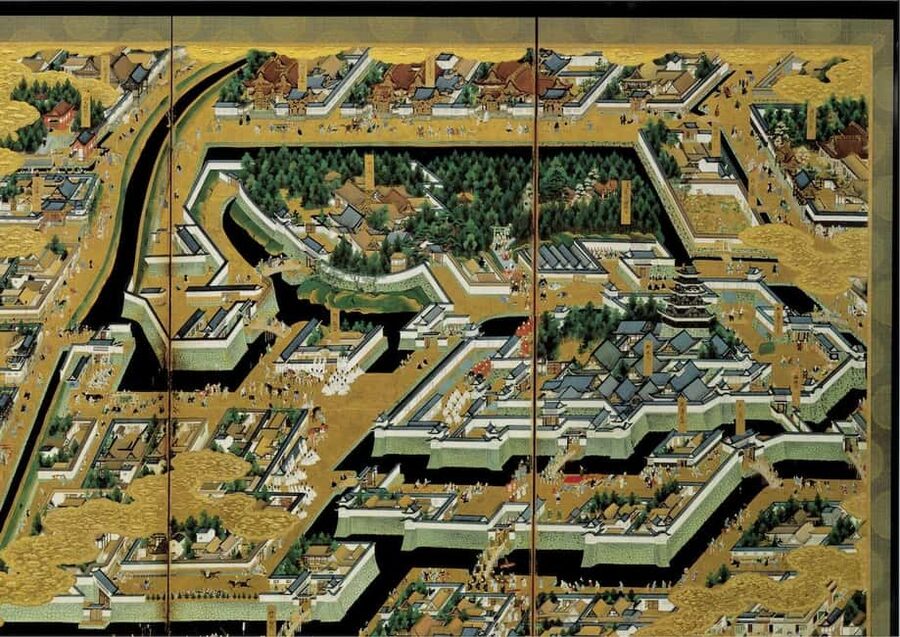
Tokyo’s Imperial Palace grounds are not just a grand residence. They are the remaining bones of Edo Castle, the seat of the Tokugawa shoguns for 260 years. This walking tour uses a map of Edo from the 1650s to explain how power, ceremony, defense, and daily life once worked here.
I like two things right away: the small group of up to eight, which should make questions practical rather than lost in a crowd, and the route’s close look at walls, moats, gates, guardhouses, and ruins. The listed price of $3.22 is remarkably low for 150 minutes with an English-speaking guide and a small gift.
The main consideration is walking. You cover a long sequence of stops in about two and a half hours, mostly outdoors, so comfortable shoes and suitable weather matter. The tour is marked wheelchair accessible, but the pace and historic surfaces are worth checking against your own needs before booking.
Key points at a glance
- A 1650s map gives the walk a clear purpose: You can compare modern Tokyo with the city that grew around the shogun’s castle.
- The route covers real defensive features: Sakurada-mon, Kikyo-mon, Ote-mon, moats, stone walls, and guardhouses are not just photo stops.
- The former main hall site gets 30 minutes: This is the longest stop and the place for the tour’s largest historical picture.
- The guide connects politics with ordinary life: Expect discussion of the Tokugawa government, the Meiji Restoration, castle residents, and the Great Fire of Meireki.
- The walk ends at Hirakawa Gate: You finish on the northern side of the former castle area, not back at Tokyo Station.
- The format is compact and flexible: Free cancellation is available up to 24 hours before the start, and you can reserve without paying immediately.
Why Edo Castle is the real subject
The Imperial Palace can seem hard to read at first. You see broad open grounds, formidable walls, clipped trees, and a few gates, but much of the original castle’s wooden architecture is gone. A guide helps you picture the compound that once directed Japan for more than two centuries.
From 1603 until the Meiji Restoration, the Tokugawa shoguns governed from Edo Castle. The emperor later took up residence here, and the former shogun’s headquarters became the Imperial Palace. That shift gives the walk its central theme: the same ground served two very different political systems.
I like tours that explain a place through its physical remains, and this one has plenty to work with. Stone construction, moats, gates, guard posts, and raised foundations make the castle’s scale easier to grasp. You are not simply looking at a palace from the outside. You are following the machinery of government.
The 1650s map is especially useful. It lets you compare the city of Edo with present-day Tokyo and consider how the castle sat at its center. The guide can use the map to explain movement through the compound, the division between public and private areas, and the way the surrounding city developed.
More Guided Castle Tours in Japan
- Kyoto: Nijo-jo Castle and Ninomaru Palace Guided Tour
★ 4.7 · 1,020 reviews - Kyoto: Nijo Castle, Kiyomizu & Fushimi Inari Guided Tour
★ 4.7 · 700 reviews - Kyoto: Imperial Palace & Nijo Castle Guided Walking Tour
★ 4.7 · 453 reviews
Starting at Tokyo Station’s Marunouchi South Gate
Meet at the ground floor of Tokyo Station’s Marunouchi South Exit, beneath the historic yellow western-style dome. This is a practical meeting point, but Tokyo Station is large, so give yourself enough time to find the correct exit.
The first walk takes about five minutes to the Mitsubishi Ichigokan Museum. The guided stop here lasts about ten minutes. The schedule does not state that museum admission is included, so treat this as a nearby orientation point rather than a planned museum visit.
This opening section helps place the Imperial Palace in modern Marunouchi, one of Tokyo’s major business districts. In a few minutes, you move from a busy rail hub to the old castle perimeter. That contrast is part of the appeal. Edo Castle has not been preserved in isolation from the city. It sits at the center of Tokyo’s modern life.
Sakurada-mon and the southern approach
From the museum, you walk about seven minutes to Sakurada-mon Gate. The guide spends roughly ten minutes here, making it one of the more substantial early stops.
A castle gate is easy to photograph and easy to misunderstand. It was not simply an entrance for anyone who happened to arrive. Gates controlled access, signaled status, and formed part of the castle’s defense. At Sakurada-mon, the guide can begin showing you how the walls, moat, and approach worked together.
The walk then continues through a series of short stops, usually around five minutes each. One location is identified by the code MQH4+V6 in Chiyoda City, followed by the Sakashita Gate guard post of the Imperial Guard. These brief explanations help fill in the spaces between the larger landmarks.
You should not expect a long sit-down lecture at each point. The format is more like a moving conversation, with the group stopping where a gate, wall, or view makes the story easier to understand. Wear shoes you can walk in comfortably, since the route keeps changing direction.
Kikyo-mon and Sakurada Tatsumi Yagura
Kikyo-mon Gate comes next, with about five minutes of explanation. Then you see Sakurada Tatsumi Yagura, a corner tower, where the guide has about six minutes.
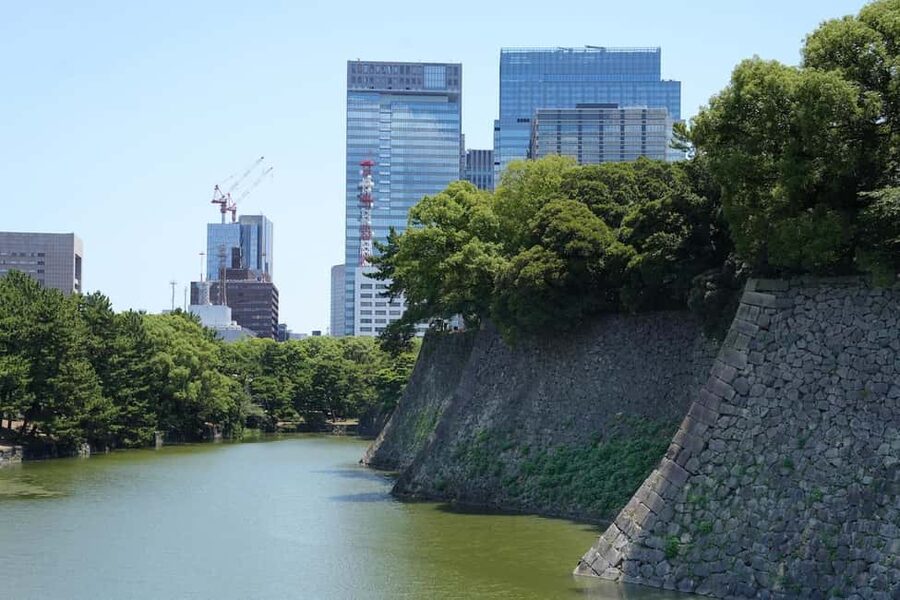
These stops show how much of the castle survives in fragments. You will not see a complete Edo-period palace rising above the trees. Instead, you read the site through its defensive edges. A gate tells you where movement was controlled. A yagura shows how a corner could be watched and defended. A moat creates distance before an attacker even reached the wall.
This is where the tour’s focus on stonework becomes valuable. The castle was built through tenka-fushin, a system in which powerful lords contributed labor and materials to major public construction. The stone walls can show different cutting and fitting styles, and the guide may point out how the work varies from one section to another.
That detail gives you something specific to look for. Rather than seeing one giant wall, you begin noticing the choices in the blocks, the joints, and the surface. For anyone interested in castles, architecture, or engineering, this may be more rewarding than a simple succession of scenic viewpoints.
More Palace Tours in Japan
- Imperial Palace East Garden and Edo Castle Walking Tour in Tokyo
★ 5.0 · 510 reviews - Kyoto: Nijo Castle and Kyoto Imperial Palace Guided Tour
★ 4.6 · 98 reviews - Tokyo: Edo Castle Ruins & Imperial Palace East Garden Tour
★ 4.4 · 13 reviews
Ote-mon, the San-no Gate ruins, and the guardhouse
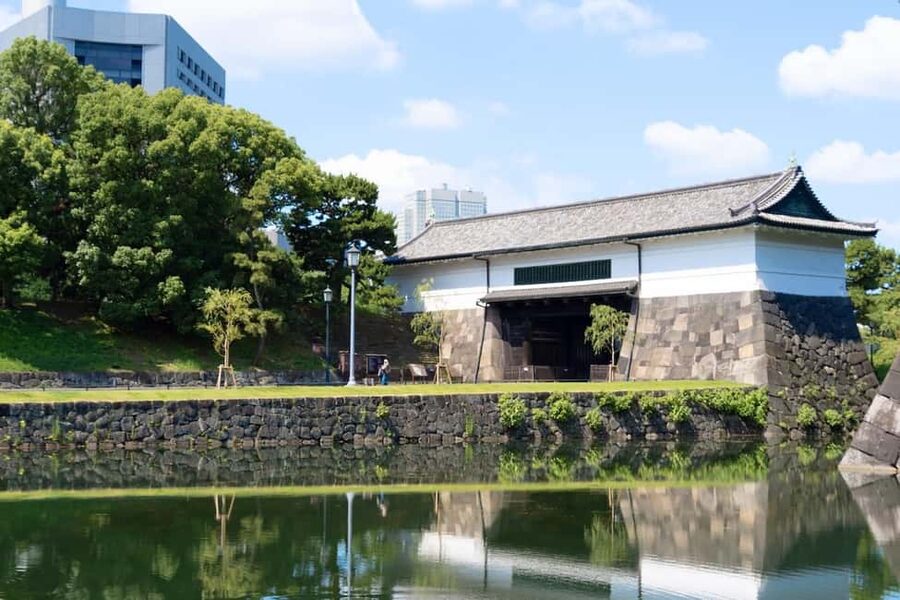
The route moves on to Ote-mon Gate, with another five-minute explanation, then to the ruins of Ote-San’no Gate. Ote-mon was a major entrance to the castle, and the nearby ruins help show that access was layered and carefully managed.
The seven-minute stop at the Hyakunin Bansho Guardhouse gives the route a more human scale. A guardhouse is not as dramatic as a palace hall, but it brings the castle’s daily operation into view. Security required people at posts, not just walls and water.
You can use this part of the walk to ask about who passed through the gates, how status affected access, and how castle workers fit into the shogun’s government. The supplied information does not name the individual guide, but the tour is conducted in English and the small group format should make those questions easier to ask.
This is also a good point to remember that Edo Castle was a working seat of power, not only a military fortress. Officials, servants, guards, family members, and visitors all occupied different parts of the compound. The tour aims to recover those lives from the remaining structures.
The Honmaru site and the missing main hall
The longest stop comes at the site of Edo Castle’s Honmaru, or main enclosure. You get about 30 minutes here, which gives the guide room to explain the castle’s government, the shogun’s residence, and the large buildings that once filled this area.
The absence of the main hall is part of the story. After the Great Fire of Meireki in 1657, the castle complex suffered major damage. A new base for the keep was constructed, but the keep itself was not rebuilt. The decision favored restoring Edo rather than spending resources on rebuilding a grand tower.
That choice says a great deal about government priorities. The castle was a symbol, but the city was home to enormous numbers of people and needed to function. You can stand on the old Honmaru site and consider the difference between rebuilding an emblem and repairing a capital.
The guide also discusses the Tokugawa method of governing and the political side of the women’s quarters, known as the Ooku. That subject adds welcome depth. Castle life was not only generals and battles. Household rules, rank, access, and personal relationships could have political effects.
One particularly useful detail concerns the castle’s fujomon, or gates associated with removing impure materials, and the Obikuruwa area. These less polished subjects help you picture the castle as a real working compound with service routes, rules, and practical problems. They also keep the tour from becoming a parade of famous names.
Kita-Hanebashi and the northern route
After the Honmaru site, the route continues to Kita-Hanebashi Gate for about five minutes. This keeps attention on the castle’s outer defenses and gives you another chance to compare different gate designs and wall sections.
A five-minute walk leads to Takebashi, followed by another short guided explanation. These transitions are not wasted time. They let you see how the castle’s parts connect, though they also mean you should expect a steady walking pace rather than long breaks.
The final major stop is Hirakawa Bridge, where the guide spends about seven minutes. Hirakawa Gate is the endpoint. This northern side of the former castle area helps complete the sense of the compound as a large, controlled world with several routes in and out.
Because the walk finishes at Hirakawa Gate rather than at the original meeting point, plan your next move before the tour begins. The supplied details do not include transport after the finish, meals, or drinks, so you handle those separately.
What the historical storytelling adds
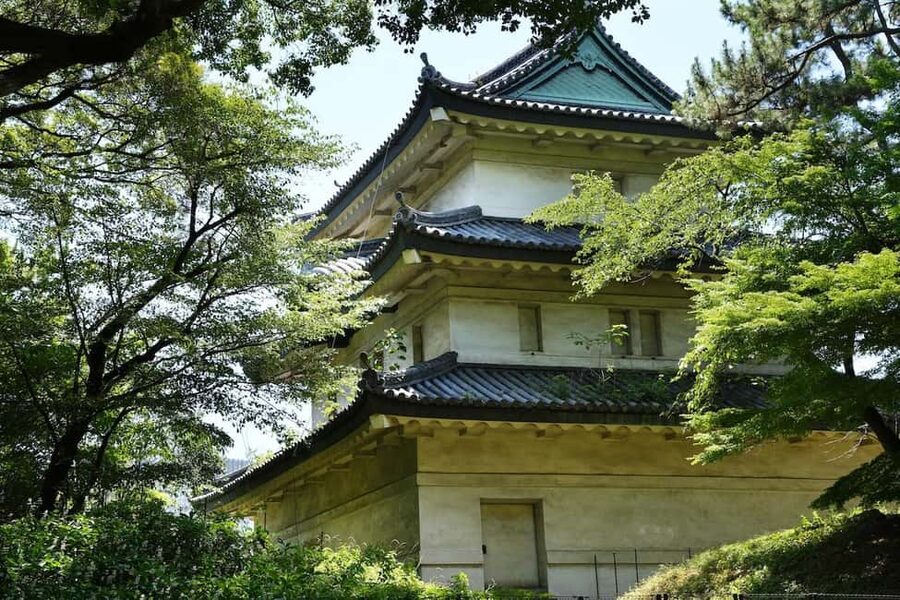
The best reason to choose this tour is the connection between physical remains and political change. You learn about the Tokugawa Shogunate, then see how the Meiji Restoration changed the role of the same site. The story moves from military government to imperial residence without requiring a separate museum visit.
I also appreciate the attention to people who lived and worked inside the castle. A castle can become a collection of grand terms, but the references to guardhouses, the Ooku, service gates, and the aftermath of the 1657 fire make the setting more personal.
One highly praised feature of the experience is the guide’s willingness to answer questions carefully, even in cold conditions. That matters because the route is full of terms and political details that can blur together. A guide who pauses to clarify the difference between the shogun’s authority, the emperor’s position, and the later imperial use of the palace makes the walk much easier to follow.
The stone walls receive special attention too. Their varied construction styles offer a concrete detail you can continue looking for after the tour. The castle’s past is not only in dates and rulers. It is also in the way each block was cut, placed, and adapted to a defensive purpose.
Price, pace, and practical value
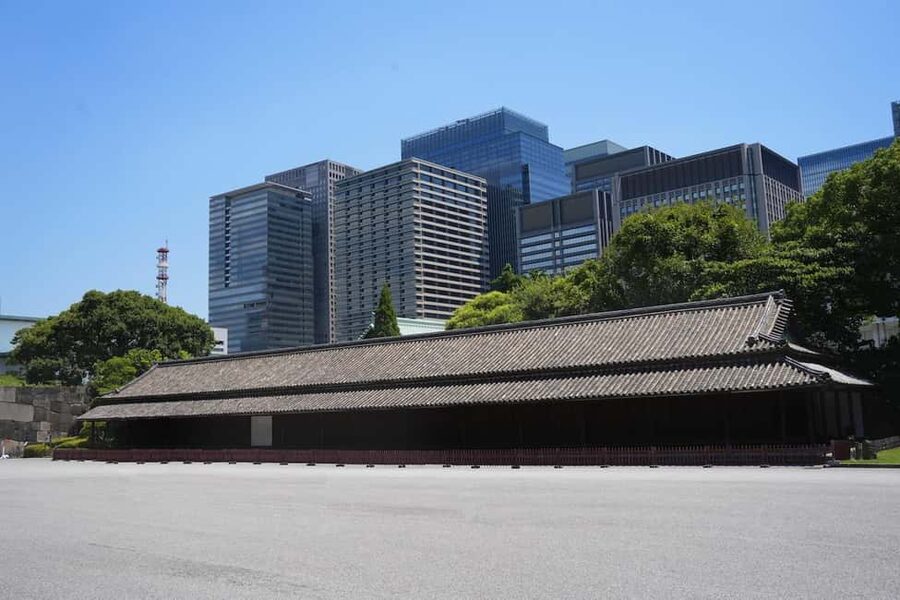
At $3.22 per person, the price is unusually modest for a 150-minute guided walk in central Tokyo. Even if you value the experience only as an introduction to the Imperial Palace grounds, the cost is low. The small gift adds a minor extra, while the main value comes from the guide’s interpretation.
The price does not include transport to Tokyo Station, food, or drinks. That is easy to manage because the meeting point is central, but you should arrive fed and carry water if needed. The tour itself does not list a meal break.
You walk for much of the 150 minutes, with roughly five-minute connections between many stops. Comfortable shoes are a clear requirement. The tour is listed as wheelchair accessible, but the supplied details do not explain the surface conditions or whether every section is equally easy to navigate, so ask the operator if you need precise access information.
A group limit of eight is a strong feature. It keeps the guide close enough for questions and makes it easier to hear at gates and walls. If you prefer a private pace or long photo stops, this format may feel structured. If you want a clear route with steady explanation, it should suit you well.
You can cancel up to 24 hours before the start for a full refund, and the reserve-now-pay-later option reduces the risk of fixing your plans too early. Starting times depend on availability.
Who should book this walk
I would choose this for a first visit to Tokyo when you want a historical framework for the Imperial Palace rather than a quick exterior photograph. It suits people who enjoy architecture, castle defenses, Japanese political history, and stories about how cities recover from disaster.
It is also a good match if you prefer a guide to point out details you might otherwise walk past. The route includes many short stops, so you get a broad view of the former castle rather than spending all your time at one gate.
You may want a different activity if you dislike outdoor walking, need frequent seated breaks, or want to enter a reconstructed palace interior. The information provided describes a walking tour of the grounds, walls, gates, ruins, and sites. It does not promise access to every Imperial Palace building.
Should you book the Edo Castle tour?
Book it if you want the Imperial Palace to make sense. The 1650s map, Tokugawa and Meiji political context, careful look at stone walls, and 30-minute Honmaru stop give the walk more substance than a standard sightseeing loop.
The strongest reasons to go are the small group, the unusually low price, and the focus on details such as the Great Fire of Meireki, the Ooku, castle service gates, and differing masonry styles. Skip it only if two and a half hours of outdoor walking feels like a poor fit or if you are specifically seeking palace interiors.
For a modest cost, you get a clear explanation of why this central patch of Tokyo mattered, how it worked, and how it changed. That is a useful way to begin understanding the city beyond its modern streets.
FAQ
Where does the tour begin?
It begins at the ground floor of the Marunouchi South Exit of Tokyo Station, beneath the historic yellow western-style dome. The listed coordinates are 35.68048457383692, 139.76571024138642.
Where does the tour finish?
The walk finishes at Hirakawa Gate, also called Hirakawa-mon. It does not return to the Tokyo Station meeting point.
How long does the tour last?
The tour lasts 150 minutes, or two and a half hours. Check availability for the specific starting time.
Is the tour conducted in English?
Yes. An English-speaking live guide leads the tour.
How many people are in the group?
The group is limited to eight participants.
Is transportation included?
No. Transportation to the starting point is not included. Meals and drinks are also excluded.
What should I wear?
Wear comfortable shoes for walking. The route includes many outdoor stops and several walking sections between the gates, walls, guardhouses, and castle sites.
More Walking Tours in Japan
- Tokyo Castle & Imperial PalaceーShogun Walking Tour
★ 4.7 · 1,068 reviews - Ultimate Osaka Walking Tour: Castle, Dotonbori & Hidden Gems
★ 5.0 · 862 reviews - Tokyo Castle & Imperial PalaceーShogun Walking Tour
★ 5.0 · 724 reviews - Osaka Castle Walking Tour and Castle Tower Admission
★ 5.0 · 561 reviews
Just added around Japan
- (Ticket Included) Explore Osaka Castle & Museum of History★ 4.8 · 21 reviews
- Peace Memorial Park, Hiroshima Castle, & Garden Private Tour★ 4.8 · 7 reviews
- Osaka: Osaka Castle Guided Tour with Local Guide★ 4.7 · 78 reviews
- Osaka: Osaka Castle – Tsuruhashi – Tennoji (Spanish Guide)★ 4.7 · 10 reviews
- Osaka: Early Morning Osaka Castle Guided Tour, Avoid Crowds★ 4.9 · 12 reviews
- Osaka: Explore Every Bit of Osaka Castle in 3 Hours★ 5.0 · 5 reviews
- Osaka: Osaka Castle 3 hours Historical Walking Tour★ 4.6 · 14 reviews
- Osaka Castle Guided Tour★ 4.7 · 249 reviews
Palace Tours, compared.

Granada: Alhambra & Nasrid Palaces Tour with Tickets
Read our review →
Granada: Alhambra and Nasrid Palaces Entry Ticket
Read our review →
Granada: Alhambra & Gardens Tour w/Nasrid Palaces Option
Read our review →
Prague: Prague Castle and Lobkowicz Palace Entry Tickets
Read our review →
Fast-Track Alhambra & Nasrid Palaces Guided Tour
Read our review →
Granada: Alhambra Ticket and Guided Tour with Nasrid Palaces
Read our review →
Alhambra & Generalife Skip the line Small Group including Nasrid Palaces
Read our review →
Granada: Alhambra Guided Tour with Nasrid Palaces & Gardens
Read our review →Browse the lists this tour appears in