
REVIEW · PALACE TOURS
Tokyo: Edo Castle Ruins & Imperial Palace East Garden Tour
Edo Castle is gone, but its scale still comes through in the massive gates, moats, stone walls, and broad grounds around today’s Imperial Palace. This two-hour walk connects the shogun’s fortress with the modern Imperial family’s gardens, giving you a useful picture of how Tokyo’s center changed over time.
I like the clear route through Otemon Gate and the old guardhouses, and I like ending among the koi ponds and clipped greenery of Ninomaru Garden. Guides such as Mari and Isao have been praised for patience, warmth, and detailed answers.
The main limitation is simple: you do not enter the Imperial Palace buildings or the inner grounds. One quiet guide-led walk offered little more than a park stroll, so this tour is best for you if you want historical explanation, not just access to attractive gardens.
Key points to know before you book
- The tour begins at Wadakura Fountain, where you hear why the fountain was built to mark a royal wedding.
- Otemon Gate and its guard posts make the castle’s defensive design easier to understand than a bare history lesson.
- The Tenshu-dai offers broad views, but the original castle keep is no longer standing.
- Ninomaru Garden is the calmest stop, with a pond and koi fish near the end of the walk.
- The price is $37 for two hours, including a live English-speaking guide and admission.
- The experience suits walkers, but it is not suitable for children under six, wheelchair users, or people with mobility impairments.
Why Edo Castle makes a good first history walk
Edo Castle was the power center of Japan during the shogun era. The Imperial Palace now occupies the wider site, so you are walking through layers of Japanese history rather than visiting a single preserved building.
That distinction matters. You will not find a complete castle with rooms, roofs, and ornate interiors. Instead, the story comes from gateways, stone foundations, guardhouses, moats, gardens, and the shape of the grounds. A guide helps turn those remains into a working fortress in your mind.
The two-hour length is sensible for Tokyo. You get enough time to follow the main route without giving up most of your morning or afternoon. At $37, the value depends on the guide. If your guide explains the shoguns, palace history, and defensive layout with care, the fee is reasonable. If the commentary is thin, you may feel you could have walked through the public garden on your own.
The experience is offered privately or in a small group. That is useful here because the important details are easy to miss. A small group also gives you a better chance to ask about a gate, stone wall, or garden feature before the tour moves on.
More Castle Gardens and Grounds in Japan
- Imperial Palace East Garden and Edo Castle Walking Tour in Tokyo
★ 5.0 · 510 reviews - Himeji: Himeji Castle & Kokoen Garden 3.5-Hour Guided Tour
★ 4.9 · 30 reviews - Kanazawa: Half-Day Private Tour – Garden, Castle, Geisha
★ 5.0 · 10 reviews
Meeting at Wadakura Fountain
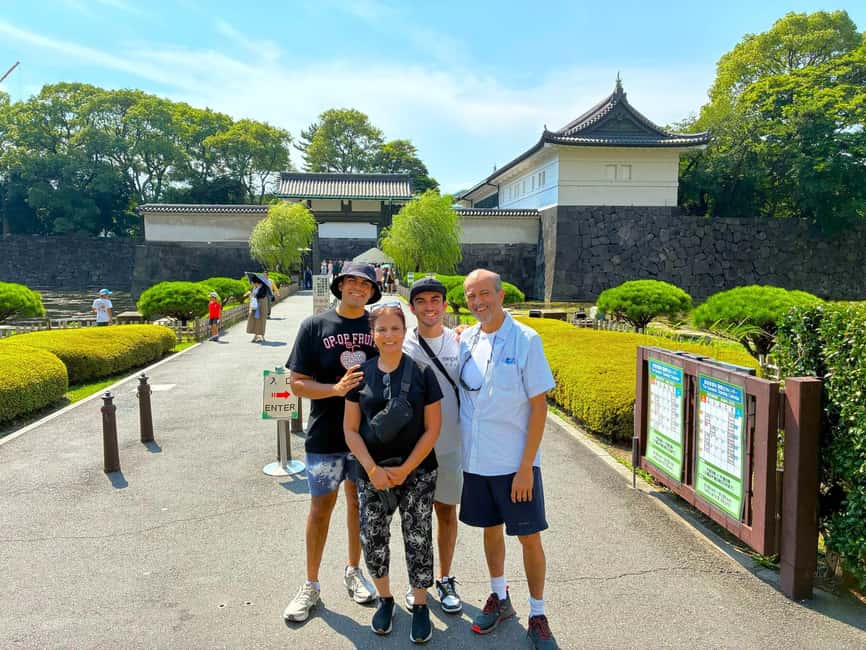
Meet outside the Wadakura Free Rest Area, in front of the entrance. Your guide is supposed to be holding a yellow sign, so look for that rather than wandering around the palace district.
The first stop is Wadakura Fountain National Park. The fountain was built to commemorate a royal wedding, and the guide uses it to explain the meaning of the site. This is a short introduction, about ten minutes, but it gives the walk a useful starting point.
You also get a brief look at Wadakura Moat. The water and open space help you see that Edo Castle was designed as a layered defense system, not simply as a grand residence. The moat is not the most dramatic stop on its own, yet it makes more sense once you understand the barriers that controlled movement toward the castle.
Bring water and wear comfortable shoes. The route includes gates, open garden paths, and historic grounds rather than indoor rooms with frequent places to sit.
Passing through Otemon Gate
Otemon Gate is the first major castle feature on the route. This was a formal entrance into the castle grounds, and its size gives you a better feel for the power of the shogunate than a small museum display would.
The guide then points out the Ote San-no-mon Gate Ruins. Ruins can sound vague on a schedule, but here the remains help show how visitors and officials passed through a series of controlled entrances. The route is about more than taking photographs. It shows how access to the castle was managed.
Next comes Doshin Bansho, a guardhouse. Then you reach Hyakunin Bansho, another guardhouse associated with castle security. These stops are especially useful if you enjoy military history or want to understand the samurai world beyond swords and uniforms.
Do not expect preserved rooms filled with original objects. The value is in the position of each building and the explanation of its role. A strong guide can make a plain structure memorable by showing how guards, officials, and visitors would have moved through the grounds.
The experience has received its highest praise when guides took time to answer questions and explain the palace and the country with enthusiasm. That is exactly what you should want at these early stops. The buildings are important, but the interpretation makes them worthwhile.
Reading the Edo Castle ruins
The central castle grounds bring you to the remains of Edo Castle itself. The former fortress was one of the largest and most important centers of political power in Japan, but much of the original structure has disappeared.
That means you should set your expectations correctly. This is not a castle interior visit. There are no palace rooms open to explore, and you are not walking through the private residence of the Imperial family.
Instead, you look at the surviving layout and foundations while the guide explains what once occupied the site. The Honmaru area was the castle’s main compound, and the site of the Honmaru Main Hall gives the walk its strongest sense of absence. You stand where major political and ceremonial spaces once existed, with little of the building left above ground.
I find this kind of stop rewarding when the guide provides scale and context. Without that help, the area may appear to be a broad patch of grass and stone. One low-rated experience was described as a simple park walk because the guide said very little. That is the key risk here. The physical remains need a narrator.
More Palace Tours in Japan
- Kyoto: Nijo-jo Castle and Ninomaru Palace Guided Tour
★ 4.7 · 1,020 reviews - Kyoto: Imperial Palace & Nijo Castle Guided Walking Tour
★ 4.7 · 453 reviews - Kyoto: Nijo Castle and Kyoto Imperial Palace Guided Tour
★ 4.6 · 98 reviews - Tokyo: Edo Castle and Imperial Palace Guided Walking Tour
★ 5.0 · 6 reviews
The Tenshu-dai and the missing keep
The Tenshu-dai is the stone base associated with the castle keep. From this point, you get panoramic views of the surrounding area and a chance to think about how the castle once dominated the city center.
The original keep is not standing today. A reconstruction model helps you picture its former height and appearance. This model is one of the most useful visual aids on the route because it bridges the gap between a low stone platform and the enormous fortress that once rose above it.
The stop is less about climbing into a building and more about seeing the relationship between the castle center, the surrounding grounds, and modern Tokyo. Your guide may point out the scale of the former complex and explain why the keep mattered as a symbol as well as a defensive structure.
Keep your camera ready, but remember that flash photography is not allowed. The tour includes a commemorative photo opportunity, so you can ask the guide when the best moment is for a group picture.
Gardens, trees, and Suwa no Chaya
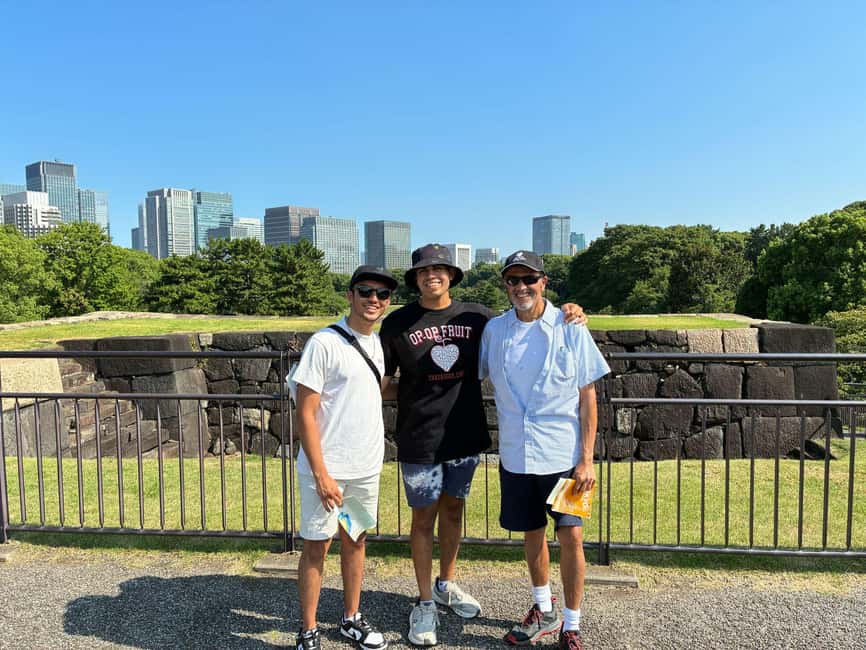
After the main castle remains, the pace becomes calmer. The route includes the prefectural trees area and Suwa no Chaya, a traditional-style tea house. These stops add variety after the gates and stone foundations.
The trees area is not a major historical monument, but it gives you a change of scenery and a chance to notice how the palace grounds are maintained. Suwa no Chaya adds a more refined, garden-centered feel to the walk.
This portion may appeal most to you if you like the meeting point of history and landscape. If you want nonstop castle facts, these stops may feel less urgent. The guide’s commentary again makes the difference. A thoughtful explanation can connect the tea house and gardens to the wider character of the palace grounds without turning the walk into a list of names.
Ninomaru Garden and its koi pond
The Imperial Palace East Gardens provide the most peaceful part of the experience. The gardens are open, carefully arranged, and easier to enjoy after you have spent time thinking about walls, gates, and military control.
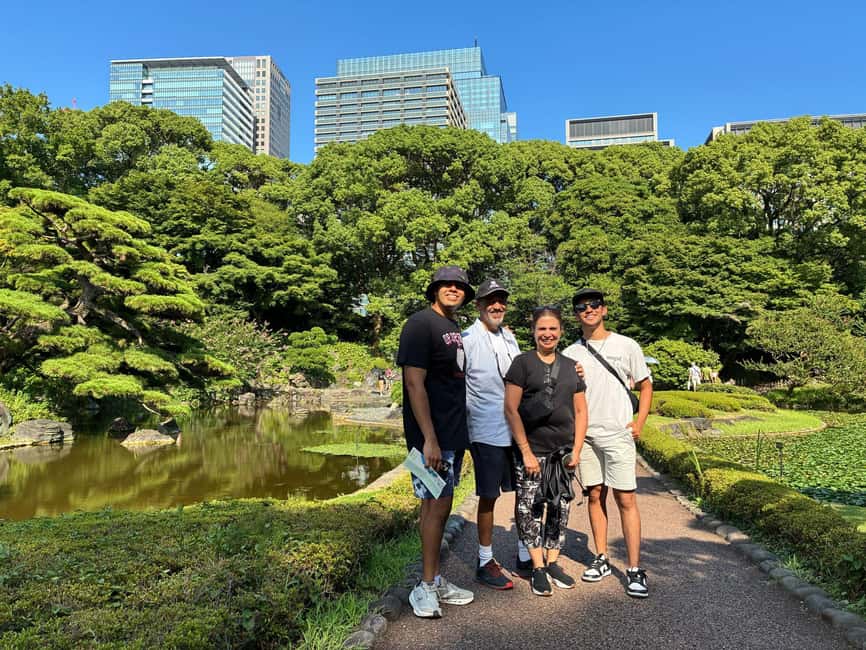
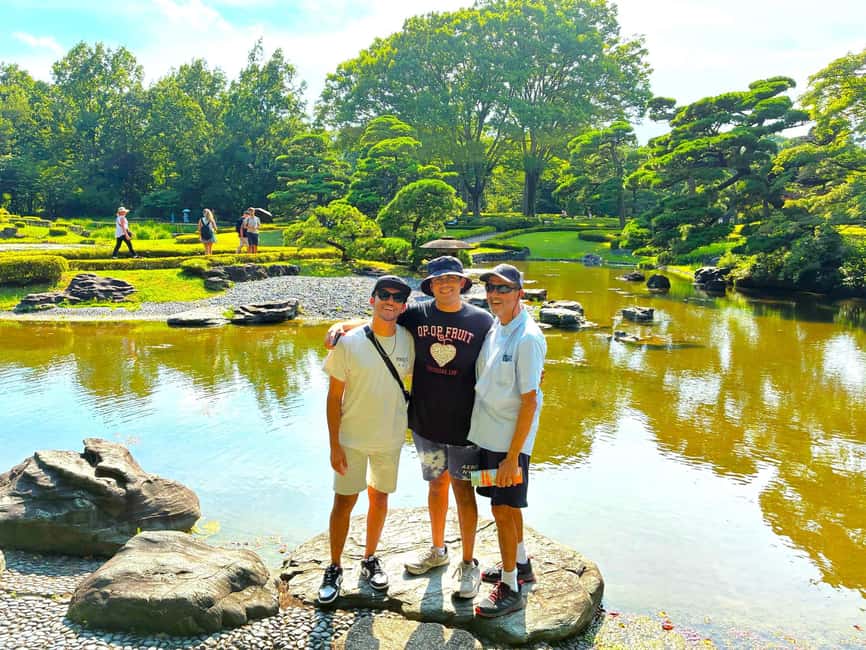
Ninomaru Garden is the highlight for many visitors who want a quiet break in central Tokyo. Its pond contains koi fish, and the setting gives you time to slow down after the more structured castle stops. The garden is also a good place to appreciate how Japanese design uses water, plants, paths, and framed views.
The tour allows about fifteen minutes here, which is enough for a guided look but not a long, unhurried garden visit. You may want to return independently if you prefer to sit, photograph the pond, or explore at your own speed.
This is also where the experience’s two sides come together. You have seen the military entrance points and the remains of the Honmaru. Now you see the polished public garden that occupies part of the same historic center. The contrast is one of the tour’s best features.
What the $37 price really includes
The $37 fee covers admission to Edo Castle and the Imperial Palace grounds used for the tour, a live English-speaking guide, and a commemorative photo opportunity. Food, drinks, personal spending, and hotel transfers are not included.
For a two-hour private or small-group walk, the cost is fair if you value explanation and questions. You are paying for a person to connect separate sites that could otherwise feel disconnected: Wadakura Fountain, the moat, Otemon Gate, the guardhouses, Honmaru, the Tenshu-dai, and Ninomaru Garden.
The price is less compelling if you are comfortable reading signs and walking on your own. The grounds are accessible without needing a tour for basic sightseeing, and the route does not include a rare interior or a special behind-the-scenes entrance.
I would book it for a first visit to Tokyo when you want a compact introduction to the city’s political history. I would skip it if your main goal is the Imperial Palace’s private rooms, since those are not open to the public and are not part of this experience.
Guide quality matters more than usual
This tour rises or falls on the guide’s speaking style. Several guides have been praised for being friendly, patient, and willing to answer questions. Mari and Isao are names associated with especially warm and informative tours, with Isao noted for his smile and careful responses and Mari praised for helping people learn a great deal.
That does not guarantee who will lead your group. It does show what a good version of the experience can offer: more than a route between attractions, with explanations tailored to your questions.
The range of experiences also suggests you should not book this expecting the same depth from every guide. If your guide is quiet, ask direct questions about the shoguns, the guardhouses, the Honmaru Main Hall, and the keep reconstruction model. Those subjects are central to the route and can draw out more useful commentary.
The English language option is specified. The tour can be private or small-group, which is helpful if you want a more personal exchange.
Who should book this walk
This experience is a good match for you if:
- You want a short, guided introduction to Edo Castle.
- You enjoy political, military, and samurai history.
- You prefer a small group or private guide to a large bus tour.
- You want both ruins and a Japanese garden in one outing.
- You are comfortable walking outdoors for two hours.
- You would like to ask questions rather than simply follow a route.
It is a weaker choice if you need step-free access, use a wheelchair, or have difficulty walking. It is also not suitable for children under six.
Plan around the weather as much as you can. The supplied guidance specifically recommends comfortable shoes, water, and a camera. Smoking and flash photography are not allowed.
Should you book the Edo Castle tour?
Book this tour if you want the history of Edo Castle explained as you walk through its surviving gates, guardhouses, ruins, and gardens. The route is compact, the price is reasonable for a small guided experience, and the contrast between military remains and Ninomaru Garden gives the visit shape.
Do not book it expecting palace interiors or access to the Imperial family’s private grounds. You will see the East Gardens and the former castle site instead.
My practical advice is to choose this walk when a guide’s storytelling matters to you. Ask questions, especially at the guardhouses and Tenshu-dai. If you mainly want photographs and a quiet garden stroll, save the $37 and explore the public grounds at your own pace.
FAQ
Where does the tour meet?
Meet outside the Wadakura Free Rest Area, in front of the entrance. The guide will be holding a yellow sign.
How long does the tour last?
The tour lasts two hours.
What language is the tour offered in?
The live guided tour is offered in English.
Does the tour enter the Imperial Palace buildings?
No. The Imperial Palace buildings are not open to the public, and the tour does not enter the inner grounds. It focuses on the East Gardens and the former Edo Castle ruins.
What is included in the price?
The $37 price includes a live tour guide, admission to Edo Castle and the Imperial Palace grounds used for the experience, and a commemorative photo opportunity.
Is hotel pickup included?
No. Hotel pickup and drop-off are not included.
What should I bring?
Bring comfortable shoes, water, and a camera.
Is the tour suitable for wheelchair users?
No. The experience is not suitable for wheelchair users, people with mobility impairments, or children under six.
Just added around Japan
- Tokyo: Edo Castle and Imperial Palace Guided Walking Tour★ 5.0 · 6 reviews
- (Ticket Included) Explore Osaka Castle & Museum of History★ 4.8 · 21 reviews
- Peace Memorial Park, Hiroshima Castle, & Garden Private Tour★ 4.8 · 7 reviews
- Osaka: Osaka Castle Guided Tour with Local Guide★ 4.7 · 78 reviews
- Osaka: Osaka Castle – Tsuruhashi – Tennoji (Spanish Guide)★ 4.7 · 10 reviews
- Osaka: Early Morning Osaka Castle Guided Tour, Avoid Crowds★ 4.9 · 12 reviews
- Osaka: Explore Every Bit of Osaka Castle in 3 Hours★ 5.0 · 5 reviews
- Osaka: Osaka Castle 3 hours Historical Walking Tour★ 4.6 · 14 reviews
Palace Tours, compared.

Granada: Alhambra & Nasrid Palaces Tour with Tickets
Read our review →
Granada: Alhambra and Nasrid Palaces Entry Ticket
Read our review →
Granada: Alhambra & Gardens Tour w/Nasrid Palaces Option
Read our review →
Prague: Prague Castle and Lobkowicz Palace Entry Tickets
Read our review →
Fast-Track Alhambra & Nasrid Palaces Guided Tour
Read our review →
Granada: Alhambra Ticket and Guided Tour with Nasrid Palaces
Read our review →
Alhambra & Generalife Skip the line Small Group including Nasrid Palaces
Read our review →
Granada: Alhambra Guided Tour with Nasrid Palaces & Gardens
Read our review →Browse the lists this tour appears in