
REVIEW · WALKING TOURS
Tokyo Castle & Imperial PalaceーShogun Walking Tour
Edo Castle was once Japan’s largest castle, and this tour helps you see the fortress that Tokyo has mostly grown around. You walk past massive stone walls, moats, gates, gardens, and palace grounds while learning how the shogun ruled from here and how the imperial family continued into modern Japan.
I like the small group of up to 10, which makes it easier to ask questions and hear the guide outdoors. I also like the way guides such as Anju, Fuma, Yuuka, and Tomo connect the Edo period with present-day Japan instead of treating the palace as a collection of old stones. The main drawback is simple: much of the two-hour tour is outside, and the grounds are broad, so poor weather or limited walking ability can affect your enjoyment.
Key points to know
- See the surviving defenses of Edo Castle: Moats, stone walls, gates, and the Sakurada Tatsumi Yagura show how formidable the shogun’s stronghold once was.
- Learn how Tokyo grew around the castle: The tour explains the castle’s size and its role in the 260-year period of samurai rule.
- Visit Ninomaru Garden and the East Gardens: Expect seasonal plants, old trees from across Japan, ponds, and special koi.
- Travel with a small English-speaking group: The limit of 10 people gives the guide room to answer questions and adjust the pace.
- Connect samurai history with the imperial family: You learn about Edo Castle, the Imperial Palace, and Japan’s long imperial tradition in one walk.
- Bring weather-ready clothing and a camera: Photography is encouraged, but there is a security check and no knives or alcohol are allowed.
Why Edo Castle is the real star of this walk
The Imperial Palace can be hard to understand on your own. Today, Tokyo surrounds it with office towers, broad roads, and busy neighborhoods, while much of the original castle is gone. The surviving moats, gates, stonework, gardens, and open spaces only make sense when you know how enormous Edo Castle once was.
This tour gives you that missing scale. Your guide explains how Edo Castle served as the center of political power during the shogun’s rule and how its layered defenses helped protect the seat of government. You are not simply looking at a wall. You are learning why the wall was placed there, how access was controlled, and what the castle meant to samurai society.
The story also moves beyond the usual samurai legends. You hear about the shogun, his retainers, the development of Tokyo, and the imperial family that now uses the palace grounds. That wider frame is one of the tour’s strongest features. It helps you connect the Edo period to Japan’s present rather than treating the past as a separate world.
If you became curious about the Edo period through television or films about samurai, you will get useful context here. The real place is less theatrical, of course, but the moats, gates, stone foundations, and formal gardens give the history a firm physical setting.
More Walking Tours in Japan:
- Ultimate Osaka Walking Tour: Castle, Dotonbori & Hidden Gems
★ 5.0 · 862 reviews - Tokyo Castle & Imperial PalaceーShogun Walking Tour
★ 5.0 · 724 reviews - Osaka Castle Walking Tour and Castle Tower Admission
★ 5.0 · 561 reviews
Meeting at Wadakura Fountain Park

The walk begins in front of Starbucks Coffee Kōkyo Gaien Wadakura Fountain Park Store, at 3-1 Kōkyo Gaien, Chiyoda City. Look for a guide holding a sign marked Local Guide Stars.
This is a practical meeting point because you begin near the Imperial Palace grounds rather than spending part of the two-hour tour getting there. Give yourself enough time to find the correct Starbucks. The Japanese name used for the shop is スターバックス コーヒー 皇居外苑 和田倉噴水公園店, which is useful if you are checking maps or asking for directions.
The activity is conducted in English only. There is no Japanese language support, so you should be comfortable following spoken English while walking outdoors. The guides use explanations, questions, stories, and occasional quizzes to keep the group involved. Several guides, including Anju, Fuma, Yuuka, Tomo, Ai, and Kosei, have been praised for keeping a friendly tone and making room for questions.
Sakurada Tatsumi Yagura and the first glimpse of the old fortress
The first stop is Sakurada Tatsumi Yagura, a corner watchtower that makes a good introduction to the castle’s defensive design. You stop for photographs and a short explanation before moving on.
The brief five-minute visit works best as a visual opening. You begin to see that Edo Castle was not just a central residence. It was a fortified complex built to control movement and protect the shogun’s seat of power.
Your guide may point out details that are easy to miss when walking alone. The stone construction, water-filled moat, and position of the tower help you picture the layered approach to the castle. This is also a good moment to ask how much of the original castle remains, since the present palace grounds combine old foundations with later imperial buildings and gardens.
Ote-Mon Gate and the logic of castle security

Ote-Mon Gate receives a longer stop of about 15 minutes. It was one of the major entrances to Edo Castle, and it gives the guide a natural place to explain how visitors and retainers would have entered the complex.
This is where the tour’s practical history lesson becomes especially useful. A castle gate was not merely an opening in a wall. Its turns, heavy construction, controlled access, and surrounding defenses helped slow or screen anyone approaching the center of power.
The tour does not ask you to memorize dates or names for their own sake. Instead, the guide uses the gate to explain how the shogun’s government functioned and why Edo Castle could help maintain a long period of peace under samurai rule. The precise story will depend on your guide, but the emphasis is on how the site worked.
Ote-Mon is also one of the better photo stops. You can photograph the gate, stonework, and moat, but keep listening as you do. The historical details are what turn a pleasant walk into a useful tour.
A few more castle tours around Japan worth a look
- Osaka Castle: Museum and Tower Entry Ticket
★ 4.5 · 2,380 reviews - Kyoto: Nijo-jo Castle and Ninomaru Palace Guided Tour
★ 4.7 · 1,020 reviews - Kyoto: Nijo Castle, Kiyomizu & Fushimi Inari Guided Tour
★ 4.7 · 700 reviews - Imperial Palace East Garden and Edo Castle Walking Tour in Tokyo
★ 5.0 · 510 reviews
The Imperial Palace and Japan’s continuing imperial tradition
The Imperial Palace stop lasts about 20 minutes and shifts the focus from the shogun to the emperor. The palace is the present-day residence of Japan’s emperor, while the surrounding grounds retain traces of Edo Castle.
That change in function is the central idea of the experience. Edo Castle was the headquarters of the shogun during the samurai era. Today, the same broad site represents the imperial system and the modern Japanese state. The guide explains the claimed 2,600-year continuity of Japan’s imperial tradition and considers how it has survived through major changes in government and society.
You should not expect a full visit inside the private palace buildings. The experience focuses on the grounds and the visible remains around them. That is still worthwhile because the open spaces, gates, walls, and gardens reveal how old and new layers of Japanese history sit together.
The guides are a major part of this stop. Anju has been praised for explaining the Edo period clearly and encouraging questions. Yuuka is known for answering questions and taking photographs, while Tomo has been noted for a relaxed pace and an interactive approach. Guides vary, but the activity is designed around a live English-speaking guide rather than an audio recording.
Ninomaru Garden, ponds, and the quieter side of Tokyo
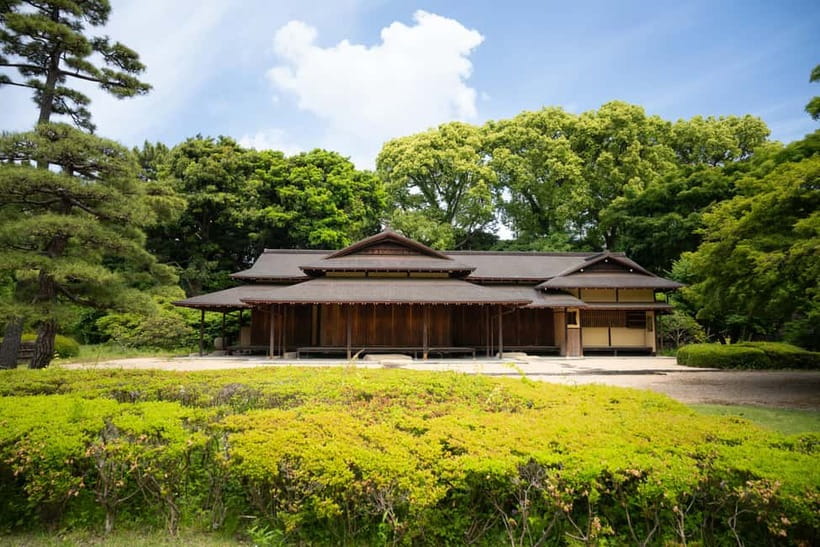
Ninomaru Garden is one of the tour’s most attractive stops, with about 15 minutes set aside for walking and explanation. After the castle defenses and political story, the garden offers a calmer view of life around the former castle.
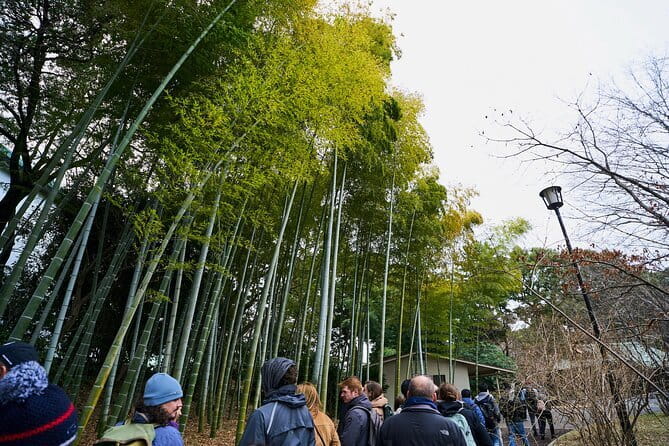
Look for carefully arranged planting, old trees from different parts of Japan, ponds, and seasonal color. The garden is not just a pretty pause. It helps explain the taste, ceremony, and private spaces associated with the ruling household and its courtly world.
The tour also includes encounters with special koi fish. They add an enjoyable change of pace, especially for children or anyone who has had enough of walls and dates. Bring a camera, since photography is encouraged throughout the grounds.
The time here is enough for an introduction, not a long garden study. If gardens are your main reason for visiting the palace, you may want extra time before or after the tour to explore at your own pace. If you want a balanced introduction to the entire area, the short stop works well.
Edo Castle ruins and the palace that no longer exists
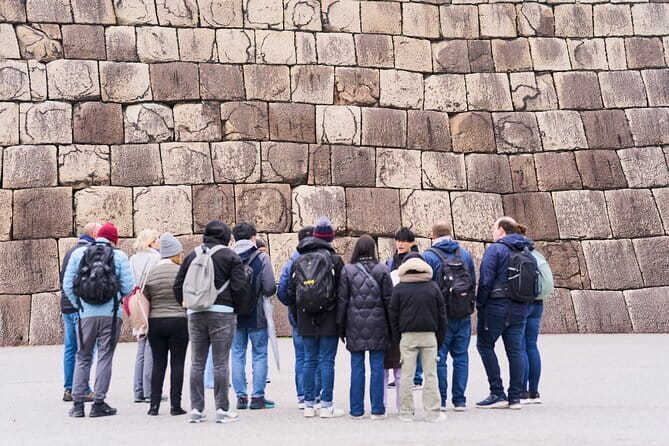
The Edo Castle Ruins stop lasts about 10 minutes. The remaining foundations and stonework give you a physical sense of the structures that once occupied this huge site.
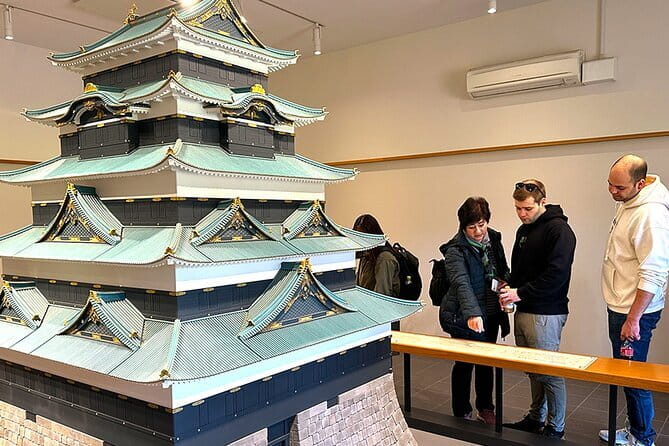
One especially useful feature is the miniature structure showing what part of the former palace looked like. A model can make the missing buildings easier to picture than a written description alone. Your guide explains what the palace used to look like and how the castle complex was organized.
This is also where you should adjust your expectations. Edo Castle is not a complete medieval castle with intact halls and towers. Much of what you see consists of ruins, foundations, gates, walls, moats, and gardens. The tour succeeds by helping you read those remains, not by promising a rebuilt castle experience.
The ruins are valuable precisely because Tokyo has grown around them. You can stand in a modern capital and still trace the outline of the power center that shaped the city. That contrast is one of the most memorable parts of the walk.
Imperial Palace East Gardens and a gentle finish
The final major stop is the Imperial Palace East Gardens, with about 20 minutes for sightseeing and explanation. This section brings together the tour’s main themes: old castle defenses, formal gardens, the emperor’s present-day residence, and Tokyo’s changing identity.
The East Gardens are a good place to slow down. You may see seasonal plants, mature trees, old stonework, and water features. The setting feels removed from the traffic outside, even though you remain in central Tokyo.
Several guides are especially praised for pointing out details that are easy to pass without context. Fuma is known for mixing historical facts with humor and answering questions. Kosei has been noted for comparing Japanese and international culture, which can help you connect older customs with modern life. The guide you receive will vary, but a small group gives you a better chance to interact than a large coach tour.
The walk returns to the Starbucks meeting point. Since the route takes place on foot and covers palace grounds, wear comfortable shoes. The route includes some slopes, and wheelchair users can use wheelchairs within the palace grounds, though certain areas require walking or moving downhill on foot.
What the $23 price gives you
At $23 per person, this is a low-cost guided introduction to one of Tokyo’s most important historical sites. The Imperial Palace grounds and East Gardens are included in the activity, along with an English guide, explanations of the samurai and shogun period, the castle’s role in Tokyo’s growth, and the imperial system.
The value depends on what you want. If you only want to stroll through gardens and take photographs, you may prefer to visit independently and keep the $23. The site itself provides much of the scenery, and you should not expect access to every palace building.
I think the price makes better sense if you want context. Without a guide, a moat can look like a moat and a stone wall can look like a stone wall. With a good explanation, you understand the defensive layers, the former castle plan, the shift from shogun to emperor, and the reason this open area matters to Tokyo.
The high overall rating reflects a consistent pattern in the feedback: guides are praised for clear English, warmth, patience, and an ability to keep the walk moving without rushing. The strongest names that appear repeatedly include Anju, Fuma, Tomo, Yuuka, Ai, and Kosei. Guide quality can never be guaranteed person by person, but the activity’s format gives each guide a useful setting for storytelling and questions.
Weather, pace, and practical comfort
A large portion of the walk is outside. Tokyo can be hot, cold, wet, or bright depending on the season, so check the forecast and dress for the day. Comfortable shoes matter more than stylish ones, since the experience includes steady walking between several stops.
The planned duration is two hours. The listed stop times total about 105 minutes, leaving the rest for walking between locations, pauses, and explanations along the route. Some guides may run slightly over if the group has many questions, but you should not treat this as a long half-day visit.
Photography is encouraged. The gardens, stone walls, moats, gates, koi, and seasonal trees provide plenty to photograph, but keep your camera ready rather than spending the entire walk looking through it. The explanations are the main reason to book a guided visit.
You will pass through a security check when entering the Imperial Palace grounds. Do not bring knives or alcohol. The tour is accessible in part for wheelchair users, though slopes and sections where participants must walk or go down on foot can make the full route difficult for some people.
Who should book this palace walk?
I would choose this tour for a first visit to Tokyo if I wanted a quick historical foundation. It is also a good fit for anyone interested in samurai culture, the Edo period, the shogun, Japanese gardens, or the imperial family.
Families may appreciate the short length, koi, gardens, and visual remains. The small group and question-friendly style also help if you are traveling with children who need more than a formal lecture to stay interested.
It is less suitable if you want a detailed architectural visit inside the palace, a long garden session, or a private tour with a guaranteed named guide. It is also not the best pick for anyone who dislikes outdoor walking or cannot manage slopes.
Should you book the Tokyo Castle and Imperial Palace Shogun Walking Tour?
Book it if you want the Imperial Palace to make sense, not just look attractive. For $23, you receive a compact introduction to Edo Castle, the samurai government, Tokyo’s growth, Japan’s imperial tradition, and the gardens that remain today.
Skip it if you prefer to wander silently, already know the history well, or want access to palace interiors. For most first-time visitors with an interest in Japanese culture, the combination of a small group, a two-hour route, and guides such as Anju, Fuma, Yuuka, and Tomo makes this a sensible way to begin exploring the palace grounds.
FAQ
How much does the Tokyo Castle and Imperial Palace Shogun Walking Tour cost?
The tour costs $23 per person.
How long does the tour last?
The tour lasts two hours.
How many people can join the group?
The group is limited to 10 participants.
What language is the tour conducted in?
The tour is conducted in English only. Japanese language support is not available.
Where does the tour meet?
Meet in front of Starbucks Coffee Kōkyo Gaien Wadakura Fountain Park Store at 3-1 Kōkyo Gaien, Chiyoda City, Tokyo.
How do I identify the guide?
The guide will be holding a sign that says Local Guide Stars.
What places are included in the walk?
The route includes Sakurada Tatsumi Yagura, Ote-Mon Gate, the Tokyo Imperial Palace, Ninomaru Garden, Edo Castle Ruins, and the Imperial Palace East Gardens.
Can I take photographs during the tour?
Yes. Photography is encouraged throughout the experience.
Are there security restrictions?
There is a security check when entering the Imperial Palace. Knives and alcohol are not permitted.
Is the tour suitable for wheelchair users?
Wheelchairs are available and can be used within the Imperial Palace grounds. Some slopes and areas require participants to walk or go down on foot, so the full route may not be suitable for every wheelchair user.
Just added around Japan
- Tokyo: Edo Castle and Imperial Palace Guided Walking Tour★ 5.0 · 6 reviews
- (Ticket Included) Explore Osaka Castle & Museum of History★ 4.8 · 21 reviews
- Peace Memorial Park, Hiroshima Castle, & Garden Private Tour★ 4.8 · 7 reviews
- Osaka: Osaka Castle Guided Tour with Local Guide★ 4.7 · 78 reviews
- Osaka: Osaka Castle – Tsuruhashi – Tennoji (Spanish Guide)★ 4.7 · 10 reviews
- Osaka: Early Morning Osaka Castle Guided Tour, Avoid Crowds★ 4.9 · 12 reviews
- Osaka: Explore Every Bit of Osaka Castle in 3 Hours★ 5.0 · 5 reviews
- Osaka: Osaka Castle 3 hours Historical Walking Tour★ 4.6 · 14 reviews
Walking Tours, compared.

Edinburgh Castle: Guided Walking Tour with Entry Ticket
Read our review →
Prague: 3-Hour Walking Tour of Old Town & Prague Castle
Read our review →Edinburgh Castle: Guided Walking Tour with Entry Ticket
Read our review →
Edinburgh Castle Guided Walking Tour in English
Read our review →
Budapest: Buda Castle Walk with Saint Stephen’s Hall
Read our review →

Prague 3-hour Afternoon Walking Tour including Prague Castle
Read our review →
Dubrovnik: City Walls Early Morning or Sunset Walking Tour
Read our review →Browse the lists this tour appears in