
REVIEW · FORTRESS & CITADEL TOURS
Fortress: Prisons, Museum of Fortifications and Alps Museum
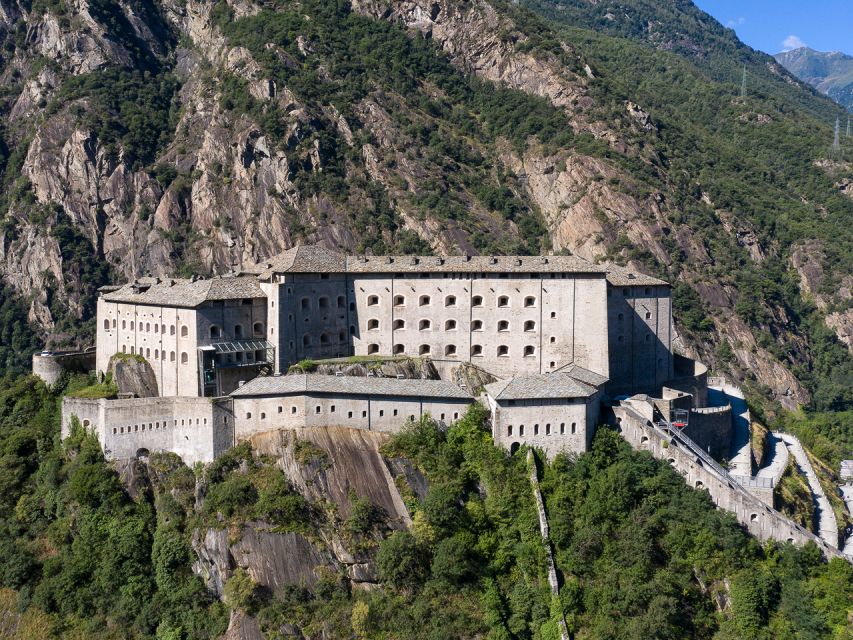
The most striking part of Bard Fortress is its setting and scale. Built into a rocky Alpine position, it controls a historic route through the Aosta Valley, and its thick walls, courtyards, walkways, and military rooms make the past feel close at hand. I like the panoramic lifts, which turn the climb into part of the visit, and the chance to choose three museum areas rather than rush through everything.
I also like the small prison cells, each only about 1.3 by 2 metres, and the way the museums link weapons, fort design, mountain life, and modern ideas about borders. The main drawback is that this is a self-guided visit. You get an audio guide through the Museon app, but no live guide, so visitors who want a flowing spoken tour will need to make their own route and pace.
Key points before you go
- The panoramic lifts make the uphill approach easier, while giving you broad views of the Alpine surroundings.
- The Prisons contain 24 tiny cells, arranged in four sections behind an entrance gallery.
- The Museum of Fortifications explains changing military methods, using models, film footage, weapons, and reconstructions.
- The Museum of the Alps moves from nature to human culture, then examines how modern life changed the mountains.
- Your $17 ticket includes three exhibition spaces, the fortress grounds, lifts, chapel, courtyards, walkways, and an audio guide.
- The ticket remains valid for 90 days, and cancellation is free up to 24 hours before the visit.
Bard Fortress, built to control an Alpine route
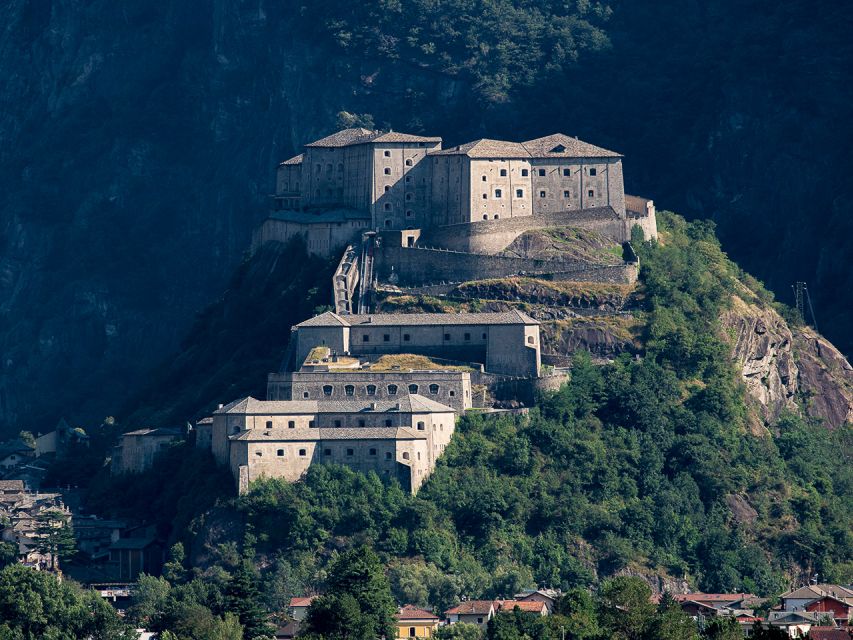
Bard Fortress is not a single quiet castle room with a few display cases. It is a large defensive complex set above the village of Bard, with walls and structures spread across the slope. Its position explains the whole visit: this was a place built to watch, control, and protect movement through the Alps.
That strategic role gives the fortress more weight than a simple photo stop. As you walk through its courtyards and along its passages, you can see how the terrain shaped military planning. The mountain setting was useful for defence, but it also made the fortification demanding to reach and difficult to build.
I would allow enough time to walk without hurrying. The ticket gives you access to the chapel, parade grounds, courtyards, walkways, and the three selected exhibition areas. These open spaces help you understand the structure before you focus on displays and prison rooms.
The fortress is also a good choice if you like architecture. The original walls and military forms are a major part of the experience. You are not looking only at objects removed from their setting. You are seeing them within the defensive system they were meant to serve.
More Fortress and Citadel Tours in Italy
- Lucca: Renaissance City Walls Walking Tour
★ 4.5 · 104 reviews - Pastrengo: Lake Garda Wine & Food Tasting in Historic Fort
★ 4.7 · 73 reviews - San Leo: Fortress Entry Ticket and Cagliostro’s Prison
★ 4.2 · 38 reviews
The panoramic lifts turn arrival into part of the visit
There are two ticket counters. One is at the beginning of the first panoramic lift, and the other is at the top of the medieval village, behind the Church of Bard. You need to exchange your voucher for an entrance ticket at one of these counters.
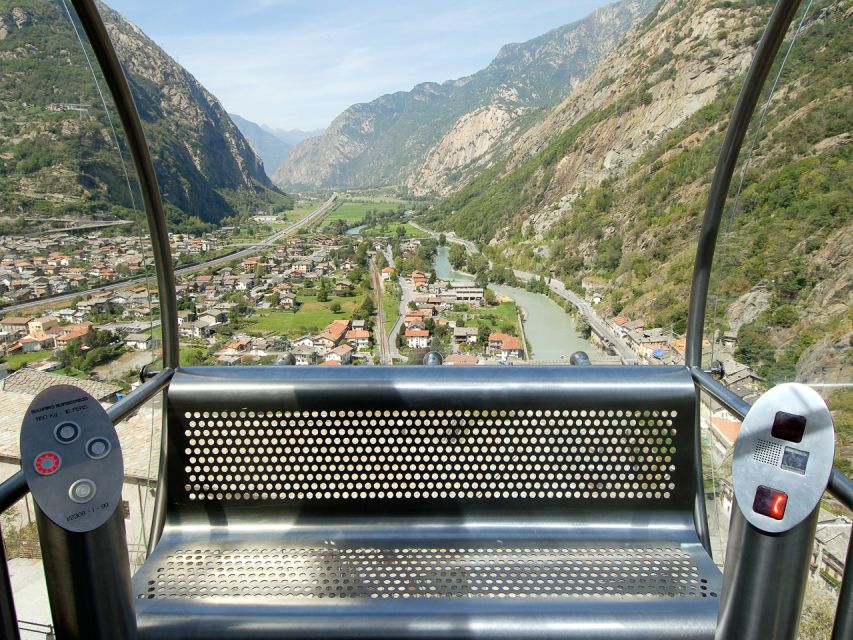
The panoramic lifts provide access through the fortress and reduce the effort of reaching the higher sections. They also give you a chance to look across the Aosta Valley and take in the Alpine scenery before entering the enclosed museum rooms.
I like this arrangement because the lift ride is not just a practical transfer. It helps you grasp the fortress’s position on the rock and the height difference between the village and the defensive complex. If you enjoy photography, keep your camera ready, though the main value is seeing how the fort relates to the surrounding mountains.
The site is wheelchair accessible, which makes the lifts especially useful. Still, the complex includes historic architecture, walkways, and compact prison rooms, so it is sensible to ask at the ticket counter about the most suitable route for your needs.
The Museum of Fortifications traces weapons and strategy
The Museum of Fortifications is the best place to begin if you want the military story. Its first section explains the development of fortresses in the Western Alps through changing weapons and military tactics.
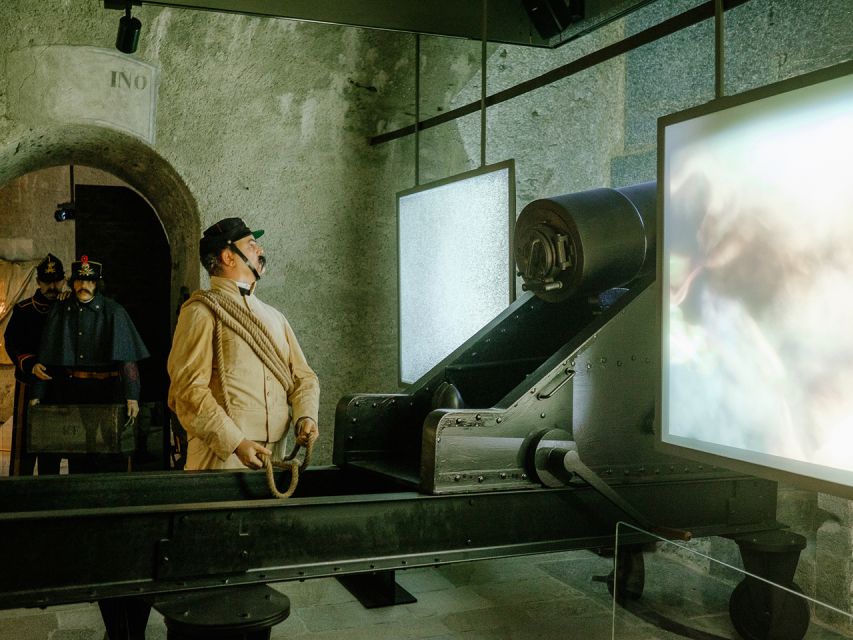
Models show how defensive structures were planned, while film footage and authentic weapons give the subject a physical connection. The focus is not only on walls. It is on the contest between attack and defence: as weapons improved, fortresses had to change their shape, materials, and layout.
This section works well for visitors who want context before exploring the building itself. You can look at Bard’s walls and then consider why they were made so thick, why routes were controlled, and how defensive design responded to new forms of attack.
The second section moves into the late 19th and early 20th centuries. This is where Fort Bard is placed within the wider network of 19th-century fortresses. Scale models and large reconstructions help explain how individual forts worked as part of a larger defensive system.
The reconstructions are useful because military planning can be hard to picture from written labels alone. A model shows relationships between forts, terrain, and lines of movement at a glance. If you have children or teenagers with you, this section may hold their attention better than a room of written explanations.
The final section asks if the Alps should be understood as a boundary. That question gives the museum a broader purpose. A boundary can be a border, a barrier, an obstacle, or a line that brings people together. The display encourages you to think beyond military maps and consider how mountains affect contact between communities.
I appreciate that the museum does not end with a simple statement. It leaves you with something to consider as you continue through the fortress and the valley beyond it.
The Prisons reveal the fortress at human scale
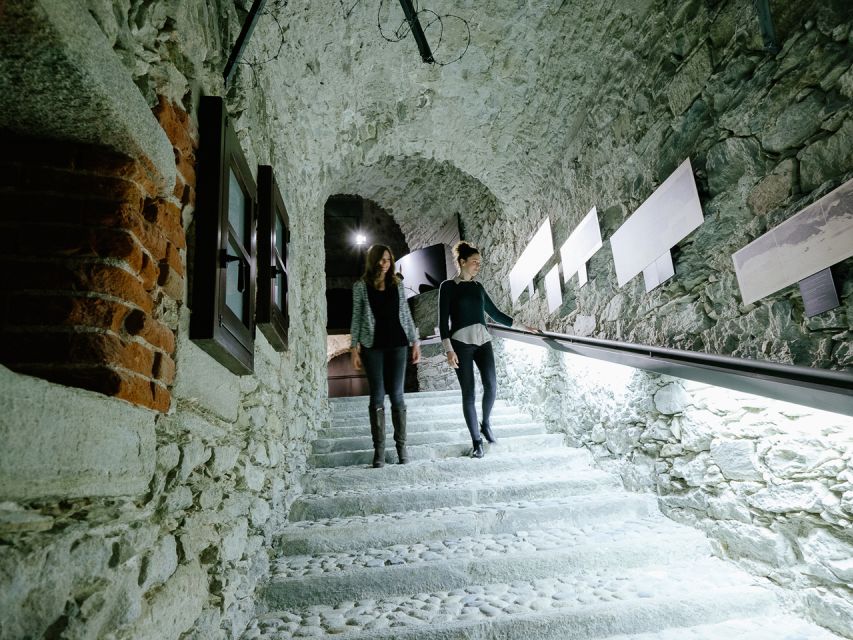
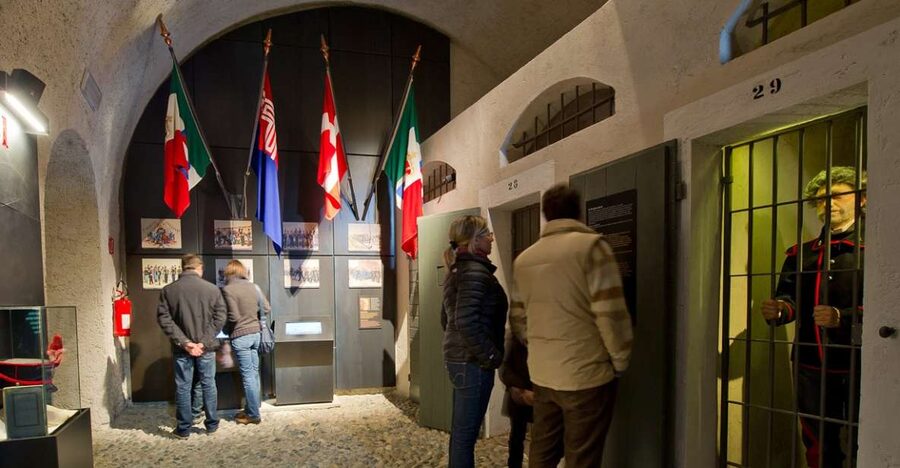
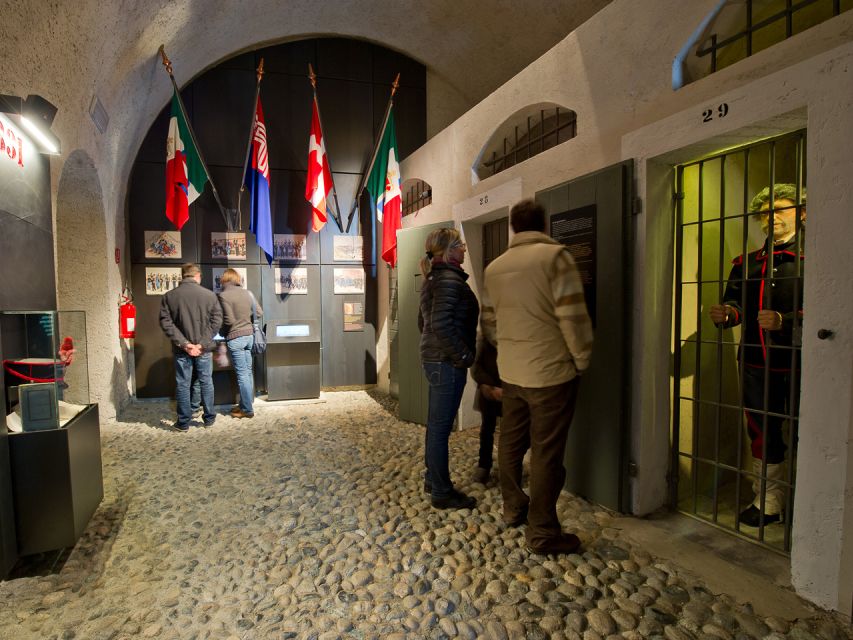
The Prisons are among the most memorable parts of the visit because they shrink the story from armies and fortifications to individual people. There are 24 cells, each roughly 1.3 by 2 metres, arranged along four sections.
These are genuinely small rooms. The narrow scale makes it easier to imagine the physical limits faced by prisoners. The cells are preceded by an entrance gallery dedicated to an illustrated representation of the fortress, so you first see the building as a whole before entering its most confined spaces.
I recommend visiting the Prisons after taking time to understand the fort. Once you know how large and powerful the structure is, the tiny cells create a sharp contrast. The fortress shifts from a grand military work to a place that also held people in restrictive conditions.
Do not expect a long guided explanation in each room. The experience depends on the architecture, the layout, and the information provided through the audio guide. If you like to stop and study each part, the self-guided format lets you set your own pace.
Visitors interested in photography should be mindful of the tight rooms and other people moving through the sections. The narrow cells are more powerful when viewed slowly, not treated as a quick checklist stop.
Same region, a different set of walls:
- Castel Sant’Angelo Entry Ticket & Audioguide
★ 4.4 · 5,472 reviews - Rome: Castel Sant’Angelo Entry Ticket & Digital Audioguide
★ 4.7 · 5,347 reviews - Rome: Castel Sant’Angelo Entry Ticket & Audio App
★ 4.3 · 4,952 reviews - Rome: Castel Sant’Angelo Entry Ticket with Audio guide
★ 4.4 · 3,646 reviews
The Museum of the Alps moves from nature to modern life
The Museum of the Alps changes the subject from defence to the mountain environment. Its first section looks at the main natural and human elements of mountain life. This creates a useful bridge between the fortress and the region around it.
The second section focuses on Alpine civilization. Here, the Alps are presented as a lived-in place rather than an empty backdrop. The museum considers the relationship between people and their surroundings, which helps explain why routes, settlements, work, and defence developed as they did.
The third section examines the changes brought by modernity. Mountains are not frozen in the past, and this part shows how technology and modern life altered the way people relate to them.
I like this museum because it widens the visit. If you choose only the military displays, you may leave thinking of the Alps mainly as a strategic obstacle. The Museum of the Alps adds human and environmental context, making the region easier to understand.
The exhibition is described as a journey from Alpine woods to high altitude. That range gives the museum a clear structure, but you should not expect a live nature walk. It is an indoor exhibition about the mountain environment, Alpine society, and changing life in the high country.
What the audio guide adds, and what it cannot do
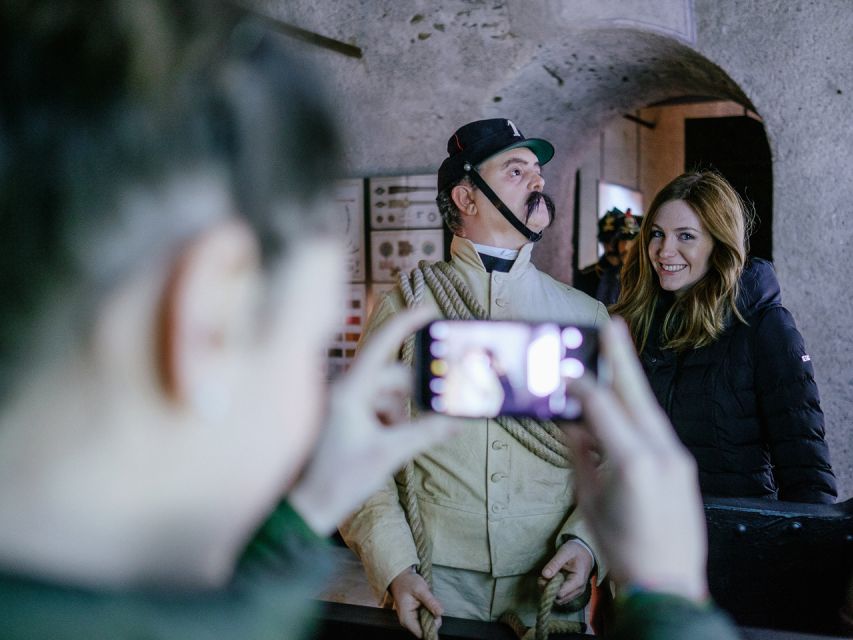
An audio guide is included, but you need to download the Museon app on your smartphone. A QR code is provided at the ticket office. This means you should arrive with a charged phone and enough space to use the app comfortably.
The audio guide covers the history and architecture of the fortress. That is helpful here because the site is large and its purpose is not always obvious from the walls alone. A short explanation can tell you why a courtyard matters or how a section fits into the wider defensive plan.
The app also gives you control. You can pause, move ahead, or spend extra time in the Prisons and museums. This suits independent visitors and families who do not all move at the same speed.
The tradeoff is the absence of a live guide. No guide’s name or scheduled spoken tour is included, and there is no group leader to answer questions as you go. If you enjoy conversation and spontaneous detail, you may find the visit less personal than a guided tour.
For the best experience, download or prepare the app before you start moving through the site, then use the audio guide selectively. You do not need to listen to every section at once. A mix of short listening stops and quiet architectural exploration works well.
What the $17 ticket really covers
At $17 per person, this is a strong value if you plan to use the ticket fully. It is not simply entry to one building. You receive access to the fortress, panoramic lifts, the chapel, parade grounds, courtyards, walkways, and three exhibition spaces of your choice from the permanent museums and art exhibitions open during your visit.
The freedom to choose three spaces matters. You can concentrate on the Prisons, Museum of Fortifications, and Museum of the Alps, which together make a well-rounded visit. If a temporary art exhibition is open, the same access arrangement may let you select it as one of your exhibition spaces, depending on the options available that day.
You also receive a 10 percent discount at the fort bookshop. That will matter most if you want a book about Alpine culture, fortifications, or the history of the site. It is a small extra, but useful for visitors who prefer taking home something more substantial than a postcard.
A live guided tour is not included, so compare this price with your own priorities. You are paying for broad site access and an audio-supported visit, not personal interpretation from a guide. For independent sightseers, the balance is good. For people who want a structured guided narrative, the value depends on how comfortable you are using the app.
The ticket is valid for 90 days, subject to availability and the starting times shown when you check. That long validity gives you flexibility if your plans change. It does not mean the visit itself lasts 90 days. Treat it as a booking validity period.
Who will get the most from this visit
I would recommend Bard Fortress to anyone interested in military architecture, Alpine culture, historic buildings, or mountain scenery. The visit has enough variety to work for a mixed group: one person can focus on weapons and strategy, another can spend more time in the Museum of the Alps, and everyone can enjoy the views and courtyards.
It also suits visitors who like to set their own pace. There is no live guide keeping the group together, and the audio guide lets you choose how much explanation you want.
Families may find the prison cells, lifts, models, and reconstructions especially useful for keeping the visit varied. The fortress is not presented as one long line of text panels. It offers movement, scale, and objects that help explain the story.
You might want to reconsider it if you dislike smartphone-based audio guides or prefer a short, tightly timed attraction. The site has several parts, and the value improves when you give the museums and open areas proper attention.
The independent format also requires a little planning. Exchange your voucher at one of the two counters, download the Museon app using the QR code, and decide which three exhibition spaces matter most to you. The staff may help with practical questions, but the visit itself is yours to manage.
Should you book Bard Fortress?
Book it if you want a substantial Alpine attraction for $17, especially if you enjoy fortifications and museums rather than only scenic viewpoints. The strongest combination is the Museum of Fortifications, the tiny Prisons, and the Museum of the Alps, with the panoramic lifts and original walls tying everything together.
The experience is well organized and broad in scope, but it is not a live-guided tour. You will get the most from it if you arrive ready to use the Museon app and make your own route. For an independent visit with good historical range, striking architecture, and mountain views, Bard Fortress earns its place on an Aosta Valley itinerary.
FAQ
Where is Bard Fortress located?
Bard Fortress is in the Aosta Valley in Italy, above the medieval village of Bard.
How much does admission cost?
The listed price is $17 per person.
How long is the ticket valid?
The ticket is valid for 90 days. You should check availability for the starting times shown when booking.
What is included in the ticket?
Admission includes the fortress, panoramic lifts, the chapel, parade grounds, courtyards, walkways, an audio guide, and access to three exhibition spaces of your choice from the permanent museums and available art exhibitions.
Which museums can I visit?
The available permanent museums include the Museum of the Alps, the Prisons, and the Museum of Fortifications and Frontiers. The ticket allows access to three exhibition spaces of your choice.
Is a live guide included?
No. A guided tour with a live guide is not included. The ticket includes an audio guide accessed through the Museon app.
How do I use the audio guide?
Download the Museon app on your smartphone and use the QR code provided at the ticket office to access the included service.
Is the fortress wheelchair accessible?
Yes, the activity is listed as wheelchair accessible. Panoramic lifts are included in the visit.
More Museum Visits in Italy
- Trieste: Miramare Castle & Museum Entry Ticket & Audio App
★ 4.2 · 213 reviews - Enchanted Castle of Sciacca – Museum Tickets
★ 3.5 · 63 reviews - Milan: Skip-the-line Sforza Castle and Museums Private Tour
★ 4.7 · 7 reviews - Osaka Castle: Museum and Tower Entry Ticket
★ 4.5 · 2,380 reviews
Just added around Italy
- HIKING TOUR: VARENNA, Castle of VEZIO Villa MONASTERO, FIUMELATTE★ 5.0 · 48 reviews
- Walking tour Castel del Monte Unesco site★ 5.0 · 5 reviews
- Castel del Monte & Matera: Private Tour from Bari or Matera★ 5.0 · 5 reviews
- TRANI and Castel Del Monte UNESCO from your accomodation★ 4.5 · 19 reviews
- Castel del Monte: excursion in the Alta Murgia National Park★ 4.5 · 6 reviews
- Castles of Puglia Day Trip from Bari★ 4.5 · 7 reviews
- Tour of the fortifications of Bari: the defenses of the city and their history★ 5.0 · 15 reviews
- Bike Tour into the nature around Castel del Monte★ 5.0 · 7 reviews
Fortress & Citadel Tours, compared.

Full Day Taj Mahal, Agra Fort & Baby Taj Tour from Delhi by Car
Read our review →
Fort Sumter Admission and Self-Guided Tour with Roundtrip Ferry
Read our review →
Carcassonne: Castle and Ramparts Entry Ticket
Read our review →
Charleston: Fort Sumter Entry Ticket with Roundtrip Ferry
Read our review →
Same Day Taj Mahal, Fort & Baby Taj Tour from Delhi by Car
Read our review →
From Delhi: Taj Mahal and Agra Fort Private Sunrise Tour
Read our review →
Sunrise Taj Mahal, Agra Fort & Baby Taj Tour from Delhi by Car
Read our review →
Salzburg: Hohensalzburg Fortress Admission Ticket
Read our review →Browse the lists this tour appears in