
REVIEW · CASTLE ENTRY TICKETS
Rome: Castel Sant’Angelo Entry Ticket with Audio guide
Castel Sant’Angelo is one of Rome’s best surprises: a massive round tomb that became a fortress, a papal refuge, and one of the city’s finest viewpoints. I like the way this visit connects Hadrian’s ancient mausoleum with the dramatic story of the plague of 590 and the Archangel Michael legend. I also like that you can explore at your own speed, with an app-based audio guide rather than a fixed group schedule.
The reserved entry can save real time when the ticket queue is long, especially in warm weather. The main drawback is value: the official admission fee is €16, while this package costs about $31. You are paying for the reservation, digital guide, support, and distribution costs, so the extra charge makes the most sense on a busy day.
Key points to know before you go
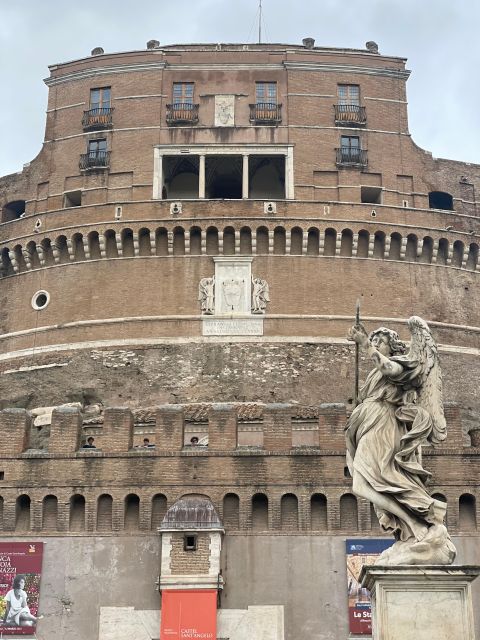
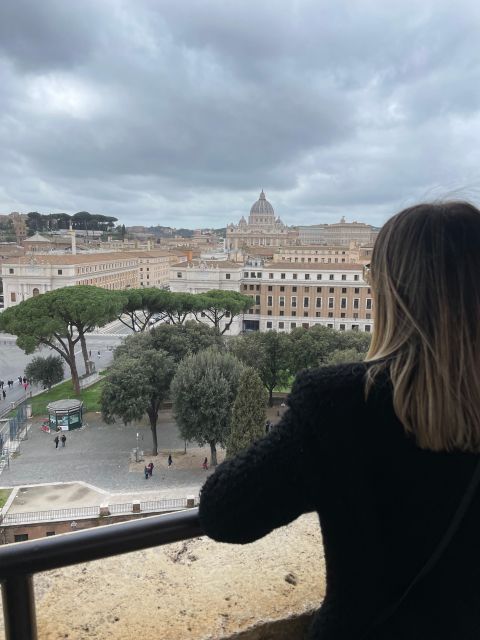
- Climb to the top for the best view: The terrace looks across Rome, the Tiber, Ponte Sant’Angelo, and toward St. Peter’s Basilica.
- See more than a fortress: The route includes Hadrian’s tomb, papal corridors, decorated rooms, and centuries of military and religious history.
- Use your own phone for the audio: Bring charged headphones and download or prepare the app before arriving.
- Queue savings depend on the day: Some visitors save half an hour or more, while others find only a short line.
- Allow two hours at minimum: The official duration is two hours, but visitors who read everything and stop for views may spend three or four hours.
- Expect stairs: The panoramic terrace requires climbing and the site is not suitable for wheelchair users or people with mobility impairments.
Why Castel Sant’Angelo feels different from Rome’s other monuments

Many Roman sights show you one period of history. Castel Sant’Angelo keeps changing as you move through it. It began as the Mausoleum of Hadrian, also called Hadrian’s Mole, then became a fortified stronghold and later a papal residence and refuge.
That change of purpose is the key to enjoying the visit. You are not simply walking through an old palace or looking at a single archaeological ruin. You are following a building that was repeatedly altered to meet the needs of emperors, soldiers, and popes.
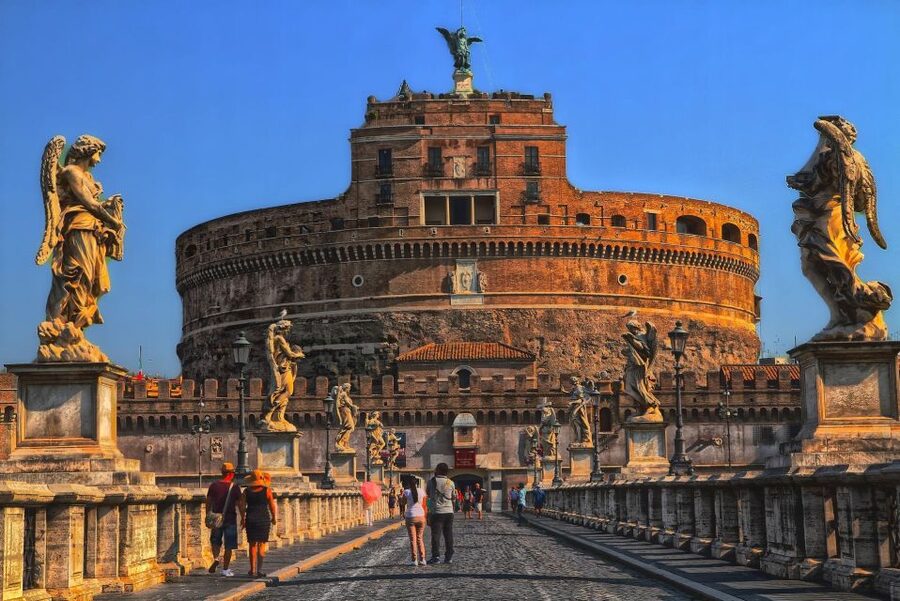
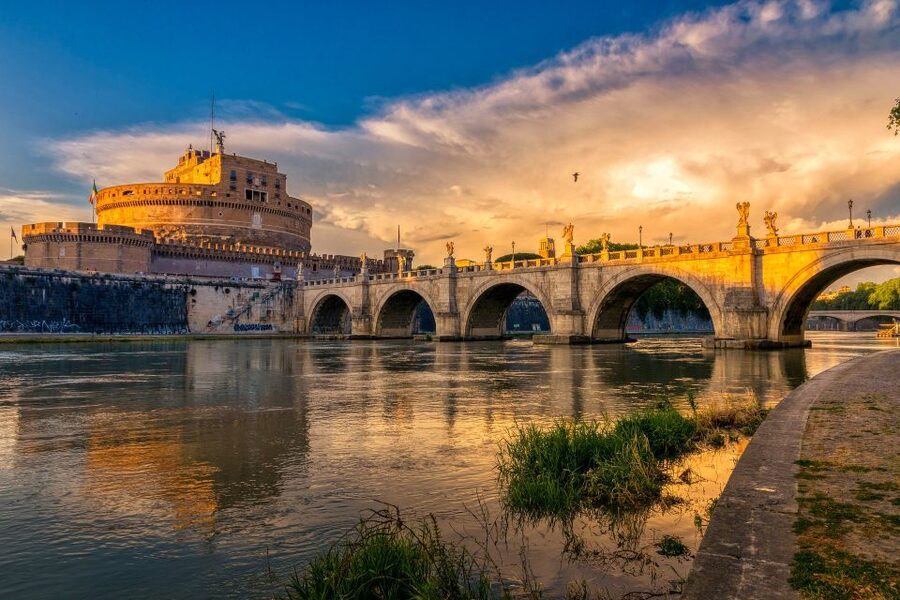
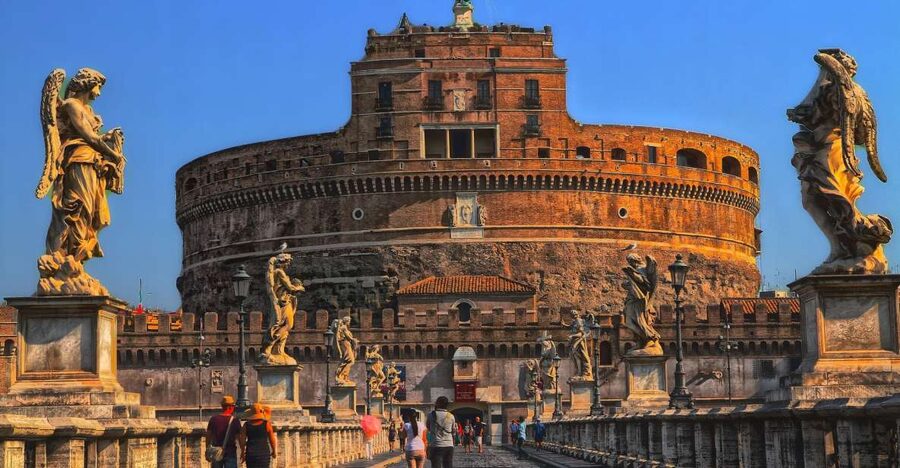
Its position beside the Tiber helps explain its importance. The castle guards the approach to Vatican City, and the grand Ponte Sant’Angelo leads directly toward its entrance. From outside, the building looks severe and defensive. Inside, the route reveals art, rooms, passageways, and views that are easy to miss if you think of it only as a castle.
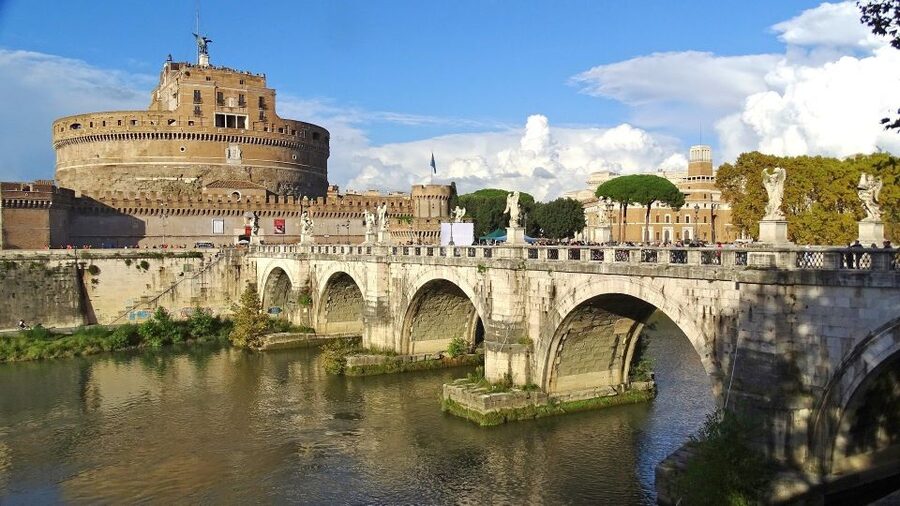
I recommend taking a moment on the bridge before entering. The statues of angels along Ponte Sant’Angelo frame the castle beautifully, and the bridge is one of the best places to photograph the building from below. After your visit, the same view has more meaning because you will understand how the castle controlled this important crossing.
More Castle Entry Tickets in Italy
- Rome: Castel Sant’Angelo Entry Ticket & Digital Audioguide
★ 4.7 · 5,347 reviews - Rome: Castel Sant’Angelo Entry Ticket & Audio App
★ 4.3 · 4,952 reviews - Rome: Castel Sant’Angelo Entrance Ticket with Audioguide
★ 4.4 · 155 reviews
Entering Hadrian’s tomb and the ancient lower levels
The first major idea to keep in mind is that this was built as a tomb for Emperor Hadrian. The original structure was a huge cylindrical mausoleum, designed to project imperial power even after the emperor’s death.
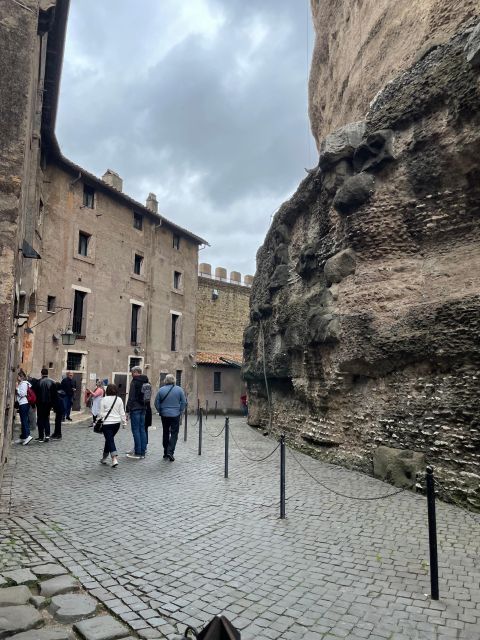
The route does not present the tomb as a perfectly preserved ancient monument. Centuries of rebuilding changed its shape and function. Still, the scale of the original project comes through in the thick walls, curved passages, and heavy construction.
The audio guide helps here, particularly if you are not familiar with Roman burial customs or the building’s early purpose. Without explanation, some spaces can look like plain stone corridors. With context, you can connect the dark lower sections to the monument’s first life as an imperial tomb.
You should not expect every part of the original mausoleum to remain intact. Castel Sant’Angelo is valuable precisely because later additions are layered over the Roman core. It is a place where the changes are part of the story, not an interruption to it.
The route is generally self-directed. You can pause to read the information panels, listen to a section, or move ahead when a room is crowded. That flexibility is one of the strongest reasons to choose the audio option instead of a tightly timed group visit.
Following the papal corridors and fortress route
As you climb higher, the building’s later role becomes clearer. Castel Sant’Angelo was tied closely to the papacy, and its protected passages helped connect the castle with the Vatican area. The Papal Corridor is one of the most memorable features because it shows how the building worked as a refuge as well as a residence.
The castle’s defensive character is also easier to understand from inside. Thick walls, enclosed routes, and changes in level make the place feel practical rather than decorative. It was built to withstand danger, yet the upper rooms contain artwork and signs of courtly life.
This contrast gives the visit its rhythm. One moment you are thinking about an emperor’s burial monument. The next, you are looking at papal rooms or moving through a passage designed for escape and protection.
A live guide in English or Spanish is available with some options. If you select that version, the guide can add a sense of order and answer questions as you go. A guided visit may suit you best if you want the political and religious story explained as one continuous narrative.
The audio guide suits independent visitors better. It lets you linger in a room, skip material that does not interest you, and move at your own pace. The digital guide is available in English, Italian, French, Spanish, German, and Chinese. Several visitors found the instructions easy to follow, but you should still set up the app before reaching the entrance.
The audio guide: useful, but prepare your phone
The audio guide is delivered through your smartphone, not through a set of headphones handed to you at the site. That keeps the arrival simple, but it puts a few tasks in your hands.
Bring:
- A fully charged phone
- Your headphones
- The audio app prepared before arrival
- Enough mobile data or a downloaded guide if the instructions allow it
The guide also includes text, which is useful if you prefer reading or find it hard to hear in crowded rooms. You can listen while standing in a shaded area, then continue when you are ready.
I would not treat the audio guide as essential. Castel Sant’Angelo has information to read along the route, and the signs help you follow the main path. One visitor enjoyed the building more without using the audio at all, simply reading and looking around. The better choice depends on how you like to visit historic sites.
The audio becomes more valuable when you want context rather than just attractive rooms. It explains the building’s changing role and the story behind the name Castel Sant’Angelo. If you tend to walk past plaques without reading them, the guide gives the visit more structure.
More Castle Entry Tickets in Rome
- Castel Gandolfo: Papal Apartments and Secret Garden Entry Ticket
★ 4.0 · 35 reviews - Rome: Castel Sant’Angelo Skip-the-Line Entry Tickets
★ 4.0 · 9 reviews
The Archangel Michael and the plague of 590
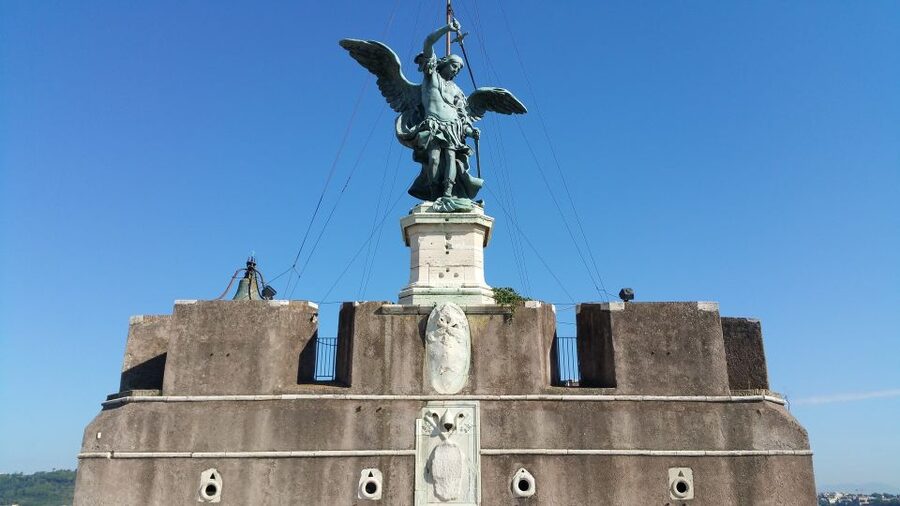
The castle’s modern name comes from a famous legend linked to the plague of 590. According to the story, Archangel Michael appeared above the mausoleum and sheathed his sword, signaling that the plague was ending.
The story is part of the castle’s identity, even though it belongs to religious tradition rather than the original Roman construction. Look for the connection between the legend, the castle’s name, and the statue of the angel above the building.
This is a good example of how Rome adds new meaning to old structures. Hadrian’s tomb was not erased when the building became a fortress, and the fortress was not forgotten when the site gained a strong papal and religious role. Each period added another layer.
The audio guide is especially helpful here because the legend can otherwise feel like a loose tale attached to the building. A short explanation places it within the story of Rome and shows why the site became known by its present name.
Reaching the terrace for Rome’s great views
The terrace is the reward at the end of the climb. From the top, you can look across the Tiber, over the rooftops of Rome, and toward St. Peter’s Basilica. The views are broad rather than enclosed, giving you a clear sense of how close Castel Sant’Angelo is to Vatican City.
You can also photograph Ponte Sant’Angelo from above. The bridge’s straight approach, angel statues, river, and castle make a strong composition, especially when the light is soft.
Several viewing levels offer worthwhile angles before you reach the highest terrace. Do not rush straight upward. Stop along the way to look back through openings and across the city. The view changes as the height increases.
There is a café inside the castle with views toward Vatican City. It can be a pleasant place to pause, but prices are high. A 330-milliliter bottle of cola was reported at €5, so I would treat the café as a convenience and a view stop rather than a budget meal.
The stairs are not a minor detail. The terrace requires climbing, and the site is not suitable for wheelchair users or people with mobility impairments. Large bags, luggage, baby strollers, and baby carriages are not allowed, so plan to arrive with only what you need.
How long to allow and when to visit
The stated duration is two hours, which is enough for a purposeful visit with the main rooms, the audio guide, and the terrace. I would allow closer to three hours if you like to read the signs, take photographs, and stop at the café.
Some visitors have spent four hours inside. That is possible if you explore slowly and make full use of the views. The site rewards patience because the route is not only about reaching the top.
Early morning is a smart choice if you want fewer people and cooler conditions. One early visit had almost no crowd at first, while the entrance became busier later. At 9 a.m., the reserved entry was useful for one visitor who found a queue already forming.
The value of the reservation changes with the season. In February, one visit had no line, so the skip-the-line benefit was limited. On a hot day or during a busy travel period, bypassing the ticket queue can save half an hour and make the $31 price easier to justify.
Punctuality matters. Your ticket and instructions are sent by WhatsApp or email, generally 24 hours before the activity. Check your messages before leaving, since the meeting point can vary by the option you book and access routes may change during the Jubilee restoration work.
Last entry is at 6:30 p.m. Do not plan to arrive near closing and expect a leisurely visit. You need time for entry, security procedures, the climb, and the terrace.
What the $31 price really buys you
The official Castel Sant’Angelo ticket costs €16 for basic admission. At about $31 per person, this experience is not the cheapest way to enter the monument.
The difference covers more than the ticket itself. You receive reserved entry, an optional smartphone audio guide, and operational support through the booking platform. Some versions also include a live guide in English or Spanish, and small-group availability may be offered.
I would pay the extra amount when:
- You are visiting during a busy period
- You dislike waiting in ticket queues
- You want audio commentary in your own language
- You need clear arrival instructions and booking support
- You are building a tight Rome schedule around Vatican City
I would think twice when:
- You are visiting in a quiet month
- You are comfortable buying basic admission directly
- You prefer reading the information on site
- You already have another Rome pass or ticket that includes entry
- You are watching every euro
The strongest value is convenience, not admission alone. If the queue is short, the premium feels substantial. If the line snakes around the entrance on a hot afternoon, reserved entry can be worth much more than the arithmetic difference suggests.
Who will enjoy this visit most
This is a strong choice for first-time visitors who want a major Roman sight without committing to a full guided tour. You get freedom to wander, but the audio guide gives you a clear thread to follow.
It also suits repeat visitors who have passed the castle many times and wondered what was inside. The interior is more varied than the exterior suggests, with ancient remains, papal spaces, art, defensive passages, and several viewing levels.
Photographers will appreciate the terrace and the bridge views. History-minded visitors will get the most from the building’s sequence of uses. Families may enjoy the castle-like setting, though strollers and baby carriages are not allowed and the stairs require care.
This is not the best option if you have limited mobility or dislike climbing. It may also disappoint you if you expect a polished palace with every room fully furnished. Castel Sant’Angelo is more atmospheric and layered than neatly presented.
Should you book Castel Sant’Angelo with the audio guide?
I would book it if you want an easy, self-paced visit near the Vatican and expect queues. The terrace views are excellent, the building has more to see than its fortress exterior suggests, and the audio guide can turn plain corridors into a clear story about emperors, popes, soldiers, and religious legend.
I would skip the audio upgrade if you enjoy exploring with printed signs or prefer complete freedom from your phone. I would also compare the price with direct admission if you are visiting during a quiet season.
The best plan is to arrive early, prepare your audio before entry, wear comfortable shoes, and save time for the terrace. For many Rome itineraries, Castel Sant’Angelo is a satisfying two to three-hour stop, especially when paired with a walk across Ponte Sant’Angelo and onward toward St. Peter’s.
FAQ
How much does the Castel Sant’Angelo experience cost?
The listed price is $31 per person. The official basic admission price is €16, while the higher package price includes reserved entry, optional audio guide services, and operational costs.
How long does the visit take?
The stated duration is two hours. You may spend three or four hours if you explore slowly, read the information, take photographs, and stop at the café.
Is the audio guide included?
The smartphone audio guide is included only if you select the audio guide option. It is available in English, Italian, French, Spanish, German, and Chinese.
Do I need to bring headphones?
Yes. Headphones are not included, so bring your own for the smartphone audio guide.
What should I bring?
Bring your passport or ID card, comfortable shoes, headphones, and a charged smartphone.
Is there a live guide option?
Some booking options include a live guide in English or Spanish. Meeting details may vary according to the option selected.
Can I visit the panoramic terrace?
Yes, the terrace is part of the visit and offers views over Rome, the Tiber, Ponte Sant’Angelo, and toward St. Peter’s Basilica. You must climb stairs to reach it.
Is Castel Sant’Angelo suitable for wheelchair users?
No. The experience is not suitable for wheelchair users or people with mobility impairments.
Are large bags or strollers allowed?
No. Luggage, large bags, baby strollers, and baby carriages are not allowed. Pets, weapons, and sharp objects are also prohibited.
Can I cancel for a refund?
You can cancel up to 24 hours before the activity for a full refund. Check your booking details for the exact meeting point and entry instructions.
More Audio Guides in Rome
- Milan: Sforza Castle Entry Ticket with Digital Audio Guide
★ 4.0 · 2,675 reviews - Lisbon: São Jorge Castle E-Ticket and Audio Guide
★ 4.3 · 2,182 reviews - Neuschwanstein Castle Skip-the-Line Ticket with Audio Guide
★ 4.4 · 1,388 reviews - Füssen: Neuschwanstein Castle Express Ticket and Audio Guide
★ 3.9 · 788 reviews
More Self-Guided Tours in Rome
- Rome: Castel Sant’ Angelo Ticket and Audio Guide
★ 4.1 · 524 reviews - Rome: Castel Sant’Angelo Ticket & Audio Guide
★ 4.1 · 236 reviews - Rome: Skip-the-Line Castel Sant’Angelo Tickets & Audio Guide
★ 4.9 · 16 reviews - Granada: Alhambra Entry Ticket with Audio Guide
★ 4.1 · 5,950 reviews
Just added around Rome
- St. Peter’s Basilica & Castel Sant’Angelo Entry★ 4.1 · 8 reviews
- St. Angel’s Castle: 2-Hour Private Tour★ 5.0 · 9 reviews
- Rome: Skip-the-Line Castel Sant’Angelo Tickets & Audio Guide★ 4.9 · 16 reviews
- Rome: Vatican, St Peter’s Sq & Castel Sant’Angelo PhotoShoot★ 5.0 · 14 reviews
- Rome: Vatican and Castel Sant’Angelo Private Photoshoot★ 5.0 · 13 reviews
- Rome: Passetto di Borgo Tour & Castel Sant’Angelo Ticket★ 4.4 · 86 reviews
- Rome Pre-Reserved Shared or Private Tour Castel Sant’Angelo★ 4.6 · 68 reviews
- Rome: Castle Sant’Angelo Ticket w/ audioguide option★ 3.6 · 25 reviews
Castle Entry Tickets, compared.


Granada: Alhambra and Nasrid Palaces Entry Ticket
Read our review →
Edinburgh Castle: Guided Walking Tour with Entry Ticket
Read our review →
Prague: Castle Tour with Local Guide and Entry Ticket
Read our review →
Prague Castle 2.5-Hour Tour Including Admission Ticket
Read our review →

Granada: Alhambra Entry Ticket with Audio Guide
Read our review →Edinburgh Castle: Guided Walking Tour with Entry Ticket
Read our review →Browse the lists this tour appears in