
REVIEW · HISTORICAL TOURS
Tour of the fortifications of Bari: the defenses of the city and their history
Bari’s old city makes more sense when you follow its defenses. This 2.5-hour walk links the Norman-Swabian Castle, medieval wall, seafront bastions, and old gates into one clear story, ending at the lively Piazza del Ferrarese.
I like two things right away: the castle entrance is included, and the route pairs major monuments with everyday Bari life, especially the women shaping orecchiette by hand on Strada delle Orecchiette. The main drawback is that several stops are exterior visits, so this is more a city-history walk than a series of full museum entries.
Key points
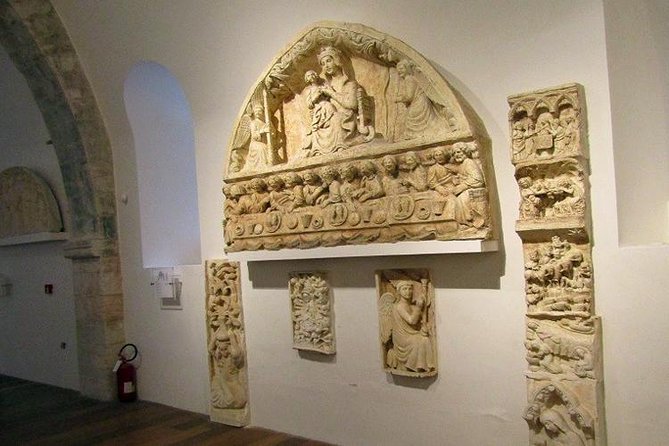
- The Norman-Swabian Castle is the main paid sight, including the Gipsoteca with 130 Apulian Romanesque models.
- The walk explains Bari’s defenses as a changing city plan, from megalithic walls to Murat’s grid of newer streets.
- Strada delle Orecchiette adds a living food tradition between the formal monuments.
- The wall walk on Via Venezia gives broad views across Bari and its remaining bastions.
- The route suits a short stay or cruise visit, since it covers central Bari in about two and a half hours.
- Guides have included Ana, Rosella, Francesca, Fabio, and Luana, with Spanish-language support available on some departures.
Why Bari’s walls are the right way to read the city
Bari Vecchia can feel like a maze if you simply wander from church to church. This route gives you a useful thread: the city first needed walls for protection, then gradually outgrew them. By the end, you can see how the old fortified center connects with the more regular Muratian part of Bari.
The story begins with the early stone defenses near the Bastion of Santa Scolastica. From there, the walk moves through the medieval city and toward the waterfront. You are not just checking off buildings. You are watching Bari change from a defended settlement into a modern port city.
I especially like this approach for a first visit. It gives the old town a shape. You learn why the castle sits where it does, why the wall offers such good views, and why Piazza del Ferrarese marks a natural meeting point between Bari Vecchia and the newer city.
The route is also practical. It starts at Piazza Federico II di Svevia, beside the castle, and finishes at Piazza del Ferrarese. You do not need to return to the starting point, which is useful if you plan to continue toward the waterfront or the newer shopping streets.
More History Tours in Italy:
- Lake Garda: Historic Castle Cruise with Wine Tasting
★ 4.5 · 241 reviews - Pastrengo: Lake Garda Wine & Food Tasting in Historic Fort
★ 4.7 · 73 reviews - Andria: Castel del Monte Private Historical Tour
★ 4.9 · 33 reviews
Inside the Norman-Swabian Castle and its 130 Romanesque models
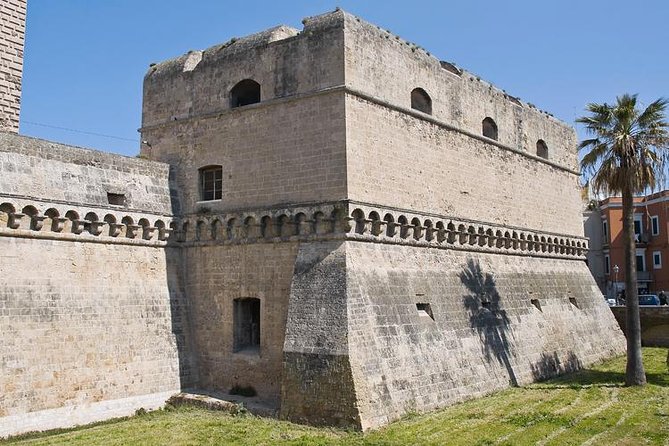
The first hour is devoted to the Castello Normanno Svevo, the only stop with an included admission ticket. That makes the castle the backbone of the experience, rather than a quick look from outside.
The castle carries both Norman and Swabian associations, and its position helps explain Bari’s defensive history. Your guide uses the building to set up the wider story of walls, bastions, gateways, and military control. The visit is not simply an architectural photo stop.
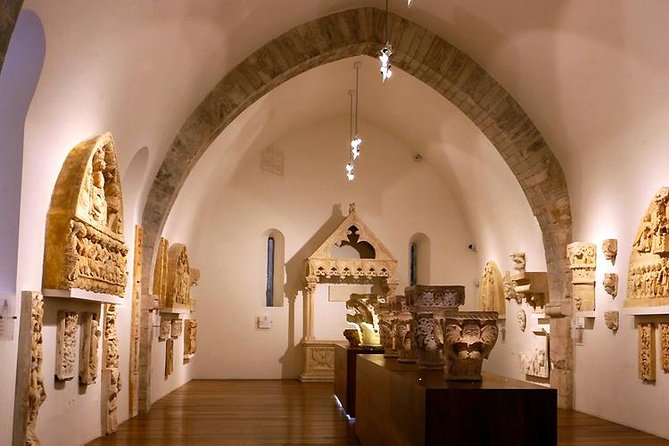
Inside, the Gipsoteca adds an unusual layer. Its collection contains 130 models of Apulian Romanesque details, including capitals, shelves, statues, and other carved architectural pieces. These were reproduced in 1911 by sculptors Pasquale Duretti and Mario Sabatelli.
That matters because many visitors see Bari’s churches from the outside and admire their pale stone without noticing the smaller carved details. The Gipsoteca lets you look closely at the artistic language of Apulian Romanesque architecture. You get a better sense of the forms and decorations that appear across the region.
Allow yourself to slow down here. The castle portion is listed at one hour, and it deserves more attention than a rushed pass through the courtyard. If you are mainly interested in food, street scenes, or sea views, this opening section may feel more academic. If you want the historical framework, it is the strongest part of the tour.
Strada delle Orecchiette brings the story down to street level
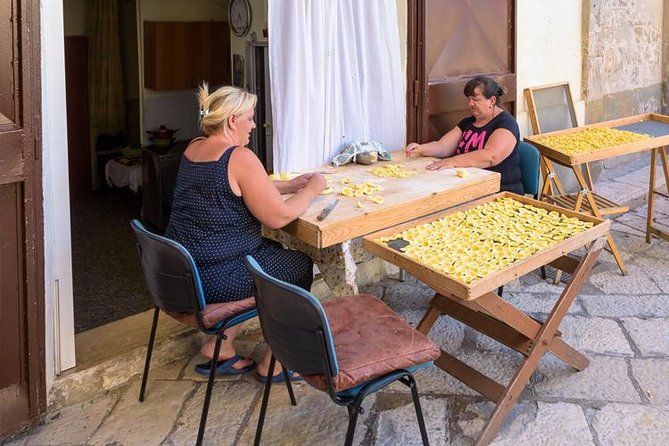
After leaving the castle, the route reaches the alley of Arco Basso, widely associated with Bari’s orecchiette makers. Here, local women sit along the lane and shape the small ear-shaped pasta with fast, practiced movements.
This fifteen-minute stop changes the pace nicely. You move from fortifications and carved stone to a working food tradition that is still visible in the old city. The pasta is not presented as a formal cooking class. You watch the makers at work and hear how orecchiette fits into Bari’s daily culture.
I like this stop because it keeps the walk from becoming a long chain of dates and military names. It also shows why a guide can be useful in Bari Vecchia. Without context, Arco Basso is simply a narrow lane. With an explanation, it becomes part of the city’s identity.
Keep your expectations realistic. The scheduled time is only fifteen minutes, so this is a short observation stop, not a meal or hands-on workshop. If you want to buy food or spend more time with the pasta makers, you will likely need to return independently after the tour.
San Sabino Cathedral is an exterior lesson in Bari’s Romanesque style
The next stop is the Cathedral of San Sabino, where the guide discusses the building’s history and architecture from outside. The visit is scheduled for about fifteen minutes.
That limitation is important. You should not book this experience expecting a full interior tour of the cathedral. Instead, you will receive an explanation of the exterior and its place in the old city.
The cathedral helps balance the castle visit. The castle shows Bari’s defensive needs, while San Sabino shows the religious architecture that shaped the medieval center. Its stonework and proportions make more sense when you have already heard about Apulian Romanesque details in the Gipsoteca.
This is also a good point to listen for how the city’s religious buildings and defenses occupied the same compact area. Bari Vecchia was not arranged as a set of isolated attractions. Churches, homes, lanes, and military structures grew together inside a confined urban space.
Because the stop is short, the quality of the explanation matters. Guides such as Rosella, Francesca, Ana, and Luana have been praised for making the historical material friendly and easy to follow. The guide roster can change, but the route clearly depends on an engaging storyteller to keep the facts from becoming heavy.
More City Tours in Italy:
- Lucca: Renaissance City Walls Walking Tour
★ 4.5 · 104 reviews - Potsdam: City and Castles Tour
★ 4.7 · 3,721 reviews - Quebec City: Guided Tour of Fairmont Le Château Frontenac
★ 4.7 · 3,027 reviews - Dublin to Rock of Cashel, Cork City & Blarney Castle Guided Tour
★ 4.5 · 2,536 reviews
San Nicola and the old Byzantine citadel
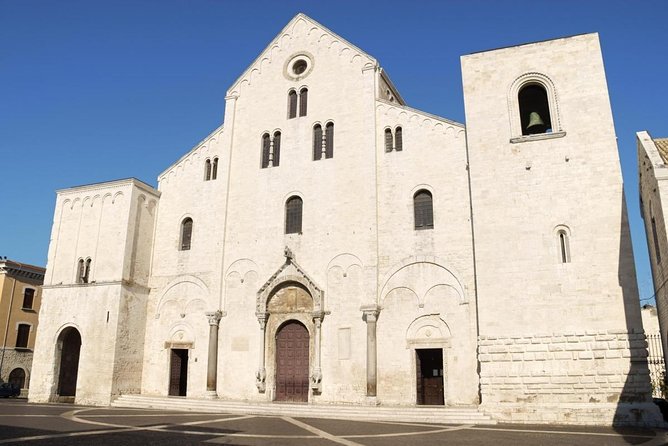
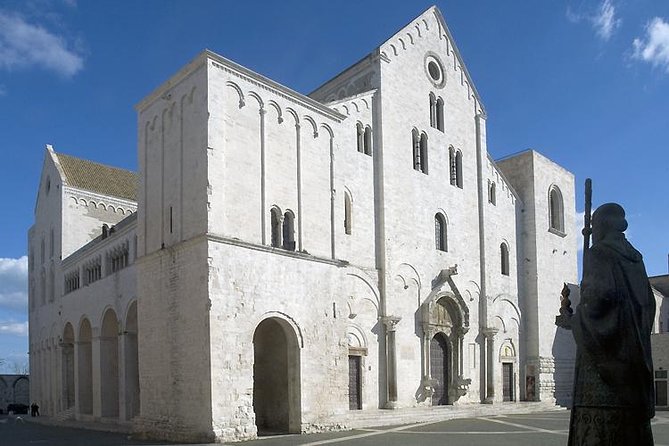
The walk then reaches the Basilica of San Nicola, with the basilica viewed from outside. The guide explains the Byzantine citadel and the story of Saint Nicholas, whose presence gives Bari one of its strongest religious connections beyond Italy.
Again, this is an exterior stop, scheduled for around twenty minutes. You are there to understand the site, its role in the old city, and its connection with Bari’s medieval identity. Entrance to the basilica is not listed as part of this tour.
That makes this stop especially useful for a first orientation. The Basilica of San Nicola is one of the key places in Bari Vecchia, and hearing its background before visiting independently can make a later interior visit more rewarding.
The guide also connects the basilica with the wider defensive story. The old city was shaped by both faith and security. The Byzantine citadel, the surrounding walls, and the major churches were all part of a compact urban center whose importance reached well beyond Bari.
If you have limited time, this outside explanation gives you a sensible overview. If San Nicola is a personal priority, check your remaining schedule after the tour and return for a separate interior visit.
Via Venezia puts the surviving wall under your feet
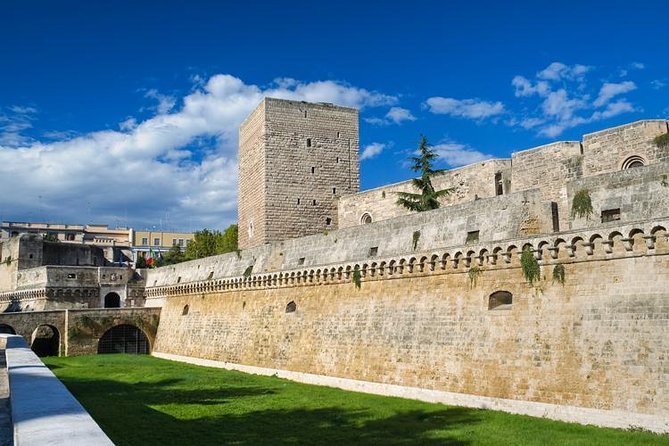
The route continues along the wall of Bari Vecchia on Via Venezia. This is one of the most satisfying parts for anyone who wants to understand the city’s physical layout.
From the wall, you get a broader view of Bari than you can from the narrow lanes. You can see portions of the old defenses, the bastions, and the relationship between the historic center and the waterfront. The walk also brings the opening story about the city’s walls back into focus.
The defense system is not presented as a single finished object. You see traces from different periods and hear how the city changed over time. The early megalithic walls near Santa Scolastica, the medieval fortifications, and later changes all become parts of one long development.
This is where the tour’s theme earns its keep. A regular old-town walk might point out the same wall as a scenic viewpoint. This route asks why it was built, what it protected, and what happened when Bari no longer needed to remain confined behind it.
The wall is also one of the better places for photographs. You get open views rather than the close stone surfaces of the lanes. Wear shoes that are comfortable for walking on historic paving, and bring sun protection in bright weather. The walk requires good weather, and the open sections will feel more exposed than the castle rooms.
Fortino Sant’Antonio and the last great look at the defenses
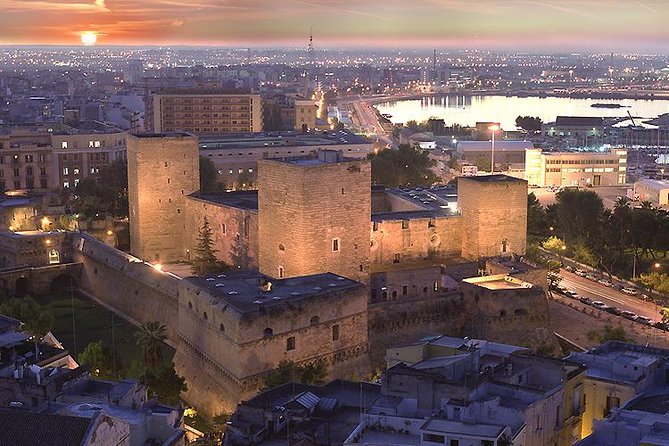
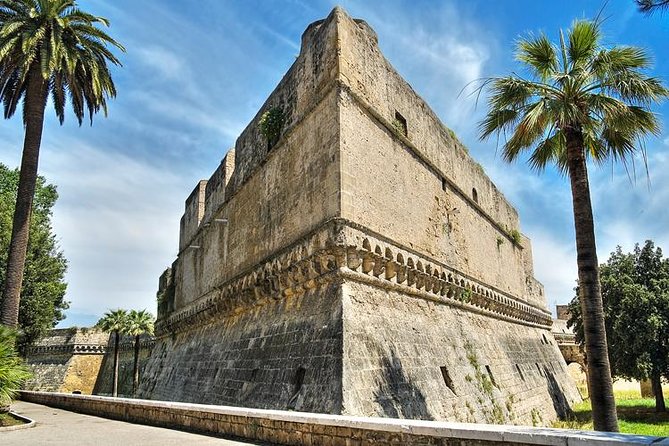
Fortino Sant’Antonio sits in front of the old port and is described as one of the four ramparts that marked Bari’s walls until the nineteenth century. The scheduled stop lasts about fifteen minutes.
Its location gives the fortino real visual value. From this high point in the old city, you can look toward traces of the medieval walls behind the Imperatore Augusto waterfront. You can also compare those older defenses with the waterfront profile dating from the first half of the twentieth century.
This is a compact lesson in urban change. Bari did not simply preserve its medieval outline. The city opened outward, removed sections of its defenses, and developed new streets and waterfront spaces. At Fortino Sant’Antonio, those layers are easier to read because the view brings them together.
The stop is short, but it carries a lot of meaning. I would pay close attention to the guide’s orientation here, since the surrounding waterfront can otherwise look like a pleasant but confusing mix of old stone and later construction.
Piazza del Ferrarese explains Murat’s Bari
The tour ends at Piazza del Ferrarese, a natural place to finish because it connects the historic center with the Muratian part of Bari.
The square was once known as Piazzetta d’Armi and was created where the Sea Gate stood. That detail ties the ending back to the opening theme. The city’s defenses were not just walls on a map. Gates controlled movement, and the loss of those gates helped open the old center toward a new urban plan.
The guide also explains how Murat’s work began the chessboard pattern of the newer city. This is one of the most useful urban-planning points on the route. Bari’s old lanes can feel irregular and tightly packed, while the newer area follows a much more regular layout.
Piazza del Ferrarese is now a lively connection point between the two parts of town. It is a practical ending, too. You finish near the waterfront and can continue exploring without retracing the route to the castle.
The guide makes the difference
This experience covers a lot of history in a short time. The guide needs to explain military changes, church architecture, Saint Nicholas, local food, and urban planning without turning the walk into a lecture.
The people associated with this route include Ana, Rosella, Francesca, Fabio, and Luana. Spanish-language guiding has been available on some departures, including a format where one guide explains the material and another helps translate. Italian is also part of the experience, depending on the guide and group.
The strongest praise has focused on warmth, humor, and clear explanations. Francesca has been noted for handling a group of twelve with humor and cultural detail. Fabio has been associated with the fortifications-focused version of the route, while Ana, Rosella, and Luana have also led city walks connected with the same local team.
Do not assume a particular guide unless your booking confirms one. Still, the range of names gives you a sense of the local staff behind the experience. The group can contain up to 30 people, so the walk is not a private tour. A group of that size may make narrow lanes and exterior explanations feel less personal, though the route remains manageable for most people.
Is $53.36 a fair price?
At $53.36 per person, the price is higher than a simple free walking tour, but this experience includes the castle admission and a full two-and-a-half-hour guided route.
The value depends on what you want. If you plan to visit the Norman-Swabian Castle anyway, the included ticket removes one separate cost and gives the building a clear historical frame. You also get the Gipsoteca, the wall walk, the fortino, and the food-focused stop in one outing.
The price is less compelling if you want extensive interior access to Bari’s churches. San Sabino and San Nicola are exterior visits here, and the orecchiette stop is brief. You are paying for interpretation and route design rather than a long list of admissions.
For a first visit, especially a short one, I think the price can make sense. The route covers the essential old city and gives you a coherent story instead of scattered facts. If you are staying several days and enjoy exploring at your own pace, you may prefer to visit the castle independently and use the saved time for longer church visits.
Who should book this Bari fortifications walk?
I would choose this tour if you want to understand how Bari was built and rebuilt. It suits visitors who like architecture, city planning, medieval history, and local traditions in equal measure.
It is also a smart choice for a cruise stop. One Spanish-language comment specifically describes the route as useful when you have little time, and the schedule fits that need. You start near the castle and finish at Piazza del Ferrarese, so the route is efficient rather than circular.
Families and mixed-interest groups may also find the balance helpful. The castle and churches provide the history, while the orecchiette makers and waterfront views add lighter moments. The tour is open to service animals, is near public transportation, and most people can participate.
I would hesitate if you need a fully accessible route, a private guide, or long interior visits at every church. The information provided says most people can participate, but it does not give detailed information about steps, surfaces, or wheelchair access. Ask before booking if that matters to you.
The tour requires good weather and a minimum number of participants. If poor weather or low enrollment cancels it, you can receive a different date or a full refund. You can also cancel for a full refund up to 24 hours before the start time. Changes or cancellations inside that 24-hour window are not accepted.
Should you book it?
Book this walk if you want Bari’s old town to feel legible by the time you leave. The castle, Gipsoteca, orecchiette lane, cathedral, Basilica of San Nicola, medieval wall, Fortino Sant’Antonio, and Piazza del Ferrarese create a well-shaped route rather than a random list of sights.
Skip it if your main goal is shopping, a cooking lesson, or full access to church interiors. For most first-time visitors, though, the mix is strong. You get one included admission, a clear account of Bari’s defenses, open waterfront views, and a glimpse of pasta making that feels tied to the neighborhood rather than added as a separate show.
FAQ
How long does the tour last?
The tour lasts approximately 2 hours and 30 minutes.
Where does the tour begin?
It begins at Piazza Federico II di Svevia, 70, 70122 Bari BA, Italy.
Where does the tour end?
The tour ends at Piazza del Ferrarese, near the excavation of Piazza del Ferrarese.
Is admission to the Norman-Swabian Castle included?
Yes. The price includes admission to the Norman-Swabian Castle and its Gipsoteca.
What can you see in the Gipsoteca?
The Gipsoteca contains 130 models of Apulian Romanesque works, including capitals, shelves, statues, and architectural details reproduced in 1911 by Pasquale Duretti and Mario Sabatelli.
Is the Basilica of San Nicola visited inside?
No. The listed visit covers the history of the Byzantine citadel and Saint Nicholas, with an exterior view of the basilica.
Is San Sabino Cathedral visited inside?
No. The scheduled stop covers the cathedral’s exterior, history, and architecture.
How many people can join the tour?
The tour can have a maximum of 30 participants.
Can I cancel for a full refund?
Yes. You can cancel at least 24 hours before the local start time for a full refund. Cancellations or changes made less than 24 hours before the start time are not accepted.
Just added around Italy
- HIKING TOUR: VARENNA, Castle of VEZIO Villa MONASTERO, FIUMELATTE★ 5.0 · 48 reviews
- Walking tour Castel del Monte Unesco site★ 5.0 · 5 reviews
- Castel del Monte & Matera: Private Tour from Bari or Matera★ 5.0 · 5 reviews
- TRANI and Castel Del Monte UNESCO from your accomodation★ 4.5 · 19 reviews
- Castel del Monte: excursion in the Alta Murgia National Park★ 4.5 · 6 reviews
- Castles of Puglia Day Trip from Bari★ 4.5 · 7 reviews
- Bike Tour into the nature around Castel del Monte★ 5.0 · 7 reviews
- Puglia Full-Day Tour: Bari, Trulli of Alberobello, Castel del Monte and Sassi of Matera★ 4.0 · 10 reviews
Historical Tours, compared.
Edinburgh: Edinburgh Castle Guided History Tour with Tickets
Read our review →
Charleston historical walking tour with a Professor of History at The Citadel
Read our review →
Buda Castle District Dark History, Legends and Vampire Night Tour
Read our review →
Luxembourg: Nature, History and Castles Full-Day Tour
Read our review →
Dublin to Cork, Blarney Castle & Cóbh Heritage Centre by train
Read our review →
Historic Krakow : Old Town & Wawel Castle Walking tour
Read our review →
Private Heritage Walking Tour in Jaisalmer Fort and Old Bazaar
Read our review →
Lake Garda: Historic Castle Cruise with Wine Tasting
Read our review →Browse the lists this tour appears in