
REVIEW · CASTLE ENTRY TICKETS
Rome: Castel Sant’Angelo Entry Ticket & Audio App
Castel Sant’Angelo is one of Rome’s best places to connect ancient Rome with the age of popes. You move through Hadrian’s former mausoleum, a massive round building later converted into a fortress, prison, and papal refuge, then climb toward terraces overlooking St. Peter’s Basilica.
I like the freedom to set your own pace, and I like that the ticket can save you from a long ticket-office line. The terrace views are the main prize, but the audio app can be less polished than a live guide, and you’ll need to download it before arrival.
Key points to know
- Hadrian’s tomb became a papal fortress: The castle began as Emperor Hadrian’s mausoleum in the second century AD before the Papal State reshaped it for defense.
- Five floors tell several stories: Expect ancient Roman remains, Renaissance decoration, military displays, prison spaces, and papal apartments.
- The upper terrace is the highlight: You get broad views over Rome, with St. Peter’s Basilica especially impressive at sunset or after dark.
- The ticket is self-guided: Entry is included, but there is no live guide. The audio content comes through a smartphone app.
- Allow time for the climb: The route includes stairs and rising passageways, though the activity is listed as wheelchair accessible.
- Compare the price: The listed activity price is $23 per person, while the stated standard admission is €16, so the convenience may cost more than buying direct.
Why Castel Sant’Angelo feels unlike Rome’s other monuments
Many Roman sights are ruins, churches, or palaces with one main identity. Castel Sant’Angelo keeps changing character as you walk through it. It began as a monumental tomb for Emperor Hadrian, was later fortified, became a papal stronghold, held prisoners, and still carries the look of a military machine.
That layered past gives the visit its appeal. You are not simply looking at old stone. You are following the practical changes that kept the building useful for centuries.
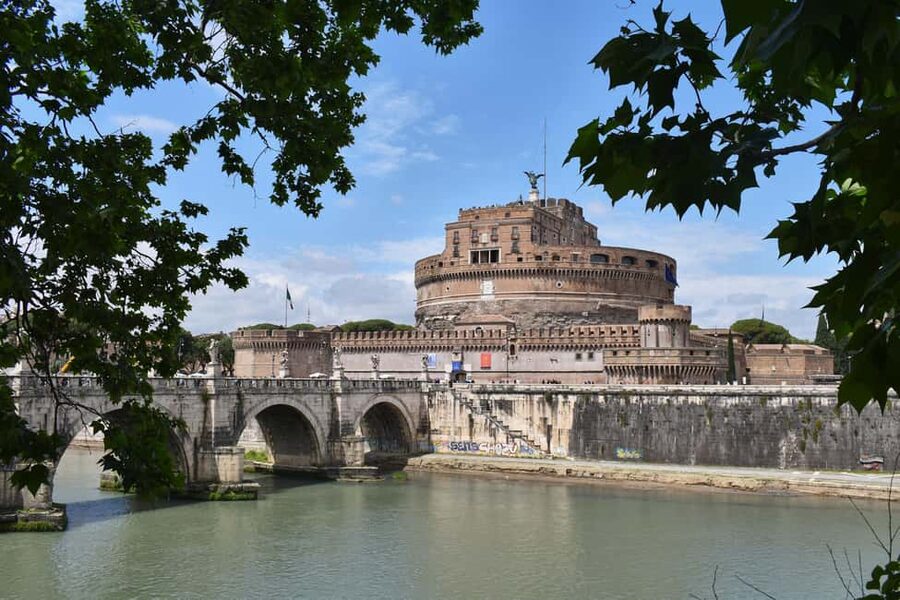
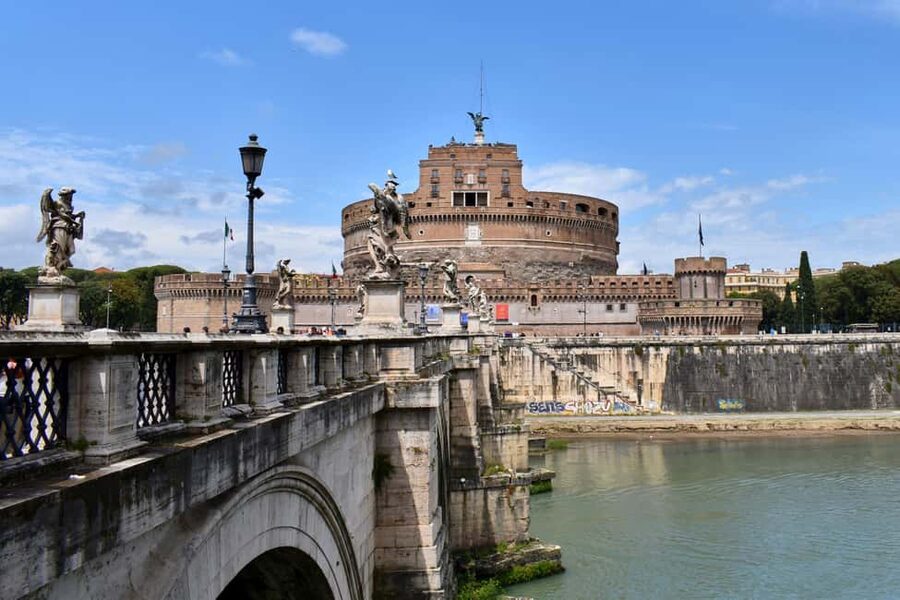
The castle sits in Parco Adriano beside the Tiber, at Lungotevere Castello 50. From the outside, its great cylindrical shape is hard to miss. The broad base and thick walls make more sense once you know the original purpose: this was built as a mausoleum between 135 and 139 AD.
The famous angel statue on top connects to the building’s later Christian identity. The castle’s name refers to the story of the archangel Michael appearing above the fortress during a plague. That story is one of the details the audio material helps place in context.
More Castle Entry Tickets in Italy
- Rome: Castel Sant’Angelo Entry Ticket & Digital Audioguide
★ 4.7 · 5,347 reviews - Rome: Castel Sant’Angelo Entry Ticket with Audio guide
★ 4.4 · 3,646 reviews - Rome: Castel Sant’Angelo Entrance Ticket with Audioguide
★ 4.4 · 155 reviews
Entering with the online ticket
The meeting point is the main entrance at Lungotevere Castello, 50. The ticket arrives after booking, and you show the official ticket on your phone for entry.
The main practical benefit is avoiding the ticket-office queue. That matters most at busy times, when the line for ordinary admission can stretch well beyond the entrance. At quieter times, the saving may be modest. One useful way to think about the $23 price is that you are paying for convenience and the audio app, not only for admission.
The stated standard adult ticket is €16. Reduced admission is €2 for EU citizens aged 18 to 25, and entry is free for children under 18 and other eligible people. If you qualify for one of those prices, buying directly from the official source may offer better value. One person who compared prices found the official website cheaper.
Allow a little extra time to find the correct queue. The ticket system is not always obvious, and there may be only a sign with a QR code rather than a representative waiting outside. A few people also had trouble locating the right part of the entrance because of unclear address directions.
You can choose an available timeslot, and the ticket is valid for one day. The exact starting options depend on availability. This is not a fixed, timed walking tour, so once inside you can take your time rather than keeping up with a group.
The ancient mausoleum beneath the fortress
The earliest story here belongs to Hadrian, the emperor known for strengthening and organizing the Roman Empire. His mausoleum was intended as a grand family tomb, and its huge circular form was designed to impress long before it became a defensive building.
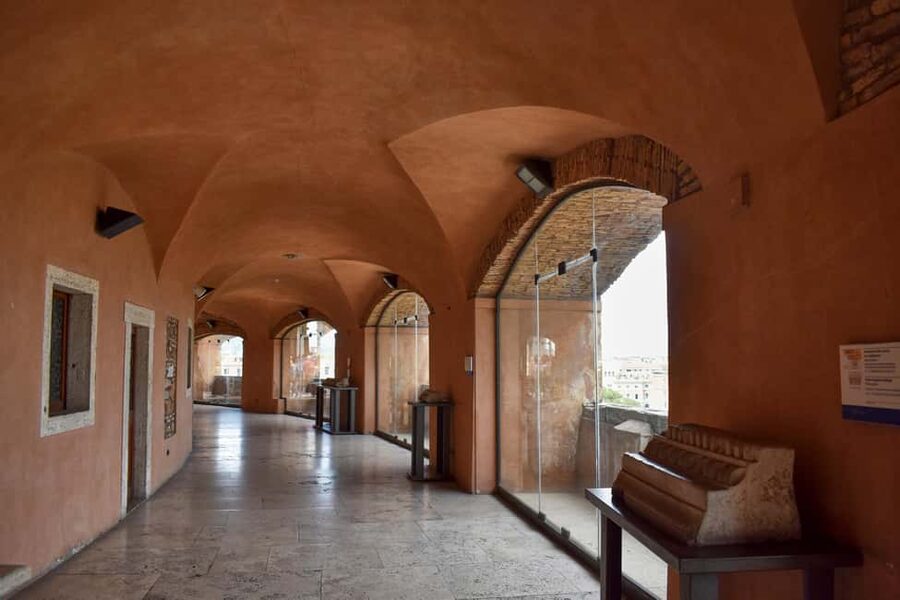
As you work through the lower and middle sections, notice how much of the structure feels heavy and enclosed. Thick masonry, curved corridors, and controlled access make the building’s military future easy to understand.
The castle’s ancient foundation is only part of what you see. Later generations adapted the building instead of replacing it. That is why the visit can feel like a vertical timeline, with Roman engineering below, fortified routes through the middle, and decorated papal rooms above.
The audio app is useful here because the building does not always explain itself clearly. Without context, a curved passage may look like another old corridor. With context, it becomes part of the route between a tomb, a fortress, and a refuge.
Weapons, walls, and the papal escape route
The Papal State turned Castel Sant’Angelo into a major defensive structure from the 14th century onward. Popes could use it for protection when Rome became dangerous, and the castle’s position near the Vatican made that protection especially important.
A vast collection of weapons shows how seriously the fortress was treated. The displays are not just decorative military objects. They help you understand that this was a working stronghold, designed to resist attack and control movement through the city.
Look for the fortified character in the route itself. You pass through spaces that feel practical rather than ceremonial, then reach areas where the popes lived with far more comfort. That contrast is one of the strongest parts of the visit.
The castle’s connection with the Vatican also helps explain its place in Rome’s story. St. Peter’s Basilica is visible from the upper levels, and the relationship between the fortress and the Vatican becomes clear when you look across the city.
More Castle Entry Tickets in Rome
- Castel Gandolfo: Papal Apartments and Secret Garden Entry Ticket
★ 4.0 · 35 reviews - Rome: Castel Sant’Angelo Skip-the-Line Entry Tickets
★ 4.0 · 9 reviews
Renaissance rooms and papal comfort
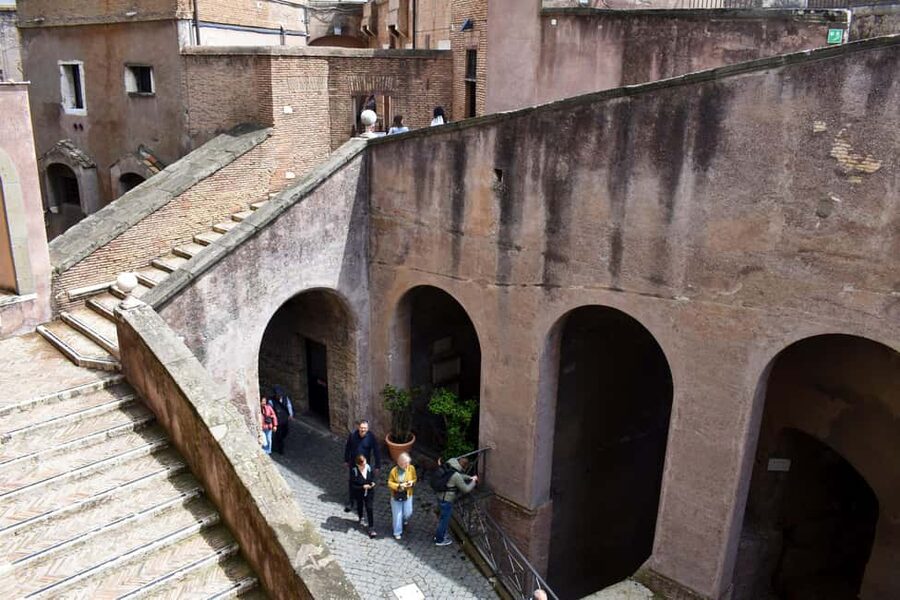
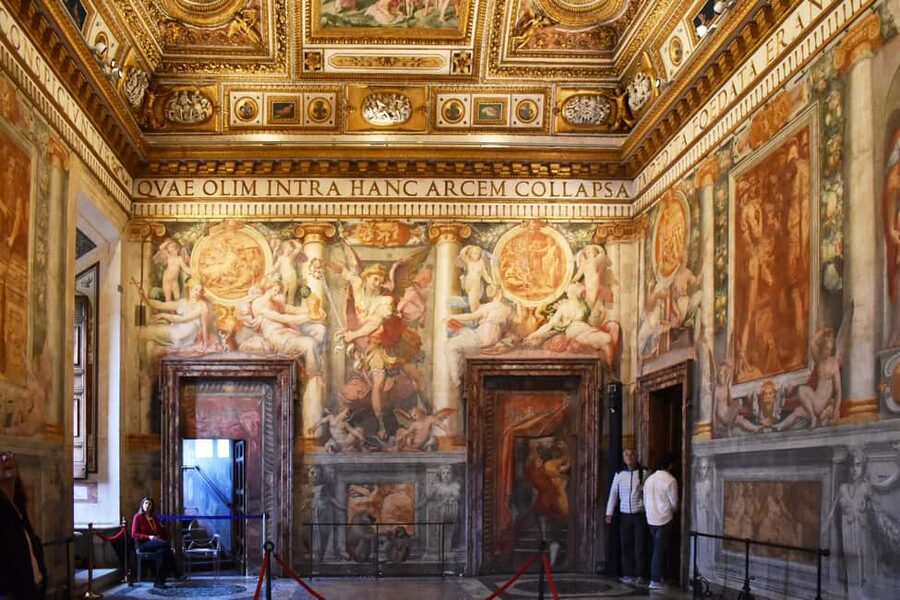
The upper floors contain the most decorative spaces. The papal apartments and rooms connected with Leo X and Clemente VII include painted decoration and beautifully decorated baths. These rooms are a sharp change from the stern stone corridors below.
The papal baths are particularly memorable because they show another side of the fortress. Even in a building built for defense, powerful residents created rooms designed for privacy, display, and comfort.
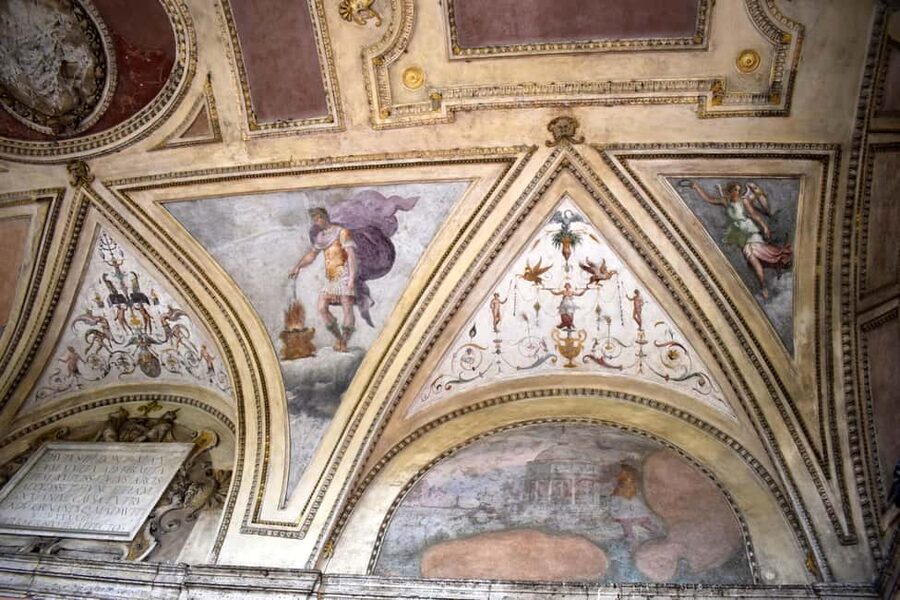
The frescoes come from the Renaissance period, when decoration carried political weight. Painted rooms were not merely pleasant surroundings. They projected status and refinement inside a building whose outer walls still looked like a military bastion.
The audio app can help explain these rooms, but its coverage is not perfectly even. Some spaces have little or no audio content, and the numbering may not always match the order in which you walk. Look for room signs before starting a track. That simple step prevents the common problem of listening to the right story in the wrong place.
If you prefer a live guide who can answer questions and keep the sequence clear, this ticket may feel limited. It includes no guided tour. You are responsible for choosing the next room and matching the app content to what you see.
The prison spaces and darker stories

Castel Sant’Angelo was also a prison. Its cells and confinement areas add a darker note to the visit, especially after the grandeur of the papal rooms.
The prison stories help explain why the castle mattered beyond military defense. It could protect popes, hold weapons, control access, and confine people within the same thick walls. The fates of prisoners were often tragic, and the building’s beauty does not erase that reality.
This section works best when you slow down. The rooms are not all large or spectacular, so a quick pass can make them blur together. The audio guide gives you a reason to pause and consider the people connected with the castle, not just its architecture.
You may also find that the castle’s exhibitions vary in impact. The weapons and rooms provide useful context, but the views and the structure itself are usually more memorable than individual display cases.
Climbing to the terraces and rooftop
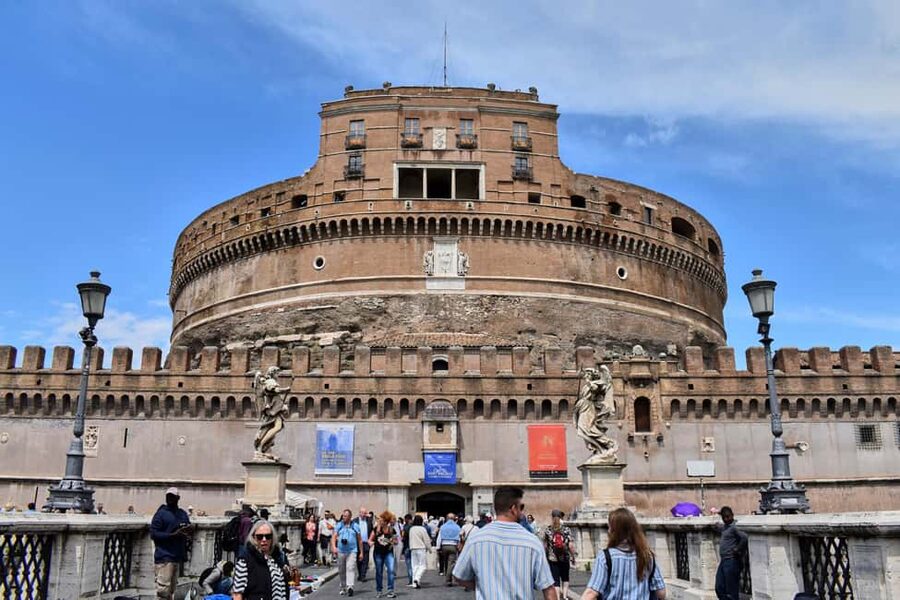
The route rises toward terraces and the famous upper viewpoint. You should expect a fair amount of walking and climbing. The building’s upper levels are reached through stairs and rising passageways, and one account specifically warns that the climb is substantial.
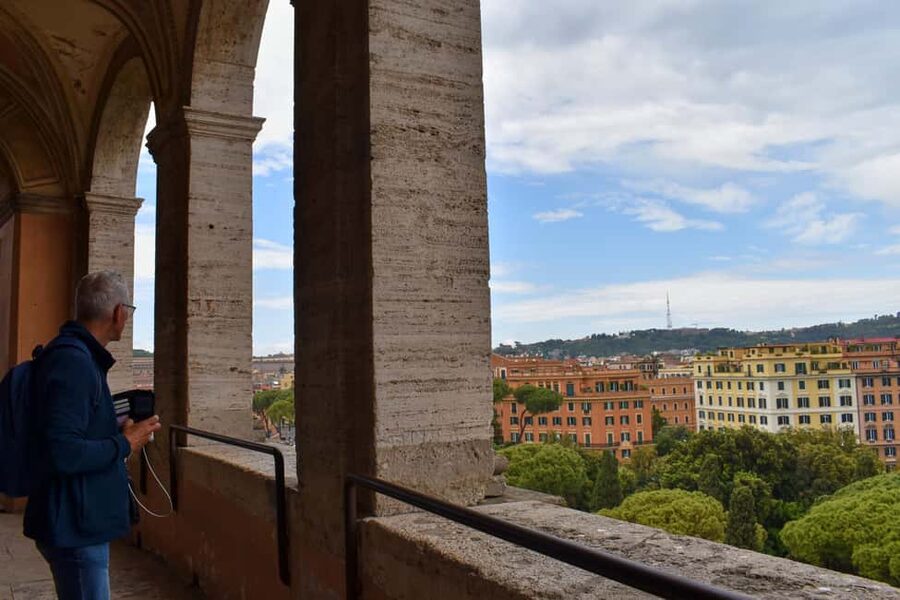
The effort pays off. From the top, Rome opens in several directions, with St. Peter’s Basilica the obvious focal point. Rooftop markers identify important buildings, which makes it easier to sort out the city’s skyline.
I would choose late afternoon if the schedule allows. A 5pm visit can place you near the terrace for sunset behind St. Peter’s, and evening light brings out the shape of the domes and rooftops. After dark, the illuminated view of St. Peter’s has a different charm.
The terrace is also a good place to pause after the interior rooms. There may be a small bar where you can get a drink or coffee, although the cafe and bookshop have not always been open. Do not build your plan around those facilities. The nearby streets have other places to stop.
The viewpoint alone can justify the admission for many people, but do not treat the castle as only a photo stop. The interior gives the view meaning. You understand the defensive position much better after walking through the fortress.
How well does the audio app work?
The digital guide is delivered on your smartphone, so prepare before you arrive. Download the app and its content over Wi-Fi if possible. One visitor arrived without doing this and could not use the guide once inside.
The app is easy to navigate for some people, but it is not always perfectly organized. You may need to match room signs with the correct audio track, and some rooms may have no corresponding recording. If your phone, battery, headphones, or audio connection causes trouble, the experience becomes much less informative.
Sharing one pair of headphones between two people can work, although each person may miss some detail. A separate pair for each phone user is more comfortable if you have one available.
You can also visit without using the app. The building is visually strong, and the terraces, corridors, weapons, and decorated rooms still make sense as a self-guided outing. But I would treat the audio as an important extra, especially if this is your first visit and you want to understand the shifts from mausoleum to fortress to papal residence.
The ticket does not include a handheld audio device. A separate headset may be available for an added fee at the castle, but that is not part of this package. If your phone is unreliable, confirm your backup plan before you arrive.
How long should you spend inside?
The ticket is valid for one day, and there is no fixed tour duration. A quick visit can cover the main rooms and rooftop, but you will get more from the castle if you allow several hours.
One person spent nearly three hours using the audio guide extensively. Another described taking much longer and treating the visit as a journey through the building’s history. You do not need to stay that long, but the castle rewards a slower pace.
I would plan at least two hours if you want to see the main sections without rushing. Add time for photographs, the papal rooms, the prison areas, and a relaxed stop on the terrace.
The visit also fits well between central Rome sights. It is especially easy to combine with a walk near the Vatican or along the Tiber. The exact transport details are not part of this ticket, but the castle is a central Rome landmark and can be reached from nearby sightseeing routes.
Is the $23 price good value?
At $23 per person, this is not the cheapest way to enter Castel Sant’Angelo. The stated adult admission is €16, so the activity price includes a markup for advance booking, access arrangements, and the smartphone audio guide.
That extra cost can make sense during a crowded period. Skipping a long ticket-office line is valuable when your Rome schedule is tight. It is less compelling on a quiet day, especially if you qualify for reduced or free admission.
The best value comes from using the app and spending enough time inside. If you only want the rooftop photograph, the price may feel high compared with direct admission. If you care about the building’s many identities and want to move at your own pace, the package is more useful.
The non-refundable policy also matters. Check your date and timeslot carefully before buying. You can choose from available times, but the booking is not flexible after purchase.
Who should book this experience?
I would recommend it to first-time visitors who want a clear introduction to Castel Sant’Angelo without committing to a group tour. It suits couples, families, and independent sightseers who like to stop often, take photographs, and choose their own pace.
It is also a good choice if you care most about views and want an easy way to secure admission ahead of time. The terrace, rooftop markers, and sightline toward St. Peter’s make the castle one of Rome’s better city-view stops.
History fans will appreciate the unusual sequence from Hadrian’s mausoleum to papal fortress, prison, and Renaissance residence. Families can enjoy the fortress shape and weapons, though the climb may be tiring for some children.
I would be more cautious if your phone is old, your battery is low, or you want a polished, room-by-room explanation from a person. The audio guide has gaps and can require some effort to match with the rooms. Also compare the direct €16 admission before paying $23, particularly if you are eligible for a reduced or free ticket.
Should you book Castel Sant’Angelo with the audio app?
Yes, if you want independent entry, strong views, and a building with more than one story to tell. The best parts are the rooftop panorama, the papal rooms, and the physical sense of moving through a fortress built on an ancient tomb.
Book it if saving time at the ticket office matters and you are willing to prepare the audio app before arrival. Choose a late afternoon slot for the chance of sunset over St. Peter’s.
Skip this package if you qualify for cheaper direct admission, need a live guide, or do not want to manage an app. In that case, compare the official ticket and any available guided option. For most self-guided visitors, though, Castel Sant’Angelo is a worthwhile Rome stop, and the view from the top is the part you will remember longest.
FAQ
Where is Castel Sant’Angelo located?
The entrance is at Lungotevere Castello, 50, in Parco Adriano in Rome.
What does the ticket include?
It includes entry to Castel Sant’Angelo and a digital audio guide used on your smartphone.
Is this a guided tour?
No. The ticket is for self-guided exploration. It does not include a live guide.
How long is the ticket valid?
The ticket is valid for one day. You choose an available timeslot when booking.
What is the standard adult admission price?
The stated standard adult admission is €16. The activity price provided for this package is $23 per person.
Are reduced tickets available?
Yes. EU citizens aged 18 to 25 can receive reduced admission of €2, and children under 18 and eligible people can enter free.
Can I use the audio guide without internet access?
You should download the app and its content before arrival, preferably over Wi-Fi. The audio guide is used on your smartphone.
Is the castle wheelchair accessible?
The activity is listed as wheelchair accessible. However, the route includes a significant amount of walking and climbing, so you should confirm which areas are accessible before arrival if that is important for your visit.
Is the booking refundable?
No. The activity is non-refundable, so check your date and selected timeslot carefully before purchasing.
More Audio Guides in Rome
- Milan: Sforza Castle Entry Ticket with Digital Audio Guide
★ 4.0 · 2,675 reviews - Lisbon: São Jorge Castle E-Ticket and Audio Guide
★ 4.3 · 2,182 reviews - Neuschwanstein Castle Skip-the-Line Ticket with Audio Guide
★ 4.4 · 1,388 reviews - Füssen: Neuschwanstein Castle Express Ticket and Audio Guide
★ 3.9 · 788 reviews
More Self-Guided Tours in Rome
- Rome: Castel Sant’ Angelo Ticket and Audio Guide
★ 4.1 · 524 reviews - Rome: Castel Sant’Angelo Ticket & Audio Guide
★ 4.1 · 236 reviews - Rome: Skip-the-Line Castel Sant’Angelo Tickets & Audio Guide
★ 4.9 · 16 reviews - Granada: Alhambra Entry Ticket with Audio Guide
★ 4.1 · 5,950 reviews
Just added around Rome
- St. Peter’s Basilica & Castel Sant’Angelo Entry★ 4.1 · 8 reviews
- St. Angel’s Castle: 2-Hour Private Tour★ 5.0 · 9 reviews
- Rome: Skip-the-Line Castel Sant’Angelo Tickets & Audio Guide★ 4.9 · 16 reviews
- Rome: Vatican, St Peter’s Sq & Castel Sant’Angelo PhotoShoot★ 5.0 · 14 reviews
- Rome: Passetto di Borgo Tour & Castel Sant’Angelo Ticket★ 4.4 · 86 reviews
- Rome Pre-Reserved Shared or Private Tour Castel Sant’Angelo★ 4.6 · 68 reviews
- Rome: Vatican and Castel Sant’Angelo Private Photoshoot★ 5.0 · 13 reviews
- Rome: Castle Sant’Angelo Ticket w/ audioguide option★ 3.6 · 25 reviews
Castle Entry Tickets, compared.


Granada: Alhambra and Nasrid Palaces Entry Ticket
Read our review →
Edinburgh Castle: Guided Walking Tour with Entry Ticket
Read our review →
Prague: Castle Tour with Local Guide and Entry Ticket
Read our review →
Prague Castle 2.5-Hour Tour Including Admission Ticket
Read our review →

Granada: Alhambra Entry Ticket with Audio Guide
Read our review →Edinburgh Castle: Guided Walking Tour with Entry Ticket
Read our review →Browse the lists this tour appears in