
REVIEW · FORTRESS & CITADEL TOURS
Bard: Fortress Exhibitions and Museums Entrance
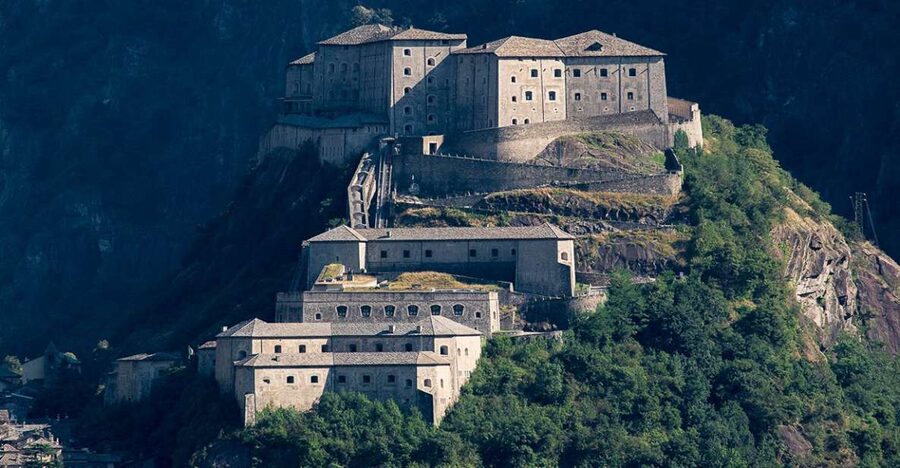
Fort Bard is not just a museum with walls around it. It is a huge 19th-century military stronghold stacked up a rocky outcrop at the entrance to the Aosta Valley, with three museums and changing art exhibitions inside. You can walk up or use the three panoramic lifts, then move through courtyards, parade grounds, prisons, and high walkways.
I like the way the ticket lets you shape the day yourself. You can focus on the Museum of the Alps, linger over the fortifications displays, or take your time with the video projections and art shows. I also like the views, which improve as you climb from the medieval village to the upper parts of the fortress.
The main catch is the voucher exchange. You still need to collect a paper ticket at one of two ticket counters, and that can mean a queue even after booking online. There is also no live guide included, so you will use the Museon app audio guide on your own smartphone.
Key points to know before you go
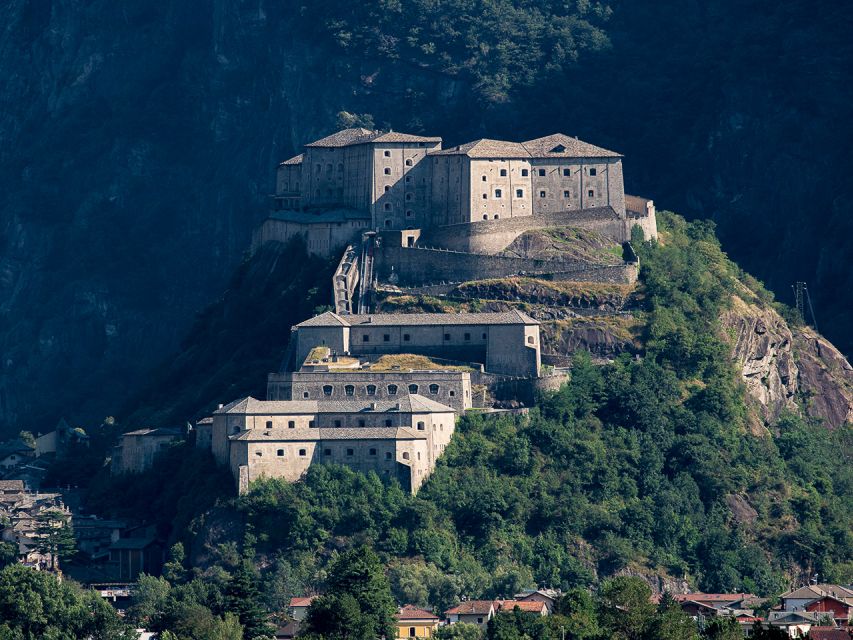
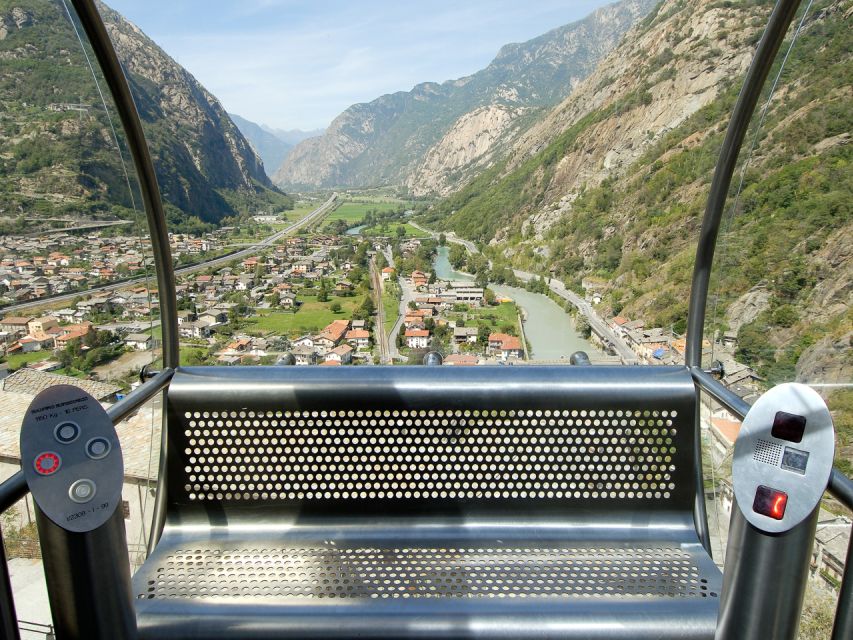
- Three panoramic lifts carry you from the lower approach toward the fortress, while a scenic walking route gives you a more active way up.
- The Museum of the Alps puts the valley’s people, nature, and traditions into a broader regional story.
- The Museum of Fortifications and Frontiers explains military borders and the strategic role of the fort.
- The Prisons offer a more enclosed, personal look at life inside the fortress.
- Temporary exhibitions are included, so the artistic program can change the feel of your visit.
- The $28 ticket is valid for 90 days, but it is best understood as a full-day admission rather than a 90-day sightseeing pass.
Why Fort Bard feels different from an ordinary museum
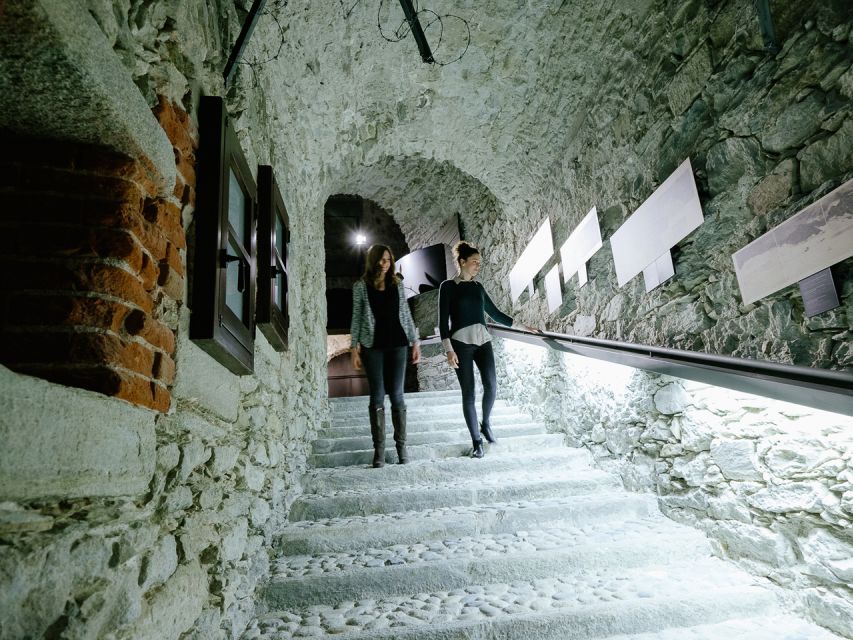
Fort Bard has an unusual advantage: the building is part of the subject. You are not looking at a model of a fortress from a quiet gallery. You are walking through the real courtyards, corridors, parade grounds, chapel, and defensive spaces that made the site important.
The present fort was built in the first half of the 19th century on a rocky prominence controlling the entrance to the Aosta Valley. That position explains much of the visit. The fort is tall, layered, and defensive by design, so you keep changing level and viewpoint as you move through it.
I find that this makes the experience more physical than a standard museum visit. Your route is not simply room after room. It moves from the medieval village below to the fortress above, with views opening up between sections. You get history, architecture, and mountain scenery in the same package.
The setting also helps explain why the exhibitions work well here. A display about frontiers feels more meaningful inside an actual military complex. A presentation about the Alps gains force when you can look out over the valley from the fort’s walkways.
More Fortress and Citadel Tours in Italy
- Fortress: Prisons, Museum of Fortifications and Alps Museum
★ 4.5 · 125 reviews - Lucca: Renaissance City Walls Walking Tour
★ 4.5 · 104 reviews - Pastrengo: Lake Garda Wine & Food Tasting in Historic Fort
★ 4.7 · 73 reviews
Starting in Bard and reaching the upper fortress
You must exchange your voucher at a ticket counter before entering. One counter is at the start of the first panoramic lift. The other is at the top of the medieval village, behind the Church of Bard.
That detail matters. If you arrive with a mobile voucher and head straight for the fort, you may need to backtrack. I would first look for the ticket counter, collect the paper admission, and ask where the lift route begins.
From there, you have two basic choices. You can take the three panoramic lifts, or you can follow the scenic walking route. The lifts save energy and make the climb simple, especially if you want to reserve your strength for the museums. The walking route gives you a slower approach and more chances to photograph the fortress from below.
The lift system is part of the experience rather than just a transport fix. As you rise, you can frame the fort against the valley from different heights. At the lower level, the building feels like a massive wall above you. Higher up, its separate sections and terraces become easier to understand.
The site is wheelchair accessible, but the fortress is still a large historic structure with multiple levels and outdoor routes. If access needs are important to you, confirm the best route at the ticket desk when you exchange your voucher.
The fortress courtyards, chapel, and walkways
Before spending time inside the museums, take a slow look at the fortress itself. Your ticket includes the chapel, parade grounds, courtyards, and walkways, and these areas provide the framework for everything that follows.
The parade grounds show the scale of the complex. This was built for military use, not for a tidy museum route, so the open spaces can feel stark and imposing. The courtyards break up the indoor sections and give you a place to pause.
The chapel adds a different note. It is a reminder that daily life in a military site included religious space as well as barracks, storage, and defense. You do not need a long explanation to appreciate that contrast.
The walkways are where I would keep your camera ready. The experience description specifically points to photographs from the bottom to the top of the fortress, and the structure gives you plenty of changing angles. You can photograph the valley below, the stonework around you, and the fortress rising above the village.
Do not rush these areas. The museums provide information, but the outdoor spaces help you understand the scale and location of Fort Bard. Give yourself time between exhibitions to look back at the building.
The Museum of the Alps
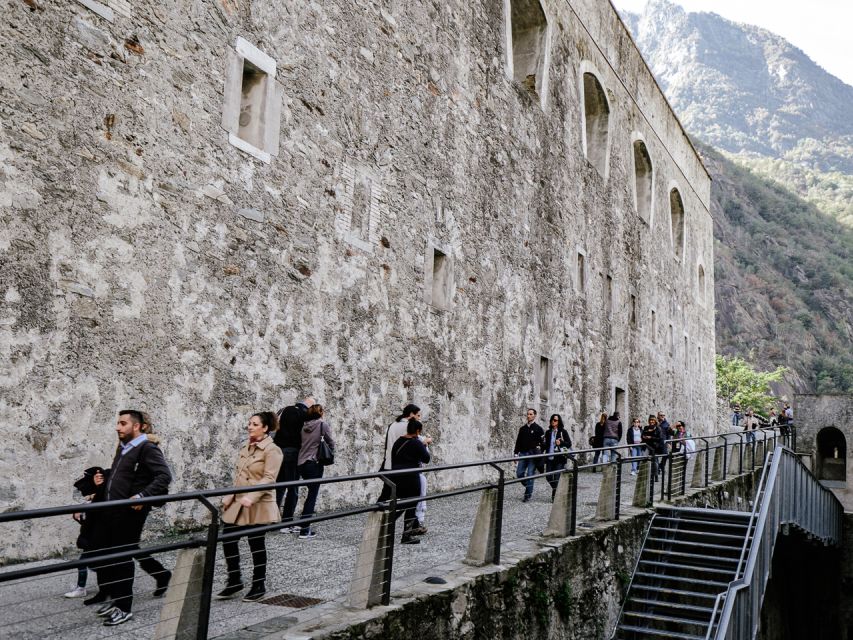
The Museum of the Alps is one of the main reasons this ticket works as a full-day visit rather than a quick fort admission. It shifts the focus from military architecture to the wider Alpine world.
The museum deals with the Alps as a place shaped by nature and by the people who live there. You can expect a more regional and cultural perspective than in the fortifications museum. It helps place the Aosta Valley in a broader setting.
I would visit this museum with fresh attention, especially if you want more than photographs and dramatic stone walls. A large fortress can easily dominate the day, but this museum gives you context for the valley outside its gates.
The displays are also useful if you are visiting the Aosta Valley for only a short time. Instead of seeing the area as a set of mountain views, you get a better sense of the region’s identity and traditions. The exact presentation can change, and the overall exhibition program may vary during the year.
Plan to compare this museum with what you see outside. The point is not only to read about the Alps, but to connect the displays with the valley visible from the fortress.
Same region, a different set of walls:
- Castel Sant’Angelo Entry Ticket & Audioguide
★ 4.4 · 5,472 reviews - Rome: Castel Sant’Angelo Entry Ticket & Digital Audioguide
★ 4.7 · 5,347 reviews - Rome: Castel Sant’Angelo Entry Ticket & Audio App
★ 4.3 · 4,952 reviews - Rome: Castel Sant’Angelo Entry Ticket with Audio guide
★ 4.4 · 3,646 reviews
The Museum of Fortifications and Frontiers
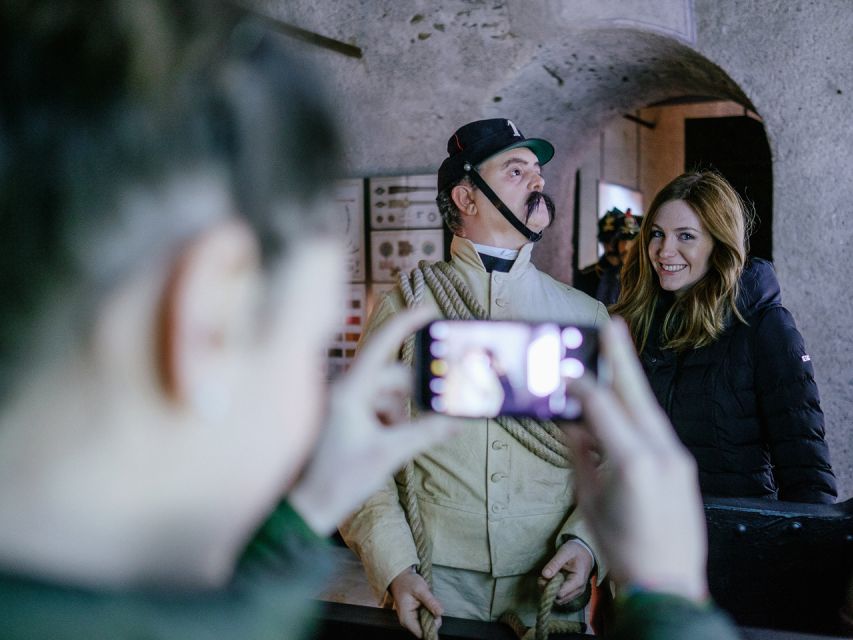
This is the museum most closely tied to Fort Bard’s military purpose. It explores fortifications and frontiers, giving you a clearer sense of why strategic sites like this were built.
I find this section most useful after you have walked through the courtyards and seen the fort’s position. The architecture can seem oversized until you understand its role. The museum gives that structure a practical reason.
Expect a more focused history of military defense and borders than at the Museum of the Alps. If you enjoy architecture, engineering, or the way political boundaries shape places, allow extra time here.
The subject can also help you read the fort itself. Look at the thickness of the walls, the controlled routes, and the way the buildings are arranged. The displays are not separate from the building. They explain what you are standing inside.
This museum will not appeal equally to everyone. If your main goal is art or mountain scenery, it may feel more technical. Still, it is an important part of the visit because it turns Fort Bard from an impressive object into a working military system.
The Prisons and the human side of the fort
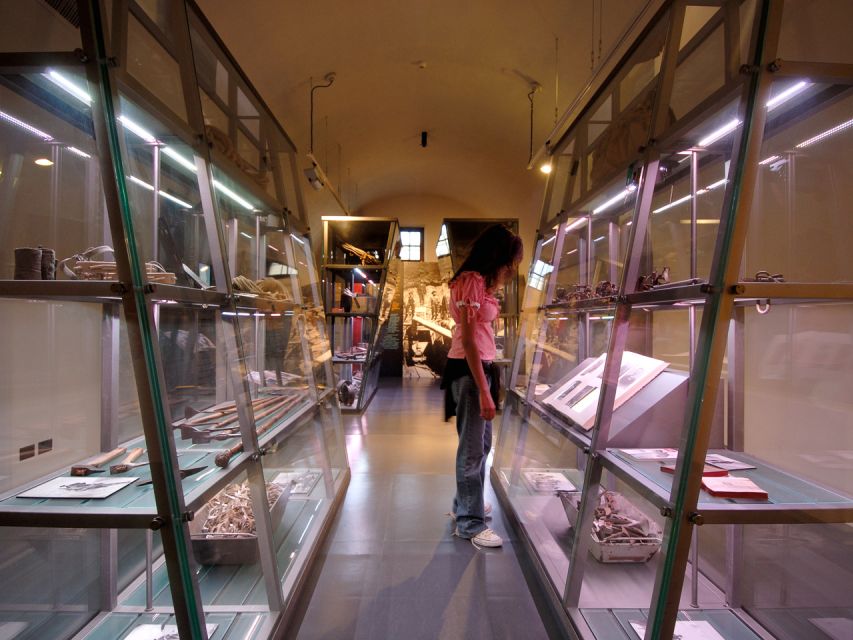
The Prisons provide a more intimate stop. After the broad spaces of the parade grounds and the large subject of borders, the prison rooms narrow your focus to confinement and daily life inside the fort.
This section can feel more atmospheric than the other museums. The rooms are part of the original military setting, so the subject does not need a great deal of decoration to make an impression. You are seeing a practical part of the fortress rather than a modern gallery designed to imitate one.
I would not race through the Prisons. The smaller scale changes the pace of the day and gives you a break from large displays. It also adds a human dimension to an otherwise grand building.
Some of the fort’s strongest moments may come from this contrast: wide views outside, then enclosed rooms within. If you are visiting with children, keep in mind that the subject and setting may be less playful than the open courtyards and lifts.
Temporary exhibitions and video projections
The ticket includes the art exhibitions open during your visit. This is a major value point, since the temporary program can change the experience from one season to the next.
The exhibitions are presented in the fortress’s existing spaces, which gives contemporary art a strong architectural setting. You may find that the building competes with the artwork at times, but that is part of the appeal. Stone walls, military rooms, and modern displays create a different mood from a purpose-built gallery.
Allow time for the temporary shows instead of treating them as an optional extra. The exhibitions have been praised for careful presentation, and video projections can be especially effective in the darker interior rooms. One installation has been described as emotionally moving, so this is not only a place for historic objects and written panels.
The exact shows are not fixed throughout the year. That makes it wise to check the current program before you go if a particular exhibition matters to you. You should also expect the number and style of displays to vary.
Families should keep an eye on children in the gallery areas. The exhibition rooms call for the same quiet behavior as any art museum, and the fort’s open spaces are better suited to active exploring.
Using the Museon audio guide
A live guide is not included. Instead, you receive access to an audio guide through the Museon app on your smartphone.
You need to download the app yourself, and the QR code is provided at the ticket office. I would prepare for this before leaving the counter, especially if your phone battery or mobile connection is a concern. The ticket desk is the natural place to ask how to activate the service.
An audio guide gives you freedom. You can move at your own pace, skip sections, and return to a display without waiting for a group. That suits Fort Bard, where people often want different amounts of time for the museums, views, and temporary shows.
The tradeoff is that you do not get a person answering questions as you go. If you prefer stories, conversation, and a set route, this package may feel less personal. If you like independence, the app keeps the day flexible.
The audio guide is especially useful for the architecture. Without explanation, the fort can seem like a series of impressive spaces. With context, the courtyards, walls, and levels make more sense.
Is the $28 admission good value?
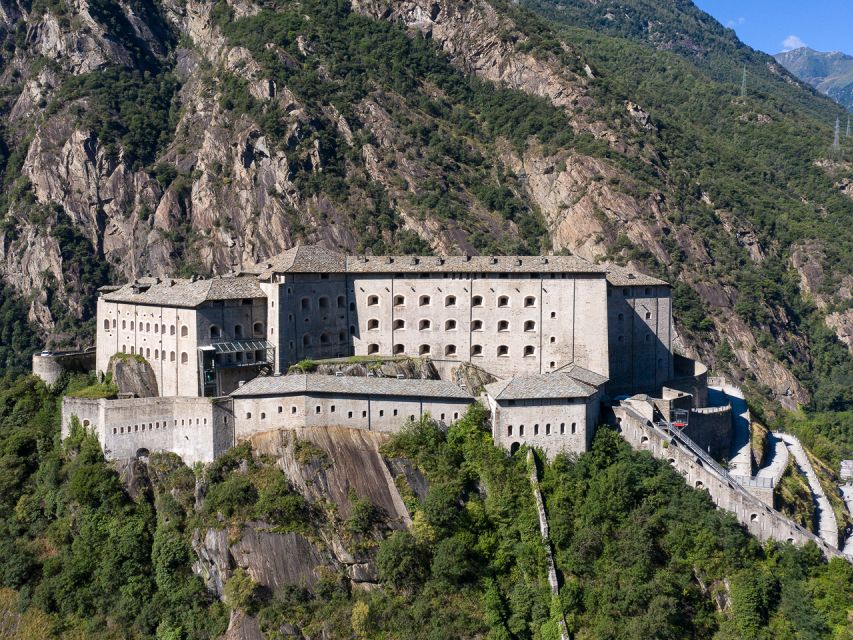
At $28 per person, this is not a bargain if you only want to ride the lifts, take a few photographs, and leave. It becomes much better value when you use the museums and temporary exhibitions as well.
Your admission covers the fortress, three museums, all exhibition spaces open at the time, the panoramic lifts, the chapel, courtyards, parade grounds, walkways, and the audio guide. That is a substantial package for a full day.
The ticket is valid for 90 days, but the practical value lies in planning a serious visit rather than treating it as repeated admission. The information provided does not promise unlimited repeat entry during those 90 days, so I would view the period as flexible booking validity, not as permission to return every weekend.
You also receive a 10 percent discount at the Fort Bard bookshop. That will matter most if you want a museum catalogue, regional book, or souvenir tied to the exhibitions.
The weak point is the voucher exchange. Online purchase does not remove the need to collect a paper ticket, and this can create a queue. Since the price does not necessarily bring a clear saving, the main benefit is convenience in having the admission arranged in advance, not a guaranteed fast entry.
How much time should you allow?
The package is designed for a day at Fort Bard. There is no fixed visit length stated, and your timing will depend on how closely you read the museums and how long you spend on the exhibitions and outdoor spaces.
I would not schedule the fortress as a quick stop between other appointments. The lifts, scenic route, courtyards, three museums, prisons, temporary exhibitions, and viewpoints all add up.
A rushed visit would probably mean choosing only the most attractive parts: the lifts, views, fort structure, and one or two museums. That can still be worthwhile, but you would not get the full value of the $28 admission.
If you have only limited time, choose your priorities before entering. For a first visit, I would combine the Museum of Fortifications and Frontiers with the Prisons, then make time for the best temporary exhibition and the outdoor walkways. If regional culture matters most to you, give the Museum of the Alps a larger share of the day.
Who should book Fort Bard?
I would recommend this experience to anyone interested in military architecture, Alpine culture, museums, or unusual historic buildings. It also suits photographers who want more than one viewpoint, since the route rises from the village to the upper fortress.
It works well for independent visitors who like setting their own pace. The audio guide and flexible route let you spend more time where your interest lies.
Families can enjoy the lifts, open courtyards, and views, but the museum and gallery sections still require care and quiet. The Prisons may also feel serious for younger children.
I would hesitate only if you dislike large historic complexes, smartphone audio guides, or changing exhibition programs. You should also think twice if your schedule allows only a very short stop, since the admission makes most sense when you use several parts of the site.
Should you book Fort Bard?
Book it if you want a full cultural day built around a real fortress, not just a viewpoint. The combination of panoramic lifts, military rooms, Alpine displays, prisons, outdoor walkways, and temporary art shows gives you a broad visit for the price.
Go in with two practical expectations: you must exchange the voucher at the ticket counter, and the audio guide requires the Museon app on your phone. If you plan around those details and allow enough time, Fort Bard offers a strong mix of architecture, history, art, and valley views.
FAQ
How much does the Fort Bard entrance ticket cost?
The ticket costs $28 per person.
How long is the ticket valid?
The ticket is valid for 90 days. The visit itself is intended to support a day of exploring the fortress, museums, and exhibitions.
What is included in the admission?
Admission includes the fortress, three panoramic lifts, the chapel, parade grounds, courtyards, walkways, the Museum of the Alps, the Museum of Fortifications and Frontiers, the Prisons, and art exhibitions open during your visit.
Is a live guide included?
No. A live guided tour is not included. An audio guide is available through the Museon app on your smartphone.
Where do I exchange the voucher?
You can exchange it at the ticket counter at the start of the first panoramic lift or at the counter at the top of the medieval village, behind the Church of Bard.
Is Fort Bard wheelchair accessible?
Yes, the activity is listed as wheelchair accessible. You can ask at the ticket counter about the most suitable route through the fortress.
More Museum Visits in Italy
- Trieste: Miramare Castle & Museum Entry Ticket & Audio App
★ 4.2 · 213 reviews - Enchanted Castle of Sciacca – Museum Tickets
★ 3.5 · 63 reviews - Milan: Skip-the-line Sforza Castle and Museums Private Tour
★ 4.7 · 7 reviews - Osaka Castle: Museum and Tower Entry Ticket
★ 4.5 · 2,380 reviews
Just added around Italy
- HIKING TOUR: VARENNA, Castle of VEZIO Villa MONASTERO, FIUMELATTE★ 5.0 · 48 reviews
- Walking tour Castel del Monte Unesco site★ 5.0 · 5 reviews
- Castel del Monte & Matera: Private Tour from Bari or Matera★ 5.0 · 5 reviews
- TRANI and Castel Del Monte UNESCO from your accomodation★ 4.5 · 19 reviews
- Castel del Monte: excursion in the Alta Murgia National Park★ 4.5 · 6 reviews
- Castles of Puglia Day Trip from Bari★ 4.5 · 7 reviews
- Tour of the fortifications of Bari: the defenses of the city and their history★ 5.0 · 15 reviews
- Bike Tour into the nature around Castel del Monte★ 5.0 · 7 reviews
Fortress & Citadel Tours, compared.

Full Day Taj Mahal, Agra Fort & Baby Taj Tour from Delhi by Car
Read our review →
Fort Sumter Admission and Self-Guided Tour with Roundtrip Ferry
Read our review →
Carcassonne: Castle and Ramparts Entry Ticket
Read our review →
Charleston: Fort Sumter Entry Ticket with Roundtrip Ferry
Read our review →
Same Day Taj Mahal, Fort & Baby Taj Tour from Delhi by Car
Read our review →
From Delhi: Taj Mahal and Agra Fort Private Sunrise Tour
Read our review →
Sunrise Taj Mahal, Agra Fort & Baby Taj Tour from Delhi by Car
Read our review →
Salzburg: Hohensalzburg Fortress Admission Ticket
Read our review →Browse the lists this tour appears in