
REVIEW · CASTLE ENTRY TICKETS
Bari: Norman-Swabian Castle Entry Ticket
Bari’s Swabian Castle is more than a heavy stone fortress. Inside its walls, you can follow the building’s change from a Norman stronghold to a Swabian royal project and later a Renaissance residence. The castle’s installations help explain those changes without asking you to read every plaque in sight.
I like the setting between Bari Cathedral and the old docks, and I like the way the interior displays make the fortress easier to understand. The optional audio guide is another strong point, especially if you want clear explanations in English or another listed language. The main drawback is scale: at about $14 per person, or €10 for adult entry with an optional €6 audio guide, the castle may feel costly if you expect a long museum visit.
Key points
- Norman origins in 1131: Ruggero II built the first castle to secure the Norman conquest of Bari.
- Swabian rebuilding: Frederick II reshaped the fortress in the 13th century, leaving his mark on the portal, atrium, and loggia.
- Renaissance transformation: Isabella of Aragon and Bona Sforza turned a stern military building into a refined residence.
- Hands-on historical displays: See ceramics, jewelry, wooden castle models, and installations tracing the building’s changes.
- Gipsoteca collection: The 2011 gallery contains plaster casts of important monuments and places of worship across Puglia.
- Flexible self-guided visit: Your ticket is valid for one day, with an audio guide available in five languages.
Bari’s castle between the cathedral and the docks
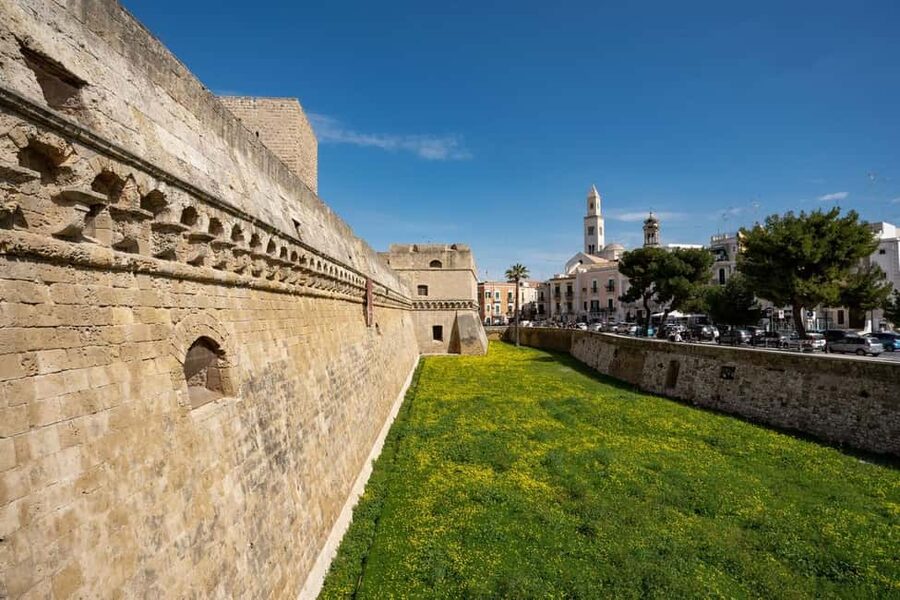
The first thing to understand is the castle’s position. It sits in Bari’s oldest area, close to the cathedral and the harbor, so it fits naturally into a walk through the historic center. You can pair it with the cathedral and nearby old streets rather than treating it as an isolated attraction.
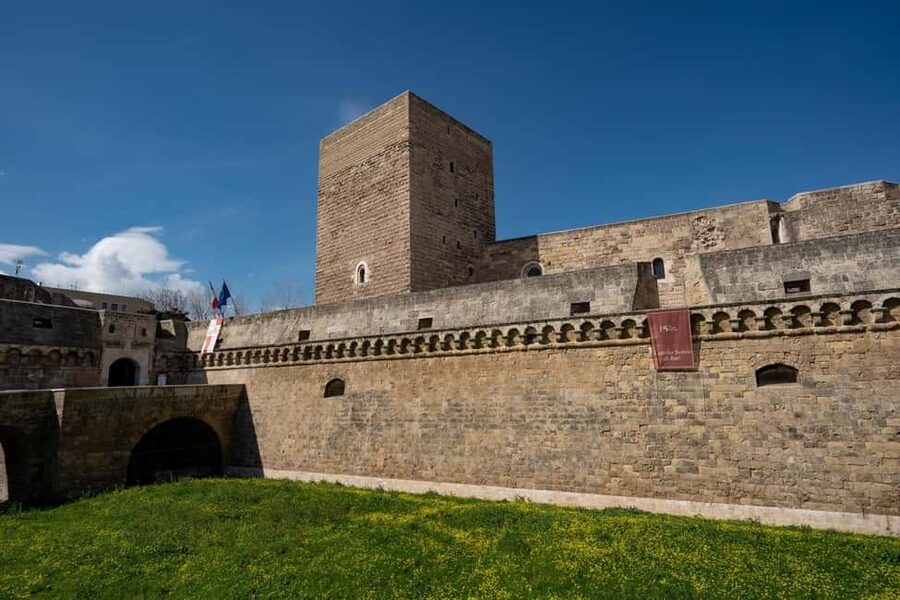
The castle’s shape is imposing and practical. Its trapezoidal form reflects military needs more than decorative taste, with thick walls and a strong sense of enclosure. From outside, it looks like the kind of building meant to control a city and guard access to the water.
That first impression is useful. You are not entering a palace built for comfort from the start. You are entering a structure born from conquest, then altered by rulers who wanted it to serve new political and domestic purposes.
More Castle Entry Tickets in Italy
- Castel Sant’Angelo Entry Ticket & Audioguide
★ 4.4 · 5,472 reviews - Rome: Castel Sant’Angelo Entry Ticket & Digital Audioguide
★ 4.7 · 5,347 reviews - Rome: Castel Sant’Angelo Entry Ticket & Audio App
★ 4.3 · 4,952 reviews
Ruggero II and the Norman beginning in 1131
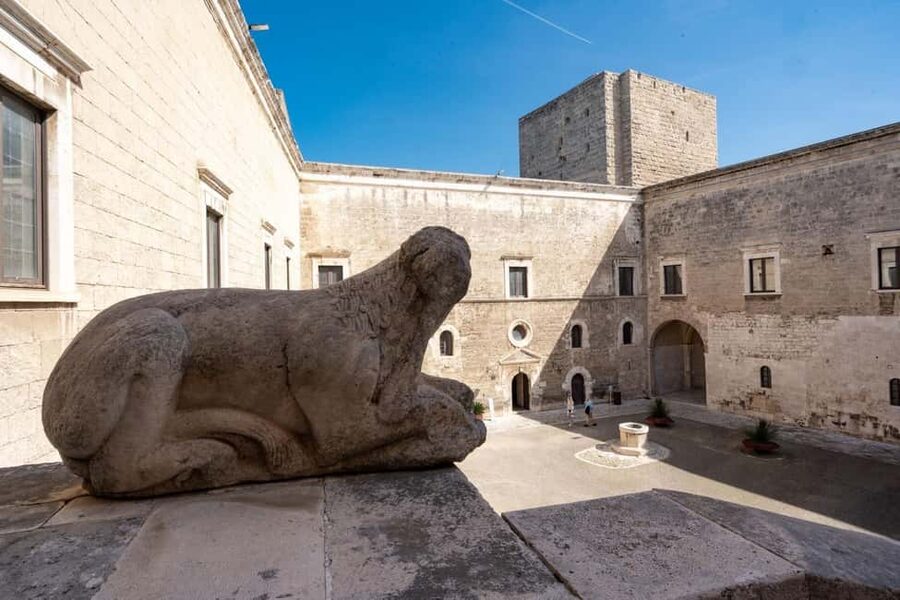
The first castle was built in 1131 by Ruggero II, part of the Norman effort to secure control of Bari. The building helped seal the Norman conquest of the city, so its story begins with power and defense rather than art.
I find this context makes the rooms more meaningful. Without it, the castle can look like a collection of stone walls and later displays. With it, you can read the building as a record of changing authority. Norman rule created the fortress, but later rulers repeatedly altered it to suit their own needs.
The location also matters here. A castle between the cathedral and the docks occupied an important point in the city. It was close to religious power, commercial activity, and the waterfront. You do not need a long lecture to see why this was a valuable place for a ruler to control.
Frederick II’s 13th-century rebuilding
The next important chapter belongs to Frederick II of Swabia. He rebuilt the fortress in the 13th century, and the tour points out signs of this work in the entrance portal, atrium, and loggia.
Look closely at the architectural details: architraves, cornices, corbels, and capitals. These features give the castle more character than its exterior suggests. They also show that Frederick II was not interested only in making the building stronger. He wanted an official residence with a sense of ceremony.
The majestic entrance portal is one of the best places to pay attention. It signals the move from plain military defense toward royal presentation. The atrium gives you another chance to see how the building’s practical and formal roles overlap.
The loggia, with its architectural framing, adds a lighter note to the fortress. It is a useful reminder that medieval royal buildings could be defensive and courtly at the same time. You are still inside a castle, but the details ask you to notice design, status, and display.
From fortress to Renaissance residence
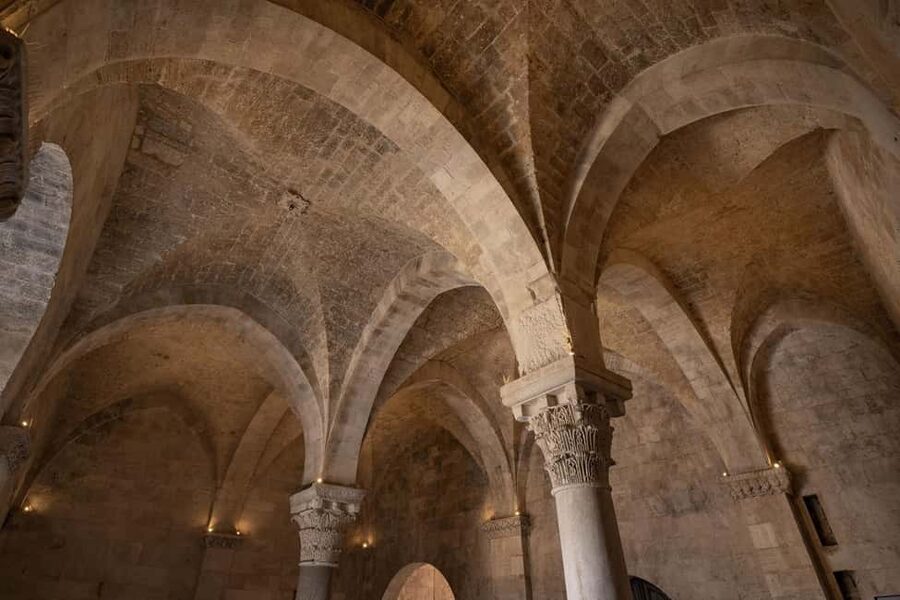
The castle changed again in the 16th century under Isabella of Aragon and her daughter Bona Sforza. They turned the austere military structure into a more refined Renaissance residence, drawing poets and artists to the court.
This is the part of the story that gives the building its strongest contrast. One side of the castle is concerned with conquest and defense. Another is concerned with living well, welcoming cultured company, and showing off the taste of the ruling household.
The change was not simply cosmetic. A residence needs different spaces and a different mood from a garrison. The Renaissance chapter helps you see why the castle contains more than battlements and thick masonry. Its later identity came from adapting old defensive walls to courtly life.
The displays inside make this evolution easier to follow. Installations in the rooms explain the fortress’s changes across the centuries. I particularly like this approach because it gives you a reason to compare each space with the chapter of history it represents.
Same region, a different set of walls:
- Rome: Castel Sant’Angelo Entry Ticket with Audio guide
★ 4.4 · 3,646 reviews - Castel Sant’Angelo: Ticket with optional Vatican or Pantheon
★ 4.4 · 3,088 reviews - Milan: Sforza Castle Entry Ticket with Digital Audio Guide
★ 4.0 · 2,675 reviews - Rome: Castel Sant’Angelo Guided Tour
★ 4.7 · 1,779 reviews
What you see inside the castle
The interior contains several collections rather than one large, single-theme museum. That makes the visit varied, but it also means you should not expect a long, linear exhibition with a huge number of objects.
Renaissance-era ceramics help connect the castle to domestic and courtly life. Jewelry adds another glimpse of status and personal display. These pieces are small compared with the building itself, but that contrast is useful. The castle tells you about power on a grand scale, while the objects show how that power appeared in everyday surroundings.
Wooden models of the castles of Bari, Barletta, and Monopoli are especially helpful. A model can show defensive form more clearly than a wall or tower can. You can compare the three fortifications and get a better sense of how castles functioned as structures and symbols.
The room installations are among the strongest parts of the visit. They explain the castle’s development and show how its use changed over time. If you have only a general interest in medieval buildings, these displays can give the visit a clear storyline.
If you are mainly interested in original objects or a large art collection, the interior may feel limited. The appeal comes from the combination of architecture, historical explanation, and selected collections, not from a vast number of museum pieces.
The Gipsoteca and Puglia’s plaster casts
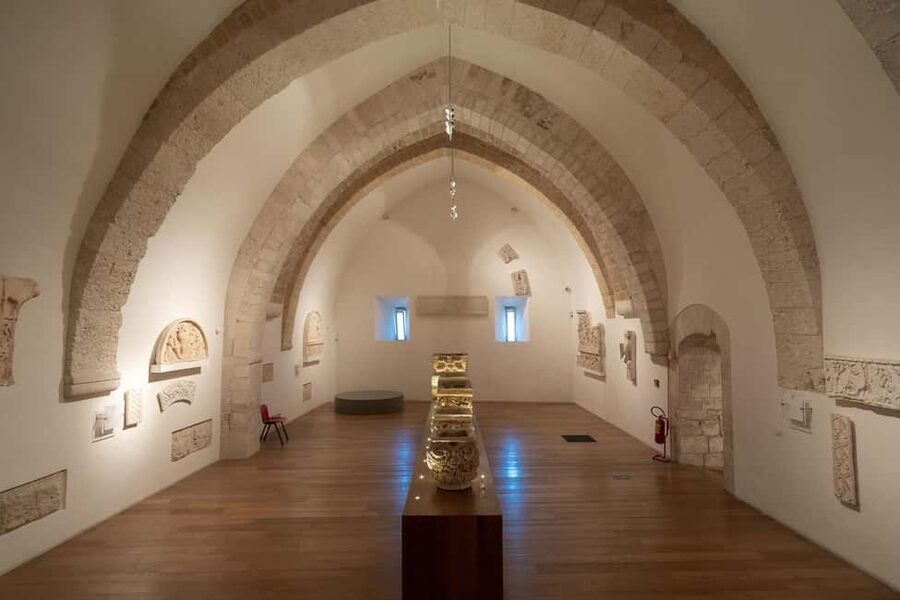
The Gipsoteca, opened in 2011, adds a different kind of collection. It contains plaster casts of important monuments and places of worship from across Puglia.
This is valuable because it lets you see architectural details from places you may not have time to visit. A plaster cast can preserve a doorway, sculpture, or decorative element in a form that is easier to study at close range. It also gives the castle a wider regional role, connecting Bari with the art and architecture of Puglia.
The Gipsoteca may appeal most to visitors who enjoy churches, carved stone, and architectural detail. If your main goal is only to see the fortress itself, it may feel like a side gallery. Give it time if you want a broader look at Puglian monuments, not just Bari’s military past.
The collection also changes the rhythm of the visit. After examining massive walls and royal rooms, you move toward smaller details and casts that reward careful looking. It is a quieter section, but one with real value for anyone interested in local architecture.
Using the audio guide in five languages
You can add an audio guide for €6. It is offered in English, Italian, French, Spanish, and German.
I would consider adding it if you want the castle’s layers explained as you move through the rooms. The building’s history involves Norman, Swabian, and Renaissance periods, and the audio guide can help keep those chapters separate. It is especially useful when you are visiting without a guide and want more than brief labels.
The strongest benefit is clarity. The architecture can be impressive, but some of its meaning is easy to miss if you do not know which details belong to Frederick II or which changes came under Isabella of Aragon and Bona Sforza.
You can also visit without the audio option. That keeps the cost lower and lets you move at your own speed. If you are comfortable reading displays and mainly want to see the castle’s rooms, portal, atrium, loggia, and collections, the basic ticket may be enough.
There is no named live guide attached to this experience. It is an entry visit with an optional recorded guide, so you should choose it for independence rather than conversation or a group lecture.
Is the €10 ticket good value?
Adult entry is listed at €10, with the audio guide costing another €6. The supplied price for the experience is about $14 per person, so check the exact amount and option before booking, since currency conversion and the audio choice can affect the total.
At €10, the ticket offers reasonable value if you already plan to spend time in Bari’s old center and want a substantial historical stop. You get the castle’s architecture, interior displays, models, ceramics, jewelry, and the Gipsoteca in one visit.
The value is less clear if you expect a large museum or several hours of densely packed exhibits. One complaint described the experience as expensive with little to see. That concern is worth taking seriously. The castle is important, but its collection is selective, and the visit depends heavily on your interest in the building itself.
The audio guide changes the calculation. At €16 total, you are paying more for interpretation rather than additional access. I think that is sensible for first-time visitors who want the political and architectural story, but less necessary for people who prefer a quick look at the rooms.
Also check the free admission dates. Entry is free on the first Sunday of each month and on April 25, June 2, and November 4. If your schedule matches one of those days, the value improves considerably, though opening arrangements can change.
Timing, access, and practical planning
The ticket is valid for one day, but you must respect the entry time you select. That matters if you are building a tight Bari schedule around the cathedral, harbor, or other stops.
Opening hours can change according to museum or park requirements. Check the current time before setting out, especially if you are visiting on a holiday or planning the castle as the fixed point in a short day.
The castle is wheelchair accessible, which makes it a practical choice for many visitors who need step-free access. The information provided does not specify which particular areas or routes may have limitations, so confirm details if you need a precise accessibility plan.
Transportation is not included. Since the castle is in the oldest part of Bari, many people will approach it as part of their city walk, but you should budget separately for any transport you choose. Meals, drinks, and souvenirs are also outside the ticket price.
Cancellation is flexible up to 24 hours before the visit for a full refund. That is useful when your Bari plans depend on weather, train times, or a changing cruise schedule.
Who will enjoy this castle most?
I would recommend the castle to you if you like historic buildings more than polished modern museums. The strongest experience comes from connecting the rooms and architectural details with the people who reshaped them.
It also suits visitors already exploring Bari Cathedral and the old city. The location makes it easy to include without a separate cross-town journey. Families may find the models and changing fortress displays easier to follow than a room full of text, though the amount of material a child will enjoy depends on age.
The audio guide makes the visit a better fit for independent sightseers who want structure without joining a scheduled group. Choose English, Italian, French, Spanish, or German according to your preference.
I would be more cautious if your main interest is a large collection of paintings, a long guided tour, or an extensive archaeological museum. The castle’s appeal lies in place, architecture, and selected displays. It is not a full-day attraction for everyone, despite the ticket being valid for one day.
Should you book the Norman-Swabian Castle?
Book it if you want to understand how Bari’s fortress changed from Norman conquest site to Swabian royal building and Renaissance residence. The entrance portal, atrium, loggia, room installations, castle models, and Gipsoteca give the visit more substance than an exterior photo stop.
Choose the €10 entry alone for a shorter, self-paced look. Add the €6 audio guide if you want the history explained clearly in your own language. If the price feels high for a modest collection, use one of the listed free admission dates if your schedule allows.
My call: this is a worthwhile Bari stop for architecture and history fans, especially when paired with the cathedral and old center. It is a less convincing buy for anyone expecting a large museum or a long, activity-packed visit.
FAQ
Where is the Swabian Castle of Bari?
The castle is in the oldest part of Bari, between Bari Cathedral and the docks.
How much does adult entry cost?
Adult entry is listed at €10. The experience price is also given as about $14 per person, so check the amount shown when booking.
How much does the audio guide cost?
The optional audio guide costs €6.
Which languages are available for the audio guide?
The audio guide is available in English, Italian, French, Spanish, and German.
Is the castle ticket valid for one day?
Yes. The ticket is valid for one day, with entry available at a selected starting time.
Do I have to enter at my selected time?
Yes. Respecting the chosen entry time is mandatory.
Is the castle wheelchair accessible?
Yes, the activity is listed as wheelchair accessible.
When is admission free?
Admission is free on the first Sunday of each month and on April 25, June 2, and November 4.
Can I cancel for a refund?
Yes. You can cancel up to 24 hours in advance for a full refund.
Just added around Italy
- HIKING TOUR: VARENNA, Castle of VEZIO Villa MONASTERO, FIUMELATTE★ 5.0 · 48 reviews
- Walking tour Castel del Monte Unesco site★ 5.0 · 5 reviews
- Castel del Monte & Matera: Private Tour from Bari or Matera★ 5.0 · 5 reviews
- TRANI and Castel Del Monte UNESCO from your accomodation★ 4.5 · 19 reviews
- Castel del Monte: excursion in the Alta Murgia National Park★ 4.5 · 6 reviews
- Castles of Puglia Day Trip from Bari★ 4.5 · 7 reviews
- Tour of the fortifications of Bari: the defenses of the city and their history★ 5.0 · 15 reviews
- Bike Tour into the nature around Castel del Monte★ 5.0 · 7 reviews
Castle Entry Tickets, compared.


Granada: Alhambra and Nasrid Palaces Entry Ticket
Read our review →
Edinburgh Castle: Guided Walking Tour with Entry Ticket
Read our review →
Prague: Castle Tour with Local Guide and Entry Ticket
Read our review →
Prague Castle 2.5-Hour Tour Including Admission Ticket
Read our review →

Granada: Alhambra Entry Ticket with Audio Guide
Read our review →Edinburgh Castle: Guided Walking Tour with Entry Ticket
Read our review →Browse the lists this tour appears in