
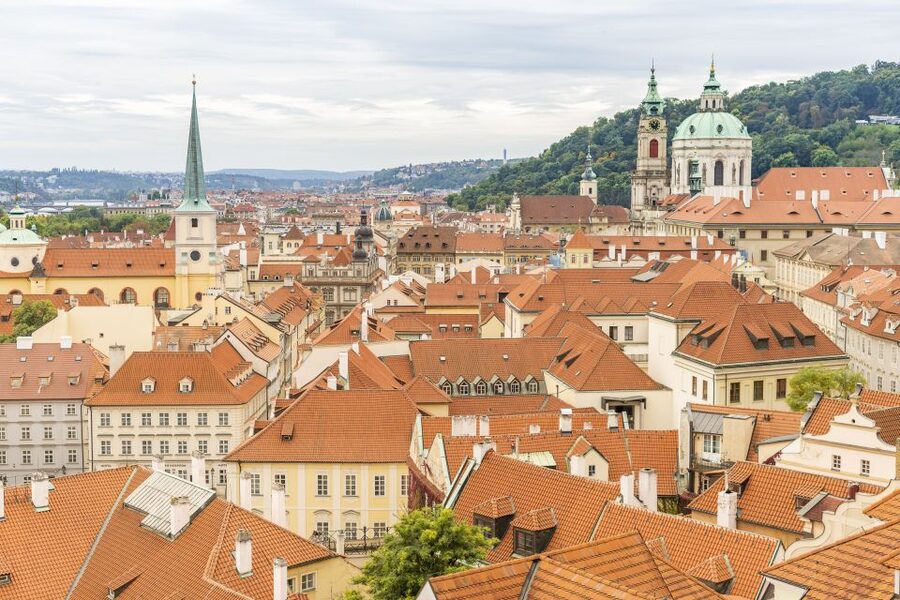
REVIEW · CASTLE ENTRY TICKETS
Prague: Castle Tour with Local Guide and Entry Ticket
Prague Castle is less a single building than a hilltop town of churches, palaces, lanes, and courtyards. This tour helps you make sense of it all, with St. Vitus Cathedral as the grand centerpiece and a local guide supplying the stories that signs alone cannot provide. Guides such as Ross, Hannah, Anna, and Tomáš have been praised for clear, lively explanations.
I especially like the tram ride up from Malostranská and the headphones, which let you keep looking around without losing the commentary. The ticket arrangement also saves time at the entrance. The main caution is group size: although a small-group option is offered, one session had 19 people, so the experience may feel less intimate than the wording suggests.
Key points to know before booking
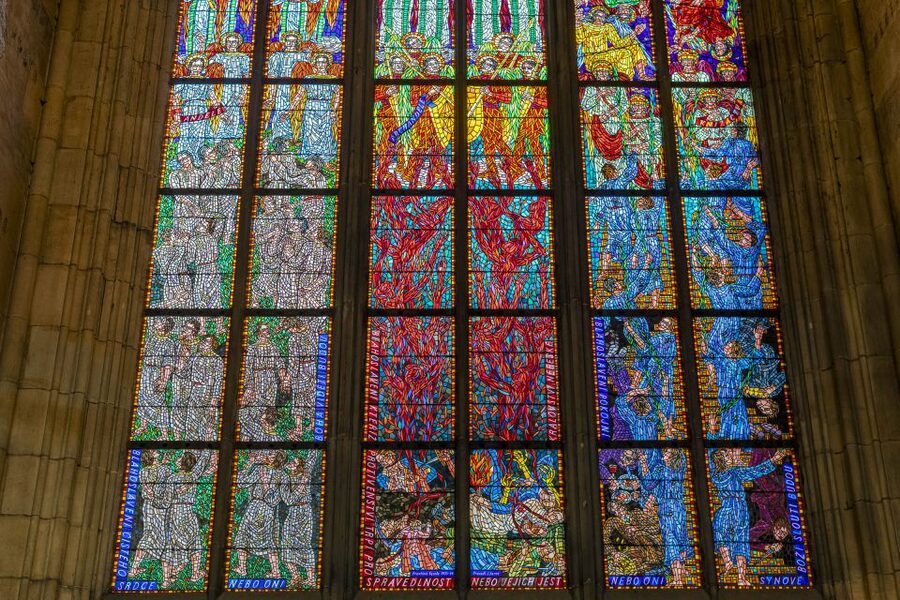
- St. Vitus Cathedral is the visual high point: See Alfons Mucha’s Art Nouveau window, medieval mosaics, royal tombs, chapels, and Gothic details.
- The tram saves energy: You meet at Malostranská metro station and ride toward the castle rather than climbing the hill from below.
- Headphones matter in crowded rooms: You can hear the guide while looking at stained glass, taking photos, or moving through busy spaces.
- The tour connects buildings to Czech history: The Defenestration of Prague and the Thirty Years War become easier to understand with a guide.
- Golden Lane provides a smaller-scale finish: Its cottages, workshops, and former homes show daily life beneath the castle’s royal grandeur.
- Allow for official closures: Prague Castle can restrict access to some areas at short notice, even when your tour is confirmed.
Why a guide helps at Prague Castle
Prague Castle can look easy on a map, but the complex contains far more than one palace. St. Vitus Cathedral, the Old Royal Palace, St. George’s Basilica, Golden Lane, courtyards, and security points can quickly turn an independent visit into a hunt for the right doorway.
I like this tour because it gives you a route and a story at the same time. Instead of treating each building as an isolated sight, the guide links the castle to Bohemian kings, Habsburg rule, Czech religious conflict, and the modern country.
The 150-minute schedule is long enough to cover the main interiors without turning into an all-day history class. You still have time to look around, take photographs, and stay on your own after the tour if you want to continue exploring.
The guide’s personal style will shape the experience. Ross is frequently praised for making history clear and entertaining, while Hannah is described as friendly, patient, and easy to follow. Anna and Tomáš have also led engaging tours, with explanations that connect the castle to Prague and the wider history of the Czech Republic.
More Castle Entry Tickets in Czechia
- Prague Castle 2.5-Hour Tour Including Admission Ticket
★ 4.7 · 8,927 reviews - Prague: Prague Castle and Lobkowicz Palace Entry Tickets
★ 4.4 · 5,066 reviews - Prague Castle Tour Including Admission Ticket – 2.5 Hour
★ 4.5 · 1,171 reviews
Meeting at Malostranská and riding up by tram
Your meeting point is directly outside the exit of Malostranská metro station, beside a small fountain. In winter, the fountain may be covered, so look instead for the brown and white Meeting Point sign and a guide with an orange umbrella.
The directions are simple, but pay attention to which exit you use. After taking the second escalator from the metro, go left. If you arrive by tram at Malostranská, cross the street and head toward the metro station.
The included tram ticket is a practical touch. The castle sits uphill, and beginning with the ride saves your legs for the courtyards and interiors. It also gives the tour a pleasant start, moving you from the lower town toward the castle district before the main sightseeing begins.
The tour uses a short security line, but security is still part of the process. On very busy days, you may wait at entrances, and official regulations can close parts of the complex with little warning. Your guide will adjust the route when possible, but access to every building is not guaranteed.
St. Vitus Cathedral: Gothic stone and bright glass
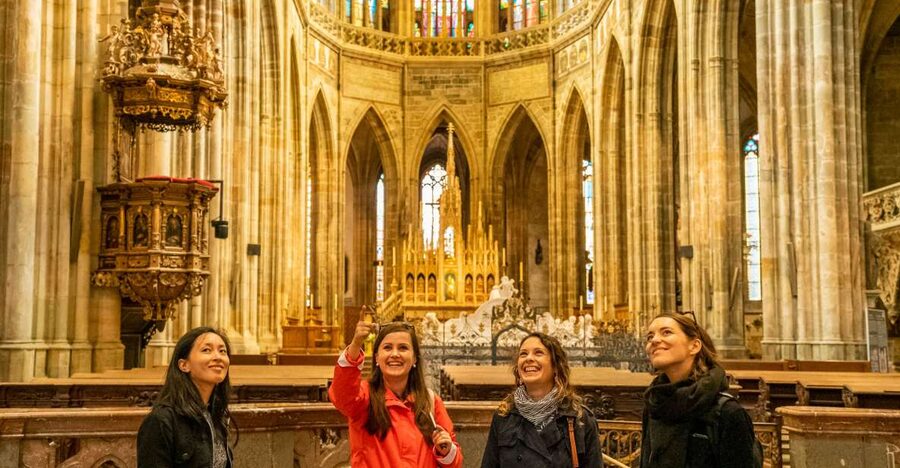
St. Vitus Cathedral is the tour’s grandest stop. From outside, look up at the Gothic structure, pointed details, and gargoyles. The scale can be hard to absorb at first, so the guide’s explanation helps you read the building instead of simply walking through it.
Inside, the light changes the mood completely. The Art Nouveau window by Czech artist Alfons Mucha is one of the most memorable details, with its flowing forms and strong color. The 14th-century mosaic of the Last Judgment adds an older, more solemn note.
The cathedral also holds major royal and religious monuments. You can see the tombs of St. Wenceslas and Charles IV, the baroque tomb of St. John of Nepomuk, and the Chapel of St. Wenceslas. These are not just decorative stops. They show how rulers, saints, and national identity have been tied to this church for centuries.
This is where the headphones become especially useful. Cathedrals are often noisy, and groups can spread out as people stop for photographs. The radio earpieces allow you to stand a little farther back and still follow the guide.
The drawback is crowding. One group included 19 people, and keeping everyone together inside the cathedral was difficult. If you want a very quiet visit or lots of uninterrupted time for photography, an independent visit at a less busy time may suit you better.
Vladislav Hall and the drama of Prague’s defenestration
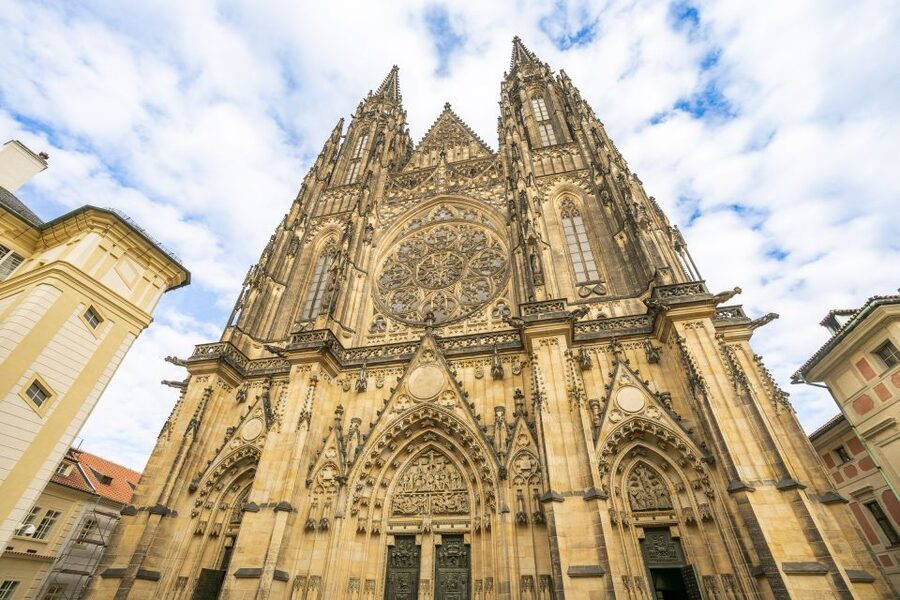
The Old Royal Palace provides a sharp contrast to the cathedral. Here, the focus is less on stained glass and religious art and more on royal government, ceremonies, and political conflict.
The highlight is Vladislav Hall, with its enormous vaulted ceiling. Its size gives you a sense of the courtly events held here, even when the room itself is relatively spare. Your guide can help you notice the engineering and explain how the space was used.
The tour also visits the chamber connected with the Defenestration of Prague. In 1618, Czech Protestant aristocrats threw Catholic governors of the Habsburg emperor and their secretary out of a window. That event helped trigger the Thirty Years War.
This episode can sound almost comic when reduced to the word defenestration, but the consequences were serious. A good guide gives the incident its proper setting and explains why religious and political tensions had become so dangerous.
I find this part especially valuable because the castle stops being only a collection of grand rooms. You begin to see it as a place where decisions were made, rival groups fought for control, and events shaped Central Europe.
More Castle Entry Tickets in Prague
- Prague: 1-Hour Castle Tour With Fast-GET Admission Ticket
★ 4.5 · 435 reviews - Prague: Karlštejn Castle Guided Tour with Entry Ticket
★ 4.3 · 139 reviews - Prague Castle: Admission Ticket With Transfer And Audioguide
★ 4.5 · 111 reviews - Prague: Castle Circuit Entry Tickets with Audio Guide
★ 3.1 · 56 reviews
St. George’s Basilica and the quieter side of the castle
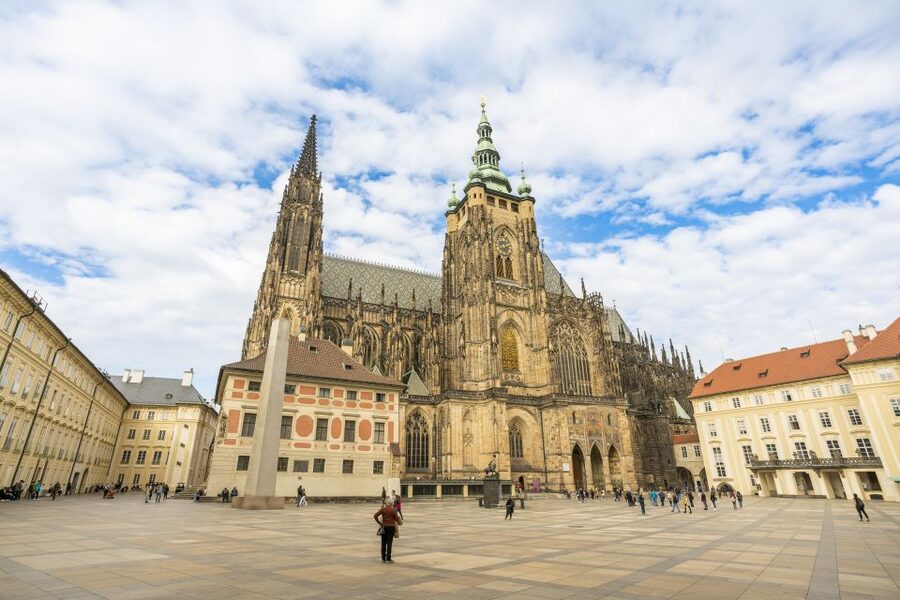
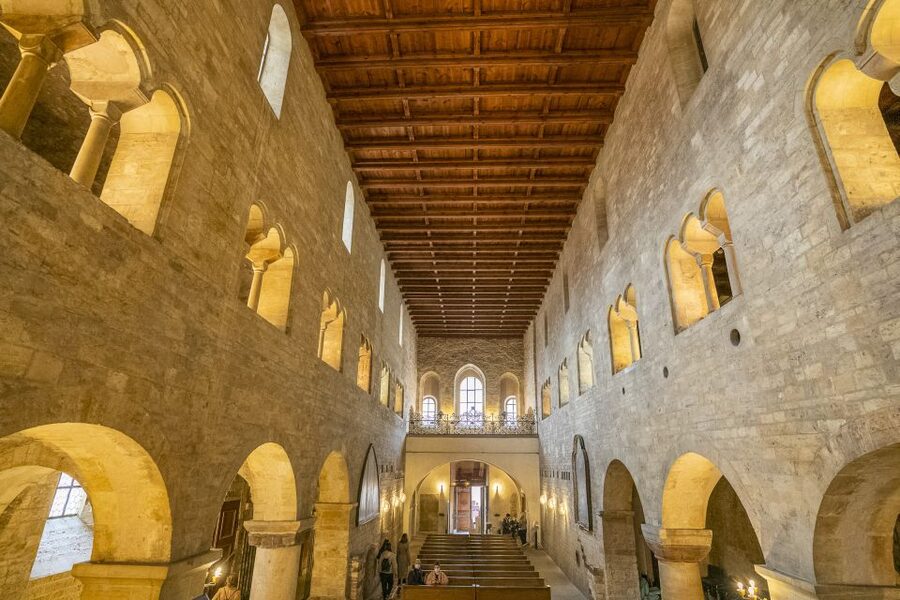
After the cathedral and palace, St. George’s Basilica offers a welcome change of scale. Its stone walls and simpler design feel more solid and restrained than the cathedral’s ornament.
Inside, you can see fragments of 12th-century frescoes. The double staircase leads to the remains of St. Ludmila, adding a devotional focus to the visit. The basilica’s smaller size makes it easier to pause and take in individual details.
This stop also helps balance the tour. Prague Castle is not only Gothic towers and royal ceremony. It includes older religious buildings whose plain surfaces reveal how architectural styles changed over time.
The guide’s commentary is useful here because some of the most important details are easy to pass. Without context, old stone, faded paint, and a staircase may seem less striking than a huge cathedral window. With an explanation, they become part of the castle’s longer story.
Golden Lane and the lives beneath the palace
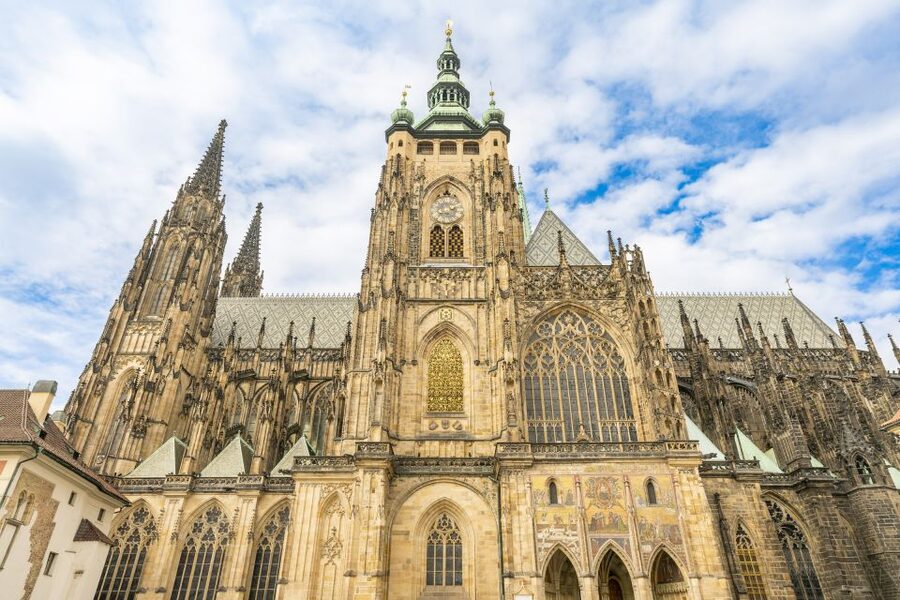
Golden Lane is the most intimate stop on the route. The small cottages were first built for the castle’s sharpshooters and later housed goldsmiths. In later centuries, artists including Franz Kafka lived there.
The reconstructed workshops and homes let you see how ordinary working people lived in the shadow of the royal complex. The tiny scale is the point. After the broad spaces of Vladislav Hall and the cathedral, these low cottages bring the visit back to daily life.
Golden Lane can be crowded, and the narrow passage makes movement slower. The headphones help you hear the guide while the group works its way along the alley. You may also want to take photographs quickly, since other groups will be moving through the same space.
This is a good final stop because it leaves you with more than an image of royal Prague. You see the castle as a working district, with guards, craftsmen, servants, artists, and families connected to the powerful institutions above them.
What the 150-minute pace feels like
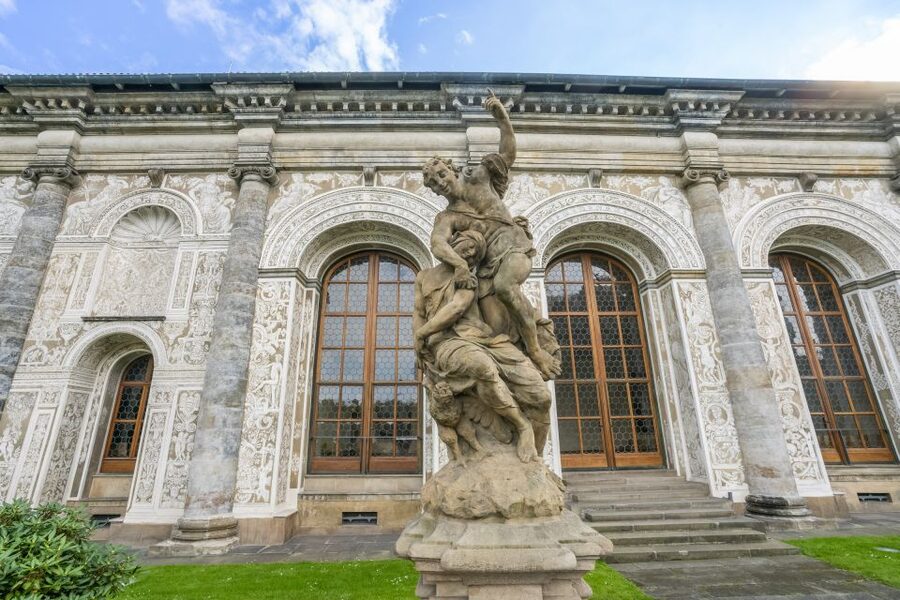
Two and a half hours is a sensible length for this route. The castle contains enough art and history to fill a full day, but most people do not want every room explained at equal length.
The guides generally keep the tour moving, with enough time at each major stop for the main story and a look around. Several guides have been praised for keeping the pace comfortable and for answering questions without letting the group fall behind.
Cold weather affects the experience. Parts of the tour take place outdoors, and one winter group spent much of the time moving through open spaces in freezing conditions. Wear warm layers in winter and comfortable shoes in every season.
The end of the tour is flexible. You can leave the castle district by tram, walk down steps, or stay longer to explore on your own. That freedom is useful if you want to revisit the cathedral or take your time in Golden Lane.
Small group, private tour, or a larger gathering
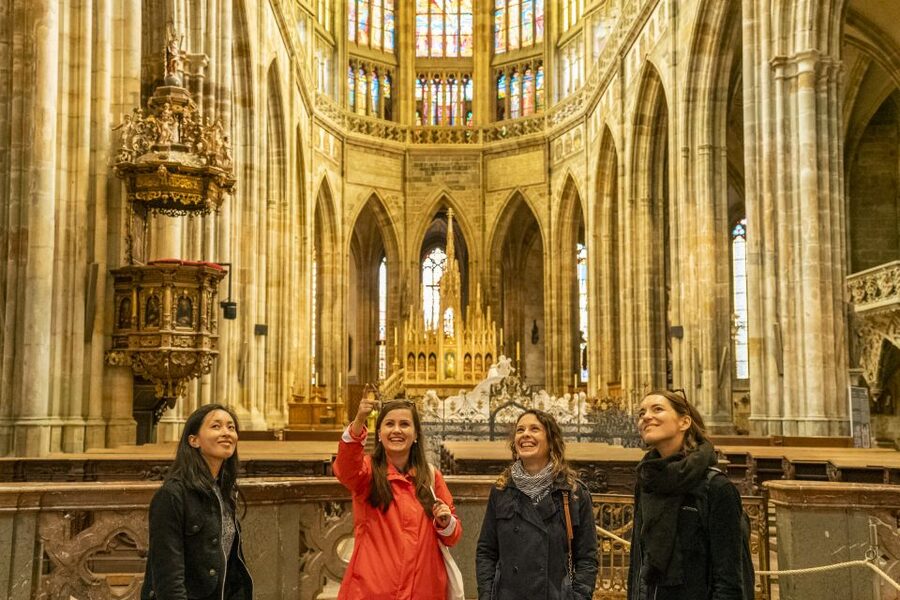
The experience offers a choice between a small-group and private format. A private tour is the better choice if you want to ask many questions, move at your own pace, or keep the visit focused on particular interests.
The small-group format should offer a good balance of cost and personal attention, but do not assume that every departure will contain only a handful of people. One group had 19 participants. That is manageable with headphones, but it is not the same as a quiet tour with six or eight people.
The radio system helps considerably. You can hear the guide even if you pause to look at a window or get briefly separated by another group. This was one of the most consistently useful features of the experience.
Guides may also adjust the tour for the people present. A guide accommodated participants with limited mobility, and other groups received extra time where interest was highest. Still, the route includes uneven historic surfaces, stairs, and outdoor walking, so comfortable shoes are essential.
Is the $61 price good value?
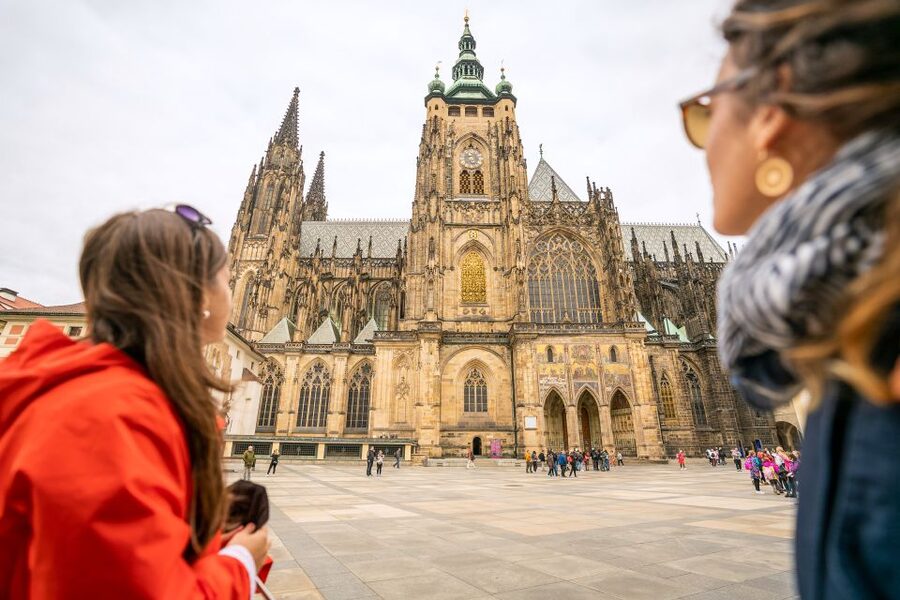
At $61 per person, the cost includes the tram ticket, Prague Castle admission, a local guide, headphones, and use of the short security line. The value depends on how much structure and historical context you want.
If you only want to enter the castle and wander, you could prefer a self-guided visit. But the complex is large, and the entrance system, route, and buildings can be confusing. The guide saves you from sorting out the main sights on your own and helps you understand what you are seeing.
The ticket also covers St. Vitus Cathedral, the Old Royal Palace, St. George’s Basilica, and Golden Lane. Those admissions, plus the tram ride, make the price easier to justify for a first visit.
I would consider it good value for anyone who wants the essential castle sights in one organized visit. It is less compelling for repeat visitors who already know the complex or prefer spending a long time with one room, monument, or photographic subject.
You can cancel up to 24 hours before the start for a full refund, and the reserve-now, pay-later option gives you some flexibility when arranging a busy Prague schedule.
Languages, children, and practical details
Live commentary is available in English, Italian, French, Spanish, German, and Russian. Check the available language when choosing your start time.
Children aged five and under go free. The tour involves walking through historic buildings and outdoor areas, so bring shoes that can handle a long visit and stairs.
The meeting point is easy to find if you follow the sign and orange umbrella instructions. Arrive with enough time to locate the correct metro exit, especially if you are unfamiliar with Prague’s underground stations.
Prague Castle can close sections for official events or other regulations. These changes may happen at the last minute. The guide will try to provide a strong visit using the areas that remain open, but no tour can promise access to every building on every date.
Should you book this Prague Castle tour?
I would book this tour for a first visit to Prague Castle, especially if you want the major sights without spending time working out the route. The tram ride, included admission, headphones, and clear historical explanation make the day easier and more rewarding.
Choose the private option if personal attention matters most. Choose the small-group option if you want a lower price and do not mind the possibility of a larger gathering.
Skip it if you already know the castle well or want to explore at your own slow pace. For most first-time visitors, though, the guide turns a huge and sometimes confusing complex into a readable story, from royal tombs and Gothic glass to political upheaval and tiny workers’ cottages.
FAQ
How long does the Prague Castle tour last?
The tour lasts 150 minutes, or two and a half hours.
Where does the tour meet?
Meet directly outside the exit of Malostranská metro station, near the small water fountain. Look for the brown and white Meeting Point sign and a guide holding an orange umbrella.
How do I find the meeting point from the metro?
After taking the second escalator from the subway, go left.
How do I find the meeting point after arriving by tram?
After getting off at the Malostranská tram stop, cross the street and walk toward Malostranská metro station.
Is the tram ride included?
Yes. The tour includes a tram ticket for the ride from Malostranská toward Prague Castle.
What does the castle admission include?
Admission includes St. Vitus Cathedral, the Old Royal Palace, St. George’s Basilica, and Golden Lane.
Which languages are available?
Live guided commentary is available in Italian, French, Spanish, English, German, and Russian.
Are headphones provided?
Yes. Headphones are provided so you can hear the guide in crowded areas and while looking around the buildings.
Can parts of Prague Castle be closed?
Yes. Some areas may close at short notice because of official regulations. The guide will do their best to adjust the visit, but access to every building cannot be guaranteed.
Are young children charged?
Children aged five and under go free of charge.
Can I cancel the booking?
Yes. You can cancel up to 24 hours in advance for a full refund.
Can I pay later?
Yes. The reserve-now, pay-later option lets you book without paying immediately.
Just added around Prague
- Tour of Prague Castle in italian language ticket included★ 4.9 · 25 reviews
- Prague Castle: Admission Ticket With Transfer And Audioguide★ 4.5 · 111 reviews
- Private Walking tour: From Charles Bridge to Prague Castle★ 4.7 · 13 reviews
- Prague: Castle and Jewish Quarter Tour★ 4.8 · 45 reviews
- Prague: Private tour to the historic fortress of Vyšehrad★ 4.9 · 16 reviews
- Prague’s Best Hidden Gem: Vysehrad Castle & Historic Fort★ 5.0 · 17 reviews
- Coutryside e-bike tour to Karlstejn Castle★ 4.9 · 9 reviews
- Prague: Prague Castle Walking Tour with Golden Lane in German★ 5.0 · 45 reviews
Castle Entry Tickets, compared.

Granada: Alhambra and Nasrid Palaces Entry Ticket
Read our review →
Edinburgh Castle: Guided Walking Tour with Entry Ticket
Read our review →
Prague Castle 2.5-Hour Tour Including Admission Ticket
Read our review →

Granada: Alhambra Entry Ticket with Audio Guide
Read our review →Edinburgh Castle: Guided Walking Tour with Entry Ticket
Read our review →
Browse the lists this tour appears in