
REVIEW · CASTLE ENTRY TICKETS
Manta: Manta Castle Entry Ticket
Manta Castle gives you an unusual mix of alpine scenery and courtly art. Built as a 13th-century military outpost, it later became a refined residence, with the Baronial Hall holding the visit’s greatest surprise: grand late-Gothic frescoes filled with knights, worthy women, the Fountain of Youth, and the god of Love.
I like the way this ticket lets you see more than a fortress shell, including the Hall of Grotesques, the old kitchen, cellars, church, and shaded grounds. I also like the price: at $12 per person, it is an easy cultural stop near Turin. The main drawback is the short one-hour duration, especially if you want time to study every painting or need to take the uphill approach slowly.
Key points at a glance
- The Baronial Hall: See the Fountain of Youth and the nine worthies and nine worthy women in striking 15th-century dress.
- A castle with two lives: Follow the building from military outpost to lavish family home under Valerano of Saluzzo.
- The Hall of Grotesques: Look up at a Mannerist ceiling inspired by Raphael’s Vatican loggias.
- More than the main room: Visit the vaulted kitchen, immense fireplace, cellars, and castle church.
- Alpine setting: Enjoy views toward the Varaita Valley with Monte Viso forming the backdrop.
- Good practical value: The $12 ticket includes castle entry, with free cancellation up to 24 hours before the visit.
Why Manta Castle is worth the trip from Turin
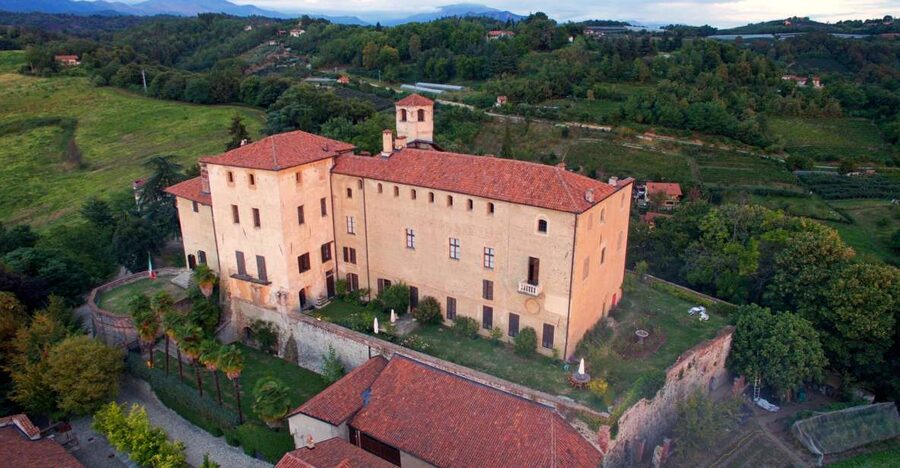
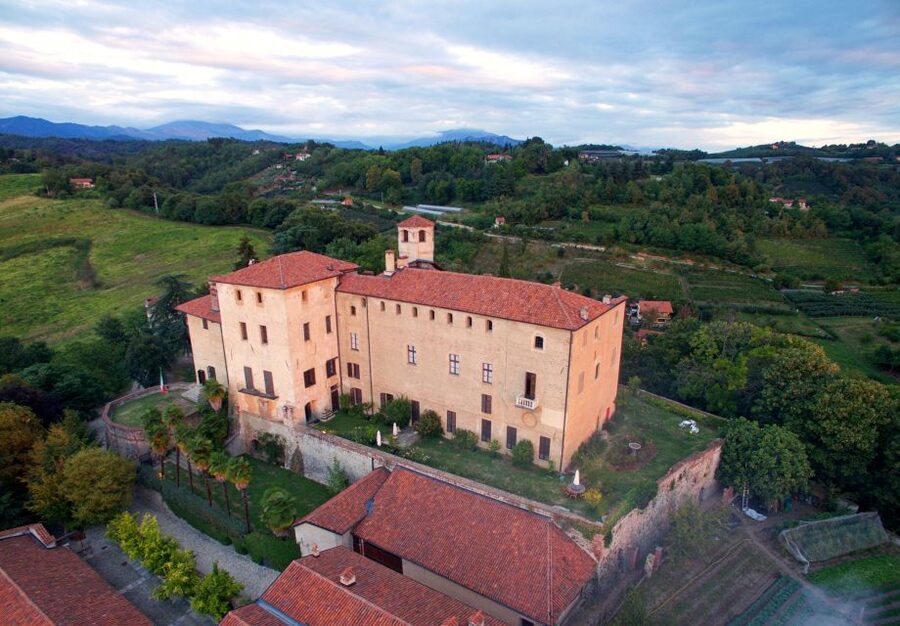
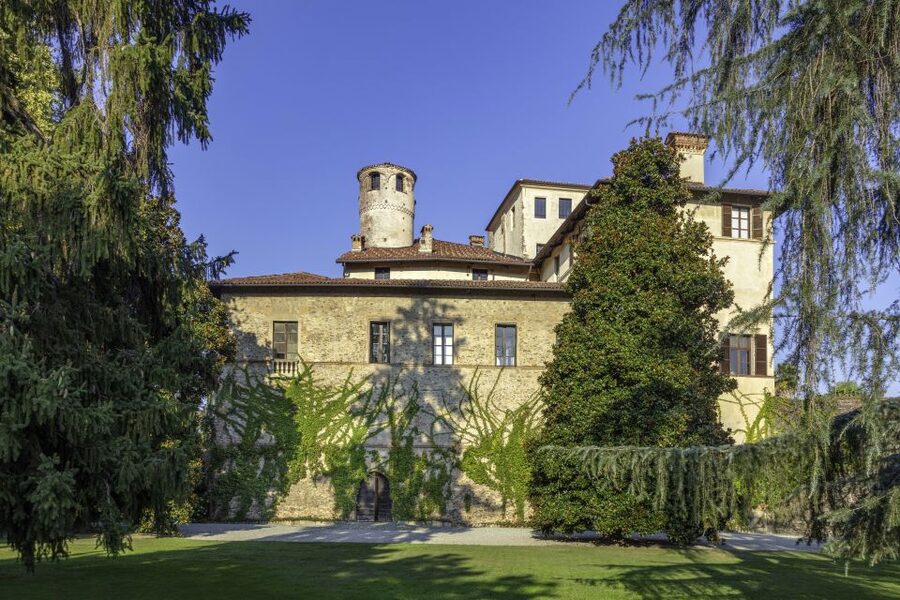
Manta Castle sits about 40 kilometers from Turin, in Piedmont, beneath the sharp outline of the Monviso massif. The setting matters. You are not looking at a sealed museum in a city street. The castle rises against the Cottian Alps, and the surrounding hills help explain why this site was chosen in the first place.
The fortress began in the 13th century as a military outpost. In the 15th century, Valerano, an enlightened ruler of the Marquisate of Saluzzo, ordered a major transformation. The stronghold became a family residence, and its rooms were decorated for a courtly world of ideals, stories, and moral lessons.
That change gives the castle its character. You can read the building in layers. The heavy defensive beginnings are still there, but inside you find art made for prestige and pleasure. I like this contrast because it gives you something to look for beyond stone walls and mountain views.
Manta is also part of The Dukes of the Alps, a cultural route focused on the House of Savoy. You do not need to know the full story of that dynasty to enjoy the castle, but the connection adds useful context. This was a region where military power, noble families, religion, and art were closely linked.
More Castle Entry Tickets in Italy
- Castel Sant’Angelo Entry Ticket & Audioguide
★ 4.4 · 5,472 reviews - Rome: Castel Sant’Angelo Entry Ticket & Digital Audioguide
★ 4.7 · 5,347 reviews - Rome: Castel Sant’Angelo Entry Ticket & Audio App
★ 4.3 · 4,952 reviews
The Baronial Hall and its remarkable fresco cycle
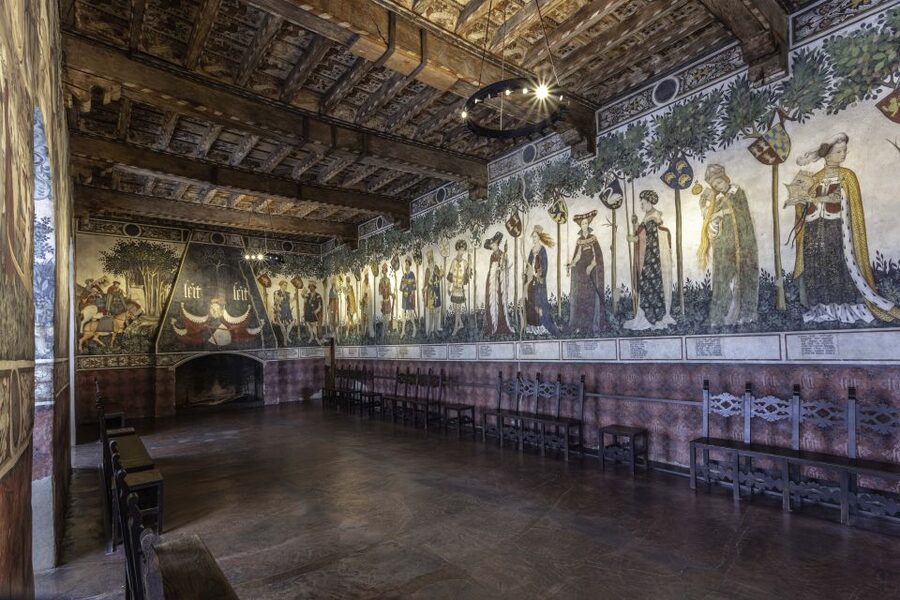
If you have only one hour, give the Baronial Hall most of your attention. This is the emotional center of the visit, and it is where the $12 admission earns its keep.
On the southern wall, you will see the myth of eternal youth. At its heart is the Fountain of Youth, topped by the god of Love. The scene draws from the chivalric tale Roman de Fauvel, a medieval story world shaped by romance, allegory, and moral warning.
The subject is more than decorative fantasy. A fountain promising youth would have carried a clear appeal for a noble court, but medieval and early Renaissance art often used such stories to raise questions about vanity, desire, and the limits of human life. I suggest you spend a few quiet minutes simply studying the figures and the way the scene fills the wall.
The opposite side presents the nine worthies and nine worthy women of classical antiquity. They represent military courage and moral virtue, and their clothing reflects the 15th century rather than the ancient world they are meant to represent.
That detail is worth noticing. Medieval artists often imagined famous figures from the past in contemporary clothing and armor. The result tells you as much about Valerano’s world as it does about classical heroes. The people shown here are not distant museum pieces. They were presented as examples for the noble audience who occupied the room.
The frescoes are the main reason I would make a special visit to Manta Castle. They are unusual, visually bold, and tied directly to the ideals of medieval chivalry. If you prefer paintings with a clear story, this room will give you plenty to examine.
The Hall of Grotesques and the castle’s later makeover
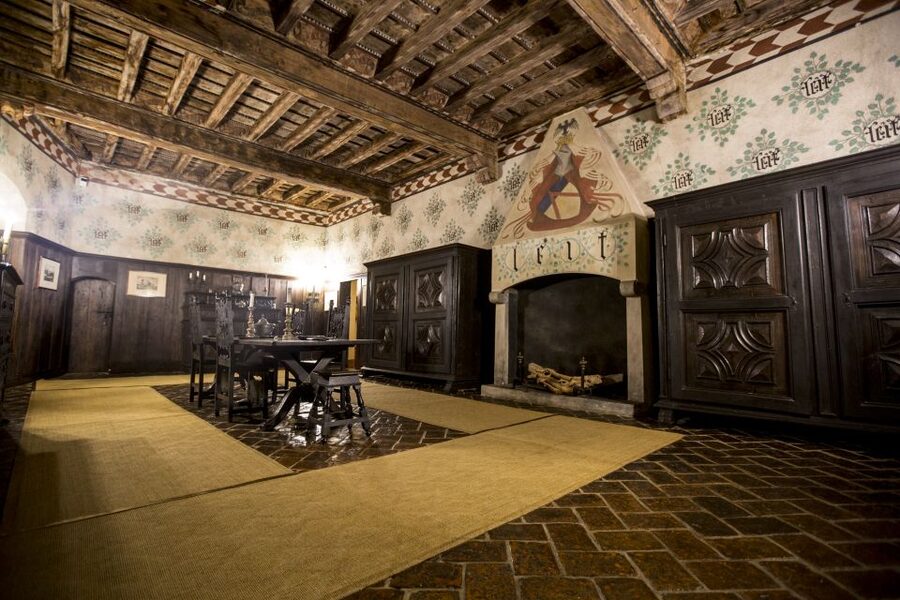
The castle changed again in the mid-16th century. That period is represented by the Hall of Grotesques, a room with a decorated ceiling covered in paintings and stucco.
Its style is Mannerist, with ideas drawn from the loggias associated with Raphael at the Vatican. You will find a different mood here than in the Baronial Hall. The earlier room centers on noble ideals and storytelling. The later room plays with ornament, pattern, and visual surprise.
Look upward as soon as you enter. The ceiling is the point, and it is easy to miss details if you focus only on the walls or walk through too quickly. The room shows how a medieval fortress continued to change as fashions shifted and noble families wanted more refined surroundings.
I like this part of the castle because it prevents the visit from becoming a single-room stop. You see two distinct artistic moments, each linked to a different stage in the building’s life. The late-Gothic frescoes feel tied to chivalric culture, while the Hall of Grotesques reflects the polished tastes of the 16th century.
The comparison also helps you understand the castle as a lived-in residence. Owners did not preserve every room in one fixed style. They renovated, redecorated, and adjusted the building to suit their time.
Kitchen, cellars, and the practical side of noble life
After the grand rooms, make time for the service areas. The large kitchen has a vaulted ceiling and an immense fireplace. It offers a useful change of scale from the decorated halls.
A room like this brings the castle down to earth. Noble households depended on extensive food preparation, storage, heating, and staff work. The kitchen helps you picture the machinery behind formal life, even if your main interest is art.
The cellars add another practical layer. Together, the kitchen and cellars show that Manta was not simply a place for ceremonies. It was a working residence that needed supplies and labor every day.
Because the visit lasts about one hour, you may need to keep moving. If the frescoes are your priority, see the Baronial Hall first or allow extra attention there before exploring the service rooms. If you enjoy architecture and domestic spaces, the kitchen may be one of the most satisfying stops because of its vaulted ceiling and oversized fireplace.
There is no food or restaurant included with the ticket. Plan this as a cultural visit rather than a meal stop. The admission covers entry to the castle itself.
Same region, a different set of walls:
- Rome: Castel Sant’Angelo Entry Ticket with Audio guide
★ 4.4 · 3,646 reviews - Castel Sant’Angelo: Ticket with optional Vatican or Pantheon
★ 4.4 · 3,088 reviews - Milan: Sforza Castle Entry Ticket with Digital Audio Guide
★ 4.0 · 2,675 reviews - Rome: Castel Sant’Angelo Guided Tour
★ 4.7 · 1,779 reviews
The castle church and its Passion frescoes
The castle church was commissioned by Valerano and decorated with important frescoes showing the Passion of Christ. It gives the visit a more solemn tone.
The church also helps explain the role of religion in a noble residence. A family home of this rank was not only a place for feasts and political business. Religious practice had a central place in daily life, and commissioning painted scenes of Christ’s Passion was both a personal and public statement.
When you enter, take time to compare the church paintings with the secular scenes in the Baronial Hall. The subjects are different, but both spaces use painted images to teach, inspire, and express the values of the people who commissioned them.
This stop may appeal most to visitors interested in religious art and medieval patronage. If you have limited time, it remains worth seeing, but the Baronial Hall is still the room I would put first.
The Varaita Valley views and the setting around Manta
The castle grounds are large and shaded, with views over the hillsides of the Varaita Valley. Monte Viso, or Monviso, provides the strongest visual marker, with its sharp profile rising above the surrounding area.
The grounds give you a chance to slow down after the interior rooms. I like having this outdoor pause because the castle can feel visually dense, especially after several painted ceilings and fresco cycles. The trees and open views let you reset your eyes.
The setting also puts the building’s military origins into perspective. A fortress needed a strong position, but a noble residence benefited from attractive surroundings too. At Manta, those purposes meet. The same high ground that offered strategic value later helped create an impressive family home.
Do not treat the outdoor area as an afterthought. If the weather is good, it is one of the best places to understand the castle’s relationship with Piedmont. You can see why the location works as part of a larger day in the region, especially if you are already exploring the area around Turin and the Cottian Alps.
One hour inside, and how to use it well
The stated duration is one hour, and that is enough for a focused visit. It is not generous if you like to read every detail, pause at every fresco, and spend time outdoors.
I would divide the hour in this order:
- Start with the Baronial Hall and study both frescoed walls.
- Continue to the Hall of Grotesques, looking carefully at the ceiling.
- See the church and its Passion scenes.
- Visit the kitchen and cellars.
- Finish in the shaded grounds if time allows.
This order puts the most distinctive art first. You can then use the remaining time for the rooms that explain how the household functioned.
The ticket does not appear to be a guided tour, and no guide name is provided. You should therefore expect an entry visit rather than a named guide-led program. That can suit independent visitors who prefer to set their own pace, but anyone wanting detailed interpretation may need to do some preparation before arriving.
A practical note: one verified booking comment describes the walk up to the castle as worth the effort, but also mentions parking beside the local elementary school when arriving by camper. That is useful information if you are traveling in a large vehicle. The exact parking arrangement may depend on local conditions, so allow time for the approach rather than assuming you will stop right beside the entrance.
The same booking feedback praises the staff’s kindness. Another notes that getting the tickets was quick, even for someone using the booking site for the first time. You can expect a simple entry process, but keep your confirmation available.
Is the $12 admission good value?
At $12 per person, Manta Castle is priced as an accessible cultural stop rather than a major all-day attraction. The value comes from the quality and variety of what you see in a short visit.
You get the castle, the Baronial Hall frescoes, the Hall of Grotesques, service rooms, church, and grounds. You also get a setting tied to Monte Viso and the Varaita Valley. That is a lot for one hour, especially if you are already touring Piedmont.
The price is less compelling if you expect a long guided program, a meal, or a full-day castle experience. None of those are included. You are paying for admission, not a packaged excursion.
For art lovers, families with older children, and anyone interested in medieval noble residences, I think the price is easy to justify. The Fountain of Youth and the nine worthies give children and casual visitors something visual to follow, while the building’s changes over time offer more for serious art and architecture fans.
Accessibility, flexibility, and who should book
The activity is listed as wheelchair accessible. That makes it a useful option for visitors who need accessible cultural sites, though the supplied information does not provide details about every surface, room, or approach. If you have specific mobility needs, confirm the practical route before arrival.
The booking terms are flexible. You can cancel up to 24 hours in advance for a full refund, and you can reserve now while paying later. That helps if your Piedmont schedule depends on weather or on how long you spend elsewhere.
I would choose Manta Castle for a half-day regional outing or as a carefully timed stop near Turin. You should book it if you enjoy historic buildings with original art, prefer independent visits, and want a place that feels tied to its mountain setting.
I would think twice if you want a long guided explanation, a restaurant on site, or enough time for a slow art study without watching the clock. The one-hour format is efficient, but it rewards planning.
Should you book Manta Castle?
Yes, if your interests include medieval art, noble residences, and Piedmont’s alpine setting. The Baronial Hall frescoes give Manta Castle a clear reason to visit, while the Hall of Grotesques, church, kitchen, cellars, and grounds add welcome variety.
At $12, it is a strong-value ticket for a compact cultural stop. Plan for the uphill approach, especially with a camper or limited mobility, and give yourself a clear hour inside. If you want more time with the paintings, arrive with your priorities set and begin in the Baronial Hall.
FAQ
Where is Manta Castle?
Manta Castle is in Piedmont, Italy, about 40 kilometers from Turin. It overlooks the hillsides of the Varaita Valley, with Monte Viso forming part of the setting.
How much does entry to Manta Castle cost?
The entry ticket costs $12 per person.
How long does a visit to Manta Castle last?
The stated duration is one hour. This is enough for a focused visit, though you may need to move at a steady pace to see every room and spend time in the grounds.
What does the Manta Castle ticket include?
The ticket includes entry to Manta Castle. It gives you access to the castle rooms, frescoes, church, service spaces, and grounds described for the visit.
Is food included with the ticket?
No. Food and restaurant service are not included.
Can I cancel my Manta Castle booking?
Yes. You can cancel up to 24 hours in advance for a full refund.
Is Manta Castle wheelchair accessible?
Yes. The activity is listed as wheelchair accessible. The supplied information does not give further details about the route or every room, so you may want to confirm specific access needs before visiting.
Just added around Italy
- HIKING TOUR: VARENNA, Castle of VEZIO Villa MONASTERO, FIUMELATTE★ 5.0 · 48 reviews
- Walking tour Castel del Monte Unesco site★ 5.0 · 5 reviews
- Castel del Monte & Matera: Private Tour from Bari or Matera★ 5.0 · 5 reviews
- TRANI and Castel Del Monte UNESCO from your accomodation★ 4.5 · 19 reviews
- Castel del Monte: excursion in the Alta Murgia National Park★ 4.5 · 6 reviews
- Castles of Puglia Day Trip from Bari★ 4.5 · 7 reviews
- Tour of the fortifications of Bari: the defenses of the city and their history★ 5.0 · 15 reviews
- Bike Tour into the nature around Castel del Monte★ 5.0 · 7 reviews
Castle Entry Tickets, compared.
Granada: Alhambra and Nasrid Palaces Entry Ticket
Read our review →
Edinburgh Castle: Guided Walking Tour with Entry Ticket
Read our review →
Prague: Castle Tour with Local Guide and Entry Ticket
Read our review →
Prague Castle 2.5-Hour Tour Including Admission Ticket
Read our review →

Granada: Alhambra Entry Ticket with Audio Guide
Read our review →Edinburgh Castle: Guided Walking Tour with Entry Ticket
Read our review →Browse the lists this tour appears in