
REVIEW · MUSEUMS
Hiroshima; Hiroshima Peace Memorial Museum and Castle Tour
Hiroshima’s story is too important to rush past with a map and a few photographs. This three-hour walk brings together the Peace Memorial Museum, the park, the Atomic Bomb Dome, surviving bomb-damaged buildings, and Hiroshima Castle, giving you both the human cost of 1945 and a look at the city that rebuilt itself.
I like the way a guide can explain the memorials in plain language, then adjust the pace when you need more time inside the museum. I also like the less obvious stops, including a school, hospital, and bank connected with the bombing. The main drawback is the tight schedule: one hour in the museum and 40 minutes at the castle may feel short if you read every display carefully.
Key points
- The museum ticket is included, and the tour skips the ticket line.
- The Peace Park and hypocenter receive guided context, not just quick photo stops.
- Surviving buildings add a human scale, showing how ordinary life was affected.
- Guides including Maria, Ihsan, Mehak, and Leo are praised for clear English and flexible pacing.
- Hiroshima Castle changes the subject, shifting from wartime memory to samurai culture.
- Castle admission and the optional museum audio guide cost extra, so budget for them if wanted.
A serious beginning at the Peace Memorial Museum
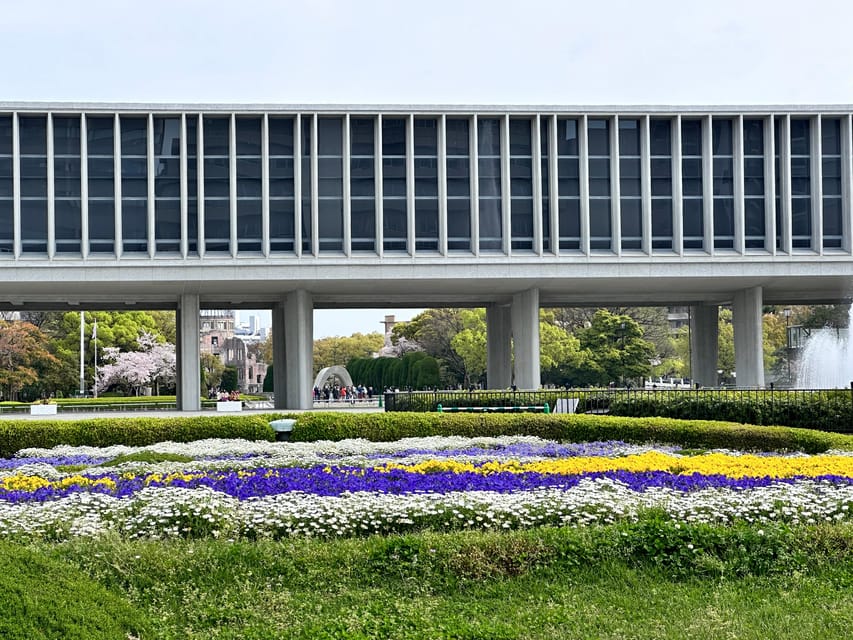
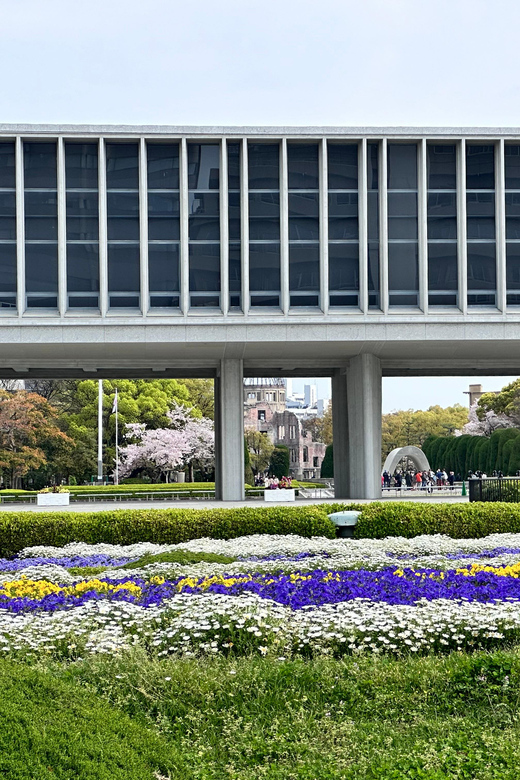
The tour starts near the taxi stand by the Peace Memorial Museum, at 1-2 Nakajimachō. That location puts you right beside Hiroshima’s central memorial area, with no long transfer before the main experience begins.
You spend about an hour inside the museum with your guide. The exhibits show the atomic bombing, its aftermath, and the effect on ordinary people. Some displays depict severe suffering, so this is not a light sightseeing stop. I would prepare children and anyone who may find graphic material upsetting before arrival.
The guide’s role matters here. A museum label can give you a date or a name, but a good guide helps connect the displays with the wider story of Hiroshima, World War II, and the city’s recovery. Maria is repeatedly praised for explaining difficult material clearly and allowing people time to read. Mehak has also been described as giving visitors space to explore part of the museum while explaining other sections herself.
That balance is useful. You are not simply following someone from case to case, and you are not left alone with material that can be hard to place in context. The format gives you room to pause, ask questions, and decide how much detail you can take in.
The included museum ticket adds real value to the $67 price. An optional audio guide is not included, but with a live guide already present, many people may find the additional purchase unnecessary. If you prefer to study every panel at length, however, the one-hour allocation may feel brisk.
More Museum Visits in Japan:
- Osaka Castle: Museum and Tower Entry Ticket
★ 4.5 · 2,380 reviews - Osaka: Osaka Castle & Historical Museum Guided Tour
★ 4.8 · 28 reviews - (Ticket Included) Explore Osaka Castle & Museum of History
★ 4.8 · 21 reviews
Reading the memorials across Peace Memorial Park
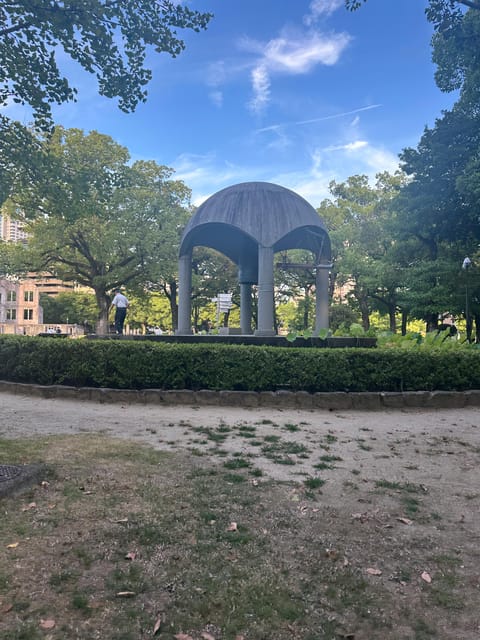
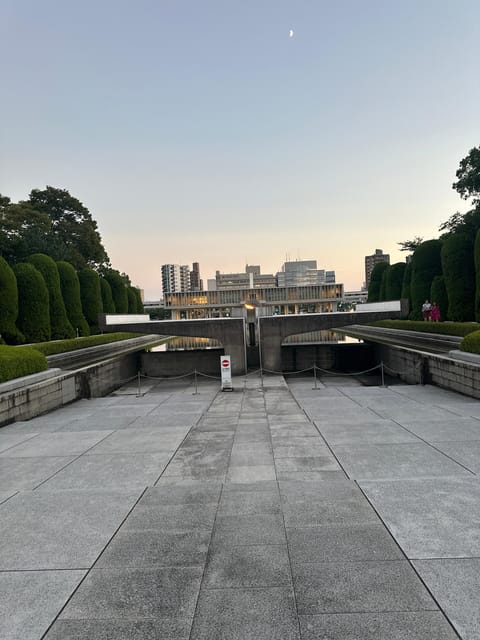
After the museum, the tour spends roughly an hour in Peace Memorial Park. This is where the experience moves from indoor exhibits to a series of monuments, memorials, and open-air places connected with Hiroshima’s past.
Your guide explains the ideas behind the memorials rather than treating them as a string of photo stops. You learn about World War II, the city’s hopes for peace, and the meaning attached to key monuments. That explanation is particularly helpful because the park can seem calm and spacious, while the events it commemorates were anything but calm.
The guides are also able to shape this part around your interests. Several people praised Maria for answering questions at length, suggesting places to eat, and adjusting the route to suit families and different ages. One family with children aged 16, 13, and 8 found that she chose material that kept everyone involved. That flexibility is one of the strongest reasons to choose a guided walk instead of visiting the park alone.
You should still expect an emotional visit. The subject is not softened, but the tone is described as respectful and considerate. Guides such as Ihsan and Bilal have been praised for handling the material with care, while keeping the information clear and easy to follow.
The Atomic Bomb Dome and Hiroshima’s hypocenter
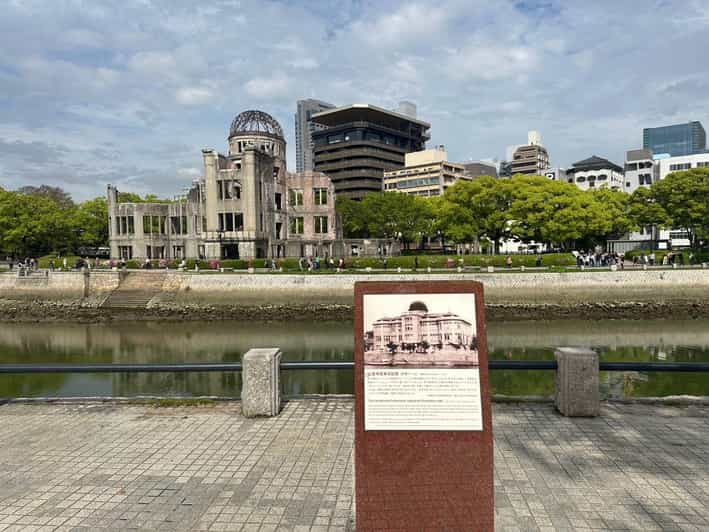
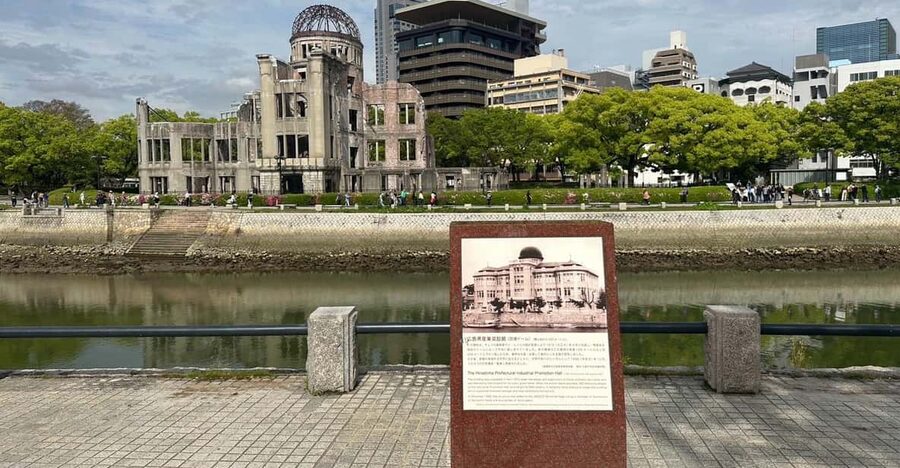
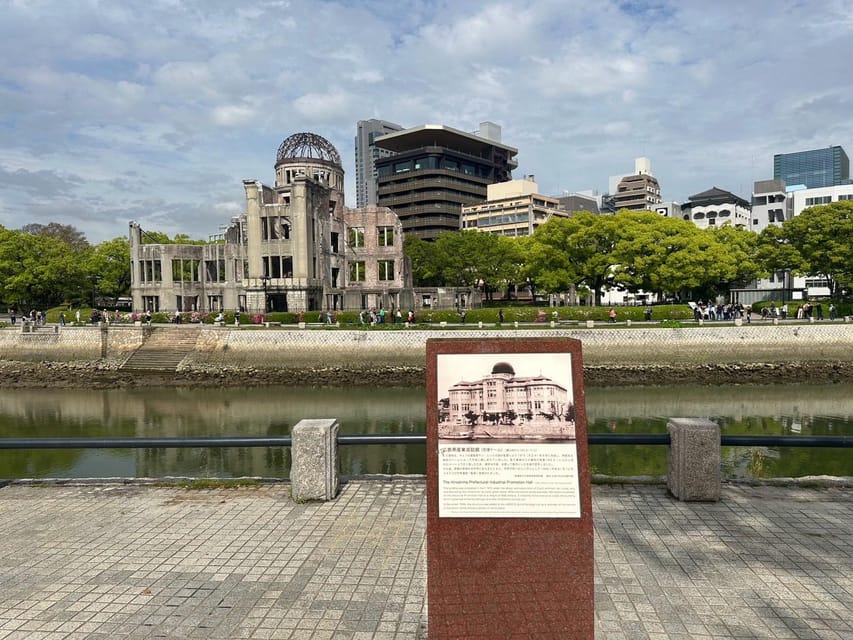
The Atomic Bomb Dome receives about 10 minutes of guided attention. That may sound brief, but the building is powerful even in a short visit. You have time for photographs and an explanation of why this damaged structure remains such an important part of Hiroshima’s memory.
The tour also takes you to the hypocenter, the point associated with the explosion. This stop helps you understand the scale and force of the bombing in a direct way. The guide connects the location with the wider story told in the museum and park, so the route does not feel like unrelated sightseeing.
One practical point: the Dome portion is a quick stop, not a long lecture or an extended interior visit. If you want a slow photographic session, you may need to use your own time after the tour.
The short walk between parts of the route is manageable for most people who are comfortable walking. Wear supportive shoes and clothing suited to three hours on foot. The tour is listed as wheelchair accessible, but the same information also says it is not suitable for wheelchair users. That is a clear contradiction, so anyone using a wheelchair should confirm access arrangements before paying.
The lesser-known buildings that show daily life
One of the most useful features of this experience is the attention given to surviving atomic-bombed buildings. The route can include places such as a school, a hospital, and a bank. These sites help you move beyond the broad facts of the bombing and picture daily life in Hiroshima at that time.
A school tells a different story from a memorial monument. A bank or hospital helps you consider the people who were working, studying, or seeking treatment when the bomb fell. The details make the history less abstract and give you a better sense of the city as a living place rather than only a symbol.
This is also where a local guide earns the fee. Maria, in particular, has been praised for showing lesser-known sites that many people would not find alone. Another guide, Bilal, has been described as spending extra time at major monuments and historical areas, while Ali and Taylor’s guide reportedly extended the visit beyond the advertised duration in some cases. Those longer tours should not be assumed, but they show that the guides may be flexible when time allows.
You should not count on seeing every surviving building named by past participants. The exact route can change with time, group interests, and the guide assigned. Still, the promise of looking at ordinary buildings is important. It gives the tour a more personal focus than a route limited to the museum, park, and Dome.
A few more castle tours around Japan worth a look
- Tokyo Castle & Imperial PalaceーShogun Walking Tour
★ 4.7 · 1,068 reviews - Kyoto: Nijo-jo Castle and Ninomaru Palace Guided Tour
★ 4.7 · 1,020 reviews - Ultimate Osaka Walking Tour: Castle, Dotonbori & Hidden Gems
★ 5.0 · 862 reviews - Tokyo Castle & Imperial PalaceーShogun Walking Tour
★ 5.0 · 724 reviews
Hiroshima Castle and the samurai chapter
The final major stop is Hiroshima Castle, reached after an approximately 10-minute walk. You have about 40 minutes here for sightseeing, a guided visit, and photographs.
The castle changes the mood and subject of the tour. Instead of focusing on the atomic bombing and its aftermath, the guide turns to Hiroshima’s earlier culture and the life of the samurai. Displays may include swords, helmets, and other objects connected with that period.
I like this contrast. Hiroshima is not only a place of wartime memory. The castle helps place the city within Japan’s longer story, and it gives you a chance to think about local culture before the tour ends.
There is an important limitation: castle tickets are not included. The museum admission is covered, but you pay separately for the castle if you choose to enter. One participant felt the castle had less to offer than the memorial area, so I would not book this tour solely for the castle. Treat it as a useful final chapter, not the main reason to go.
The 40-minute visit may suit you if you want a quick introduction. If samurai history is a major interest, you may want extra time at the castle on your own.
What the guides add to the experience
Guide quality is the biggest variable in a walking tour, and the strongest pattern here is clear communication combined with personal attention. Maria appears often among the assigned guides and is praised for her English, patience, cultural explanations, and ability to reshape the route around a group’s interests.
Ihsan is also described as friendly, well informed, and engaging from beginning to end. Leo has been praised for explaining World War II history and learning about the group’s interests. Mehak is described as warm and energetic, while Bilal and Ali are praised for detail, care, and a willingness to spend extra time.
The advertised languages are English, Hindi, Malay, and Urdu. That is useful if you want more than a basic English tour, though you should check the available language when selecting a time.
The tour can work for families, couples, older adults who are comfortable walking, and people visiting Hiroshima for the first time. It is especially useful if you want to ask questions rather than simply read signs. A guide may also offer suggestions for food and other places to see, as Maria did for several groups.
Do not expect every guide or group to create the same experience. A private or small-group format can make it easier to pause and ask questions, but the supplied details do not guarantee a private booking. Confirm the group arrangement if that matters to you.
Is $67 a fair price?
At $67 per person, this is not the cheapest way to see Hiroshima’s memorial district. You can visit public areas independently, and you can decide for yourself how long to spend inside the museum.
The fee makes more sense if you value interpretation. It includes a live guide, a walking tour, the museum ticket, and traditional Hiroshima snacks. You are also paying for a route that connects the museum, park, hypocenter, Dome, surviving buildings, and castle in a single three-hour outing.
The strongest value comes from the human details and the questions a guide can answer. If you want to understand why a monument matters, how the city recovered, or where ordinary life fits into the story, the price is easier to justify.
The value is weaker if you read quickly, dislike guided pacing, or mainly want to photograph the Dome and castle. You also need to allow for the separate castle ticket, any food and drink you buy, and the optional audio guide.
The reserve-now-and-pay-later option and cancellation up to 24 hours before departure add useful flexibility. Starting times vary, so check availability before arranging trains or other fixed plans.
How to prepare for the three hours
Wear comfortable shoes. The route includes walking between outdoor sites, and the experience works best when you are not distracted by sore feet or unsuitable clothing.
Give yourself emotional space. The museum contains shocking material, and the park continues that subject in a quieter but still serious way. If you are traveling with children, explain beforehand that the displays concern real suffering and may be graphic.
Arrive at the stated meeting point near the museum’s taxi stand. Since the tour begins in the memorial district, you do not need to spend the first part of the morning crossing the city.
If you want extra time in the museum, tell the guide early. Several guides are described as patient when people read carefully, but the planned museum visit is about one hour, and the full route is about three hours.
The included traditional snacks are a pleasant small addition, not a meal. Food and drinks are not included, so plan separately if you expect lunch.
Who should book this Hiroshima tour?
I would choose this experience if you are visiting Hiroshima for the first time, want a clear introduction to the bombing and its aftermath, and prefer a human guide to an audio-only visit. It is also a good fit for families who need the pace and explanations adjusted to different ages.
It suits people who want both the memorial district and a little local culture. The castle, samurai displays, and traditional snacks stop the tour from being focused only on one painful chapter.
I would hesitate if you need a fully accessible route, want to spend several hours reading every museum display, or have little interest in guided interpretation. The accessibility information is inconsistent, and the castle admission is extra.
Should you book it?
Book this tour if you want Hiroshima’s memorial sites explained with care and connected to everyday life. The museum, Peace Park, hypocenter, Atomic Bomb Dome, and surviving buildings form the heart of the experience, while Hiroshima Castle adds useful cultural context.
The best choice is to confirm the guide language, accessibility, group format, and castle ticket details before booking. If those points suit your plans, $67 is a reasonable price for a thoughtful introduction, especially when you want to ask questions and see more than the standard monuments.
FAQ
How long does the Hiroshima tour last?
The scheduled duration is three hours.
Where does the tour begin?
It begins at the taxi stand near the Peace Memorial Museum, at 1-2 Nakajimachō.
Is the Peace Memorial Museum ticket included?
Yes. The Peace Memorial Museum ticket is included, and the tour offers skip-the-ticket-line entry.
Is the museum audio guide included?
No. The optional Peace Memorial Museum audio guide costs extra.
Is Hiroshima Castle admission included?
No. Castle tickets are not included in the tour price.
What sites are visited?
The route includes the Peace Memorial Museum, Peace Memorial Park, the Atomic Bomb Dome, the hypocenter, surviving atomic-bombed buildings, Hiroshima Gokoku Shrine, and Hiroshima Castle.
Are food and drinks included?
Food and drinks are not included. Traditional Hiroshima snacks are included.
Which languages are available?
Live guides are available in English, Hindi, Malay, and Urdu.
Is the tour suitable for wheelchair users?
The supplied information is inconsistent. It describes the activity as wheelchair accessible but also says it is not suitable for wheelchair users. Confirm access details with the provider before booking.
Can I cancel the tour?
You can cancel up to 24 hours in advance for a full refund. The reserve-now-and-pay-later option allows you to book without paying immediately.
Just added around Japan
- Tokyo: Edo Castle and Imperial Palace Guided Walking Tour★ 5.0 · 6 reviews
- (Ticket Included) Explore Osaka Castle & Museum of History★ 4.8 · 21 reviews
- Peace Memorial Park, Hiroshima Castle, & Garden Private Tour★ 4.8 · 7 reviews
- Osaka: Osaka Castle Guided Tour with Local Guide★ 4.7 · 78 reviews
- Osaka: Osaka Castle – Tsuruhashi – Tennoji (Spanish Guide)★ 4.7 · 10 reviews
- Osaka: Early Morning Osaka Castle Guided Tour, Avoid Crowds★ 4.9 · 12 reviews
- Osaka: Explore Every Bit of Osaka Castle in 3 Hours★ 5.0 · 5 reviews
- Osaka: Osaka Castle 3 hours Historical Walking Tour★ 4.6 · 14 reviews
Museums, compared.
Chapultepec Castle & Anthropology Museum Tour
Read our review →
Cairo: Egyptian Museum, Citadel, and Old Cairo Guided Tour
Read our review →
Amboise: Clos Lucé Castle, Da Vinci Park and Museum Ticket
Read our review →
Mexico City: Chapultepec Castle and Anthropology Museum Tour
Read our review →
Museum of Egyptian Civilization, Citadel & Old Cairo Tour
Read our review →
The Egyptian Museum, the Citadel, Khan Khalil Bazaar & Old Cairo
Read our review →
Split: Klis Fortress GOT and Olive Museum Entry Tickets
Read our review →Browse the lists this tour appears in