
REVIEW · ROME CASTLE TOURS
Roma – Majesty of Castel Sant’Angelo small group tour
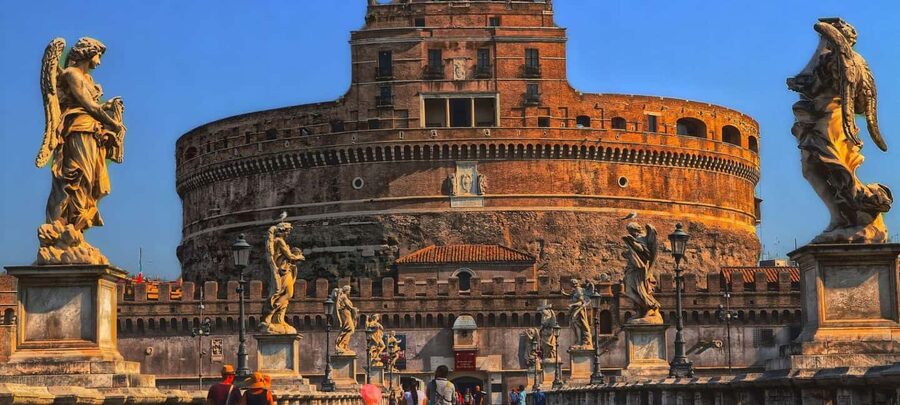
Castel Sant’Angelo is one of Rome’s best time machines. In a single visit, you move from Emperor Hadrian’s mausoleum to a papal fortress, then into richly decorated rooms, old prison spaces, and a terrace with broad views across the city. It is history with thick walls, sharp turns, and a few good mysteries.
I like two things in particular. First, the guide connects the building’s changing uses instead of treating it as a pile of unrelated rooms. Second, the tour gives you access to the upper terrace, where Rome opens up around you. The main caution is timing: the guided portion lasts 105 minutes, but the full activity is listed as two hours, and one past booking felt that not every part was covered.
Key points to know before booking
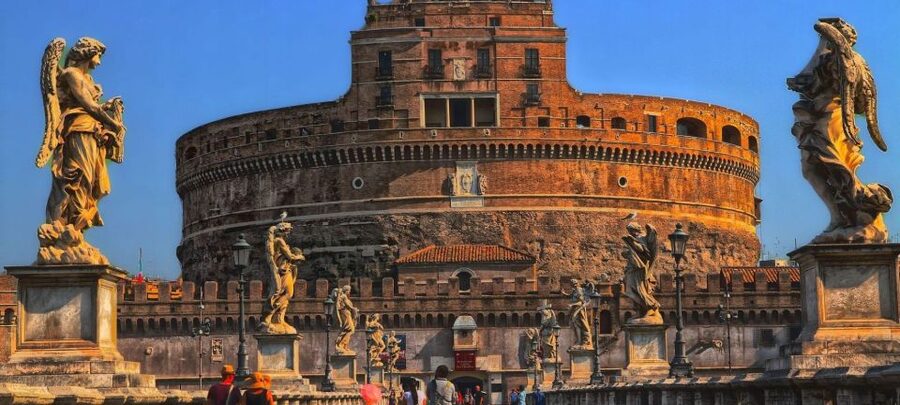
- Roman beginnings: Walk through the mausoleum built for Emperor Hadrian before seeing how later rulers changed it.
- Papal escape route: Learn how the castle served as a refuge, treasury, prison, and military stronghold for the popes.
- Renaissance interiors: See lavish chambers and art connected with Rome’s great Renaissance period, including works associated with Michelangelo.
- Terrace views: Finish high above the Tiber with panoramic views of Rome.
- Small-group format: A live English or Spanish-speaking guide leads the visit, with headsets provided when at least six people take part.
- Practical footwear rule: Bring identification and wear firm, closed shoes. Flip-flops, open-toe sandals, and high heels are not allowed.
Why Castel Sant’Angelo is worth your Rome time
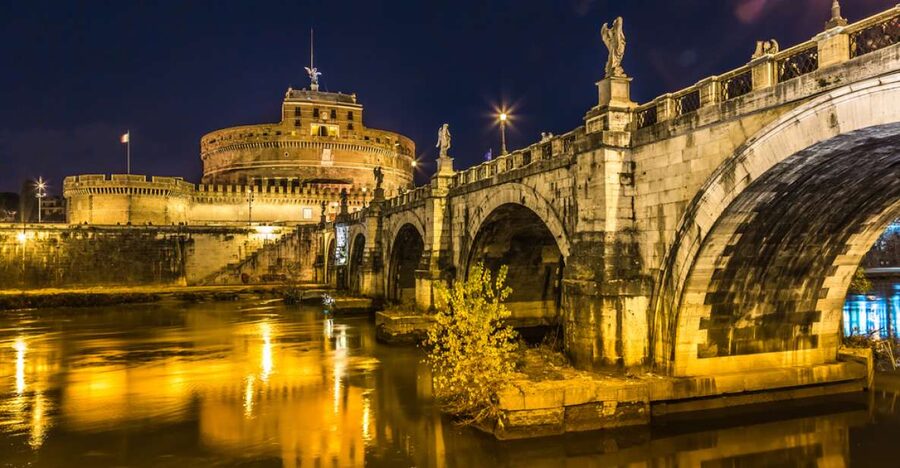
Many Roman sights tell one main story. Castel Sant’Angelo tells several, one laid over another. It began as a grand tomb for Emperor Hadrian and members of his family. Later, it became a military fortress, a papal residence, a storehouse for treasure, and a prison.
That change is the heart of the visit. You are not simply admiring an old building. You are seeing how Rome repeatedly reused the same strong structure when power, danger, and politics changed.
I also like the contrast between the exterior and interior. From outside, the castle looks heavy and defensive. Inside, the route can lead from austere underground spaces to rooms decorated for papal life. The building’s power comes from that sudden shift between stone, shadow, ceremony, and views.
The tour costs $87 per person. That is not a small add-on, especially if you are traveling with several people. The value depends on what you want from the visit. If you only want to enter the castle and wander at your own pace, the price may feel high. If you want the building’s Roman, military, papal, artistic, and political stories tied together by one guide, the cost is easier to justify.
A few more castle tours around Rome worth a look
- Rome: Castel Sant’Angelo Entry Ticket & Digital Audioguide
★ 4.7 · 5,347 reviews - Rome: Castel Sant’Angelo Entry Ticket & Audio App
★ 4.3 · 4,952 reviews - Rome: Castel Sant’Angelo Entry Ticket with Audio guide
★ 4.4 · 3,646 reviews
Meeting the guide on Lungotevere Castello
The meeting point is Lungotevere Castello 50, beside Castel Sant’Angelo. Look for staff carrying a CITY WALKERS sign. Since the meeting point is given as a street address rather than hotel pickup, you need to make your own way there.
There is no pickup or drop-off. Build in time to reach the meeting point without rushing, especially if this is your first day in Rome. The activity is listed as two hours, while the guided tour itself is 105 minutes. That extra time likely covers meeting, entry, and movement through the site, so you should not plan another timed attraction immediately afterward.
The tour includes skip-the-ticket-line access. That matters at a major Roman monument, where buying a ticket and finding the correct entrance can consume useful sightseeing time. Still, you should arrive at the stated meeting time. Skip-the-line access does not mean you can join at any point during the day.
The mausoleum of Emperor Hadrian
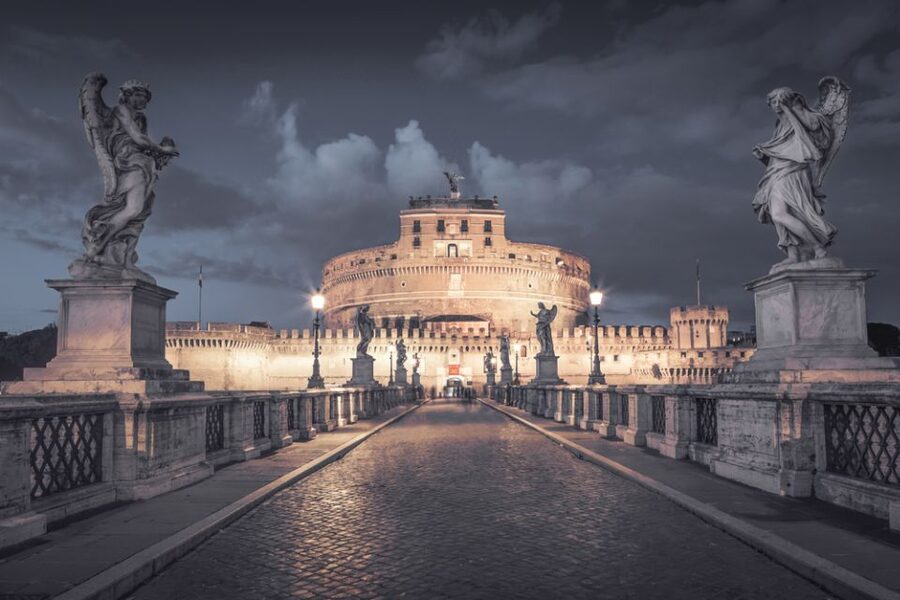
The first major chapter is Castel Sant’Angelo’s original purpose as a mausoleum. Emperor Hadrian ordered the enormous tomb as a final resting place for himself and members of his family.
This beginning gives the castle a different character from the one suggested by its later name. You are starting with a funerary monument, not a fortress. The structure was designed to project imperial authority even in death, with a scale that matched the power of Rome’s emperors.
Your guide’s role matters here. Without context, the building can look like a massive circular stronghold with a confusing series of ramps and rooms. With the story of Hadrian’s tomb in mind, the shape and layout become easier to understand. You can see why later rulers valued the same thick walls and elevated position.
The Roman origin also keeps the tour from becoming only a story about popes. The castle’s first identity came from imperial Rome, centuries before it became a refuge for church leaders.
From imperial tomb to papal fortress
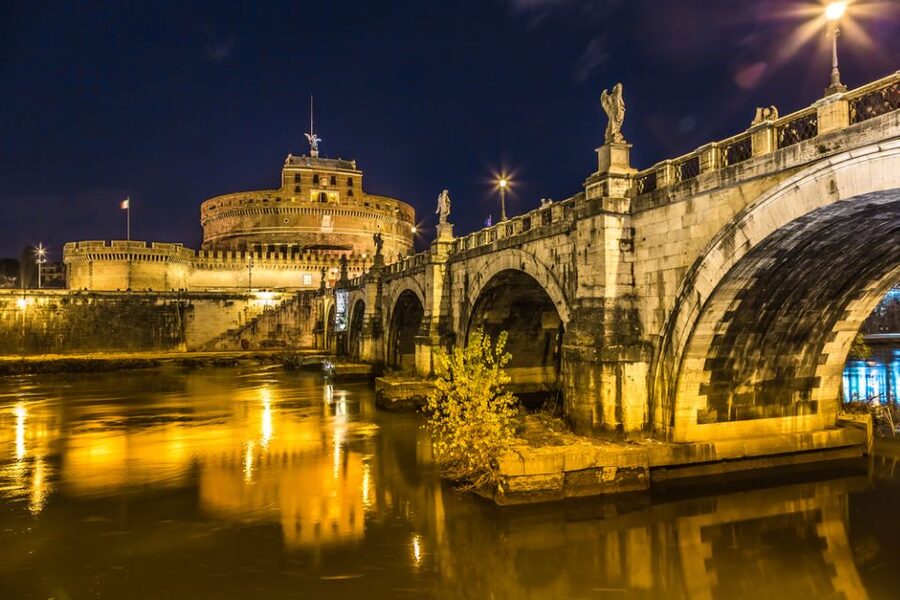
The castle’s second major chapter is military and political. Over time, the former mausoleum became a fortress that helped defend the city and protect the pope.
This is where the visit becomes especially useful for understanding medieval and Renaissance Rome. The popes needed a secure stronghold, and Castel Sant’Angelo offered walls, height, storage, and a strategic position beside the Tiber. It could serve as a place of safety when Rome was under threat.
The castle also functioned as a papal residence and refuge. Those uses explain why parts of the building feel formal and decorated, while others feel severe and defensive. A pope might need a grand chamber for official life, then a secure route or fortified space during a crisis.
The castle’s role as a treasury adds another practical layer. Powerful institutions need somewhere to protect money and valuables, particularly during periods of conflict. Your guide can connect those everyday needs with the larger political story of Rome.
Same region, a different set of walls:
- Castel Sant’Angelo: Ticket with optional Vatican or Pantheon
★ 4.4 · 3,088 reviews - Rome: Castel Sant’Angelo Guided Tour
★ 4.7 · 1,779 reviews - Castel Sant’Angelo Tour with Panoramic Views
★ 4.5 · 1,103 reviews - Castel Gandolfo Lake Kayak and Swim Tour
★ 5.0 · 661 reviews
Dungeons, prison rooms, and darker stories
The route also includes ancient dungeons and prison areas. These spaces offer a sharp change from the grander rooms above.
I would pay attention to the atmosphere here rather than expect a large prison museum. The supplied details do not promise a display of every cell or a full catalog of prisoners. Instead, the prison areas help you understand the castle as a working fortress, where confinement was part of its purpose.
This section is useful for visitors who want more than art and architecture. Castel Sant’Angelo was not only a monument or papal residence. It was also a place where people could be held, guarded, and cut off from the city.
The stories of emperors, popes, and legendary figures add human drama to the stonework. Ask your guide for clarification if a story moves quickly. The castle has many layers, and 105 minutes is enough for a strong overview, not every detail.
Renaissance rooms and Michelangelo’s connection
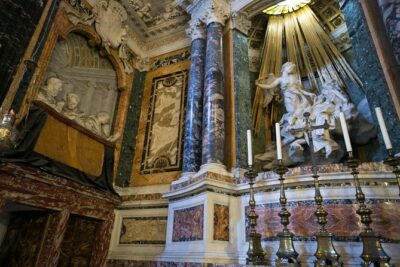
The interior rooms bring the Renaissance into the tour. You can see opulent chambers created for papal life, along with Renaissance art connected to the period’s great names, including Michelangelo.
This is one of the best reasons to take a guided visit rather than simply walk through on your own. A decorated room can be attractive at first glance, but the guide can explain who used it, why it was commissioned, and how it fits the castle’s defensive role.
The appeal comes from the tension between luxury and security. These were not isolated palaces built only for comfort. They were rooms within a fortified complex. A richly decorated chamber could exist only a short distance from thick walls, guarded passages, and prison spaces.
The mention of Michelangelo should be understood in the context of Renaissance splendor rather than as a promise that the castle contains a full collection of his work. The supplied tour details identify Renaissance artistry and Michelangelo’s masterpieces as highlights, but they do not list specific works or rooms. If a particular artist or piece matters greatly to you, ask the guide what you will see on the day.
The terrace and views over Rome
The terrace is the natural high point of the visit. From here, you can look across Rome and see the city from a fortified perch rather than from street level.
I value this kind of ending because it gives you a visual map of the places you have been hearing about. After moving through enclosed rooms and underground spaces, you get open air and a wider sense of the city.
The view is also part of the castle’s military logic. A high terrace was not built simply for sightseeing. Height helped defenders watch the surrounding area and understand the castle’s position beside the Tiber.
Bring your camera, but do not let the terrace turn into a rushed photo stop. Take a moment to connect the view with the building’s story. You are looking from a former imperial tomb, later transformed into a papal refuge and fortress.
How the 105-minute guided route feels
The core tour lasts 105 minutes. That is long enough to cover the major phases of the castle, but it requires a clear pace.
Expect a guided route through the Roman origins, defensive spaces, papal areas, prison sections, Renaissance rooms, and terrace. The guide is expected to explain the castle’s art, architecture, and political uses as you move, rather than leave you to assemble the story yourself.
A previous booking described a relaxed visit lasting about two and a half hours and praised the organization and guides. The official duration here is shorter, so I would plan around the stated two-hour activity rather than assume you will have several extra hours inside.
Another past booking raised a useful warning: not every part of the tour was seen, and the person could not visit Castel Sant’Angelo again that same day. That tells you to treat the route as a structured experience. If you have a must-see room or a specific part of the fortress in mind, ask at the start whether it is included.
Group size, languages, and headsets
The tour is offered in English and Spanish. No guide names are provided, so you cannot choose a particular guide in advance. The important choice is language: select the option in which you can follow explanations about Roman institutions, papal politics, and Renaissance art without strain.
Headsets are provided when at least six people participate. That can make a real difference inside thick-walled rooms, where voices may not carry well and a group can spread out along the route.
The experience is described as a small-group tour, but a specific maximum group size is not provided. If you prefer the freedom to stop for long periods or study every detail, a guided group may feel brisk. If you want a clear route and a steady explanation of the site, the format should suit you well.
Price, flexibility, and practical rules
At $87 per person, this is a mid-to-high priced two-hour activity. You are paying for entry, a live guide, skip-the-ticket-line access, and the time saved by having the site explained in order.
The price makes the most sense if Castel Sant’Angelo is a priority and you want more than an independent walk through the rooms. It is less compelling if you already know the monument well or prefer reading plaques at your own pace.
You can cancel up to 24 hours before the activity for a full refund. You can also reserve now and pay later, which is useful if your Rome schedule is still shifting.
Bring your ID. Wear practical shoes, since flip-flops, open-toe sandals, and high heels are not permitted. Those rules are easy to follow and worth taking seriously when the route includes fortress spaces and uneven or demanding walking conditions.
Who should book this Castel Sant’Angelo tour?
I would recommend it to first-time visitors who want the castle’s long story explained without having to research every phase in advance. It also suits anyone drawn to military history, papal Rome, Renaissance interiors, or city views.
Families and mixed-interest groups may find the changing themes helpful. One person can focus on emperors, another on prisons, another on art, and everyone gets the terrace at the end.
I would think twice if you want a slow art study or a completely flexible visit. The route has a set pace, the timing is limited, and one past booking felt that not everything was covered. You should also check that your preferred language is available before booking.
Should you book it?
Book this tour if you want a clear story of Castel Sant’Angelo, skip-the-line entry, and a guide who can connect Hadrian’s mausoleum with papal power, prison life, Renaissance rooms, and the terrace views.
Skip it if you only want a quick photo from outside or prefer to explore every corner alone. At $87, the tour needs to earn its price through explanation and organization. For a first visit, its strongest value is the way it turns a complicated building into a readable sequence of Roman, papal, military, and artistic chapters.
FAQ
Where does the Castel Sant’Angelo tour meet?
The meeting point is Lungotevere Castello 50, 00193 Rome. Look for staff holding a CITY WALKERS sign.
How long does the tour last?
The activity is listed as two hours. The guided visit inside Castel Sant’Angelo lasts 105 minutes.
What is included in the price?
The price includes a tour guide, entry to Castel Sant’Angelo, and headsets when at least six participants are taking part.
Is transportation included?
No. Pickup and drop-off are not included, so you need to reach the meeting point yourself.
Is skip-the-ticket-line access included?
Yes. The activity includes skip-the-ticket-line entry.
Which languages are available?
The live tour guide is available in English and Spanish.
Do I need to bring identification?
Yes. You should bring your ID.
What footwear is allowed?
You should not wear flip-flops, open-toe sandals, or high heels. Choose practical, secure footwear instead.
Can I cancel for a refund?
Yes. You can cancel up to 24 hours in advance for a full refund. You can also reserve now and pay later.
Just added around Rome
- St. Peter’s Basilica & Castel Sant’Angelo Entry★ 4.1 · 8 reviews
- St. Angel’s Castle: 2-Hour Private Tour★ 5.0 · 9 reviews
- Rome: Skip-the-Line Castel Sant’Angelo Tickets & Audio Guide★ 4.9 · 16 reviews
- Rome: Vatican, St Peter’s Sq & Castel Sant’Angelo PhotoShoot★ 5.0 · 14 reviews
- Rome: Passetto di Borgo Tour & Castel Sant’Angelo Ticket★ 4.4 · 86 reviews
- Rome Pre-Reserved Shared or Private Tour Castel Sant’Angelo★ 4.6 · 68 reviews
- Rome: Vatican and Castel Sant’Angelo Private Photoshoot★ 5.0 · 13 reviews
- Rome: Castle Sant’Angelo Ticket w/ audioguide option★ 3.6 · 25 reviews
Rome Castle Tours, compared.
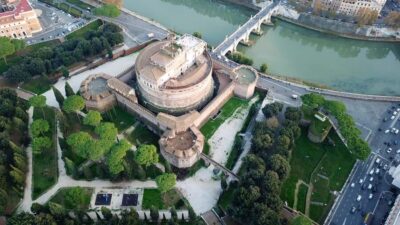
Rome: Castel Sant’Angelo Entry Ticket & Digital Audioguide
Read our review →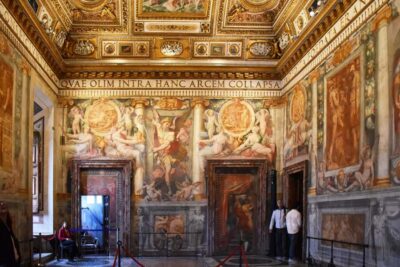
Rome: Castel Sant’Angelo Entry Ticket & Audio App
Read our review →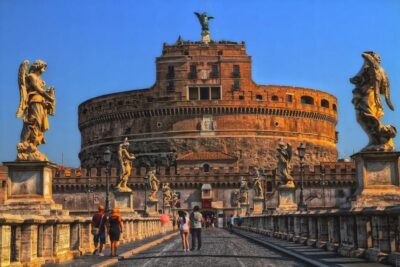
Rome: Castel Sant’Angelo Entry Ticket with Audio guide
Read our review →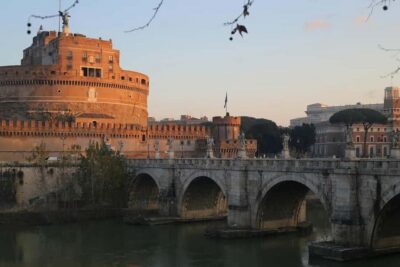
Castel Sant’Angelo: Ticket with optional Vatican or Pantheon
Read our review →


Rome: Castel Sant’ Angelo Ticket and Audio Guide
Read our review →Browse the lists this tour appears in