
REVIEW · GUIDED CASTLE TOURS
Milan: Sforza Castle Guided Tour
Sforza Castle is more than a photogenic fortress beside Parco Sempione. Inside its walls, you move through the changing roles of Milan’s great castle, from Visconti and Sforza stronghold to military barracks, ducal residence, and home to museums, archives, and libraries. The final stop, Michelangelo’s Pietà Rondanini, gives the tour its emotional high point.
I like the small group of up to nine because it gives a guide room to explain details without turning the visit into a marching line. I also like that the ticket and museum entry are included, with skip-the-ticket-line access. The main drawback is the price: at $158.60 per person for two hours, this is a premium visit, and the moderate walking may not suit anyone with back problems.
Key points to know before you book
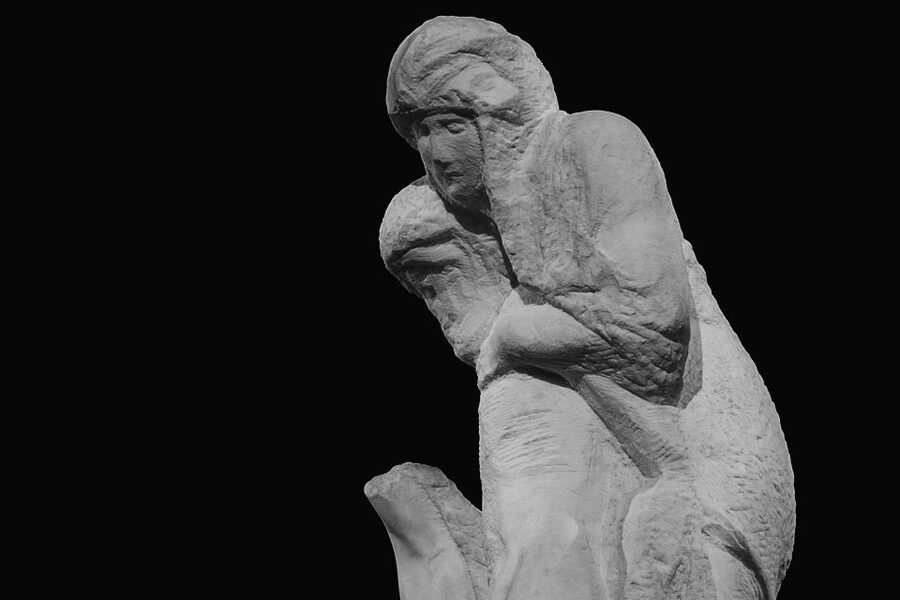
- Michelangelo’s Pietà Rondanini is the tour’s essential stop, and you see it at the end of the visit.
- The castle has had several lives, including fortress, military barracks, private quarters, and museum center.
- Luca Beltrami’s early 20th-century restoration explains much of the castle’s present appearance.
- Groups are limited to nine people, with a radio-guided system included.
- Guide Pier receives special praise for his history and architecture knowledge and impeccable French.
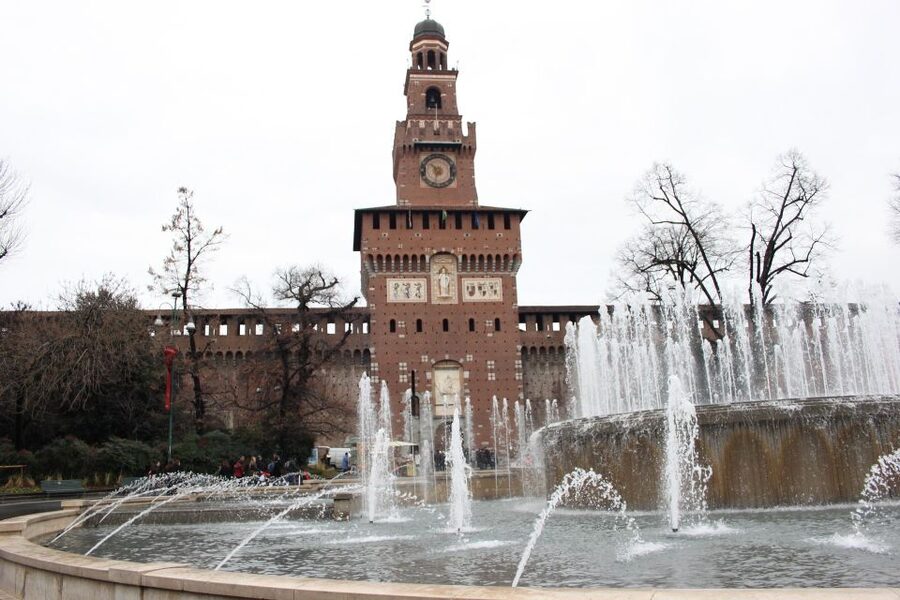
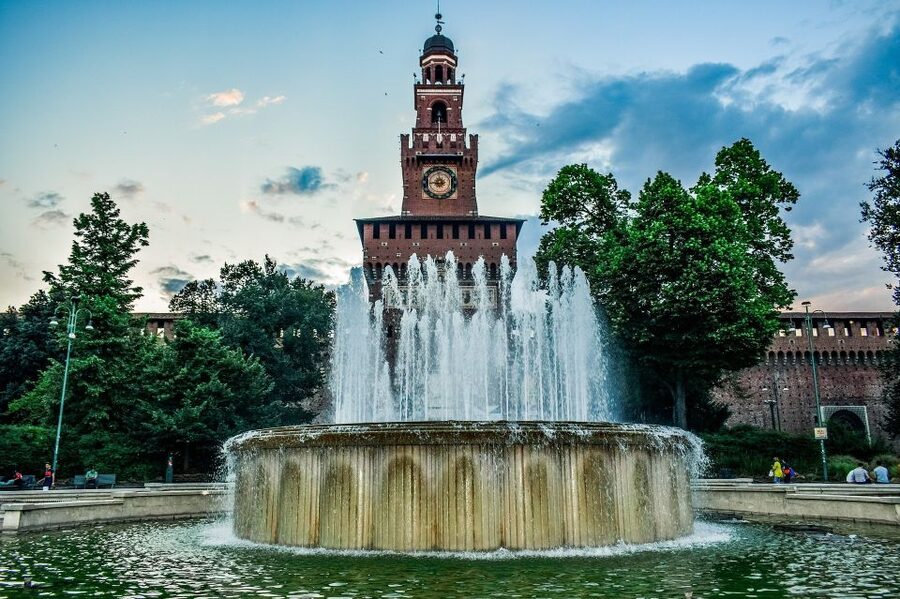
- The meeting point is simple, at the fountain in front of the main entrance in Piazza Castello.
Why Sforza Castle matters in Milan
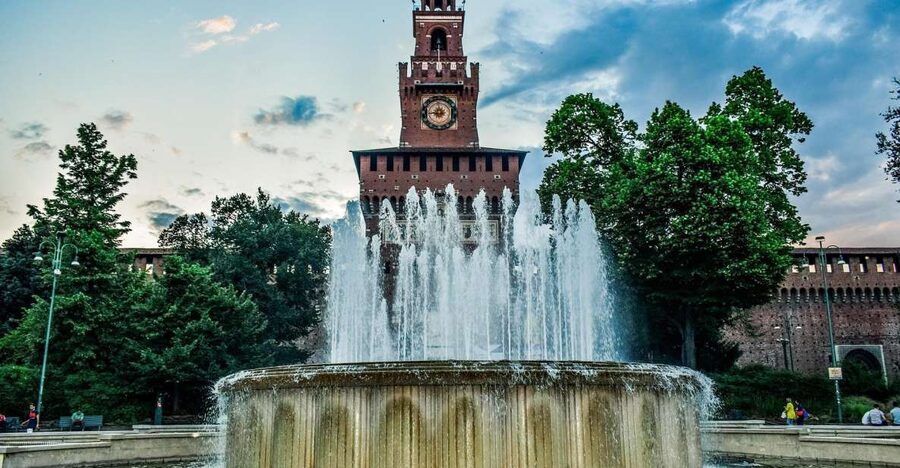
Milan can sometimes feel like a city of grand façades, busy streets, and famous shopping corridors. Sforza Castle gives you a different way into the city. Its walls connect Milan’s political power, military needs, art, and civic life in one place.
The castle began as a defensive structure under the Visconti family. The Sforza family later reshaped it, and the building took on a more courtly role. Over time, its use changed again. It served as a military site and housed private quarters before becoming a center for museums and cultural institutions.
That sequence is what makes a guided visit useful. If you walk through the castle alone, you can admire the towers, courtyards, and heavy walls, but the building’s purpose may remain unclear. A guide can help you read the site as a record of political change rather than just another old fortress.
The tour focuses on the castle’s transformations over the centuries. You are not simply shown one room after another. You are given a framework for understanding why the structure looks and functions as it does today.
More Guided Castle Tours in Italy
- Rome: Castel Sant’Angelo Guided Tour
★ 4.7 · 1,779 reviews - Milan: The Last Supper & Sforza Castle Guided Tour
★ 4.6 · 610 reviews - Milan: Last Supper and Sforza Castle Guided Tour
★ 4.6 · 498 reviews
Meeting at the fountain in Piazza Castello
The tour begins at Piazza Castello, in front of the main entrance at the fountain. This is a practical meeting point, but you should allow enough time to find the correct entrance and identify your guide before the start.
The activity ends back at the meeting point. That makes the visit easy to fit into a day of sightseeing around central Milan. You do not need to arrange a separate ride at the end, and the castle’s location makes it convenient to continue exploring after the two-hour visit.
The tour is offered in English, German, Italian, French, Spanish, and Russian. If you care about the language of explanation, select carefully when booking. A live guide can shape the visit around the group, which is more useful here than simply reading labels as you walk.
A radio-guided system is included. That matters in a historic building where the group may spread out between rooms or courtyards. You can hear the explanation without needing to crowd around the guide.
The castle as fortress and seat of power
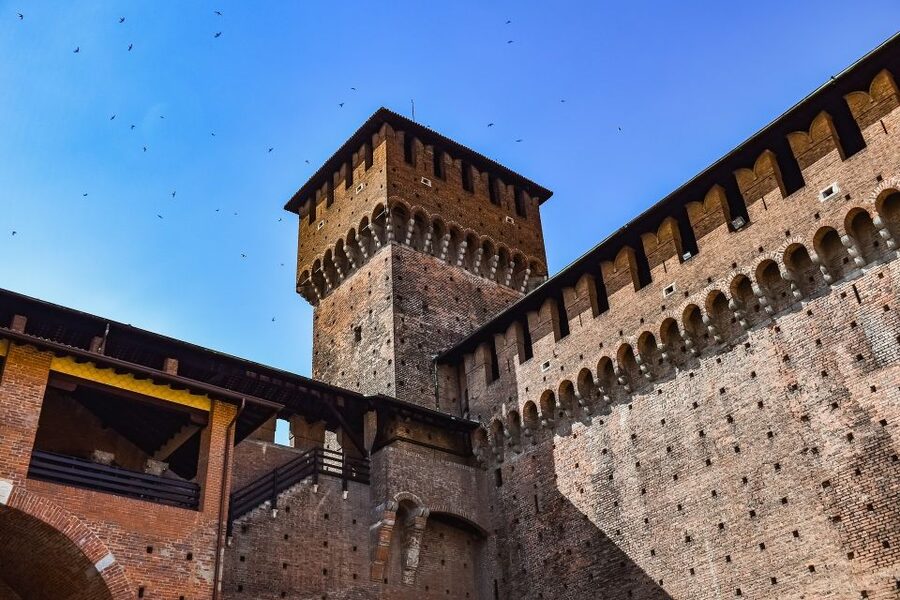
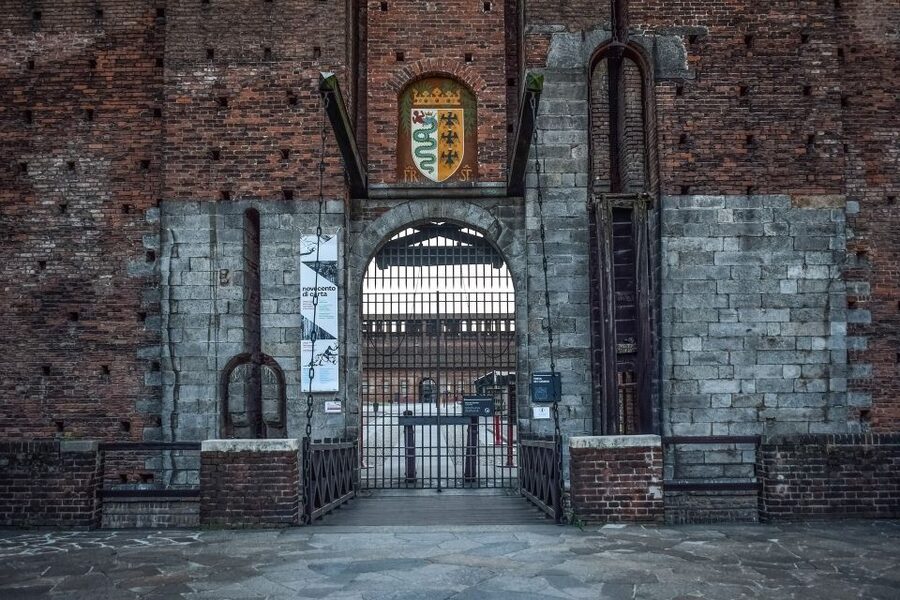
The first part of the visit introduces Sforza Castle as a defense fortress. The thick walls and imposing layout make more sense once you consider its original military role. This was not built only to impress visitors. It was designed to protect power in a city that mattered greatly to northern Italy.
The Visconti and Sforza families are central to the story. Their rule shaped the building, and their changing needs affected its design and use. You will hear how the castle moved between defensive and residential functions, becoming both a stronghold and a place connected to court life.
I find this part especially helpful for putting Milan’s art history in context. Renaissance art did not appear in isolation. It was supported, displayed, and controlled by powerful families. At Sforza Castle, politics and art occupy the same walls.
The castle also functioned as military barracks. That later use adds a less glamorous layer to the building. A grand residence could become a practical military site, then later be restored and adapted again. The building’s identity is not fixed, and the guide’s job is to make those changes easy to follow.
Private quarters and the castle’s later roles
The tour also covers the private quarters, giving you a sense of how the castle served the people who controlled Milan. These spaces help balance the military story. You are not looking only at battlements and defense works, but also at the private side of power.
The shift from private quarters and barracks to museums is a major part of the experience. Today, the castle contains museums of art, archives, and libraries. This is not just a monument preserved behind ropes. It remains a place used for culture and study.
The activity includes entry to the Sforza Castle Museum. The guide leads you through the castle and museum setting, explaining how its many functions developed. Because the tour lasts two hours, you should expect a focused introduction rather than an exhaustive visit to every collection or room.
That is both a strength and a limitation. You get a clear route and a connected story, but you may want extra time afterward if you prefer to study individual works at length. The tour is best seen as a strong orientation to the castle and its key artistic highlight, not as a full museum day.
Same region, a different set of walls:
- Castel Sant’Angelo Entry Ticket & Audioguide
★ 4.4 · 5,472 reviews - Rome: Castel Sant’Angelo Entry Ticket & Digital Audioguide
★ 4.7 · 5,347 reviews - Rome: Castel Sant’Angelo Entry Ticket & Audio App
★ 4.3 · 4,952 reviews - Rome: Castel Sant’Angelo Entry Ticket with Audio guide
★ 4.4 · 3,646 reviews
Luca Beltrami and the restoration of Sforza Castle
One of the more distinctive parts of the tour is the discussion of the castle’s last major restoration, carried out by architect Luca Beltrami at the beginning of the 20th century.
Restoration can be a tricky subject. Many historic buildings look ancient, but their current appearance may reflect later choices about what should be repaired, rebuilt, or emphasized. Beltrami’s work is important because it shaped the castle visitors see today.
The guide explains the restoration as part of the building’s wider story. That helps you avoid a common mistake: assuming every tower, wall, or decorative feature has survived unchanged from the Renaissance.
I like this focus because it turns restoration into part of the sightseeing rather than an abstract architectural footnote. You begin to notice that historic places are often edited by later generations. The castle is old, but your experience of it is also shaped by modern decisions about preservation.
If architecture interests you, this may be one of the tour’s most useful sections. The visit does not stop at famous names and famous artworks. It gives attention to the work needed to make the castle function as a public cultural site.
Michelangelo’s Pietà Rondanini
The tour ends with Michelangelo’s Pietà Rondanini, the work many people will most want to see. Its placement at the conclusion gives the visit a clear arc, moving from military power and political families toward one of Milan’s most important works of art.
The Pietà Rondanini is famous as Michelangelo’s final sculpture. The supplied tour information identifies it as the key artistic sight at the end of the visit, so you should plan to give it your full attention rather than treating it as a quick final stop.
A guide can help you approach the sculpture with context instead of seeing it as an isolated object. After learning about the castle’s rulers, restorations, and changing uses, you encounter a work of art within a building shaped by centuries of power and culture.
The visit does not promise a long, private viewing or an art-history seminar focused only on Michelangelo. You are part of a guided route, and the tour has to keep moving. Still, ending with the Pietà Rondanini gives the two hours a memorable final scene.
If this sculpture is your main reason for visiting, confirm the exact tour language and schedule before booking. The tour is designed to cover the broader castle as well as the artwork, so it suits you best if you want both the building and the sculpture.
What the small group changes
A maximum of nine participants is a real advantage at this price. In a large group, castle explanations can become hard to hear and easy to forget. Here, the guide has a better chance of speaking directly to the group and answering a question without interrupting the whole flow.
The radio system adds another layer of ease. You can keep a reasonable distance from the guide and still follow the explanation. This is particularly useful when the group moves through spaces with different shapes and acoustics.
The small-group format does not make the tour private. You still follow a set route and share the guide’s attention. But it should feel more personal than a large coach-style excursion, especially with only two hours available.
The clearest praise in the feedback goes to guide Pier, who is described as strong on history and architecture and especially impressive in French. If Pier leads your departure, you can expect a guide who brings solid subject knowledge and clear language to the visit. Guide assignments are not guaranteed, so book the tour for the format and content rather than for one individual alone.
Is $158.60 a fair price?
At $158.60 per person, this is not a budget castle visit. The price includes the guided tour, entry to the Sforza Castle Museum, a live guide, the radio system, and skip-the-ticket-line access.
The value depends on what you want from Sforza Castle. If you only want to walk around the exterior or see the castle without much explanation, the price will probably feel high. You are paying for structure, interpretation, museum access, and a very small group.
The cost is easier to justify if you care about Renaissance Milan, architecture, restoration, and Michelangelo. A good guide can connect the Visconti and Sforza families, the military uses, Luca Beltrami’s restoration, and the Pietà Rondanini into one understandable visit.
The two-hour length also matters. You are not committing half a day, so the tour can fit into a packed Milan itinerary. On the other hand, the short format means you should not expect to explore every part of the castle or spend unlimited time with each artwork.
I would compare this tour with the cost of a self-guided visit plus the value of your own research time. If you want a polished introduction and prefer not to manage museum entry and route planning yourself, the price may be reasonable. If you are comfortable reading labels and exploring at your own pace, you may prefer a less expensive visit without a guide.
Walking, footwear, and practical comfort
Bring comfortable shoes and water. The tour involves a moderate amount of walking, and the activity is not recommended for people with back problems.
The information provided does not specify the exact surfaces, stairs, or seating available along the route, so ask before booking if you have particular mobility needs. Do not assume that a historic castle will offer the same ease of movement as a modern museum.
Two hours is manageable for many people, but the visit is active rather than seated. Comfortable footwear will help you focus on the architecture and art instead of your feet.
The activity has a useful cancellation policy: you can cancel up to 24 hours in advance for a full refund. You can also reserve now and pay later, which gives you some flexibility while your Milan plans are still changing. Minimum numbers apply, so the operator may cancel after confirmation if too few people have booked. In that case, you are offered an alternative or a full refund.
Who should book this Milan castle tour?
I would recommend this tour to you if you want a guided introduction to Sforza Castle and prefer a small group over a large sightseeing party. It suits first-time visitors who want the major historical themes explained clearly within a limited time.
It is also a good match for anyone interested in the connection between politics, architecture, and art. The tour does not treat the Pietà Rondanini as a disconnected attraction. It places the sculpture at the end of a story about Milan’s rulers, military past, restoration work, and museum life.
You may want to skip it if you mainly want a quiet, unhurried museum visit. The fixed two-hour route and group format will not give you unlimited time with each object. The price may also be difficult to defend if the castle is only a minor item on your Milan list.
Should you book it?
Book this Sforza Castle tour if Michelangelo’s Pietà Rondanini, Renaissance Milan, and guided architectural context are all high on your list. The small group, included entry, radio system, and clear meeting point make the visit easy to manage.
Think twice if you have back problems, dislike moderate walking, or want the lowest-cost way to see the castle. At $158.60, this is a focused premium tour. Its value comes from the guide’s interpretation and the chance to connect the castle’s many roles in one well-planned visit.
FAQ
How long does the Sforza Castle tour last?
The tour lasts two hours.
Where does the tour begin?
It begins in Piazza Castello, in front of the main entrance at the fountain.
Where does the activity end?
The activity ends back at the meeting point.
Is entry to the castle museum included?
Yes. The price includes the Sforza Castle Museum entry ticket.
Is the ticket line skipped?
Yes. Skip-the-ticket-line access is included.
What languages are available?
Live tours are available in English, German, Italian, French, Spanish, and Russian.
Is the tour suitable for people with back problems?
No. The activity involves a moderate amount of walking and is not recommended for people with back problems.
Just added around Italy
- HIKING TOUR: VARENNA, Castle of VEZIO Villa MONASTERO, FIUMELATTE★ 5.0 · 48 reviews
- Walking tour Castel del Monte Unesco site★ 5.0 · 5 reviews
- Castel del Monte & Matera: Private Tour from Bari or Matera★ 5.0 · 5 reviews
- TRANI and Castel Del Monte UNESCO from your accomodation★ 4.5 · 19 reviews
- Castel del Monte: excursion in the Alta Murgia National Park★ 4.5 · 6 reviews
- Castles of Puglia Day Trip from Bari★ 4.5 · 7 reviews
- Tour of the fortifications of Bari: the defenses of the city and their history★ 5.0 · 15 reviews
- Bike Tour into the nature around Castel del Monte★ 5.0 · 7 reviews
Guided Castle Tours, compared.

Edinburgh Castle: Guided Walking Tour with Entry Ticket
Read our review →
Seville: Cathedral, Giralda & Alcazar Entry With Guided Tour
Read our review →
Granada: Alhambra & Generalife Fast-Track Guided Tour
Read our review →Edinburgh Castle: Guided Walking Tour with Entry Ticket
Read our review →
Stonehenge, Windsor Castle and Bath Full Day Guided Tour
Read our review →
Edinburgh Castle Guided Walking Tour in English
Read our review →
Seville: Alcázar and Cathedral Entry Ticket and Guided Tour
Read our review →
Fast-Track Alhambra & Nasrid Palaces Guided Tour
Read our review →Browse the lists this tour appears in