
REVIEW · JAPANESE CASTLE TOURS
Matsumoto Castle Tour & Soba Noodle Making Workshop
Matsumoto’s best pairing is wonderfully simple: an original Japanese castle followed by a bowl of noodles you helped make. You get history first, then a practical taste of local food culture. I like the fluent English guidance, including the area stories shared by guides such as Tom, and I like that the soba master helps you through each stage rather than leaving you to guess.
I also like the meal at the end. Your noodles are cooked for you, and you receive one extra dish, so this is more than a cooking demonstration. The main consideration is the castle’s steep, narrow stairs, while the soba portion uses at least 500 grams of flour and is therefore shared by two or three people.
Key points to know before booking
- Matsumoto Castle is the starting point: Meet your guide outside the main gate, just before the paid entrance area.
- The castle visit takes about 90 minutes: You see an unusually well-preserved original structure, not a modern reconstruction.
- The soba workshop lasts about an hour: A local master demonstrates the process, then guides you through the work.
- Your noodles become lunch: The restaurant cooks what you make, serving it hot or chilled with an extra dish.
- The serving is shared: At least 500 grams of soba is needed, making the workshop suitable for two or three people.
- Plan for physical effort: The castle tower stairs are steep and narrow, and the tour is not suitable for wheelchair users or pregnant women.
Why this castle and cooking combination works
Matsumoto Castle gives you the grand setting. Soba making gives you something to do with your hands. That balance matters, especially if you have already seen several temples and historic buildings during a Japan trip.
The castle is one of only five in Japan designated as a National Treasure. More importantly for your visit, its original structure remains well preserved. You are not simply looking at a rebuilt exterior. The timber, defensive design, and interior spaces give the tour a stronger sense of place.
Then the mood changes. At the workshop, you move from looking at Japanese culture to taking part in one small piece of it. You learn how the dough is prepared, shaped, and cut before the noodles are cooked. It is a modest activity, but it gives you a better feel for the care behind a familiar Japanese meal.
The whole experience lasts three hours. The estimated breakdown is 90 minutes at the castle, 60 minutes making soba, and 30 minutes eating. That is a tidy half-day plan, though the timing can shift and the tour may finish earlier or later.
More Japanese Castle Tours in Japan:
- Osaka Castle: Museum and Tower Entry Ticket
★ 4.5 · 2,380 reviews - Kyoto: Nijo-jo Castle and Ninomaru Palace Guided Tour
★ 4.7 · 1,020 reviews - Kyoto: Nijo Castle, Kiyomizu & Fushimi Inari Guided Tour
★ 4.7 · 700 reviews
Starting outside Matsumoto Castle
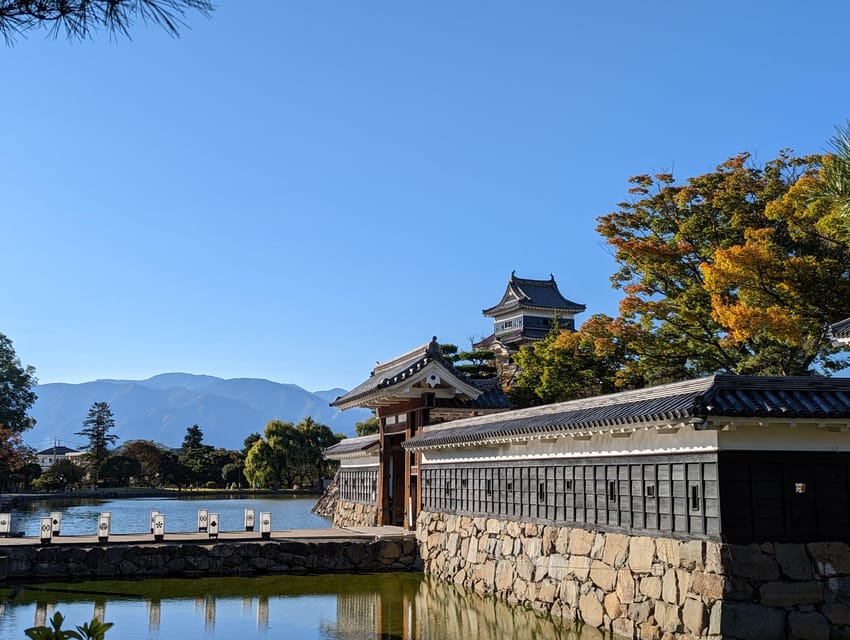
Your guide meets you just outside the main gate of Matsumoto Castle, in front of the ticket gate and entrance to the paid admission area. This is useful because you do not need to search for a restaurant or workshop before the tour begins.
Arrive with enough time to find the main gate. The meeting point is specific, but the castle grounds can still feel unfamiliar if you are rushing. Have your booking details ready and look for the English-speaking guide near the entrance.
The guide sets the tone for the castle visit. Tom, one guide associated with this experience, has been praised for sharing stories about the area as well as basic sightseeing information. Another guide was noted for speaking fluent English and Japanese. That matters here because the castle is easier to understand when you know what to look for, rather than simply walking through room after room.
The tour is guided in English. You should expect explanation and conversation, not a silent admission ticket. If you want the most from the visit, ask about the castle’s design, its original construction, and the reasons it has survived in such good condition.
Inside Japan’s oldest original castle
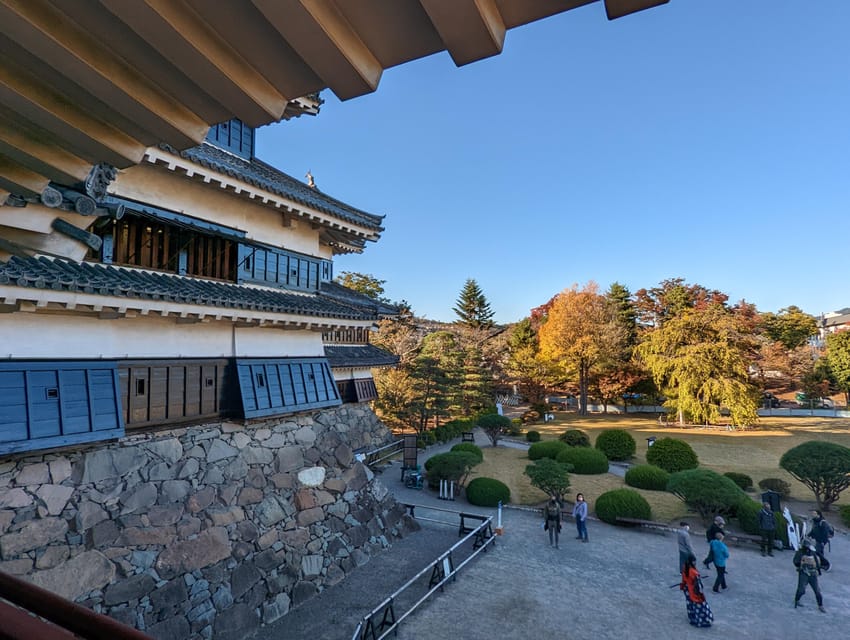
Matsumoto Castle is often called one of the oldest castles in Japan, and the experience description identifies it as the oldest original castle still remaining in the country. Its National Treasure status comes from the survival of its original structure.
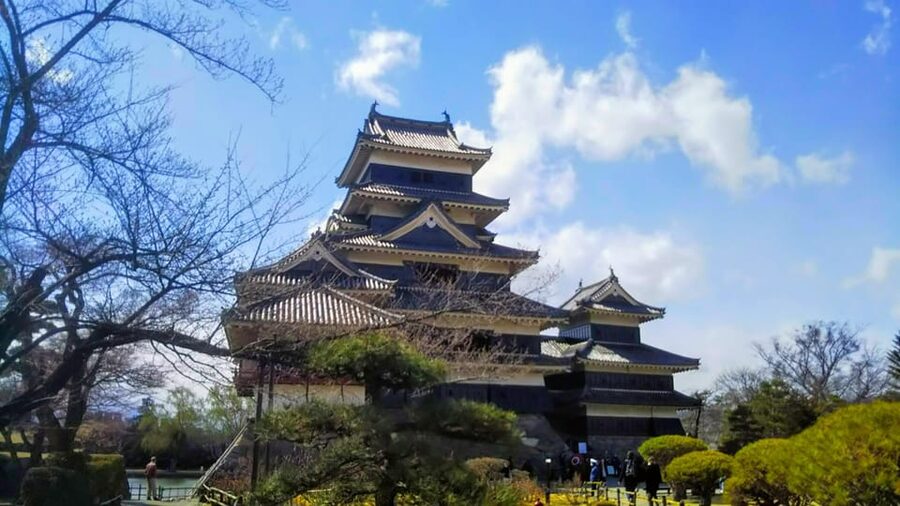
The castle’s dark exterior gives it a distinct look, especially compared with lighter castle buildings elsewhere in Japan. Inside, the focus is less on polished comfort and more on military architecture. You see a building designed for defense, movement, and control.
The castle visit lasts about 90 minutes. That gives you time to take in the building without turning the entire afternoon into a castle tour. Your guide can help you notice details that are easy to miss on your own, including the practical purpose of the interior layout.
There is one clear physical warning. The stairs to the top of the tower are steep and narrow. You should wear stable shoes and take your time. The climb may be uncomfortable if you have knee, balance, or mobility problems. The activity is not suitable for wheelchair users, and it is listed as unsuitable for pregnant women.
The stairs are not a small footnote. They are part of the original castle experience, but they also limit who can enjoy the full visit. If climbing them would be difficult, ask before booking so you understand the options available.
From castle rooms to soba preparation
After the castle, the experience turns to food. The soba workshop begins with a short video introduction. It explains what soba is and lays out the stages, from preparing the dough to cutting the noodles.
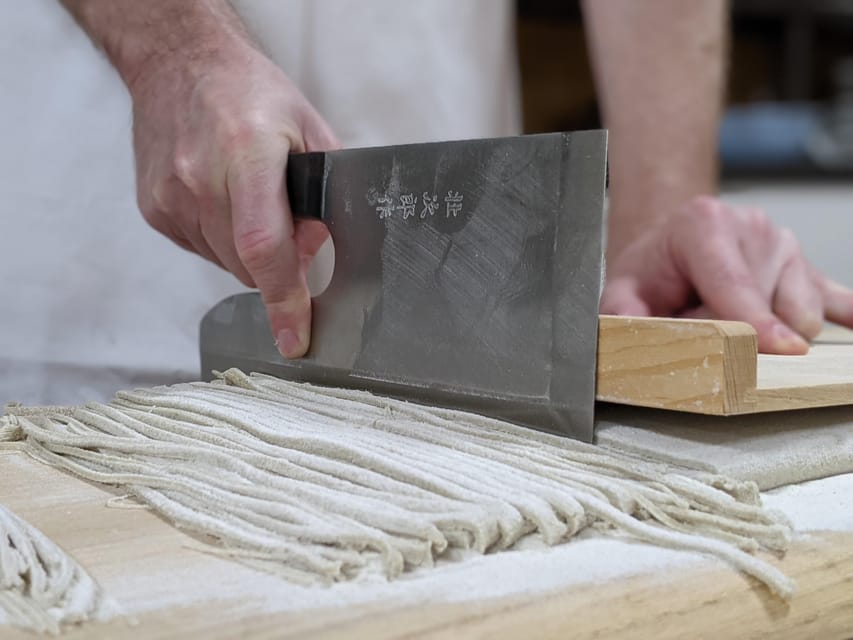
That introduction is helpful because soba making has several steps, and the finished noodles can look deceptively simple. You start with the basic mixture, work the dough, roll it, and cut it into noodles with traditional tools.
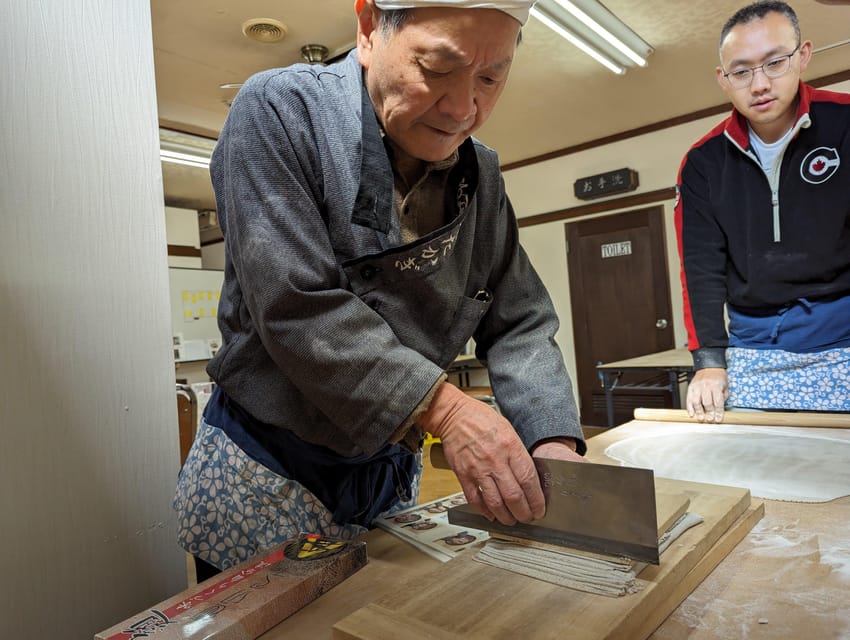
You are not merely watching a chef prepare a bowl. The workshop places you in the role of an apprentice. An experienced soba master demonstrates the technique and helps you as you work. This is the part I like most for families and first-time cooks: you get structure, but you also get your hands involved.
The tools are included. You do not need to bring equipment or know anything about Japanese cooking in advance. Still, do not expect a polished cooking class with every step moving at your pace. The master has a set process, and the lesson is designed to fit inside roughly 60 minutes.
The important thing is that the master assists you through each stage. One detailed account of the activity described the chef as helping with every step and clearly having years of experience. That is useful reassurance if your dough does not look perfect right away.
A few more castle tours around Japan worth a look
- Learn Zen in a class of making Matcha tea near Osaka Castle
★ 4.8 · 17 reviews - Château du Bois-Huaut: Cellar Tour and Wine Tasting Class
★ 4.8 · 53 reviews - Granada: “Alhambra´s Craft Workshop”
★ 4.9 · 32 reviews - Nasrid Crafts: Only plasterwork workshop in the Alhambra
★ 4.5 · 15 reviews
The shared 500-gram soba batch
The minimum amount needed to prepare soba is 500 grams. That means the result is shared by two or three people. This affects how you should think about the booking.
For a couple, the quantity makes good sense. You can work together and share the finished meal. For a family with parents and a teenager, it can also be a fun group task, though each person should not expect an individual full batch.
Solo visitors should understand the arrangement before paying. You will still take part in the making and eat the finished noodles, but the portion is based on a shared serving. The format is better for people who enjoy a social, hands-on lesson than for someone seeking a private cooking session.
The shared batch also helps explain the price. At $92 per person, you are paying for an English-speaking guide, castle admission, a guided castle visit, all soba tools, instruction from a soba master, and food at the end. The amount is not cheap for three hours, but it covers two different experiences and a meal rather than just entry to one attraction.
Eating the noodles you cut yourself
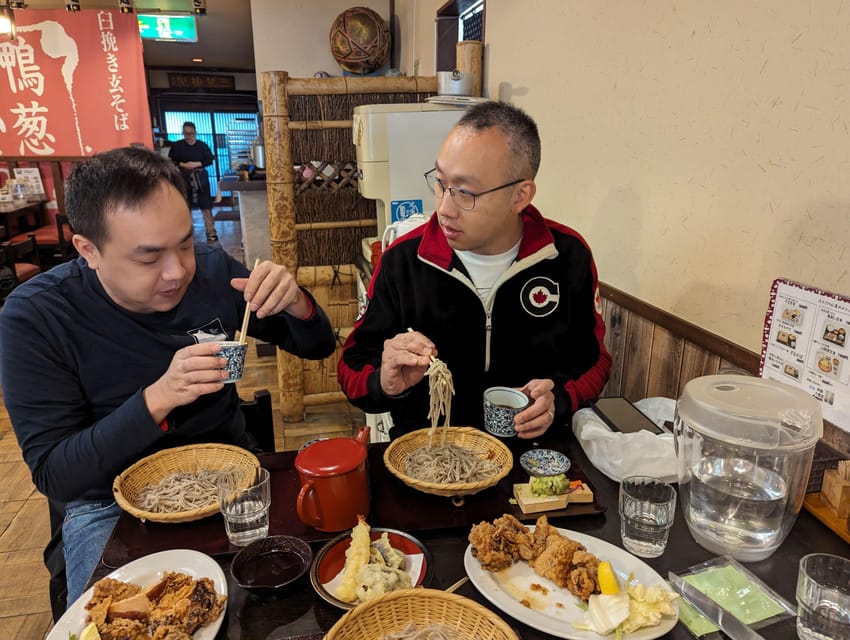
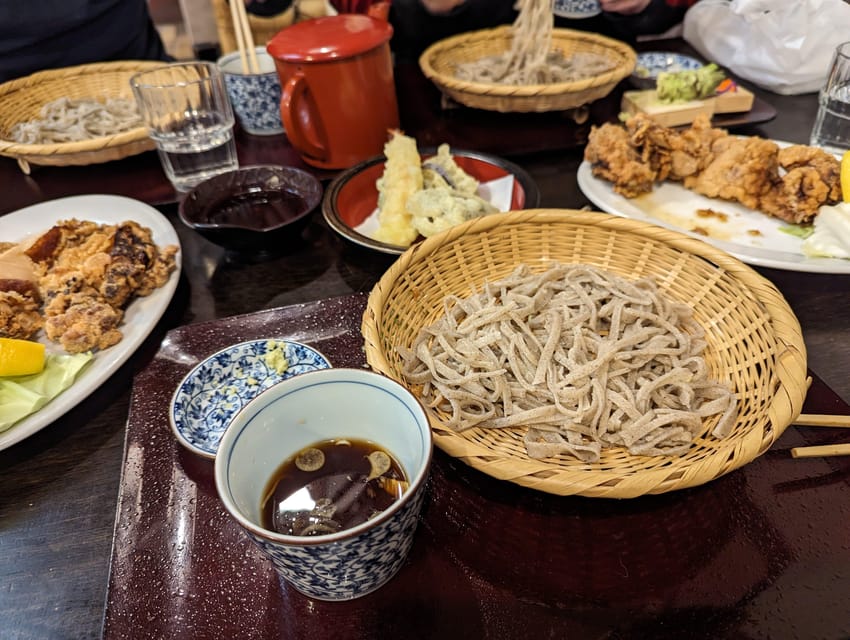
Once the noodles are cut, you go to the restaurant, where the soba master cooks them. You can enjoy the noodles hot or chilled, with tempura or another side dish depending on the meal arrangement.
This final step gives the workshop a proper payoff. You do not carry away uncooked noodles or watch somebody else eat the finished dish. You taste the result of your own work, including its uneven edges and homemade character.
The included meal comes with your soba creation and one extra dish. The additional dish may be prepared by the cafe downstairs, and one account described it as a tasty part of the meal. Other side dishes, snacks, and drinks are not included, so bring some extra money if you want more than the stated meal.
You should also tell the operator about allergies or dietary needs when booking. Vegetarian and vegan options are available on request. That phrase matters: you should request the adaptation ahead of time rather than assume it will be arranged at the table.
The meal lasts about 30 minutes. It is enough time to eat, but this is not designed as a long restaurant sitting. The food is the final part of a compact cultural experience.
What the $92 price really gives you
At $92 per person, the value depends on what you want from a short tour. If you only want to see Matsumoto Castle, this is more expensive than arranging admission alone. If you want a guided visit and a local food activity in the same morning or afternoon, the price is easier to justify.
You are paying for the guide’s time, castle entry, soba instruction, equipment, and lunch. The English guidance is especially useful if you want context rather than a quick walk through the building. The food portion also includes more than a sample, since your noodles are cooked and served as part of the meal.
The tour is a good fit for people who like experiences with a clear beginning and end. You meet at the castle, learn about an important local site, make food, and eat it. There is little wasted time in the basic plan.
The value is weaker if you dislike group food preparation, cannot manage the castle stairs, or want a full restaurant lunch with drinks and several dishes. Snacks, extra side dishes, souvenirs, insurance, and transport to or from your hotel cost extra.
Who will enjoy this three-hour experience
I would recommend this to families, couples, and first-time visitors who want more than sightseeing photos. A family with parents and a teenager has a natural setup for the shared soba work, and the activity offers a break from passive museum visits.
It also suits food-focused visitors who want to learn one local dish without giving up half a day. The lesson is short enough to fit around other Matsumoto plans, but active enough to feel memorable.
You should think twice if you have serious mobility limits. The castle stairs are steep and narrow, and wheelchair users cannot take part according to the stated restrictions. Pregnancy is also listed as a reason not to book.
This may not be the best choice for someone who wants a private lesson or a full individual serving. The 500-gram minimum is shared among two or three people, so the group format is part of the design.
Timing, meeting details, and practical planning
The full activity takes about three hours, but the times are estimates. The castle portion is listed at 90 minutes, soba making at 60 minutes, and lunch at 30 minutes. Leave some flexibility afterward instead of scheduling a train or reservation immediately after the tour.
There is no hotel pickup or drop-off. You make your own way to Matsumoto Castle and leave independently after the meal. The meeting point is outside the main gate, before the paid admission entrance.
The tour is offered with a live English-speaking guide. Availability and starting times should be checked when you book. You can reserve now and pay later, and cancellation is allowed up to 24 hours in advance for a full refund.
Those policies are useful if your Japan itinerary is still changing. They do not remove the need to plan carefully, though. You still need to reach the castle on time, mention dietary requirements in advance, and allow for the steep climb.
Should you book the Matsumoto Castle and soba tour?
Book it if you want a balanced introduction to Matsumoto: one major historic sight, one practical food lesson, and a meal in three hours. The strongest reasons are the original castle structure, the hands-on work with an experienced soba master, and the chance to eat what you made.
I would be especially happy to recommend it to families and couples who enjoy doing something together. Guides such as Tom add local stories to the castle visit, while the cooking lesson gives the afternoon a clear personal touch.
Skip it if steep, narrow stairs are a serious problem, if you need wheelchair access, or if you want a private cooking class with an individual serving. For everyone else, $92 is a reasonable price for a tightly planned culture and food experience, provided you are comfortable sharing the soba batch and paying separately for extra drinks or snacks.
FAQ
Where does the Matsumoto Castle and soba tour begin?
The guide meets you just outside the main gate of Matsumoto Castle, in front of the ticket gate and entrance to the paid admission area.
How long does the full activity last?
The experience lasts about three hours. The estimated schedule includes 90 minutes at Matsumoto Castle, 60 minutes making soba, and 30 minutes eating lunch. The tour may finish earlier or later.
Is the tour offered in English?
Yes. The experience includes a live English-speaking guide.
Are Matsumoto Castle admission and the guided visit included?
Yes. Guided Matsumoto Castle admission is included in the price.
How much soba do I make?
At least 500 grams of soba is required for preparation. The finished serving is shared by two or three people.
Are vegetarian and vegan options available?
Yes. Vegetarian and vegan options are available on request. You should provide dietary requirements or allergy information when booking.
Is the tour suitable for wheelchair users?
No. The activity is not suitable for wheelchair users, and the castle tower has steep, narrow stairs. Pregnant women are also listed as not suitable for this activity.
Just added around Japan
- Tokyo: Edo Castle and Imperial Palace Guided Walking Tour★ 5.0 · 6 reviews
- (Ticket Included) Explore Osaka Castle & Museum of History★ 4.8 · 21 reviews
- Peace Memorial Park, Hiroshima Castle, & Garden Private Tour★ 4.8 · 7 reviews
- Osaka: Osaka Castle Guided Tour with Local Guide★ 4.7 · 78 reviews
- Osaka: Osaka Castle – Tsuruhashi – Tennoji (Spanish Guide)★ 4.7 · 10 reviews
- Osaka: Early Morning Osaka Castle Guided Tour, Avoid Crowds★ 4.9 · 12 reviews
- Osaka: Explore Every Bit of Osaka Castle in 3 Hours★ 5.0 · 5 reviews
- Osaka: Osaka Castle 3 hours Historical Walking Tour★ 4.6 · 14 reviews
Japanese Castle Tours, compared.
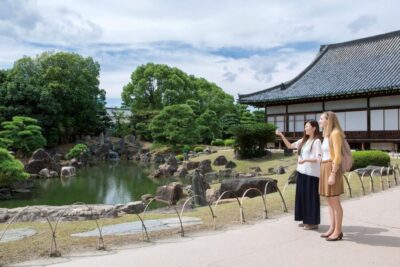
Kyoto: Nijo-jo Castle and Ninomaru Palace Guided Tour
Read our review →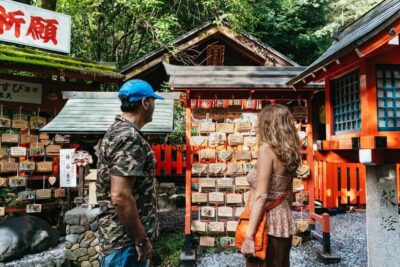
Kyoto: Nijo Castle, Kiyomizu & Fushimi Inari Guided Tour
Read our review →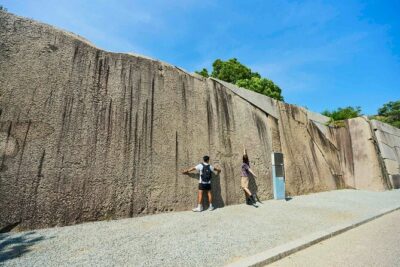
Osaka Castle Walking Tour and Castle Tower Admission
Read our review →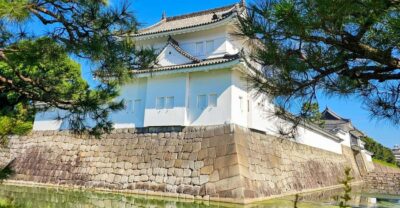
Kyoto: Imperial Palace & Nijo Castle Guided Walking Tour
Read our review →
From Osaka: Himeji Castle, Arima Onsen & Mt. Rokko Day Tour
Read our review →
5-Hour Osaka Bike Tour to the Neighborhood of Osaka Castle
Read our review →
Browse the lists this tour appears in