
REVIEW · ALHAMBRA TOURS
Nasrid Crafts: Only plasterwork workshop in the Alhambra
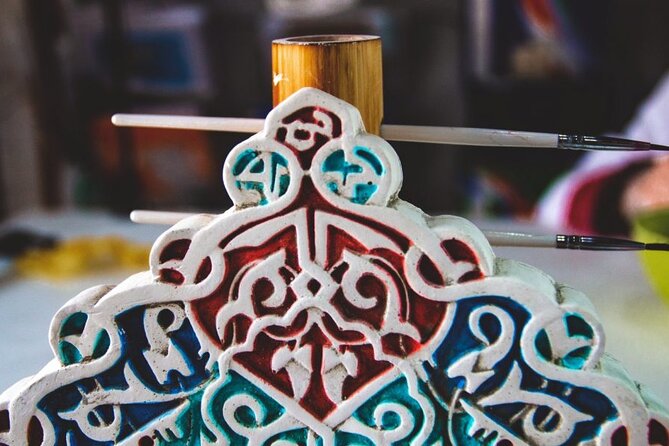
The most revealing part of this experience is seeing Alhambra-style plasterwork made at close range, not behind glass or high above your head in a palace room. At Artesanía Nazarí, craftsmen explain the molds, plaster pouring, carving, finishing, and decorative wash used to create replicas of Andalusia’s great monuments.
I like the hands-on finish, where you refine and paint plaster pieces yourself. I also like the small-group setting, limited to 14 people, since it gives you room to ask questions and watch each stage clearly. The main drawback is practical: this is in Cenes de la Vega, not inside the Alhambra complex, and fragile finished pieces may not come with a protective box.
Key points at a glance
- Watch the complete plaster process: See molds, plaster pouring, surface refinement, painting, and finishing in one visit.
- Work on your own Nazarí pieces: You receive three design pieces to refine and decorate, plus a handmade plaster gift.
- See traditional and modern methods together: The workshop uses old techniques alongside tools such as a CNC router for mold-making.
- Go before or after the Alhambra: A visit beforehand can help you notice the palace’s plaster patterns and restoration work.
- Expect a small group: The maximum is 14 people, with an English-language guide and live demonstrations.
- Plan for careful transport: Plaster is fragile and dusty, so bring a bag or container for the pieces you take home.
Why this workshop changes the way you see the Alhambra
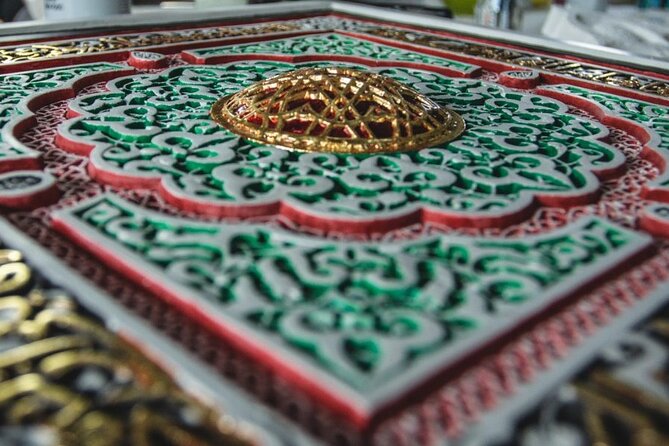
Most people first notice the Alhambra’s courtyards, tilework, carved wood, and famous views. The plaster decoration can seem almost weightless, as if it simply grew across the walls. This workshop shows you that every pattern began as a carefully planned object, made from a mold and finished by hand.
I like this experience because it gives practical meaning to details you might otherwise walk past. After seeing the workshop, a carved panel in the Court of the Lions is no longer just a pretty surface. You begin to look for repeated motifs, edges, layers, symmetry, and the marks of restoration.
The workshop has more than 25 years of experience and works on official replicas connected with major Spanish monuments. Those include the Alhambra in Granada, the Real Alcázar in Seville, Casa Pilatos, the Sephardic Museum in Toledo, and Santiago de Compostela Cathedral.
That does not make this a substitute for visiting the Alhambra. It does something different. The palace gives you the finished masterpiece. Artesanía Nazarí lets you see the workshop logic behind it.
More Alhambra Tours in Spain:
- Granada: Alhambra & Nasrid Palaces Tour with Tickets
★ 4.7 · 19,801 reviews - Granada: Alhambra and Nasrid Palaces Entry Ticket
★ 4.6 · 15,130 reviews - Granada: Alhambra & Generalife Fast-Track Guided Tour
★ 4.7 · 8,313 reviews
Arriving at Artesanía Nazarí in Cenes de la Vega
The meeting point is Artesanía Nazarí, at Calle Sta. Ana, 1, in Cenes de la Vega, Granada. The activity begins and ends there, so you should plan your route carefully rather than assume you can simply follow the Alhambra’s visitor signs.
The address is near public transportation, but the supplied details do not specify a particular bus line or travel time. Check your route before setting out, especially if you are fitting the workshop around an Alhambra entry slot.
One small arrival detail matters. Ring the doorbell when you reach the entrance. This is a scheduled workshop, not a shop where someone necessarily waits at the door for walk-in customers. A reservation alone may not be obvious from outside.
The visit is offered in English, and confirmation is provided at booking. The advertised length is about one hour and 30 minutes to two hours, with the workshop description allowing roughly two hours for the full visit and practical activity.
Inside the working plaster studio
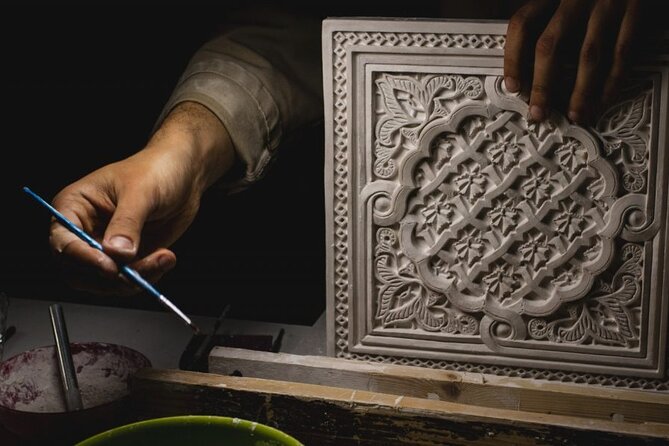
The visit begins with a guided look around the workshop. You learn how natural plaster is turned into decorative architectural work, and how old craft methods are kept in use alongside present-day tools.
One particularly useful detail is the role of molds. A CNC router can shape the mold, but that does not reduce the work to a simple machine demonstration. The mold still has to be understood, prepared, filled, and finished properly. The workshop helps you see where accuracy matters and where the human hand remains essential.
You are shown different molds and the plaster-pouring process. This is the point at which the experience becomes more than a general talk about Andalusian art. You can connect the explanation to the repeated geometric and vegetal designs seen throughout the Alhambra.
The staff also explain the restoration side of the craft. A replica needs to look right, but restoration requires a close reading of the original material, surface, pattern, and construction method. The workshop’s work on official replicas gives this demonstration a useful professional context.
A name connected with the workshop’s plaster tradition is Ramón Rubio Domene, described as the creator of the Alhambra mortar technique. The visit presents this work as part of a continuing craft tradition, not as a museum display frozen in the past.
From mold to finished Nazarí decoration
The strongest part of the visit is the live demonstration. Instead of seeing only finished ornaments, you follow the process from mold to plaster piece and then to surface treatment.
You can expect explanations of how the plaster takes the shape of the mold, how excess material is handled, and how the surface is prepared. The exact order and time spent on each step may vary, but the visit is designed to show the full process rather than one isolated trick.
The distinction between making a new decorative piece and restoring an old one is worth paying attention to. New work begins with a design and a mold. Restoration starts with an existing fragment or pattern that must be understood and matched. That difference gives the workshop real value for anyone interested in architecture, conservation, design, or museum work.
The explanations are presented in a direct, approachable way. You do not need specialist art training to follow them. If you enjoy asking questions, the small group should make it easier to do so, although the number of staff and the exact group on your date are not specified.
A few more castle tours around Spain worth a look
- Granada: “Alhambra´s Craft Workshop”
★ 4.9 · 32 reviews - Château du Bois-Huaut: Cellar Tour and Wine Tasting Class
★ 4.8 · 53 reviews - Learn Zen in a class of making Matcha tea near Osaka Castle
★ 4.8 · 17 reviews - Pizza Pro, a Hands-On Cooking Class Near Castel Sant Angelo
★ 4.7 · 13 reviews
Your hands-on plaster activity
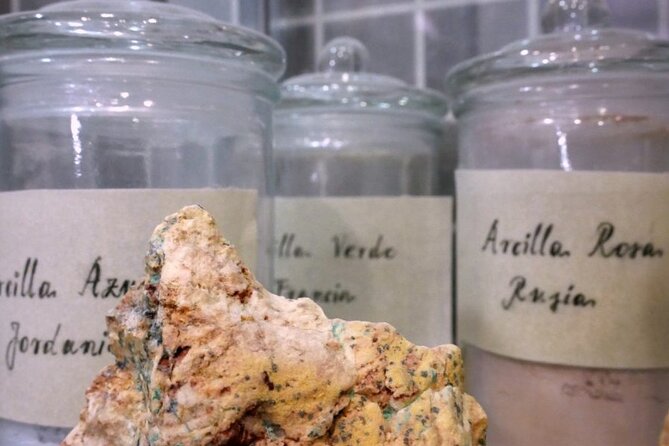
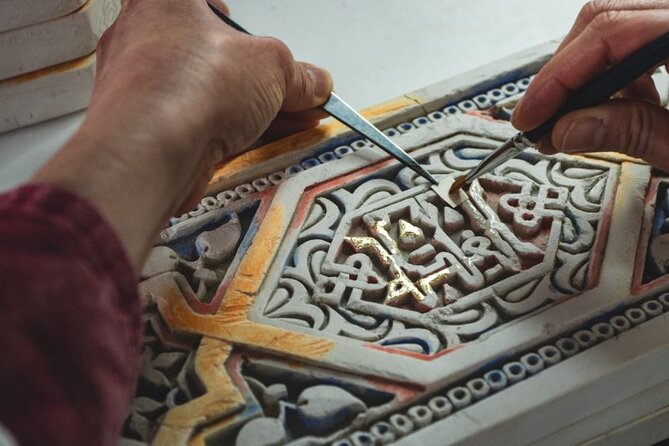
After the demonstration, you receive three randomly selected design pieces to refine and paint. This is not a full master-craftsman apprenticeship, but it gives you a proper sense of the patience required to finish decorative plaster.
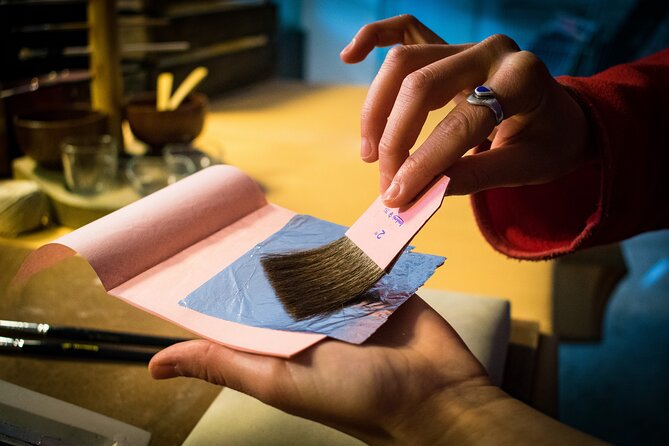
You can take around 30 minutes for this part if you work steadily, or longer if you want to spend more time on the details. The decorative wash helps bring out the pattern and gives the piece a more finished Nazarí appearance.
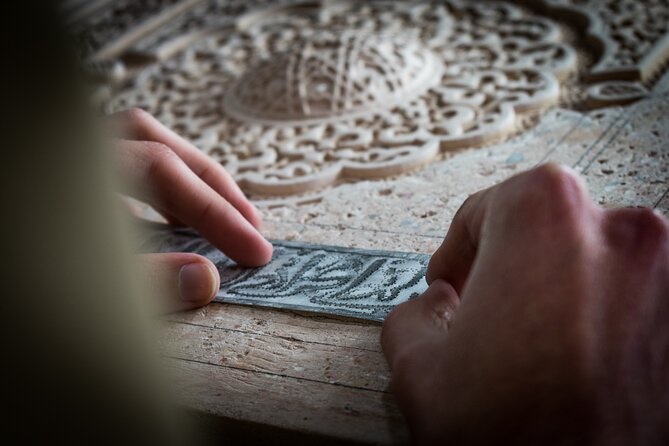
This practical section is a good reason to book the experience even if you already plan to visit the Alhambra. You are no longer looking only at the final surface. You are handling the material, correcting small flaws, and making choices about color and finish.
The activity also works well for couples, families, and design-minded visitors because everyone receives something to work on. Most people can participate, and service animals are allowed. The maximum group size is 14, which keeps the workshop more personal than a large coach excursion.
At the end, you receive a handmade Nazarí plaster gift. You may also be able to buy additional pieces directly from the workshop, which is useful if you want a locally made souvenir connected to Granada’s architectural tradition rather than a standard palace-shop item.
The fragile souvenir problem
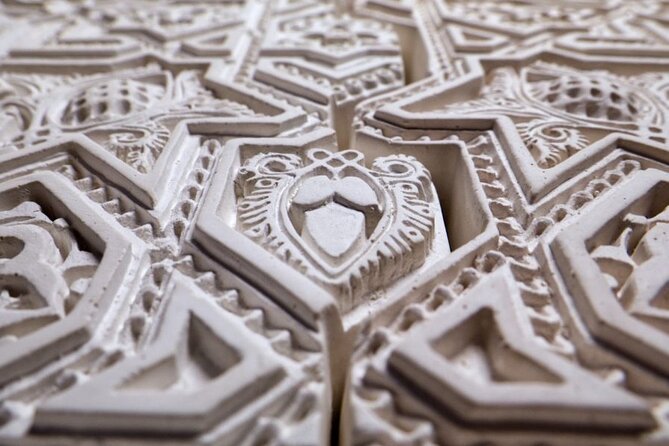
The one clear practical weakness is packaging. Finished plaster pieces can be fragile and leave dust behind, and protective boxes are not necessarily provided.
I would bring a small reusable bag, tissue, bubble wrap, or a shallow container if you have one. Even a carefully finished piece can chip when placed loose in a car or squeezed into luggage. Ask about packaging before you leave the workshop.
This issue does not spoil the visit, but it affects how much you should buy and how you plan the rest of your day. If you are heading straight to an airport or changing hotels, keep the pieces somewhere flat and protected.
Why the timing matters around your Alhambra visit
You can schedule the workshop before seeing the Alhambra or afterward. I see a good case for either choice.
Go first if you want a visual primer. The workshop can teach you what to notice in the palace: repeated relief patterns, the use of plaster as a wall surface, the relationship between mold-made forms and hand finishing, and the challenges of conservation.
Go afterward if you want answers to questions raised by the palace itself. Many visitors leave wondering how the delicate decoration was produced. The workshop gives you a practical explanation while the details are still fresh.
Do not treat the two-hour visit as a replacement for palace admission. The workshop does not give you access to the Nasrid Palaces, the Generalife, or the Alhambra grounds. It is a separate craft experience at the Cenes de la Vega meeting point.
Because Alhambra admission times are fixed and popular slots can sell out, leave enough travel time between the two activities. The workshop’s stated duration is approximate, and your own decorating time can stretch the visit.
Is $24.03 a fair price?
At $24.03 per person, this is reasonably priced for a guided workshop that includes demonstrations, practical work, and a handmade plaster gift. The value depends on what you want from your Granada visit.
If you only want a quick souvenir, the price may feel high compared with buying a small object in a shop. If you want to understand how the Alhambra’s plaster decoration is made and try part of the process yourself, the cost is easier to justify.
The strongest value comes from the combination of instruction and participation. You are not paying just to look around a studio. You receive an explanation of the craft, a demonstration of the working methods, time to finish your own pieces, and a gift to take home.
The workshop is often booked about 25 days ahead, so I would not leave it until the last minute if it is important to your plans. Availability can be limited by the small maximum group and the requirement for a minimum number of participants.
Who will enjoy this most
I would recommend this to you if you like architecture, traditional crafts, restoration, design, or hands-on activities. It is especially useful for anyone who visited the Alhambra and wanted to understand the plasterwork beyond taking photographs.
It also suits visitors who prefer a small specialist experience to another general sightseeing tour. The focus stays on one material and one craft, but the subject opens a window onto Andalusian art, monument care, and historic construction.
Families can take part, since most people are able to participate, but the supplied details do not state a minimum age or provide a children’s program. For that reason, I would confirm suitability for very young children before booking.
This is less suitable if you want a tour inside the Alhambra, a broad introduction to Granada, or a fast activity with no practical section. It is also not ideal if you need a polished souvenir that can be packed immediately without extra care.
Booking and cancellation details worth knowing
Book through the official experience channel rather than relying on informal WhatsApp arrangements. The workshop’s WhatsApp contact is intended for other matters, and using the proper booking route should reduce confusion about dates and confirmation.
You can cancel for a full refund up to 24 hours before the start time. Changes or cancellations inside that 24-hour window are not accepted for a refund, and the cut-off follows local time.
The experience requires a minimum number of participants. If the workshop is canceled because that minimum is not reached, you are offered another date or experience, or a full refund.
Should you book Nasrid Crafts?
Book it if you want to understand the Alhambra through the people and materials that helped create it. The live plaster demonstration, the chance to refine three pieces, and the handmade gift make this more useful than a standard souvenir stop.
I would place it before or after your palace visit, not instead of it. Check the Cenes de la Vega location, ring the doorbell on arrival, allow about two hours, and bring a way to protect the plaster pieces.
Skip it if your schedule is already packed with major sights or if you have little interest in craft processes. But for an architecture fan, a returning Alhambra visitor, or anyone who enjoys making something with their own hands, this is one of the more distinctive small experiences near Granada.
FAQ
Where does the Nasrid Crafts workshop take place?
The workshop takes place at Artesanía Nazarí, Calle Sta. Ana, 1, 18190 Cenes de la Vega, Granada, Spain. The activity ends back at the same meeting point.
How long does the workshop last?
The experience lasts approximately one hour and 30 minutes to two hours. The full workshop description allows about two hours, including the demonstration and hands-on plaster activity.
Is the workshop offered in English?
Yes. The experience is offered in English.
What is included in the visit?
You receive a guided workshop tour, explanations and live demonstrations, a presentation of the complete plasterwork process, time to create and finish plaster pieces, and a handmade Nazarí plaster gift. Admission is included.
How many people can join the workshop?
The maximum group size is 14 people.
Can I cancel for a full refund?
Yes, if you cancel at least 24 hours before the experience start time. Cancellations or changes made less than 24 hours before the start time are not refunded.
Just added around Spain
- Montjuïc Cable Car & Magic Fountain Barcelona Private Tour★ 5.0 · 77 reviews
- Montjuic Castle Admission Ticket in Barcelona★ 3.5 · 59 reviews
- Barcelona City Walk with Montjuïc Castle & Cable Car Guided Tour★ 4.0 · 15 reviews
- 2hr Montjuïc Castle Segway Tour★ 5.0 · 5 reviews
- Barcelona Best Views: Old Town and Montjuic Castle Private Tour★ 5.0 · 24 reviews
- Castle of Loarre- Collegiate Church of Bolea★ 4.5 · 7 reviews
- Castle of Baños de la Encina★ 4.5 · 65 reviews
- Guided tour of Almodovar Castle, entrance fee included★ 4.5 · 6 reviews
Alhambra Tours, compared.

Granada: Alhambra & Nasrid Palaces Tour with Tickets
Read our review →
Granada: Alhambra and Nasrid Palaces Entry Ticket
Read our review →
Granada: Alhambra & Generalife Fast-Track Guided Tour
Read our review →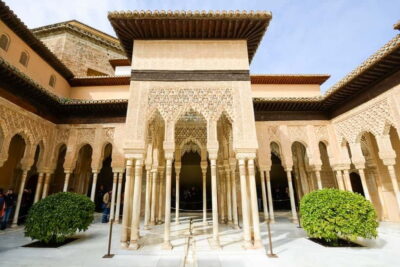
Granada: Alhambra & Gardens Tour w/Nasrid Palaces Option
Read our review →
Granada: Alhambra Entry Ticket with Audio Guide
Read our review →
Fast-Track Alhambra & Nasrid Palaces Guided Tour
Read our review →
Skip The Line Alhambra and Generalife Guided Tour
Read our review →
Granada: Alhambra Ticket and Guided Tour with Nasrid Palaces
Read our review →Browse the lists this tour appears in