
REVIEW · GUIDED CASTLE TOURS
Bari: Norman-Swabian Castle Guided Tour
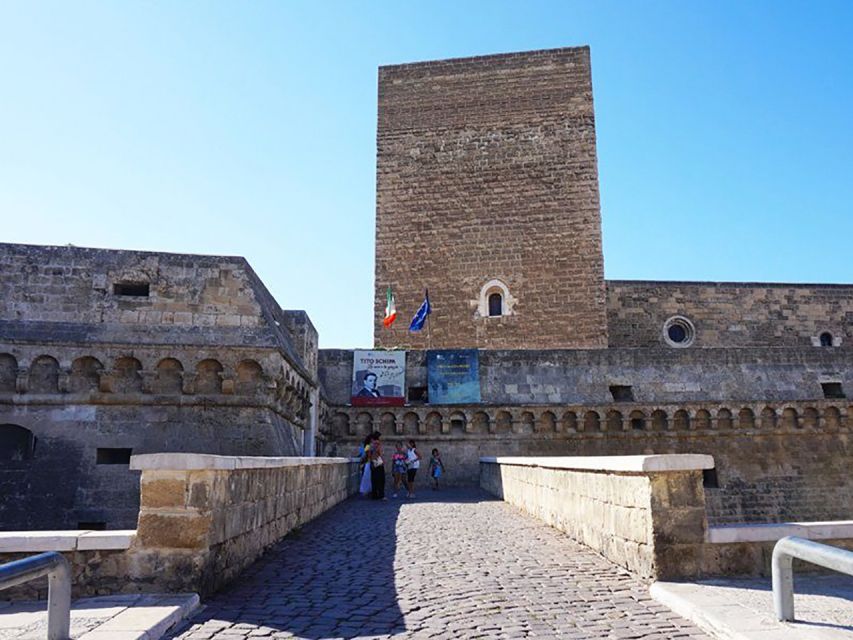
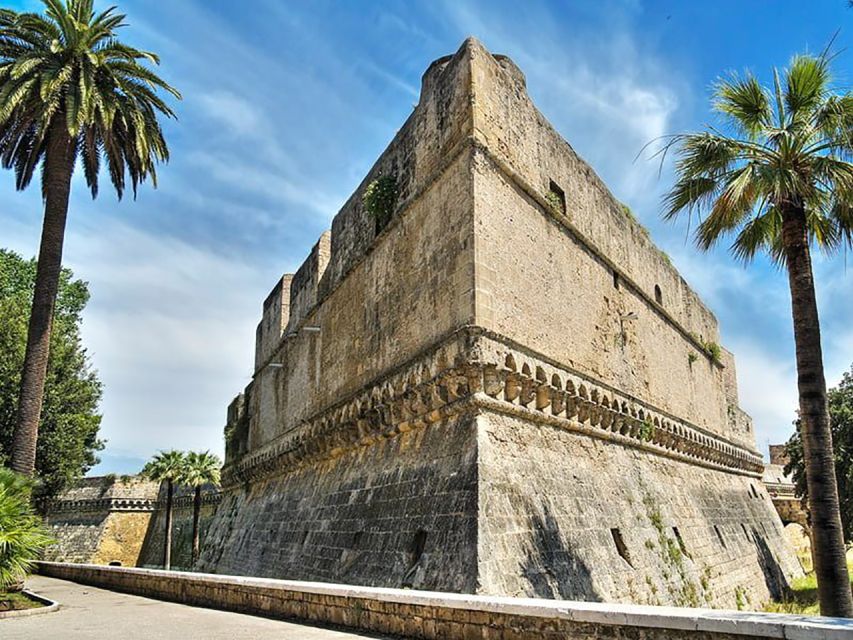
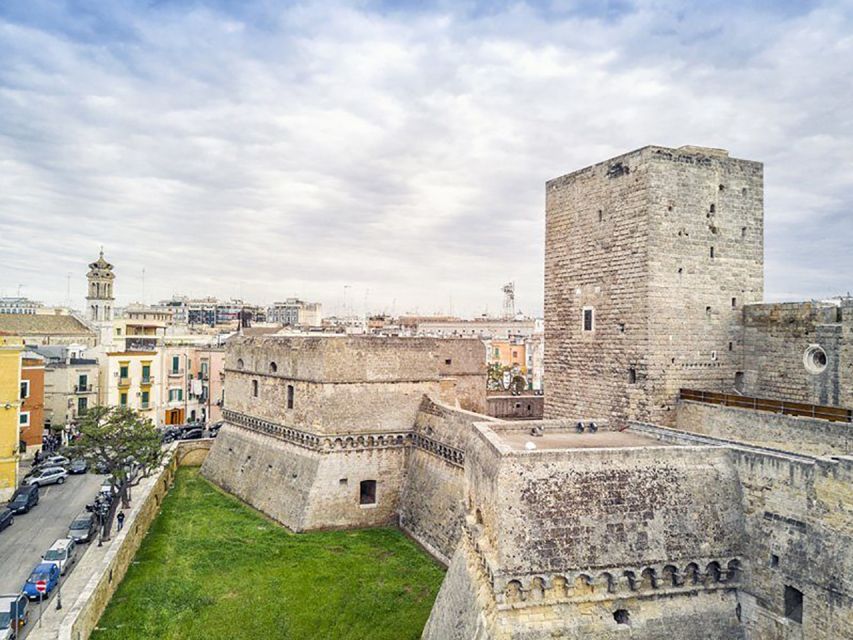
Bari’s Norman-Swabian Castle is more than a photo stop beside the old town. Inside its walls, an art-history guide connects the courtyard, towers, archaeological finds, plaster sculptures, and medieval rooms into one readable story. The moat and heavy stonework show the castle’s defensive side, while the museum rooms reveal how its purpose changed over time.
I like the way this 80-minute visit combines the big architectural features with smaller objects you could easily miss on your own. I also like the guides’ personal touch: Francesca is energetic and attentive, while Fabio is praised for clear, lively explanations. The main consideration is time. If you want to study the displays and audio-visual material, the guided portion may feel brisk.
Key points to know before you go
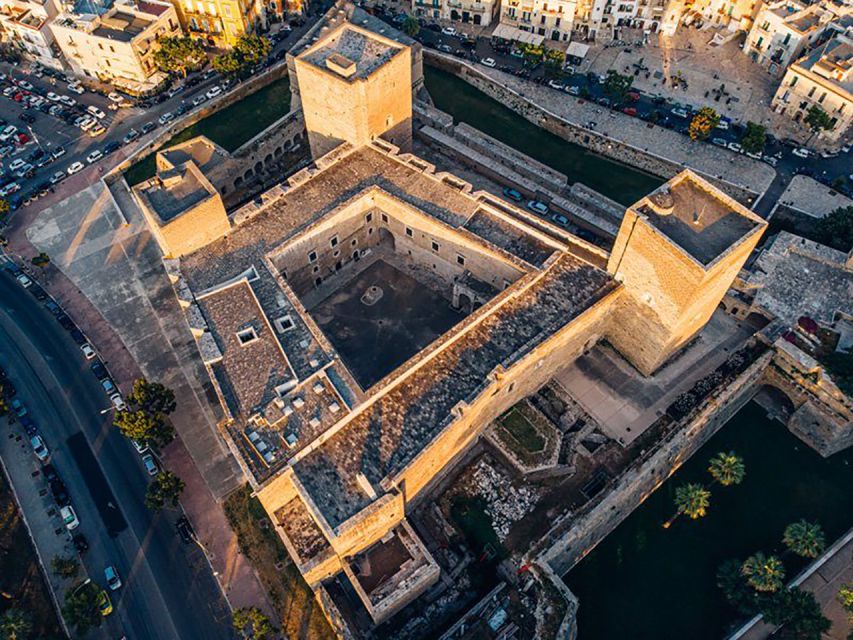
- The courtyard puts the castle’s scale in perspective: Look up at the three stone towers and walk beside the broad moat.
- The Gipsoteca adds an unexpected art stop: Its plaster copies recreate famous sculptures and monument carvings made for the 1911 celebration of Italian unity.
- The tour includes more than stone walls: You’ll see excavated ceramics, jewelry, archaeological material, and the Norman Room.
- The guide makes the difference: Francesca and Fabio have been singled out for clear explanations about ownership, building changes, daily life, and Bari’s past.
- Plan around the 80-minute schedule: The tour gives you a strong introduction, but you may want extra time for the exhibits and audio-visual displays.
- The practical setup is easy: Meet beside the high arch in the square, use the skip-the-line entry, and choose Italian, English, French, or Spanish.
Why Bari’s castle is worth your time
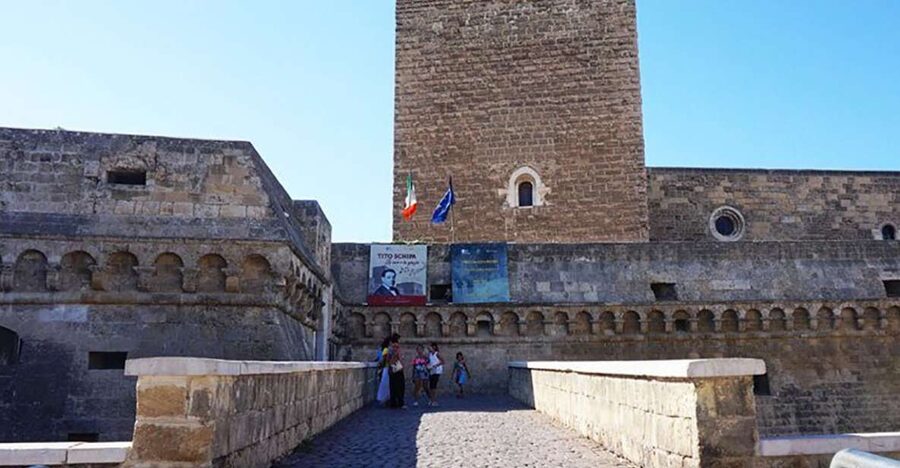
The castle is one of Bari’s most recognizable buildings, but its best feature is the contrast between its stern exterior and its varied interior. From outside, you get the classic medieval picture: thick walls, a moat, and towers built to control access. Inside, the visit shifts between archaeology, decorative art, sculpture, and historical interpretation.
That mix suits you if you want more than a quick architectural look. You’ll not only walk through the central courtyard, but also see objects linked to the castle’s long use and later museum role. The guide helps explain how the structure changed under different owners and periods, including its structural changes and the way people lived within its walls.
I would choose this tour early in a Bari visit. It gives you useful context for the old town without taking up half a day. At 80 minutes, it is long enough to add substance but short enough to fit around lunch, a stroll through the historic center, or another booked activity.
More Guided Castle Tours in Italy
- Rome: Castel Sant’Angelo Guided Tour
★ 4.7 · 1,779 reviews - Milan: The Last Supper & Sforza Castle Guided Tour
★ 4.6 · 610 reviews - Milan: Last Supper and Sforza Castle Guided Tour
★ 4.6 · 498 reviews
Meeting the guide beside the high arch
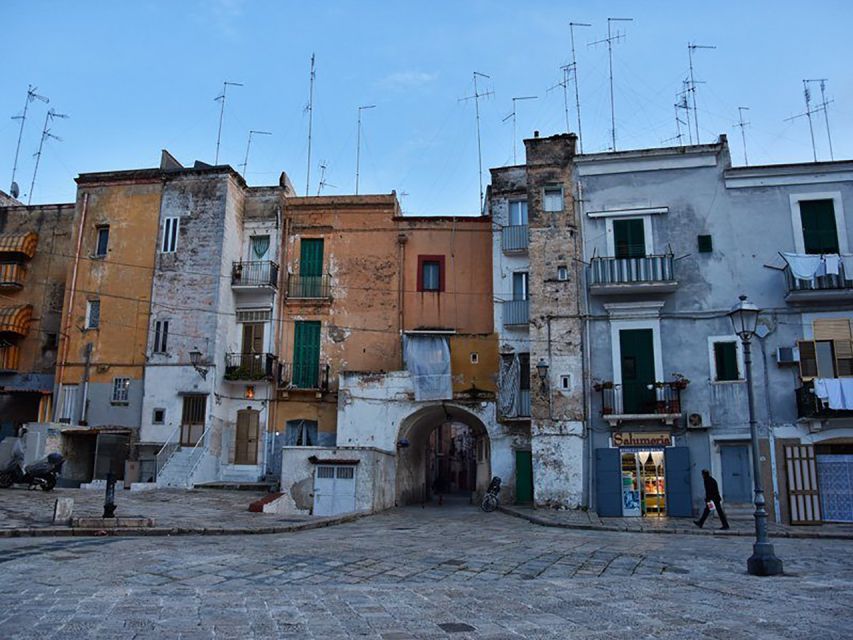
The meeting point is beside the so-called high arch, clearly visible from the square. That matters because the castle is a substantial building, and wandering around its outer walls looking for the right entrance can waste time. Arrive with comfortable shoes and keep the meeting point details handy.
Transport is not included, so you need to make your own way to the castle. This is best treated as a central Bari walking activity rather than a day trip with transfers. An umbrella or rain gear is sensible, since parts of the visit involve courtyards, moats, and outdoor transitions.
The tour includes entry and a guided visit, with skip-the-ticket-line access. That saves you from handling the admission process separately. The exact starting time depends on availability, so check the schedule before building the rest of your day around it.
The courtyard, moat, and three stone towers
The central courtyard is the natural first lesson in the castle’s design. Here, you can look up at the three stone towers and get a feel for the building’s defensive scale. A guide can point out structural details that blur into the background when you are simply taking photographs.
The moat is another important part of the experience. It is not a decorative ditch added for effect. It helps you understand how the castle controlled movement and protected its walls. Even if you have visited castles elsewhere in Italy, seeing the moat together with the towers gives this building a firm, practical character.
This section is also a good reason to wear shoes with a secure sole. You should expect some walking across hard surfaces and between different areas of the castle. Comfortable clothing is recommended, and you should bring weather protection if rain is possible.
The courtyard portion is not a long outdoor excursion, but it gives the rest of the tour a useful frame. Once you enter the rooms, you understand that the objects inside belong to a fortress with a working defensive structure, not simply an art museum placed in an old shell.
The Gipsoteca and its 1911 plaster sculptures
The Gipsoteca, located in the west wing, is the tour’s most unusual stop. A gipsoteca is a collection of plaster casts, and here you’ll see copies of famous sculptures and carvings from monuments. These are not random classroom models. Mario Sabatelli and Pasquale Duretti created them in 1911 to mark 50 years of Italian unity.
That date gives the room a second layer of meaning. The sculptures are not only examples of artistic technique. They also reflect a period when Italy was presenting a shared national identity through art, monuments, and public culture.
I like this stop because it changes the rhythm of the visit. The courtyard and moat are about defense and stone. The Gipsoteca asks you to look closely at shape, surface, and detail. Plaster copies can also make famous works easier to examine than the original monuments, where crowds, distance, or protective barriers may limit your view.
Your guide’s art background is especially useful here. Francesca has been described as engaging and energetic, while Fabio’s explanations have been praised for being precise and lively rather than school-like. That is exactly the kind of help you want in a room where the casts may otherwise feel like a collection of pale replicas.
Same region, a different set of walls:
- Castel Sant’Angelo Entry Ticket & Audioguide
★ 4.4 · 5,472 reviews - Rome: Castel Sant’Angelo Entry Ticket & Digital Audioguide
★ 4.7 · 5,347 reviews - Rome: Castel Sant’Angelo Entry Ticket & Audio App
★ 4.3 · 4,952 reviews - Rome: Castel Sant’Angelo Entry Ticket with Audio guide
★ 4.4 · 3,646 reviews
Ceramics, jewelry, and the castle’s smaller finds
The castle’s archaeological displays keep the visit from becoming a parade of grand rooms. In the east wing, you can see ceramic tableware excavated from the castle itself. These pieces offer a more ordinary view of the building, since dishes and household objects tell you about use and daily activity in a way that towers cannot.
The jewelry display adds another change of scale. Jewelry is shown in the Minorenni Tower, bringing you into a more personal side of the castle’s past. Small objects require slower looking, so do not expect to absorb every detail while moving with the group. If an item catches your eye, remember its location and return to it if you have time after the guided portion.
You’ll also see other archaeological material, including displays connected with the castle’s changing use. The value here is not that every object is spectacular. It is that the objects help turn the castle from a military monument into a place where people worked, lived, stored goods, and altered rooms across generations.
The Norman Room and the stone-winged cats
The Norman Room adds a strong visual finish to the interior route. Among the objects on display are stone-winged cats, an unusual detail that helps make this room memorable. They are the sort of features you might walk past without context, so listen when the guide directs your attention to them.
The room also reinforces the castle’s mix of military, civic, and artistic roles. You are not looking at a single perfectly preserved period interior. Instead, you are seeing layers of use and display within a building that has been adapted into a museum.
That is the broader lesson of this visit. The castle is valuable not only because it is old, but because its spaces show change. The guide discusses ownership over generations, structural alterations, and how life inside the building worked. Those explanations make the individual rooms connect.
Audio-visual displays and excavation walkways
Some rooms include audio-visual demonstrations that add sound and moving images to the historical material. These displays can help if you prefer interpretation that does more than rely on labels. They also give the castle a more modern museum feel without removing its old stone setting.
Excavation platforms and walkways provide another way to see the building. They let you observe archaeological areas from above or along designated paths, giving you a clearer sense of how different sections fit together. These features are particularly useful if you enjoy seeing evidence of construction and later changes rather than only polished exhibits.
The catch is that 80 minutes can pass quickly. The guide needs to keep the group moving, and the castle contains enough material to tempt you into stopping at every case. If you want to watch each demonstration, examine every ceramic piece, and spend time with the jewelry, treat the guided visit as an introduction rather than your entire castle experience.
What the guide adds to the visit
A guide who specializes in art can do more than recite dates. The best moments here come from connections: how the castle’s ownership changed, why its structure looks the way it does, how people lived inside it, and why a plaster sculpture belongs in a Bari fortress museum.
Francesca has been described as punctual, engaging, accommodating, and energetic. She can adjust her pace to the group and explain Bari’s wider past as well as the castle itself. Fabio’s strength is a precise and lively presentation, with particular praise for the audio-visual sections and the way he handles the material without sounding like a classroom lecture.
The tour is offered in Italian, English, French, and Spanish. That choice is important in a site where architectural terms and historical changes can become confusing. You should select the language in which you are most comfortable following a detailed explanation, especially if you want to understand how the building changed over time.
A private group option is available. That may suit families or small groups who want a more personal pace, though the standard product already offers a live guide and a clearly defined route.
Is $42 a fair price for 80 minutes?
At $42 per person, this is not the cheapest way to see an Italian castle. The value depends on what you want from the visit. If you only want to photograph the exterior and walk past the moat, you can spend much less by exploring Bari independently.
The price makes more sense if you want the entry handled, skip-the-line access, and an art-focused explanation of the rooms. You are paying for interpretation, not just admission. The guide draws your attention to structural details, connects the castle to Bari’s past, and explains displays that may seem disconnected when viewed alone.
I consider the price reasonable for a first visit, particularly if you have limited time in Bari or do not want to research the castle before arriving. It is less compelling for a repeat visit when you already understand the building and prefer to explore quietly.
The strongest value comes from preparation. Wear comfortable shoes, arrive at the high arch on time, and decide in advance whether you can stay longer to look at the exhibits after the guided portion. The tour gives you a route and a framework. Your own extra time lets you slow down.
Who should book this castle tour?
I would recommend it to first-time visitors to Bari who want historical context without committing to a long walking tour. It also suits anyone who enjoys combining architecture with art and archaeology. The Gipsoteca, ceramics, jewelry, and audio-visual displays give the visit more range than a standard fortress walk.
Families can benefit from the short format and the visual variety, although younger children may not care about every historical explanation. Children under 11 enter free. The wheelchair-accessible format is also useful, though you should still confirm any personal access requirements when booking.
Art lovers will find the Gipsoteca especially worthwhile. People interested in military architecture will prefer the moat, towers, courtyard, and structural explanations. If your main goal is to see every exhibit at a leisurely pace, book this only if you can allow extra time beyond the 80-minute guided route.
The tour may not suit you if you dislike organized visits or want a completely unstructured museum experience. It is also not a transport-inclusive excursion. You must reach the castle yourself and manage your own schedule around the available starting times.
Should you book it?
Book this tour if you want the Norman-Swabian Castle to make sense, not merely appear in your holiday photos. The guide-led format ties together the courtyard, three towers, Gipsoteca, excavated ceramics, jewelry, Norman Room, and audio-visual material in a manageable 80 minutes.
Skip it if you only want a quick look at the exterior or prefer to read displays alone. For most first-time visitors, though, the art specialist guide adds enough context to justify the $42 price. Arrive ready to walk, allow extra time if possible, and choose this as a focused Bari history stop rather than a rushed box to tick.
FAQ
How long does the castle tour last?
The guided tour lasts 80 minutes.
What is included in the price?
The price includes the entry ticket and the guided tour of the Norman-Swabian Castle of Bari.
Is transportation included?
No. Transport to and from the castle is not included.
Where is the meeting point?
The guide waits beside the so-called high arch, which is clearly visible from the square.
What languages are available?
The live tour is available in Italian, English, French, and Spanish.
Is the tour wheelchair accessible?
Yes, the activity is listed as wheelchair accessible.
Can I book a private group?
Yes. A private group option is available.
Are children under 11 charged admission?
No. Entry is free for children under 11 years of age.
What should I bring?
Bring comfortable shoes, comfortable clothing, and an umbrella or rain gear in case of wet weather.
Can I cancel for a full refund?
Yes. You can cancel up to 24 hours in advance for a full refund. You can also reserve now and pay later.
Just added around Italy
- HIKING TOUR: VARENNA, Castle of VEZIO Villa MONASTERO, FIUMELATTE★ 5.0 · 48 reviews
- Walking tour Castel del Monte Unesco site★ 5.0 · 5 reviews
- Castel del Monte & Matera: Private Tour from Bari or Matera★ 5.0 · 5 reviews
- TRANI and Castel Del Monte UNESCO from your accomodation★ 4.5 · 19 reviews
- Castel del Monte: excursion in the Alta Murgia National Park★ 4.5 · 6 reviews
- Castles of Puglia Day Trip from Bari★ 4.5 · 7 reviews
- Tour of the fortifications of Bari: the defenses of the city and their history★ 5.0 · 15 reviews
- Bike Tour into the nature around Castel del Monte★ 5.0 · 7 reviews
Guided Castle Tours, compared.

Edinburgh Castle: Guided Walking Tour with Entry Ticket
Read our review →
Seville: Cathedral, Giralda & Alcazar Entry With Guided Tour
Read our review →
Granada: Alhambra & Generalife Fast-Track Guided Tour
Read our review →Edinburgh Castle: Guided Walking Tour with Entry Ticket
Read our review →
Stonehenge, Windsor Castle and Bath Full Day Guided Tour
Read our review →
Edinburgh Castle Guided Walking Tour in English
Read our review →
Seville: Alcázar and Cathedral Entry Ticket and Guided Tour
Read our review →
Fast-Track Alhambra & Nasrid Palaces Guided Tour
Read our review →Browse the lists this tour appears in