
REVIEW · SKIP THE LINE
Castel Sant’Angelo Skip-the-Line ticket
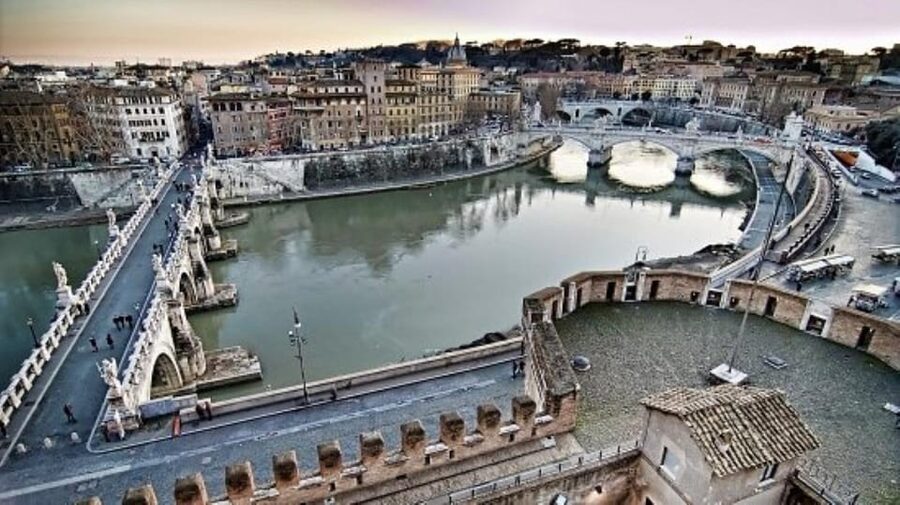
Castel Sant’Angelo is one of Rome’s best places for a story and a view. Built as the Mausoleum of Hadrian, it later became a papal fortress, prison, and museum. I like the easy location near St. Peter’s Basilica and the Vatican Museums, and I like that the terrace gives you a fine look over the Tiber and Sant’Angelo Bridge. The main catch is that this is usually an entry ticket, not a guided tour.
I also like the flexible booking terms and the short one to one-and-a-half-hour visit. You can receive your ticket by email or WhatsApp and go straight to the entrance. Still, check the details carefully: the ticket arrives the day before, a guide is not included, and the castle is not suitable for wheelchair users or visitors with mobility impairments.
Key points to know before you book
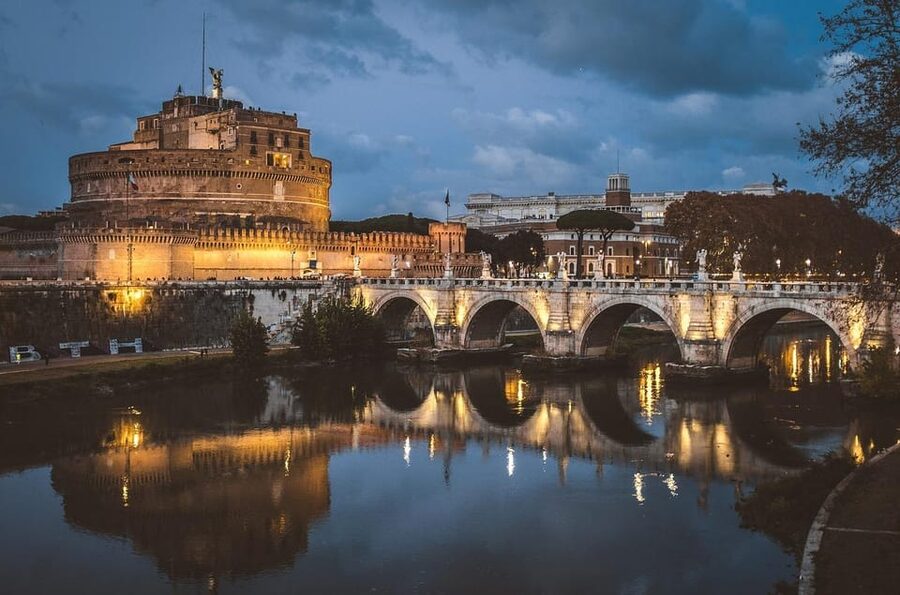
- Hadrian’s mausoleum became a fortress: You’ll see how one massive Roman tomb was reused by the papacy as a refuge and defensive stronghold.
- The terrace is the payoff: Plan time for the views across the Tiber, toward St. Peter’s Basilica, and over Sant’Angelo Bridge.
- The Passetto di Borgo tells a dramatic story: This fortified passage linked the Vatican with the castle, giving popes a route to safety during attacks.
- The ticket saves time, not interpretation: Skip-the-line entry is included, while an audio guide is available only if you select that option.
- The visit is short but packed: One to one-and-a-half hours is enough for the main rooms, cells, displays, and terrace if you keep moving.
- Children under 18 pay no admission price: A service fee still applies, and every child needs a passport or ID card.
Why Castel Sant’Angelo feels different from other Roman sights
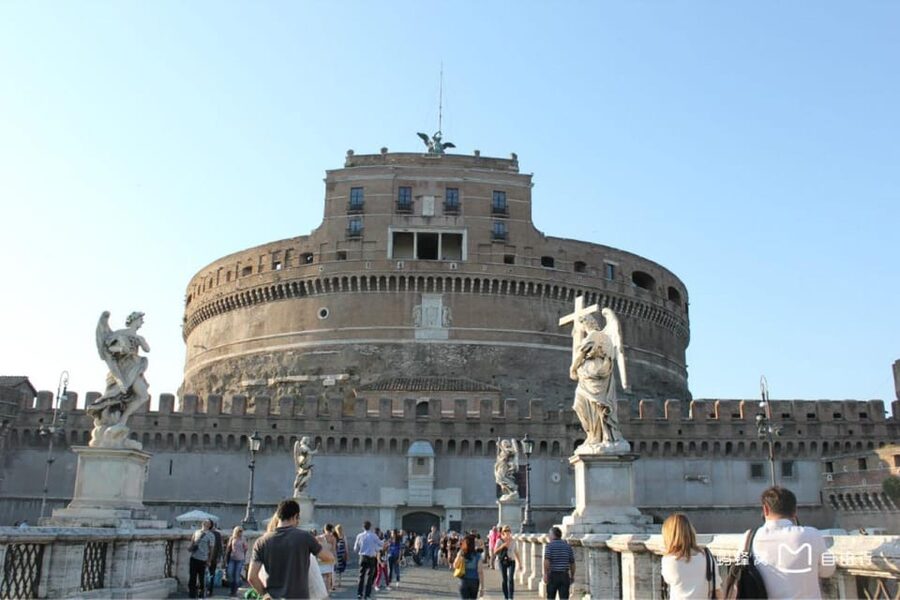
Rome has no shortage of ancient monuments, but Castel Sant’Angelo has an unusually strange life story. It began as the tomb of Emperor Hadrian, then changed roles over centuries. The building became a papal fortress, an emergency shelter, a prison, and eventually a museum.
That change is what makes the visit worthwhile. You are not simply looking at a Roman ruin. You are walking through a building that was repeatedly altered to answer new threats and new needs.
The castle sits beside the Tiber, close to the Vatican area. That makes it easy to pair with St. Peter’s Basilica or the Vatican Museums, although you should not assume you can fit all three into a relaxed morning. The castle alone takes about one to one-and-a-half hours, and the Vatican sites need their own time and planning.
The setting helps, too. Sant’Angelo Bridge leads toward the castle and gives you one of Rome’s most recognizable photo approaches. Take a moment before entering to look back at the bridge, the river, and the round bulk of the fortress. The outside view tells part of the story before you ever reach the ticket entrance.
More Skip the Line Tickets in Rome:
- Rome: Castel Sant’Angelo Tour With Skip-the-line Access
★ 4.9 · 84 reviews - Rome: Castel Sant’Angelo Skip the Line Private Tour
★ 4.9 · 29 reviews - Vatican Gardens & Castel Sant’Angelo Skip-the-line tickets
★ 4.3 · 20 reviews
Getting inside with the skip-the-line ticket
The biggest practical benefit here is simple: you receive an entry ticket intended to let you bypass the regular ticket line. Your tickets are sent directly by email and WhatsApp, usually the day before the activity.
That timing matters. Do not wait until the last minute to look for the message. Download the PDF before you leave your hotel, and keep the email or WhatsApp message available on your phone. If you have trouble downloading it, assistance is available through email or WhatsApp.
You go directly to the entrance with the ticket. There is no separate meeting point where you need to join a guide. The booking information says the activity ends back at the meeting point, but the practical part of the visit is self-guided unless you select an audio guide option.
Bring your passport or ID card. Children need identification, too. The full names of all participants must be supplied in English, so collect that information before booking rather than trying to sort it out on the day.
Skip-the-line access is most useful when Rome is busy and you have a fixed plan around the Vatican. It does not make the castle empty, and it does not give you a personal escort through the rooms. It simply removes one likely delay at the start.
From Hadrian’s tomb to a papal fortress
The first major idea to keep in mind is the building’s original purpose. Castel Sant’Angelo was constructed as the Mausoleum of Hadrian, a grand tomb for the emperor and his family.
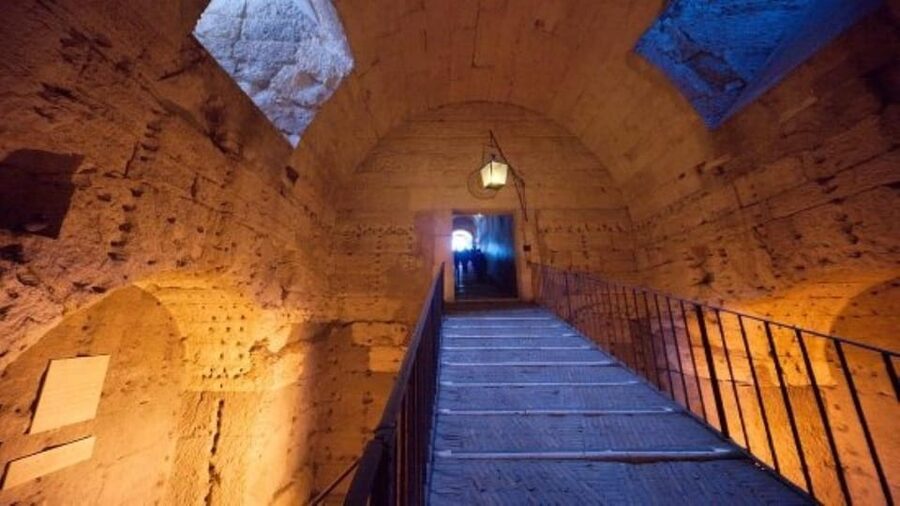
The structure was later adapted into a fortified papal residence. Its thick form, elevated position, and location beside the river made it useful in dangerous times. The popes could use the castle as a refuge when Rome came under attack.
This is where the castle differs from a typical museum visit. You’ll see a building shaped by practical fear. Defensive use changed the way people moved through it, and the papal connection adds a political layer to the Roman story.
The Passetto di Borgo is central to that story. This fortified passage connected the Vatican with Castel Sant’Angelo, allowing popes to escape from the Vatican to the castle during an invasion. The route is one of the most memorable details to learn about because it links two famous Roman landmarks in a very direct way.
Access to every part of the passage is not promised as part of this ticket, so treat it as a feature you’ll learn about rather than assuming you can walk its full length. Even so, understanding the connection changes how you see the castle. It was not an isolated fortress. It formed part of the Vatican’s emergency plan.
The supernatural story of the archangel Michael
The castle also carries a famous religious legend. At the end of the sixth century, Rome suffered from plague. According to the story, the archangel Michael appeared above the mausoleum and put away his sword, signaling that the danger had ended.
That vision gave the castle its present name, Castel Sant’Angelo, or Castle of the Holy Angel. It also explains the importance of the angel statue above the building.
You do not need to treat the tale as literal to appreciate its effect. The story helps explain why this former mausoleum became such an important Christian landmark. Rome often layers legend over engineering, and here the two meet in a particularly striking way: a Roman tomb became a fortress, then a place associated with an angelic rescue.
I find this part especially useful if you are visiting with children or anyone who prefers stories to dates. The plague legend gives the building a clear human and supernatural drama, while the architecture shows the slower story of Roman adaptation.
More Entry Tickets in Rome:
- Rome: Castel Sant’Angelo Entry Ticket & Digital Audioguide
★ 4.7 · 5,347 reviews - Rome: Castel Sant’Angelo Entry Ticket & Audio App
★ 4.3 · 4,952 reviews - Rome: Castel Sant’Angelo Entry Ticket with Audio guide
★ 4.4 · 3,646 reviews - Castel Sant’Angelo: Ticket with optional Vatican or Pantheon
★ 4.4 · 3,088 reviews
Prison cells and the darker side of the castle
Castel Sant’Angelo was also used as a prison from the mid-fourteenth century. That gives the visit a harsher tone.
You may see frightening cells, including one known as Sammalò or San Marocco. These spaces are a reminder that the fortress was not only a safe place for popes. It was also a place where prisoners could be held in cramped and unpleasant conditions.
The prison areas are important because they prevent the castle from becoming just a scenic viewpoint. The terrace is beautiful, but the cells show the power behind the building. The same walls that protected high-ranking churchmen also confined prisoners.
The available information does not promise a long lecture or a guided explanation at each cell. If you select the audio guide option, it may help give these rooms more context. Without it, read the displays carefully and allow extra time for the parts that interest you.
The visit can feel uneven if you rush only toward the terrace. I suggest treating the prison rooms and fortress passages as part of the main attraction, not as filler before the view.
The terrace and the best reason to bring your camera
The terrace is the natural high point of the visit. From here, you can enjoy one of the most evocative views in Rome, with the Tiber below and the city opening around you.
The castle’s position makes the view especially useful for understanding the area. You can look toward St. Peter’s Basilica and see how close the Vatican is. The river and Sant’Angelo Bridge provide the foreground, while the city supplies the wider Roman backdrop.
This is also the place to take your best pictures of Sant’Angelo Bridge. The bridge gives the castle a grand approach, and the terrace lets you look back across that approach from above.
Give yourself enough time here. A one-hour visit can work, but you will need to keep moving through the interior. If you want to study the rooms, listen to an audio guide, and take photographs from the terrace, the full one-and-a-half hours will feel more comfortable.
The terrace is not merely a reward at the end. It helps you understand why the site mattered. From above, the river crossing, the Vatican connection, and the castle’s commanding position make much more sense.
Audio guide or independent visit
A guided tour is not included. That is the most important thing to understand before you book.
The audio guide is included only if you choose the relevant option. For many visitors, that add-on is worth considering because the castle has several distinct identities, and a bare ticket will not automatically explain every transition.
With an audio guide, you can move at your own pace and pause in the rooms that interest you. You can also spend less time reading every sign. The trade-off is that you will not have a live person answering questions or adjusting the visit to your interests.
One piece of feedback attached to this experience praised a guide as amazing, but no guide name is provided, and the standard description says a guided tour is not included. If having a live guide is important to you, confirm exactly which option you are booking rather than assuming the basic ticket includes one.
For independent visitors, the ticket still works well. The building itself gives you plenty to look at, and the terrace, bridge, prison cells, and papal refuge story provide a clear route through the visit.
Is $17 a fair price?
At $17 per person, this is a reasonable price if you value time and want a straightforward way into Castel Sant’Angelo. You are paying mainly for entry convenience, not for an extended guided lesson.
The value improves if the regular ticket line is long or if you have a timed plan near the Vatican. Losing an hour in a queue can cost more than the ticket savings, especially on a short Rome visit.
The price needs a little care when children are involved. Admission for visitors under 18 is free, but the amount paid covers a service fee. Children still need their full names and passport or ID card details.
The audio guide option may change the total price, so check the final amount before paying. If you already know the monument well or prefer reading at your own pace, the basic ticket may be enough. If you want more help connecting Hadrian, the popes, the prison, and the archangel legend, the audio option has a stronger case.
The booking also allows cancellation up to 24 hours in advance for a full refund. You can reserve now and pay later, which is useful when your Rome schedule is still shifting.
Timing your visit near the Vatican
The castle’s location makes it a natural addition to a Vatican day. It is near St. Peter’s Basilica and the Vatican Museums, so you can place it before or after those sights.
I would avoid treating it as a quick extra between two tightly timed bookings. The visit can take up to one-and-a-half hours, and you’ll want time for the terrace and bridge photographs.
A good plan is to leave room around the castle rather than trying to predict every minute. The ticket provides a starting time, but the experience itself is not described as a guided group itinerary with a fixed sequence.
The small-group option may appeal to you if it is available for your date, though the standard arrangement remains a ticket-based visit. Check what is included in the exact option before booking.
What you cannot bring and who should skip it
Pets are not allowed. Weapons and sharp objects are prohibited, and baby strollers, luggage, and large bags are also not permitted.
That last point matters if you are changing hotels or carrying a full daypack. Travel light and arrange luggage storage elsewhere before arriving. The information provided does not specify a cloakroom, so do not count on leaving large items at the entrance.
The site is not suitable for wheelchair users or people with mobility impairments. The building’s fortress design, interior routes, and access conditions make this a serious consideration, not a minor inconvenience.
Bring identification for every participant, including children. Keep the ticket PDF easy to display on your phone, and check your email and WhatsApp the day before the visit.
Who will get the most from this castle visit?
I would recommend this experience to you if you enjoy Roman buildings that changed purpose over time. It is also a good match if you want a strong viewpoint near the Vatican without committing to another long tour.
History-minded visitors will appreciate the link between Hadrian’s mausoleum, papal power, the Passetto di Borgo, and the prison. Photographers will like the bridge and terrace. Families may enjoy the archangel legend and the fortress setting, though the darker prison rooms may not suit very young children.
I would be more cautious if you need a wheelchair-accessible attraction, want a live guide included, or plan to bring luggage. I would also reconsider it if your schedule is already packed with the Vatican Museums and St. Peter’s Basilica.
Should you book Castel Sant’Angelo?
Book it if you want a short, flexible visit with a useful skip-the-line entry and a memorable view. At $17, it offers solid value for a self-guided stop, especially when combined with a Vatican-area day.
Choose the audio guide option if you want more explanation. Do not book the basic ticket expecting a personal guide, because that is not included. And before you commit, make sure everyone can manage the castle’s access conditions and arrive without large bags.
The best reason to go is the combination of stories. You get Hadrian’s tomb, a papal escape route, a plague legend, prison cells, and a terrace overlooking Rome, all inside one unusual building.
FAQ
How long does the Castel Sant’Angelo visit take?
The activity lasts about one to one-and-a-half hours. Check availability for the starting times offered on your date.
Is a guided tour included?
No. A guided tour is not included. An audio guide ticket is available if you select that option when booking.
How do I receive my ticket?
Your ticket is sent by email and/or WhatsApp, usually the day before the activity. You can go directly to the entrance with the ticket.
Do children need tickets and identification?
Visitors under 18 have free admission, but the price paid covers a service fee. Children must bring a passport or ID card, and all participants’ full names must be provided in English.
Can I cancel the booking?
Yes. You can cancel up to 24 hours in advance for a full refund. A reserve-now-and-pay-later option is also available.
Can I bring luggage, a stroller, or a pet?
No. Pets, weapons, sharp objects, baby strollers, luggage, and large bags are not allowed. The activity is also not suitable for wheelchair users or people with mobility impairments.
Just added around Rome
- St. Peter’s Basilica & Castel Sant’Angelo Entry★ 4.1 · 8 reviews
- St. Angel’s Castle: 2-Hour Private Tour★ 5.0 · 9 reviews
- Rome: Skip-the-Line Castel Sant’Angelo Tickets & Audio Guide★ 4.9 · 16 reviews
- Rome: Vatican, St Peter’s Sq & Castel Sant’Angelo PhotoShoot★ 5.0 · 14 reviews
- Rome Pre-Reserved Shared or Private Tour Castel Sant’Angelo★ 4.6 · 68 reviews
- Rome: Vatican and Castel Sant’Angelo Private Photoshoot★ 5.0 · 13 reviews
- Rome: Passetto di Borgo Tour & Castel Sant’Angelo Ticket★ 4.4 · 86 reviews
- Rome: Castle Sant’Angelo Ticket w/ audioguide option★ 3.6 · 25 reviews
Skip the Line, compared.

Seville: Alcázar, Cathedral & Giralda Skip-the-Line Tour
Read our review →
Granada: Alhambra & Generalife Fast-Track Guided Tour
Read our review →
Seville: Priority Access Cathedral, Giralda & Alcázar Tour
Read our review →
Fast-Track Alhambra & Nasrid Palaces Guided Tour
Read our review →
Alcazar and Cathedral of Seville Tour with Skip the Line Tickets
Read our review →
Alcázar of Seville Skip-the-Line Tickets and Guided Tour
Read our review →
Skip The Line Alhambra and Generalife Guided Tour
Read our review →
Alhambra & Generalife Skip the line Small Group including Nasrid Palaces
Read our review →Browse the lists this tour appears in