
REVIEW · ROME CASTLE TOURS
Rome Pre-Reserved Shared or Private Tour Castel Sant’Angelo
Castel Sant’Angelo is one of Rome’s best history puzzles: a Roman emperor’s tomb turned fortress, papal refuge, and palace. In 75 minutes, you move from the statues of Ponte Sant’Angelo to Hadrian’s Mausoleum, then climb toward the upper terrace for broad views over the city.
I love the way the tour links the castle to the bridge outside, and I like the clear storytelling praised in particular from guides Francesca and Mario. The main consideration is simple: the Passetto di Borgo is not open on this tour, so you can learn about the secret Vatican passage without walking through it.
Key points to know before booking
- Hadrian’s tomb became a papal fortress: See how one building changed from imperial burial place to a defensive stronghold and papal residence.
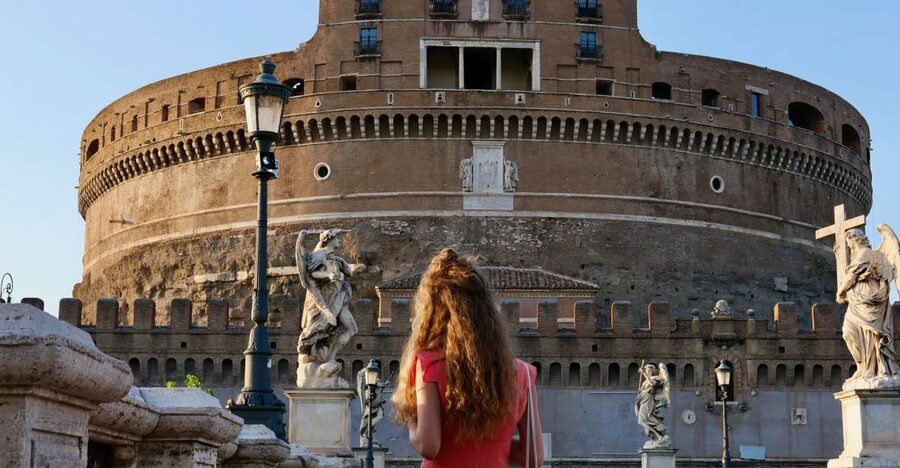
- The tour begins on Ponte Sant’Angelo: Spend about 15 minutes learning about the bridge and its statues before entering the castle.
- The upper terrace is the payoff: Fresh air and wide views give you a strong finish after the indoor rooms and corridors.
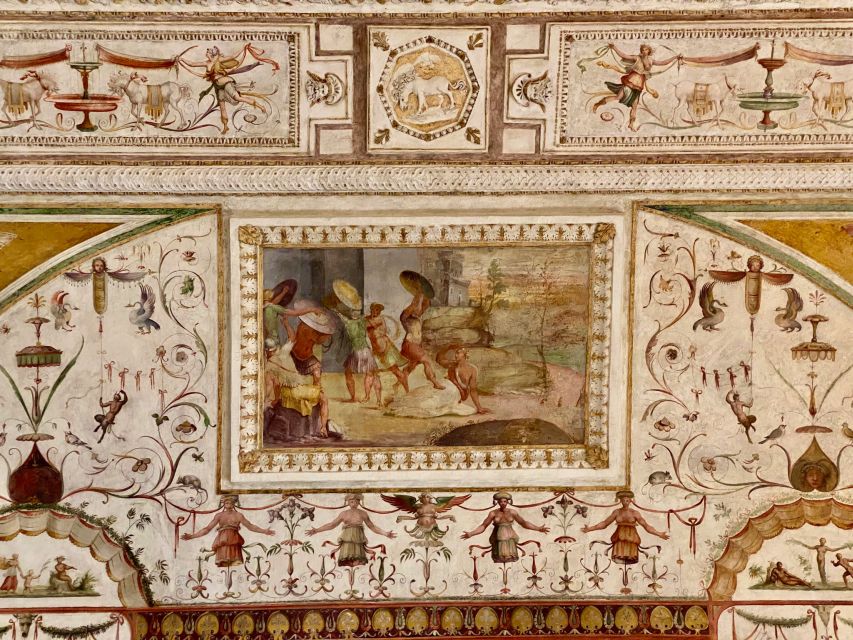
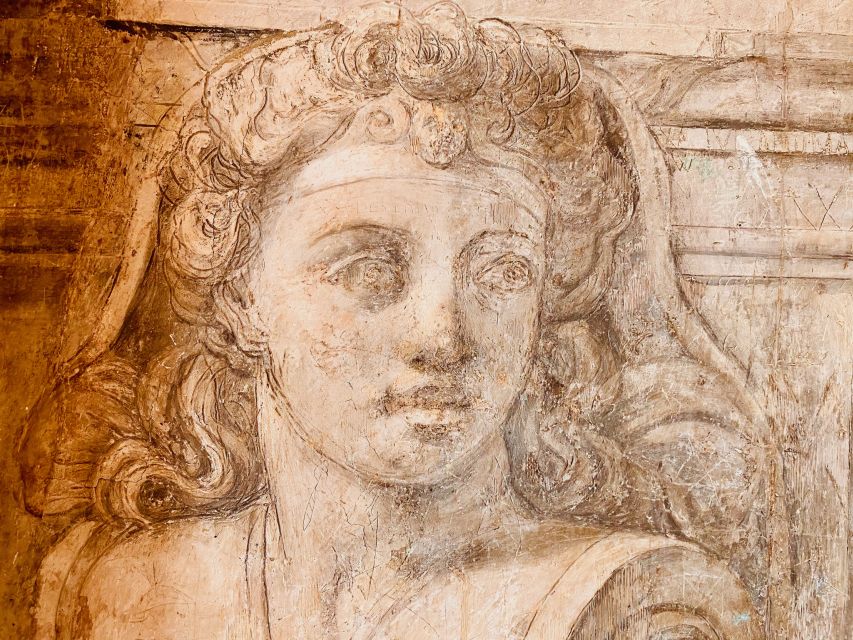
- The art is unusual rather than uniformly grand: Look for frescoes, grotesque motifs, statues, and trompe-l’oeil painting.
- The Vatican passage is explained, not entered: The Passetto di Borgo is excluded, so keep your expectations clear.
- You can choose the group style: Shared small groups and private tours are available, with guides in English, Italian, German, Spanish, French, and Portuguese.
Why Castel Sant’Angelo feels unlike other Roman sights
Many Roman monuments reveal one main chapter of the city. Castel Sant’Angelo gives you several in one building. It began as the mausoleum of Emperor Hadrian, later became a fortress, and then served the popes as a refuge and residence.
That changing purpose is what makes the castle worth your time. You are not simply walking through an ancient tomb. You are following the practical needs of different rulers. A monumental burial place became a defensible castle. Parts of it became papal rooms, decorated halls, and protected routes.
I find this kind of site especially useful early in a Rome visit because it gives you a framework for understanding the city’s power struggles. The building is not decorated in the same way as St. Peter’s Basilica, and one Austrian guest specifically advised visiting it near the beginning of a Rome trip, before comparing its more restrained interiors with the splendor of St. Peter’s.
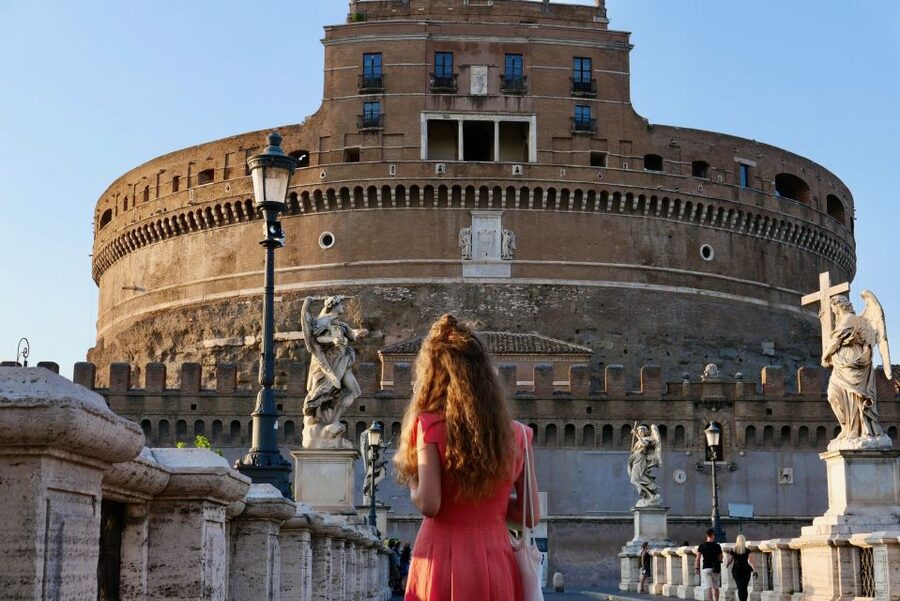
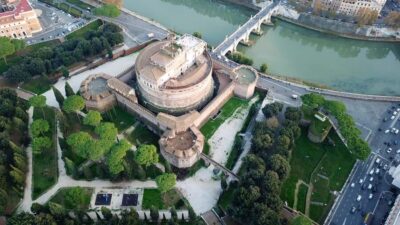
The setting also helps. The castle sits beside the Tiber, with Ponte Sant’Angelo leading toward it. From the outside, it looks like a solid round fortress. Inside, its corridors and rooms reveal how many times Rome has reused its old buildings.
More Private Tours in Rome:
- Rome: Vatican and Castel Sant’Angelo Private Photoshoot
★ 4.9 · 133 reviews - Rome: Castel Sant’Angelo Skip the Line Private Tour
★ 4.9 · 29 reviews - Rome: Vatican and Castel Sant’Angelo Private Photoshoot
★ 5.0 · 13 reviews
Meeting your guide at Ponte Sant’Angelo
You meet in front of the entrance to Castel Sant’Angelo, by the bridge. Look for a staff member holding a yellow Touriks sign. This matters because the voucher on your phone is not the entry ticket. Your guide provides the actual ticket at the meeting point.
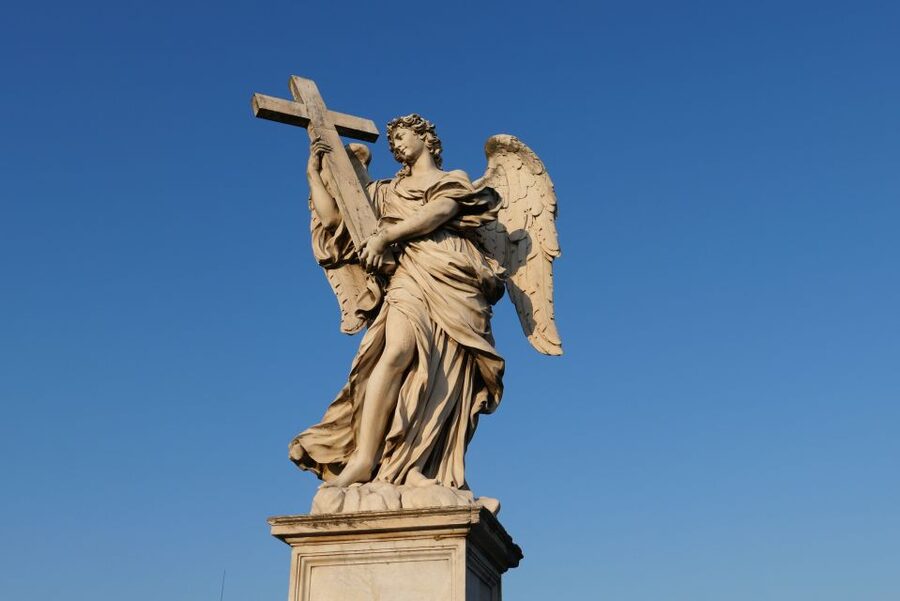
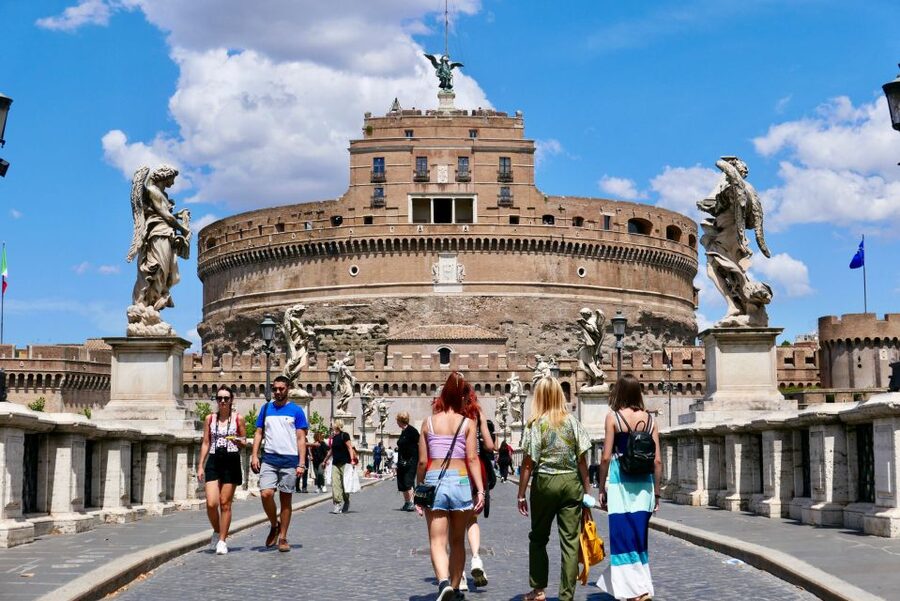
The tour begins with about 15 minutes on Ponte Sant’Angelo. This is a smart use of time. The bridge is not just a walkway to the castle. Its statues and position create the visual approach to the fortress, and your guide explains their connection to the monument.
I like starting here because the exterior gives you a chance to get your bearings before entering. You can look back toward the castle, study the bridge, and understand why the building controlled an important route near the Vatican.
The bridge stop is short, so do not expect a long architectural lecture. It works as an introduction. If you arrive a little early, use the time to locate the yellow sign and gather what you need before the group moves inside.
Inside Hadrian’s Mausoleum
The main castle visit lasts about one hour. You move through the former tomb, fortress areas, papal corridors, and papal rooms while the guide connects the spaces to the building’s changing role.
Hadrian’s tomb is the anchor of the story. The original function was dynastic: an emperor created a monumental resting place for himself and his family. Later generations adapted the structure for defense and political survival. That contrast is easy to picture as you walk through a building whose purpose changed without losing its massive Roman core.
The castle’s architecture can feel more severe than the ornate interiors of Rome’s churches. That is not a flaw, but it is important to know before paying $81. The value comes from the guide’s explanation, the layered history, and the terrace views, not from a constant sequence of glittering rooms.
One Austrian guest described the interior as comparatively simple after visiting St. Peter’s Basilica. I think that is useful advice. If you want painted ceilings and lavish decoration at every turn, this may feel modest. If you enjoy forts, old corridors, and buildings that show their working history, the castle makes a stronger impression.
Papal corridors, rooms, and the Gran Loggia
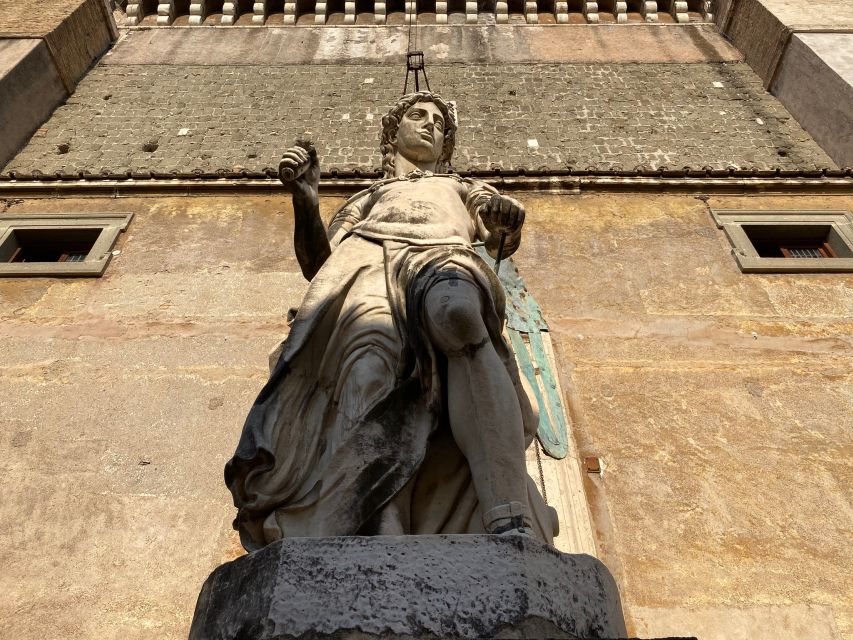
The papal sections show the building in a different light. Instead of serving only as a mausoleum or military refuge, Castel Sant’Angelo also became a papal residence and a protected place close to the Vatican.
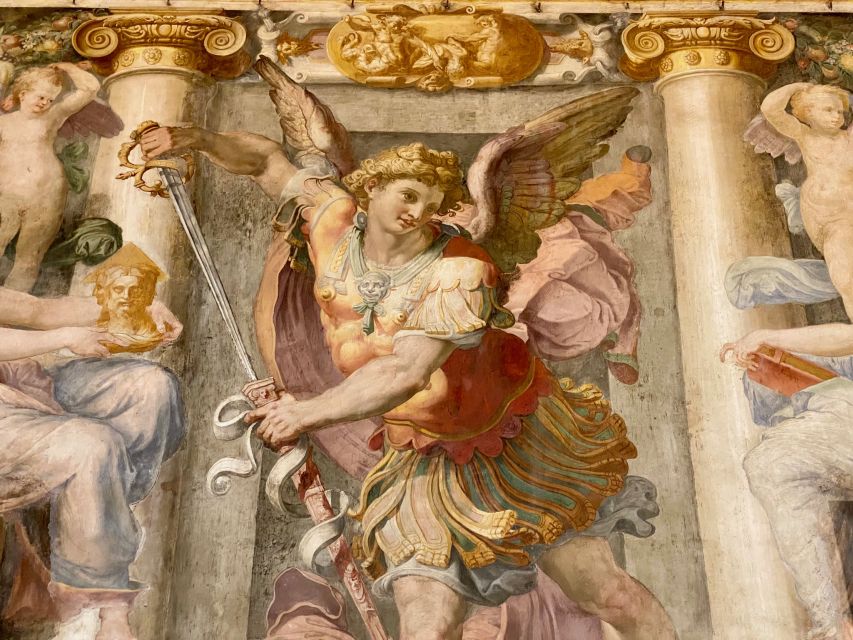
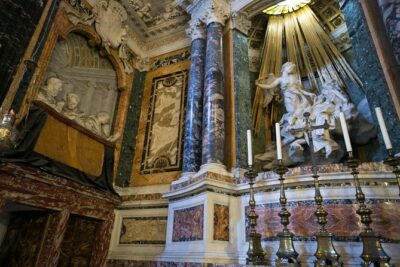
You visit papal corridors and rooms, including the Gran Loggia of Paul III. These spaces introduce a more decorative side of the castle. The frescoes and painted details are not simply decoration. Your guide points out the symbolism and the darker stories associated with the building’s past.
Look closely at the grotesque motifs and illusionistic trompe-l’oeil painting. Trompe-l’oeil means painting designed to create the impression of three-dimensional forms or architectural details. It rewards a slower look, even on a short tour.
This is where the quality of the guide matters most. The castle can be confusing if you see only a succession of rooms and stairways. A live explanation gives the spaces a purpose. Francesca is praised for mixing interesting facts with humor, while Mario is noted for giving a large amount of historical information. The language options include English, Italian, German, Spanish, French, and Portuguese.
A few more castle tours around Rome worth a look
- Rome: Castel Sant’Angelo Entry Ticket & Digital Audioguide
★ 4.7 · 5,347 reviews - Rome: Castel Sant’Angelo Entry Ticket & Audio App
★ 4.3 · 4,952 reviews - Rome: Castel Sant’Angelo Entry Ticket with Audio guide
★ 4.4 · 3,646 reviews - Castel Sant’Angelo: Ticket with optional Vatican or Pantheon
★ 4.4 · 3,088 reviews
The Vatican connection, with an important limit
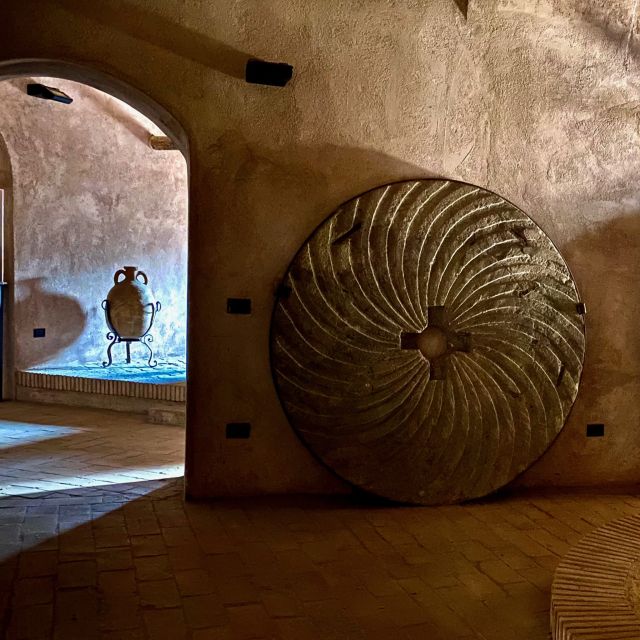
The castle is connected in the public imagination to the Vatican because of the Passetto di Borgo, the fortified passage between Castel Sant’Angelo and Vatican City. The route allowed popes to move between the Vatican and the castle under protection.
Your guide explains this connection, but you do not enter the Passetto di Borgo on this tour. This is the most important detail to understand before booking. Descriptions of the secret passage can sound like a promise of access, but this experience does not include a walk through it.
I still find the connection valuable because it explains why the castle mattered so much beyond its Roman origins. The building was not an isolated monument. It was part of a defensive system tied to papal power.
If walking through the passage is your main reason for visiting, choose a different experience that specifically includes Passetto access. If you mainly want the castle, its papal rooms, the tomb, and the terrace, the explanation is a useful part of the tour without changing the focus of the visit.
Finishing on the upper terrace
The tour ends at the upper terrace, and this is likely the most immediately rewarding part for many people. After the enclosed corridors and rooms, you step into fresh air and see Rome from above.
The terrace offers one of the city’s best panoramic views according to the tour description. You can take in the surrounding streets, the Tiber area, the bridge, and the wider Roman skyline. The exact view depends on the weather, which is also why the tour can be canceled in poor conditions.
I like this ending because it gives the visit a clear rhythm. You begin outside on the bridge, move through the building’s complicated interior, and finish with open space and a visual sense of where the castle sits in Rome.
Bring comfortable shoes. The tour includes historic interiors and movement through the castle, so this is not the place for footwear that makes walking unpleasant. The experience is partially wheelchair-accessible, but the available information does not promise full access to every area.
Is $81 a fair price?
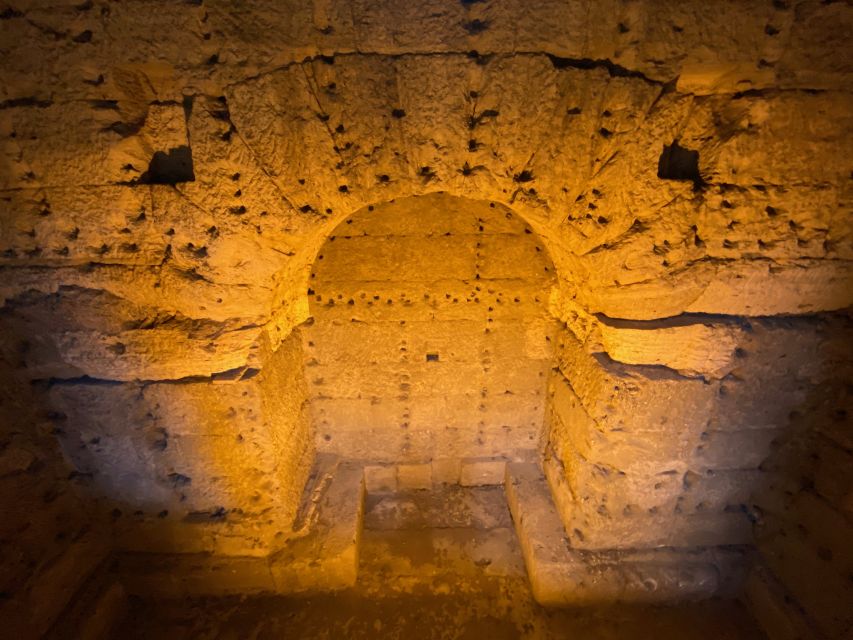
The advertised price is $81 per person. The standard entry ticket is €16, and that ticket is included. The rest of the price pays for the live guide, pre-reserved admission, headsets, and on-site assistance.
For a self-guided visit, the ticket alone costs much less. That makes the tour worthwhile mainly if you want the building explained in a short, organized visit. You are paying for context and time management, not just entry.
The headsets are sterilized and help you hear the guide clearly. That is useful inside a stone fortress, where voices can carry poorly and a shared group can otherwise become difficult to follow. The tour is available as a private experience or in a small shared group, so you have some control over the feel and cost of the visit.
I would choose the private option for a family with specific questions, a couple wanting a slower pace, or anyone who dislikes being tied to a larger group. The shared option makes more sense if you want the guide’s structure without paying for a fully private visit.
The tour lasts 75 minutes, which keeps the cost easier to assess. You get a focused introduction rather than half a day inside the castle. If you want every room and corner, this may feel brief. If your Rome schedule is crowded, the length is a strength.
What the guide adds to the experience
The strongest praise goes to the guides and their storytelling. Francesca is described as informative, humorous, and effective at keeping the tour moving. Mario is praised for providing a great deal of historical information. Other comments highlight the good duration and manageable group size.
That feedback matches what this monument needs. Castel Sant’Angelo is full of symbols, reused spaces, and historical shifts. Without an explanation, you may notice the architecture but miss why the building changed shape and function.
A good guide also helps you notice details that are easy to pass. Look for the frescoes, statues, grotesque designs, and trompe-l’oeil effects. The tour promises stories about the darker and more mysterious side of Rome, but it also gives you practical historical structure.
You should not expect a theatrical performance. The experience is a guided history visit, with humor and stories used to make the material easier to follow. The four recent comments supplied about the tour consistently praise the guides, facts, and overall duration, which is the clearest sign of its strength.
Practical details that affect your choice
Reserve your place in advance, especially if you need a particular language. The available languages are English, Italian, German, Spanish, French, and Portuguese. Starting times vary, so you need to check availability for your date.
Bring a passport or ID card and comfortable shoes. Weapons and sharp objects are not allowed, and food, drinks, alcohol, and drugs are prohibited inside.
There is no hotel pickup or drop-off. You make your own way to Castel Sant’Angelo and meet by the entrance near the bridge. Food and drinks are also not included.
The tour is subject to weather conditions. If it is canceled, you receive the option of another date or a full refund. You can also cancel up to 24 hours in advance for a full refund, and the reserve-now, pay-later option keeps your plans flexible.
Who should book this Castel Sant’Angelo tour?
I would recommend it to you if you want a short, guided visit that combines ancient Rome, papal history, architecture, and a strong city view. It works especially well for a first visit to Rome, when a guide can help you understand how the monument fits into the city’s larger story.
It also suits you if you prefer small groups, need a choice of languages, or want a private guide. Families and visitors with limited time may appreciate the 75-minute format.
I would be more cautious if you mainly want access to the Passetto di Borgo. That passage is not included. I would also set your expectations carefully if your favorite Roman sights are highly decorated churches and palaces. Castel Sant’Angelo has frescoes and fine rooms, but much of its character comes from heavy fortifications, corridors, and the contrast between military and papal use.
Should you book it?
Book this tour if you want the castle’s story explained clearly, with pre-reserved admission and a final terrace view. The guide is the main value, and Francesca and Mario are singled out for strong storytelling, useful facts, and a touch of humor.
Skip it if you want only a cheap entrance ticket or if walking through the Vatican passage is essential. For most visitors who want a focused look at Hadrian’s tomb, the papal rooms, the fortress structure, and the bridge outside, $81 is a reasonable price for a polished 75-minute introduction.
FAQ
How long does the Castel Sant’Angelo tour last?
The tour lasts 75 minutes. About 15 minutes are spent on Ponte Sant’Angelo, followed by roughly one hour inside Castel Sant’Angelo.
Where does the tour meet?
Meet your guide in front of the entrance to Castel Sant’Angelo, by the bridge. Look for a staff member holding a yellow Touriks sign.
Is entry to Castel Sant’Angelo included?
Yes. A pre-reserved entry ticket valued at €16 per person is included. The voucher itself is not the entry ticket, as your guide provides the ticket at the meeting point.
Can I enter the Passetto di Borgo?
No. The tour explains the passage connecting Castel Sant’Angelo with Vatican City, but access to the Passetto di Borgo is not included.
Which languages are available?
Live guides are available in English, Italian, German, Spanish, French, and Portuguese.
Is the tour private or shared?
You can choose a private tour or a small shared group, depending on the option available for your date.
What should I bring?
Bring a passport or ID card and comfortable shoes. Weapons, sharp objects, food, drinks, alcohol, and drugs are not allowed.
Just added around Rome
- St. Peter’s Basilica & Castel Sant’Angelo Entry★ 4.1 · 8 reviews
- St. Angel’s Castle: 2-Hour Private Tour★ 5.0 · 9 reviews
- Rome: Skip-the-Line Castel Sant’Angelo Tickets & Audio Guide★ 4.9 · 16 reviews
- Rome: Vatican, St Peter’s Sq & Castel Sant’Angelo PhotoShoot★ 5.0 · 14 reviews
- Rome: Vatican and Castel Sant’Angelo Private Photoshoot★ 5.0 · 13 reviews
- Rome: Passetto di Borgo Tour & Castel Sant’Angelo Ticket★ 4.4 · 86 reviews
- Rome: Castle Sant’Angelo Ticket w/ audioguide option★ 3.6 · 25 reviews
- Rome: Passetto & Castel Sant’Angelo Entry and Audioguide★ 3.6 · 43 reviews
Rome Castle Tours, compared.
Rome: Castel Sant’Angelo Entry Ticket & Digital Audioguide
Read our review →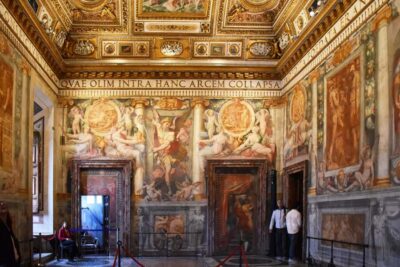
Rome: Castel Sant’Angelo Entry Ticket & Audio App
Read our review →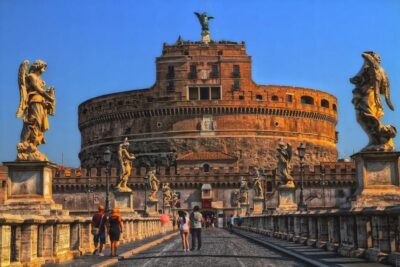
Rome: Castel Sant’Angelo Entry Ticket with Audio guide
Read our review →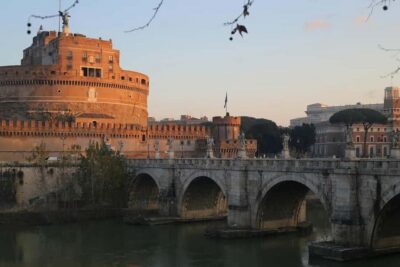
Castel Sant’Angelo: Ticket with optional Vatican or Pantheon
Read our review →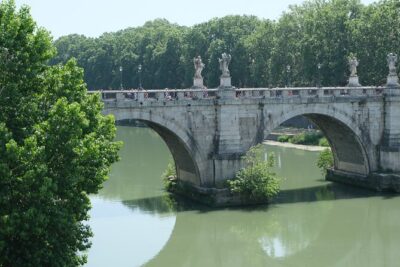


Rome: Castel Sant’ Angelo Ticket and Audio Guide
Read our review →Browse the lists this tour appears in