
REVIEW · JAPANESE CASTLE TOURS
Learn Zen in a class of making Matcha tea near Osaka Castle
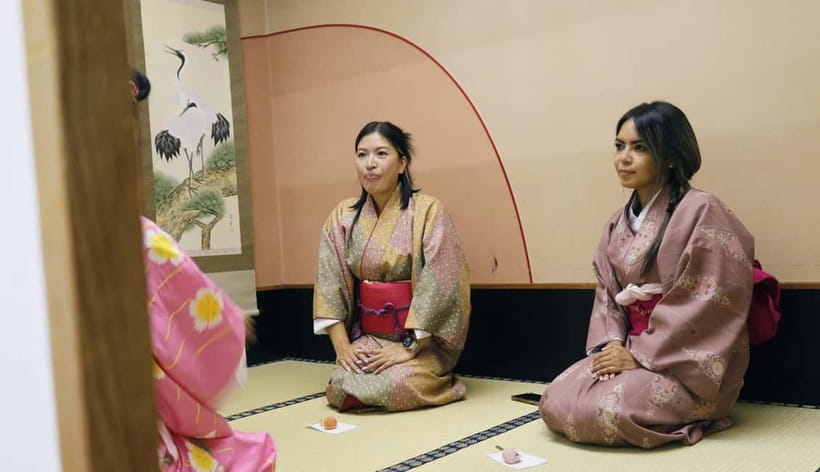
Passing through the tea-room entrance is the heart of this experience: inside, age, nationality, gender, and social rank are set aside. I like the way the class makes you a participant rather than a spectator, and I like the mix of kimono dressing, matcha, and wagashi in one compact visit.
The small group, limited to six people, gives the instructor time to correct gestures and let each person prepare tea. The main consideration is timing: the class lasts only one hour, but you must arrive 30 minutes early to change, and hair styling, outdoor photos, and some clothing combinations cost extra.
Key details before you book
- Enter the tea room as an equal: The nijiriguchi, or low tea-room entrance, introduces the central idea of leaving status outside.
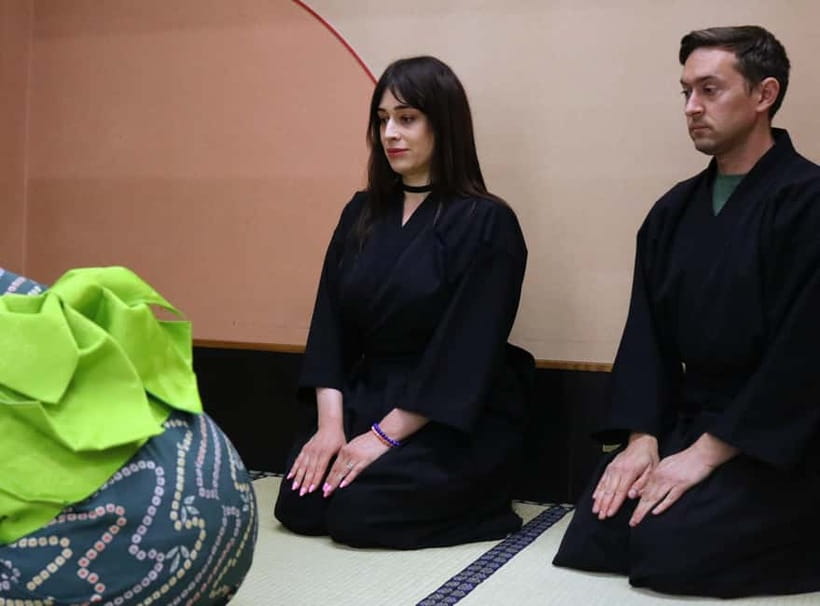
- Choose a traditional look: Women wear kimono, while men dress in hakama and dogi or a kimono-based samurai outfit.
- Prepare and serve matcha: You learn how to sit, bow, walk, handle tea, and respond as a considerate tea guest.
- Taste seasonal wagashi: These handmade sweets explain Japanese ideas of wabi, sabi, craftsmanship, and the four seasons.
- Keep the camera memories: A photographer takes pictures during the experience, with the finished images sent to your email address.
- Plan for the add-ons: Wagami hair styling, outdoor photography, and movie filming are paid options.
Why this Osaka tea class feels different
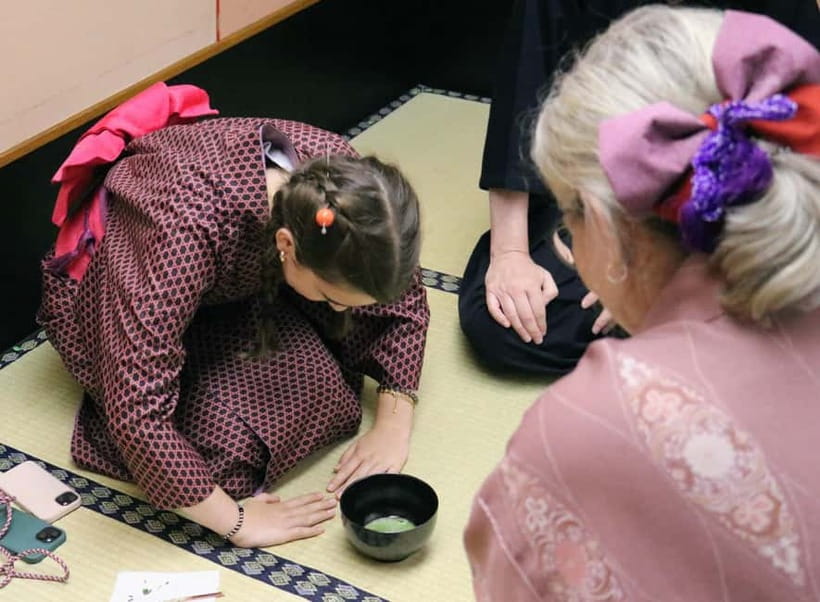
Many Japanese cultural activities let you watch a ceremony from the side. This one asks you to dress for the part and take an active role. You do not simply receive a bowl of matcha. You learn how to become a proper tea guest, then prepare tea for someone else.
That change matters. The tea ceremony, or chanoyu, is built on a shared exchange. The host offers care and attention, but the guest must answer with good manners, awareness, and respect. You learn that hospitality is not a one-way performance.
The class takes place at Bushi no Homare, also called Samurai Honor, in Osaka’s Joto-ku district. It is promoted as an experience near Osaka Castle, but the exact meeting point is Excellence Takayama 1F, 2-3-19 Shiginonishi, Joto-ku, Osaka-shi. Use Google Maps rather than Apple Maps, since the Apple Maps address is reported as incorrect.
Look for the wooden Samurai Honor sign, the activity pamphlets in front of the shop, or the kimonos and hakama hanging outside. You should arrive 30 minutes before your booked time. That extra half-hour is for instructions and changing clothes, not part of the one-hour tea class itself.
More Japanese Castle Tours in Osaka:
- Osaka Castle: Museum and Tower Entry Ticket
★ 4.5 · 2,380 reviews - Osaka Castle Walking Tour and Castle Tower Admission
★ 5.0 · 561 reviews - From Osaka: Himeji Castle, Arima Onsen & Mt. Rokko Day Tour
★ 4.6 · 339 reviews
Changing into kimono or samurai clothing
The first practical step is changing into traditional clothing. Women wear kimono, obi, tabi socks, zori sandals, and a small basket bag when those items are included in the selected arrangement. Men wear a kimono-style outfit with obi, tabi, and geta, or the hakama and dogi combination described for the samurai presentation.
Bring a T-shirt under your clothing. It is a simple but useful tip, especially if you prefer not to put traditional garments directly against your skin. You will be changing before the ceremony, so wear something easy to remove and put back on.
For women, hair arrangement with decorative kanzashi is listed as a paid Wagami option. Some participants have received an elegant updo with flowers, but you should not assume that this is included in the basic booking. Check the exact clothing and styling package before paying.
The clothing adds more than color to your photographs. It changes the way you move. A kimono encourages smaller steps and careful posture. Hakama and dogi create a samurai image, but the class still focuses on tea etiquette rather than martial arts.
This is also one place where the small group helps. With no more than six people, the staff can assist with clothing and make sure each person is ready before entering the tea room.
Crossing the nijiriguchi into an equal room
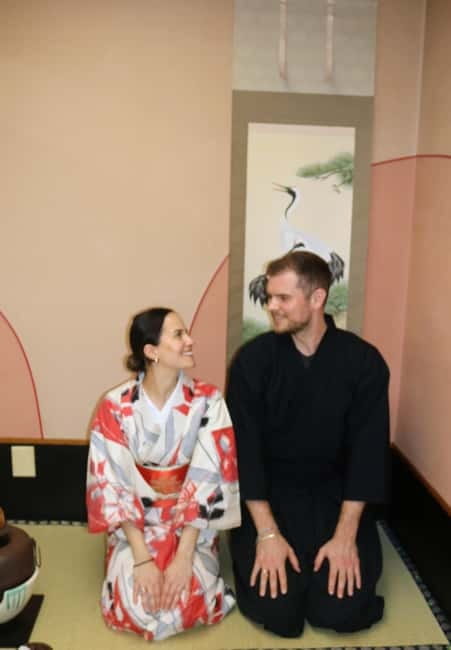
The low entrance to a tea room is called the nijiriguchi. Traditionally, a person entering must lower the head and body. Symbolically, the entrance leaves rank and status outside.
The class uses this simple action to explain a larger idea. Once you enter, everyone is treated equally. It does not matter where you come from, how old you are, or what position you hold at home. The room asks you to pay attention to the same quiet rules as everyone else.
You learn how to sit, bow, stand, walk, and receive tea. These movements may look small, but they carry the ceremony’s sense of order. The instructor demonstrates the proper manners and gives you a chance to practise them.
Do not worry about knowing Japanese customs in advance. English and Japanese are the listed teaching languages, and an English interpreter guide is included. The experience is designed to explain the meaning behind the actions, not simply tell you to copy them.
A guide named Kaori has been part of the English-language teaching team and has explained the historical and cultural setting step by step. Staffing can vary, so your instructor may be someone else. The important point is that the class is built around explanation, not silent posing.
Learning to make and serve matcha
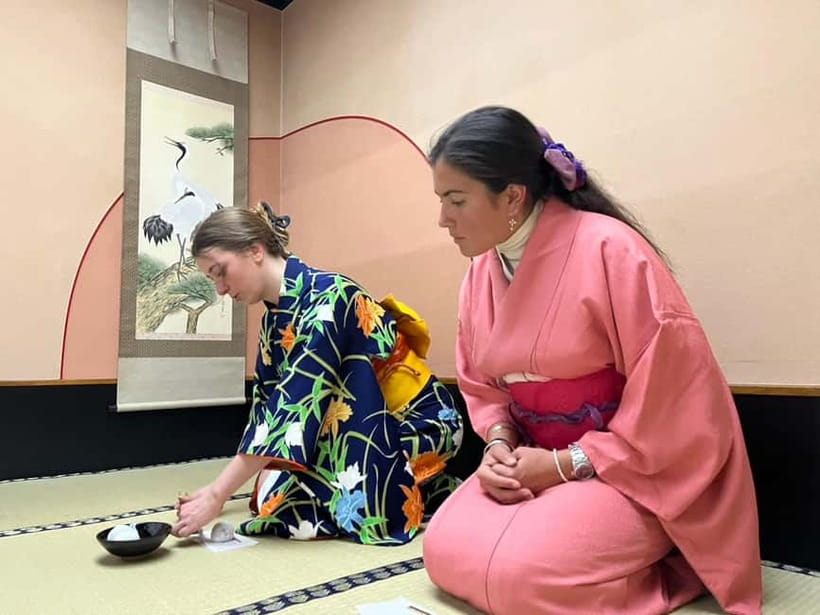
The matcha portion gives the class its hands-on centre. The tea master or instructor prepares powdered green tea and serves it according to traditional manners. You then learn the guest’s role and have a chance to prepare tea for another person.
This is a useful distinction. Making matcha at a café can be a quick demonstration. Here, the preparation is tied to posture, gesture, timing, and care for the person receiving the bowl.
You learn how the host serves, but you also learn how a guest responds. That response may include how you accept the tea, how you bow, and how you show appreciation. The lesson makes the ceremony feel less like a staged show and more like a conversation conducted through movement.
The tea itself can be intense for first-time drinkers. Matcha has a concentrated green taste, and the wagashi served alongside it helps balance the experience with sweetness. If you already enjoy green tea, you will probably appreciate the preparation more. If you are unsure about matcha, the class still gives you a clear introduction without requiring specialist knowledge.
The one-hour length is both a benefit and a limit. It fits neatly into a day of sightseeing and does not demand a half-day commitment. At the same time, you should expect an introductory lesson rather than formal mastery of tea ceremony.
A few more castle tours around Osaka worth a look
- Château du Bois-Huaut: Cellar Tour and Wine Tasting Class
★ 4.8 · 53 reviews - Granada: “Alhambra´s Craft Workshop”
★ 4.9 · 32 reviews - Nasrid Crafts: Only plasterwork workshop in the Alhambra
★ 4.5 · 15 reviews - Pizza Pro, a Hands-On Cooking Class Near Castel Sant Angelo
★ 4.7 · 13 reviews
Wagashi and the four seasons on a small plate
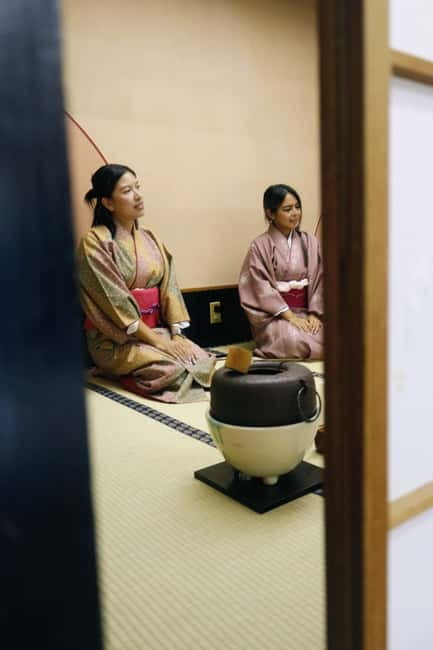
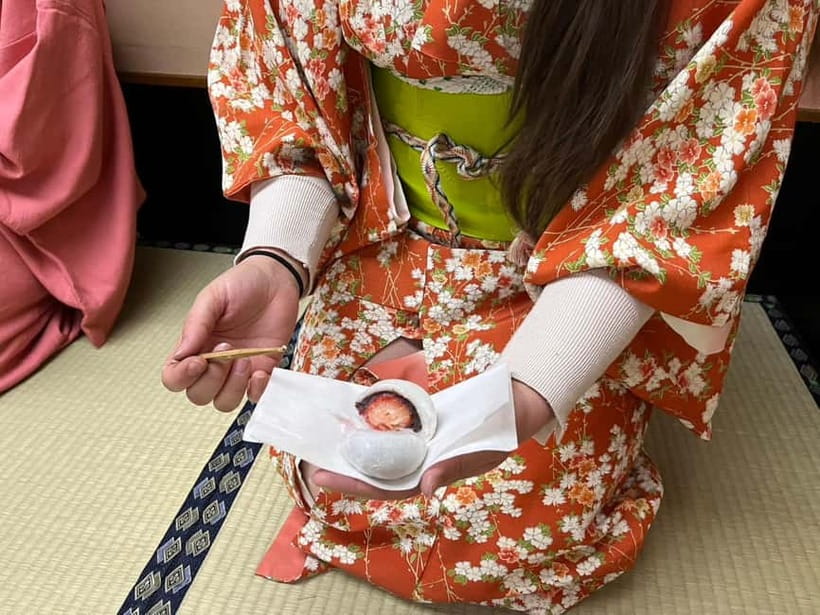
Wagashi are traditional Japanese sweets associated closely with tea culture. Their shapes and colors often reflect the season, and their handmade appearance is part of their appeal.
The class uses wagashi to explain wabi and sabi, Japanese ideas connected with simplicity, age, imperfection, restraint, and quiet beauty. The lesson also links sweets with the four seasons. A flower, leaf, fruit, or color can suggest a particular time of year.
This is why the sweet is more than a snack beside the tea. You are being shown how Japanese food can carry history and visual meaning. Wagashi developed alongside tea culture, and making or studying the sweets offers a small window into Japanese food traditions.
The craftsmanship is easy to notice. Each sweet is made by hand, and the design may look almost too precise to eat. That delicacy fits the tea ceremony, where the bowl, sweets, flowers, clothing, and gestures all form part of the setting.
The class information describes learning through wagashi, though the exact amount of hands-on sweet making may depend on the session. If making the sweets yourself is essential to your plans, confirm that detail before booking. You can count on matcha and wagashi being part of the tea experience.
Photos in kimono, with a practical warning about extras
Photography is included, and a photographer takes pictures during the ceremony. The images are sent to the designated email address, and the stated arrangement is to receive the data after the session.
This is a welcome feature because the ceremony asks you to concentrate on posture and manners. You do not have to keep interrupting the class to take phone pictures. The photos also capture details that are easy to miss while you are learning, such as your clothing, the tea tools, and the formal movements.
You should separate the included photography from the paid options. Outdoor photo shoots are listed as extras for both women and men. Movie filming is also paid. Wagami hair styling and decorative kanzashi are not part of the basic package unless selected.
The distinction matters when comparing the $40 price. At that rate, you receive clothing, matcha, wagashi, an English interpreter guide, a certified professional instructor, tax, tips, and photo data. You are not paying for transportation, hotel pickup, or a station transfer.
For a short cultural activity, the price is fair if you value participation and photographs. It is less attractive if you want a long tea-school lesson or a full traditional makeover with outdoor portraits. The value depends on what you want from the hour.
Small groups and family suitability
A maximum of six participants is one of the strongest features. Tea etiquette involves details that are hard to follow in a large room. A small class gives you a better chance to ask questions, practise the movements, and prepare tea yourself.
It also works well for families with children who are old enough to follow quiet instructions. The activity is not suitable for children under 10, so younger children cannot join. Children who meet the age requirement can share the dressing, tea preparation, and photo memories with parents or relatives.
Keep in mind that this is a calm, formal activity. It is not a loud costume party or a free-running samurai show. You will need to sit, listen, bow, and handle tea carefully. That makes it a good match for families interested in Japanese customs, but less suitable for anyone seeking constant action.
The experience is also limited to people under 95 and is not suitable for people with altitude sickness. Those restrictions are unusual for a city activity, but they are part of the stated conditions.
How the one-hour schedule works
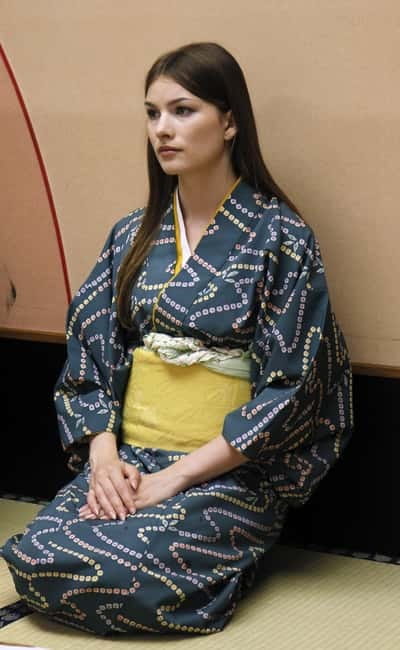
The activity itself lasts one hour, but your total time at the venue will be longer because of the required early arrival and changing. A sensible outline looks like this:
- Arrive 30 minutes early at Samurai Honor and find the wooden sign.
- Receive instructions and change into kimono, hakama, or dogi.
- Enter the tea room through the nijiriguchi.
- Learn tea-room posture, bows, walking, sitting, and guest manners.
- See matcha prepared and served according to the ceremony.
- Prepare tea for another participant.
- Taste wagashi and discuss seasonal design and Japanese aesthetics.
- Take photographs during the activity.
- Receive the photo data by email.
The exact order may change. Clothing, hair, explanations, and photography can take different amounts of time depending on the group. If you book a session with several participants, allow the class to move at the pace of the full group.
The listed instructors speak English and Japanese. Other languages, including Italian, Spanish, French, Chinese, Thai, and Indonesian, may be possible if staff schedules allow, but you must ask before booking. Availability is limited, so do not assume a non-English interpreter will be present.
What to bring and what to skip
Bring a T-shirt for changing. You do not need to bring tea, sweets, or traditional clothing because those are supplied.
Pets are not allowed. Alcohol and drugs are prohibited, and nudity is not permitted. The activity does not include pickup, drop-off, or transportation, so you need to make your own way to the address.
The Google Maps link is the safer navigation choice. Apple Maps may send you to the wrong location. Arriving late could cut into your dressing and instruction time, so build in enough time to find the wooden sign and activity pamphlets.
Who should book this tea ceremony?
I would choose this for a first visit to Osaka if you want a focused introduction to Japanese customs without committing to a long formal tea course. It is especially suitable for couples, small families with children aged 10 and over, and friends who want shared photographs in traditional clothing.
It also suits you if you care about the meaning behind the ceremony. The explanations of equality, hospitality, wagashi, seasons, and wabi and sabi give the clothing and matcha a cultural setting.
I would look elsewhere if your priority is a full outdoor kimono photo session, a private hair-and-makeup package, or extended training in tea ceremony. Those elements either cost extra or are not part of the one-hour basic activity.
The flexible cancellation policy helps if your Osaka schedule is still moving. You can cancel up to 24 hours in advance for a full refund, and the reserve-now, pay-later option means you do not have to pay at the time of booking.
Should you book this Osaka matcha class?
Book it if you want to take part in Japanese tea culture, not merely watch it. The combination of a small class, traditional clothing, matcha preparation, wagashi, English instruction, and emailed photographs packs a lot into one hour.
Before paying, confirm the clothing package, hair styling, language needs, and any outdoor photography you want. At $40 per person, the basic experience offers good value for a short cultural stop, provided you understand that add-ons and transportation are separate.
FAQ
Where does the tea ceremony take place?
It takes place at Bushi no Homare, also called Samurai Honor, at Excellence Takayama 1F, 2-3-19 Shiginonishi, Joto-ku, Osaka-shi, Osaka 536-0014.
How do I find the meeting point?
Look for a wooden sign reading Samurai Honor. Activity pamphlets are displayed in front of the shop, and kimonos and hakama may be hanging outside. Use Google Maps because the Apple Maps address is incorrect.
How early should I arrive?
Arrive 30 minutes before your reserved start time. This allows time for instructions and changing clothes.
How long does the experience last?
The tea ceremony experience lasts one hour. The total time at the venue is longer because you must arrive early to change.
What clothing is included?
Kimono clothing is included. The experience describes women wearing kimono and men wearing hakama and dogi or a traditional kimono-based outfit. Check the selected arrangement for the exact clothing combination.
Is hair styling included?
Wagami, which includes collected hair styling and kanzashi, is listed as a paid option. Do not assume it is included in the basic booking.
Is the activity available in English?
Yes. English and Japanese are listed languages, and an English interpreter guide is included. Italian, Spanish, French, Chinese, Thai, and Indonesian may be possible if staff availability allows.
Can children join the activity?
Children under 10 cannot join. The experience is suitable only for children who meet the stated age requirement and can take part in the quiet, formal class.
Just added around Osaka
- (Ticket Included) Explore Osaka Castle & Museum of History★ 4.8 · 21 reviews
- Osaka: Osaka Castle Guided Tour with Local Guide★ 4.7 · 78 reviews
- Osaka: Osaka Castle – Tsuruhashi – Tennoji (Spanish Guide)★ 4.7 · 10 reviews
- Osaka: Early Morning Osaka Castle Guided Tour, Avoid Crowds★ 4.9 · 12 reviews
- Osaka: Explore Every Bit of Osaka Castle in 3 Hours★ 5.0 · 5 reviews
- Osaka: Osaka Castle 3 hours Historical Walking Tour★ 4.6 · 14 reviews
- Samurai Armor & Sword experience with phot near Osaka Castle★ 4.6 · 16 reviews
- Osaka: Castle History Walking Tour / Castle Tower Admission★ 4.9 · 230 reviews
Japanese Castle Tours, compared.
Kyoto: Nijo-jo Castle and Ninomaru Palace Guided Tour
Read our review →
Kyoto: Nijo Castle, Kiyomizu & Fushimi Inari Guided Tour
Read our review →
Osaka Castle Walking Tour and Castle Tower Admission
Read our review →
Kyoto: Imperial Palace & Nijo Castle Guided Walking Tour
Read our review →
From Osaka: Himeji Castle, Arima Onsen & Mt. Rokko Day Tour
Read our review →
5-Hour Osaka Bike Tour to the Neighborhood of Osaka Castle
Read our review →
Browse the lists this tour appears in