REVIEW · TOURS
Tour Compartido al Castillo San Felipe de Barajas Cartagena
Cartagena’s past comes into focus on the walk from rebellious Getsemaní to San Felipe de Barajas, the fortress that guarded the city from pirates and invading armies. I like the way this tour links street life with military power, and I like the route’s practical mix of history, local recommendations, a chocolate stop, and sweeping views from the Hill of San Lázaro. The main catch is simple: the $12 tour price does not include the castle ticket, and the full walk covers about 7 kilometers in hot weather.
I also like that the guides, including Ronaldo, Luis Carlos, Luis Fernando, and John Serrato, bring different personalities to the history. The tour is in Spanish only, so you should feel comfortable following a live Spanish explanation. Bring water, wear good shoes, and expect a shared group rather than a private outing.
Key points to know before you book
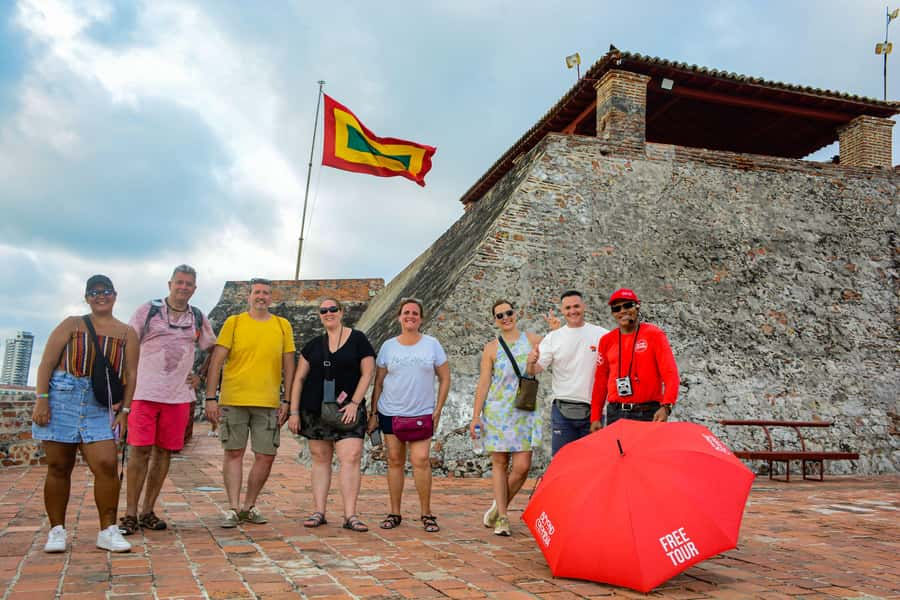
- A 7-kilometer route with a clear purpose: You walk from the social heart of Getsemaní to the fortress that controlled Cartagena.
- The castle ticket costs extra: Budget 33,000 COP per person, purchased at the official booth or online.
- The tunnels are a major highlight: You learn how sound helped soldiers detect movement above the fortress.
- Getsemaní gives the tour its human side: The walk covers inequality, Afro-descendant communities, rebellion, music, murals, and independence.
- The tour runs in Spanish: Guides such as Ronaldo and Luis Carlos are praised for clear explanations and strong historical storytelling.
- This suits active adults more than families with young children: It is not recommended for children under 10, wheelchair users, or people over 70.
From Plaza de la Trinidad into Getsemaní
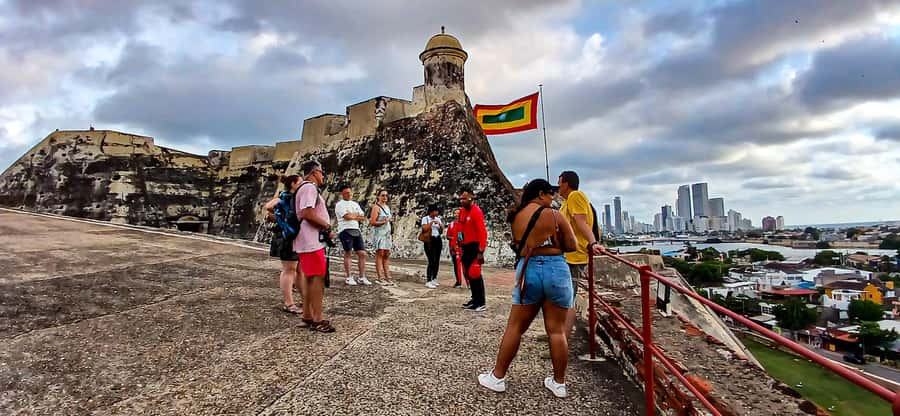
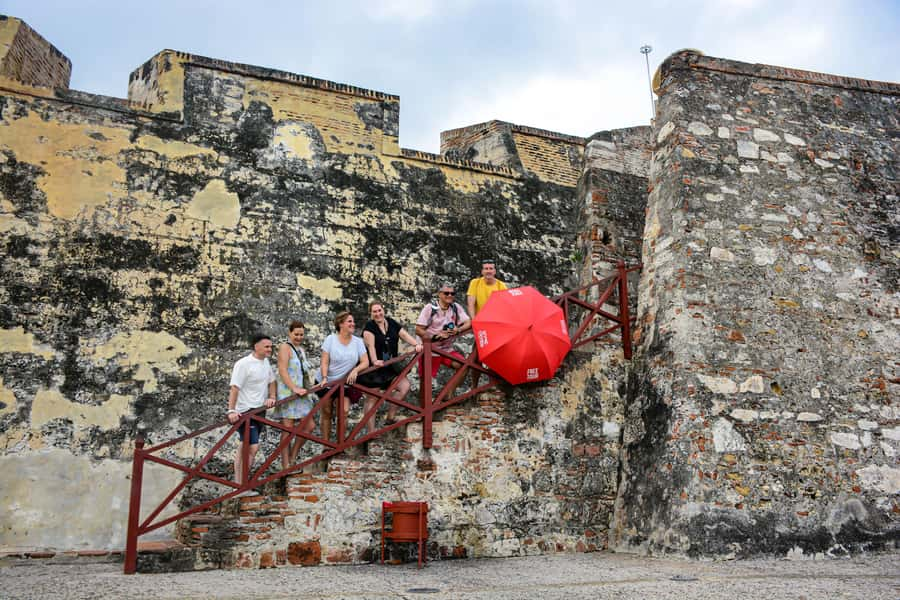
The tour begins at Plaza de la Trinidad, where you look for the red umbrellas. This square is more than a convenient meeting point. It is the social center of Getsemaní, a neighborhood shaped by sailors, artisans, freed Afro-descendant communities, and people who lived outside Cartagena’s protected elite quarters.
That setting gives the opening talk real weight. Instead of beginning with stone walls and military dates, your guide starts with people. You hear why Getsemaní became a center of resistance and how unequal treatment helped fuel the fight for independence.
I find this a smart way to begin. The castle can seem like a giant structure dropped beside the modern city. Getsemaní explains who lived around that power, who benefited from it, and who challenged it.
As you walk, look at the murals and street scenes around the neighborhood. The tour connects the area’s music, public life, and cultural symbols to its past. The point is not simply to admire colorful streets. You are asked to see how local identity grew from pressure, conflict, and community action.
The square can be lively, and the surrounding streets may be crowded. Keep your belongings close, especially in busy areas. The tour itself warns you to keep your friends nearby and your personal items even closer, practical advice in any popular part of Cartagena.
A few more castle tours around the world worth a look
- Seville: Royal Alcázar Entry Ticket
★ 4.6 · 28,378 reviews - Granada: Alhambra & Nasrid Palaces Tour with Tickets
★ 4.7 · 19,801 reviews - Stonehenge, Windsor Castle, and Bath from London
★ 4.5 · 18,662 reviews
The walk across Pedro Heredia Bridge
From Getsemaní, the group continues on foot toward the castle, crossing the Pedro Heredia Bridge along the way. There is no vehicle transfer during the experience, so this is a proper walking tour rather than a short neighborhood stroll followed by a ride.
The route is designed to connect two sides of Cartagena’s story. Getsemaní represents ordinary people, protest, and independence. San Felipe represents defensive planning, royal power, and the effort to hold the city against outside forces.
You should expect several rest stops while the guide speaks. Even so, the route covers about 7 kilometers and lasts 150 minutes, so the distance matters. Cartagena’s heat can make a moderate walk feel longer. Comfortable shoes are essential, and water is not optional.
The physical route also helps you understand the fortress’s position. As you approach the Hill of San Lázaro, the castle’s purpose becomes easier to grasp. The hill offered a key view over Cartagena, and its position helped protect the city’s approaches.
A chocolate stop with a local angle
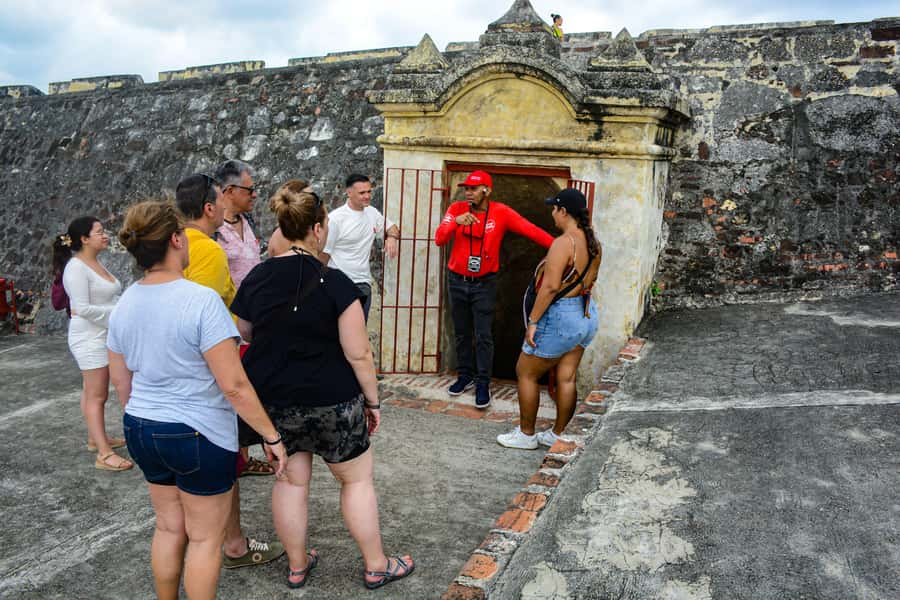
The experience includes a visit to the Chocolate Museum for photographs and a tasting stop. This is a welcome pause in a history-heavy walk, particularly if you need a short break before the castle.
The stop also gives the tour some local flavor beyond battles and colonial architecture. It is not presented as a full food tour, so you should not book this experience expecting an extended tasting program. Think of it as a brief cultural stop built into the route.
Food and drinks beyond the chocolate tasting are not included. One person specifically found it useful to carry a small snack, and I agree with that advice. The tour runs long enough for hunger to become part of the story, especially if you start without breakfast or lunch.
Why San Felipe de Barajas was so hard to take
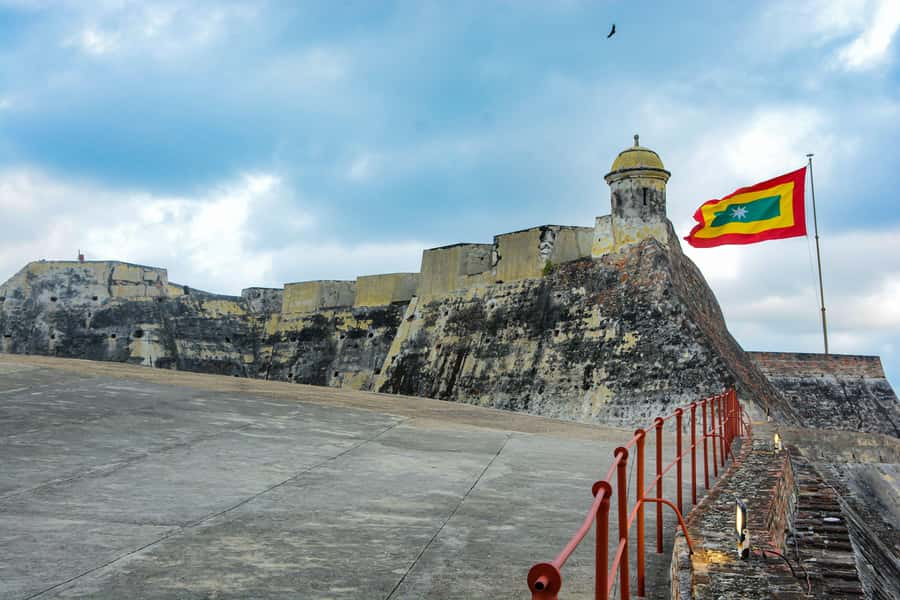
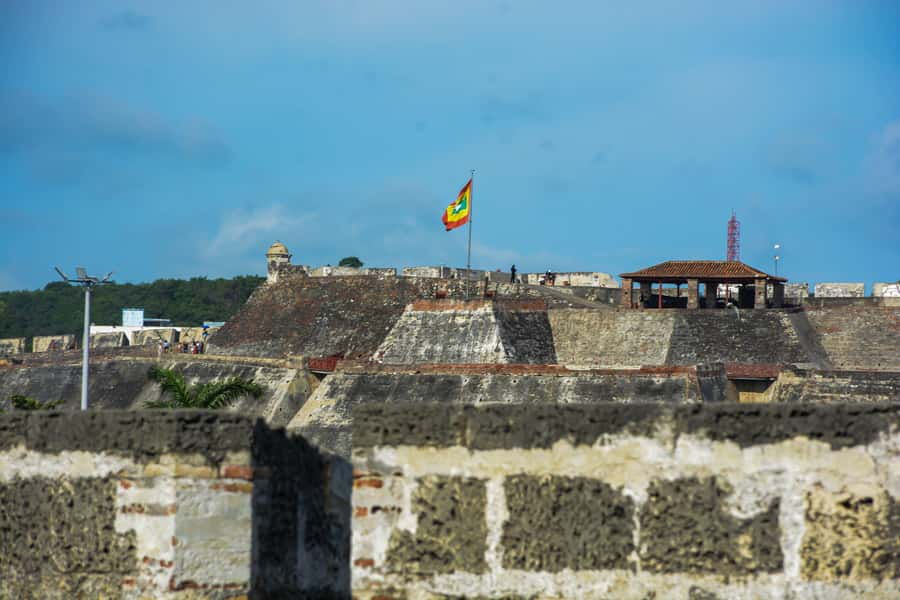
The main destination is San Felipe de Barajas, Cartagena’s largest fortress and most important military stronghold. From the outside, its thick walls and broad shape make its purpose obvious. Inside, the design is more interesting than the massive façade suggests.
Your guide explains how pirates and foreign empires tried to take Cartagena and why the fortress gained a reputation for being nearly impossible to conquer. The most dramatic episode is the battle in which roughly 3,000 Spanish troops defeated more than 25,000 British soldiers.
That story is worth hearing on site because the fortress stops being an abstract monument. Its slopes, walls, and high position show how geography and engineering worked together. You can see why control of the Hill of San Lázaro mattered and why a force with fewer soldiers could still hold an important defensive position.
The tour also brings in Blas de Lezo, a major figure in Cartagena’s defense. His leadership gives the military story a human center, rather than leaving you with only dates and construction details.
Same region, a different set of walls:
- Bucharest: Dracula’s Castle, Peles Castle, & Brasov Old Town
★ 4.5 · 17,858 reviews - Granada: Alhambra and Nasrid Palaces Entry Ticket
★ 4.6 · 15,130 reviews - From Munich: Neuschwanstein & Linderhof Castle Full-Day Trip
★ 4.6 · 14,646 reviews - Edinburgh Castle: Guided Walking Tour with Entry Ticket
★ 4.7 · 11,699 reviews
Inside the fortress tunnels
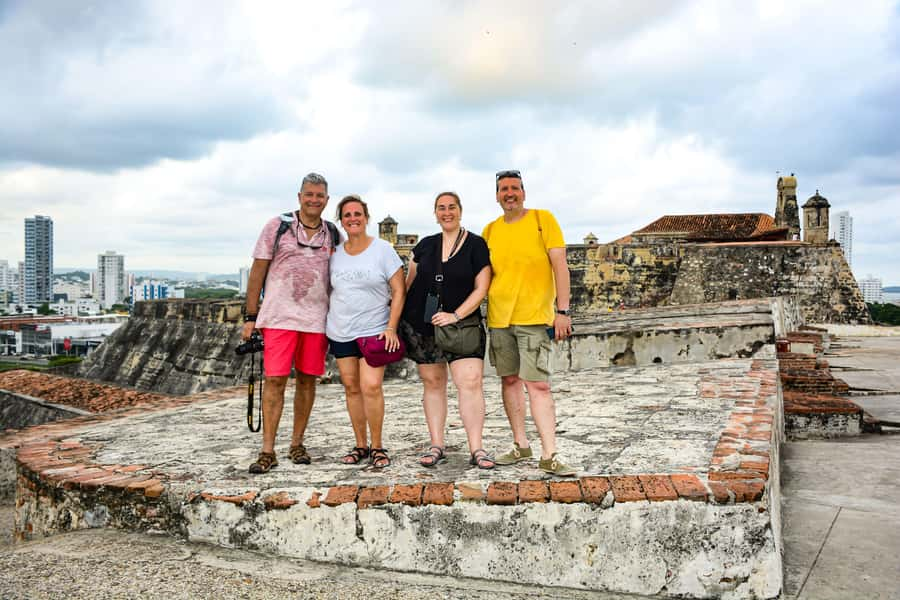
The tunnels are among the most distinctive parts of the castle visit. They were built for defense and surveillance, and the tour explains their acoustic design.
Soldiers could hear enemies moving above, while people outside could not easily hear what was happening inside. In this setting, sound became a defensive tool. It is a small detail, but it helps you understand the intelligence built into the fortress.
You are not simply walking through old passageways. You are learning how the defenders used darkness, echoes, hidden movement, and the shape of the hill to their advantage. This is the sort of detail that can make a fort visit memorable for someone who is not normally interested in military architecture.
The castle section requires its own entrance ticket. You pay 33,000 COP per person at the official ticket office or purchase it online. The guide leads the group to the entrance, but each participant buys the ticket independently before continuing inside.
That extra cost is important when you compare this experience with other Cartagena tours. The advertised $12 price covers the shared guided walk, but your real activity cost is the tour price plus the castle admission. You also need to pay for any food, drinks, souvenirs, and transport to or from your hotel.
Views from the Hill of San Lázaro
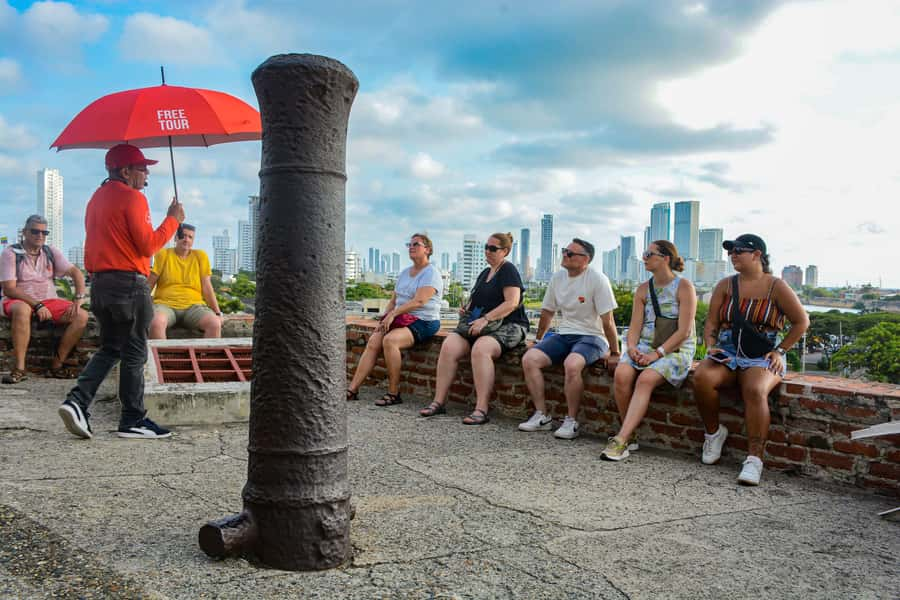
The castle’s position on the Hill of San Lázaro gives you one of the tour’s best visual moments. From here, you can look across Cartagena and better understand why the hill was vital to the city’s defense.
The view also gives the route a satisfying shape. You begin in the streets of Getsemaní, where social history takes the lead. You finish above the city, looking across the place that those communities and soldiers fought to protect.
Bring a phone or camera if you want photographs, but do not let the viewpoint replace the explanation. The real value comes from knowing what you are looking at and why this location mattered. Your guide ties the view to the fortress, the old city, and the military routes that made Cartagena such a sought-after port.
What the guides add to the experience
The guide can make or break a history walk, and the strongest praise for this experience centers on the people leading it. Ronaldo is described as warm, professional, entertaining, and full of historical detail. Luis Carlos is noted for explaining clearly and making the material easy to follow.
Luis Fernando is also praised for his strong knowledge of Cartagena’s past, while John Serrato is described as especially kind and friendly. Since the tour is shared, you may not know which guide will lead your departure, but the named guides show the range of the team.
The style is conversational rather than purely academic. You hear stories about battles, but also about local culture, social inequality, independence, and daily life. That balance matters in Cartagena, where grand colonial buildings can hide the hard lives of the people who built and defended the city.
The activity is Spanish only. If you understand Spanish well enough to follow a two-and-a-half-hour explanation, this format should work nicely. If you need English, this is not the right booking.
Cost, pace, and who should book
At $12 per person, the shared walk offers good value if you want context before entering the castle. A standalone castle visit gives you the building, but this tour gives you the route connecting Getsemaní, the bridge, the hill, and the fortress.
The value is strongest for first-time visitors who want Cartagena explained through both people and architecture. You get a local orientation, a chocolate stop, recommendations for lunch, coffee, souvenirs, and other nearby places, plus discounts with selected local partners when you show the tour map.
The pace is less suitable if you dislike walking in heat or prefer a short, tightly contained visit. You will walk about 7 kilometers and make several stops, so allow energy for the final castle section. The activity is not suitable for children under 10, wheelchair users, or people over 70.
It is also a shared group experience. You will not have a private guide setting the pace around your own interests. That can be a drawback if you want long photography stops or a detailed discussion of one narrow subject, but it can also make the walk social and affordable.
You can cancel up to 24 hours before the activity for a full refund, and you can reserve now and pay later. Those terms help if your Cartagena schedule is still shifting.
Practical advice for a smoother walk
Wear light, comfortable clothing and shoes with solid support. The route is long enough that sandals without good footing may become uncomfortable, especially around uneven surfaces.
Carry water or your preferred drink. The tour specifically warns that you may feel thirsty, and the combination of heat, walking, and castle steps makes hydration important.
Pack a small snack if you tend to get hungry. The chocolate stop is not a substitute for lunch, and food is not included.
Meet at Plaza de la Trinidad in Getsemaní and look for the red umbrellas. Keep your valuables secure in crowded areas, and avoid bringing alcohol or drugs. Audio recording is not allowed.
The tour ends at Castillo San Felipe de Barajas, not back at your hotel. Plan your next stop from the fortress area and remember that transport to and from your hotel is not included.
Should you book this Cartagena castle walk?
Book it if you want the castle to make sense as part of Cartagena’s story rather than as an isolated monument. The connection between Getsemaní’s resistance, the Hill of San Lázaro, and the fortress gives the experience a strong narrative line.
I would especially choose it if you speak Spanish, enjoy walking, and want a guide who can explain both social history and military strategy. The Spanish-speaking guides, including Ronaldo, Luis Carlos, Luis Fernando, and John Serrato, are the strongest reason to expect a lively and useful visit.
Skip it if you need English, require wheelchair access, dislike group tours, or want a short visit with no extra ticket cost. For everyone else, budget the 33,000 COP castle admission, bring water and a snack, and allow three hours for a thoughtful route from Getsemaní to Cartagena’s great stone defender.
FAQ
Where does the tour begin?
The tour begins at Plaza de la Trinidad in Getsemaní. Look for the red umbrellas.
Where does the tour finish?
It finishes at Castillo San Felipe de Barajas.
How long does the tour last?
The tour lasts 150 minutes.
Is the castle entrance included?
No. The castle ticket costs 33,000 COP per person and is purchased at the official booth or online.
What language is the tour in?
The live guided tour is in Spanish.
How far do you walk?
You walk about 7 kilometers, with several stops to listen to the guide.
What should I bring?
Bring comfortable shoes and water. A small snack is also useful because food is not included.
Is the tour suitable for everyone?
It is not suitable for children under 10, wheelchair users, or people over 70.
Just added around the world
- Secrets of Buda Castle: Self-Guided Puzzle Adventure in Budapest★ 5.0 · 8 reviews
- Budapest Hike to Visegrád Castle w or wo Sauna/Danube beach★ 5.0 · 11 reviews
- Castle District tour with Matthias Church Ticket & Cake & Coffee★ 5.0 · 31 reviews
- Buda Castle Tour: History and Architecture★ 5.0 · 33 reviews
- Buda Castle Quarter Walking Tour★ 5.0 · 16 reviews
- Buda Castle’s Secrets with a Historian★ 5.0 · 108 reviews
- Buda Castle Walking Tour with Matthias church entry, Cake&Coffee★ 4.5 · 21 reviews
- BloodThirsty Hungary – Castle District★ 5.0 · 80 reviews
Tours, compared.
Granada: Alhambra & Nasrid Palaces Tour with Tickets
Read our review →
Edinburgh Castle: Guided Walking Tour with Entry Ticket
Read our review →
Seville: Alcázar, Cathedral & Giralda Skip-the-Line Tour
Read our review →
Prague: Castle Tour with Local Guide and Entry Ticket
Read our review →
Edinburgh: Edinburgh Castle Guided History Tour with Tickets
Read our review →
Prague Castle 2.5-Hour Tour Including Admission Ticket
Read our review →
Seville: Cathedral, Giralda & Alcazar Entry With Guided Tour
Read our review →