
REVIEW · CASTLE ENTRY TICKETS
Paris: Château de Vincennes Entry Ticket
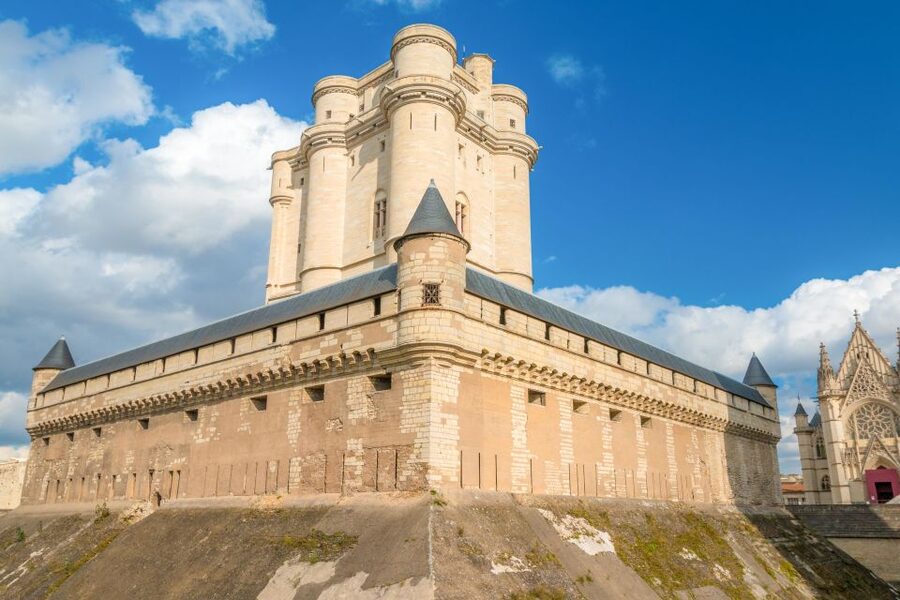
Château de Vincennes gives you a rare look at France before Versailles stole the spotlight. Its 52-meter medieval keep rises above a fortified royal complex, and climbing through it brings you into rooms tied to kings, prisoners, war, and national memory. I like the chance to see the rooms where the Marquis de Sade and Fouquet were held, and I like that the ticket stays valid for 365 days rather than locking you into one rushed visit.
I also like the choice between a self-guided visit, a multilingual visitor guide, and a French tour at 2:15 PM or 3 PM. The main drawback is location: you need to make your own way east of central Paris, and the keep requires a stair climb. If you prefer a polished guided tour in English, this ticket may feel spare.
Key points to know before you go
- The keep reaches 52 meters: Climb the fortified tower, described as the tallest of its kind in Europe.
- The site covers centuries of French power: Follow the story from the 14th-century monarchy through Napoleon and the Second World War.
- Prison history adds human drama: See rooms linked with Fouquet, the Marquis de Sade, Mirabeau, and the death of King Henry V.
- You have several ways to explore: Choose a self-guided visit, multilingual visitor information, augmented reality, or a French tour.
- The ticket lasts 365 days: This gives you unusual flexibility, though the activity is non-refundable.
- The practical details matter: Bring a passport or photo ID, arrive before the final 45 minutes, and plan your own transport.
Why Château de Vincennes deserves time beyond central Paris
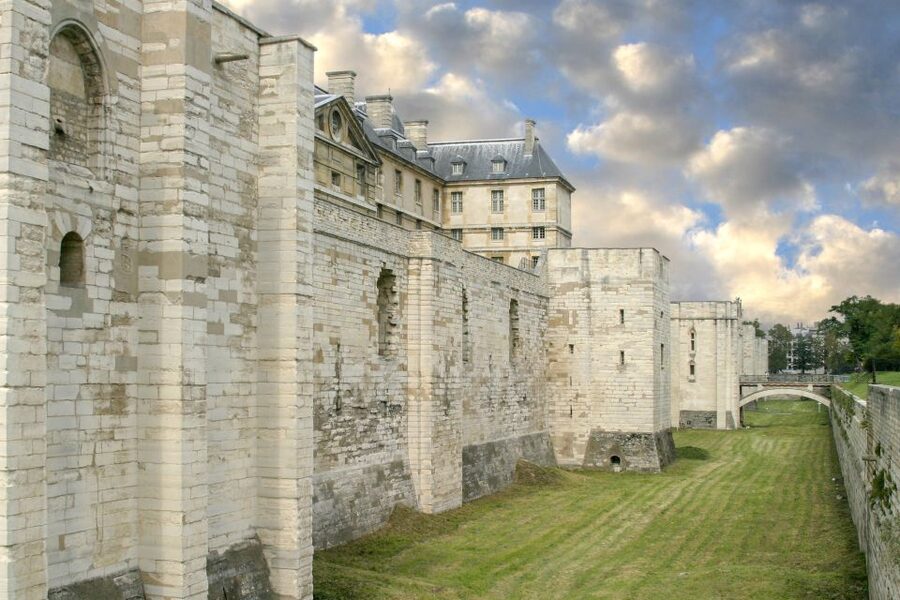
Many Paris visitors spend their whole stay among boulevards, museums, and grand royal residences. Vincennes offers a different picture. This is a fortress built to defend the capital and strengthen royal power, not a palace designed mainly for ceremony.
The castle was created in the 14th century, when the monarchy needed a strong base close to Paris. Its walls and towers reflect a period when royal authority was not simply accepted. The fortress guarded the capital and gave kings protection during unrest and uprisings.
That setting helps you read French history through the building itself. The walls are not just old stone. They tell you that security, authority, and control were central concerns of medieval government.
The royal connection continued until 1682, when Louis XIV moved the court to Versailles. Versailles became the famous symbol of royal display, but Vincennes retained an older and more defensive character. I find that contrast useful: one site shows monarchy at its most theatrical, while the other shows how vulnerable and practical royal power could be.
More Castle Entry Tickets in France
- Carcassonne: Castle and Ramparts Entry Ticket
★ 4.6 · 2,884 reviews - Chambord: Entry Ticket to the Castle
★ 4.6 · 1,841 reviews - Chenonceau Castle Admission Ticket
★ 4.7 · 1,515 reviews
Entering the 14th-century fortress
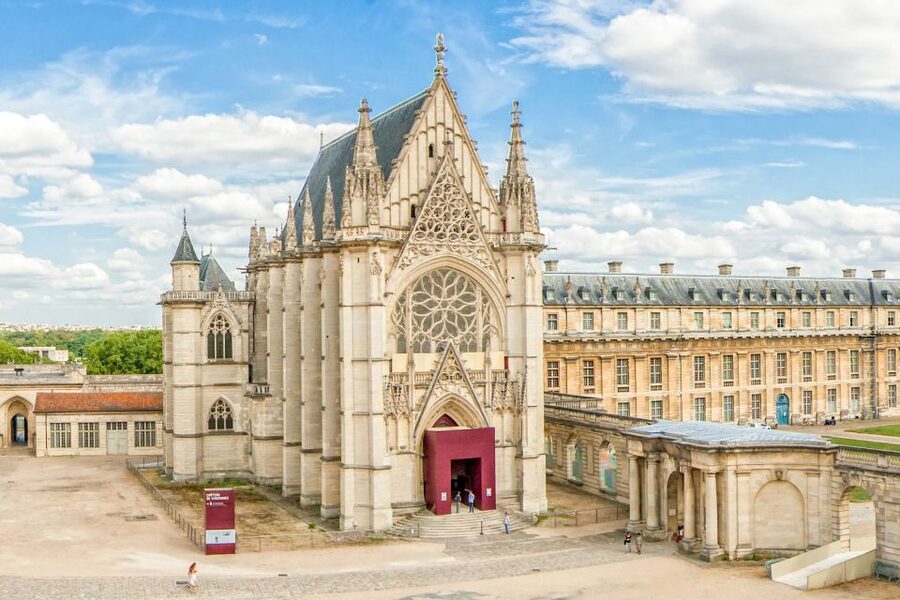
Your visit begins at Château of Vincennes on Avenue de Paris in Vincennes, east of Paris. Transport is not included, so you need to arrange your own journey. The short trip into the eastern suburbs is part of the experience, since the castle feels less like another central Paris attraction and more like a real fortified town edge.
Once inside, take a little time to look at the scale of the complex before heading straight for the keep. The fortress was built to protect the capital, and its layout makes that purpose clear. This is not a compact single-room monument. You are visiting a large royal and military site with several layers of use.
The ticket includes entrance and self-guided options. You receive visitor information in several languages, which is useful if you want to move at your own pace. An augmented reality terminal in Charles V’s study adds another layer to the visit, especially if you want help picturing the building in its royal period.
A French guided tour runs every day at 2:15 PM and 3 PM, with no reservation required. That is a good choice for French speakers who want a set explanation rather than a purely independent visit. The supplied information does not promise an English guided tour, so English-speaking visitors should plan to rely on the multilingual material and self-guided format.
Climbing the 52-meter medieval keep
The main event is the keep, a 52-meter fortified tower. It is described as the tallest medieval keep of its kind in Europe, and the height gives the visit a clear physical focus. You do not simply look at a tower from the courtyard. You climb the stairs through it.
That climb is important to your planning. The visit involves stairs, so it will suit people comfortable with a vertical route more than anyone looking for an easy, level monument. The reward is a closer sense of how the keep worked as both a defensive structure and a royal residence.
As you move upward, pay attention to the rooms rather than treating the tower as a lookout alone. Its thick defensive design and enclosed spaces help explain how a medieval ruler could use one building for protection, administration, and living quarters.
The height also gives the building its drama. A 52-meter tower rising from a fortified enclosure feels very different from a palace facade. I like that the strongest visual moment here comes from the structure itself, not from elaborate decoration.
The ticket information does not state the exact time required for the climb or describe every viewpoint, so do not build your day around promises of a particular panorama. Come for the architecture and the historical rooms first. Any views from the upper levels are an added benefit.
Prison rooms with famous names attached
From the 16th through the 19th century, the keep served as a prison. That changes the mood of the visit. You are not only following royal history, but also seeing how a place built to protect kings became a place used to confine political and notorious figures.
The rooms connected with Fouquet, the Marquis de Sade, and Mirabeau give the prison story a human scale. Names can make a large historical period feel remote, but individual prisoners bring the rooms closer. You can think about how power worked from the other side of the walls, with the fortress used to remove people from public life.
The keep is also linked with King Henry V, who died there. That detail connects the building to royal mortality as well as royal authority. Kings could command fortresses, armies, and courts, yet they were still subject to illness and death inside the same walls.
I would allow time to pause in these rooms. The most valuable part of a historical site is often not the grandest space, but the place where an event becomes specific. At Vincennes, the prison chambers and the king’s death give the fortress a more personal story.
Same region, a different set of walls:
- Loire Valley Castles Day Trip from Paris with Complementary Wine
★ 4.5 · 3,907 reviews - From Paris: Loire Valley Castles Day Trip With Wine Tasting
★ 4.6 · 1,727 reviews - Medoc or Saint Emilion Wine Tasting and Chateau from Bordeaux
★ 5.0 · 1,415 reviews - From Paris: Full-Day Loire Valley Chateaux Tour
★ 4.4 · 1,269 reviews
From royal stronghold to Napoleon’s military base
The castle did not become irrelevant when the monarchy moved to Versailles. Under Napoleon I, it was transformed into a barracks and arsenal. This later use makes the site easier to understand as a working military complex rather than a frozen medieval relic.
The change also shows how old fortifications can be reused by new governments. Napoleon’s France needed military storage, troops, and defenses, and the existing fortress could serve those needs. The building adapted to a new political age without losing its earlier purpose as a protector of Paris.
During invasions in the 19th century, the fortress helped defend the capital. That chapter is useful because it carries the story beyond kings and prisoners. Vincennes remained connected to national security long after medieval castle building had ended.
If you enjoy military history, this section may be one of the strongest reasons to visit. If your main interest is decorative royal interiors, the castle may feel more severe than Versailles. Its value comes from military structure, historical change, and the way each period reused the same place.
Charles V’s study and the augmented reality option
Charles V’s study offers one of the more distinctive parts of the visit. The augmented reality terminal is designed to help you picture the setting and understand its royal use.
I would make a point of using it instead of rushing past. Technology works best at a historic site when it answers a simple question: what did this room look like, and how was it used? Here, the terminal can help bridge the gap between bare stone and the room’s former royal purpose.
You also receive a visitor guide in several languages. That gives you more control than a fixed tour. You can spend longer with the prison rooms, move quickly through military material, or pause over the parts that matter most to you.
The tradeoff is that a self-guided visit requires attention. Nobody is necessarily moving you from one major point to the next, and the available information may not offer the same flow as a dedicated guide. Families and independent sightseers may appreciate that freedom, while visitors who prefer a strong narrative should attend the French tour if possible.
What the 365-day ticket is really worth
At $15 per person, the ticket is reasonably priced for a major historic monument with a tall keep, royal rooms, prison history, and military chapters. The value improves if you care about the building itself rather than simply collecting another famous Paris photo.
The unusual feature is the 365-day validity. You are not tied to a single date or narrow entry window. That can help if your Paris plans change, if you live nearby, or if you want to return to a site after learning more about French history.
There is a practical catch. The activity is non-refundable, so the long validity does not mean you can simply cancel for a refund. Check the available starting times and opening information before buying, then keep the ticket for a day when you can make the trip east.
The ticket also includes French guided tours, self-guided access, multilingual information, and the augmented reality terminal. You are not paying separately for food, drinks, or transport, because those are not included. Plan for those costs on your own.
Timing, entry rules, and useful planning
The last entry is 45 minutes before the stated closing time. Do not arrive at the final moment and expect a full visit. The keep and the historical rooms deserve more than a hurried pass through the gate.
Bring a passport or ID card. Visitors under 18 and European Union citizens under 26 can enter free, but they must first show photo identification at the ticketing station before going to the monument entrance.
Free entry is also offered on the first Sunday of January, February, March, November, and December. European Heritage Days, held on the third weekend of September each year, also offer free entry. If one of those dates fits your schedule, compare the free option with the convenience of this paid ticket.
The château is closed on January 1, May 1, and December 25. Those dates are easy to overlook when planning a winter or holiday visit.
The group type is listed as small, limited to 10 participants. That matters mainly if you join the French guided format. For the self-guided visit, your pace is more important than the group size.
Who will enjoy this castle most
I would recommend Château de Vincennes to you if you like fortresses, royal power, prisons, military history, or buildings that changed purpose over time. It is also a good choice if you have already seen the central Paris highlights and want a site with a stronger sense of place.
History-minded families may appreciate the named prisoners and the augmented reality terminal. The castle offers more to discuss than a simple walk through empty rooms, although younger children may find the military and political story less immediate.
French speakers have the best chance to use the daily guided tours. English-speaking visitors can still explore with the multilingual guide, but you should not assume that an English guide is included.
You should think twice if you want a fully escorted excursion, included transport, refreshments, or a monument with lavish interiors. This ticket gives you entry and interpretation tools, not a complete day tour.
The 4.5 rating from 342 bookings matches the strongest appeal of the site: it is both beautiful and genuinely interesting. Short responses describe the castle as wonderful, beautiful, and extremely absorbing. Those qualities make sense here, since the building offers visual strength and substantial historical content rather than one narrow attraction.
Should you book Château de Vincennes?
Book it if you want a serious historic site that shows France through defense, monarchy, imprisonment, military use, and national remembrance. The 52-meter keep is the clear highlight, while Charles V’s study, the prison rooms, and the Napoleon-era story give the visit depth.
Skip it if your Paris schedule is already packed and you want only central attractions, or if climbing stairs is a problem. You must also arrange your own transport and accept that the activity is non-refundable.
For the right visitor, $15 is a fair price, especially with a ticket valid for 365 days. I would choose this experience for its fortress character and layered history, then plan enough time to climb the keep without rushing.
FAQ
Where is Château de Vincennes?
It is located on Avenue de Paris in Vincennes, 94300 France, in the eastern suburbs of Paris.
How long is the ticket valid?
The ticket is valid for 365 days.
Is transport included?
No. You need to arrange and pay for your own transport to Château de Vincennes.
Are guided tours included?
A guided tour in French is included every day at 2:15 PM and 3 PM. No reservation is required for those tours.
Are self-guided visits available?
Yes. Self-guided visits are included, along with visitor information in several languages.
Is there an augmented reality feature?
Yes. An augmented reality terminal is available in Charles V’s study.
Do children enter free?
Visitors under 18 enter free with the required photo identification shown at the ticketing station.
When is Château de Vincennes closed?
The château is closed on January 1, May 1, and December 25. Last entry is 45 minutes before the indicated closing time.
Just added around France
- Private Wine Lovers – Super St Emilion – behind the scenes visits top chateaux and medieval town★ 5.0 · 25 reviews
- Saint Emilion Castle and Village Wine Tour★ 4.5 · 23 reviews
- Château de Fieuzal, Pessac-Léognan: Visit and Tasting★ 5.0 · 18 reviews
- 3H private city tour of Bordeaux and vineyard in a Citroën DS★ 5.0 · 4 reviews
- Bordeaux Médoc Region Private Wine Lovers Tour with Chateau Visits & Tastings★ 5.0 · 40 reviews
- Full-day Saint-Emilion: Village, Undergrounds and Châteaux★ 4.5 · 55 reviews
- Bordeaux to Dordogne – Private Tour: Fortified Castles and Medieval Villages★ 4.5 · 4 reviews
- Chateau du Taillan and Park including Wine Tasting Tour★ 5.0 · 40 reviews
Castle Entry Tickets, compared.

Granada: Alhambra and Nasrid Palaces Entry Ticket
Read our review →
Edinburgh Castle: Guided Walking Tour with Entry Ticket
Read our review →
Prague: Castle Tour with Local Guide and Entry Ticket
Read our review →
Prague Castle 2.5-Hour Tour Including Admission Ticket
Read our review →

Granada: Alhambra Entry Ticket with Audio Guide
Read our review →Edinburgh Castle: Guided Walking Tour with Entry Ticket
Read our review →Browse the lists this tour appears in