
REVIEW · FORTRESS & CITADEL TOURS
Dubrovnik City Walls: Small-Group 2-Hour Tour With a Local
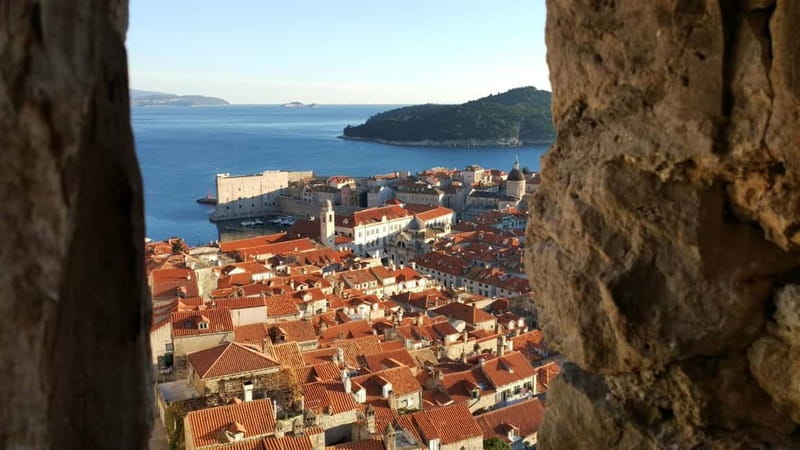
Dubrovnik’s city walls are the best place to understand how this small republic survived between Venice and the Ottoman Empire. From the stone ramparts, you’ll see the red roofs, the Old Harbor, Fort Lovrijenac, and the open Adriatic while your guide explains how each tower and cannon fit into the city’s defense. Marko and Roco bring plenty of energy and answer questions as you walk.
I like the small group, capped at eight people per guide, because you can hear the explanations and ask about details without fighting through a crowd. I also like the focus on daily life inside the walls, not only battles and dates. The main drawback is serious: more than 700 stairs make this a poor choice if you have limited mobility, fear heights, or lack the fitness for a steady two-hour walk.
Key points to know before you book
- More than 700 stairs: Expect a demanding walk with no elevator or escalator.
- Small group of up to eight: You get a better chance to hear the guide and ask questions.
- Strong military focus: Fort Revelin, Minčeta Fortress, Fort Bokar, and Fort Lovrijenac all fit into the story.
- Excellent photo views: The route looks down on the Old Harbor, Stradun, the Old Port, and the Adriatic.
- The wall ticket costs extra: The tour price is $41 per person, but standard wall admission is 40 euros unless you use a Dubrovnik Pass or qualify for a reduced fare.
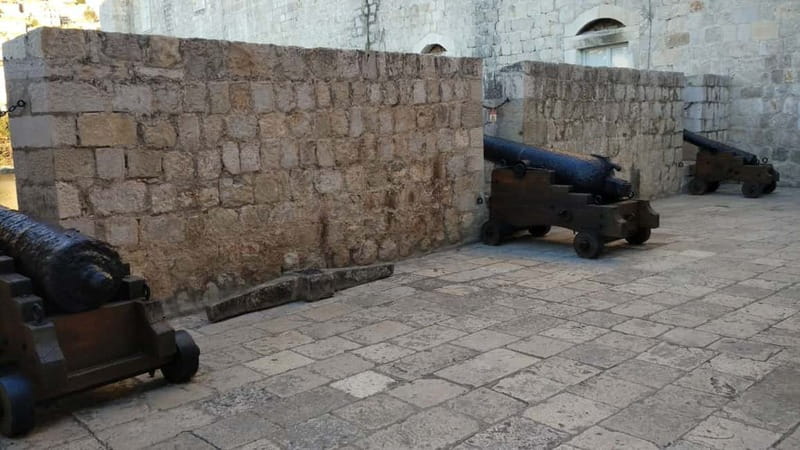
- Meet near Ploče Gate: Find the guide by the cannon, holding a red and white flag, in the small square above the Old Harbor.
Why Dubrovnik’s walls are worth seeing with a guide
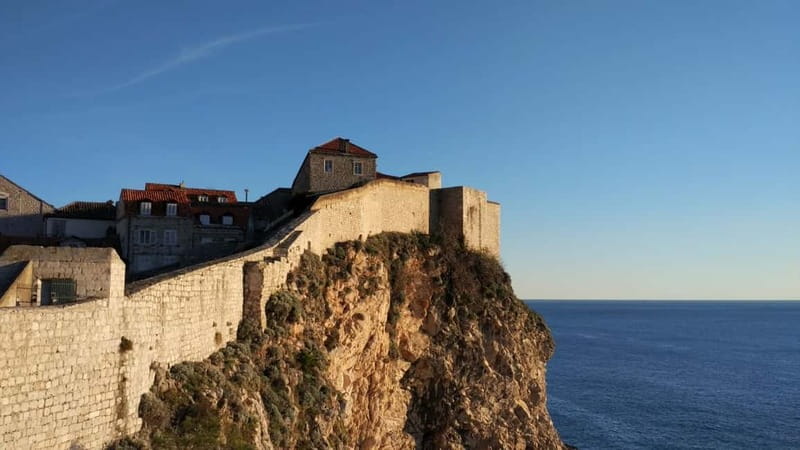
A walk around Dubrovnik’s walls can be beautiful even without help. You get rooftops, sea views, towers, and plenty of photo stops. But without context, the fortifications can blur into one long stone path.
A local guide gives the walls a job to do. You learn why the harbor needed protection, why the eastern approach was vulnerable, and how a small maritime republic relied on both weapons and careful diplomacy. That turns a scenic walk into a clear story about survival.
I especially like the emphasis on Ragusa, the old name for Dubrovnik’s republic. The city had to deal with larger powers, including Venice and the Ottoman Empire. The guide connects those political pressures to the walls beneath your feet, showing that Dubrovnik was not simply a pretty port. It was a careful, guarded, and highly organized city-state.
The small group matters here. On a wide section of wall, eight people is still a manageable number. At a narrow tower or busy viewing point, it is much easier to stay close to the guide than in a large walking group. Marko is known for using humor, questions, and lively storytelling, while Roco also leads the route. The experience can feel especially personal if the group is small enough for a natural conversation.
More Fortress and Citadel Tours in Croatia
- Dubrovnik: City Walls Early Morning or Sunset Walking Tour
★ 4.8 · 1,523 reviews - Dubrovnik: Ancient City Walls & Wars Walking Tour
★ 5.0 · 1,270 reviews - Dubrovnik Combo: Old Town & Ancient City Walls
★ 5.0 · 1,019 reviews
Meeting at Ploče Gate and looking over the harbor
The meeting point is in the small square just inside Ploče Gate, Dubrovnik’s eastern entrance. Look toward the corner by the cannon and find the guide holding a red and white flag.
This is a useful place to start because the view already introduces the tour’s main subject. From the harbor viewpoint, you can look down toward the Old Harbor and picture why this inlet mattered so much to the Dubrovnik Republic. Ships, trade, and seafaring supported the city, but the harbor also created a point that enemies might try to attack.
The first section includes short guided walks of about five minutes at a time. That pacing gives your guide room to explain one feature before moving to the next. It also means you should not expect a fast lap around the walls. The route is built around stops, stories, and views.
Bring water, especially in warm weather. The walls offer little relief from the sun in some areas, and the stone steps add work before you have even reached the main viewpoints.
Fort Revelin and the eastern defenses
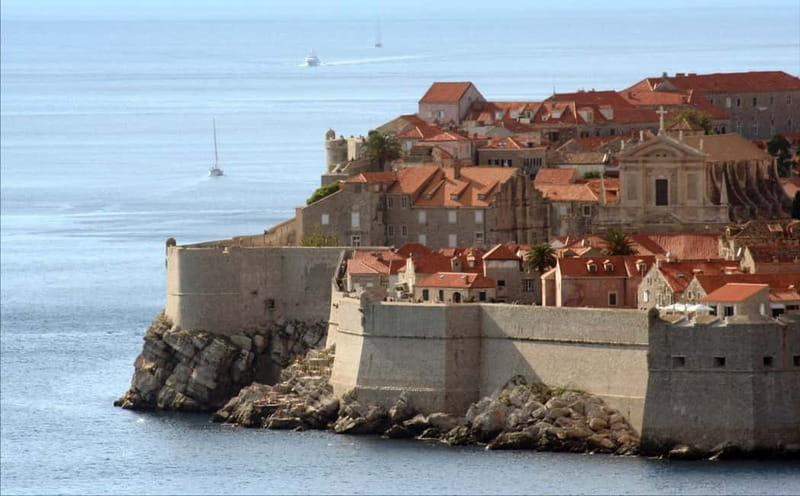
Fort Revelin protected the eastern approach to the Old Town. Its position near Ploče Gate helps explain why this side of Dubrovnik needed such strong defenses. The fort was not an isolated monument. It formed part of a wider system that controlled access from the land side and watched the harbor.
Here, I find the military focus more useful than a simple list of construction dates. You begin to see the walls as a working machine. Gates, towers, walkways, and firing positions all had specific purposes.
The eastern stretch also helps set up the larger political story. Dubrovnik could not match every rival in size or manpower, so its defenses had to buy time and discourage attack. The guide explains how weapons such as bows and arrows, stone boulders, and later cannons were used in different periods.
The steps begin to matter at this point. You will be walking uphill and along uneven stone surfaces, so comfortable shoes are important. This is not a flat stroll beside the sea.
The northern walls and the practical side of medieval warfare
The northern section is where the tour gets into the mechanics of defense. You hear about bows, arrows, stone boulders, and siege tactics, but the value comes from seeing where those methods would have been used.
From the top of the walls, you can understand the advantage of height. Defenders could watch approaching forces and attack from above. Towers gave soldiers protected positions, while thick walls helped absorb or deflect blows.
Your guide may also explain how the fortifications changed as warfare changed. The walls were not frozen in one medieval moment. Their defenses developed as weapons improved and political threats shifted.
One of the more interesting stops involves Dubrovnik’s relationship with the Ottoman Empire. The story is not simply one of constant war. Diplomacy often helped the republic avoid battles it could not afford. That is a useful correction to the usual fortress story: walls mattered, but negotiation mattered too.
If you enjoy political history, this section may be one of the strongest parts of the walk. If you only want scenic photographs, the explanations may feel longer than expected. The tour is designed for people who want the story behind the stones.
More Fortress and Citadel Tours in Dubrovnik:
- Dubrovnik: City Walls, Old Town Walking Tour & Adriatic View
★ 4.9 · 982 reviews - Dubrovnik: Old Town & City Walls Guided Tours Combo
★ 4.8 · 697 reviews - Dubrovnik Cable Car Ride, Old Town Walking Tour plus City Walls
★ 4.5 · 685 reviews - Dubrovnik: City Walls Tour for Early Birds & Sunset Chaser
★ 4.9 · 600 reviews
Minčeta Fortress and the best high view
Minčeta Fortress is a major stop and one of the high points of the route. From here, you get a broad view over Dubrovnik, with the old roofs and the sea spreading beyond them.
The guide explains the role of the Italian architect Michelozzi and points out details connected with the old gun foundry and the cannons that once defended the city. That gives the fortress more meaning than a simple lookout. You can see how the building was shaped for war, not only for appearance.
This is also a good moment to slow down. The route contains many steps, and Minčeta gives you a natural place to pause, take photographs, and listen. Morning tours can be especially pleasant here because the supplied tour details specifically mention warm morning light, though starting times depend on availability.
Do not treat this as a guaranteed quiet viewpoint. Dubrovnik’s walls are popular, and the fortress is an important stop for many people. The small group helps, but it does not remove the city’s crowds.
The Stradun photo stop
The route includes a memorable view down toward Stradun, Dubrovnik’s main street. From above, the broad stone thoroughfare creates a strong contrast with the tightly packed buildings and rooftops around it.
This view is valuable because it shows the Old Town as a planned, defended place rather than a collection of attractive streets. Stradun runs through the historic center, while the walls define its edge and protect the city from outside threats.
You will probably want a camera ready here. Still, do not rush past the explanation. The guide uses the viewpoint to connect the Old Town’s public spaces with the wall’s defensive role.
The photo stop is also one of the easier places to appreciate Dubrovnik’s scale. From street level, the walls can feel enormous. From above, you can see how the buildings, gates, harbor, and fortifications fit together.
Fort Bokar, Fort Lovrijenac, and the western defenses
On the western stretch, the guide turns to Fort Bokar and Fort Lovrijenac, which guarded the approach to Pile Gate. These defenses protected one of the city’s key entrances from attack by land and sea.
Fort Lovrijenac is particularly striking. Some sections of its walls are twelve meters thick, an astonishing reminder of the force that Dubrovnik expected its enemies to bring. The fortress is set apart from the main walls, so the guide’s explanation helps you understand how the two defensive positions worked together.
This is one of the places where the view and the military story reinforce each other. You can look toward the fort and see why its position mattered. You are not just hearing that it protected Pile Gate. You are seeing the approach it controlled.
The western section may also feel exposed if you dislike heights. The tour specifically excludes people afraid of heights, and that is sensible. You are walking above the city on open ramparts, with sections where the drop is very noticeable.
The southern walls, Fort St. John, and the Old Port
The southern stretch offers another view of the Adriatic and leads toward Fort St. John and the Old Port. This side of the city faced the sea, so its defenses had a different character from the landward walls.
Your guide points out the oldest and youngest sections of the fortifications and explains how the wall system changed over time. That detail helps you read the structure as a record of several periods, not one single building campaign.
The southern wall also brings the rivalry with Venice into focus. Dubrovnik’s maritime connections made it prosperous, but they also put it in competition with a much stronger sea power. The guide explains how this rivalry shaped the republic’s choices and defense planning.
Near the Old Port, the original harbor viewpoint comes back into the story. By this point, you can connect the water below with the trade, ships, and military concerns described at the start. The route ends with a clearer sense of why the harbor and the walls belonged to the same system.
How hard are the 700-plus stairs?
This is the practical issue that should decide your booking. The tour includes more than 700 stairs, and there is no elevator or escalator. You need a moderate level of fitness and the ability to walk on uneven stone surfaces for two hours.
The tour is not recommended for people with walking difficulties, mobility impairments, or a low level of fitness. It is also not suitable for wheelchair users, babies under one year, or children under 12. People who are afraid of heights should choose another way to see Dubrovnik.
I would not book this as a casual add-on after a tiring day of sightseeing. Plan it when your legs are fresh. Wear secure shoes, carry water, and allow yourself time to stop for the views.
The route has many short guided sections, which helps break the walk into pieces. Still, short stops do not remove the climb. If stairs already make you hesitate, the wall walk may be more demanding than its two-hour length suggests.
Is the $41 price good value?
The tour costs $41 per person, and that pays for the licensed English-speaking guide. The city wall entrance ticket is separate, which changes the total cost in a meaningful way.
For much of the year, a single wall ticket costs 40 euros. That means the admission can cost about as much as the tour itself. With both charges included, this is not a cheap activity.
The value improves if you already have a Dubrovnik Pass. The pass includes free wall entry and lets you skip the line, so you are mainly paying for the guide. Students with a valid ISIC card and people under 18 pay 15 euros for the wall ticket. In January, February, November, and December, the listed wall price is 20 euros.
For me, the guide is worth considering because the walls are such a central part of Dubrovnik’s story. You can walk them independently, but you may miss the purpose of the towers, the changes in construction, and the balance between warfare and diplomacy. The small group also offers more value than a large group if you want to ask questions.
If your priority is simply getting the views at the lowest possible cost, buy the wall entry and walk independently. If you want the walls explained as a connected story, the extra tour fee is easier to justify.
Which guide and group size should you expect?
The tour is in English and limited to eight participants per guide. Marko is one of the named guides, and Roco also leads tours. Marko’s style includes humor, questions, and direct interaction, which can help keep the walk from becoming a string of dates and names.
A small group also gives you a better chance to ask about Dubrovnik’s past or present. The experience includes discussion of what it is like to live inside the walls, not only the old military story. That human angle is useful because the Old Town is still part of modern life.
There is no promise that every departure will be led by Marko. You may meet another member of the local guiding team. Still, the tour is designed around a local English-speaking guide rather than an audio recording or a self-guided route.
The activity has a 4.8 rating based on 18 ratings, and the strongest praise centers on the guides’ energy, humor, and ability to explain history. That matches what this kind of tour needs most: a good voice and clear storytelling make the long climb feel purposeful.
Who should book this Dubrovnik wall walk?
You should book it if you want the city’s military and political story, prefer a small group, and can comfortably manage more than 700 stairs. It is a strong match for anyone interested in fortifications, maritime trade, the Dubrovnik Republic, Venice, or the Ottoman Empire.
It also suits you if you like asking questions rather than simply following a scripted route. Marko’s use of quizzes and interaction can make the experience appealing to families with older children, although the official minimum age is 12.
You should skip it if you have mobility limits, fear heights, or want a gentle sightseeing walk. You should also think twice if the wall ticket plus the $41 tour price pushes beyond your budget.
Book when your legs are fresh, check whether the Dubrovnik Pass makes financial sense, and meet by the cannon inside Ploče Gate. If you want Dubrovnik’s walls to explain themselves, this small-group walk is a smart choice. If you only want a quick look from above, the separate admission may be enough.
FAQ
Where does the Dubrovnik city walls tour meet?
Meet in the small square just inside Ploče Gate, the eastern entrance to the Old Town. Look for the guide near the cannon, holding a red and white flag.
How long does the tour last?
The guided walk lasts two hours.
How many people are in each group?
The group is limited to eight participants per guide.
Is the city wall entrance included in the tour price?
No. The wall entrance ticket is not included. Standard admission is 40 euros for most of the year, while the listed price is 20 euros in January, February, November, and December. Students with a valid ISIC card and people under 18 pay 15 euros.
Can I use a Dubrovnik Pass for entry?
Yes. A Dubrovnik Pass provides free entry to the walls and lets you skip the line.
How many stairs are on the tour?
The route includes more than 700 stairs. There is no elevator or escalator.
Is the tour suitable for children and people with mobility limitations?
The tour is not suitable for children under 12, people with mobility impairments, wheelchair users, people afraid of heights, people with a low level of fitness, or babies under one year.
More 2-Hour Experiences in Dubrovnik
- Prague Castle & Castle District: 2-Hour Guided Tour
★ 4.6 · 622 reviews - From Ivy Lea: 2-Hour Two Castle 1000 Islands Scenic Cruise
★ 4.5 · 142 reviews - Córdoba: Alcázar and Jewish Quarter 2-Hour Guided Tour
★ 4.2 · 50 reviews - Delhi: Red Fort 2 Hour Light & Sound Show with Private Guide
★ 4.8 · 14 reviews
Just added around Dubrovnik
- Dubrovnik: City Walls Private Guided Walking Tour★ 5.0 · 6 reviews
- Dubrovnik: Game of Thrones & City Walls Walking Tour★ 5.0 · 12 reviews
- Dubrovnik: Sunset Tour With Panorama Of City Walls★ 5.0 · 6 reviews
- Dubrovnik:City Walls & Old Town 2 in 1 Walking Tour★ 5.0 · 16 reviews
- Dubrovnik City Walls Walking Tour★ 4.9 · 22 reviews
- Dubrovnik: Old Town & City Walls Private Walking Tour★ 5.0 · 206 reviews
- Dubrovnik: Old Town & City Walls Tour with Optional DU Pass★ 4.8 · 34 reviews
- Dubrovnik: Game of Thrones and City Walls Walking Tour★ 4.8 · 20 reviews
Fortress & Citadel Tours, compared.

Full Day Taj Mahal, Agra Fort & Baby Taj Tour from Delhi by Car
Read our review →
Fort Sumter Admission and Self-Guided Tour with Roundtrip Ferry
Read our review →
Carcassonne: Castle and Ramparts Entry Ticket
Read our review →
Charleston: Fort Sumter Entry Ticket with Roundtrip Ferry
Read our review →
Same Day Taj Mahal, Fort & Baby Taj Tour from Delhi by Car
Read our review →
From Delhi: Taj Mahal and Agra Fort Private Sunrise Tour
Read our review →
Sunrise Taj Mahal, Agra Fort & Baby Taj Tour from Delhi by Car
Read our review →
Salzburg: Hohensalzburg Fortress Admission Ticket
Read our review →Browse the lists this tour appears in