
REVIEW · FORTRESS & CITADEL TOURS
Carcassonne: Castle and Ramparts Entry Ticket
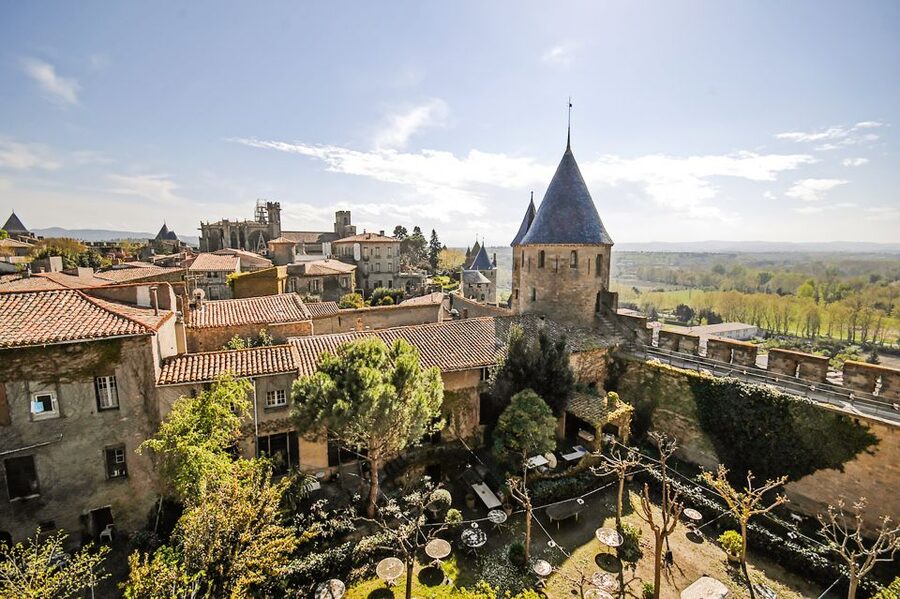
Carcassonne’s Château Comtal and double-walled fortifications give you the clearest view of this extraordinary medieval city. I like the freedom to wander at my own pace, and I like that the ticket includes both the castle and the ramparts, not just a quick look at the fortress courtyard. The main drawback is that the ramparts involve high steps and uneven ground, so this is not an effortless walk.
At $15, the ticket is a fair buy if you want more than photographs from the streets of the Cité. Prebooking can save you from a slow ticket line, especially later in the morning, but remember that this is a self-guided visit, not a personal tour. The optional €3 audio guide adds useful detail, while the printed information and signs work well if you are short on time.
Key points at a glance
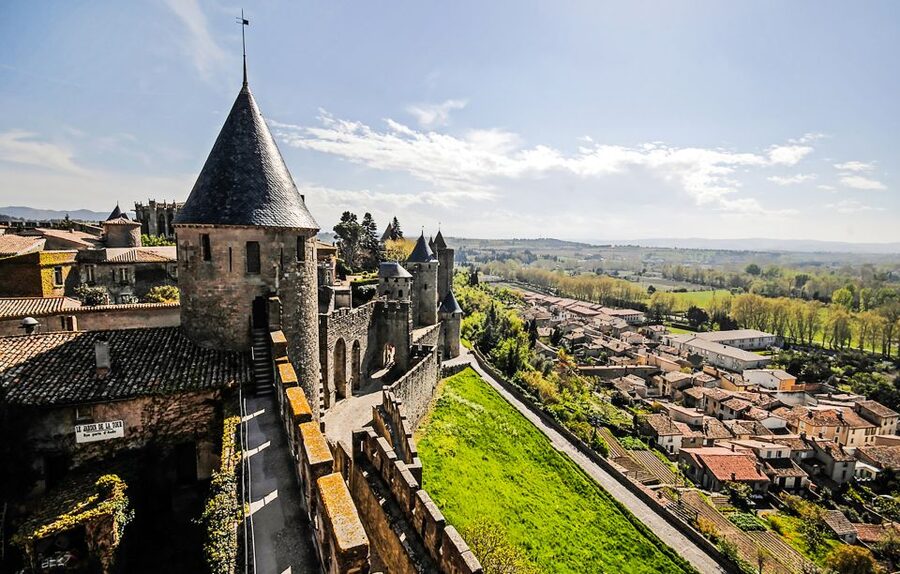
- Walk the double-walled ramparts: The western section offers broad views over Carcassonne and the surrounding countryside.
- See the Bishop’s Tower: This square tower is the only structure that crosses both city walls.
- Look for the alabaster window: The Salle Pierre Embry contains three polychrome alabaster statues from the early 15th century.
- Choose your level of detail: Use the multilingual leaflet and information boards, or rent the €3 audio guide.
- Arrive early in busy months: Narrow ramparts can feel crowded once queues build up.
- Plan around the steps: The barbican and main courtyard are accessible, but parts of the ramparts are more demanding.
Why Carcassonne’s castle matters

Carcassonne is not just a pretty cluster of stone walls. The site was settled as early as the 6th century BC and later became an important Roman town. By the 4th century, it had fortifications, and its position made it a key military site during the Middle Ages.
The city took its familiar shape in the 13th century. The French king ordered the construction of the distinctive double walls and expanded the castle, creating the layered defenses that still define the Cité. You can see why the design mattered as you move between the outer and inner walls, towers, gates, and narrow walking routes.
The castle is also tied to the Trencavel family, one of the most powerful noble families in 12th-century southern France. After the Cathar Crusade from 1209 to 1229, the Inquisition, and the exile of the Trencavel family, Carcassonne fell into decline. Parts of the fortress were left in ruins.
Its later story is nearly as remarkable. Eugène Viollet-le-Duc began restoration work for the French state in 1844, and the project was completed in 1911 under his pupil Paul Boeswillwald. The restoration gave the royal city its familiar appearance and helped lead to its inscription as a UNESCO World Heritage site in 1997.
That restoration is worth keeping in mind as you walk. Carcassonne is not a perfectly untouched medieval town. It is a carefully reconstructed monument, and the visit lets you see both medieval military planning and the 19th-century effort to recover it.
More Castle Entry Tickets in France
- Chambord: Entry Ticket to the Castle
★ 4.6 · 1,841 reviews - Chenonceau Castle Admission Ticket
★ 4.7 · 1,515 reviews - Loire Valley: Château Royal d’Amboise Entrance Ticket
★ 4.6 · 476 reviews
Entering the Château Comtal
Your visit begins at the Château Comtal, at 1 rue Viollet-le-Duc in the Cité of Carcassonne. The ticket covers the castle courtyards, the archaeological museum, and the ramparts. You can use the ticket for one day, giving you room to set your own pace instead of rushing through every room.
I recommend starting with the castle before walking the walls. The castle closes earlier than some parts of the surrounding Cité, and this order gives you a better chance of seeing everything included. Once you have explored the interior, you can take the ramparts at a slower pace and stop for views.
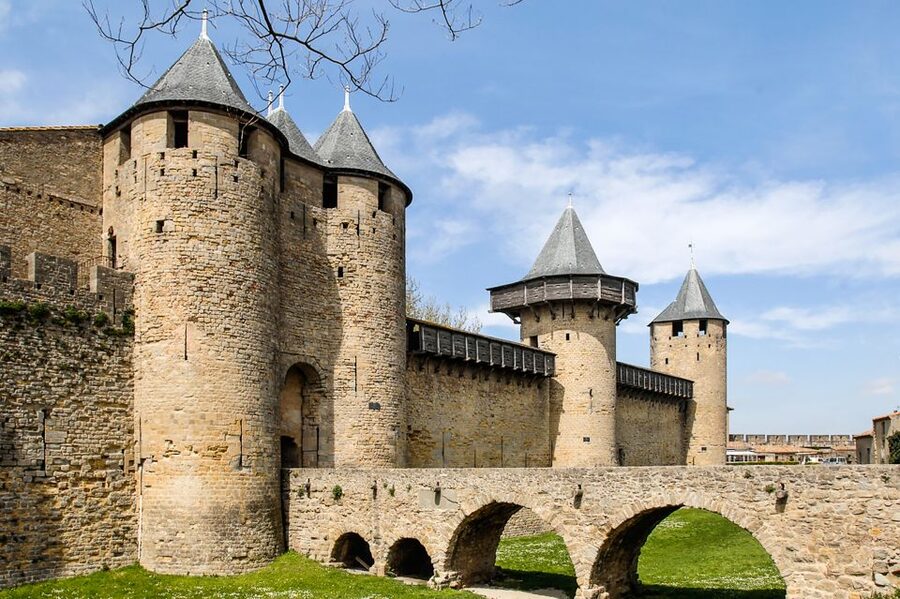
The castle courtyards help you understand how the fortress worked. Look at the arrangement of walls and towers rather than treating the courtyard as a single photo stop. The defensive plan becomes easier to follow once you notice how the castle sits inside the larger fortified city.
Information boards provide basic context, and several signs are available in languages including French, English, and Spanish. The printed leaflet is offered in French, English, German, Italian, Spanish, Portuguese, Dutch, Japanese, Chinese, Russian, and Polish.
The archaeological museum and Salle Pierre Embry
The archaeological museum gives the visit more substance. Without it, you could easily spend your time admiring towers and stonework without understanding how the site changed across centuries. The displays add historical context to the fortress and help connect the Roman, medieval, and restoration periods.
One detail worth seeking out is the Salle Pierre Embry. Its window includes three polychrome alabaster statues from the early 15th century. This is the sort of small feature that can get lost among the larger walls and towers, so keep an eye out for the room rather than moving straight toward the ramparts.
The museum and indoor rooms also provide a useful pause if the weather turns cold or windy. One visit in summer can mean strong sun on the exposed walls, while another season may bring a sharp wind across the higher sections. The castle gives you some shelter and a chance to slow down.
Climbing the Bishop’s Tower
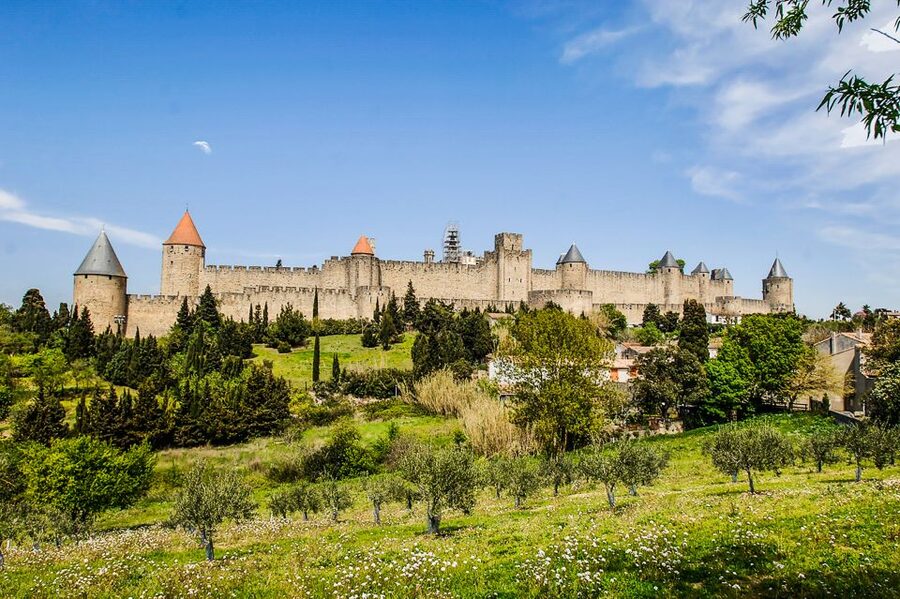
The square Bishop’s Tower deserves special attention. It is the only construction that straddles both city walls, making it a clear example of how tightly the inner and outer defenses were linked.
As you move through the castle and walls, details like this help turn the visit from a simple walk into a lesson in military design. Carcassonne was built around control, visibility, and layers of defense. The Bishop’s Tower is a physical reminder that the two rings of fortification were not separate decorations. They formed one system.
The climb also shows why sturdy shoes matter. The route includes stairs, uneven surfaces, and narrow sections. The effort is manageable for many people, but you should not expect a smooth, level stroll from beginning to end.
More Fortress and Citadel Tours in France
- Discover Fort Boyard
★ 4.6 · 844 reviews - From La Rochelle: Sailing Cruise to Fort Boyard
★ 4.8 · 623 reviews - Toulouse: Carcassonne Day Trip by Coach with Audioguide
★ 4.4 · 580 reviews - Carcassonne During World War 2
★ 5.0 · 127 reviews
Walking the western ramparts
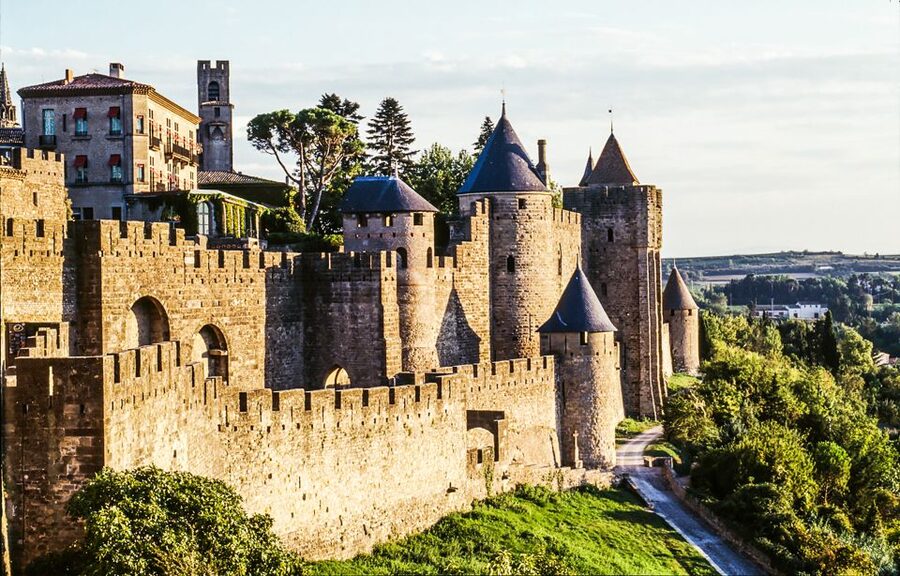
The newer self-guided addition to the experience gives you access to magnificent views from the medieval western ramparts. This is one of the strongest reasons to buy the ticket instead of simply walking around the Cité’s public streets.
The ramparts take about 30 minutes to walk at a steady pace, though you will likely spend longer if you stop for views, read the signs, or wait for room on narrow stretches. You can see across the city and out toward the surrounding countryside from several points along the route.
The views change as the wall turns. From one section, the focus is the Cité and its towers. From another, the view opens outward across the area around Carcassonne. This shifting perspective makes the rampart walk feel more like an exploration than a single lookout.
The narrow paths are also the main practical drawback. Later in the morning, queues can form, and a busy rampart is less pleasant when people are moving in both directions. I would aim for an early start, such as around 10:30 or earlier when possible. You can then enjoy the castle and walls before the narrow sections become crowded.
Some very high steps may challenge people with limited mobility. You can leave the ramparts at different points if needed, but the full wall walk is not suitable for everyone. The monument is accessible to people with limited mobility in the barbican and main courtyard, so you can still see part of the complex without attempting every stair.
The leaflet or the €3 audio guide
You have two sensible ways to handle the information. The included leaflet gives you a basic route and background in your chosen language. Information boards are placed around the castle and ramparts, and they are enough if you want to keep moving or have limited time.
The audio guide costs an additional €3 and can be rented on-site. I think it is good value if this is your main historical stop in Carcassonne. It gives the stones a clearer story and helps explain why particular towers, rooms, and wall sections matter.
The audio guide is not perfect for every walking style. One issue is that the recording can advance to the next segment if you move into another room, which may feel abrupt. You need to stay aware of the numbered stops and avoid walking ahead before a section has finished.
If you prefer reading, skip the audio and use the boards. Several people have found the written material sufficient, especially when they were short on time. If you want a fuller explanation of the castle’s role in southern France, pay the extra €3 and allow yourself enough time to listen.
How much time should you allow?
The ticket is valid for one day, but most people will not need an entire day inside the castle and ramparts. Allow at least 90 minutes if you want to see the main castle areas and complete a fairly brisk wall walk.
Give yourself two to three hours if you plan to use the audio guide, read the museum displays, stop at the notable rooms, and pause for views. The wider Cité has cafés, restaurants, and souvenir shops, so you can take a break nearby before or after the paid monument visit.
The surrounding medieval city is pleasant to explore, but it is also quite commercial. The castle and ramparts provide the strongest sense of Carcassonne’s military past. I would not treat the paid entry as optional if your goal is to understand the place rather than simply photograph it.
Price, queues, and the best time to visit
At $15 per person, this is a reasonable price for access to several connected parts of the monument. You are paying for the castle courtyards, museum, and ramparts in one ticket, not just an entrance into a single room.
The practical value is even better when queues are long. Prebooked tickets allow you to go directly to entry rather than waiting in the slower line for same-day purchases. This matters most in summer and around the middle of the morning, when the narrow walkways can become crowded.
The activity is listed as a small group limited to 10 participants, but the visit itself is self-guided. Do not arrive expecting a guide to lead you from room to room. You decide how quickly to move, which signs to read, and how long to stay at each viewpoint.
The ticket is non-refundable, so check your plans before booking. The site is closed on January 1, May 1, and December 25. It closes at 4:00 PM on December 24 and December 31, and the ramparts close on July 14 because of the fireworks.
Free entry is available to people under 18 and EU citizens under 26 with valid identification. A timeslot still needs to be prebooked through the official ramparts website. Free admission is also offered on the first Sunday of January, February, March, November, and December, and during European Heritage Days on the third weekend of September.
Practical details for a smoother visit
Bring your passport or ID card, especially if you may qualify for free admission. Carry some cash as well, since the instructions specifically recommend it and you may want the optional audio guide.
Leave scooters, bicycles, helmets, non-folding strollers, and large luggage outside. Animals are not permitted inside the monument. These rules matter more here than at a simple museum because the castle rooms and ramparts have tight passages.
Wear shoes suited to stairs and uneven stone. The visit is not a mountain hike, but the height changes and hard surfaces can be tiring. Give yourself more time if you need regular pauses.
The meeting point is the Château et Remparts de la Cité de Carcassonne, 1 rue Viollet-le-Duc, 11000 Carcassonne. Directions through the old city can be confusing, so allow a little extra time to find the entrance rather than arriving at the last minute.
Who should book this experience?
I recommend it for first-time visitors to Carcassonne, history fans, photographers, and anyone who wants the best views from the fortified city. Families with older children may also enjoy the towers and walls, though young children need close attention around steps and exposed sections.
It is less suitable if you want a fully guided historical walk or if you cannot manage stairs. The leaflet and signs give you useful information, but they do not replace a live guide who can answer questions or adjust the pace.
For a more detailed visit, add the audio guide and start early. For a quick look, enter the castle first, see the key rooms, and complete the ramparts before moving on to the rest of the Cité.
Should you book Carcassonne Castle and Ramparts?
Yes, if you have time for only one paid sight in Carcassonne. The public streets show you the town’s appearance, but the castle, museum, and ramparts explain how the place worked and give you the finest views.
Book ahead if you are visiting in summer or at a popular morning hour. Choose the leaflet if you want freedom and speed, or add the €3 audio guide if you want more historical detail. Just plan for stairs, uneven ground, and a non-refundable ticket. For $15, this is a strong-value way to experience the part of Carcassonne that gives the city its lasting power.
FAQ
What does the Carcassonne castle and ramparts ticket include?
It includes a self-guided visit to the Château Comtal courtyards, the archaeological museum, and the medieval ramparts, including the western ramparts.
How long is the ticket valid?
The ticket is valid for one day. You can use that time to visit the castle, museum, and ramparts at your own pace.
Is an audio guide included?
No. An audio guide can be rented on-site for an additional €3. The ticket includes a multilingual leaflet, and information boards are also available.
What languages are available for the leaflet?
The leaflet is available in French, English, German, Italian, Spanish, Portuguese, Dutch, Japanese, Chinese, Russian, and Polish.
Is the monument accessible to people with limited mobility?
The barbican and main courtyard are accessible to people with limited mobility. Some parts of the ramparts include high steps and uneven surfaces, and the complete wall walk may be difficult.
What items are not allowed inside?
Scooters, bicycles, helmets, non-folding strollers, and large luggage are not permitted inside the Château Comtal or on the ramparts. Animals are also not allowed.
When is Carcassonne’s castle and ramparts attraction closed?
It is closed on January 1, May 1, and December 25. The attraction closes at 4:00 PM on December 24 and December 31. The ramparts are closed on July 14 because of the fireworks.
Just added around France
- Private Wine Lovers – Super St Emilion – behind the scenes visits top chateaux and medieval town★ 5.0 · 25 reviews
- Saint Emilion Castle and Village Wine Tour★ 4.5 · 23 reviews
- Château de Fieuzal, Pessac-Léognan: Visit and Tasting★ 5.0 · 18 reviews
- 3H private city tour of Bordeaux and vineyard in a Citroën DS★ 5.0 · 4 reviews
- Bordeaux Médoc Region Private Wine Lovers Tour with Chateau Visits & Tastings★ 5.0 · 40 reviews
- Full-day Saint-Emilion: Village, Undergrounds and Châteaux★ 4.5 · 55 reviews
- Bordeaux to Dordogne – Private Tour: Fortified Castles and Medieval Villages★ 4.5 · 4 reviews
- Chateau du Taillan and Park including Wine Tasting Tour★ 5.0 · 40 reviews
Fortress & Citadel Tours, compared.

Full Day Taj Mahal, Agra Fort & Baby Taj Tour from Delhi by Car
Read our review →
Fort Sumter Admission and Self-Guided Tour with Roundtrip Ferry
Read our review →
Charleston: Fort Sumter Entry Ticket with Roundtrip Ferry
Read our review →
Same Day Taj Mahal, Fort & Baby Taj Tour from Delhi by Car
Read our review →
From Delhi: Taj Mahal and Agra Fort Private Sunrise Tour
Read our review →
Sunrise Taj Mahal, Agra Fort & Baby Taj Tour from Delhi by Car
Read our review →
Salzburg: Hohensalzburg Fortress Admission Ticket
Read our review →
From Delhi: Taj Mahal Sunrise, Baby Taj & Agra Fort Day Tour
Read our review →Browse the lists this tour appears in