
REVIEW · SPAIN CASTLE TOURS
Castle of Baños de la Encina
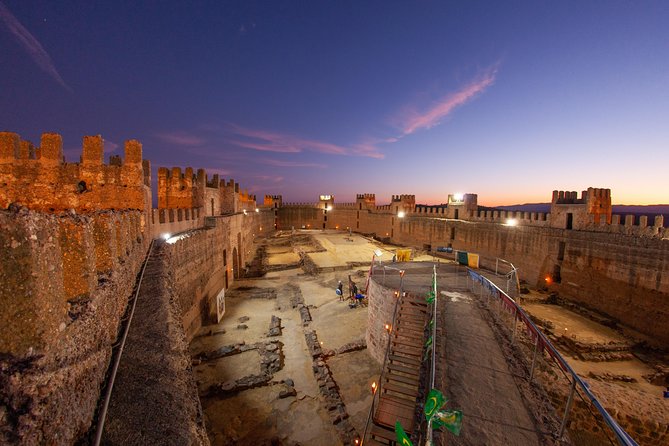
The first thing you notice at Baños de la Encina is the castle’s powerful outline: fourteen crenellated towers ring the Almohad fortress, with a later Christian Tower of Tribute completing the picture. Bury al-Hamma is not a restored fantasy. It is a remarkably well-preserved fortified complex, and the short guided visit connects the stones to the people who used them.
I like two things here. The 45-minute length gives you a clear, focused look without swallowing half your day, and the low $7.49 price makes a guided visit easy to add to an Andalusian road trip. I also like that the tour includes archaeological remains from several periods, not just the medieval walls.
The main consideration is timing. Forty-five minutes passes quickly inside a site with prehistoric, Iberian, Almohad, and Christian layers, so you will get an introduction rather than a slow, highly detailed study. The tour also requires good weather, and the meeting point is in Baños de la Encina rather than a major city.
Key points to know before booking
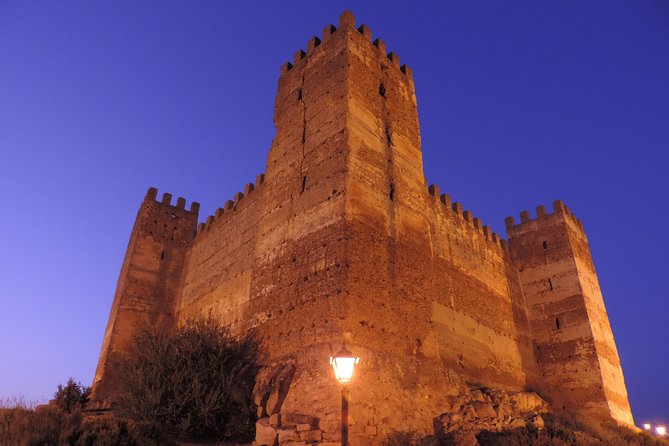
- Fourteen Almohad towers and one Christian tower: The fortress ring gives the castle its distinctive profile and helps you read its defensive design.
- A site used since the Copper Age: Archaeological remains reach far beyond the medieval period.
- Iberian walls and a funerary mausoleum: These earlier remains add a surprising sacred and defensive dimension to the visit.
- A 45-minute guided format: You get a compact explanation of the castle’s construction, development, and loss by the Muslims.
- A $7.49 admission price: For a local guide and included entry, this is an inexpensive way to add context to a visit to the town.
- A maximum of 25 people: The group is capped, though the size on your date can vary.
Why Baños de la Encina’s castle deserves your time
Many Spanish castles are impressive from the outside but offer little once you pass through the gate. Baños de la Encina gives you more to work with. Its walls preserve a sequence of occupation that begins in prehistory, moves through Iberian remains, and reaches the Almohad urban complex of the 12th century.
That long sequence is the real reason to take the guided tour. You are not simply looking at towers and imagining battles. You are being shown how one strategic site changed over time, and how archaeological work has added new information beneath and within the medieval structure.
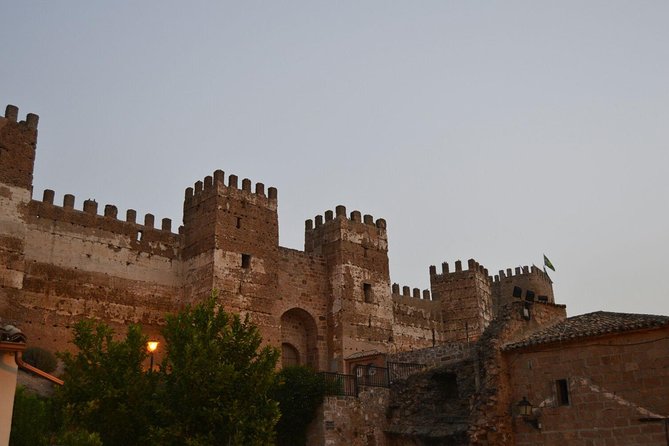
The castle is known as Bury al-Hamma. Its position above the town gives it a commanding profile, with the robust wall and repeated towers visible across the surrounding countryside. The setting matters because the fortress was built to be seen, understood, and defended. Even before the guide begins, the outline tells you that this was not a minor residence.
I like the fact that the visit treats the castle as an archaeological site as well as a military monument. That makes it a better choice for you if a simple photo stop is not enough, but you still want a tour that fits into a busy day.
A few more castle tours around Spain worth a look
- Seville: Royal Alcázar Entry Ticket
★ 4.6 · 28,378 reviews - Granada: Alhambra & Nasrid Palaces Tour with Tickets
★ 4.7 · 19,801 reviews - Granada: Alhambra and Nasrid Palaces Entry Ticket
★ 4.6 · 15,130 reviews
Entering Bury al-Hamma and reading the fourteen towers
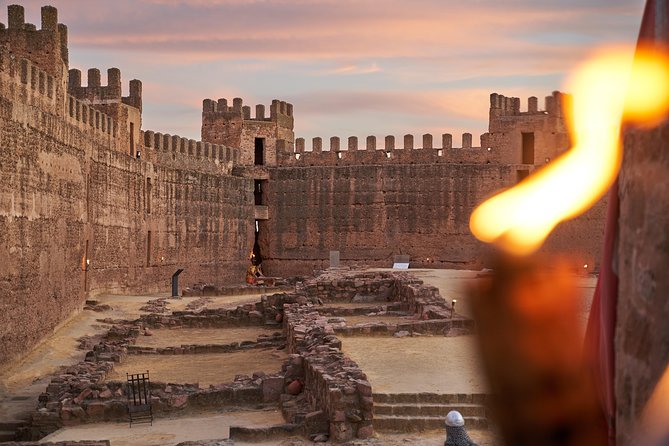
The outer wall is the visual star of the visit. Fourteen towers reinforce the fortified circuit, and their crenellated tops give the complex a strong, almost graphic appearance. The castle has suffered very little damage, which helps you understand the original shape instead of trying to reconstruct it from fragments.
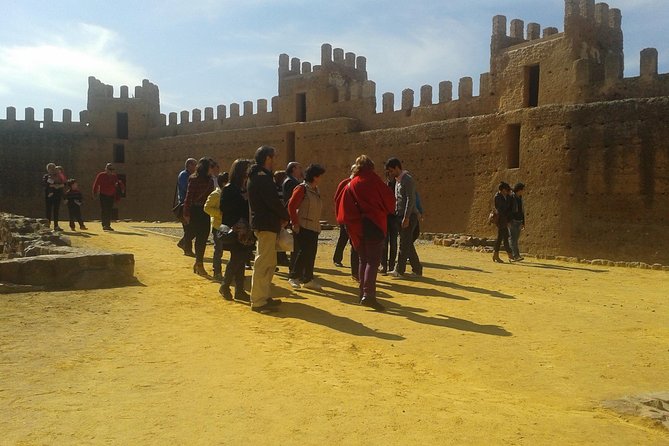
A guide is especially useful here. From ground level, the towers can look like a repeating row of masonry. With an explanation, you can begin to see the wall as a planned defensive system. The repeated towers break up the long stretches of wall and give defenders protected positions along the perimeter.
The tour’s focus is the castle’s story from construction through its loss by the Muslims. That makes this a guided history walk rather than an unstructured visit. You can expect the guide to place the visible walls into that larger sequence, explaining what the fortress was and how its control changed.
The supplied information does not name the guide, so you should not expect to book a particular person. The experience is led by a local guide, and the quality of the explanation matters here because the masonry itself does not label every period for you.
The group limit is 25 people. That is small enough to keep the visit from becoming a large crowd, though your actual group may be smaller or closer to the maximum. A previous visit took place with a reduced group and pleasant weather, conditions that made the explanation feel especially easy to follow.
Copper Age traces beneath the medieval fortress
The most surprising part of the site may be its earliest layer. The first known occupation traces at the castle go back to the Copper Age, long before the Almohad fortress took shape. You will not be visiting a site that began in the 12th century and simply stayed the same.
That prehistoric connection gives the castle extra weight. The hill or fortified position was useful before the medieval walls appeared, and later builders took advantage of a place that already mattered to earlier communities. The tour helps you connect the visible fortress to this much longer human presence.
The information available for the experience does not specify exactly how every prehistoric remain is displayed or how much time the guide spends on each one. I would treat this section as an important part of the explanation, not as a separate museum-style exhibit. The value is in understanding the layers together.
If you are interested in archaeology, this is a strong reason to book the guided visit instead of only photographing the exterior. The low price also makes it a sensible choice for anyone who wants more substance without committing to a long specialist tour.
Iberian walls and a sacred funerary mausoleum
Inside the castle, strong Iberian walls and a funerary mausoleum with a sacred character add another turn to the story. These remains show that the site served purposes beyond military defense. The castle’s ground holds evidence of communities that used the area for protection, settlement, and ritual.
The Iberian walls are particularly useful for understanding how later construction can cover or incorporate earlier structures. When you walk through an old fortress, it is easy to assume every visible wall belongs to the same period. Here, the archaeological remains challenge that assumption.
The funerary mausoleum adds a human detail. A fortress can feel like an abstract machine of towers, walls, and battlements. A burial structure reminds you that people also attached religious and ceremonial meaning to this place.
I would pay close attention when the guide points out these remains. They may not have the immediate visual drama of the main wall, but they are among the details that make the visit more than a standard castle walk. They also give the tour a broader scope than the title might suggest.
Same region, a different set of walls:
- Seville: Alcázar, Cathedral & Giralda Skip-the-Line Tour
★ 4.8 · 11,525 reviews - Seville: Cathedral, Giralda & Alcazar Entry With Guided Tour
★ 4.6 · 8,560 reviews - Granada: Alhambra & Generalife Fast-Track Guided Tour
★ 4.7 · 8,313 reviews - Madrid: Segovia and Toledo Tour, Alcazar, and Cathedral
★ 4.7 · 7,797 reviews
The 12th-century Almohad urban complex
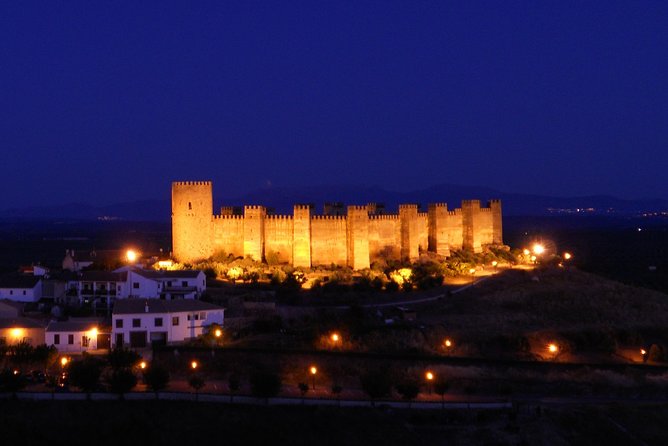
The Almohad period forms the heart of the castle’s story. The complex dates to the 12th century, and the fortress is regarded as one of the best-preserved Muslim castles in Spain. Its preservation lets you see the scale and order of Almohad construction without relying entirely on drawings or reconstructions.
The phrase urban complex matters. This was not simply a ring of defensive stone with empty space inside. The interior had its own organization and use, and the archaeological remains help reveal that. The tour covers the castle from its construction onward, so you can expect the guide to explain both the defensive shell and the activity within it.
This is where a local guide earns the admission price. A short explanation can turn a wall into evidence of planning, authority, and daily use. Without that context, you might spend your time looking for a dramatic room or a famous viewpoint and miss the larger story.
The site’s condition is another advantage. Because the castle has hardly suffered damage, its layout remains unusually legible. You can still read the relationship between the wall, the towers, and the interior areas. That does not mean every space is perfectly preserved, but the overall structure remains unusually clear.
The Christian Tower of Tribute and changing control
The fourteenth tower is joined by a fifteenth, identified as the Christian Tower of Tribute. This later tower helps you see that the castle did not freeze in its Almohad phase. Control and use changed, and the structure gained a Christian element within an older fortified complex.
That contrast is one of the most interesting visual lessons of the tour. Most of the defensive circuit belongs to the Muslim fortress, while the Tower of Tribute marks a later chapter. The guide’s account of the castle’s loss by the Muslims gives this change a clear place in the overall story.
I like this kind of detail because it keeps the tour from presenting the castle as one simple, unchanging monument. You are looking at a place shaped by different periods, with each one leaving something behind. The fifteenth tower is a visible reminder of that transition.
The tour is not advertised as a long military reenactment or an extensive architectural lecture. You should expect a compact explanation of the major stages, with the guide selecting the most useful details for a 45-minute visit. If you want every political event or construction phase, you may find the format too brief.
Recent excavations add something new
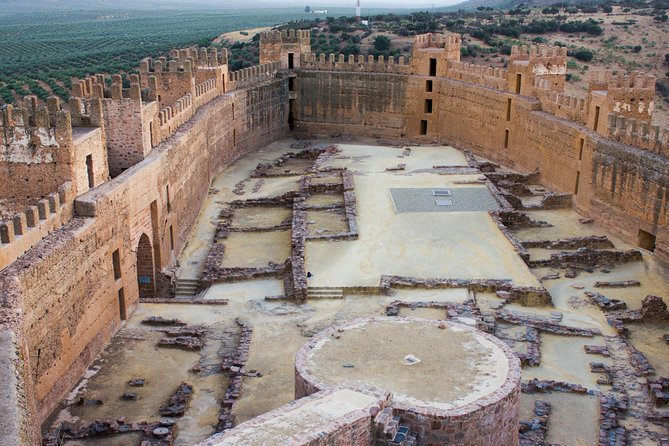
The visit also includes archaeological remains found during recent excavation. That is worth noting because it means the tour is not limited to old stories that have been repeated for generations. New work has added to what can be understood about the site.
The available information does not list every excavation discovery, so I would not book this expecting a catalog of individual artifacts. Instead, think of the excavation material as part of the guide’s explanation of how archaeologists have learned more about the castle and its earlier occupations.
This is a good feature for repeat visitors too. A castle that has been studied and excavated over time can reveal more than its famous outline suggests. The tour connects the current archaeological work to the visible remains, making the visit feel tied to ongoing study rather than finished once the walls were built.
For you, the practical benefit is simple: the excavation details give the guide more than a standard script about towers. They create a reason to listen closely, especially if you already know the basic story of medieval castles in Andalusia.
Is $7.49 good value for 45 minutes?
At $7.49 per person, this is an easy value calculation. You receive admission and a local guided explanation lasting about 45 minutes. The price is low enough that the tour does not need to replace another major activity to justify itself.
I would call it especially good value if you are already visiting Baños de la Encina. The castle is the main attraction, and the guide supplies the context that the stonework alone cannot provide. You avoid spending much more for a longer excursion while still learning about the prehistoric, Iberian, Almohad, and Christian layers.
The limitation is duration. Forty-five minutes is enough for a well-shaped introduction, but not enough for a slow, exhaustive inspection of every tower and archaeological feature. If you prefer to linger, take detailed photographs, or study architecture at your own pace, you may want additional time around the visit, if available at the site.
The average booking point is six days ahead, which suggests planning several days in advance is sensible. You do not need to book far ahead in the way you might for a major Spanish monument, but waiting until the last minute may be less wise if your dates are fixed.
Meeting point, group size, and weather rules
The tour begins at Castillo de Baños de la Encina, Calle Santa María, 1, 23711 Baños de la Encina, Jaén, Spain. It ends back at the same meeting point, so you are not left arranging a separate pickup or finding your way to another part of town.
A mobile ticket is provided, which keeps the admission process simple. Confirmation arrives at booking, and service animals are allowed. Most people can participate, though the supplied information does not provide a detailed mobility description of the castle itself.
The maximum group size is 25 people. That cap gives the guide a reasonable chance to speak to the full group, but I would not assume every departure will feel intimate. Group size can affect how easily you hear and how long it takes to move through a compact historic site.
Good weather is required. If poor weather cancels the activity, you are offered another date or a full refund. For a castle visit, this matters more than it might for an indoor museum, since the experience depends on moving through an old fortified complex.
You can cancel for a full refund up to 24 hours before the start time. Cancellations or changes within 24 hours are not refunded or accepted, so keep the local cut-off time in mind when your plans are uncertain.
Who will get the most from this castle tour?
I would recommend this for you if you enjoy old fortifications but want more than an exterior photograph. The mix of prehistoric traces, Iberian construction, a sacred funerary site, Almohad architecture, Christian changes, and recent excavation makes the castle unusually layered.
It also suits families and mixed-interest groups because the 45-minute format is manageable. You receive a clear story without asking everyone to give up an entire morning. The low price helps if you are adding several paid stops to an Andalusian itinerary.
History and archaeology fans will get the most from the details. You should listen for how the guide separates the periods, since the castle’s appeal lies in those layers rather than in one famous event.
This may be less satisfying if you want a long, self-directed visit or detailed information about every room. The tour is short, and the supplied description does not promise extensive free time. It is best understood as a focused introduction to one of Spain’s best-preserved Muslim castles.
Should you book Castillo de Baños de la Encina?
Book it if you will be in Baños de la Encina and want the castle to make sense, not just look impressive. For $7.49, the guided explanation and included admission offer strong value, especially with the chance to hear about remains dating from the Copper Age through the Almohad period and later Christian use.
Skip it only if your schedule cannot spare 45 minutes, the weather is poor, or you strongly prefer exploring without a guide. For most visitors interested in Andalusian fortresses, this is a practical, inexpensive addition with real archaeological substance.
FAQ
How long does the Castle of Baños de la Encina tour last?
The guided tour lasts approximately 45 minutes.
Where does the tour begin and end?
It begins at Castillo de Baños de la Encina, Calle Santa María, 1, 23711 Baños de la Encina, Jaén, Spain. The activity ends back at the meeting point.
What does the tour cover?
The guide explains the castle’s history from its construction through its loss by the Muslims. The visit also covers archaeological remains found during recent excavation.
What archaeological remains can you learn about?
The site includes Copper Age occupation traces, strong Iberian walls, a funerary mausoleum with a sacred character, and a 12th-century Almohad urban complex.
How much does the tour cost?
The listed price is $7.49 per person, with admission included.
Can I cancel the booking?
You can cancel up to 24 hours before the experience begins for a full refund. Cancellations or changes made less than 24 hours before the start time are not accepted or refunded. If poor weather cancels the experience, you will be offered another date or a full refund.
Just added around Spain
- Montjuïc Cable Car & Magic Fountain Barcelona Private Tour★ 5.0 · 77 reviews
- Montjuic Castle Admission Ticket in Barcelona★ 3.5 · 59 reviews
- Barcelona City Walk with Montjuïc Castle & Cable Car Guided Tour★ 4.0 · 15 reviews
- 2hr Montjuïc Castle Segway Tour★ 5.0 · 5 reviews
- Barcelona Best Views: Old Town and Montjuic Castle Private Tour★ 5.0 · 24 reviews
- Castle of Loarre- Collegiate Church of Bolea★ 4.5 · 7 reviews
- Nasrid Crafts: Only plasterwork workshop in the Alhambra★ 4.5 · 15 reviews
- Guided tour of Almodovar Castle, entrance fee included★ 4.5 · 6 reviews
Spain Castle Tours, compared.


Granada: Alhambra & Nasrid Palaces Tour with Tickets
Read our review →
Granada: Alhambra and Nasrid Palaces Entry Ticket
Read our review →
Seville: Alcázar, Cathedral & Giralda Skip-the-Line Tour
Read our review →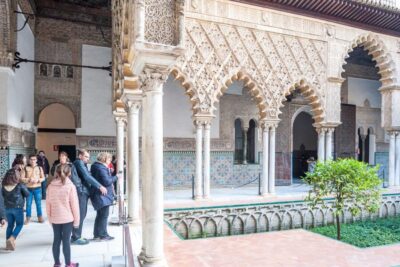
Seville: Cathedral, Giralda & Alcazar Entry With Guided Tour
Read our review →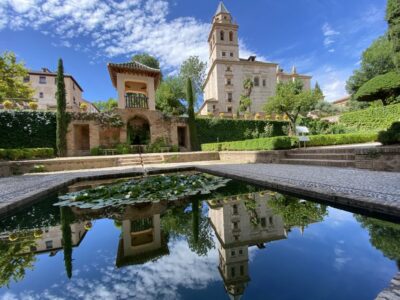
Granada: Alhambra & Generalife Fast-Track Guided Tour
Read our review →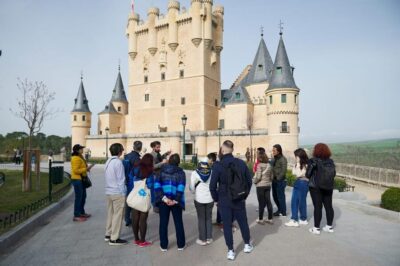
Madrid: Segovia and Toledo Tour, Alcazar, and Cathedral
Read our review →
Seville: Priority Access Cathedral, Giralda & Alcázar Tour
Read our review →Browse the lists this tour appears in