
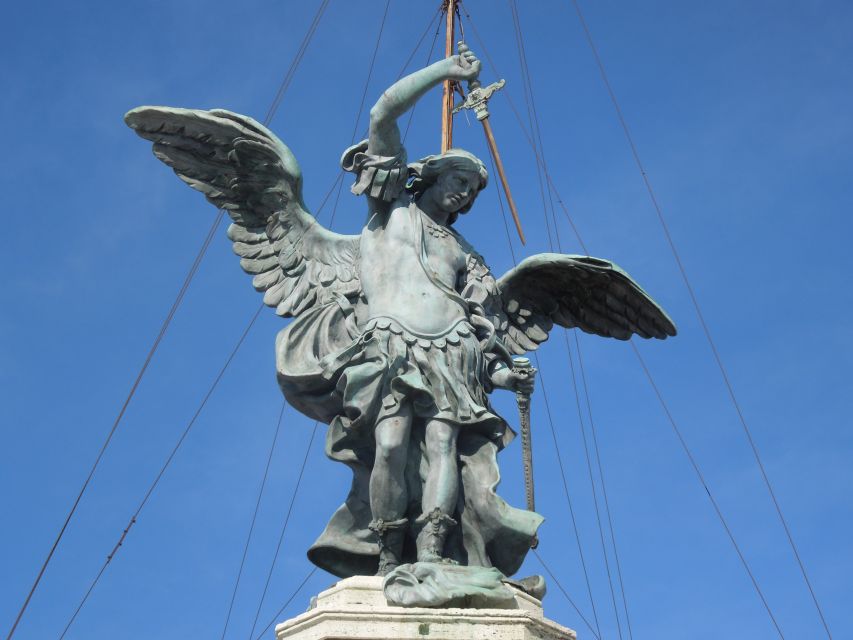
REVIEW · SKIP THE LINE
Rome: Castel Sant’Angelo Skip the Line Private Tour
Castel Sant’Angelo is one of Rome’s best buildings for seeing how power changes hands. It began as Emperor Hadrian’s tomb, then became a fortress, papal residence, treasury, prison, and execution site. I like that this private two-hour tour follows those changes inside the actual rooms, rather than treating the castle as just another photo stop.
I especially like the chance to see Pope Paul III’s apartment and its frescoes, then climb to the terrace for a sweeping view of Rome. The guide can also shape the visit around your questions, and Mates is praised for spending the full tour focused on the castle’s details. The main drawback is practical: reaching the panoramic terrace requires several flights of stairs, so this is not a good choice for wheelchair users or people with limited mobility.
Key points to know before booking
- Hadrian’s tomb sits at the heart of the castle: You see the building’s original purpose before learning how later rulers changed it.
- Paul III’s apartment adds a surprisingly elegant side: Frescoes and decorated rooms show the castle as a papal home, not only a military stronghold.
- The private format keeps the focus tight: You can ask questions and spend more time on the parts that interest you.
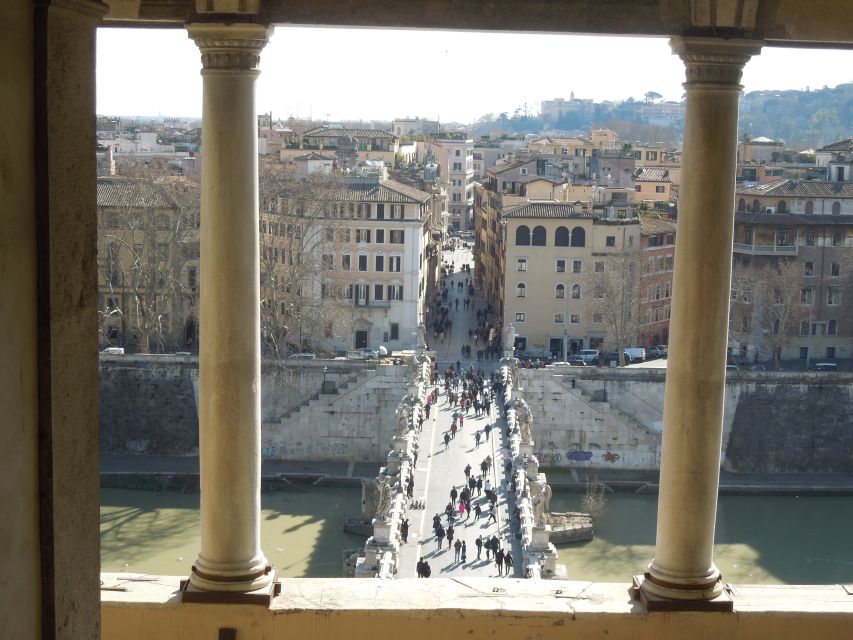
- The top terrace is the visual payoff: You get panoramic views over Rome and a strong angle back toward the castle.
- The tour lasts two hours: That is enough for a focused visit without turning the castle into an all-day undertaking.
- Stairs shape the experience: Wear comfortable shoes, leave large bags behind, and plan on climbing to the terrace.
Why Castel Sant’Angelo feels different from Rome’s other monuments
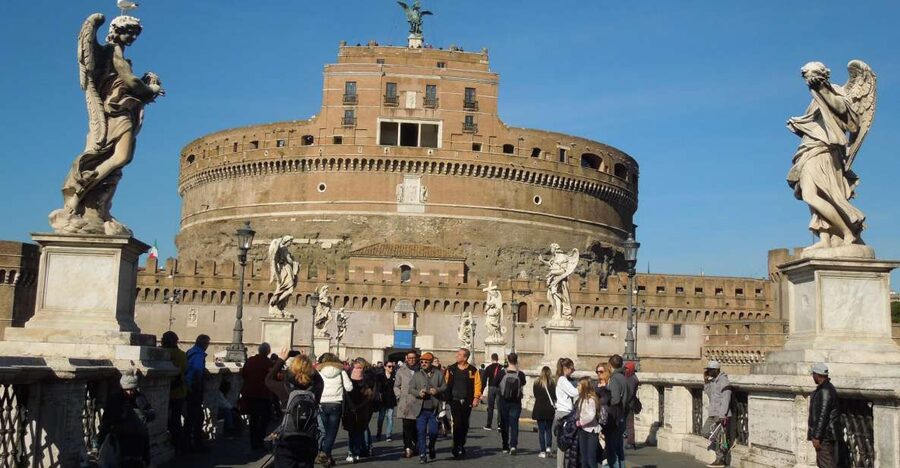
Many Roman monuments tell one main story. Castel Sant’Angelo tells several, one on top of another.
Emperor Hadrian ordered the building as a mausoleum for himself and his successors. Over time, the tomb was fortified and absorbed into Rome’s defenses. Popes later used it as a residence and refuge, while the castle also held the papal treasury and served as a prison.
That mixture gives the visit a useful rhythm. You move from imperial burial place to defensive structure, then into rooms shaped by papal wealth and politics. The castle is not polished into a single neat theme. Its appeal comes from seeing how each period reused what came before.
I find that a private guide makes this type of building easier to read. Without context, a thick wall, painted chamber, or underground space can blur into the next. With a guide, you can connect the room to its purpose and understand why the castle kept its importance for so long.
More Skip the Line Tickets in Rome:
- Rome: Castel Sant’Angelo Tour With Skip-the-line Access
★ 4.9 · 84 reviews - Vatican Gardens & Castel Sant’Angelo Skip-the-line tickets
★ 4.3 · 20 reviews - Rome: Skip-the-Line Castel Sant’Angelo Tickets & Audio Guide
★ 4.9 · 16 reviews
Meeting at the bridge and entering the castle
The guide meets you in the square at the end of the bridge, outside the main entrance. This is a clear meeting place, but give yourself enough time to get there. You do not want to be searching for the entrance while your private tour is ready to begin.
Entrance tickets are included, and the tour uses a separate entrance to skip the main line. That matters most during busy periods, when waiting outside can eat into a short Rome sightseeing day. Skip-the-line access does not make the castle empty, but it does help the visit begin on schedule.
The tour is conducted in English with a live guide. It is a private group, so you are not being carried along with a large crowd or listening to a speech aimed at the whole room. You can ask why a room mattered, how the castle changed, or where a particular view leads.
The tour ends back at the meeting point. Hotel pickup, transportation, food, and drinks are not included, so you should arrange your own way to the bridge and plan a meal separately.
Starting with Emperor Hadrian’s tomb
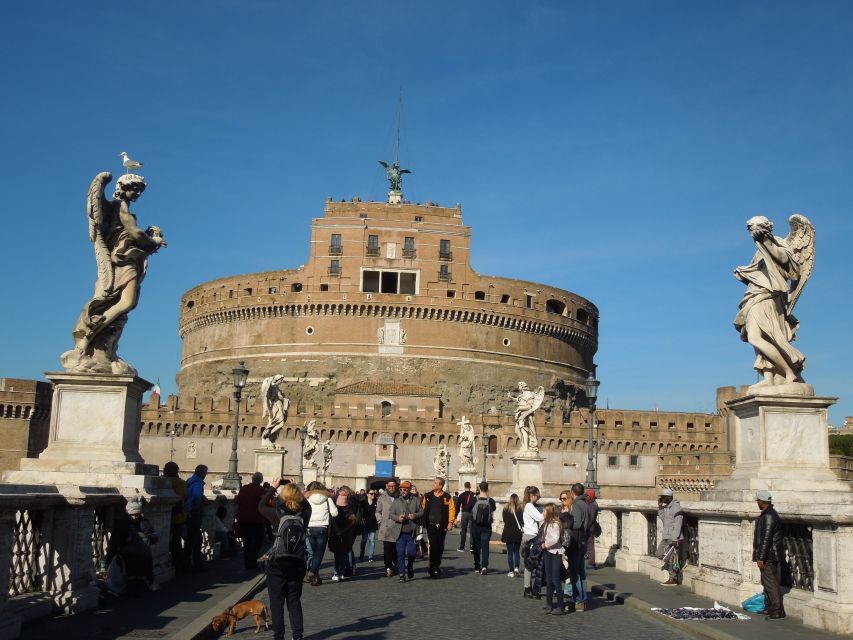
The most important early stop is the tomb of Emperor Hadrian. This is where the building’s story begins, and it gives the castle a more personal purpose than a standard fortress.
Hadrian did not build the site simply as a military post. He intended it as his burial place, with later emperors also buried there. Seeing the tomb helps you understand that the original structure was designed for imperial memory and ceremony before it became a defensive stronghold.
I like this opening because it changes how you look at the upper parts of the castle. The walls, ramps, and heavy construction are not just features of a fortress. They are later answers to Rome’s changing needs, built around an earlier imperial monument.
The exact amount of time spent at each area can depend on your guide and your questions. If ancient Rome is your priority, tell the guide early. If you are more interested in the papal rooms or views, the private format makes it easier to shift the emphasis.
Following the castle’s military and political changes
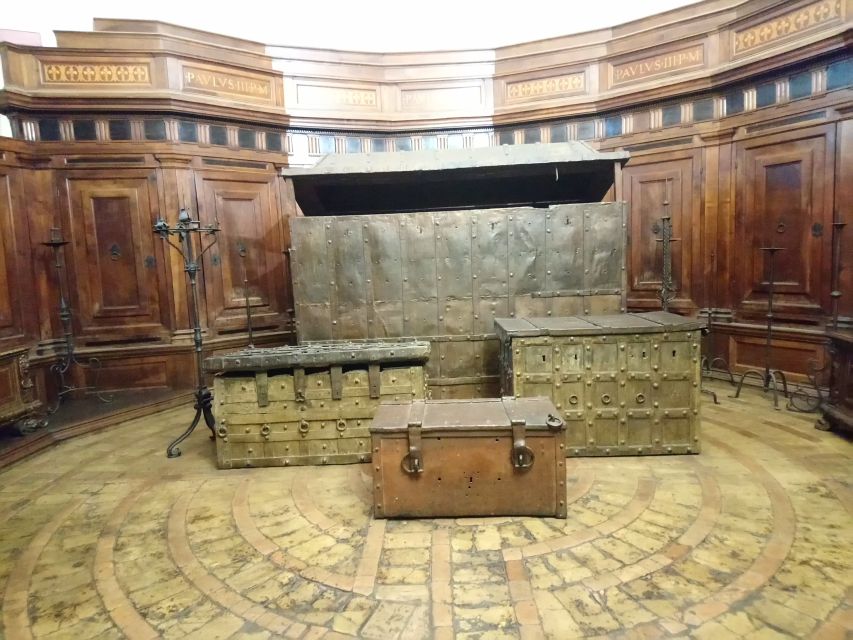
The tour also brings you through the castle’s fortified areas and architectural remains. These sections may not have the decorative appeal of the papal apartment, but they explain why the building survived and remained useful.
Castel Sant’Angelo worked as a defensive refuge and a place of control. Its thick walls and elevated position helped protect the people and valuables inside. The building’s later use as a prison and location for public executions adds a darker edge to the visit.
I appreciate that the experience does not present the castle as only beautiful. You see paintings, statues, and grand rooms, but you also encounter a building tied to imprisonment and punishment. That contrast makes the visit more honest and gives the artwork a sharper setting.
A guide is especially useful here because the fortress spaces can be visually plain compared with Rome’s churches and palaces. The meaning comes from knowing what the rooms were for and how the castle fit into the city’s power structure.
More Private Tours in Rome:
- Rome: Vatican and Castel Sant’Angelo Private Photoshoot
★ 4.9 · 133 reviews - Rome Pre-Reserved Shared or Private Tour Castel Sant’Angelo
★ 4.6 · 68 reviews - Rome: Vatican and Castel Sant’Angelo Private Photoshoot
★ 5.0 · 13 reviews - St. Angel’s Castle: 2-Hour Private Tour
★ 5.0 · 9 reviews
Pope Paul III’s apartment and its frescoes
For many people, the papal apartment is the tour’s most refined stop. Pope Paul III used the castle as a residence, and the decorated rooms show how far the building had moved from its original role as a mausoleum.
The apartment’s frescoes are a major reason to choose this tour. They bring color and detail into a structure otherwise dominated by stone, brick, ramps, and defensive walls. You get a glimpse of the papal court’s taste and the effort made to turn a fortress into a home fit for a powerful ruler.
I like the way this stop balances the tomb and the military sections. Hadrian’s burial place explains the beginning of the building. Paul III’s apartment shows how later occupants reshaped it for comfort, ceremony, and display.
Look closely at the paintings and architectural details rather than rushing through for the rooftop view. A good question to ask your guide is how the private apartment differed from the rest of the castle. The tour’s strongest praise centers on detailed explanations, and this is the kind of room where that attention pays off.
The treasury room and the castle’s more serious side
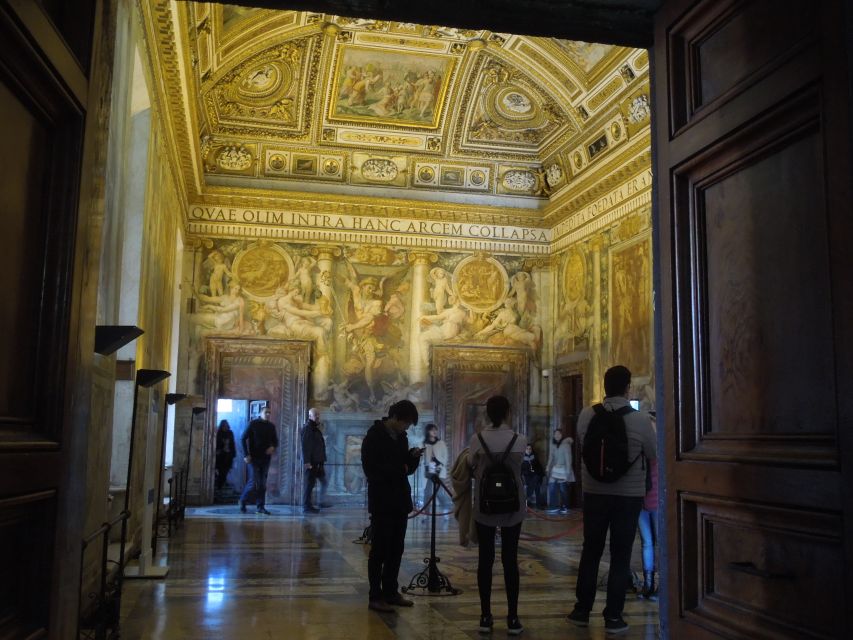
The treasury room adds another piece to the story. The castle was used to hold the papal treasury, so this space points to the building’s role as a secure storehouse as well as a residence and prison.
This stop helps connect architecture with power. A treasury needed protection, and the castle’s walls gave valuables a level of security. The room also shows why the building mattered to the papacy beyond shelter or ceremony.
Do not expect every area to feel lavish. The value is in seeing how different functions operated under one roof. A private guide can explain the difference between a room meant for living, a space meant for storage, and areas designed for defense.
The climb to the top terrace
The panoramic terrace is the clear visual reward. From the top, you can take broad views over Rome and photograph the castle itself from above.
The climb is not a minor detail. You will need to go up a series of stairs to reach the terrace, and the tour is not suitable for wheelchair users or people with mobility impairments. Comfortable shoes are essential, especially if you plan to continue sightseeing afterward.
For visitors who can manage the stairs, the terrace gives the castle a new shape. From inside, you feel the thickness and height of the structure. From above, you can understand its position in Rome and see the city spread around it.
Bring your camera, but allow time to look before taking photographs. The view is one of the tour’s main reasons to book, and it is easy to spend the final part of the visit snapping pictures without taking in the setting. Your guide may also help point out what you are seeing, adding meaning to the panorama.
What a private guide adds in two hours
Two hours is a sensible length for this site. Castel Sant’Angelo has enough rooms and periods to fill much longer, but a focused visit lets you see the important areas without losing an entire morning or afternoon.
The private arrangement is the biggest advantage. You can ask questions as they occur instead of waiting for a group pause. If the frescoes catch your attention, you can ask for more detail. If you are fascinated by Hadrian or the castle’s defensive role, you can steer the conversation in that direction.
The strongest guide feedback is tied to Mates, who is described as an expert and attentive guide. The key point is not simply information. The guide is expected to keep attention on the castle’s specific details and answer questions throughout the visit.
That kind of focus matters more here than on a simple landmark walk. The castle has many layers, and a general Rome guide could easily skim over them. A specialist approach helps you understand why the same building could serve as a tomb, palace, treasury, prison, and fortress.
Is $214.11 per person a fair price?
At $214.11 per person, this is not a budget admission ticket. You are paying for a private two-hour visit, entrance tickets, skip-the-line access, and an English-speaking guide.
The value depends on how much you want from the castle. If you only want to enter, take a few photographs, and see the terrace, the price will feel high. If you want the building explained in detail and prefer not to join a large group, the private format makes the cost easier to justify.
I would compare this tour with the value of your time in Rome. Skip-the-line entry can protect a short schedule, while private guiding can prevent you from wandering through rooms without understanding their purpose. For two people or a small private group, the cost may make more sense than booking separate group experiences.
The included entrance ticket keeps the price easier to evaluate. Since food, drinks, and hotel transportation are not included, add those costs separately, though neither is essential to enjoy the visit.
Who should book this Castel Sant’Angelo tour?
I would choose this experience if you care about Roman history, papal Rome, architecture, or city views. It suits someone who wants more than a quick look and enjoys asking questions along the way.
It is also a good choice if you have already seen Rome’s more obvious attractions and want a site with several different moods. The tour covers imperial burial, fortification, papal decoration, treasury storage, imprisonment, and panoramic sightseeing in one building.
Families with older children may also find the changing uses interesting, particularly if they enjoy stories about castles, popes, emperors, and secretive political spaces. The climbing requirement is the main issue to assess carefully.
I would not book it if you need step-free access, dislike stairs, or want a relaxed visit with plenty of time for food and shopping. I would also reconsider if your only goal is a rooftop photograph, since the guided historical portion makes up much of the experience.
Practical tips for a smoother visit
Wear comfortable shoes. The tour is a walking experience, and the route includes stairs to the terrace.
Leave luggage and large bags elsewhere. They are not allowed, so arrive with only what you need for the visit.
Meet the guide at the square at the end of the bridge, outside the main entrance. This is the stated meeting point, and the tour returns there when finished.
Keep the two-hour schedule in mind when planning the rest of your day. You may want time afterward for photographs near the bridge or for another nearby activity, but do not pack the schedule so tightly that a small delay causes problems.
The tour offers free cancellation up to 24 hours before the start time, and you can reserve now and pay later. Those terms help if your Rome plans are still changing, but check the available starting times before building the rest of your day around it.
Should you book it?
Book this tour if you want Castel Sant’Angelo explained as a changing Roman power center, not treated as a quick stop. The combination of Hadrian’s tomb, Paul III’s frescoed apartment, the treasury, fortified spaces, and the terrace gives you a well-rounded visit in two hours.
The strongest reason to choose it is the private guide. Mates is specifically praised for detailed, attentive explanations, and that personal focus fits a complicated building like this. The strongest reason to hesitate is the price, along with the stairs.
For an accessible visit or a low-cost entry, choose another option. For a focused private tour with skip-the-line access and one of Rome’s best city views, this is a sound choice.
FAQ
How long does the Castel Sant’Angelo tour last?
The tour lasts two hours. Starting times vary, so check availability when booking.
Is the tour private?
Yes. The activity is for a private group with a live English-speaking guide.
Where does the tour meet?
The guide meets you in the square at the end of the bridge, outside Castel Sant’Angelo’s main entrance. The tour ends back at the same meeting point.
What is included in the price?
The price includes entrance tickets, a local guide, the private walking tour, and the city view from the castle.
Can wheelchair users join the tour?
No. The tour is not suitable for wheelchair users or people with mobility impairments because you must climb stairs to reach the panoramic terrace.
What should I bring, and what is not allowed?
Bring comfortable shoes. Luggage and large bags are not allowed inside the activity.
Just added around Rome
- St. Peter’s Basilica & Castel Sant’Angelo Entry★ 4.1 · 8 reviews
- St. Angel’s Castle: 2-Hour Private Tour★ 5.0 · 9 reviews
- Rome: Skip-the-Line Castel Sant’Angelo Tickets & Audio Guide★ 4.9 · 16 reviews
- Rome: Vatican, St Peter’s Sq & Castel Sant’Angelo PhotoShoot★ 5.0 · 14 reviews
- Rome: Passetto di Borgo Tour & Castel Sant’Angelo Ticket★ 4.4 · 86 reviews
- Rome Pre-Reserved Shared or Private Tour Castel Sant’Angelo★ 4.6 · 68 reviews
- Rome: Vatican and Castel Sant’Angelo Private Photoshoot★ 5.0 · 13 reviews
- Rome: Castle Sant’Angelo Ticket w/ audioguide option★ 3.6 · 25 reviews
Skip the Line, compared.
Seville: Alcázar, Cathedral & Giralda Skip-the-Line Tour
Read our review →
Granada: Alhambra & Generalife Fast-Track Guided Tour
Read our review →
Seville: Priority Access Cathedral, Giralda & Alcázar Tour
Read our review →
Fast-Track Alhambra & Nasrid Palaces Guided Tour
Read our review →
Alcazar and Cathedral of Seville Tour with Skip the Line Tickets
Read our review →
Alcázar of Seville Skip-the-Line Tickets and Guided Tour
Read our review →
Skip The Line Alhambra and Generalife Guided Tour
Read our review →
Alhambra & Generalife Skip the line Small Group including Nasrid Palaces
Read our review →Browse the lists this tour appears in