

REVIEW · GUIDED CASTLE TOURS
Castel Sant’Angelo | The Tomb of Hadrian Private Guided Tour
Castel Sant’Angelo is one of Rome’s best time-travel machines. It began as Emperor Hadrian’s enormous tomb, then became a papal residence, fortress, prison, execution site, and museum. A private guide helps you make sense of those sharp turns instead of simply walking through a series of grand rooms.
I like the small private group, which gives you room to ask questions and follow the subjects that interest you. I also like the route from Ponte Sant’Angelo to the castle, ending on the rooftop terrace, where Rome opens up around the Tiber.
The main consideration is price: at $225.44 per person, this is a serious expense, especially since two people are required to book. The experience suits visitors who care more about context and conversation than simply checking another monument off a list.
Key points to know before booking
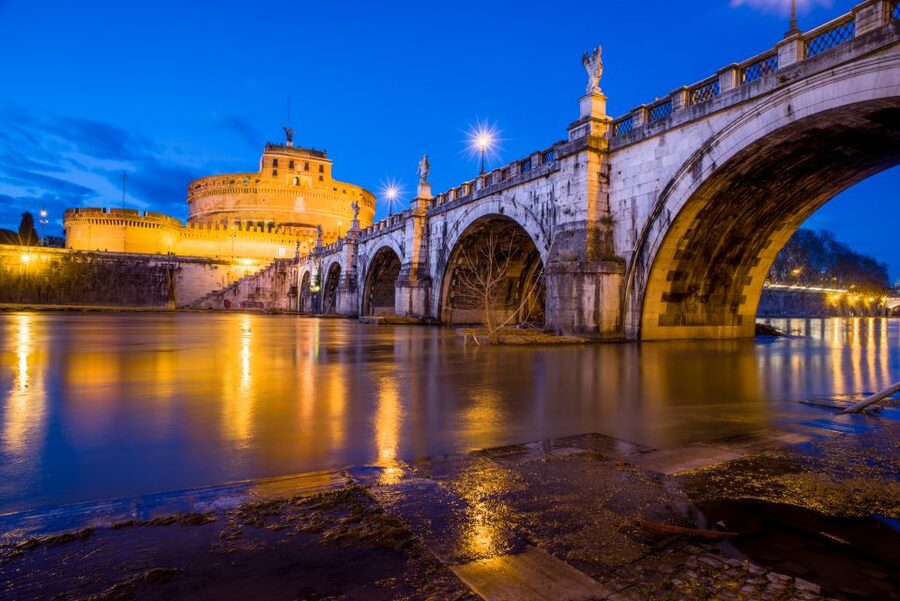
- Hadrian’s tomb became a fortress: You see how one Roman monument took on several very different roles over the centuries.
- A private art historian leads the visit: Guides such as Sabrina and Martin have been especially praised for clear explanations, extra facts, and thoughtful answers.
- Ponte Sant’Angelo is part of the story: The tour begins with the bridge’s statues before entering the castle.
- The rooftop is the grand finale: You get broad views of Rome and the Tiber from the terrace.
- The darker rooms matter too: Expect stories about cramped prison cells, executions, escapes, and the disposal of bodies.
- The tour requires walking and stairs: Comfortable shoes are essential, and the site is not suitable for wheelchair users or walking frames.
Why Castel Sant’Angelo is worth your time
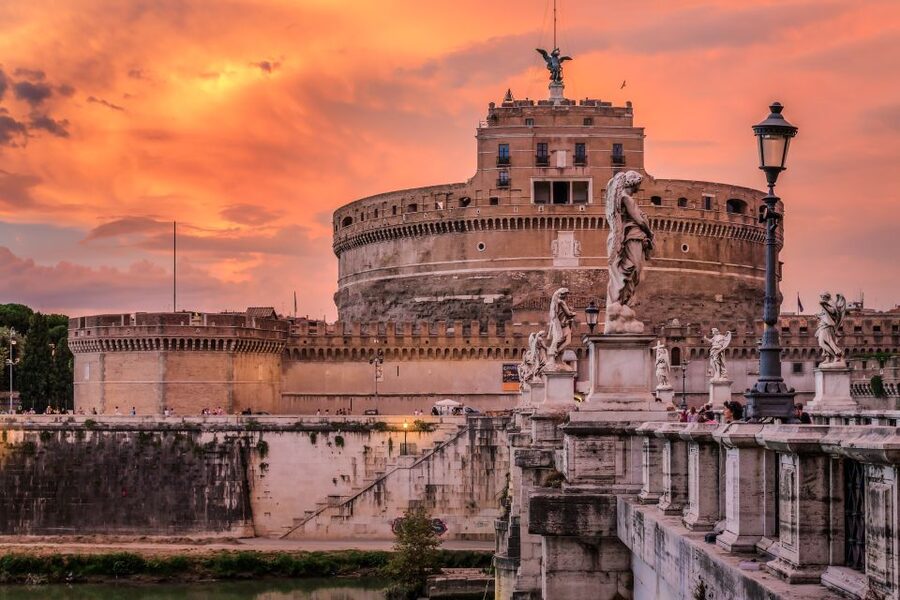
Many of Rome’s monuments make sense only after you understand how their purpose changed. Castel Sant’Angelo is especially rewarding because it is not just one building from one period. Its thick circular core began as the Mausoleum of Hadrian, built for the emperor and his family.
Later rulers altered the site to meet new needs. Popes used it as a residence and refuge. Military leaders strengthened it as a fortress. Prisoners were held there, and executions took place within its walls. Today, you walk through those layers in a single visit.
That mixture gives the castle a different mood from Rome’s temples and open-air ruins. You are not only looking at ancient stone. You are seeing how the same building was adapted by emperors, popes, soldiers, jailers, and artists.
I find a private tour particularly useful here because the castle can feel confusing without a guide. Its passageways, courtyards, rooms, ramps, and terraces do not tell the full story on their own. Your guide can explain what changed, why the building mattered, and how the rooms fit together.
More Guided Castle Tours in Italy
- Rome: Castel Sant’Angelo Guided Tour
★ 4.7 · 1,779 reviews - Rome: Small Group Guided Tour of Castel Sant’Angelo
★ 4.8 · 215 reviews - Rome: Castel Sant’Angelo Guided Tour
★ 4.5 · 202 reviews
Meeting at Ponte Sant’Angelo
You meet your guide outside the main entrance to Castel Sant’Angelo at Lungotevere Castello 50. Look for the guide holding a Tour in the City sign. Since the meeting point is beside the famous bridge, arrive with enough time to get your bearings before the scheduled start.
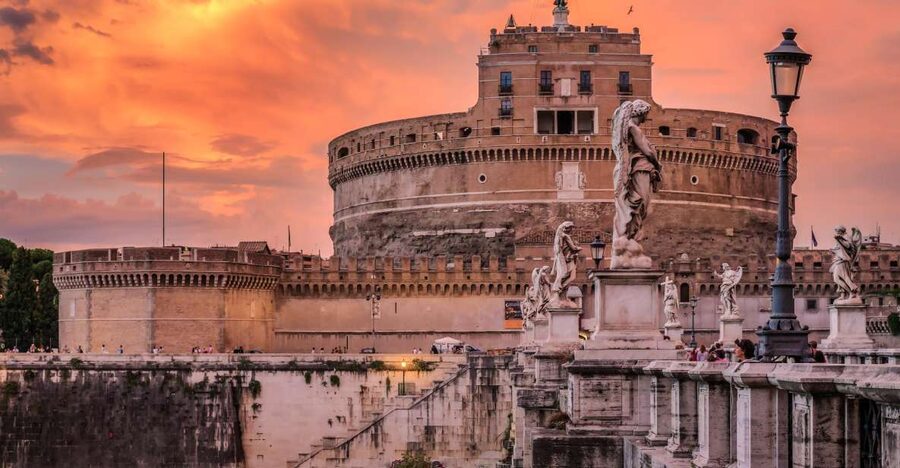
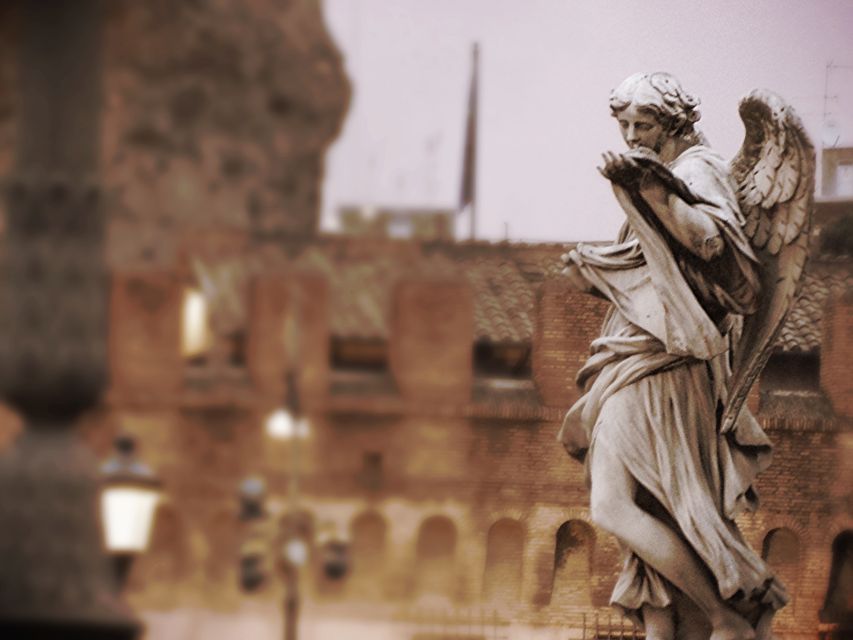
The opening section takes place at Ponte Sant’Angelo, the bridge crossing the Tiber in front of the castle. Its line of angel sculptures creates a ceremonial approach to the fortress, and the bridge gives you an immediate view of the building’s powerful round mass.
Your guide spends about 15 minutes discussing the bridge and its statues before taking you inside. That short stop is useful because it frames Castel Sant’Angelo as part of Rome’s larger urban setting, not as an isolated museum.
The bridge is also one of the easiest places to take an attractive photograph of the castle. You get the river in the foreground, the angels along the crossing, and the fortress rising behind them.
Inside Hadrian’s tomb
The tour includes entrance fees and skip-the-line access, so you do not need to arrange a separate ticket or wait in the standard ticket queue. Skip-the-line entry is most valuable when the area is busy, although it does not remove the need for security or any site rules.
Inside, the guide traces the building’s first purpose as Hadrian’s mausoleum. The original idea was grand and imperial: a monumental tomb for one of Rome’s most important emperors. Later construction changed the building, but the old core still gives the castle its unusual shape and scale.
I like this part of the visit because it shows how ancient Rome was not discarded when later powers took control. Instead, the old structure was reused and modified. The result is a building where Roman imperial ambition, papal power, military planning, and prison history all occupy the same walls.
The route involves a moderate amount of walking. You should expect uneven surfaces, stairs, and changes in level. Wear shoes that are comfortable for two hours of movement, not stylish footwear that becomes a punishment halfway through the visit.
Papal rooms and Michelangelo’s courtyard
The castle’s papal rooms offer a sharp contrast to its military exterior. Inside, you find decorated chambers, gilded stucco, marble floors, and frescoed spaces connected with the papal use of the building.
One noted room is Pope Clement VII’s bathroom, decorated with frescoes associated with Raphael’s school. That detail helps explain why Castel Sant’Angelo was not only a defensive refuge. At certain points, it also functioned as a comfortable and highly decorated papal residence.
The tour also includes Michelangelo’s courtyard. The mention of Michelangelo does not mean you should expect a museum devoted solely to his work. Instead, the courtyard is one of the artistic highlights within a building shaped by many periods.
A private guide can help you separate original Roman work from later additions and explain why artistic decoration mattered inside a fortress. Without that explanation, it is easy to focus only on the most polished surfaces and miss the political message behind them.
The chapel has its own clothing rule. Shoulders and knees must be covered to enter, so dress in smart casual clothing that meets those requirements. This is worth planning around, particularly during hot weather when visitors may prefer very light clothing.
More Guided Castle Tours in Rome
- Castel Sant Angelo Guided Tour and Tickets
★ 3.5 · 82 reviews - Passetto di Borgo Guided Tour & Castel Sant’Angelo Ticket
★ 4.5 · 42 reviews - Castel Sant’Angelo: skip the line guided tour – tiered price
★ 5.0 · 5 reviews
The prison cells and the castle’s darker side
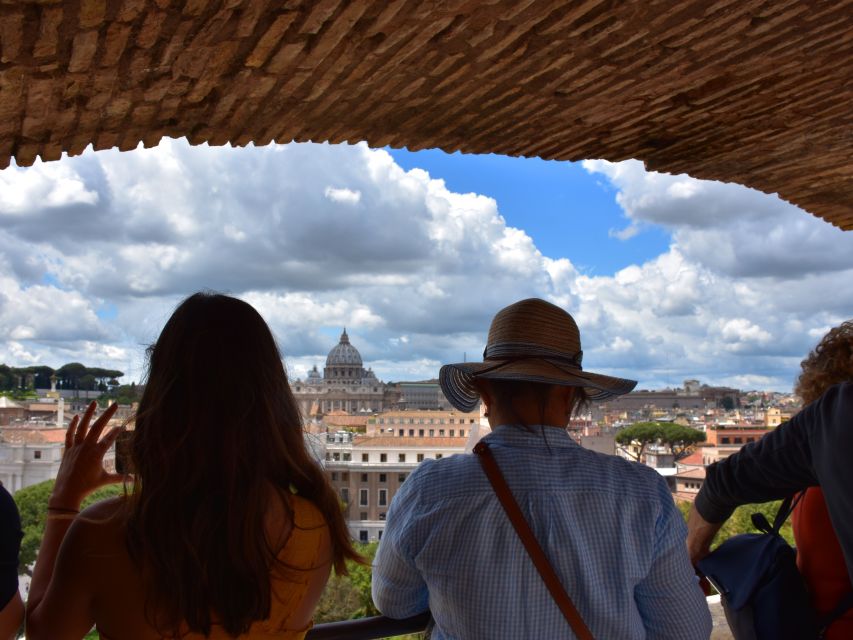
Castel Sant’Angelo is not all marble and panoramic views. Its prison history is one of the most memorable parts of the experience, though it may not suit visitors who want a purely artistic outing.
The guide explains the most feared cell, a cramped space above the spiraling ramp connected with Hadrian’s mausoleum. It could be reached only through a trapdoor. Another hidden space in the floor was used for disposing of bodies.
These details make the castle feel less like a grand palace and more like a working prison and fortress. You begin to understand why the building inspired dramatic stories of confinement, escape, and political danger.
The castle’s connection with Dan Brown’s Angels and Demons adds a modern pop-culture angle. The book helped bring the site to the attention of many readers, but the real building has enough history without fictional decoration. I would treat the novel as a small extra, not the reason to book the tour.
The stories can be grim, so families should consider the ages and interests of their children. The tour is a better fit for older children, teenagers, and adults who are comfortable hearing about imprisonment and executions.
The rooftop terrace and Rome’s best views
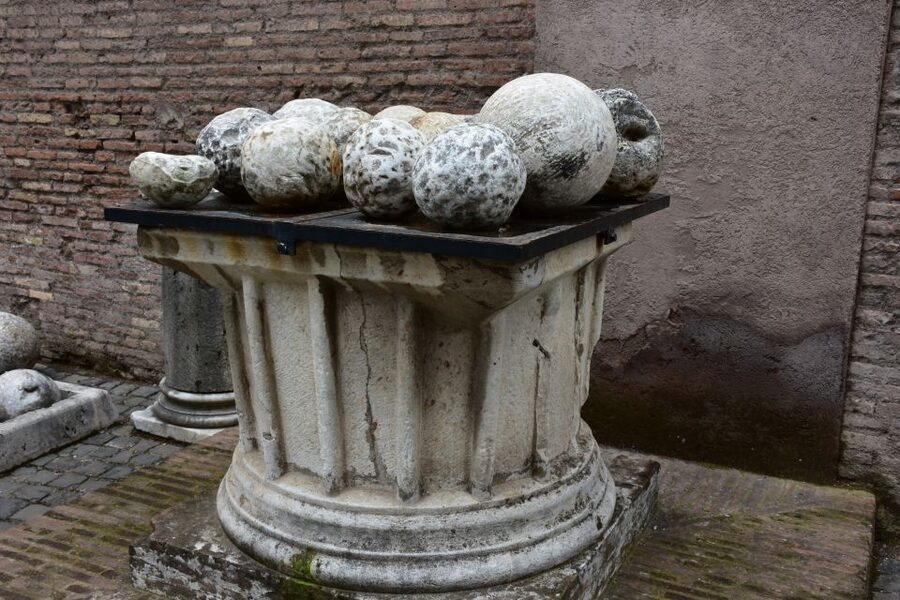
The final climb leads to the rooftop terrace. This is where the visit shifts from enclosed corridors and heavy walls to open views across Rome.
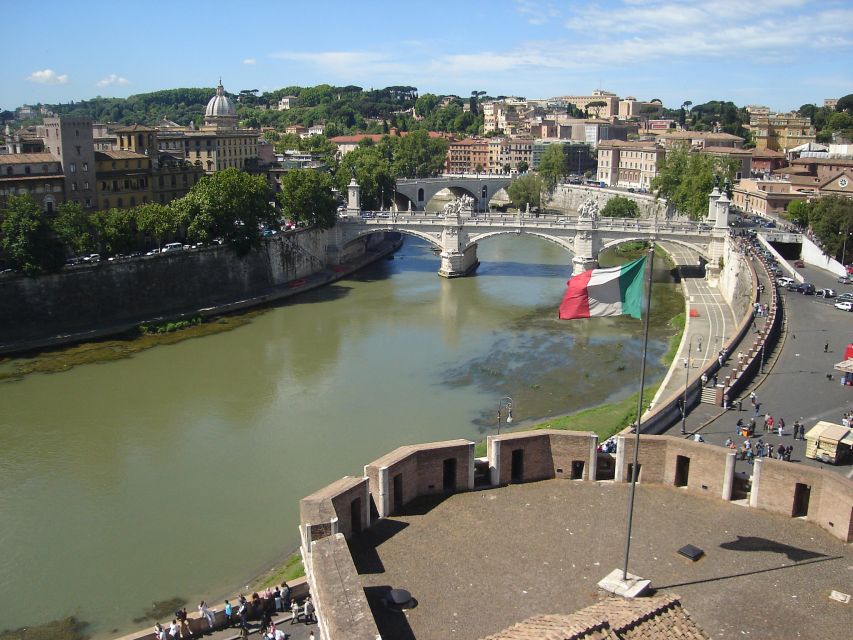
You can look toward the Tiber, Ponte Sant’Angelo, and the city’s historic center. The terrace is an ideal place for photographs because the castle gives you height without taking you far from central Rome.
I like ending here because the view pulls the entire visit together. You can look back toward the bridge and see the route you followed into the fortress. You can also appreciate why this site mattered strategically: it controlled a key position beside the river and offered commanding views across the city.
The terrace is not just a photo stop. It helps you understand the relationship between the castle and Rome around it. The monument’s changing roles make more sense when you see its position beside the river and near the city’s major religious and political centers.
The climb is also the reason to be realistic about mobility. The tour is not wheelchair accessible and is not suitable for walking frames. Anyone who has difficulty with stairs or extended walking should choose another Rome visit.
What the private format adds
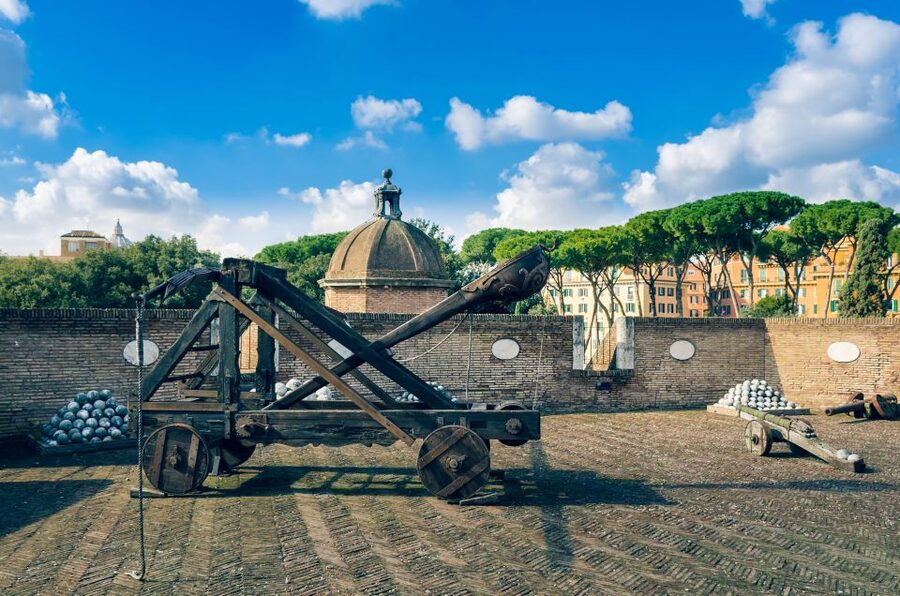
The group size ranges from two to ten people. That is small enough for a personal conversation, though a group of ten will feel less intimate than a tour for two or four.
The private format is most useful if you want to ask questions. You can spend more time on subjects that catch your attention, such as Roman emperors, papal power, military architecture, prison life, art, or the castle’s role in popular culture.
Sabrina has been praised for her enthusiasm, detailed answers, and ability to connect Castel Sant’Angelo with the wider story of Rome. Martin has also been singled out for his broad explanations and skill with photographs. Guides are assigned by availability, so you should not assume that either person will lead your visit, but these examples show the kind of guide-led experience this tour aims to provide.
The headsets are included and help you hear the guide clearly. That matters inside a large stone building, where voices can be swallowed by enclosed rooms and passing groups.
The available languages are English, Spanish, French, and Italian. The booking information gives special attention to English and Spanish, so confirm your preferred language when reserving.
Is the $225.44 price good value?
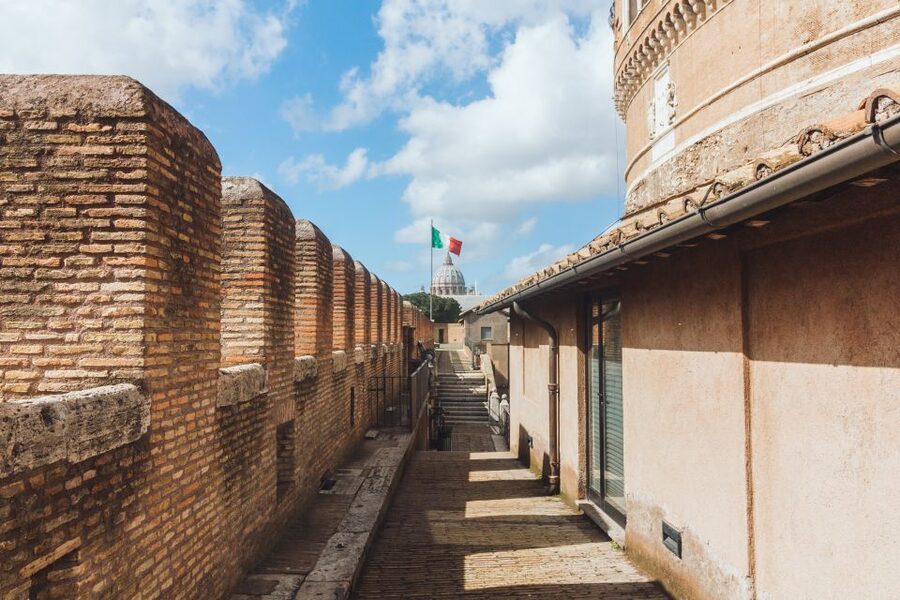
At $225.44 per person, the cost is high for a two-hour visit. Since the minimum group size is two, a couple pays about $450.88 before any other trip expenses.
The price includes the entrance fee, a private professional art historian guide, headsets, and privileged skip-the-line access. It does not include food, drinks, transport, or hotel pickup and drop-off. You must make your own way to Lungotevere Castello 50.
I would not recommend this tour to someone who only wants quick access and a rooftop photograph. A standard museum visit may be enough if you are happy to read labels and explore at your own pace.
I would consider the price more reasonable for a couple, family, or small group that values explanation. A guide can connect the tomb, papal apartments, prison cells, bridge, and rooftop into one clear story. That extra context is the main thing you are paying for.
The strongest reason to choose this format is not the skip-the-line benefit alone. It is the chance to ask questions and receive a tailored explanation from an art historian. One past participant even wished the tour had lasted longer, which tells you this experience may feel brief if you enjoy detailed historical discussion.
Timing, clothing, and practical details
The activity lasts about two hours, with starting times based on availability. Since the tour ends back at Castel Sant’Angelo, you can easily plan a nearby meal or continue through central Rome afterward, but the activity does not provide transport.
Bring a valid passport or identity card. The name on your document must match the booking details, and each person must show valid identification for entry.
Wear smart casual clothing and comfortable shoes. Cover your shoulders and knees if you want to enter the small chapel. Large luggage, pets, smoking, and walking frames are not allowed.
You can cancel up to 24 hours before the activity for a full refund. The reserve-now-and-pay-later option lets you hold a place without paying at the time of booking, which is useful when your Rome schedule is still changing.
Who should book this Castel Sant’Angelo tour?
I would choose this tour if you want a guide-led explanation of Rome’s imperial, papal, military, and artistic past in one compact visit. It works especially well for first-time visitors who want the building to make sense, and for returning visitors who prefer history to a quick sightseeing stop.
It is also a good match for people who enjoy asking questions. The private format gives you more control than a large group tour, and the guides are positioned to explain details that are easy to miss.
I would skip it if you have limited mobility, dislike stairs, or want to explore without a fixed pace. I would also think twice about the price if the rooftop view is your main goal.
For most history-minded visitors, the best reason to book is the combination of access and interpretation. You move from Ponte Sant’Angelo through Hadrian’s tomb, papal rooms, prison spaces, and the terrace with a single guide connecting the pieces. That is what turns Castel Sant’Angelo from an impressive building into a readable part of Rome.
FAQ
Where does the tour begin?
Meet your guide outside the main entrance of Castel Sant’Angelo at Lungotevere Castello 50. The guide will hold a Tour in the City sign.
How long does the experience last?
The guided experience lasts about two hours. Available starting times depend on the date you select.
Is entry to Castel Sant’Angelo included?
Yes. Entrance fees are included, along with skip-the-line access.
Is the tour private?
Yes. It is a private group experience for a minimum of two and a maximum of ten people.
Which languages are available?
The listed languages are English, Spanish, French, and Italian. The booking information specifically notes English and Spanish, so confirm your preferred language when reserving.
Is the tour wheelchair accessible?
No. The activity is not suitable for wheelchair users or people using walking frames. A moderate amount of walking is involved.
What should I bring?
Bring a valid passport or identity card that matches the name used for the booking. Comfortable shoes are also recommended.
What clothing is required?
Smart casual dress is required. Shoulders and knees must be covered if you want to enter the small chapel.
Should you book it?
Book this experience if you want a personal, history-focused visit and are willing to pay for expert guidance. Skip it if you only want a fast look at the castle or need an accessible route. For a small group interested in Rome’s emperors, popes, art, prisons, and commanding views, the private format gives Castel Sant’Angelo a clear and memorable shape.
Just added around Rome
- St. Peter’s Basilica & Castel Sant’Angelo Entry★ 4.1 · 8 reviews
- St. Angel’s Castle: 2-Hour Private Tour★ 5.0 · 9 reviews
- Rome: Skip-the-Line Castel Sant’Angelo Tickets & Audio Guide★ 4.9 · 16 reviews
- Rome: Vatican, St Peter’s Sq & Castel Sant’Angelo PhotoShoot★ 5.0 · 14 reviews
- Rome: Passetto di Borgo Tour & Castel Sant’Angelo Ticket★ 4.4 · 86 reviews
- Rome Pre-Reserved Shared or Private Tour Castel Sant’Angelo★ 4.6 · 68 reviews
- Rome: Vatican and Castel Sant’Angelo Private Photoshoot★ 5.0 · 13 reviews
- Rome: Castle Sant’Angelo Ticket w/ audioguide option★ 3.6 · 25 reviews
Guided Castle Tours, compared.

Edinburgh Castle: Guided Walking Tour with Entry Ticket
Read our review →
Seville: Cathedral, Giralda & Alcazar Entry With Guided Tour
Read our review →
Granada: Alhambra & Generalife Fast-Track Guided Tour
Read our review →Edinburgh Castle: Guided Walking Tour with Entry Ticket
Read our review →
Stonehenge, Windsor Castle and Bath Full Day Guided Tour
Read our review →
Edinburgh Castle Guided Walking Tour in English
Read our review →
Seville: Alcázar and Cathedral Entry Ticket and Guided Tour
Read our review →
Fast-Track Alhambra & Nasrid Palaces Guided Tour
Read our review →Browse the lists this tour appears in