
REVIEW · HISTORICAL TOURS
Osaka: Castle History Walking Tour / Castle Tower Admission
Osaka Castle was built to make attackers lose their way, their nerve, and eventually their lives. This 90-minute walking tour makes that design easy to read, from the outer moats and zigzag gates to the steep stone walls and arrow slits. I especially like the focus on military strategy and the story of how the castle fell in 1614 and 1615. The separate entrance also helps you avoid the worst of the ticket queue.
I like that the tour does not treat the castle as just a pretty photo stop. You see the largest stone, learn how workers moved huge blocks in the 16th century, and spot marks left by different stone-cutting crews. Guides such as Mao, Saya, Spike, Kaz, Yuta, and Ken have earned strong praise for clear English, patience, and lively storytelling. The main drawback is that the castle museum floors are not guided, so you explore those displays independently after the outdoor tour.
Key points at a glance

- Read the defenses before entering the tower: Moats, gates, wall angles, and zigzag routes show how Osaka Castle slowed an attacking army.
- See the castle’s largest stone: Your guide explains how enormous blocks were transported and fitted into the walls.
- Use a separate entrance: The tour includes castle admission and helps you bypass the main ticket line.
- Visit Hokoku Shrine: This adds context about Toyotomi Hideyoshi, the castle’s founder, and the legacy that later challenged Tokugawa power.
- Finish with Osaka from above: The tower provides city views and time to look around the museum at your own pace.
- Expect a walking tour, not a full museum lecture: Comfortable shoes matter, and the interior floors are self-guided.
Osaka Castle makes more sense from the outside
Many people first see Osaka Castle as a grand white tower with gold trim. That is a fine first impression, but it misses the point. The real lesson begins outside, where the castle reveals itself as a machine for delaying an enemy.
You start in front of the Lawson S Otemae Rest House Store. There are several Lawson stores nearby, so check the exact Google Maps pin before setting out and look for the Local Guide Stars sign. Once the group gathers, the guide leads you toward the castle grounds and begins with the parts most visitors hurry past: the moats, gates, walls, and approach routes.
This order is smart. If you enter the tower first, the castle can feel like a reconstructed landmark with an observation deck. If you study the defenses first, the tower becomes the final position in a much larger battle plan.
The tour explains the triple moats and layered defenses built to separate and exhaust attackers. Gates did not simply open onto a straight road. Many were arranged as masugata entrances, enclosed spaces that forced an enemy to turn, slow down, and gather in a vulnerable area before reaching the next gate.
You also walk routes that zigzag rather than run directly toward the center. That shape was not decorative. It made attackers expose their sides and backs while defenders fired from protected positions. The closer an enemy came, the more difficult it became to know where to go next.
More History Tours in Osaka:
- Osaka: Osaka Castle & Historical Museum Guided Tour
★ 4.8 · 28 reviews - (Ticket Included) Explore Osaka Castle & Museum of History
★ 4.8 · 21 reviews - Osaka: Osaka Castle 3 hours Historical Walking Tour
★ 4.6 · 14 reviews
The walls are the first great exhibit
The stonework around Osaka Castle deserves time. Your guide points out how the walls slope and how their lower sections were built to resist climbing. At a glance, the stones can look like a massive decorative surface. On closer inspection, the angles and tight construction show a practical purpose.
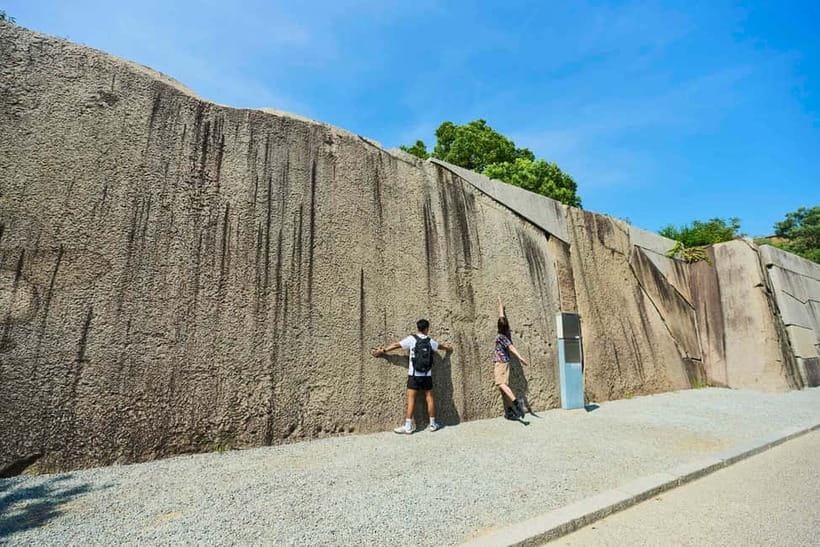
One of the tour’s most memorable stops is the castle’s largest stone. The guide explains the challenge of transporting and placing such a block with 16th-century methods. You do not need to be an engineering specialist to appreciate the problem. Moving huge stones required planning, manpower, tools, and a reliable route from quarry to construction site.
You also look for small marks in the stonework left by different master craftsmen. These marks helped identify the work of separate crews. They are easy to miss when you walk alone, which is one of the clearest reasons to pay for the guide here. A guide does not just point at a wall. The guide tells you what to look for.
This part suits anyone interested in architecture, military planning, or old construction methods. It also works for families because the basic question is easy to grasp: how do you keep an enemy out when your castle covers a huge area? Osaka Castle’s answer was to make every approach slow, confusing, and exposed.
The castle as a weapon of fear
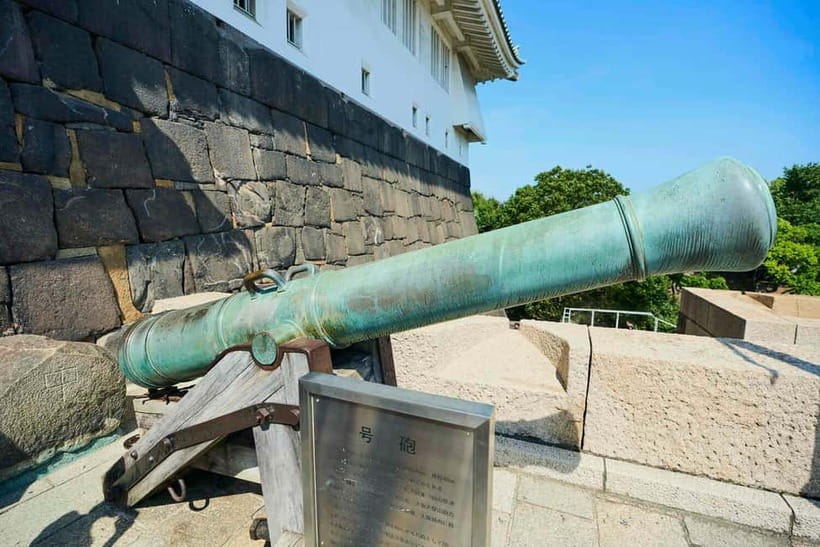
The tower was more than a residence or a symbol of authority. The tour presents it as a command post and a last defensive position, with arrow slits and gun ports built into the structure. These openings allowed defenders to fire outward while remaining protected behind thick walls.
The use of gold had a military purpose, too. The glittering decoration helped project power and wealth. A fortress that looked rich and imposing could make an attacking force reconsider its chances before the fighting even began. This is one of the more interesting ideas in the tour because it links beauty with intimidation.
That combination defines Osaka Castle. Its walls were built for practical defense, while its decoration sent a political message. The castle needed to function as a fortress, but it also needed to announce the strength of Toyotomi authority.
The English-speaking guides bring different personalities to this material. Saya has been praised for clear explanations and a friendly manner. Mao is especially good for travelers who want extra context about Japanese culture as well as the castle. Spike is known for explaining the castle’s history with energy, while Yuta and Ken have been singled out for answering detailed questions and adjusting to the pace of the group.
The exact guide varies, but the useful pattern is clear: this is not an audio guide with a fixed script. You can ask questions, pause for photographs, and get explanations tailored to the group. That makes a real difference at a site where many details are easy to overlook.
Hokoku Shrine and the Toyotomi story
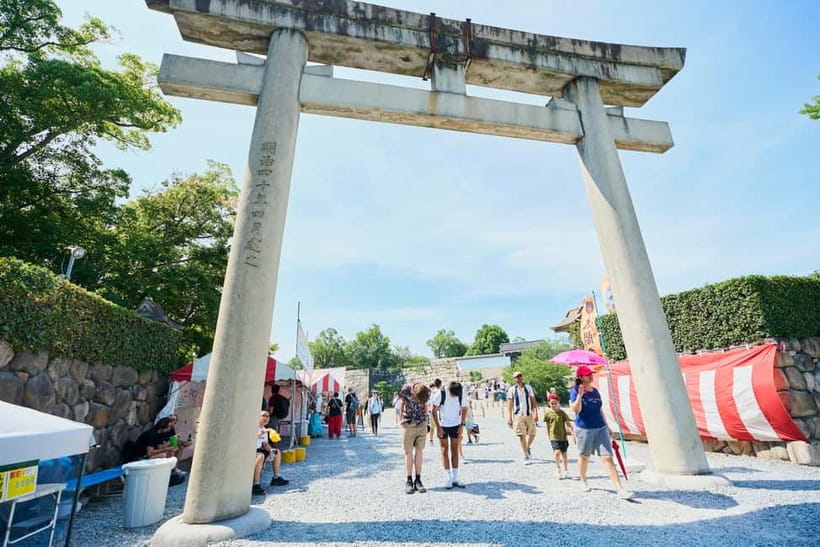
The itinerary includes a guided visit to Hokoku Shrine, associated with Toyotomi Hideyoshi. This stop helps connect the castle grounds with the political story behind the fortress.
Hideyoshi built Osaka Castle as a statement of power after years of conflict. His authority shaped Osaka, but the political order did not remain secure after his death. The castle later became the center of the struggle between the Toyotomi legacy and Tokugawa Ieyasu’s ambition.
The guide explains how a fortress that seemed almost impossible to defeat fell during the campaigns of 1614 and 1615. The important lesson is that strong walls do not guarantee permanent safety. Politics, alliances, military pressure, and decisions by those inside the castle mattered just as much as stone and water.
Hokoku Shrine also gives the tour a change of pace. After studying moats and defensive walls, you have a quieter place to consider the people and ambitions behind the construction. Depending on timing, you might also encounter a cultural event at the shrine. One visitor happened to see a traditional Japanese wedding ceremony during the visit, though this is not a promised feature of the tour.
More Walking Tours in Osaka:
- Ultimate Osaka Walking Tour: Castle, Dotonbori & Hidden Gems
★ 5.0 · 862 reviews - Osaka Castle Walking Tour and Castle Tower Admission
★ 5.0 · 561 reviews - 1-Day walking tour in Osaka:Castle, temples and Ukiyoe
★ 5.0 · 4 reviews - Edinburgh Castle: Guided Walking Tour with Entry Ticket
★ 4.7 · 11,699 reviews
Entering the tower without wasting the morning
Osaka Castle Tower admission is included, and the tour uses a separate entrance to help you bypass the main ticket line. This is particularly useful during busy periods, when queues can form both for admission and for the elevator.
An early start can make the visit easier. A 9 a.m. tour has been praised as a good choice because the castle was less crowded at the beginning, while lines had grown noticeably by late morning. The operator does not promise an empty castle, and the guide may need to manage the group around other visitors, but arriving early gives you better odds of a calmer visit.
The tower itself is a modern reconstruction, so you should set your expectations correctly. You are not entering an untouched 16th-century interior. You are visiting a reconstructed landmark containing a museum about the castle, its rulers, and the conflicts connected to it.
The guide takes you through the main castle experience, but the museum floors are not guided floor by floor. That arrangement works well if you want the main history explained outdoors and prefer to browse displays independently. It works less well if you want a detailed lecture beside every exhibit.
At the top, the city view is the payoff. From above, the moats and broad grounds make more sense, and you can see how the castle occupied a commanding position in Osaka. The view also gives you a chance to step away from the history lesson and simply enjoy the city.
What the 90 minutes feel like
The advertised duration is 90 minutes, with much of the time spent walking through the castle grounds and approaching the tower. The stated route includes a guided castle visit, a visit to Hokoku Shrine, and time around the castle for photographs and self-guided exploration.
Expect a steady walk rather than a strenuous hike. You will cross historical grounds, wait at stops while the guide explains details, and move through areas that may be crowded. Comfortable shoes are a must. Weather-appropriate clothing is equally important because much of the useful explanation takes place outdoors.
The pace appears flexible. Kaz has been praised for helping an older guest stay comfortable, and another guide adjusted the experience around a family member with a temporary mobility problem. That does not mean every access need can be accommodated, so you should contact the provider if you have specific mobility concerns. Still, the guides seem attentive to group comfort rather than rushing everyone from one point to the next.
Families can also manage this tour well. A three-year-old remained engaged during one visit, while teenage children enjoyed an unhurried route with several stops. The military story gives younger visitors something concrete to follow: attackers approach, gates trap them, defenders fire, and the castle keeps making the route harder.
Is $33 a fair price?
At $33 per person, the price is reasonable if you value an English-speaking guide and want more than a quick look at the tower. Castle admission is included, and the separate entrance may save time. The real value, though, comes from the explanation of things you might otherwise walk past.
You can visit Osaka Castle on your own for less, but you would need to research the Toyotomi and Tokugawa story, understand the masugata gates, identify the largest stone, and notice the craftsmen’s marks without help. If you already know Japanese castle architecture well, the tour may add less for you.
For most first-time visitors, I think the price works because the guide turns a large site into a readable sequence. You begin with defense, move through architecture and political history, visit the shrine, and finish with the tower view. It is a focused introduction rather than a full-day history course.
The strongest value comes for solo visitors and small groups. Several bookings have resulted in very small groups or even a private experience when no other participants arrived. You cannot count on that happening, but a small group gives you more time for questions and photographs.
Who should book this castle walk?
I would choose this tour if you like history, military design, architecture, or practical stories about how old buildings worked. It is also a good fit if you prefer having a local English-speaking guide explain the site before you explore the museum on your own.
You should also consider it if queues bother you. The separate entrance is a useful advantage, especially later in the morning or during busy periods. The tour can save time, though crowd levels and entry conditions can change.
I would think twice if you want a quiet, independent visit with no fixed pace. The tour follows a group route and includes explanations at set stops. It is also not the right choice if you expect every museum floor to receive a guided commentary.
The experience has earned a 4.9 rating from 230 reviews, with repeated praise for friendly guides, clear English, useful historical detail, good photo stops, and help with different walking speeds. The names change, but guides including Mao, Saya, Spike, Kaz, Yuta, Ken, Yu, and Ami have all been praised for making the castle easier to understand.
Practical details before you go
Meet in front of Lawson S Otemae Rest House Store. Osaka has multiple Lawson shops, so use the supplied map location rather than searching for the store name and choosing the first result.
Wear shoes you can walk in comfortably. Bring clothing suited to the weather, since the first part of the experience takes place outside and the castle grounds provide much of the explanation.
Free cancellation is available up to 24 hours before the activity for a full refund, and you can reserve now and pay later. The tour is offered in English with a live guide. Starting times vary, so check availability when booking.
Should you book the Osaka Castle History Walking Tour?
Book it if you want Osaka Castle to become more than a tower with a view. The guide shows you why the walls bend, why the gates are shaped as they are, how giant stones reached the site, and why a fortress that looked invincible still fell.
Skip it if you only want a quick photograph and a self-guided museum visit. For everyone else, especially first-time visitors, the combination of castle admission, queue assistance, outdoor military history, Hokoku Shrine, and city views makes $33 a fair buy.
FAQ
Where does the Osaka Castle walking tour meet?
Meet in front of Lawson S Otemae Rest House Store. There are several Lawson stores nearby, so confirm the exact location on Google Maps and look for the Local Guide Stars sign.
Is Osaka Castle admission included?
Yes. The Osaka Castle Tower admission ticket is included in the tour price.
Is the castle museum guided floor by floor?
No. The tour includes a professional English-speaking guide, but guided commentary for each museum floor is not included. You have time to explore the museum on your own.
What language is the tour offered in?
The tour is offered in English with a live guide.
How long does the activity last?
The advertised duration is 90 minutes. Check the available start times when booking.
What should I bring?
Bring comfortable shoes and clothing suited to the weather. The experience includes walking through outdoor historical sites.
Just added around Osaka
- (Ticket Included) Explore Osaka Castle & Museum of History★ 4.8 · 21 reviews
- Osaka: Osaka Castle Guided Tour with Local Guide★ 4.7 · 78 reviews
- Osaka: Osaka Castle – Tsuruhashi – Tennoji (Spanish Guide)★ 4.7 · 10 reviews
- Osaka: Early Morning Osaka Castle Guided Tour, Avoid Crowds★ 4.9 · 12 reviews
- Osaka: Explore Every Bit of Osaka Castle in 3 Hours★ 5.0 · 5 reviews
- Osaka: Osaka Castle 3 hours Historical Walking Tour★ 4.6 · 14 reviews
- Samurai Armor & Sword experience with phot near Osaka Castle★ 4.6 · 16 reviews
- Osaka Castle Guided Tour★ 4.7 · 249 reviews
Historical Tours, compared.

Edinburgh: Edinburgh Castle Guided History Tour with Tickets
Read our review →
Charleston historical walking tour with a Professor of History at The Citadel
Read our review →
Buda Castle District Dark History, Legends and Vampire Night Tour
Read our review →
Luxembourg: Nature, History and Castles Full-Day Tour
Read our review →
Dublin to Cork, Blarney Castle & Cóbh Heritage Centre by train
Read our review →
Historic Krakow : Old Town & Wawel Castle Walking tour
Read our review →
Private Heritage Walking Tour in Jaisalmer Fort and Old Bazaar
Read our review →
Lake Garda: Historic Castle Cruise with Wine Tasting
Read our review →Browse the lists this tour appears in