
REVIEW · WALKING TOURS
1-Day walking tour in Osaka:Castle, temples and Ukiyoe
Osaka compresses centuries of change into one long day: a castle rebuilt after repeated destruction, Japan’s first Buddhist temple, a food market, neon-lit Dotonbori, and a hands-on ukiyoe art experience. That range makes this more than a photo stop tour.
I like the way the route joins famous sights with smaller cultural moments, especially the temple ceremonies and chanting described by the guide Winky. I also like that your entrance fees, train tickets during the tour, and ukiyoe session are covered. The tradeoff is clear: this is a full day on foot, with several train rides and little time for a slow, independent look at each place.
Key points at a glance
- Osaka Castle Museum: Learn how the 1597 castle was repeatedly destroyed and rebuilt, including its 1995 reconstruction.
- Shitennoji Temple: Trace the path of Buddhism from India through China to Japan at one of the country’s earliest Buddhist sites.
- Kuromon Ichiba Market: Choose and buy your own lunch among about 150 food and retail shops spread along roughly 580 metres.
- Dotonbori and Shinsaibashi: See Osaka’s giant three-dimensional signs, shopping streets, local shrines, and famous photo spots.
- Ukiyoe workshop: Add a traditional Japanese art activity to a day otherwise filled with sightseeing and food.
- Public transportation route: Train tickets during the tour are included, but you need comfortable shoes and energy for a long outdoor day.
Why this one-day Osaka route works
This tour is built for the visitor who wants a useful first look at Osaka without spending hours planning transfers. It links major sights in a sensible east-to-south city route, then finishes around the Minami district, where Dotonbori and Shinsaibashi provide Osaka’s loudest street scenes.
You begin at 9:25 in Akatsuki Plaza inside JR Osaka Station. From there, the day uses trains and walking rather than a private coach. That matters in Osaka, where public transportation gets you closer to ordinary city life and avoids the feeling of being sealed inside a tour bus.
The guide supplies the thread connecting the stops. Osaka Castle is not just a pretty roofline. Shitennoji is not just a temple gate. Kuromon is not just a place to grab lunch. Each stop adds a different piece of the city: military power, religion, food, commerce, popular entertainment, and art.
The pace is not leisurely. The listed schedule includes about an hour by train at the start, another 30-minute train ride before Shitennoji, and another 30-minute ride before Kuromon Market. These transfers may sound long, but they are part of the day’s practical rhythm. You should still expect plenty of walking outdoors.
More Walking Tours in Osaka:
- Ultimate Osaka Walking Tour: Castle, Dotonbori & Hidden Gems
★ 5.0 · 862 reviews - Osaka Castle Walking Tour and Castle Tower Admission
★ 5.0 · 561 reviews - Osaka: Castle History Walking Tour / Castle Tower Admission
★ 4.9 · 230 reviews
Meeting Winky at Osaka Station
The meeting point is Akatsuki Plaza, also called Akatsuki Square, on the first floor of the North Gate Building inside JR Osaka Station. It is north of the Central Exit ticket gates and near the North Central Exit. Look for the guide holding a SNOW MONKEY RESORTS sign.
The easiest visual clue is a wide open area with an escalator on either side. Stay on the first floor. Do not follow the escalators upward while searching for the group.
If you arrive on the Midosuji Subway Line from Namba or Shinsaibashi, follow the signs toward JR Osaka Station. You may need to use connecting passageways or go upstairs before reaching the station. Once you reach the Central Exit area, walk north toward Yodobashi Camera. Akatsuki Plaza is ahead on the first floor.
This is one place where giving yourself extra time pays off. Osaka Station is large, and a rushed search for the right plaza can start the day badly. The guide’s English sign should make the final approach easier.
The English-speaking guide is identified as Winky. The strongest part of the guide service is the historical explanation, especially for visitors who want more than names and dates. Winky is also described as patient and friendly with families, and one family found the guide especially good with children, including a five-year-old.
Osaka Castle, rebuilt more than once
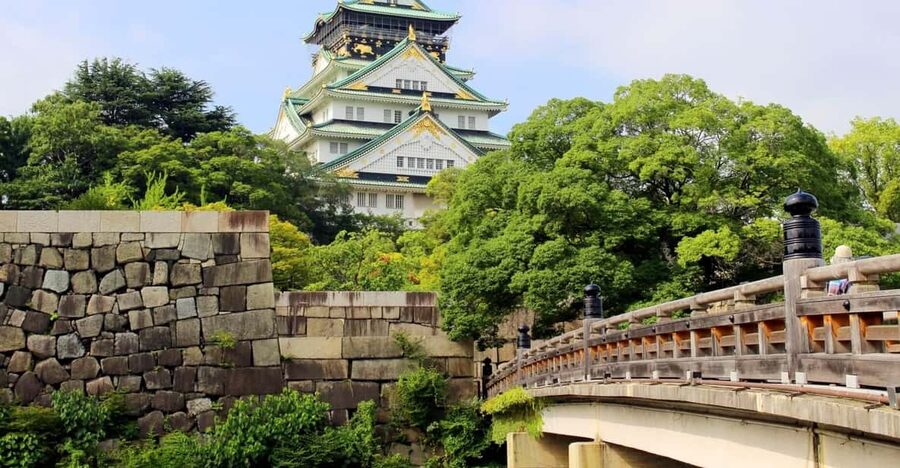
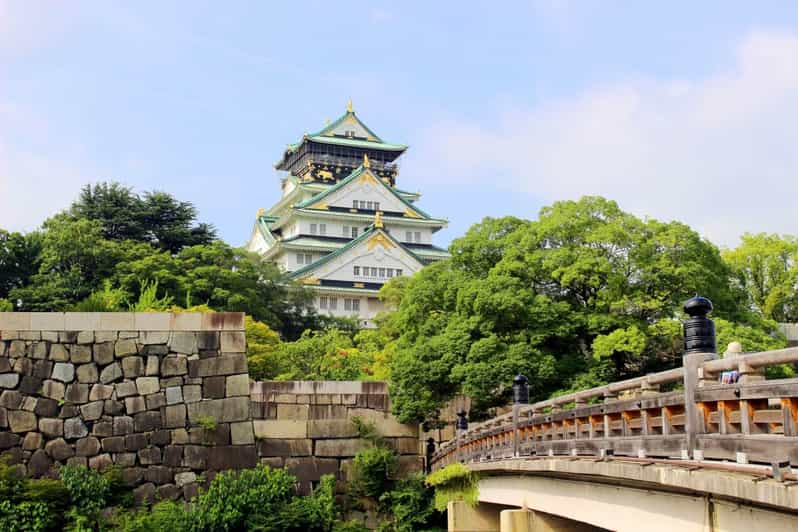
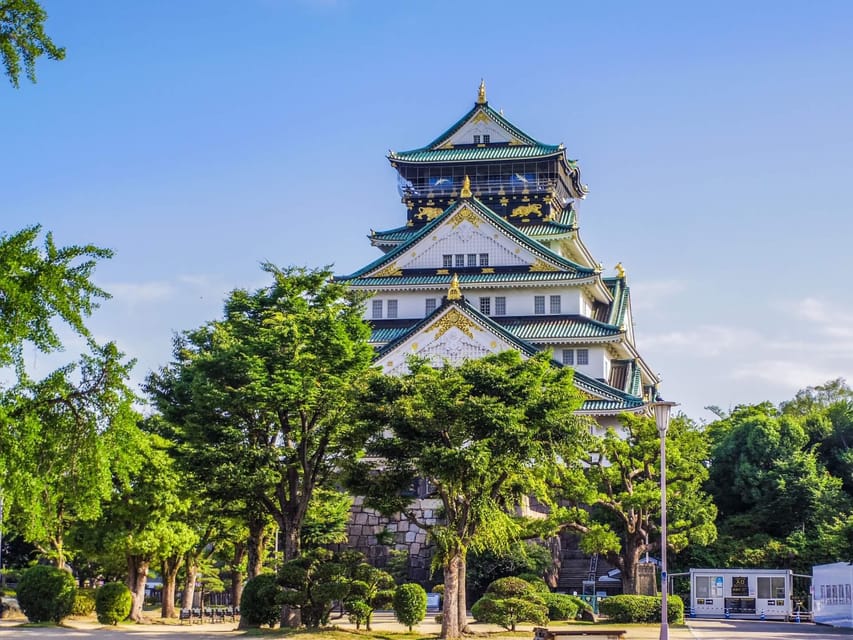
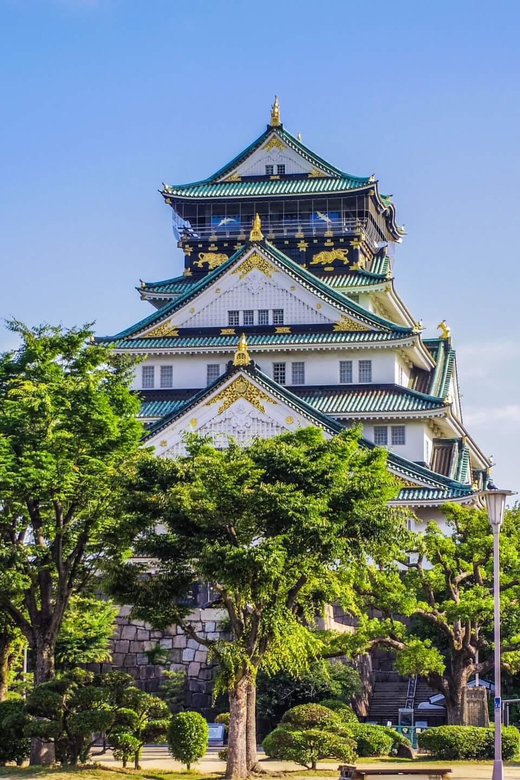
The first major stop is Osaka Castle, with about an hour for the museum, the grounds, and guided sightseeing. The castle was completed in 1597, but it did not survive intact. It was destroyed many times before the Japanese government rebuilt it in 1995.
That date gives you an important warning: the present castle is not an untouched relic from the sixteenth century. Its appearance differs from the original building. The value here is not simply looking at an old fortress. It is understanding how Osaka’s most famous symbol has been damaged, rebuilt, and reshaped over time.
Inside the Osaka Castle Museum, the guide explains the history of Osaka and the castle itself. This makes the visit more rewarding than taking a few pictures from the moat and moving on. The museum gives you a starting point for understanding the city’s political past, while the surrounding grounds provide the space to appreciate the castle as a landmark.
The one-hour stop will feel short if you want to inspect every display at length. This is a guided introduction rather than a museum day. If you have already spent a full morning at Osaka Castle on a previous visit, this portion may feel familiar. For a first visit, it is a useful orientation.
Shitennoji and the arrival of Buddhism
After Osaka Castle, you take a train for about 30 minutes to Shitennoji Temple. You spend roughly 50 minutes here with the guide.
Shitennoji is presented as the first Japanese Buddhist temple. Its importance is not limited to the buildings in front of you. This is where the tour shifts from Osaka’s political past to the movement of religious ideas across Asia. You learn how Buddhism travelled from India to China and then reached Japan thousands of years ago.
That wider context is one of the best reasons to include Shitennoji. Without explanation, a temple visit can become a quick look at roofs, statues, and incense. With a guide, the site becomes part of a much larger story about how beliefs and customs moved between countries.
The stop can also feel more personal than a standard sightseeing visit. Details from the day include seeing ceremonies, hearing monks chant prayers, and going to the top of the Buddhist temple to pay respects to a relic. These experiences depend on what is taking place during your visit, so you should not treat every ceremony as guaranteed. Still, the possibility adds a meaningful layer to the stop.
Fifty minutes is enough for an introduction, but not for a long, unhurried temple visit. Stay aware of the meeting time, especially if you pause for photographs or spend extra time in prayer areas.
More Day Trips in Osaka:
- Osaka: 1-Day Guided Tour – Sky Bldg, Castle, Namba Shinsekai
★ 5.0 · 6 reviews - From Munich: Neuschwanstein & Linderhof Castle Full-Day Trip
★ 4.6 · 14,646 reviews - Bucharest: Dracula’s Castle, Peleș Castle & Brașov Day Trip
★ 4.4 · 6,100 reviews - Windsor Castle, Stonehenge, and Oxford Day Trip from London
★ 4.5 · 5,292 reviews
Lunch at Kuromon Ichiba Market
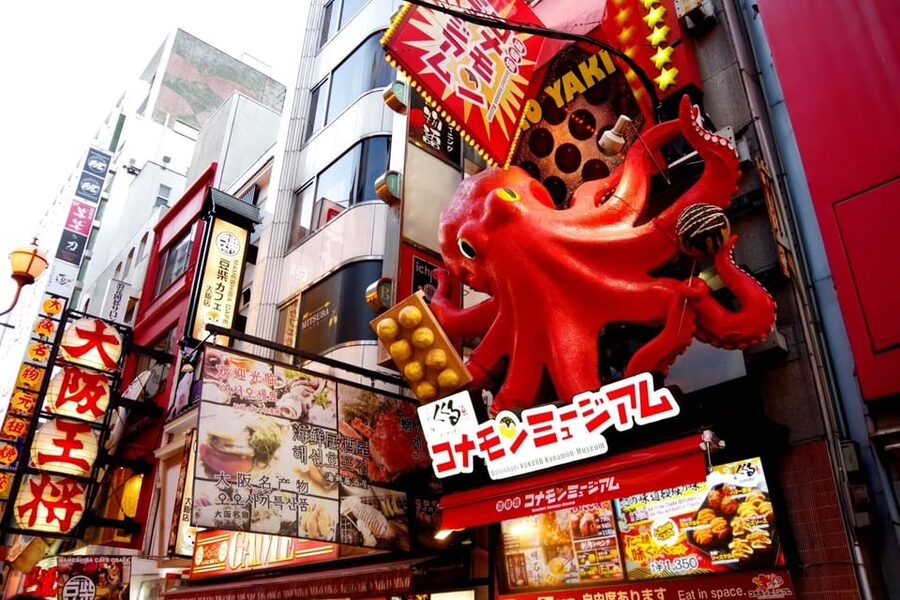
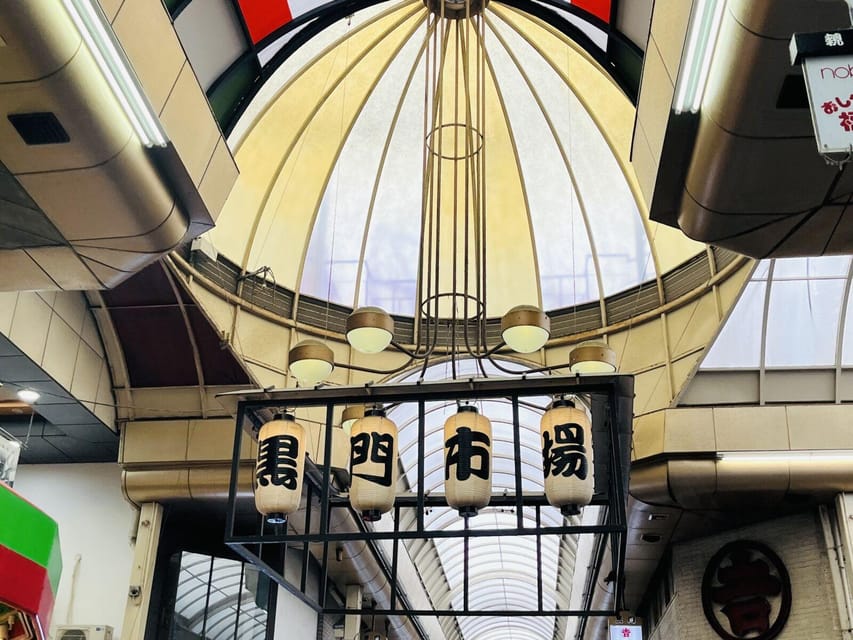
The next train ride takes about 30 minutes, bringing you to Kuromon Ichiba Market. The market stretches for roughly 580 metres and contains about 150 shops selling seafood, vegetables, fruit, prepared food, drinks, clothing, and other goods.
This is the point where the tour shifts from guided history to everyday Osaka. Your lunch is not included, so you choose and pay for what you want. That arrangement is useful because it gives you control over both price and appetite. You can sample a few small items, choose a fuller meal, or simply browse if you ate earlier.
I would keep some flexibility in your budget here. The tour price covers the guide and selected admissions, but not food and drinks. A market stop is more enjoyable when you do not feel forced to buy the first item you see.
The scheduled hour includes a guided introduction and free time. That is enough to get a taste of the market, but not enough to inspect all 150 shops. Kuromon can be crowded and visually busy, so listen carefully when the guide explains where and when to meet again.
This stop also gives the day a needed pause. After the castle, temple, and train rides, eating and browsing helps break up the sightseeing. It is still not a long rest, however. The tour continues into Dotonbori, so comfortable shoes remain essential.
Dotonbori, a shrine, and Osaka’s giant signs
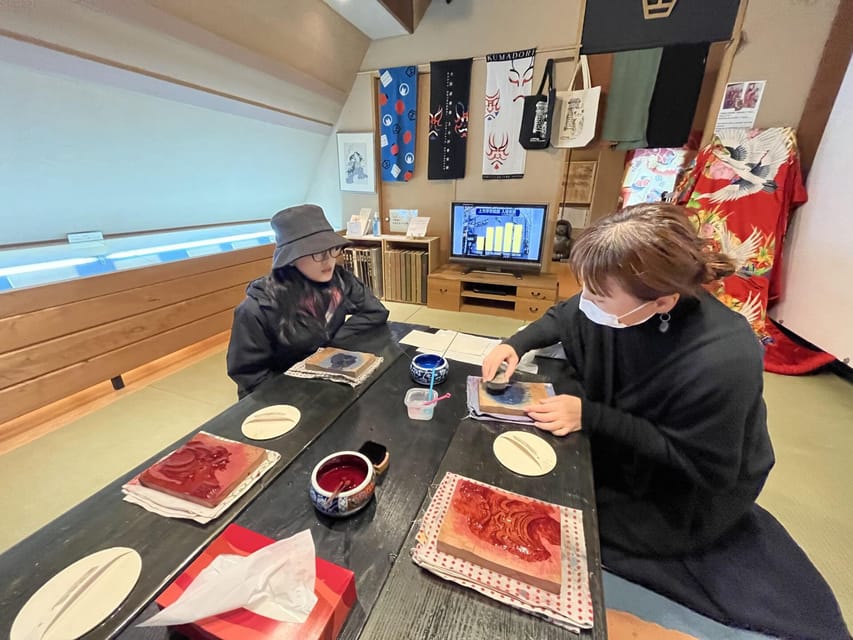
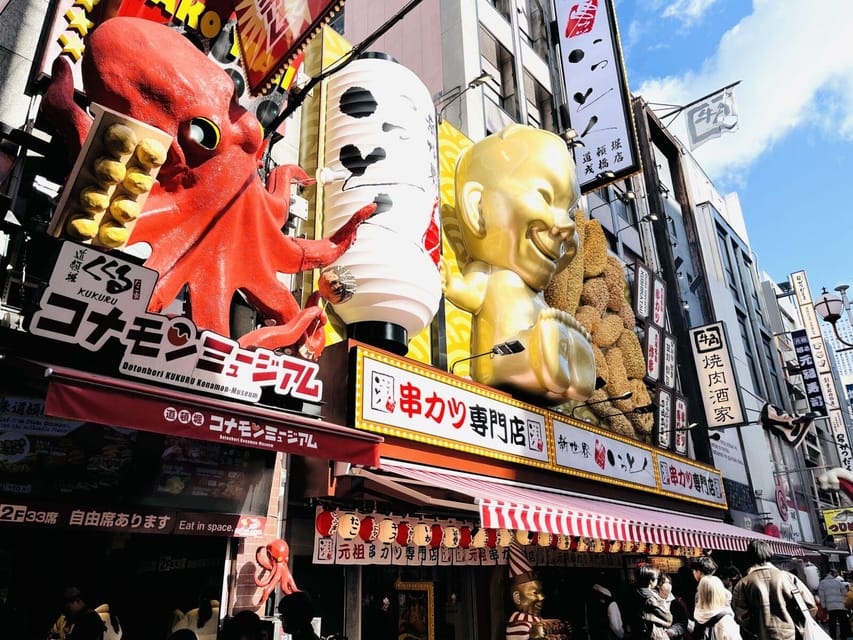
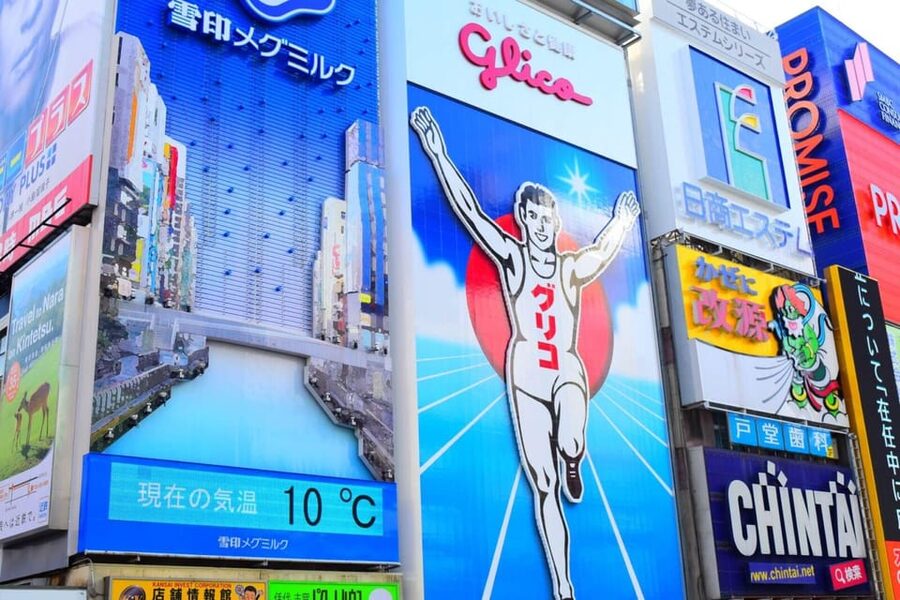
After lunch, you spend about two hours in Dotonbori. This is the city’s famous entertainment and dining district, marked by enormous three-dimensional billboards and a constant stream of commercial energy.
The area is often reduced to food signs and photo opportunities, but the tour adds more substance. You visit a distinctive shrine nearby and spend time looking at the district with a guide who can explain its role as the symbolic business and downtown area of Minami, Osaka.
The two-hour allocation is generous compared with the shorter castle and temple stops. It lets you take photographs, follow the guide through the area, and enjoy some free time without racing from one sign to the next. You may still find the district loud and crowded, especially around the best-known photo points. That is part of Dotonbori’s character, but it will not suit anyone seeking a quiet afternoon.
The famous billboard photo is built into the walk. Bring a phone or camera, and expect to pose. This is one of the tour’s lighter moments after a morning focused on history and religion.
Making ukiyoe instead of only looking at it
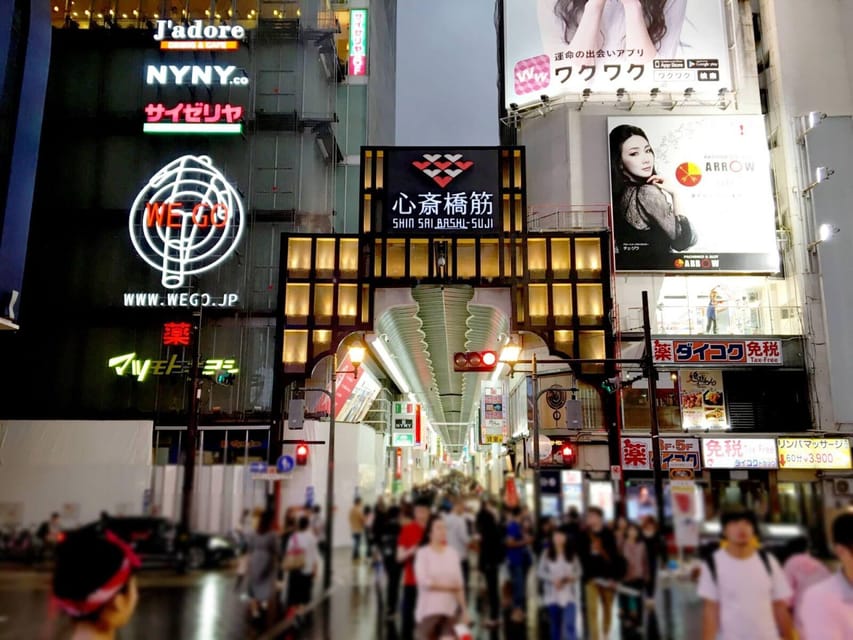
The art portion adds variety to the day. Ukiyoe began appearing in the 1670s and flourished from the seventeenth through nineteenth centuries. Today, it is one of Japan’s most recognizable art forms.
Rather than treating ukiyoe as a picture on a wall, the tour includes an experience fee for a traditional art activity. The supplied details do not specify the exact design process or the piece you will make, so I would think of it as a hands-on introduction rather than a full art course.
This is a smart inclusion for families and for anyone who wants a break from walking. It also gives the day a stronger cultural balance. You see Osaka’s history at the castle, learn about religion at Shitennoji, taste local food at Kuromon, and then take part in a Japanese art tradition.
The activity is one of the clearest differences between this route and a standard Osaka highlights tour. You are not only collecting photographs. You are also given time to work with a cultural form that has shaped how Japan is seen around the world.
Shinsaibashi and the walk back toward the station
The final neighborhood is Shinsaibashi, a long-established shopping street and regional commercial center. You find Japanese local shops alongside international brands, making this a useful place to see both sides of modern Osaka shopping.
The guided walk lasts about 30 minutes. Along the way, you pass another famous Osaka billboard and have a chance to take photographs. Shinsaibashi is less about a single monument than about the city’s commercial life, so the guide’s commentary helps you understand why the area matters.
At the end, the group returns together to JR Osaka Station. You are welcome to continue exploring the city center instead of treating the return as the end of your Osaka day. That flexibility is practical if you want to remain near Umeda, but remember that any additional train fare after the tour is your responsibility.
What the $136 price includes
At $136 per person, this is not the cheapest way to see Osaka. The value comes from what it bundles: entrance fees at the included sights, train tickets needed during the tour, an English-speaking guide, and the ukiyoe experience.
Food and drinks are extra, as are train tickets before the meeting and after the tour. The price makes the most sense if you want historical context and help with Osaka’s station system. It is less attractive if you prefer to move quickly, skip museums, or choose every stop yourself.
A private day would offer more control, but it would likely cost more. A self-guided day would cost less, though you would need to handle the route, transfers, admissions, and explanations on your own. This tour sits between those two options: structured enough to remove much of the planning, but flexible enough to leave you free time at the market and in Dotonbori.
The main value is the range of experiences. You get a castle, temple, market, shrine, art activity, shopping street, and major nightlife district in one day. The main cost is energy. You pay not only in money but also in walking time and attention.
Who should book this walking day
I would recommend it most strongly to first-time visitors with only one full day for Osaka. It gives you a practical overview and introduces both famous sights and less obvious cultural stops.
Families can also benefit, particularly because the day changes pace often. Museums, temple grounds, food browsing, photographs, and ukiyoe provide different kinds of activity. The guide Winky is specifically described as patient with children.
This is also a good fit if Japanese history feels difficult to approach alone. The castle and temple are much easier to understand when the guide explains how political power, Buddhism, and the city’s development connect.
I would hesitate if you dislike long outdoor days, crowded commercial districts, or fixed meeting times. The tour requires comfortable clothing, walking shoes, and protection from sun or rain. The listed times are estimates and can shift with weather and train conditions, so you need to stay adaptable.
Cancellation is free up to 24 hours before the tour, and you can reserve now and pay later. Those terms help if your Osaka plans are still changing, but they do not make the physical demands any lighter.
Should you book this Osaka tour?
Book it if you want one guided day that explains Osaka rather than simply points at it. The strongest reasons are the mix of castle history, Shitennoji’s Buddhist story, Kuromon’s food culture, Dotonbori’s famous street scenes, and a hands-on ukiyoe session.
Skip it if you want a slow museum visit, a relaxed lunch, or complete control over your route. You will spend much of the day walking, riding trains, and keeping track of meeting times.
For the right person, $136 buys useful structure, included admissions and train fares, and an English guide who can turn a crowded city into a story you can follow. Wear good shoes, arrive early at Akatsuki Plaza, and leave room in your budget for lunch at Kuromon Market.
FAQ
How long does the Osaka walking tour last?
It is a one-day tour starting at 9:25 at JR Osaka Station and returning to the station after visits to Osaka Castle, Shitennoji, Kuromon Market, Dotonbori, and Shinsaibashi.
Where do I meet the guide?
Meet at Akatsuki Plaza, also called Akatsuki Square, on the first floor of the North Gate Building inside JR Osaka Station. It is north of the Central Exit ticket gates, near the North Central Exit.
Is the tour conducted in English?
Yes. The tour includes a live English-speaking guide. The guide identified for the experience is Winky.
Are train tickets included?
Yes. Train tickets required during the tour are included. Train tickets used before the tour begins or after it ends are not included.
Is lunch included in the price?
No. Food and drinks at Kuromon Ichiba Market are not included, so you pay for your own lunch and any other purchases.
Does the tour include the ukiyoe activity?
Yes. The ukiyoe experience fee is included, along with entrance fees for each included sightseeing stop.
What should I wear and bring?
Wear comfortable shoes and clothing because the tour takes you outdoors for hours and includes walking. Bring sun protection and rain protection if needed.
Just added around Osaka
- (Ticket Included) Explore Osaka Castle & Museum of History★ 4.8 · 21 reviews
- Osaka: Osaka Castle Guided Tour with Local Guide★ 4.7 · 78 reviews
- Osaka: Osaka Castle – Tsuruhashi – Tennoji (Spanish Guide)★ 4.7 · 10 reviews
- Osaka: Early Morning Osaka Castle Guided Tour, Avoid Crowds★ 4.9 · 12 reviews
- Osaka: Explore Every Bit of Osaka Castle in 3 Hours★ 5.0 · 5 reviews
- Osaka: Osaka Castle 3 hours Historical Walking Tour★ 4.6 · 14 reviews
- Osaka Castle Guided Tour★ 4.7 · 249 reviews
- Samurai Armor & Sword experience with phot near Osaka Castle★ 4.6 · 16 reviews
Walking Tours, compared.

Edinburgh Castle: Guided Walking Tour with Entry Ticket
Read our review →
Prague: 3-Hour Walking Tour of Old Town & Prague Castle
Read our review →Edinburgh Castle: Guided Walking Tour with Entry Ticket
Read our review →
Edinburgh Castle Guided Walking Tour in English
Read our review →
Budapest: Buda Castle Walk with Saint Stephen’s Hall
Read our review →
Prague 3-hour Afternoon Walking Tour including Prague Castle
Read our review →
Dubrovnik: City Walls Early Morning or Sunset Walking Tour
Read our review →Browse the lists this tour appears in