
REVIEW · JAPANESE CASTLE TOURS
Samurai Armor & Sword experience with phot near Osaka Castle
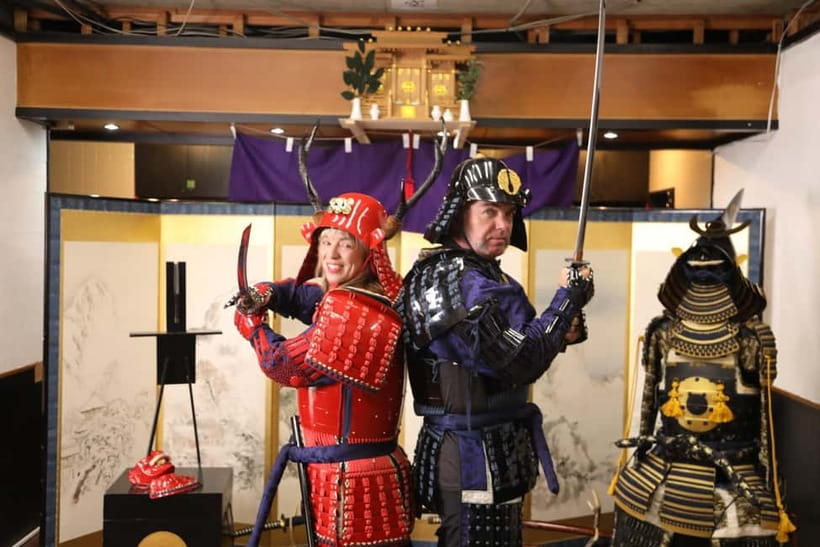
The sharpest part of this Osaka experience is not the costume. It is the chance to handle a real samurai sword under a certified instructor, then put on armor and learn why posture, restraint, and respect mattered to the warrior class. You begin in dogi and hakama, practice the proper movements, and finish with photos in full armor.
I like the clear progression from manners to movement, and I like that your photos are sent to a designated email address rather than left as a memory you must capture yourself. The private-group format also gives the instructor room to guide your stance and sword work.
The main consideration is location. It is promoted as the only samurai experience near Osaka Castle, but the actual venue is in Joto-ku, at Excellence Takayama 1F, and the supplied directions warn that Apple Maps is wrong. Use Google Maps and arrive 30 minutes early.
Key points at a glance
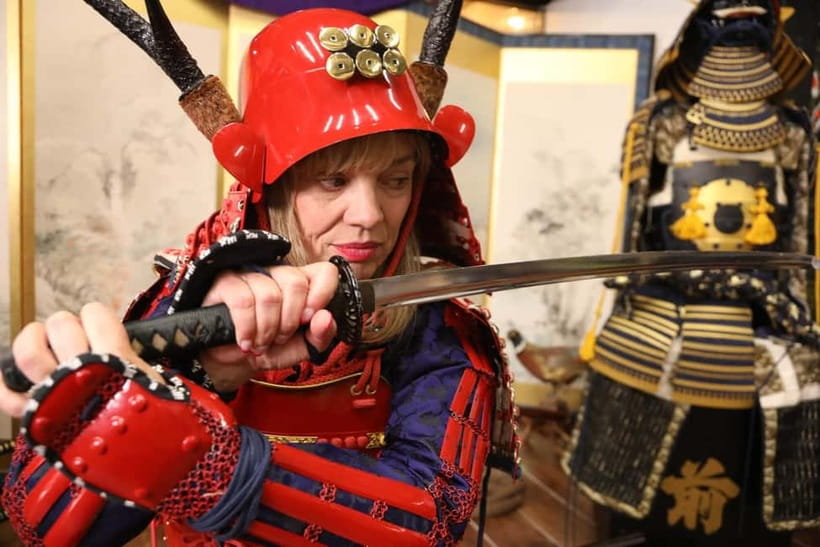
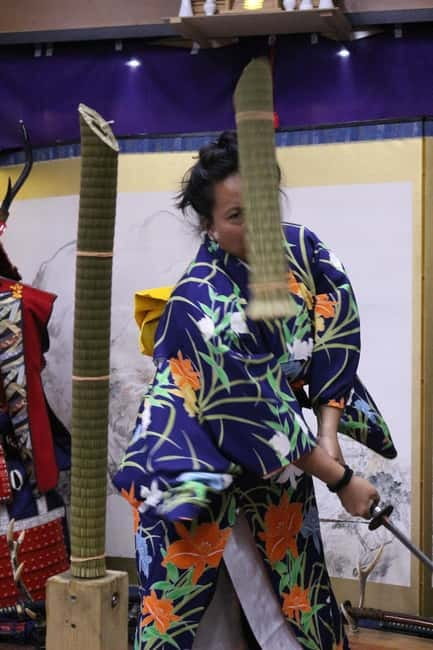
- Real sword cutting: After practicing with an iai training sword, you try a cutting exercise with a real samurai sword under instruction.
- A proper Bushido opening: The session begins and ends with a bow toward a shrine in the dojo.
- Full armor indoors: You wear samurai armor and a helmet for a commemorative photo, not just a light costume.
- Private 90-minute format: The activity is designed for a private group, with English and Japanese instruction.
- Photos included: The finished images are sent to your designated email address.
- Good cancellation flexibility: You can cancel up to 24 hours before the activity for a full refund, and reserve now while paying later.
Why this is more than a costume photo
Many Japan photo activities hand you a robe, point you toward a backdrop, and call it history. This one takes a different route. You first learn how a samurai was expected to carry himself, then work through the basic actions of drawing, swinging, cleaning, and returning a sword to its sheath.
That order matters. The armor photo comes after the training, so the session has a little structure and purpose. You are not simply dressing up as a warrior. You are being introduced to a code built around dignity, readiness, and responsibility.
The experience provider, Bushi no Homare, also known as Samurai Honor, presents the session within a dojo setting. A shrine is enshrined there, and the instructor uses a bow at the beginning and end of practice. That small ritual gives the 90 minutes a clear frame and helps separate the activity from an ordinary photo stop.
You should still keep your expectations realistic. This is an introduction, not a full martial arts course or a museum lecture on Japanese military history. You will learn selected customs and basic forms, handle a sword, try a cutting exercise, wear armor, and take photographs. For most people, that is the right amount for a holiday morning or afternoon.
More Japanese Castle Tours in Osaka:
- Osaka Castle: Museum and Tower Entry Ticket
★ 4.5 · 2,380 reviews - Osaka Castle Walking Tour and Castle Tower Admission
★ 5.0 · 561 reviews - From Osaka: Himeji Castle, Arima Onsen & Mt. Rokko Day Tour
★ 4.6 · 339 reviews
Finding the dojo near Osaka Castle
The meeting point is marked by a wooden sign reading Honor of the Samurai. A rack of Samurai Honor pamphlets sits in front of the shop, and hanging kimono and hakama may help you spot the entrance.
The official address is Excellence Takayama 1F, 2-3-19 Shiginonishi, Joto-ku, Osaka-shi, Osaka 536-0014. Use Google Maps. The directions specifically warn that the Apple Maps address is incorrect, so this is not the time to trust your phone blindly.
The activity is described as being near Osaka Castle, which makes it easy to pair with castle sightseeing, but do not assume you can walk out of the castle grounds and instantly see the dojo. Check the route before you leave your hotel and allow enough time to arrive 30 minutes before your reserved start.
That early arrival is needed for instructions and changing clothes. The meeting time is not the same as the actual start time. Arriving late could cut into the part you paid to experience, especially since the session is only 90 minutes.
Transportation and hotel or station pickup are not included. You make your own way to the venue, and the price does not cover other personal expenses.
Changing into dogi and hakama
The first step is changing into samurai clothing. You wear a dogi and hakama, the garments used as the base layer before the armor is added.
This is a useful start because it changes your posture and movement before you ever pick up a sword. The hakama is not everyday sightseeing clothing, and the instructor can begin correcting how you stand, walk, and carry yourself as soon as you are dressed.
Bring a T-shirt. That is the only item specifically requested, and it is the sensible layer for changing into training clothes. Do not arrive expecting to wear your full street outfit beneath the armor.
The session is taught in English and Japanese. English is the default language for interpretation. Italian, Spanish, French, Chinese, Thai, and Indonesian interpretation may be possible, but you must ask about staff availability before booking, and it is not guaranteed.
Bowing before the shrine
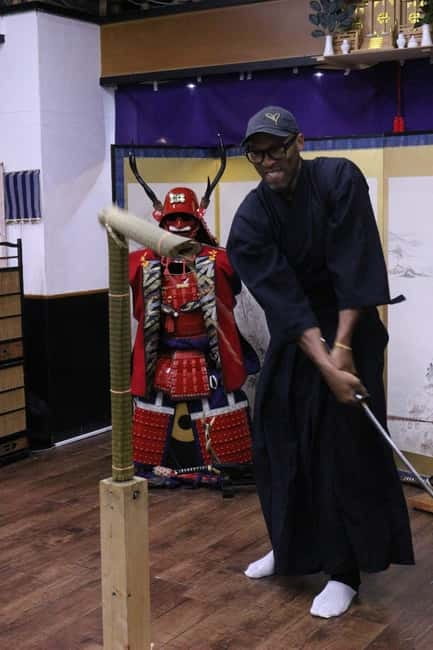
Practice begins with a bow before the shrine in the dojo. It also ends with a bow.
I like this part because it gives the activity a sense of place. The sword work is not introduced as a stunt. It is presented within a tradition where the weapon, the training space, and the person holding the blade all deserve respect.
The historical explanation focuses on the close relationship between a samurai and his sword. You hear how boys from samurai families began with wooden swords, and how carrying a real sword later brought both self-respect and responsibility.
The lesson also covers the idea that a samurai kept the sword close, even during ordinary domestic life. The point is not to suggest that you will recreate daily samurai life in 90 minutes. Rather, it helps you understand why the instructors pay so much attention to the sword belt, the scabbard, and the direction of the blade.
This context is brief but useful. It turns later hand movements into something more meaningful than choreography.
A few more castle tours around Osaka worth a look
- Ultimate Osaka Walking Tour: Castle, Dotonbori & Hidden Gems
★ 5.0 · 862 reviews - 5-Hour Osaka Bike Tour to the Neighborhood of Osaka Castle
★ 5.0 · 319 reviews - Osaka Castle Guided Tour
★ 4.7 · 249 reviews - Osaka: Castle History Walking Tour / Castle Tower Admission
★ 4.9 · 230 reviews
Learning how to walk with a sword
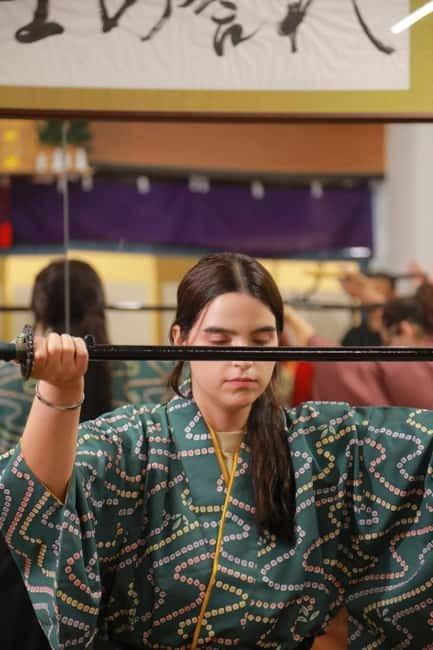
One of the most unusual portions is practicing how to walk with a sword tucked into your belt. The blade faces upward, and the instruction includes walking on the left side of the road so sword scabbards would not strike one another.
You also learn about keeping the koiguchi, the mouth of the scabbard, cut and ready for a draw. These details show how etiquette and practical safety were linked in samurai conduct.
For you, the value is in noticing how many ordinary movements change once a long sword is at your waist. Turning, walking, and standing require more awareness. That makes this section more interesting than a simple explanation of armor parts.
It is also a reminder to listen closely. The sword is not a prop to swing casually. The experience stresses responsibility and controlled movement, and the private format should help the instructor correct basic gestures as you go.
Practicing battou, chiburui, and nottou
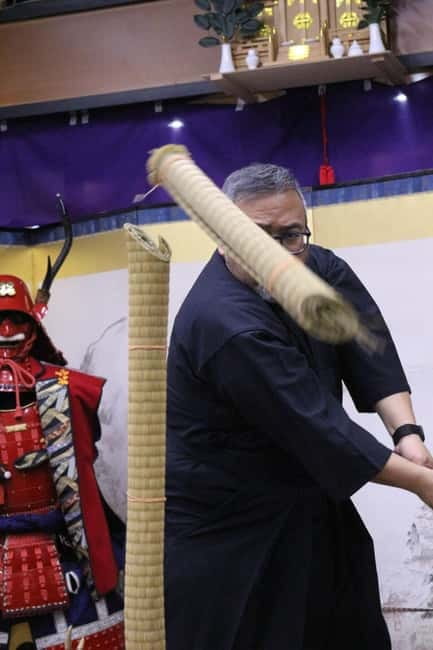
Before you cut anything, you work with an iai practice sword. The instructor introduces a basic stance and the sequence of drawing and returning the sword.
Three terms are central:
- Battou: Drawing the sword from its scabbard, in preparation to cut.
- Chiburui: The symbolic action of removing blood from the blade after a cut.
- Nottou: Returning the sword to its scabbard.
The names add a little vocabulary, but the physical order is the important part. You draw, complete the movement, symbolically clean the blade, and sheath it again. Each step has to be controlled.
The instructor also teaches basic kata, stances, and sword swings. When swinging downward, you are told to use the weight of the sword rather than relying on arm strength. A correctly executed swing produces a distinctive hi-nari sound from the blade.
That sound is a practical cue. It gives you something immediate to listen for while learning the motion. Do not treat it as a contest of power. The lesson is about alignment, timing, and letting the sword do the work.
Cutting with a real samurai sword
The most unusual feature is the chance to try sword cutting with a real samurai sword after practicing the basics.
This is the point where the certified professional instructor matters most. You do not begin with the real blade. The activity first takes you through the practice sword, the stance, the draw, and the swing. Only then do you attempt the cutting exercise under direct guidance.
The supplied details do not specify the cutting target or the exact number of attempts, so do not book this expecting a particular set piece. What you can count on is an introduction to the sword’s cutting ability, not free handling of a weapon.
I would treat this as a focused technical moment rather than an action scene. The appeal is feeling how a traditional blade moves when your form is correct. It also reinforces the lesson about responsibility: a sharp sword demands calm attention.
If you are nervous around weapons, say so at the start. The activity is designed around instruction, but you should be comfortable following directions and staying focused. Food, alcohol, and drugs are not allowed, and party-style bookings are not accepted.
Putting on armor and taking the portrait
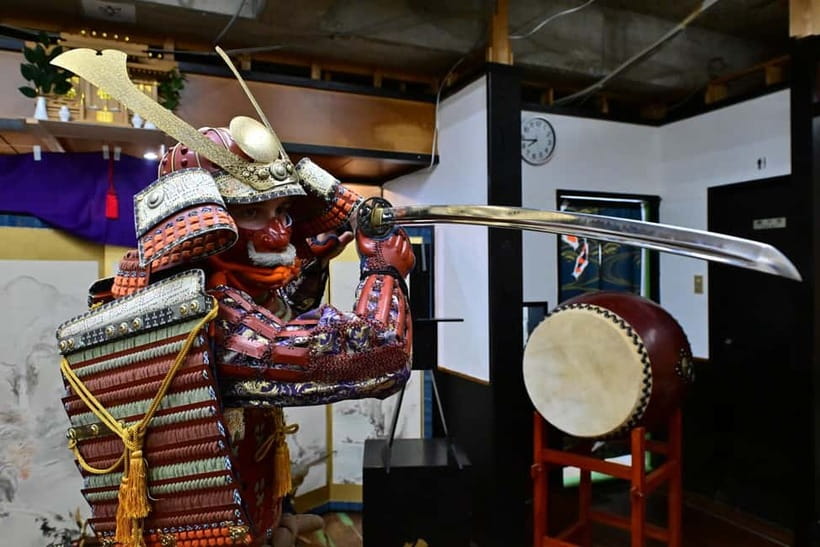
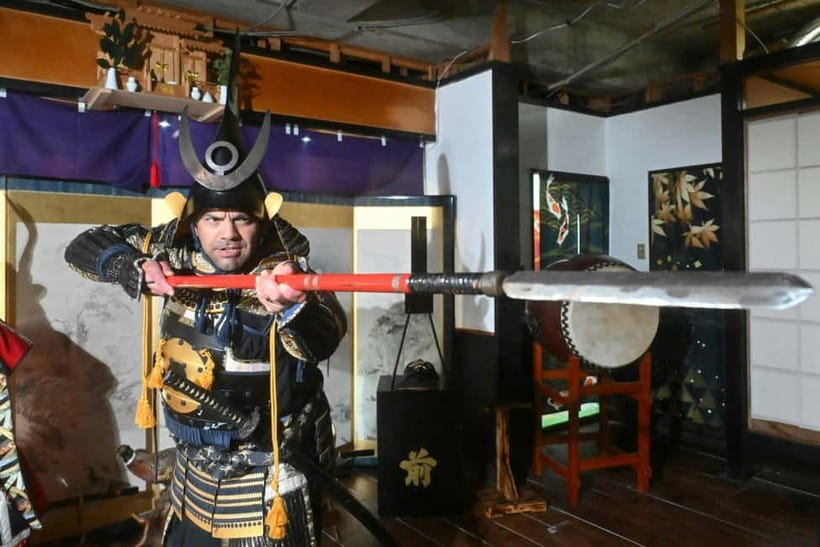
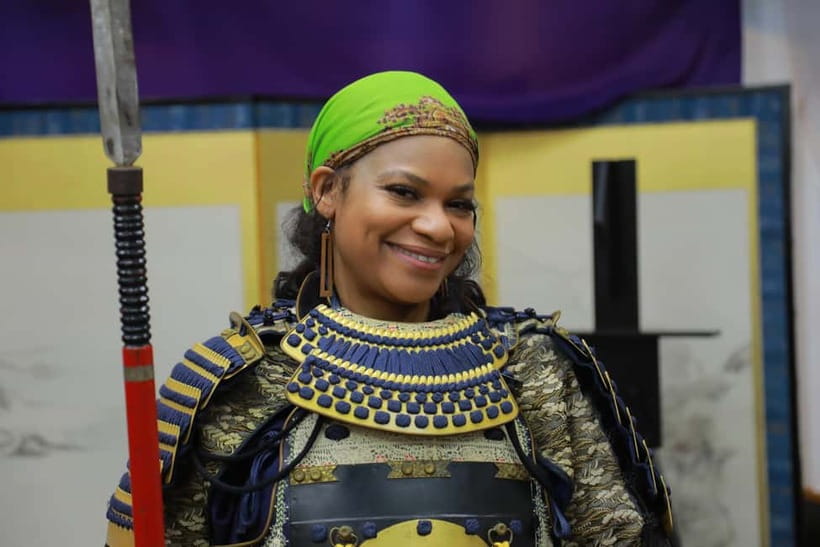
After the sword work, you put on samurai armor and a helmet indoors. The armor is the visual payoff, but the timing makes it more effective because you have already learned how a samurai was expected to stand and move.
The session presents armor as more than protection. Before battle, a samurai would wear armor and draw a sword to show dignity and beauty as well as readiness. That idea gives the portrait a clear purpose.
You can expect a commemorative photo in the armor. The photo shooting is included, and the data is sent to your designated email address. That is a practical benefit for couples, families with eligible children, or anyone who wants a record without asking a stranger to take pictures.
The armor is worn indoors, so this is not a walking parade through Osaka Castle. That is worth knowing if you imagined outdoor photos among the castle walls. The experience gives you the costume, helmet, and setting, while your Osaka sightseeing remains a separate part of the day.
What the $106 price buys you
At $106 per person, this is not a cheap dress-up stop. The value depends on what you want from a cultural activity.
You are paying for a 90-minute private-group session, samurai clothing, instruction in English or Japanese, a certified professional instructor, the real sword-cutting segment, indoor armor use, and photography with the images emailed to you. Tax and tips are included.
I find the combination stronger than a costume rental alone. The instruction, the terminology, and the ritual opening give the session substance. The photo service also saves you from paying separately for a portrait package, although the information does not promise professional retouching or a particular number of images.
The price makes less sense if you only want a quick armor photograph. In that case, a shorter photo activity may suit you better. It makes more sense if you value hands-on practice and want a structured introduction to samurai manners as well as a souvenir image.
A movie shooting option is available for an extra fee, but it is not included. Transportation is also extra because you arrange your own way to the dojo.
Who will enjoy this most
I would recommend this for adults and children aged 10 or older who can listen carefully, follow physical instructions, and appreciate the difference between a real weapon and a stage prop.
It suits:
- First-time visitors who want a hands-on cultural activity
- Couples or families seeking a shared photo and training session
- People interested in martial arts, Japanese etiquette, or historical costume
- Anyone already planning Osaka Castle sightseeing and wanting a related activity
- Small private groups that prefer direct instruction over a large class
It may not suit you if you want a relaxed photo-only visit, dislike structured instruction, or cannot arrive early to change. Children under 10, babies under one, people over 80, and people with altitude sickness are listed as unsuitable.
Pets are not allowed, although assistance dogs are permitted. Baby strollers and carriages are also not allowed, and bachelor or bachelorette groups are not accepted.
What the feedback tells me about the experience
The strongest pattern in the feedback is clear instruction, friendly staff, and a sense of fun without losing the educational side. One British participant called it one of the best things to do in Japan and singled out the hosts and teaching. An Australian visitor described it as fun, educational, and safe.
The photo service also earns attention. A German participant particularly liked receiving the images by email, and the photos were described as turning out well. That is useful if you are choosing between an activity that leaves you with memories and one that leaves you with only a few phone snapshots.
There is one serious warning. A French booking was canceled twice because of overbooking, including once on the morning of the scheduled session. The overall score is 4.6 out of 5 from 16 ratings, but that cancellation problem is still worth taking seriously.
If this activity is central to your day, avoid placing it immediately before a flight, timed train, or nonrefundable dinner. Confirm the booking details, check your messages, and keep a little flexibility in your Osaka schedule. The provider allows free cancellation up to 24 hours in advance and offers reserve-now, pay-later booking, which helps reduce the financial risk, but it cannot remove the inconvenience of a late change.
Should you book the samurai session?
Book it if you want more than a costume photograph. The best parts are the sequence of samurai etiquette, sword handling, basic kata, real-blade cutting, and armor photography. You leave with a better sense of why posture and restraint mattered, plus photos sent by email.
Think twice if your main goal is simply to see Osaka Castle or take outdoor pictures. This is an indoor dojo activity at a separate address, and you must arrange transportation yourself.
For most visitors who enjoy hands-on history, the $106 price is reasonable because it combines teaching, equipment, a private format, and photography. Just use Google Maps, arrive 30 minutes early, wear a T-shirt underneath the costume, and leave room in your schedule in case booking availability changes.
FAQ
How long does the samurai experience last?
The experience lasts 90 minutes. You should arrive 30 minutes before your reserved start time for instructions and changing clothes.
Where is the meeting point?
The venue is Bushi no Homare, also called Samurai Honor, at Excellence Takayama 1F, 2-3-19 Shiginonishi, Joto-ku, Osaka-shi, Osaka 536-0014. Look for the wooden Honor of the Samurai sign and the rack of activity pamphlets.
Which map should I use?
Use Google Maps. The supplied directions state that the address shown on Apple Maps is incorrect.
Is the activity taught in English?
Yes. English and Japanese instruction are available, with English as the default interpretation language. Italian, Spanish, French, Chinese, Thai, and Indonesian interpretation may be available if staff schedules allow, but you must ask before booking.
What is included in the price?
The price includes samurai clothing, indoor samurai armor, instruction from a certified professional instructor, tax, tips, and photo shooting. The photos are sent to your designated email address.
Can I cut with a real samurai sword?
Yes. After practicing basic movements with an iai practice sword, you can try sword cutting with a real samurai sword under instruction.
What should I bring?
Bring a T-shirt for changing into the samurai clothing.
Can children join the activity?
Children under 10 are not suitable for the experience. Babies under one are also not suitable, and baby strollers and carriages are not allowed.
Just added around Osaka
- (Ticket Included) Explore Osaka Castle & Museum of History★ 4.8 · 21 reviews
- Osaka: Osaka Castle Guided Tour with Local Guide★ 4.7 · 78 reviews
- Osaka: Osaka Castle – Tsuruhashi – Tennoji (Spanish Guide)★ 4.7 · 10 reviews
- Osaka: Early Morning Osaka Castle Guided Tour, Avoid Crowds★ 4.9 · 12 reviews
- Osaka: Explore Every Bit of Osaka Castle in 3 Hours★ 5.0 · 5 reviews
- Osaka: Osaka Castle 3 hours Historical Walking Tour★ 4.6 · 14 reviews
- Osaka Castle Guided Tour★ 4.7 · 249 reviews
- Osaka: Castle History Walking Tour / Castle Tower Admission★ 4.9 · 230 reviews
Japanese Castle Tours, compared.
Kyoto: Nijo-jo Castle and Ninomaru Palace Guided Tour
Read our review →
Kyoto: Nijo Castle, Kiyomizu & Fushimi Inari Guided Tour
Read our review →
Osaka Castle Walking Tour and Castle Tower Admission
Read our review →
Kyoto: Imperial Palace & Nijo Castle Guided Walking Tour
Read our review →
From Osaka: Himeji Castle, Arima Onsen & Mt. Rokko Day Tour
Read our review →
5-Hour Osaka Bike Tour to the Neighborhood of Osaka Castle
Read our review →
Browse the lists this tour appears in