
REVIEW · GUIDED CASTLE TOURS
Jerez: City Guided Tour and the Alcazar
The best part of this Jerez tour is the way it links the Alcázar fortress with the old city around it. You do not just enter a monument, look around, and leave. You walk from the medieval meeting place at Plaza del Arenal through churches, plazas, and civic buildings, seeing how Jerez grew around its Islamic and Christian past.
I like two things here. First, the Alcázar visit includes the mosque, Arab baths, gardens, and Palace of Villavicencio, so your €29 covers more than a quick look at stone walls. Second, guides such as Rose, Rosa, Victoria, and Celeste are praised for clear English, warm personalities, and useful suggestions for the rest of your day.
The main consideration is pace. Two hours is enough for a strong introduction, but not for a slow visit to every corner of Jerez. You also need to arrive on time, wear comfortable shoes, and accept that a visit may occasionally be delivered in two languages.
Key points to know before booking
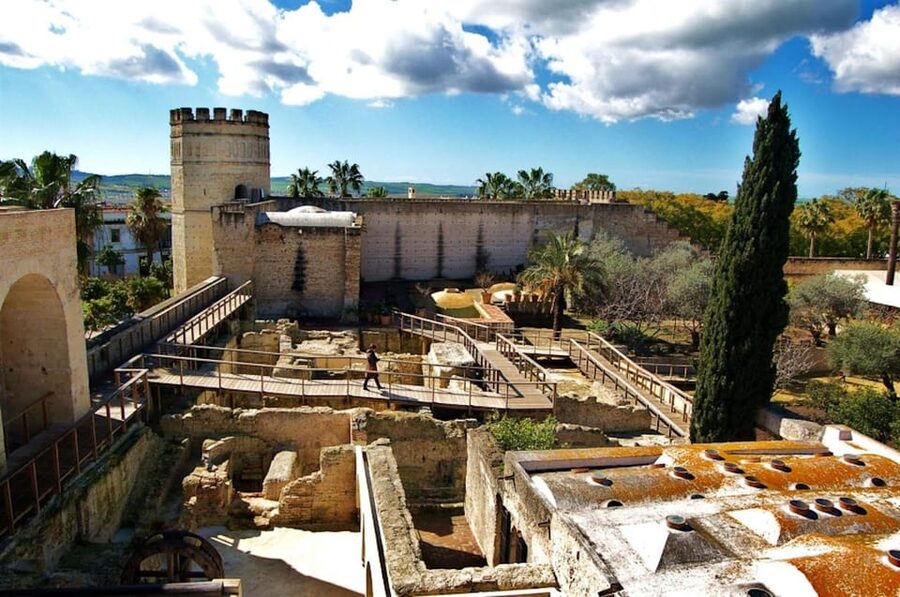
- The Alcázar is the centerpiece: See its Almohad walls, entrance gate, mosque, baths, gardens, and the Palace of Villavicencio.
- The route covers several historic squares: You walk from Plaza del Arenal to Plaza del Arroyo, Plaza de la Asunción, and the Consistorio de Jerez.
- Guiding is the real value: Rose, Rosa, Victoria, Celeste, and Rosalba are among the named guides praised for clear explanations and friendly help.
- It is a walking introduction, not a full-day tour: The two-hour route gives you a useful framework for exploring Jerez afterward.
- The tour costs $29 per person: That includes the guide and Alcázar admission, but not food, drinks, transport, or hotel pickup.
- You can book in English or Spanish: Private groups are available, and the tour is wheelchair accessible.
Starting at Plaza del Arenal
The tour begins at the equestrian monument in Plaza del Arenal, the large central square that has served as a meeting point since medieval times. This is a sensible place to start because it gives you an immediate sense of Jerez as a living city, not simply a collection of monuments.
Your guide sets the broad story here. Jerez has passed through Islamic, Christian, Renaissance, Baroque, and modern phases, and the route shows those changes in a compact area. The square also makes a practical meeting point because it is central and easy to identify from the equestrian statue.
The opening walk matters because it puts the Alcázar in context. Instead of treating the fortress as an isolated attraction, you begin to see its relationship with the streets, churches, civic buildings, and public spaces that developed around it.
You should arrive early. The instructions stress punctuality, and arriving late can mean losing the service. That is especially important with a two-hour route, since even a small delay can cut into time inside the Alcázar.
More Guided Castle Tours in Spain
- Seville: Cathedral, Giralda & Alcazar Entry With Guided Tour
★ 4.6 · 8,560 reviews - Granada: Alhambra & Generalife Fast-Track Guided Tour
★ 4.7 · 8,313 reviews - Seville: Alcázar and Cathedral Entry Ticket and Guided Tour
★ 4.6 · 5,056 reviews
Entering Jerez’s Almohad Alcázar
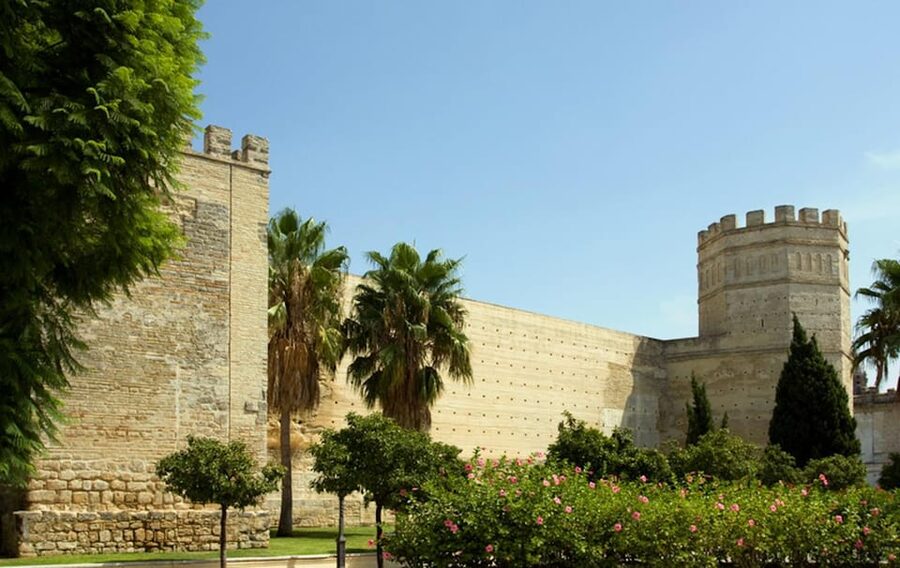
The Alcázar is the main reason to book this experience. It is an imposing remnant of 12th-century Almohad architecture, with thick defensive walls and a strong entrance gate that reflect Jerez’s role as a fortified city.
At the exterior, your guide explains the battles, alliances, and legends tied to the fortress. This is where a live guide earns the admission price. Bare walls can be hard to read on your own, but stories about power and conflict give the structure a purpose.
The Alcázar also shows how buildings change hands and uses over time. Its Islamic foundations remain clear, while later additions reflect Christian rule and the city’s changing fortunes. You are not seeing one frozen period. You are seeing a fortress shaped by several centuries of political and religious change.
The walls and gate are also a good reminder that Jerez was not built only for beauty. This was a defensive site, and its architecture had a practical job. Look for the sense of enclosure and strength before you move into the quieter interior spaces.
The mosque, baths, and gardens inside the fortress
Inside the Alcázar, the route visits a former mosque, Arab baths, Islamic-inspired gardens, and the Palace of Villavicencio. These areas give the visit variety, which helps during a short tour.
The mosque is especially important because it makes the Islamic period more tangible. You can connect the religious building with the broader design of the fortress and with the city that surrounded it. Your guide also helps explain how the site changed as Jerez moved from Muslim to Christian control.
The Arab baths offer a different kind of evidence. They point to daily life rather than warfare or government. A fortress was not only a place for rulers and soldiers. It also needed spaces for routine, cleanliness, and communal life.
The gardens provide a pause from the heavier stone architecture. Their Islamic influence brings order and calm into the complex, and they help you picture the Alcázar as a place of residence and administration as well as defense.
The Palace of Villavicencio adds another layer, with views from its tower. The tower is one of the more rewarding stops for anyone who likes to understand a city from above. You can see how the old center fits together and how the fortress relates to the surrounding streets.
Access to several different spaces is a major strength of this tour. If you visited only the walls, the Alcázar might feel like a brief architectural stop. The combination of mosque, baths, gardens, palace, and tower creates a fuller picture.
From the Cathedral Redoubt to Plaza del Arroyo
After the Alcázar, the route continues toward the Cathedral Redoubt, described as a Baroque monument with Renaissance and neoclassical influences. This part of the walk shows how Jerez’s visual character changed after the medieval period.
The word redoubt points to a defensive past, while the later artistic influences suggest a city with growing civic and religious ambition. You do not need specialist knowledge of architectural styles to enjoy this stop. The guide’s role is to point out how shapes, decoration, and purpose changed from the fortress to later city buildings.
The tour then reaches Plaza del Arroyo. This square is surrounded by stately palaces and has a quieter feel than Plaza del Arenal. It gives you a chance to slow down and notice the scale of Jerez’s old center.
I like this section because it prevents the tour from becoming Alcázar only. You get a better sense of the city’s streets and public spaces, and you begin to understand that Jerez’s character is spread across the old town.
Still, the exact order or inclusion of a stop can change if special circumstances require a similar replacement. If one particular building is your top priority, confirm the day’s route with the guide at the start.
Same region, a different set of walls:
- Seville: Royal Alcázar Entry Ticket
★ 4.6 · 28,378 reviews - Granada: Alhambra & Nasrid Palaces Tour with Tickets
★ 4.7 · 19,801 reviews - Granada: Alhambra and Nasrid Palaces Entry Ticket
★ 4.6 · 15,130 reviews - Seville: Alcázar, Cathedral & Giralda Skip-the-Line Tour
★ 4.8 · 11,525 reviews
Gothic-Mudejar details at Plaza de la Asunción
The next stop is Plaza de la Asunción, home to the church of San Dionisio and the historic Cabildo Viejo. This is one of the most useful points for understanding Jerez’s blend of traditions.
San Dionisio is presented as a Gothic-Mudejar example. That combination is important. Mudejar architecture reflects the continued influence of Islamic building traditions under Christian rule, so the church helps connect the city’s Christian period with the earlier Islamic design language seen at the Alcázar.
The Cabildo Viejo offers a civic counterpart to the church. Here, the route shifts from religion and defense to government and urban power. You see how medieval Jerez organized both spiritual and public life.
This is the kind of stop that benefits from a guide who can explain connections rather than simply name buildings. Rosa, Rose, Victoria, Celeste, and Rosalba have each been praised for clear explanations and for answering questions. The strongest part of the experience is likely to be the conversation around the sites, not just the act of walking past them.
You should feel free to ask questions. The tour is designed to leave room for them, and the guides have been noted for helping people shape the rest of their time in Jerez. That makes this a useful first activity in the city.
Finishing at the Renaissance Consistorio
The route ends at the Consistorio de Jerez, a Renaissance building linked with the city’s period of wealth and influence. It provides a fitting final stop because the tour has moved through military, religious, residential, and civic spaces.
By this point, you have seen several versions of Jerez. The Alcázar shows Islamic fortification and daily life. The churches and squares show the Christian and later Baroque city. The Consistorio represents civic authority and the city’s golden age.
The ending is also practical. You are left in the historic center rather than taken back to the starting point by transport. Since transport is not included, plan to continue on foot or make your own way from there.
A guide may also suggest what to see next. One participant was directed toward the cathedral for a later visit, and several guides were praised for helping with plans beyond the formal route. That kind of local direction can make a short orientation tour more useful than a longer walk with no personal guidance.
What $29 buys you
At $29 per person, the price is fair if you want both a guided city walk and Alcázar admission. The fee includes the live guide and entry to the fortress, which is the most important ticketed stop on the route.
The value is strongest for first-time visitors. You receive historical background, architectural interpretation, and an overview of the old center in two hours. You also save yourself the work of piecing together the relationship between the Alcázar and the surrounding plazas.
It is less compelling if you prefer to explore entirely at your own speed. You may want more time in the gardens, more time at the tower, or a long pause at each church. A guided group must keep moving to cover the route.
Food and drinks are not included, nor is transport or hotel pickup. That keeps the price simple, but you should plan your own refreshments and route to the meeting point. The minimum booking is two adults, so solo visitors cannot book this activity alone under the stated conditions.
Private groups are available. That option may suit families or friends who want to ask many questions or keep a more personal pace, though the information provided does not give a separate private-group price.
Guides, language, and group comfort
The tour is offered in English and Spanish. Some visits may be conducted in two languages, so ask at the start if you need to know how the commentary will be divided.
The named guides receive especially strong praise for their approach. Rose is repeatedly described as enthusiastic, friendly, and skilled at making the history easy to follow. Victoria is noted for arriving on time, identifying herself clearly, answering questions, and helping visitors plan their day. Rosa is praised for clear explanations, and Celeste is remembered for sharing plenty of useful detail.
Those personal qualities matter here because the route covers several periods and styles. A dry list of dates would make the Alcázar and old town harder to follow. A guide who explains events in modern language can help you picture what happened without turning the tour into a lecture.
The tour is wheelchair accessible, which is an important practical advantage. Comfortable shoes are still recommended because the experience is a walking tour through historic streets and monument spaces. Pets are not allowed, although assistance dogs are permitted.
The warm-weather warning also deserves attention. A June participant described the conditions as very hot, so you should take the timing seriously during hot periods. The activity lasts two hours, but much of that time is spent outdoors or walking between sites.
Who will get the most from this tour
I would choose this tour for a first day in Jerez. It gives you enough orientation to understand the old center, then leaves you with ideas for what to visit afterward.
It also suits anyone who enjoys history but does not want to spend hours reading labels. The route covers architecture, battles, political change, religious buildings, gardens, and local legends, with a guide to connect the pieces.
Families with older children may find the two-hour length manageable, but children under 12 must be accompanied by an adult. The stories of fortifications and battles may also hold attention better than a long museum visit.
This is a good choice for visitors staying in Jerez who want a broad introduction. It also works well for a short stop, provided you can reach the meeting point and keep to the exact start time.
You may want something else if your priority is wine, horses, food, or a longer specialist visit. None of those are included in this walk. The focus is the city center and the Alcázar, with historical and architectural interpretation.
How to make the most of the two hours
Arrive at the equestrian monument in Plaza del Arenal a little early. The tour depends on a prompt start, and late arrival may mean the service is treated as completed.
Wear comfortable shoes and dress for the weather. You will move through plazas, streets, and the Alcázar, and the route includes outdoor sections. In hot months, an early or later starting time may be more comfortable if those options appear when you check availability.
Use the first half of the tour to ask about the fortress. The mosque, baths, gardens, and tower each show a different side of the Alcázar, so do not hesitate to ask how they relate to one another.
Save a little attention for the city walk after the fortress. The Cathedral Redoubt, Plaza del Arroyo, Plaza de la Asunción, San Dionisio, Cabildo Viejo, and Consistorio are not filler stops. They explain how Jerez grew beyond its original defensive core.
Finally, ask your guide what deserves more time after the tour. The guides have helped visitors plan the rest of their day, and the tour is most useful when it becomes a starting map for your own exploration.
Should you book the Jerez Alcázar tour?
Book it if you want a compact, well-organized introduction to Jerez with a proper visit inside the Alcázar. The combination of fortress, mosque, baths, gardens, palace tower, churches, squares, and civic buildings gives you a lot for two hours.
At $29, the package is good value for a first visit, especially because Alcázar admission and guiding are included. I would be more cautious only if you dislike fixed walking routes, need long independent visits at each site, or are looking for a food or wine experience instead.
For most first-time visitors, this is a sensible opening activity. You finish with a clearer sense of Jerez, several buildings to revisit, and practical advice from a guide who can help shape the rest of your stay.
FAQ
How long does the Jerez city and Alcázar tour last?
The tour lasts two hours and includes a guided walk through central Jerez plus entry to the Alcázar.
What is included in the price?
The $29 price includes guide service and entrance to the Alcázar of Jerez. Transport, hotel pickup, food, and drinks are not included.
Where does the tour meet?
The meeting point is in front of the equestrian monument in Plaza del Arenal.
Is the tour offered in English?
Yes. The tour is available in English and Spanish. On some occasions, the visit may be conducted in two languages.
Is the tour wheelchair accessible?
Yes, the activity is listed as wheelchair accessible.
Can I cancel or pay later?
You can cancel up to 24 hours in advance for a full refund. Reserve now and pay later is also available.
Just added around Spain
- Montjuïc Cable Car & Magic Fountain Barcelona Private Tour★ 5.0 · 77 reviews
- Montjuic Castle Admission Ticket in Barcelona★ 3.5 · 59 reviews
- 2hr Montjuïc Castle Segway Tour★ 5.0 · 5 reviews
- Barcelona Best Views: Old Town and Montjuic Castle Private Tour★ 5.0 · 24 reviews
- Barcelona City Walk with Montjuïc Castle & Cable Car Guided Tour★ 4.0 · 15 reviews
- Castle of Loarre- Collegiate Church of Bolea★ 4.5 · 7 reviews
- Castle of Baños de la Encina★ 4.5 · 65 reviews
- Nasrid Crafts: Only plasterwork workshop in the Alhambra★ 4.5 · 15 reviews
Guided Castle Tours, compared.

Edinburgh Castle: Guided Walking Tour with Entry Ticket
Read our review →
Seville: Cathedral, Giralda & Alcazar Entry With Guided Tour
Read our review →
Granada: Alhambra & Generalife Fast-Track Guided Tour
Read our review →Edinburgh Castle: Guided Walking Tour with Entry Ticket
Read our review →
Stonehenge, Windsor Castle and Bath Full Day Guided Tour
Read our review →
Edinburgh Castle Guided Walking Tour in English
Read our review →
Seville: Alcázar and Cathedral Entry Ticket and Guided Tour
Read our review →
Fast-Track Alhambra & Nasrid Palaces Guided Tour
Read our review →Browse the lists this tour appears in