
REVIEW · FORTRESS & CITADEL TOURS
Québec City: Saint-Louis-Forts-and-Châteaux visit
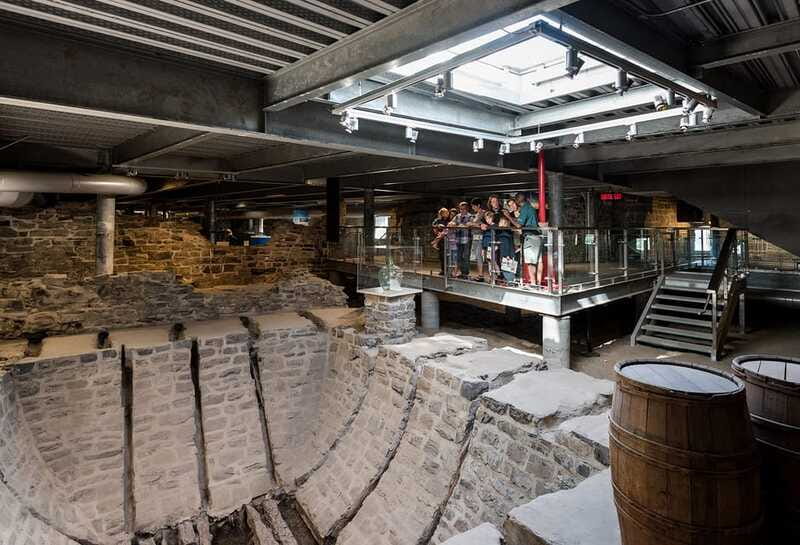
Beneath Dufferin Terrace lie the remains of Château Saint-Louis, once the French and British governors’ home and the seat of power for more than 200 years. I like the way this visit connects crumbling foundations with real decisions that shaped North America, and I especially like the artifacts, which turn abstract history into everyday objects.
At $9 per person, the one-hour visit is an easy addition to an Old Québec walk. I also appreciate the Huron-Wendat Nation perspective on diplomacy. The main caution is practical: the site is not suitable for wheelchair users or people with mobility impairments, and the self-guided audio option uses some theatrical role-playing that may not suit every listener.
Key points at a glance
- Colonial power beneath the terrace: See the remains of the only château erected in Québec City.
- More than 120 artifacts: Archaeological finds show how people lived, worked, entertained themselves, and managed a large residence.
- French and British history in one stop: The site served as the official residence of governors from 1620 to 1834.
- A Huron-Wendat perspective: An exhibition presents diplomatic alliances from the Nation’s point of view.
- Two ways to visit: Choose an on-site heritage guide or a downloadable Parks Canada audio tour.
- A short, low-cost visit: The hour-long experience fits neatly between Old Québec sights, though stairs and uneven access matter.
What lies beneath Dufferin Terrace
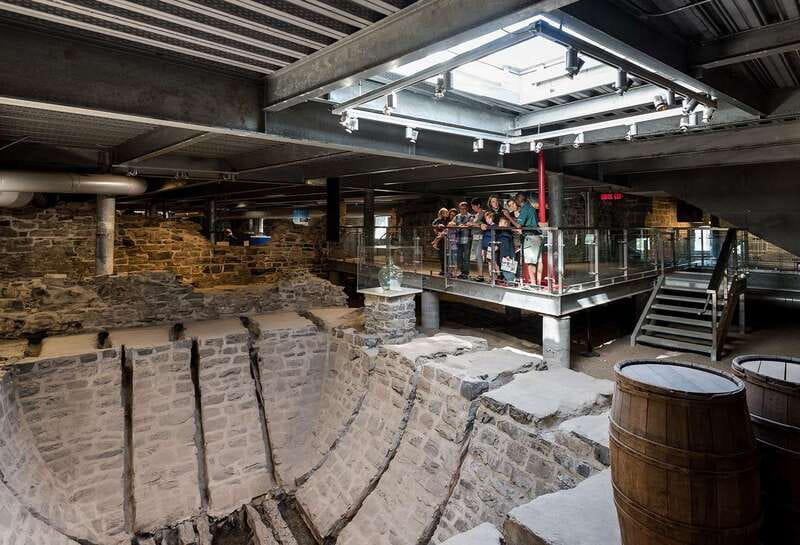
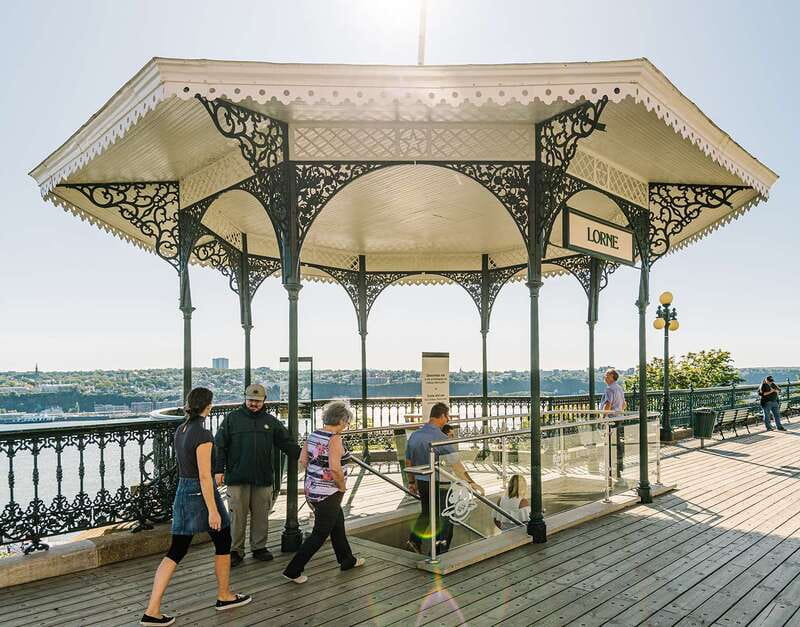
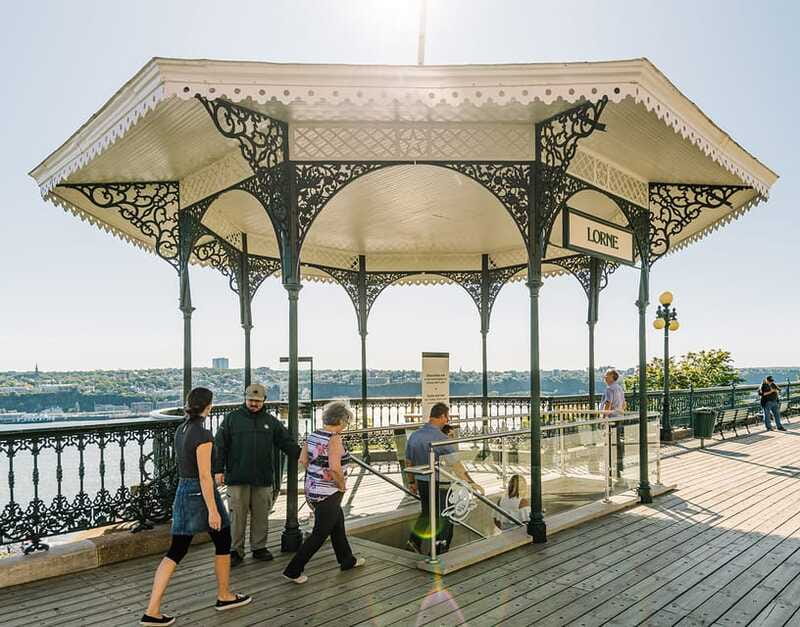
Most people walk along Dufferin Terrace for the St. Lawrence River views and the grand Château Frontenac above. This experience asks you to look down instead. Stairs lead from the boardwalk to the Saint-Louis Forts and Châteaux National Historic Site, where the remains of Québec’s former seat of government are preserved below street level.
That change in viewpoint is the main appeal. You are not simply looking at an old building façade. You are walking through the footprint of a place that served as the official residence and political headquarters of French and British governors from 1620 to 1834.
The site is also described as the only château erected in Québec City. That gives the visit a clear focus. You are seeing the remains of one specific residence and fort complex, not wandering through a general museum with unrelated displays.
More Fortress and Citadel Tours in Canada:
- Halifax Premium Tour: Peggy’s Cove, Citadel & Titanic Cemetery
★ 4.5 · 368 reviews - Halifax: Peggy’s Cove, Citadel and Titanic Cemetery Tour
★ 4.0 · 180 reviews - Saint John Driving Tour With Skywalk, Martello Tower & Fort
★ 4.6 · 29 reviews
The first stop: Dufferin Terrace and the St. Lawrence view
Your meeting point is at the beginning of Dufferin Terrace, near a green and white kiosk marked Frontenac and displaying a Canadian flag. A guided visit begins here, with the heritage guide wearing a green and beige uniform.
Allow a moment to get your bearings before going below the terrace. The river view gives useful context: this was a strategic place for governors who directed affairs in a major colonial city. The setting also makes the visit easy to combine with a walk around Old Québec.
The descent is part of the experience, but it is also the first practical warning. Stairs are involved, and the site is not suitable for wheelchair users or people with mobility impairments. Large bags, luggage, food, and drinks are not permitted inside. Assistance dogs are allowed, but other pets are not.
Walking through 200 years of political power
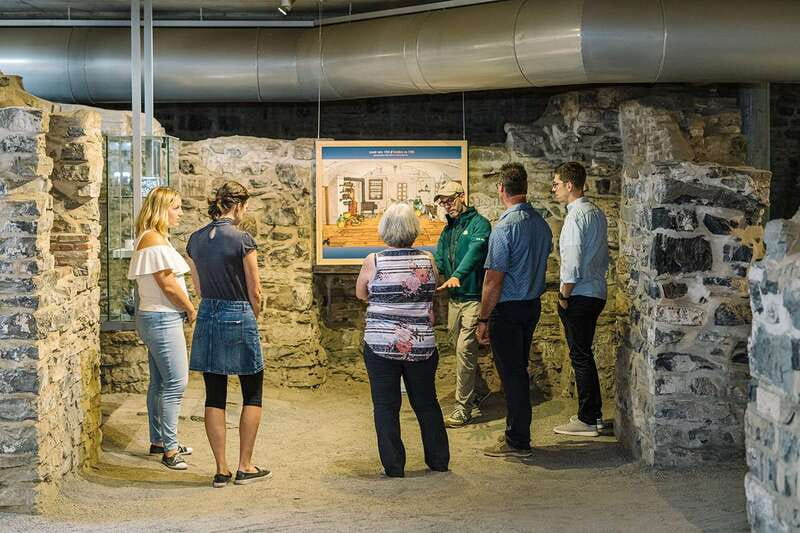
Once below the terrace, the remains help you picture the scale and layout of the former château. The structures are no longer intact, so you will need to use the interpretation, audio material, and displays to imagine the residence as it once was.
That requires a little attention. This is not a polished palace where every room looks ready for a royal arrival. Instead, the foundations and archaeological remains act as a map. They show how the building changed over time and how planning, architecture, and government were tied together.
The political story is the strongest reason to visit. French and British governors made diplomatic decisions here, hosted important events, and directed affairs that reached well beyond Québec. The tour links those choices to the wider history of North America without asking you to spend half a day in a museum.
I like this scale. In about an hour, you get a clear sense of who held power, where that power was exercised, and how the residence developed across more than two centuries.
Artifacts that make daily life easier to picture
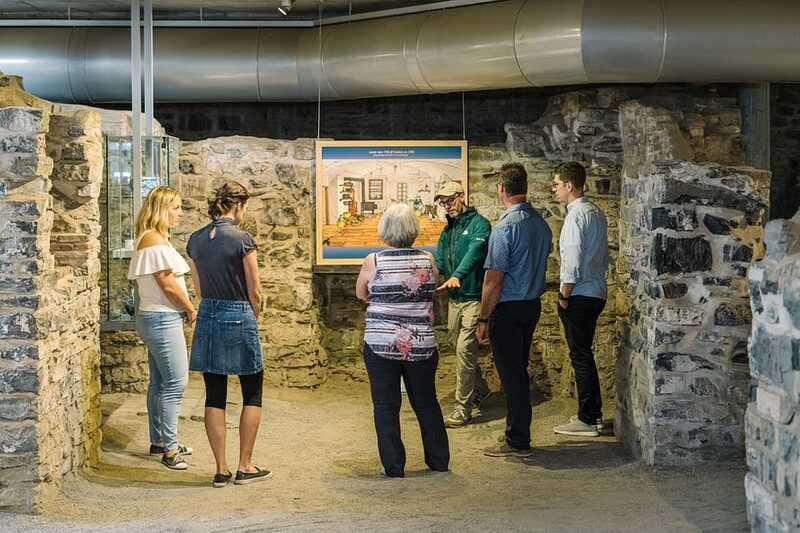
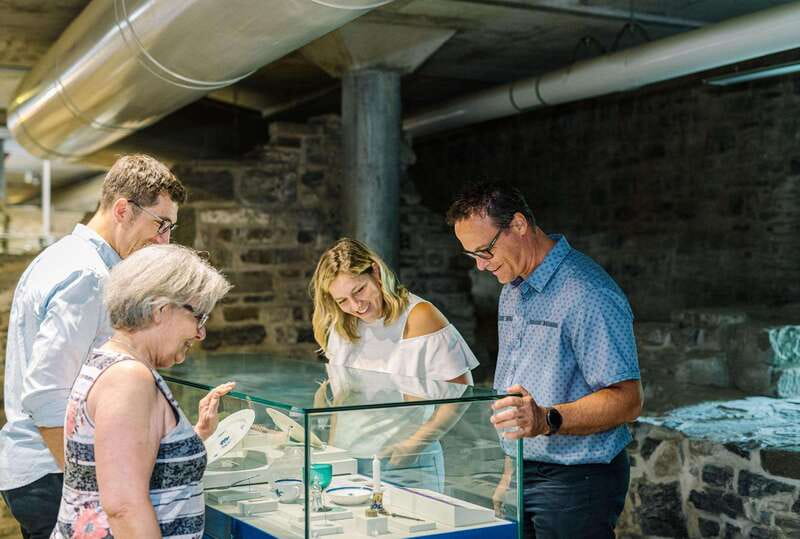
The site displays more than 120 artifacts discovered during archaeological excavations. These objects are a major strength because they add physical detail to a story that could otherwise feel distant.
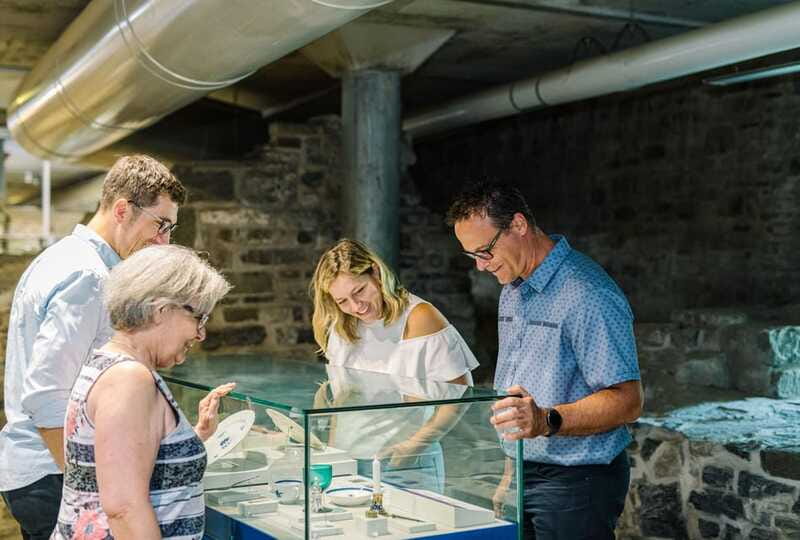
You may see objects that raise practical questions about daily life at the château. The audio material addresses details such as how an icebox was used, what grooves in the bottom were for, and why women used bottles of ammonia. Those small points are valuable because they show how people solved ordinary problems before modern conveniences.
The artifacts also help you picture the building as a working residence rather than only a government office. Lavish events took place here, but daily routines required storage, cleaning, cooling, serving, and maintenance. An object from an archaeological dig can tell you more about those routines than a broad statement about life in colonial Québec.
If you enjoy household history, archaeology, or museum displays, set aside time to examine the objects instead of hurrying from one explanation to the next. The visit is short, but the artifacts reward a slower look.
More City Tours in Canada:
- Quebec City: Guided Tour of Fairmont Le Château Frontenac
★ 4.7 · 3,027 reviews - Guided Tour of the Fairmont Le Chateau Frontenac in Quebec City
★ 4.5 · 1,217 reviews - Potsdam: City and Castles Tour
★ 4.7 · 3,721 reviews - Dublin to Rock of Cashel, Cork City & Blarney Castle Guided Tour
★ 4.5 · 2,536 reviews
French and British governors under one roof
Château Saint-Louis served both French and British governors between 1620 and 1834. That long period gives the site unusual range. You are not looking at a single moment in Québec’s past, but at a residence that continued to matter as political control changed.
The tour explains the château’s evolution and governance across its lifespan. This is where the remains become especially useful. They allow you to think about how a seat of power was planned, altered, and used over time.
The story is not limited to architecture. Governors lived here, received diplomatic visitors, hosted formal events, and made decisions that affected relationships with Indigenous Nations and colonial authorities. The result is a visit that combines domestic history with government and diplomacy.
I would not expect a full political lecture in sixty minutes. The experience gives you the main framework and several memorable details. If you want every military, architectural, and political development explained at length, you will need additional museums and historic sites in Québec City. For a compact introduction, the balance works well.
The Huron-Wendat perspective on diplomacy
A central part of the visit is the exhibition about diplomatic alliances with the Huron-Wendat Nation, presented in collaboration with the Nation. This gives the site a broader point of view than a governor-centered story alone.
That perspective matters because colonial diplomacy was not simply a series of decisions made by European officials. Alliances involved Indigenous Nations with their own interests, leaders, strategies, and expectations. The exhibition helps place those relationships within the story of the château.
I value this part because it adds substance to the political history. You are not only learning where governors lived. You are also considering how diplomacy operated between colonial governments and the Huron-Wendat Nation.
The supplied tour details do not specify the exhibition’s exact format or length, so I would treat it as an important section within the overall visit rather than plan on a separate extended program. The one-hour duration means you should pay attention to how the audio or guide connects this material to the site around you.
Guided visit or downloadable audio tour?
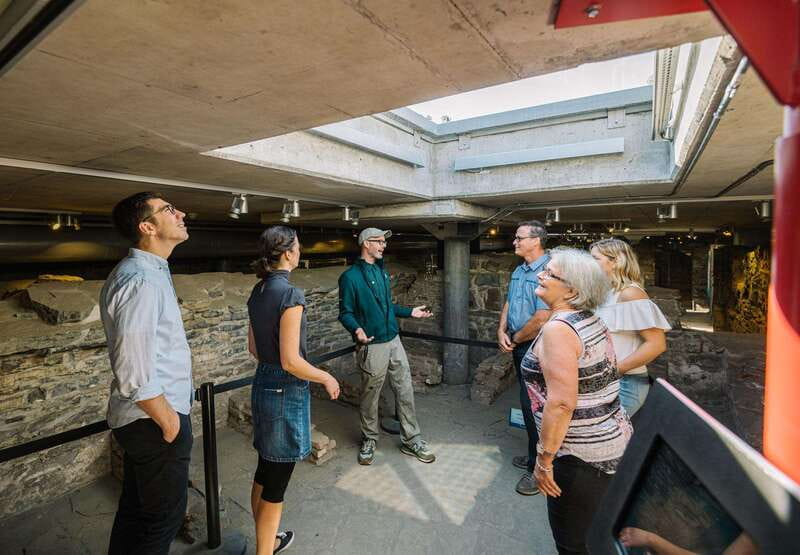
You can visit with an on-site heritage guide or use the downloadable Parks Canada app for a self-guided audio tour. Live tours are offered in English, French, Spanish, German, and Chinese, with starting times varying by availability.
A guide is likely the better choice if you enjoy asking questions or want the story delivered in a direct, organized way. The guide can point out features as you move through the remains and give the visit a more social rhythm. The strongest praise for this format focuses on animated delivery, clear explanations, and an entertaining presentation.
The audio route gives you more control over your pace. You can stop longer at the artifacts, replay a section, or move through the material without keeping up with a group. The app is downloadable and designed to add context to the self-guided visit.
There is one style issue to consider. Parts of the audio presentation use role-playing, with the listener sometimes treated as a governor and sometimes as a servant. That theatrical approach may make the past feel lively for some people, but it may feel forced if you prefer plain historical explanation.
If you dislike audio drama, ask for the on-site heritage guide when booking or choose the format that gives you the clearest control. If you enjoy interactive interpretation, the audio approach may be a good fit.
Why one hour is enough, and when it is not
The one-hour duration is a practical strength. Old Québec is packed with sights, and this visit can fit between the terrace, Château Frontenac, Place Royale, and other historic stops without taking over your day.
You get enough time to understand the site, see the archaeological displays, and hear the main political story. The short format also makes the $9 price easy to justify, especially if you are already exploring Dufferin Terrace.
The limit is depth. One hour cannot give every artifact equal attention or explain every stage of the château’s development in detail. If you are passionate about archaeology, Indigenous diplomacy, or colonial government, you may wish the visit were longer.
I would treat this as a focused historical stop rather than a complete study of Québec’s past. It works best when you want a solid story with physical remains and objects, not a full-day academic program.
Is the $9 admission good value?
At $9 per person, the price is modest for a historic site in the center of Old Québec. The value comes from the combination of three things: access to the remains beneath Dufferin Terrace, the archaeological artifacts, and either an audio interpretation or a heritage guide.
The price is especially fair if you already plan to walk along the terrace. There is no separate trip across town, and the visit adds a different layer to one of Québec City’s best-known viewpoints.
Value depends on your preferred format. A live guide gives you a more personal presentation, while the downloadable audio tour keeps the cost low and lets you move at your own pace. The price does not include food, drinks, or luggage storage, so plan to arrive without those items.
Canadian Armed Forces members, Canadian veterans, and their immediate families can receive daily free admission to Parks Canada sites with the specified Platinum Une FC or Canadian veteran service card. That benefit does not include the guided tour.
Who should book this visit?
I would recommend it to you if you like archaeology, government history, Indigenous diplomacy, or everyday details from earlier centuries. It is also a good choice if you want a short indoor and underground-style historical stop close to the main sights of Old Québec.
Families may find the artifacts and role-based audio format engaging, though the best fit depends on how much historical explanation children enjoy. The guided version may be easier for anyone who wants the story presented without managing an app.
You should think twice if stairs are difficult, if you need wheelchair access, or if you want a fully intact château with furnished rooms. The visit centers on remains and displays, so imagination is part of the experience.
I also would not choose the audio option automatically. If theatrical narration irritates you, a live heritage guide may suit you better. If you prefer quiet, independent pacing, download the Parks Canada app and take your time with the objects.
Practical details before you go
Look for the Frontenac sign on the green and white kiosk at the beginning of Dufferin Terrace. The guide wears a green and beige uniform, which makes the meeting point easier to identify in a busy area.
The visit lasts one hour, but starting times vary, so check availability when you reserve. You can cancel up to 24 hours in advance for a full refund, and the reserve-now, pay-later option lets you hold a place without paying immediately.
Do not bring food, drinks, luggage, or large bags. Pets are not allowed, except for assistance dogs. Bare feet are also not permitted, an unusual rule but a simple one to follow.
Should you book the Saint-Louis Forts and Châteaux visit?
Yes, if you want a short, inexpensive way to connect Old Québec’s grand views with the political and domestic life that once operated below them. The artifacts are the real treat, and the Huron-Wendat diplomatic perspective gives the visit more range than a simple governor’s residence tour.
Choose the guided option if you want lively explanation and the chance to follow a clear story. Choose the audio route if you value independence, but keep in mind its occasional role-playing style. With stairs, limited time, and a site made up of remains rather than intact rooms, it is not for everyone. For most visitors who can manage the access, $9 buys a useful hour of Québec history.
FAQ
How long does the Saint-Louis Forts and Châteaux visit last?
The visit lasts one hour.
How much does admission cost?
Admission costs $9 per person.
Where is the meeting point?
Meet at the beginning of Dufferin Terrace, near a green and white kiosk with a Frontenac sign and a Canadian flag.
How can I identify the guide?
The heritage guide wears a green and beige uniform.
Is the visit guided or self-guided?
You can choose an on-site heritage guide or take a self-guided audio tour using the downloadable Parks Canada app.
What languages are available for the live tour?
Live tours are offered in English, French, Spanish, German, and Chinese.
Is the site accessible for wheelchair users?
No. The site is not suitable for wheelchair users or people with mobility impairments.
Can I cancel or pay later?
You can cancel up to 24 hours in advance for a full refund. The reserve-now, pay-later option lets you book without paying immediately.
Just added around Canada
- Banff Food Tour: Eat the Castle★ 5.0 · 130 reviews
- Saint John Driving Tour With Skywalk, Martello Tower & Fort★ 4.6 · 29 reviews
- Québec: Fortifications-of-Québec Guided Walking Tour★ 4.7 · 60 reviews
- Quebec: La Citadelle de Québec Ticket and Guided Tour★ 4.7 · 227 reviews
- Ottawa: Secrets of the Château Laurier – Guided Hotel Tour★ 4.4 · 148 reviews
- Halifax: Peggy’s Cove, Citadel and Titanic Cemetery Tour★ 4.0 · 180 reviews
- Halifax: Small Group Walking Tour with Citadel & Museum★ 4.8 · 16 reviews
- Fortress of Louisbourg Driving Tour from Sydney Nova Scotia★ 3.5 · 10 reviews
Fortress & Citadel Tours, compared.

Full Day Taj Mahal, Agra Fort & Baby Taj Tour from Delhi by Car
Read our review →
Fort Sumter Admission and Self-Guided Tour with Roundtrip Ferry
Read our review →
Carcassonne: Castle and Ramparts Entry Ticket
Read our review →
Charleston: Fort Sumter Entry Ticket with Roundtrip Ferry
Read our review →
Same Day Taj Mahal, Fort & Baby Taj Tour from Delhi by Car
Read our review →
From Delhi: Taj Mahal and Agra Fort Private Sunrise Tour
Read our review →
Sunrise Taj Mahal, Agra Fort & Baby Taj Tour from Delhi by Car
Read our review →
Salzburg: Hohensalzburg Fortress Admission Ticket
Read our review →Browse the lists this tour appears in