
REVIEW · PALACE TOURS
Prague Castle, St. Vitus Cathedral, Royal Palace, St. George’s Basilica
Prague Castle is far more than a pretty viewpoint. It is a working record of Bohemian power, faith, art, and political trouble, packed into one enormous hilltop complex. With historian Robert Procházka, you move from St. Vitus Cathedral to royal chambers, a Romanesque basilica, and tiny Golden Lane houses in three focused hours. I especially like the serious historical approach and the chance to see four major castle sights without guessing where to go. The drawback is that the tour is in German, and the amount of information may feel heavy if you prefer a light, casual outing.
I also like the practical ticket arrangement. Admission is separate, but Robert helps you buy the correct ticket at the guide counter, which can save time. Bring a warm layer, even in warmer months, since the castle interiors can feel cold.
Key points to know before you book
- Robert Procházka leads the tour in German: He is a historian with an impressive command of Prague’s past and a clear, pleasant speaking voice.
- The four main interiors are included in the route: St. Vitus Cathedral, the Old Royal Palace, St. George’s Basilica, and Golden Lane.
- Admission is extra: The listed price is $43 per person, then you pay €18 as an adult or €14 as a senior aged 65 and over for the site ticket.
- The tour begins at the Prague Castle tram stop: Take tram line 22 or 23 toward Bílá hora and meet Robert at the stop marked Pražský hrad.
- The route ends on Golden Lane: You finish among the small historic houses rather than returning to the starting point.
- The experience suits adults and older children: Children under 10 are not accepted, and the detailed presentation is best for people who enjoy history.
Why Prague Castle deserves three focused hours
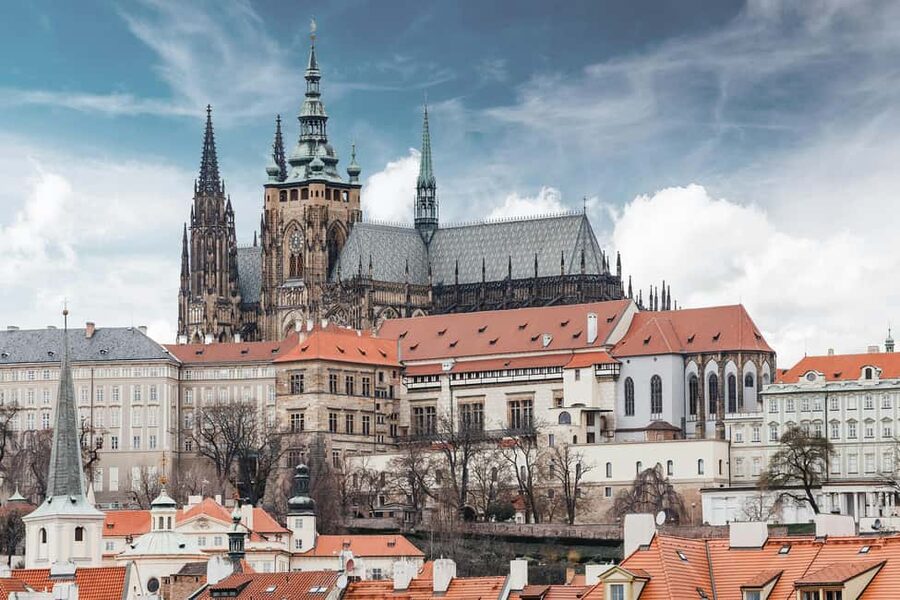
Prague Castle is easy to underestimate. From a distance, it looks like one grand palace above the river. On foot, it is a large enclosed complex containing churches, royal rooms, defensive spaces, lanes, courtyards, and layers of construction from different centuries.
The grounds are listed in the Guinness Book of Records as the largest enclosed castle grounds in the world. That fact matters less as a record than as a warning: you are not visiting one building. You are moving through a small historic district with a complicated story.
I like having a historian here because the buildings do not explain themselves very well. A Gothic arch tells you something about style, but it does not tell you why a chapel mattered to Bohemian kings, how a political crisis began in a royal office, or why a row of tiny houses became linked with alchemy and Franz Kafka.
The three-hour length is a good fit for this material. It gives you enough time to see the main interiors without turning the visit into an all-day march. Still, this is not a quick photo stop. You should arrive ready to listen.
More Castle and Cathedral Tours in Czechia
- ️ Segway Fun Tour of Prague to Castle and Strahov Monastery viewpoint & Brewery
★ 5.0 · 188 reviews - Classic Prague Castle Tour, Strahov Monastery & Castle District
★ 5.0 · 182 reviews - Saint Vitus Cathedral and Hidden Gems of Prague Castle
★ 5.0 · 26 reviews
Meeting Robert at the Pražský hrad stop
The meeting point is directly at the Pražský hrad tram stop. Take tram line 22 or 23 in the direction of Bílá hora. Robert Procházka waits at the stop, so you do not need to search through the castle grounds for a tour office.
This is a useful arrival point because Prague Castle is large and the entrances can be confusing. Meeting at public transport keeps the start simple. I would still allow enough time to find the correct platform and direction, especially if you are not familiar with Prague’s tram system.
The activity is offered in German. Robert’s German is described as excellent, with a calm voice that is easy to follow. That becomes important during the indoor portions, where several rooms may be crowded and the sound can be less forgiving.
The group may be small. On some dates, the tour has been conducted for only a couple or one family. That can make a real difference. You have a better chance to ask questions, and Robert can adjust his explanation instead of delivering a fixed speech to a large crowd.
St. Vitus Cathedral and the Bohemian crown
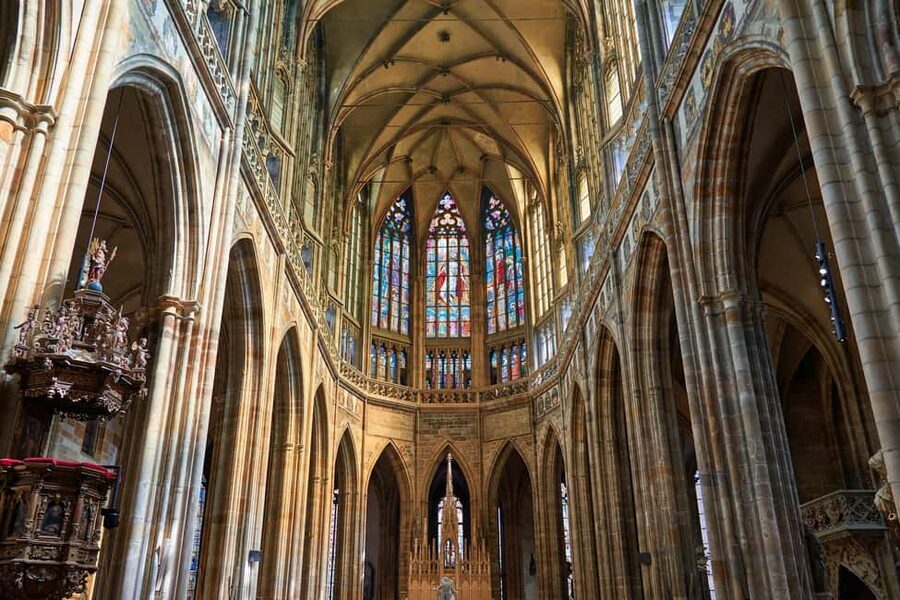
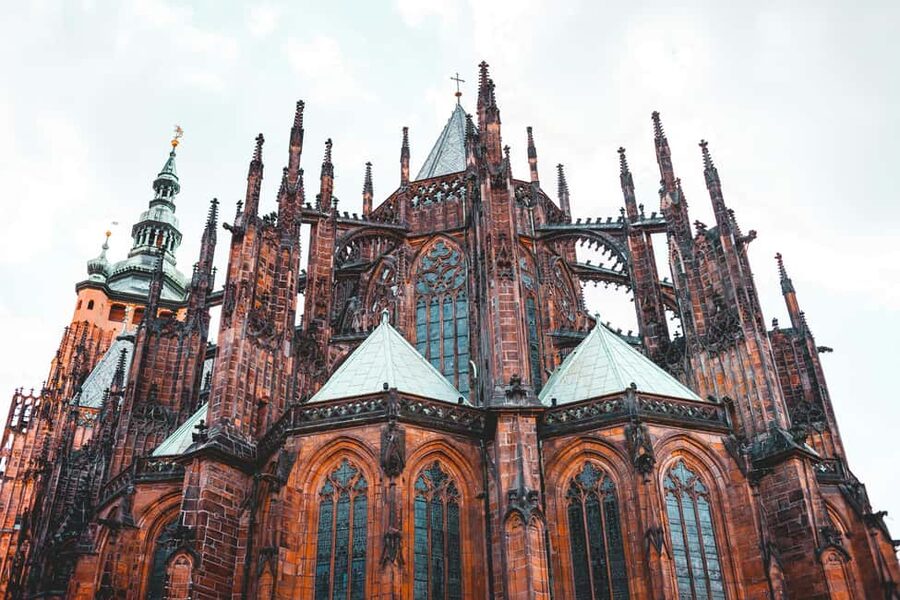
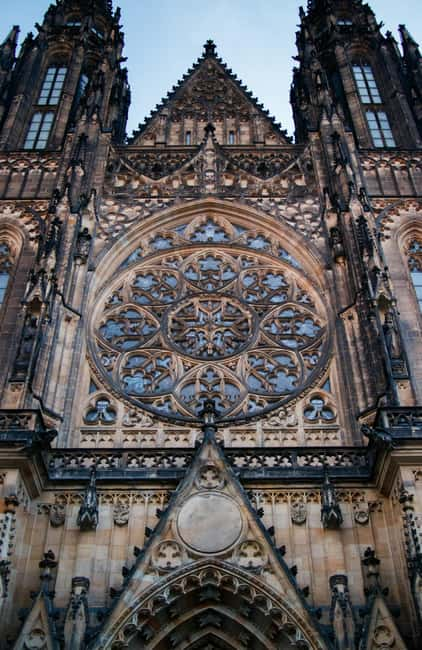
St. Vitus Cathedral is the visual and historical center of the visit. Its construction reaches back to the 10th century, although the great Gothic cathedral you see today belongs mainly to the 14th century and later periods.
The site began with a Romanesque rotunda founded around 925. That early building was replaced as Prague’s importance grew, leaving the cathedral as a record of changing religious and royal ambition.
Inside, you will see the burial and coronation church of Bohemian kings. The cathedral also holds the memory of major national saints, including St. Wenceslas and St. Adalbert. These names are not just decorative labels. They help explain why this church became such a powerful symbol of Czech identity.
One of the most important spaces is the Wenceslas Chapel. It is decorated with semi-precious stones, and the bones of St. Wenceslas rest in a Gothic shrine. A spiral staircase leads from the chapel toward the Crown Chamber, where the coronation insignia are kept.
The tour does not promise access to every restricted area, so you should not expect to enter the Crown Chamber itself. What you do get is the context that makes the chapel and the cathedral more meaningful. Without that background, it is easy to walk through admiring the stonework while missing the political and religious weight of the place.
Give yourself time to look up. The cathedral’s Gothic structure is meant to pull your eyes toward the height of the interior. Robert’s explanations add the human details behind the stone: kings, saints, coronations, burials, and the long process of building a national church.
The Old Royal Palace and Prague’s political drama
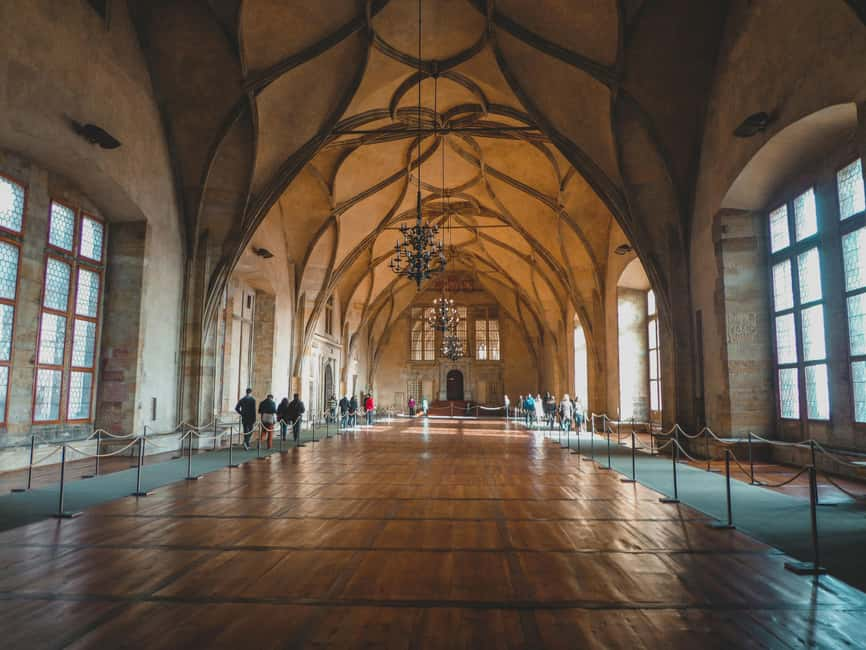
The Old Royal Palace changes the mood. Here, the focus shifts from sacred ceremony to government, power, and conflict.
The palace contains the largest late Gothic throne room in Central Europe. Its size gives you a sense of how royal authority was displayed, but the room is not only about ceremony. The palace was also a place where decisions were made, disputes sharpened, and political enemies sometimes took extreme action.
The State Chancellery is linked with the Third Defenestration of Prague, the event that helped begin the Thirty Years’ War. The word defenestration means throwing someone out of a window, and Prague has a particularly famous connection with this grim method of political protest.
That detail can sound almost comic when reduced to a single word. In the palace, it becomes a reminder that religious and political disputes in early modern Europe could turn violent very quickly. Robert’s historical approach is useful here because he can connect one room to the larger conflict instead of leaving the episode as a strange local anecdote.
You will also see a replica of the Bohemian crown jewels. Since the actual coronation insignia are kept in the Crown Chamber, the replica gives you a chance to understand the objects and their symbolism without expecting access to the secure collection.
This portion will suit you best if you enjoy cause and effect. If you want only architecture, the explanation may feel long. If you like knowing how a building shaped events, the palace is one of the strongest parts of the route.
More Castle and Cathedral Tours in Prague
- Prague Castle: Royal Palace, Cathedral, and Golden Lane Tour
★ 4.4 · 24 reviews - Prague: Castle and Monastery Segway Tour
★ 4.6 · 22 reviews - St Vitus Cathedral & Hidden Gems of Prague Castle
★ 5.0 · 10 reviews - Prague Hradcany Castle, St Vitus Cathedral Tour with Tickets
★ 5.0 · 10 reviews
St. George’s Basilica and the older Prague
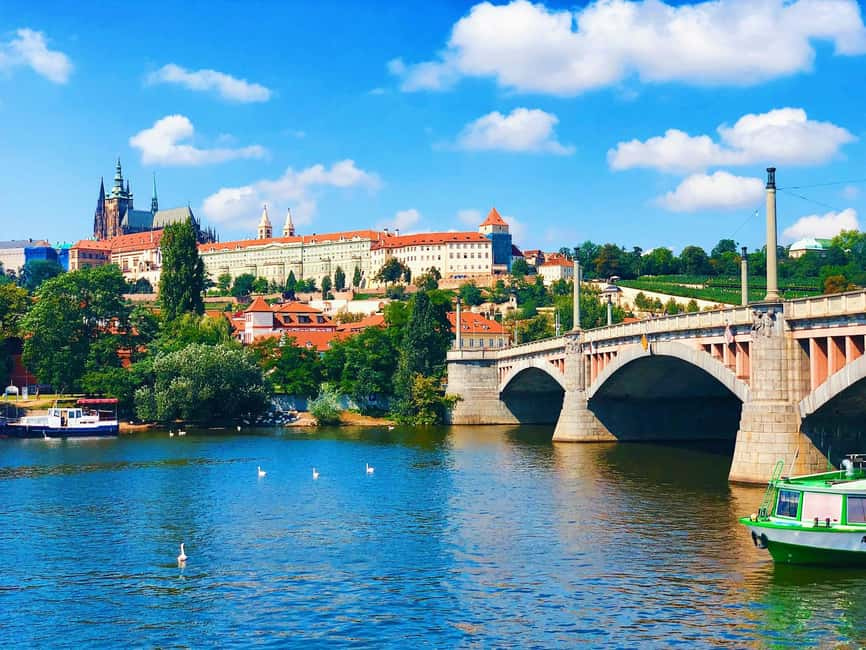
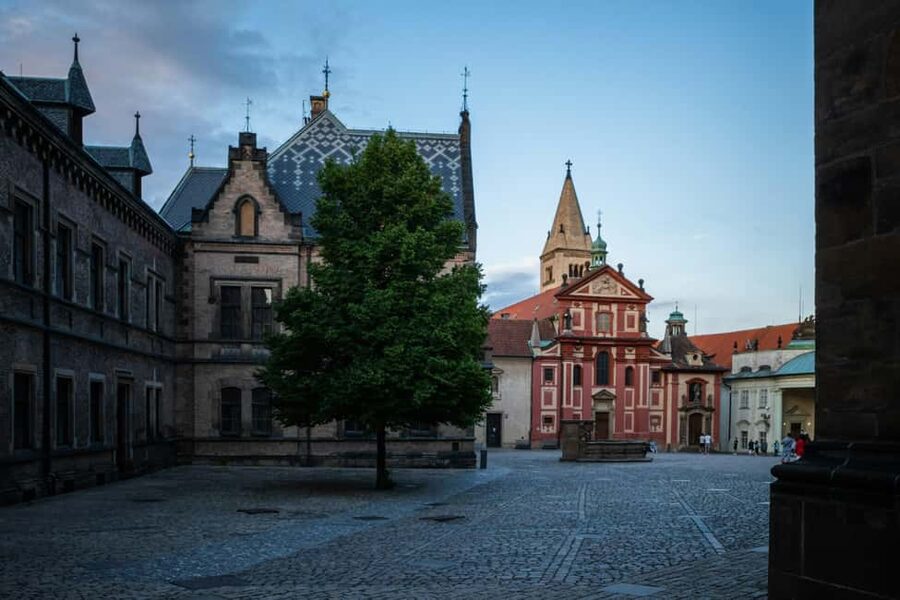
St. George’s Basilica offers a sharp contrast to the cathedral. The basilica dates to the 10th century and represents an earlier, more compact form of church architecture.
After the scale of St. Vitus, its older design can feel more intimate. That change is useful. You begin to see Prague Castle not as one unified project, but as a place repeatedly altered by new rulers, new styles, and new religious needs.
The basilica houses the tomb of St. Ludmila, the grandmother of St. Wenceslas. Her story is difficult and memorable. She was strangled by Viking warriors acting on behalf of her daughter-in-law.
This is exactly the sort of detail that helps the past feel less distant. The royal family was not a calm line of portraits. It was marked by family tension, power struggles, and violence.
Robert’s approach appears especially strong with this kind of material. The information is detailed, but it is presented as a connected story rather than a list of dates. Still, you should know what you are choosing. One assessment of the tour described the amount of information as potentially overwhelming for someone without much background or interest in history.
That is fair. I would choose this experience if you enjoy asking why. I would not choose it for a child who wants a fast-moving attraction or for anyone who finds long historical explanations tiring.
Golden Lane, alchemists, and Franz Kafka
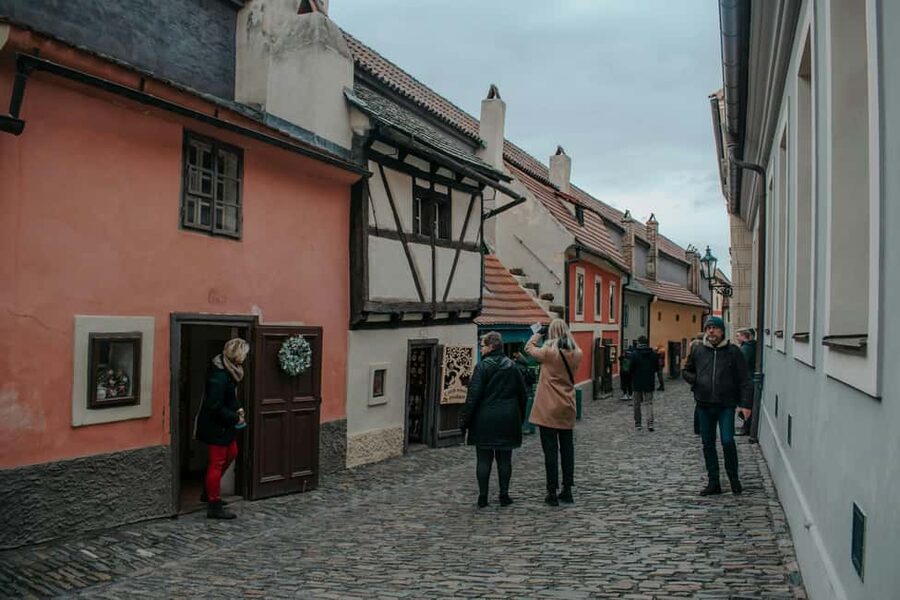
The final stop is Golden Lane, a narrow row of small houses that gives the tour a different scale. After grand churches and royal rooms, you finish among modest dwellings pressed close together.
The lane is linked with the reign of Emperor Rudolf II and the alchemists who searched for an elixir of life and tried to turn lead into gold. Those stories have helped give Golden Lane its unusual atmosphere, but the historical value is broader than the alchemy legends.
The tiny houses show how different life could look within the same castle grounds. Royal ceremonies and political decisions took place nearby, while workers and residents occupied much smaller spaces.
Franz Kafka is also associated with one of the little houses. His connection adds a modern literary layer to an area otherwise tied to medieval and Renaissance stories.
The tour ends here, which is practical. You can continue exploring Golden Lane on your own, take photographs, or move on without retracing the route to the meeting point. The end point also means you should plan your next step before you arrive. You may want to stay in the castle grounds, or you may prefer to head back into central Prague.
Architecture from Romanesque to Baroque
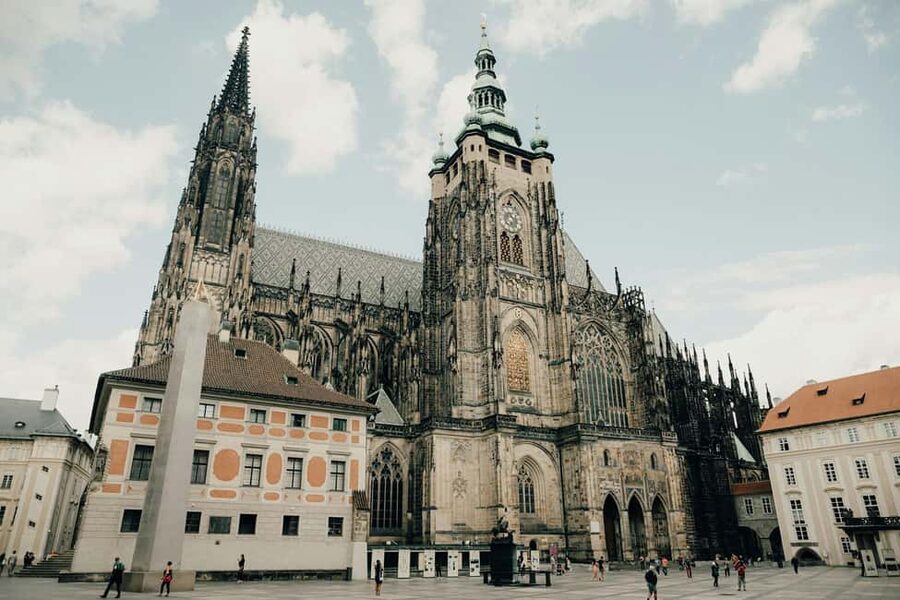
One of the best reasons to take this tour is the range of styles packed into a single site. You will encounter Romanesque foundations, Gothic cathedral architecture, Renaissance and Baroque changes, and later adaptations of older buildings.
St. Vitus gives you the bold vertical language of the Gothic period. St. George’s Basilica brings you back to an older Romanesque setting. The Old Royal Palace shows how royal spaces developed for ceremony and administration. Golden Lane provides a close look at small-scale domestic architecture.
I like this mix because it lets you compare periods without traveling across the city. You do not need a separate architecture lecture for every building. The route itself becomes the lesson.
The city views are another major reward. Prague Castle sits high above the city, and the grounds provide wide views across Prague. The exact visibility depends on conditions, but the elevated position is one of the clear pleasures of visiting the complex.
Do not rush the view. After the indoor explanations, a few quiet minutes outside can help you sort through what you have seen. The castle is impressive from below, but the view from within the grounds shows how closely the city’s churches, roofs, river, and hills fit together.
Price, tickets, and overall value
The tour costs $43 per person. Admission to St. Vitus Cathedral, the Old Royal Palace, St. George’s Basilica, and Golden Lane is not included.
The additional admission is €18 for adults and €14 for seniors aged 65 and over. Robert accompanies you to the castle cashier and helps arrange the ticket. You can pay by card at the counter or give him the amount in euros so he can obtain the ticket for you. The guide counter is reserved for guides, so you should not face the same wait as people using the regular line.
That extra charge makes the total cost higher than the headline price, so include it when comparing tours. Even so, the value is reasonable if you want a German-speaking historian and a guided explanation of all four main interiors.
The tour would be less useful if you only want exterior photographs. In that case, you can see the castle grounds and views without paying for a detailed guided visit. The price makes more sense for you if historical context, questions, and efficient navigation matter.
Who will enjoy this castle tour
I would recommend it most strongly to adults who like history, architecture, and political stories. Older teenagers may enjoy it too, but children under 10 are not accepted.
German speakers get the full benefit. Robert’s clear delivery helps, and the smaller groups reported on some dates can make the experience feel more personal. Families with adult children may find it especially successful because there is room for questions and discussion.
You should be ready for a serious amount of information. One family found it to be the best outing of their Prague stay, while another assessment warned that the detail could feel overloaded without some interest in history. Both points can be true.
Dress warmly. The castle interiors can be cold, and this is not the place to rely on the temperature outside. Comfortable shoes are also sensible because the experience covers a large complex, though no specific accessibility details are provided.
The tour allows free cancellation up to 24 hours before the start, and you can reserve now and pay later. Those terms are useful if your Prague schedule is still shifting.
Should you book it?
Book this tour if you want Prague Castle explained by a historian rather than simply photographed. Robert Procházka’s strong German, detailed stories, and willingness to answer questions make the experience especially appealing to adults who enjoy serious cultural sightseeing.
The best reasons to choose it are the small-group possibility, the efficient ticket help, the four major interiors, and the way the route connects architecture with royal and religious history. The main reasons to skip it are just as clear: the tour is not in English, admission costs extra, and the presentation may feel too detailed if you prefer a short overview.
For German-speaking visitors with three hours to spare, this is a well-focused way to understand Prague Castle and finish with one of the city’s finest views.
FAQ
Where does the Prague Castle tour begin?
The tour begins at the Pražský hrad tram stop, also called the Prague Castle stop.
Which tram should I take to the meeting point?
Take tram line 22 or 23 in the direction of Bílá hora.
Who leads the tour?
Historian Robert Procházka leads the tour.
What language is the tour in?
The live tour is conducted in German.
How long does the tour last?
The tour lasts three hours.
Which sites are visited?
The route includes St. Vitus Cathedral, the Old Royal Palace, St. George’s Basilica, and Golden Lane.
Is the castle admission included in the tour price?
No. Admission is separate from the $43 tour price.
How much does the admission ticket cost?
The admission ticket costs €18 for adults and €14 for seniors aged 65 and over.
Where does the tour end?
The tour ends in Golden Lane.
Are children under 10 allowed to join?
No. The activity is not suitable for children under 10.
More Palace Tours in Prague
- Prague: Prague Castle and Lobkowicz Palace Entry Tickets
★ 4.4 · 5,066 reviews - Prague Castle: Midday Classical Concert at Lobkowicz Palace
★ 4.6 · 1,106 reviews - Granada: Alhambra & Nasrid Palaces Tour with Tickets
★ 4.7 · 19,801 reviews - Granada: Alhambra and Nasrid Palaces Entry Ticket
★ 4.6 · 15,130 reviews
Just added around Prague
- Tour of Prague Castle in italian language ticket included★ 4.9 · 25 reviews
- Prague Castle: Admission Ticket With Transfer And Audioguide★ 4.5 · 111 reviews
- Private Walking tour: From Charles Bridge to Prague Castle★ 4.7 · 13 reviews
- Prague: Castle and Jewish Quarter Tour★ 4.8 · 45 reviews
- Prague: Private tour to the historic fortress of Vyšehrad★ 4.9 · 16 reviews
- Prague’s Best Hidden Gem: Vysehrad Castle & Historic Fort★ 5.0 · 17 reviews
- Coutryside e-bike tour to Karlstejn Castle★ 4.9 · 9 reviews
- Prague: Prague Castle Walking Tour with Golden Lane in German★ 5.0 · 45 reviews
Palace Tours, compared.
Granada: Alhambra & Nasrid Palaces Tour with Tickets
Read our review →
Granada: Alhambra and Nasrid Palaces Entry Ticket
Read our review →
Granada: Alhambra & Gardens Tour w/Nasrid Palaces Option
Read our review →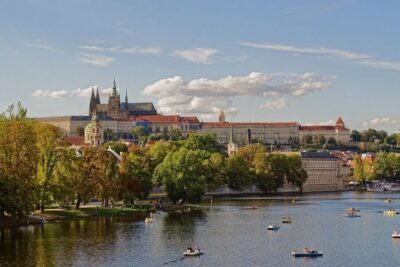
Prague: Prague Castle and Lobkowicz Palace Entry Tickets
Read our review →
Fast-Track Alhambra & Nasrid Palaces Guided Tour
Read our review →
Granada: Alhambra Ticket and Guided Tour with Nasrid Palaces
Read our review →
Alhambra & Generalife Skip the line Small Group including Nasrid Palaces
Read our review →
Granada: Alhambra Guided Tour with Nasrid Palaces & Gardens
Read our review →Browse the lists this tour appears in