REVIEW · CASTLE DAY TRIPS
Guided Private Full Day Tour to Baalbek, Anjar and Chateau Ksara
Baalbek is the star here: its huge Roman columns, temples, and carved stones make the Beqaa Valley day trip one of Lebanon’s most memorable outings. I like the private vehicle and hotel pickup, which remove the usual transport fuss, and I like the mix of Roman, Umayyad, Islamic, and Lebanese wine culture. Guides including Albert and Georgette have been praised for clear explanations and flexible pacing.
The main drawback is that the $100 price does not include entry fees, wine tasting, or lunch. Your day also covers a lot of ground in about eight hours, so this is better for focused sightseeing than for lingering at every stop.
Key points at a glance
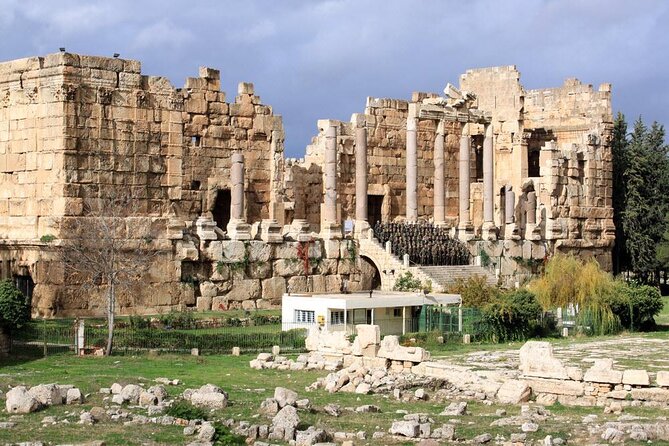
- Baalbek’s enormous Roman temples are the main reason to book, with the Temple of Jupiter and Temple of Bacchus forming the heart of the visit.
- A private tour gives you your own vehicle and guide, rather than placing you in a large group with a fixed pace.
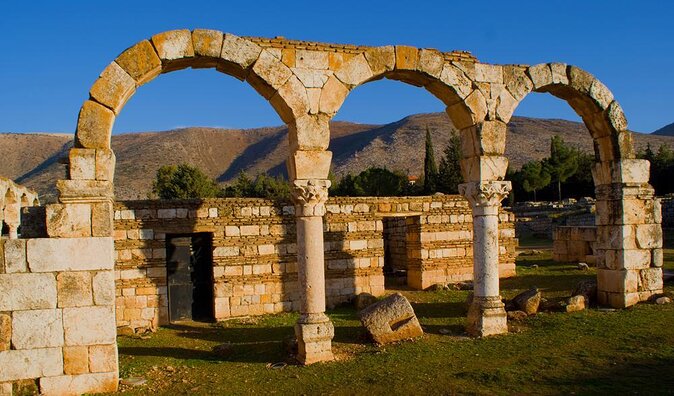
- Anjar adds a different period of Lebanese history, with Umayyad palace walls, baths, a mosque, and Roman-style columns.
- The Stone of the Pregnant Woman offers a quick look at the massive blocks once intended for the Baalbek sanctuary.
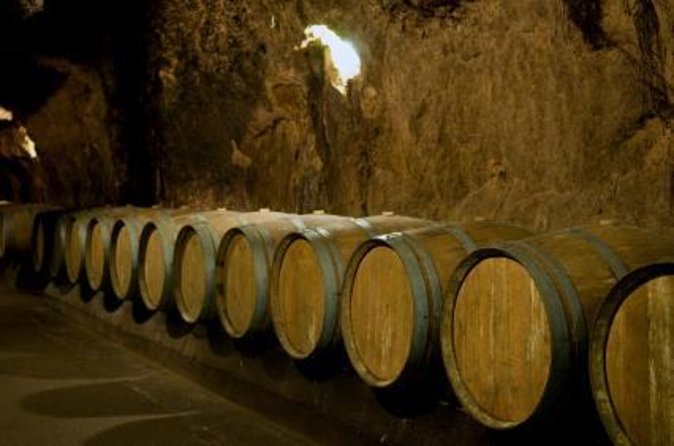
- Chateau Ksara finishes the day with Lebanese wine, served in a cave, though tasting fees are extra.
- The $100 price is strongest for couples or small groups, since private transport and guiding are included but several costs are paid separately.
Why Baalbek makes this Beirut day trip worthwhile
Lebanon’s capital can keep you busy for days, but the Beqaa Valley gives you a very different sense of the country. The road leads away from Beirut toward Baalbek, a city known in the Hellenistic period as Heliopolis, or City of the Sun.
I find the appeal of this tour simple: in one day, you see the remains of a Phoenician religious center, one of the Roman world’s grandest sanctuaries, an Umayyad commercial city, and one of Lebanon’s best-known wineries. Those subjects can feel disconnected in a guidebook. With a guide beside you, the changes in culture and religion are easier to follow.
The trip lasts about eight hours. That is enough time for the principal sights, but not enough for a slow archaeological study. You should expect a full day with several stops, walking around exposed ruins, and time in the vehicle between sites.
The private format matters. You receive hotel pickup and drop-off from Beirut, air-conditioned transport, a tour leader, and a professional guide. You are not sharing the day with an unknown group, so the guide can explain the sites at a pace that suits your party. Albert is one guide associated with this experience, and Georgette has been praised for her enthusiasm and detailed explanations.
More Castle Day Trips in the world:
- From Munich: Neuschwanstein & Linderhof Castle Full-Day Trip
★ 4.6 · 14,646 reviews - Neuschwanstein & Linderhof Castle-Fairytale Day Tour from Munich
★ 4.5 · 7,275 reviews - Bucharest: Dracula’s Castle, Peleș Castle & Brașov Day Trip
★ 4.4 · 6,100 reviews
Arriving at the Temple of Jupiter in Baalbek
Baalbek is the centerpiece, and you should give it your full attention. The sanctuary sits at about 1,150 meters at the foot of the Anti-Lebanon range, near the fertile Beqaa plain.
The scale is the first thing you notice. The Roman builders worked on the complex for more than two centuries, creating a sanctuary devoted to a Romanized version of a Phoenician triad: Jupiter, Venus, and Bacchus. The site later became known as Heliopolis during the Hellenistic period and kept its religious role under Roman rule.
The Temple of Jupiter is famous for its massive surviving columns and elevated platform. Even in ruin, the complex shows how much effort went into creating a place that could draw pilgrims from across the Roman world.
The Temple of Bacchus is smaller than the Temple of Jupiter, but it is often the more intact and detailed of the two. I would pay close attention to its carved decoration, doorway, and proportions. This is not just a pile of fallen stones. You can still read the ambition of the original builders in the scale of the walls and the precision of the surviving work.
Plan on roughly two hours in the Baalbek area, with about an hour and a half focused on the temple complex itself. The timings are useful as a guide, not a promise. A strong guide may pause longer at a feature that interests your group, while a busy day may require a brisker pace.
The main Baalbek stop is described as having no admission charge, but the temple complex itself has an entry fee that is not included. Bring extra money for this and ask your guide how the payments will be handled before you enter.
The Mosque of Sayyeda Khawla and a different side of Baalbek
The Mosque of Sayyeda Khawla adds a religious site to the ancient Roman setting. It is built where Sayyida Khawla, the daughter of Imam al-Hussein and granddaughter of the Prophet Muhammad, is believed to have been buried.
The local tradition connects the site to the caravan of captives from Karbala. According to the belief held in Baalbek, Khawla died while the caravan passed through the area and was buried there.
This stop helps you see Baalbek as more than an archaeological attraction. It is also a living place of faith, with traditions that remain important to the local community. You should dress and behave respectfully at the mosque, though the tour information does not set out a specific dress code.
The Stone of the Pregnant Woman in 15 minutes
The Stone of the Pregnant Woman is a short stop, but it helps explain the engineering challenge behind Baalbek. It is a worked Roman monolith, one of two huge stone blocks in the area that rank among the largest ever quarried.
The stones were likely meant for the nearby temple complex. Their size gives you a useful visual clue: the sanctuary was not built from ordinary blocks placed one at a time. The Roman builders planned with immense pieces of stone, then moved and fitted them into an already enormous structure.
You may spend only about 15 minutes here. That is enough for photographs and a guide’s explanation. Do not expect another full archaeological site. Think of it as a quick, striking supplement to the main Baalbek visit.
More Full-Day Tours in the world:
- Stonehenge, Windsor Castle and Bath Full Day Guided Tour
★ 4.5 · 5,346 reviews - From Munich: Neuschwanstein Castle Full-Day Trip
★ 4.7 · 3,977 reviews - Full Day Taj Mahal, Agra Fort & Baby Taj Tour from Delhi by Car
★ 5.0 · 3,647 reviews - From Malaga: Granada Full-Day Trip with Alhambra
★ 4.6 · 3,235 reviews
Anjar’s Umayyad city and Roman-style details
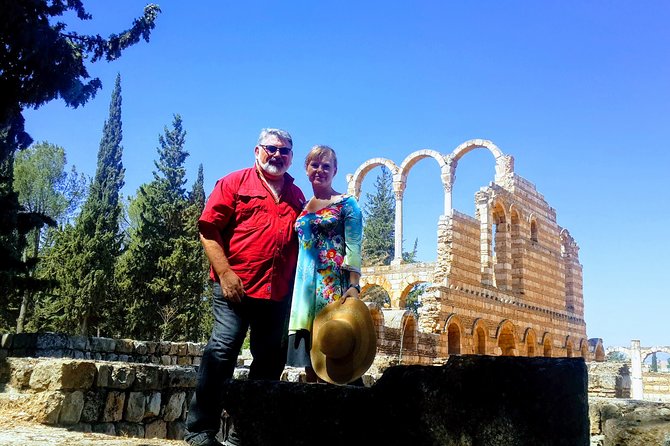
Anjar changes the period and mood of the day. The site was an inland commercial center at the meeting point of routes from Beirut to Damascus and across the Beqaa toward Homs and Tiberiade.
Archaeologists discovered the ancient city only in the late 1940s. That relatively recent discovery makes Anjar feel different from Baalbek, where the ancient sanctuary has long shaped the identity of the area.
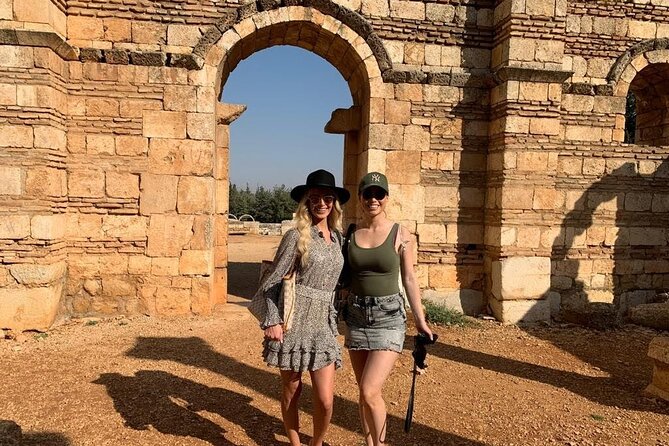
The ruins include walls from the Umayyad palace, harems, a mosque, the caliph’s great palace, thermal baths, and rows of pillars. You may also notice Roman architectural elements, which makes sense in a region where later builders worked among, reused, and responded to earlier traditions.
I like Anjar because it keeps the day from becoming a parade of Roman temples. Here, you get a look at city planning, trade, royal buildings, and public bathing. The site also shows how the Beqaa Valley connected major routes rather than sitting apart from the wider region.
The scheduled visit lasts about 45 minutes, and admission is not included. That is enough time for an overview with a guide, but you will not examine every wall or pillar in detail. If Anjar is your main interest, a longer specialist visit would be more suitable. For a first look at the Beqaa Valley, the stop gives you a useful and manageable introduction.
Chateau Ksara in a Lebanese wine cave
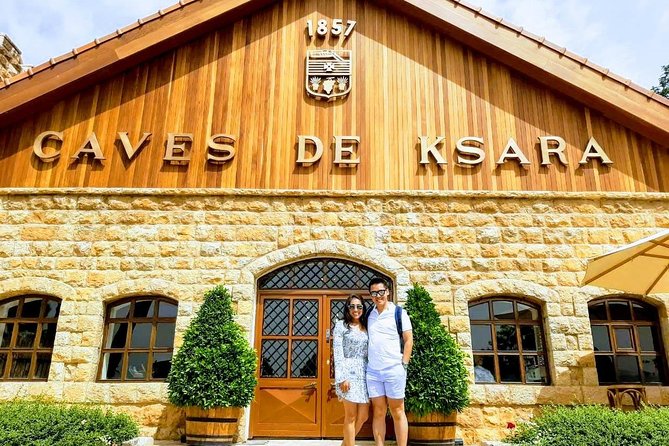
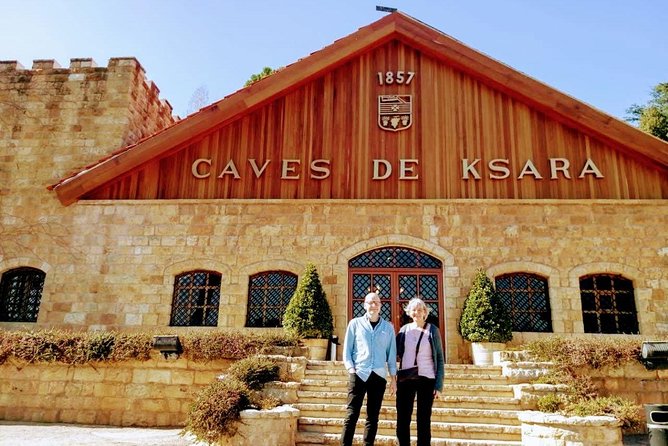
Chateau Ksara brings the day indoors and gives you a chance to sit down after the ruins. The winery was founded in 1857 by Jesuit priests and later developed Lebanon’s first dry wine.
The winery produces about three million bottles a year and exports to more than 40 countries. Those figures give you a sense of its scale, but the memorable part of the visit is the setting: you can sample local wine while seated in a cave.
The stop lasts about an hour. Wine tasting is not included in the tour price, so confirm the cost before you begin. The same applies to the winery entry fee.
You should also remember that lunch is not included. The tour information does not specify a restaurant or meal arrangement, so plan to ask your provider about the day’s lunch timing. An eight-hour outing with several historic sites can feel long if you wait until late afternoon to eat.
Chateau Ksara is a good finish because it offers a cultural experience rather than another ruin. It also lets you try Lebanese wine in a place directly connected to its production. If you do not drink wine, the tour still provides the winery visit, but this portion will naturally be less important to you.
How the private format affects the day
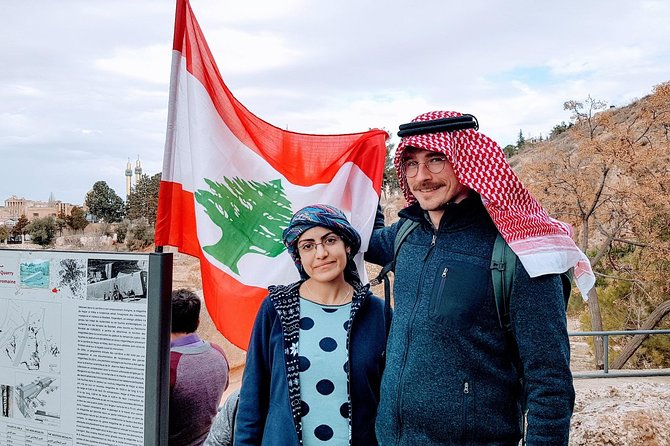
Private transport is the strongest practical feature after the sights themselves. You are picked up at your Beirut hotel and returned there in an air-conditioned vehicle. You do not need to arrange separate transport to Baalbek, Anjar, or the winery.
The guide and driver combination can also make the schedule more flexible. Albert has been described as both well-informed and willing to adjust the day, while Georgette has been praised for her enthusiasm and ability to explain the history. Those qualities matter because the tour includes several periods and places that can blur together without good storytelling.
You should still keep your expectations realistic. Private does not mean unlimited time. The day remains about eight hours, and the stated stop lengths show a fairly efficient plan. You will see the key places, but you may need to choose between lingering for photographs and hearing every explanation.
This format suits couples, families, and small groups who want their own pace. It is less suitable if you prefer to explore every ruin independently with no guide or if you want to spend an entire day at Baalbek alone.
Is $100 per person good value?
At $100 per person, the tour offers a reasonable package for a private full-day outing from Beirut. You receive hotel pickup and drop-off, private transportation, an air-conditioned vehicle, a tour leader, and a professional guide.
The price looks better when shared by a small group, since you are paying for a private experience rather than a seat on a large bus. Group discounts may also be available. Still, you must budget beyond the advertised rate for Baalbek temple admission, Anjar admission, Chateau Ksara admission, wine tasting, and lunch.
That extra spending is not a minor detail. If you are comparing tours, ask for the current total cost of the included stops and tasting before booking. The basic tour price covers the structure of the day, but your final cost depends on what you choose to enter, eat, and taste.
I would call it good value for someone who wants convenience and a guide. If you already have a car, know the sites well, and plan to visit only one attraction, the price may feel less attractive. For a first visit to the Beqaa Valley from Beirut, the combination of transport, interpretation, and several major sights makes the cost easier to justify.
Who should book this Baalbek and Anjar tour?
I would choose this tour if you want to see the main Beqaa Valley sights without arranging transport yourself. It works especially well for visitors based in Beirut who want a single day outside the capital.
History fans will get the most from the Roman and Umayyad sites. Wine lovers will appreciate the Chateau Ksara visit, though you need to pay extra for the tasting. The tour also suits people who prefer a private guide to a large group.
You should think twice if your priority is a slow, highly detailed archaeological visit. The schedule covers Baalbek, the mosque, the Stone of the Pregnant Woman, Anjar, and Chateau Ksara in one day. That variety is the appeal, but it also means limited time at each place.
Free cancellation is available if you cancel at least 24 hours before the start time. Cancellations made less than 24 hours ahead are not refunded, and changes inside that period are not accepted.
My verdict on the day
I like this tour because it gives you three very different experiences in one well-organized day: enormous Roman ruins, an Umayyad city, and Lebanese wine in a cave. Baalbek alone would justify the drive from Beirut, but Anjar adds useful historical contrast and Chateau Ksara gives the final hours a more relaxed feel.
The best reason to book is the private setup with a guide. The strongest guides, including Albert and Georgette, can connect the stones to the people, religions, rulers, and trade routes that shaped the Beqaa Valley.
Book it if you value convenience, context, and variety. Skip it if you want a slow temple study, do not want to pay extra entrance and tasting fees, or would rather arrange a single site on your own.
FAQ
How long does the tour last?
The tour lasts approximately eight hours.
Does the tour include hotel pickup and drop-off?
Yes. Pickup and drop-off from your Beirut hotel are included.
Is transportation private?
Yes. The tour uses comfortable private transportation in an air-conditioned vehicle, and only your group participates.
Are Baalbek and Anjar admission fees included?
No. Entry fees for the Baalbek temple complex and the Anjar ruins are not included.
Is the wine tasting at Chateau Ksara included?
No. The wine tasting and winery admission are not included in the tour price.
Is lunch included?
No. Lunch is not included.
Can I cancel for a full refund?
Yes, if you cancel at least 24 hours before the experience start time. Cancellations made less than 24 hours before the start time are not refunded.
Just added around the world
- Secrets of Buda Castle: Self-Guided Puzzle Adventure in Budapest★ 5.0 · 8 reviews
- Budapest Hike to Visegrád Castle w or wo Sauna/Danube beach★ 5.0 · 11 reviews
- Castle District tour with Matthias Church Ticket & Cake & Coffee★ 5.0 · 31 reviews
- Buda Castle Tour: History and Architecture★ 5.0 · 33 reviews
- Buda Castle Quarter Walking Tour★ 5.0 · 16 reviews
- Buda Castle’s Secrets with a Historian★ 5.0 · 108 reviews
- Buda Castle Walking Tour with Matthias church entry, Cake&Coffee★ 4.5 · 21 reviews
- BloodThirsty Hungary – Castle District★ 5.0 · 80 reviews
Castle Day Trips, compared.

From Munich: Neuschwanstein & Linderhof Castle Full-Day Trip
Read our review →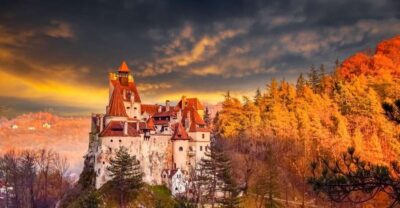
Bucharest: Dracula’s Castle, Peleș Castle & Brașov Day Trip
Read our review →
Windsor Castle, Stonehenge, and Oxford Day Trip from London
Read our review →
Inverness: Isle of Skye and Eilean Donan Castle Day Trip
Read our review →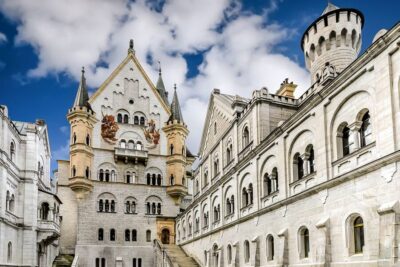
From Munich: Neuschwanstein Castle Full-Day Trip
Read our review →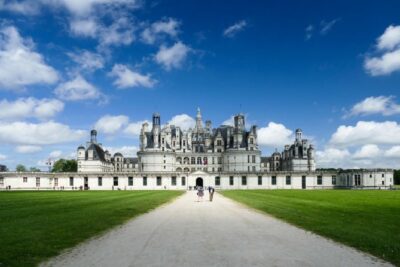
Loire Valley Castles Day Trip from Paris with Complementary Wine
Read our review →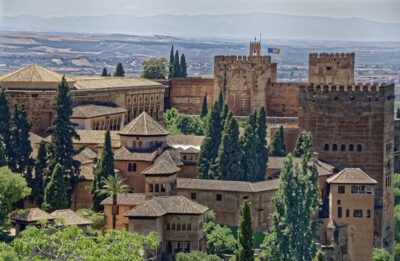
From Malaga: Granada Full-Day Trip with Alhambra
Read our review →