
REVIEW · FORTRESS & CITADEL TOURS
Group Guided Walking Tour in Fort and Colaba
Mumbai’s story comes into focus on this walk: a fishing and farming settlement shaped by Portuguese and British rule, then remade as a modern Indian metropolis. You move through Fort and Colaba, where grand public buildings, churches, gardens, cricket grounds, and old commercial streets sit within an easy walking route.
I like the small group limit of 12, which gives your guide room to answer questions instead of delivering a speech to a crowd. I also like the route’s variety, from the Asiatic Society and St. Thomas Cathedral to a Jewish synagogue and the Gateway of India. The main consideration is the weather: this is a long outdoor walk in Mumbai, so heat, humidity, and rain can affect your comfort.
Key points
- Town Hall to the Gateway of India: Follow a point-to-point route through Fort and Colaba rather than doubling back.
- Nine historic stops: See colonial architecture, a cricket ground, an Anglican church, a Jewish synagogue, and Mumbai’s best-known waterfront monument.
- Maximum group size of 12: Expect a more personal walk, with better chances to ask questions.
- A useful city introduction: The guide explains roughly 500 years of Mumbai’s development in about two and a half hours.
- Local tips included: Your guide can suggest places to eat, visit, or explore after the walk.
- Good value at $16.73: The price covers a guided tour with no separate admission fees listed for the stops.
A clear way to meet old Mumbai

This tour works because it gives you a simple line through the historic center. You start at the Asiatic Society Library, also called Town Hall, and finish at the Gateway of India in Colaba. Along the way, the city changes in front of you, from formal British-era civic buildings to art spaces, religious sites, and waterfront landmarks.
The route lasts about two hours and 30 minutes. That is long enough to put Mumbai’s major buildings into context, but short enough to fit into a day of sightseeing. I would place it early in a Mumbai visit, since the guide’s local recommendations can help you decide what to do next.
You are not simply ticking off monuments. The useful part is learning how each building fits into the city’s growth. Mumbai’s past is spread across many communities and eras, and this route makes that mix easier to understand.
The mobile ticket keeps arrival simple. The meeting point is the Asiatic Society at Town Hall on Shahid Bhagat Singh Road in Fort. The walk ends at the Gateway of India, a practical finish because you can continue exploring Colaba afterward.
More Fortress and Citadel Tours in India
- Same Day Taj Mahal, Agra Fort & Baby Taj Tour from Delhi by Car
★ 5.0 · 4,304 reviews - Full Day Taj Mahal, Agra Fort & Baby Taj Tour from Delhi by Car
★ 5.0 · 3,647 reviews - Same Day Taj Mahal, Fort & Baby Taj Tour from Delhi by Car
★ 4.9 · 2,534 reviews
Town Hall and Horniman Circle explain the city’s foundations
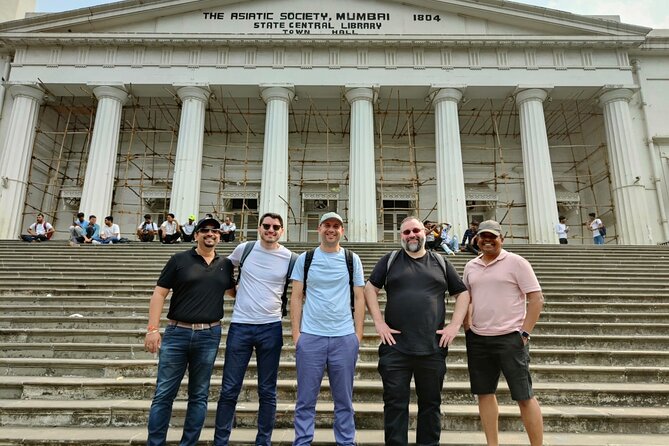
The first stop is Town Hall, home of the Asiatic Society Library. You spend about 20 minutes here, hearing how Mumbai developed under Portuguese and British control. The building gives the tour a strong opening because it links architecture with the basic question of how the city came to be.
You will want to look beyond the main facade. The point of this stop is not only the building itself, but the story of Mumbai’s transformation from a smaller settlement into a major port and city. Your guide provides the background that can be easy to miss when you walk past on your own.
Next comes Horniman Circle Garden, with about 15 minutes to see the garden and the Victorian buildings around it. This is described as Mumbai’s oldest garden, and the guide explains how the area was used in earlier periods.
I like this stop because it shows how a public open space can reveal the priorities of a city. The buildings around the circle give you a sense of the formal civic center created during the colonial period. The garden also offers a pause from the harder stone and traffic of the surrounding streets.
Do not expect a long rest here. Fifteen minutes is enough for an explanation and a look around, but not for a leisurely break. The walk keeps moving at a steady pace.
St. Thomas Cathedral and Flora Fountain show two sides of Fort
St. Thomas Cathedral is the next stop, with about 15 minutes inside Mumbai’s oldest Anglican church. You can see memorials and the grand altar, while the guide explains the church’s place in the city’s colonial past.
This is one of the quieter stops on the route. After the streets outside, the interior gives you a chance to slow down and notice details that are easy to miss from the pavement. Memorials also add a personal side to the history. They show how institutions were built around real people, not just abstract dates and grand plans.
The visit is fairly brief, so your time inside may depend on the church’s access at that moment. Still, even a short visit helps break up the walk and adds a religious dimension to the story of Fort.
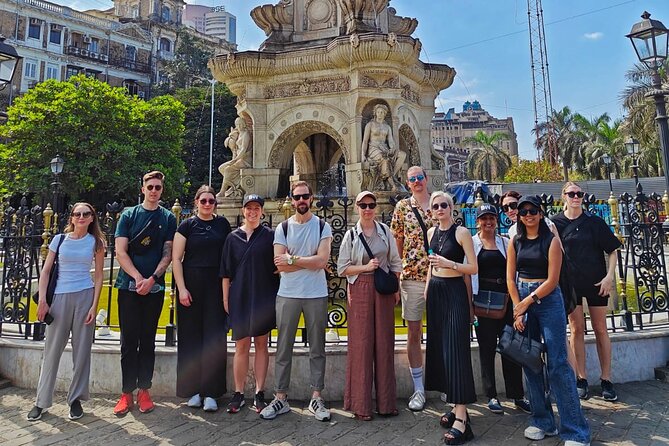
From there, you reach Flora Fountain. The tour allows about 15 minutes to see this major city landmark and the Martyrs’ Memorial in Mumbai’s main town square. The fountain is presented as Mumbai’s answer to Piccadilly Circus, which gives you a quick sense of its central urban role.
This is a good place for photos and for taking in the traffic of the city around you. You may find that the most interesting feature is not one isolated monument, but the way the fountain sits among busy roads and grand buildings. Your guide helps explain what the square has meant to Mumbai over time.
The setting can be noisy and active, so do not expect a peaceful garden stop. That is part of the point. Flora Fountain shows Fort as a working center, not a museum frozen in the past.
Oval Maidan puts cricket beside grand architecture
At Oval Maidan, you spend about 20 minutes looking across the large open ground and the buildings around it. This is identified as the birthplace of Indian cricket and part of a UNESCO World Heritage site.
For many people, this will be one of the most meaningful stops. Cricket is not a small footnote in India, and seeing the open ground where the sport took root gives the city’s social history a physical setting. You are not only looking at colonial architecture. You are also looking at how an imported game became part of Indian life.
The open space makes a useful contrast with Fort’s tightly packed streets. From here, the grand buildings around the maidan are easier to see as a group. Your guide can point out the different styles and explain how the area developed.
This is also one of the better photo stops, although the quality of your view may depend on light, traffic, and where the group pauses. The tour does not promise extended time for photography, so take your pictures as the explanation unfolds.
More Guided Castle Tours in India
- Private Guided Walking Tour in Fort & Colaba
★ 5.0 · 895 reviews - Jaipur: Jaipur & Amber Fort Full or Half-Day Guided Tour
★ 4.8 · 210 reviews - Jodhpur: Mehrangarh Fort and Blue City Private Guided Tour
★ 4.9 · 102 reviews - From Delhi: Private Jaipur & Amber Fort Guided Tour by Car
★ 4.8 · 84 reviews
Rajabai Clock Tower adds the university story
The walk continues to Rajabai Clock Tower, Mumbai’s answer to Big Ben. You spend about 15 minutes hearing how the University of Mumbai developed and how the tower fits into that story.
The tower is a strong visual landmark, but the useful part is the explanation behind it. Grand civic and university buildings can blur together after a while. Learning about the university gives this stop a different focus and reminds you that Mumbai’s historic center was also built for education, public service, and civic life.
You might not be able to enter every building on the route, and this stop is mainly about viewing the tower and surrounding architecture. That is worth knowing if you prefer interior visits. The tour is designed as a walking overview, with short stops rather than long admissions or guided tours inside each site.
Kala Ghoda brings art and architecture together
Kala Ghoda is Mumbai’s main art district and receives about 15 minutes on the walk. Here, the guide points out the area’s varied architecture and the stories connected to its buildings.
This section adds a more modern cultural note to the tour. Fort is often associated with colonial offices and public buildings, but Kala Ghoda shows how the same historic center also became a place for art and creative life. The district’s mix of structures makes it a rewarding place to look upward and compare facades.
The stop is short, so you are getting an introduction rather than a full art tour. If you want to explore galleries or spend time studying the buildings, plan to return after the walk. The advantage of seeing it with a guide first is that you gain a basic map of the area and can decide what deserves more time.
This is also where local recommendations may be especially useful. Your guide can suggest what to see next, and that advice can help you use the rest of your day without wandering aimlessly.
The Keneseth Eliyahoo Synagogue reveals a lesser-seen Mumbai
The Keneseth Eliyahoo Synagogue is one of the route’s most distinctive stops. You spend about 15 minutes exploring Mumbai’s Jewish quarter and learning about a Jewish presence that is now almost gone from the city.
I value this part of the walk because it moves beyond the standard collection of British-era landmarks. Mumbai’s story includes many communities, and this synagogue gives you a look at one that is easy to overlook. The stop also shows how the city’s commercial center once held a wider range of religious and cultural life.
Access inside any active religious site can vary, so the experience may focus on the exterior and the surrounding story. Even so, the location adds depth to the route. It is a reminder that historic Mumbai was never only Portuguese, British, or Indian in a single sense. Different communities helped shape the city.
With only 15 minutes here, listen closely to the guide. The explanation is likely to be more valuable than a quick photograph.
The Gateway of India provides a strong finish
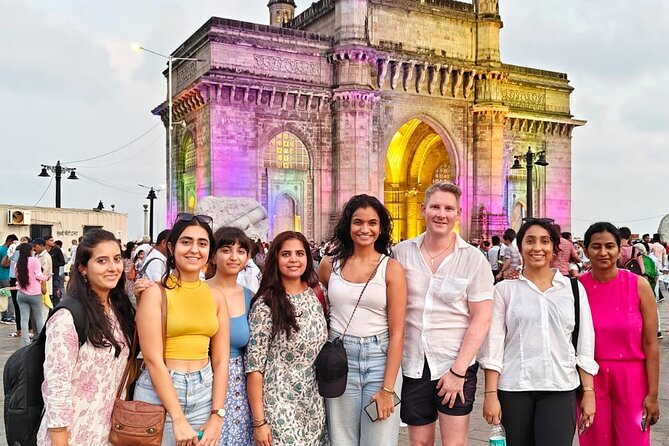
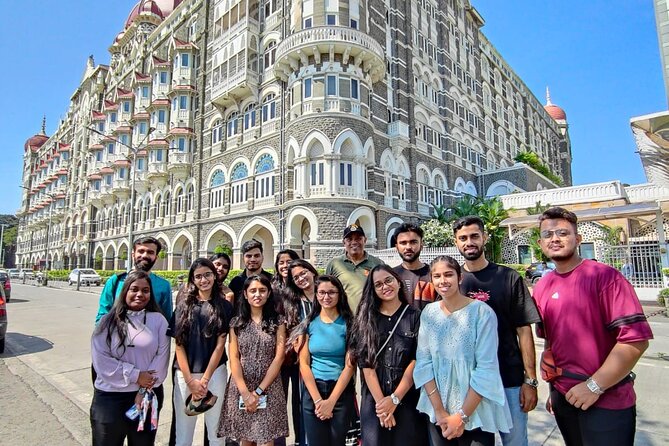
The walk ends at the Gateway of India, with the Taj Mahal Palace Hotel nearby. The final stop lasts about 20 minutes, giving you time to take photographs and hear why these two landmarks have become symbols of Mumbai.
This is the most recognizable part of the route, but it works better after the earlier stops. By the time you reach the waterfront, you have seen the civic, religious, educational, sporting, and cultural parts of the old city. The Gateway then feels like a fitting final marker rather than just a famous photo background.
The Taj Mahal Palace Hotel adds another layer to the scene. Together, the hotel and the arch create one of Mumbai’s best-known views. Expect other people, traffic, and plenty of activity around the waterfront. The tour gives you a guided introduction, not private access or a long quiet pause.
Ending here is practical. You are already in Colaba, so you can continue with your own plans after the tour. The route does not return you to Town Hall, which means you should think of it as a one-way walk.
What the $16.73 price really offers
At $16.73 per person, this is a good-value introduction to Mumbai’s historic center. You are paying for a guide, a carefully arranged route, and local context across nine stops. The listed stops do not carry separate admission charges, so you are not facing a series of extra entry fees during the walk.
The value is strongest if you are new to Mumbai. A guide can connect buildings that might otherwise seem unrelated, explain why they matter, and point out details you would probably pass without noticing. One piece of feedback specifically praised the way the tour revealed buildings with hundreds of years of history that are easy to overlook while walking alone.
The price is less compelling if you already know Fort and Colaba well or prefer to explore at your own pace. The schedule gives each stop roughly 15 to 20 minutes, so you will not have time for long interior visits, extended photography, or spontaneous detours.
The group cap of 12 improves the deal. A smaller group usually makes it easier to hear the guide and ask about food, neighborhoods, and other sights. The tour has been praised for clear history and a friendly approach, and Palak is one guide associated with particularly positive feedback.
A complimentary coffee break may be included, as it was during one walk led by Palak. Treat this as a pleasant possibility rather than a guaranteed feature, since it is not listed as a formal inclusion.
Timing, walking comfort, and practical details
You should allow two and a half hours for the experience, plus extra time before the start and after the finish. The route covers several parts of south Mumbai, so comfortable walking shoes are sensible even though the total distance is not stated.
Mumbai’s weather matters. The tour requires good weather, and poor conditions can lead to a new date or a full refund. Heat and humidity may still affect a sunny walk, so I would choose a time of day that suits your comfort and bring water.
The meeting point is the Asiatic Society at Town Hall in Fort. The end point is the Gateway of India in Apollo Bandar, Colaba. Both locations are near public transportation, which makes the one-way route easier to fit into a wider day.
Most people can take part, according to the supplied tour details. Still, the activity involves standing and walking between stops, with limited time at each site. If you need a slower pace or frequent seating, confirm that the format suits you before booking.
The mobile ticket is convenient, but keep your phone charged and ready at the meeting point. Confirmation is provided when you book.
Free cancellation is available if you cancel at least 24 hours before the start time. Cancellations made within 24 hours are not refunded, and changes inside that window are not accepted. Cut-off times use Mumbai local time.
Who will get the most from this Fort and Colaba walk
I would choose this tour if you want a compact introduction to south Mumbai with a strong focus on architecture and city history. It suits first-time visitors, people with only a short stay, and anyone who wants a guide to explain the buildings between the famous photo stops.
It is also a good choice for curious repeat visitors. The synagogue, cricket ground, university tower, and cathedral add more than the usual Gateway of India visit. The route gives you a better sense of how different communities and institutions shaped the city.
Families and small groups may appreciate the limited group size, especially if you want to ask questions. The guide can also offer local recommendations, which is useful when you still need to decide where to eat or what to see next.
I would hesitate if you dislike walking in warm weather, need lots of free time at each monument, or want extensive access inside buildings. The tour is an overview, not a full museum visit. Its strength is the connection between sites.
Should you book this Mumbai walking tour?
Book it if you want an affordable, well-paced introduction to Fort and Colaba, especially early in your stay. The route covers far more than the Gateway of India, and the small group format gives the guide room to explain the city’s changes, communities, and architecture.
Skip it if you already know this part of Mumbai or prefer unstructured wandering. For most first-time visitors, though, $16.73 buys useful orientation, a wide range of landmarks, and a strong finish at the waterfront. Plan for weather, wear comfortable shoes, and keep a little time afterward to explore Colaba on your own.
FAQ
How long does the walking tour last?
The tour lasts approximately 2 hours and 30 minutes.
Where does the tour start?
It starts at the Asiatic Society, Mumbai Town Hall, on Shahid Bhagat Singh Road in Fort, Mumbai.
Where does the tour end?
The walk ends at the Gateway of India in Apollo Bandar, Colaba, near the Taj Mahal Palace Hotel.
How many people can join the tour?
The group has a maximum of 12 travelers.
What landmarks are included?
Stops include Town Hall, Horniman Circle Garden, St. Thomas Cathedral, Flora Fountain, Oval Maidan, Rajabai Clock Tower, Kala Ghoda, Keneseth Eliyahoo Synagogue, and the Gateway of India.
Is the tour available with a mobile ticket?
Yes. A mobile ticket is available, and booking confirmation is provided at the time of booking.
Can I cancel for a full refund?
Yes, if you cancel at least 24 hours before the experience starts. Cancellations made less than 24 hours in advance are not refunded. If poor weather causes the tour to be canceled, you will be offered another date or a full refund.
More Walking Tours in India
- Private Heritage Walking Tour in Jaisalmer Fort and Old Bazaar
★ 5.0 · 306 reviews - Tipu Palace + Koté Vishnu + Fort + KR Market + Jain Temple = Bengaluru Pété Walk
★ 5.0 · 150 reviews - Bangalore: Palace, Temples, Fort & Markets Walking Tour
★ 4.9 · 97 reviews - Old Bangalore Historical Walk thro Palace, Temples, Fort & Market
★ 5.0 · 60 reviews
Just added around India
- Red Fort & Old Delhi: Half Day Heritage Walking tour★ 4.5 · 15 reviews
- Bangalore Fort heritage walk★ 5.0 · 22 reviews
- Private Tour Guide For Taj Mahal And Agra Fort★ 5.0 · 17 reviews
- Taj Mahal & Agra Fort Tour with Fatehpur Sikri from Agra★ 5.0 · 13 reviews
- Taj Mahal & Agra Fort Tour from Agra City★ 5.0 · 30 reviews
- Taj with mausoleum and Agra fort visits : Choose Your Option★ 4.5 · 57 reviews
- From Agra: Skip-the-Line Taj Mahal & Agra Fort Private Day Tour★ 5.0 · 25 reviews
- Taj Mahal and Agra Fort Private Tour by Car from Delhi★ 5.0 · 13 reviews
Fortress & Citadel Tours, compared.

Full Day Taj Mahal, Agra Fort & Baby Taj Tour from Delhi by Car
Read our review →
Fort Sumter Admission and Self-Guided Tour with Roundtrip Ferry
Read our review →
Carcassonne: Castle and Ramparts Entry Ticket
Read our review →
Charleston: Fort Sumter Entry Ticket with Roundtrip Ferry
Read our review →
Same Day Taj Mahal, Fort & Baby Taj Tour from Delhi by Car
Read our review →
From Delhi: Taj Mahal and Agra Fort Private Sunrise Tour
Read our review →
Sunrise Taj Mahal, Agra Fort & Baby Taj Tour from Delhi by Car
Read our review →
Salzburg: Hohensalzburg Fortress Admission Ticket
Read our review →Browse the lists this tour appears in