REVIEW · FORTRESS & CITADEL TOURS
Daytrip from Khiva to Five Ancient Fortresses
The real appeal here is the scale of ancient Khorezm. In one long day, you move beyond Khiva’s tiled lanes into Karakalpakstan, where mud-brick citadels rise from open, dry country. Ayaz-Kala and Toprak-Kala are the big prizes, while the other three add useful context and a sense of how large this old fortified region once was.
I like the private car and flexible departure time, especially for a small group of up to three people. I also like the freedom to walk and take photographs without being tied to a large group. The catch is important: this is mainly transport with sightseeing stops, not a fully guided archaeology tour. Drivers may speak little English, and some roads are rough enough that fast driving has been a concern.
Key points to know
- Five fortresses in about seven hours: Guldursun-Kala, Ayaz-Kala, Kavat-Kala, Toprak-Kala, and Kyzyl-Kala fit into one ambitious day.
- Private transport for up to three people: The $115 group price can be good value when shared.
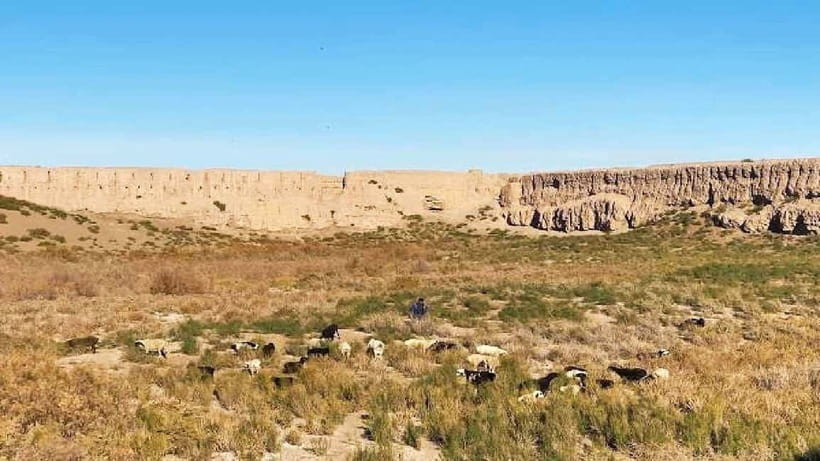
- Ayaz-Kala is the visual highlight: It is actually a group of three fortresses around a hill.
- Toprak-Kala gives the strongest sense of an ancient city: Excavations found coins, ceramics, fabrics, ornaments, and Zoroastrian ossuary fragments.
- No guide is included: You get a driver, vehicle, and route, but you should prepare to explore much of each site independently.
- Bring extra cash for entry fees and lunch: Tickets and an optional meal are not included.
Why these five fortresses matter
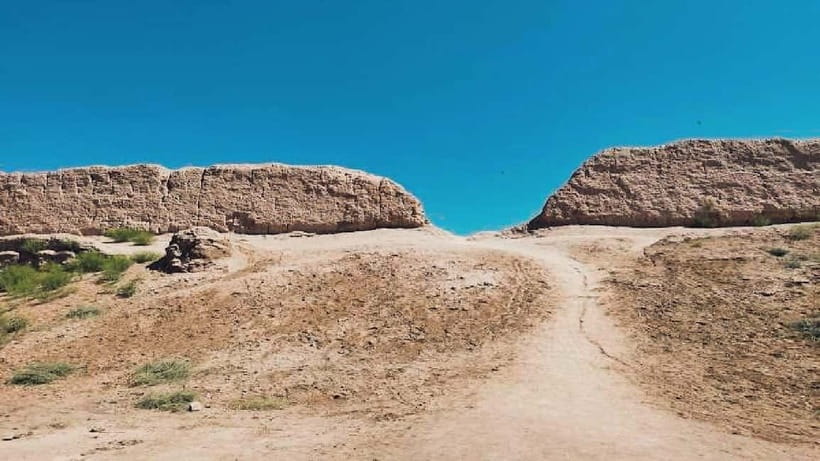
Khiva is famous for its preserved old town, but the fortresses outside it tell a different story. Here, the setting is wide and spare, and the remains are often made of sun-dried mud brick. You see defensive walls, raised citadels, worn towers, and broad stretches of earth rather than polished monuments.
That raw quality is part of the attraction. These places are not restored theme parks. Some walls are easy to understand, while other sites can look like low mounds unless you know what you are seeing. I would approach the day as an archaeological outing, not a sequence of five perfectly preserved castles.
The sites belong to the old Khorezm region, a major center of settlement and power in Central Asia. Their dates vary widely. Guldursun-Kala reaches back to the second or first centuries BC, while Toprak-Kala was built in the third century and served as a residence for Khorezmshahs until around AD 305.
More Fortress and Citadel Tours in the world:
- Same Day Taj Mahal, Agra Fort & Baby Taj Tour from Delhi by Car
★ 5.0 · 4,304 reviews - Full Day Taj Mahal, Agra Fort & Baby Taj Tour from Delhi by Car
★ 5.0 · 3,647 reviews - Fort Sumter Admission and Self-Guided Tour with Roundtrip Ferry
★ 4.5 · 3,343 reviews
A practical start from Khiva or Urgench
Pickup is available from a hotel in Khiva, or from Urgench airport and train station. Drop-off can be arranged in either Khiva or Urgench, which helps if your rail or flight plans do not match a standard hotel return.
The vehicle is private, air-conditioned, and provided for your group alone. The price is $115 for up to three people, not per person. That makes the cost reasonable for three, less attractive for a solo visitor, and still worth considering for two people who want a direct route rather than arranging several separate rides.
Departure time is flexible, but the outing lasts about seven hours. That is enough for the route as planned, though it leaves little room for long meals or extended exploration at every stop. Tell the driver early if one fortress matters most to you. The day includes photo stops, walks, free time, and some breaks, but the amount of time at each place can vary.
Some drivers have limited English. They are trained to follow the program, but you should not expect a full spoken explanation of Khorezmian history at every site. If you want dates, dynasties, and architectural details, download notes or bring a guidebook before leaving Khiva.
Guldursun-Kala, the broad first impression
Guldursun-Kala is a strong opening because its size helps you grasp the scale of the old fortification system. The fortress was built on a rectangular plan covering about 35 hectares. Its adobe walls were arranged in two rows, with loopholes built into the defenses.
The site dates to the second or first centuries BC, though the history is not simple. It was later abandoned for reasons that remain unclear, and archaeological evidence places its final occupation around 1220, during the rule of Shah Ala ad-Din Muhammad and the period of Mongol attacks on the Khwarezmian Empire.
You can expect a photo stop, a walk, and time to look around on your own. There is no promise of a formal guided talk, so the fortress rewards preparation. Look for the shape of the walls and the defensive logic rather than expecting intact rooms.
Guldursun-Kala is also a good reminder that these sites were not isolated towers. They were large fortified settlements tied to irrigation, farming, trade, and regional power. Even when the remains seem modest, the footprint tells you that a substantial community once occupied the area.
Ayaz-Kala and its three citadels
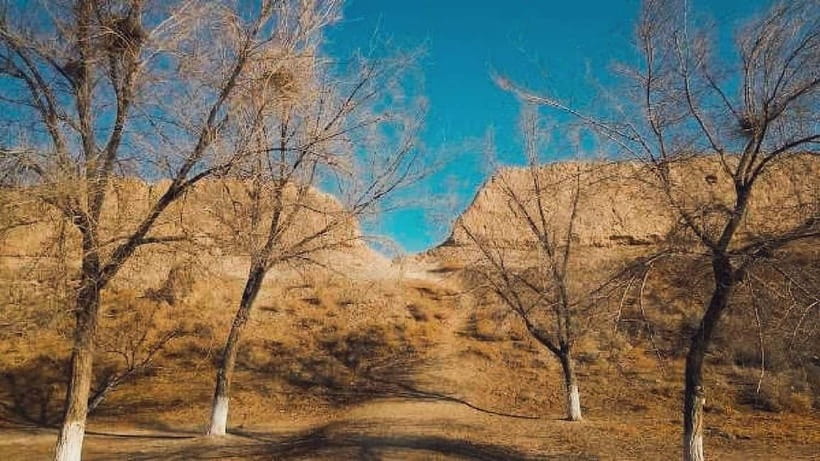
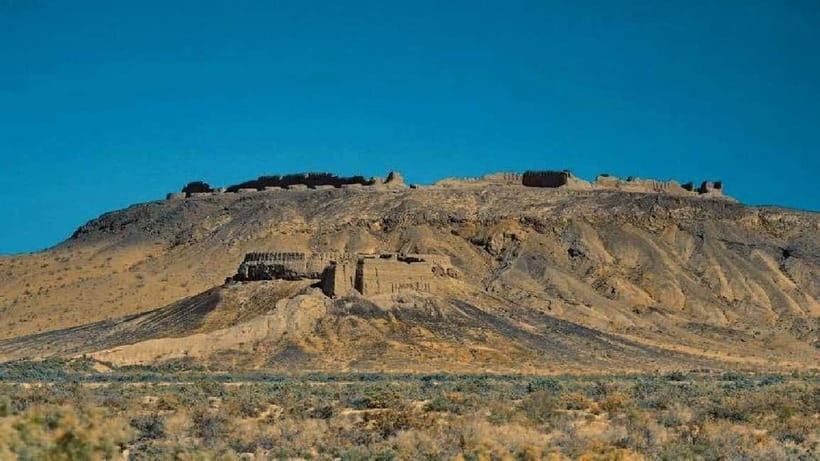
Ayaz-Kala is the visual star of the route. It is often described as one fortress, but it is really a complex of three fortresses grouped around a hill in the eastern part of the Sultan Uizdak ridge. The Turkic name is linked with frost or cold.
The upper position and open surroundings make Ayaz-Kala especially easy to appreciate. You can see why a high fortified site mattered. The remains have a strong outline, and the hill gives the place a memorable profile for photographs.
You get time to visit, walk, take pictures, and explore independently. This is the stop where I would spend extra minutes if the schedule begins to tighten. It offers the clearest sense of a fortress as a defensive structure, rather than simply an archaeological mound.
The site is about 96 kilometers from Khiva, and the route takes you well beyond the city. That distance is precisely why private transport is useful. You avoid the hassle of arranging separate rides, and you can return to Khiva after seeing a part of Karakalpakstan that is difficult to fit into a normal city itinerary.
Same region, a different set of walls:
- Seville: Royal Alcázar Entry Ticket
★ 4.6 · 28,378 reviews - Granada: Alhambra & Nasrid Palaces Tour with Tickets
★ 4.7 · 19,801 reviews - Stonehenge, Windsor Castle, and Bath from London
★ 4.5 · 18,662 reviews - Bucharest: Dracula’s Castle, Peles Castle, & Brasov Old Town
★ 4.5 · 17,858 reviews
Kavat-Kala, the least obvious stop
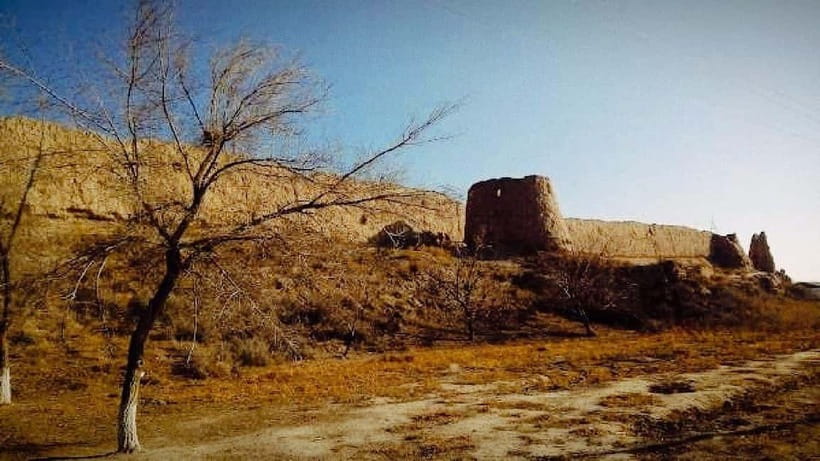
Kavat-Kala requires a different expectation. It is described as a medieval monument stretching for about 15 kilometers along the Gavhore Channel, with a width of roughly 2 to 3 kilometers. The fortress itself, around 160 to 190 meters, is the central monument within a much larger complex.
Between the twelfth and thirteenth centuries, the central area was heavily settled. As many as 90 estates once existed there. Today, the remains are less immediately readable than Ayaz-Kala or Toprak-Kala, and ongoing archaeological study is still needed to explain the site fully.
You will have a visit and sightseeing time, with a break built into the stop. The value here is not a dramatic citadel rising intact from the ground. It is the chance to see the wider settlement system, including traces of residential and clay buildings.
This is the stop most likely to test your patience if you want five equally impressive monuments. I would keep your expectations modest and use it to think about how water channels and estates supported the fortified towns. If your interest is strictly in striking ruins, Kavat-Kala may feel thin.
Toprak-Kala, the archaeological centerpiece
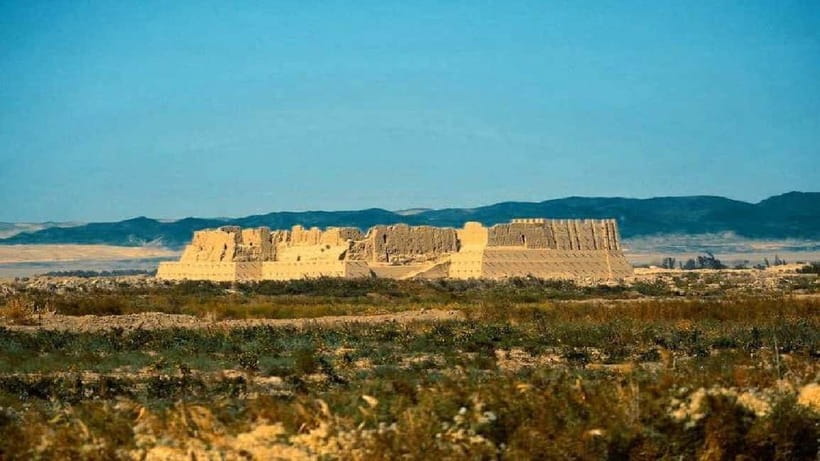
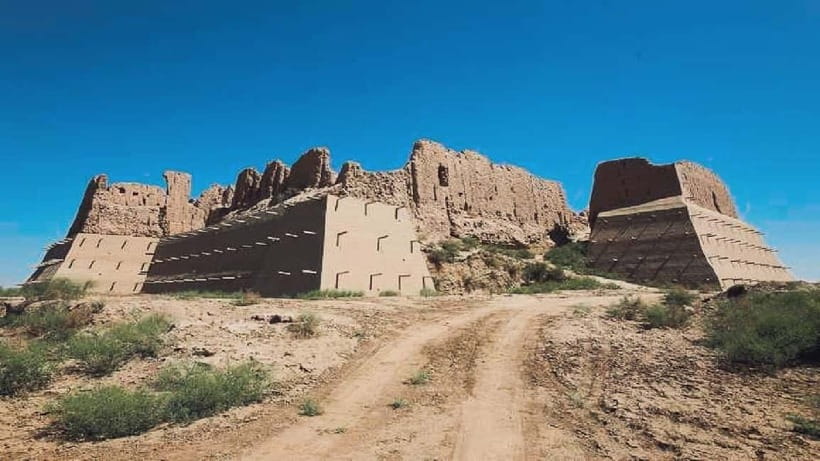
Toprak-Kala is the other major stop. Built in the third century, it served as a residence for the Khorezmshahs until about AD 305. Later wars pushed the rulers elsewhere, and the city gradually declined.
The site is important because excavation found objects that bring the former court and settlement closer to life. Finds included coins, Zoroastrian ossuary fragments, fine ceramics, wool and silk textiles, gold ornaments, and a necklace made from 300 glass beads, paste, amber, and coral. You are not simply looking at walls here. You are standing over the remains of a royal center with evidence of craft, ritual, trade, and daily life.
The itinerary allows a break, photographs, walking, and independent sightseeing. Take time to notice the plan of the city and the thickness of the mud-brick construction. Even without a guide, Toprak-Kala gives you more to discuss afterward than a simple defensive ruin.
For many people, the day’s two essential sites are Ayaz-Kala and Toprak-Kala. If the car is running late or you need to shorten the outing, protect time at these two first. The other fortresses are worthwhile additions, but these provide the clearest visual and historical payoff.
Kyzyl-Kala and the final defensive lesson
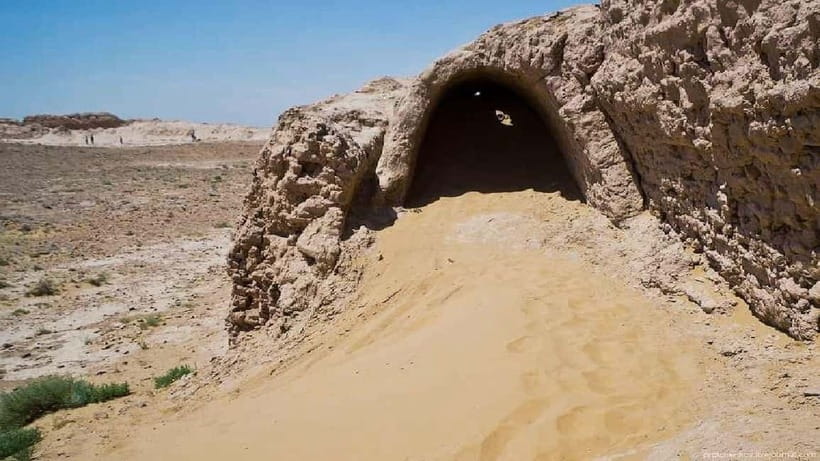
Kyzyl-Kala served as a refuge during raids by nomadic groups. Its defenses included a double wall, with watchtowers at the corners. Smoke signals could warn nearby communities that an enemy force was approaching, giving people time to reach the citadel.
One detail makes the site particularly interesting: ceramic pipes were installed to provide a continuing water supply. That small piece of engineering changes how you view the fortress. It was not only a wall with lookout points. It had to support people under pressure, even if they were sheltering there for a limited time.
You get time for photographs, walking, and independent sightseeing, along with a safety briefing. The stop may be listed around sunset, as are several parts of the route, but the exact light depends on departure time and the pace of the day.
Kyzyl-Kala is a useful final stop because it turns the fortresses into a connected defensive network. Smoke, walls, towers, and water all worked together. The remains may not be as immediately grand as Ayaz-Kala, but the practical story is strong.
What the private driver arrangement means
This experience is best understood as a private driving day with archaeological stops. Your driver takes you from Khiva or Urgench, waits while you visit the sites, and returns you to the selected drop-off point. The driver may offer some information, but a separate guide is not included.
That arrangement has real advantages. You can ask to stop for photographs, set a comfortable pace within the seven-hour limit, and avoid sharing a vehicle with strangers. One driver, Izzat, has been singled out for being friendly, accommodating, and good at making cultural connections despite the language barrier.
The quality of communication can vary. Some drivers speak very little English, so do not book this expecting a detailed lecture while driving. Also make your preferences clear about speed and food stops. A few accounts describe very fast driving on poor roads, while others praise the driver’s road skills and flexibility. If you feel uncomfortable, say so plainly at once.
Lunch is optional and not included. The route may pass restaurants, but the safest practical habit is to agree on the plan before stopping. Ask to see prices before ordering, and carry snacks and water so you are not forced into a rushed meal.
Tickets, timing, and the real cost
The $115 price covers a private air-conditioned vehicle for up to three people, hotel or airport pickup, drop-off, parking fees, and round-trip transport. Entry tickets are extra, and lunch is extra.
One useful budgeting note is that a booking may involve separate site charges. A reported cost was 20,000 Uzbek som at three sites, though the exact fees and collection points can vary. Carry Uzbek som in small notes and ask your driver which payments are official before handing over money.
At seven hours, the tour is compact for five stops. You will see a lot, but you will not have unlimited time at each fortress. That tradeoff favors people who want a broad introduction. It is less suitable if you prefer slow photography, long walks, or detailed study of every wall.
The private price becomes strongest when three people share it. For one person, the cost is higher per head, but the convenience may still beat piecing together transport in a remote region.
Who should book this day trip
I would recommend it to you if you are based in Khiva, want to see more than the old city, and enjoy ruins in open country. It is also a good fit for a small private group that values flexibility over a scripted guided tour.
You should be comfortable walking over uneven ground and exploring exposed ruins without a polished visitor center. The exact condition of the remains varies greatly. Bring sun protection, sturdy shoes, water, and a phone or book with historical notes.
I would hesitate if your main goal is expert interpretation. Since no guide is included and English may be limited, you will need to supply much of the context yourself. I would also think twice if you dislike long drives, rough roads, or a tightly packed schedule.
The strongest praise for this experience centers on friendly drivers, flexible stops, enough time at the sights, and the sheer appeal of seeing these old fortresses survive in such a demanding setting. The main concerns are limited English, occasional fast driving, unclear food arrangements, and the fact that one or two sites may feel hard to recognize.
Should you book the five-fortress route?
Book it if you want a practical way to reach Ayaz-Kala, Toprak-Kala, and three less obvious sites in one day. The private vehicle, pickup options, and group price make the route simple to arrange, and the fortresses offer a memorable counterpoint to Khiva’s restored architecture.
If you only have time for the most impressive ruins, ask how the schedule can protect Ayaz-Kala and Toprak-Kala. If you want a full historical explanation, arrange a guide separately or prepare your own notes. With those expectations in place, this is a worthwhile outing into the older, rougher, and more revealing side of Khorezm.
FAQ
How long does the fortress day trip last?
The activity lasts about seven hours.
Where can pickup take place?
Pickup is available from hotels in Khiva, as well as Urgench airport and train station.
Where can I be dropped off?
Drop-off is available in Khiva or Urgench.
How many people can join for the listed price?
The private group price of $115 covers up to three people.
Which fortresses are included?
The route includes Guldursun-Kala, Ayaz-Kala, Kavat-Kala, Toprak-Kala, and Kyzyl-Kala.
Is a guide included?
No. The experience includes private transportation and a driver, but a separate guide is not included.
Is lunch included?
No. An optional lunch is available at your own expense.
Are entrance tickets included?
No. Entry tickets must be paid separately.
Is the vehicle air-conditioned?
Yes. Round-trip transport is provided in a private air-conditioned vehicle.
Can I cancel the booking?
You can cancel up to 24 hours in advance for a full refund. Reserve now and pay later is also available.
Just added around the world
- Budapest Hike to Visegrád Castle w or wo Sauna/Danube beach★ 5.0 · 11 reviews
- Secrets of Buda Castle: Self-Guided Puzzle Adventure in Budapest★ 5.0 · 8 reviews
- Castle District tour with Matthias Church Ticket & Cake & Coffee★ 5.0 · 31 reviews
- Buda Castle Tour: History and Architecture★ 5.0 · 33 reviews
- Buda Castle Quarter Walking Tour★ 5.0 · 16 reviews
- Buda Castle’s Secrets with a Historian★ 5.0 · 108 reviews
- Buda Castle Walking Tour with Matthias church entry, Cake&Coffee★ 4.5 · 21 reviews
- BloodThirsty Hungary – Castle District★ 5.0 · 80 reviews
Fortress & Citadel Tours, compared.
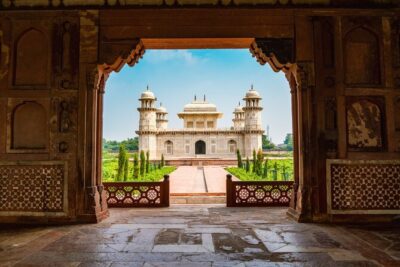
Full Day Taj Mahal, Agra Fort & Baby Taj Tour from Delhi by Car
Read our review →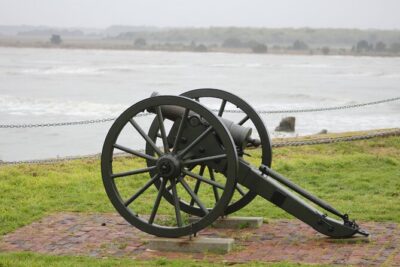
Fort Sumter Admission and Self-Guided Tour with Roundtrip Ferry
Read our review →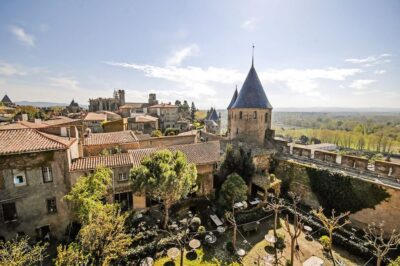
Carcassonne: Castle and Ramparts Entry Ticket
Read our review →
Charleston: Fort Sumter Entry Ticket with Roundtrip Ferry
Read our review →
Same Day Taj Mahal, Fort & Baby Taj Tour from Delhi by Car
Read our review →
From Delhi: Taj Mahal and Agra Fort Private Sunrise Tour
Read our review →
Sunrise Taj Mahal, Agra Fort & Baby Taj Tour from Delhi by Car
Read our review →