
REVIEW · WINE TOURS
Château de Luc: Unique visit and wine tasting
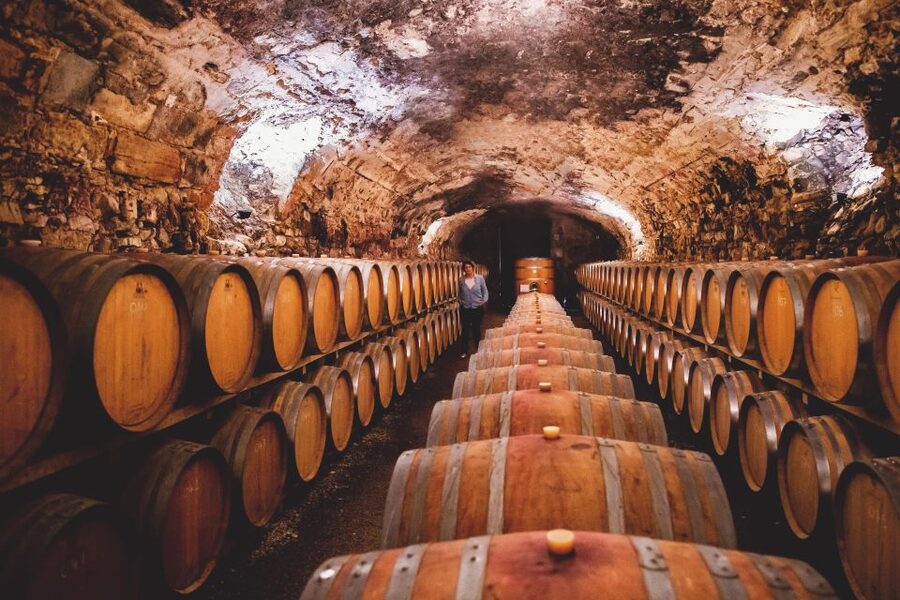
The oldest part of this visit is below your feet. At Château de Luc, you move from historic rooms into a 14th-century underground cellar, then finish with organic wines in a former stable. It is a small-scale introduction to the people, politics, and wine of the Languedoc.
I like the way the visit links the Fabre family story with the wider history of the Midi wine region, including the 19th-century boom and the revolt of 1907. I also like the tasting’s range, from IGP Pays d’Oc to AOC Languedoc, Corbières, and Minervois. The main drawback is that the tour may feel short if you expect a long technical winery visit, and one report found the wines disappointing.
Key points to know
- The 14th-century cellar: Go underground to see the oldest and most atmospheric part of the estate.
- A family-run estate: Guides such as Jeanne connect the château’s past with the family’s current wine work.
- Organic wines: Taste between three and six bottles from several Languedoc appellations.
- A history lesson with a local focus: Learn about the 19th-century wine boom and the great revolt of 1907.
- Good value at $15: The price covers the historical visit and tasting, while children under legal drinking age visit free.
- Practical limitation: The château is not suitable for wheelchair users, and finding the visitor entrance may require care.
A château visit that begins underground
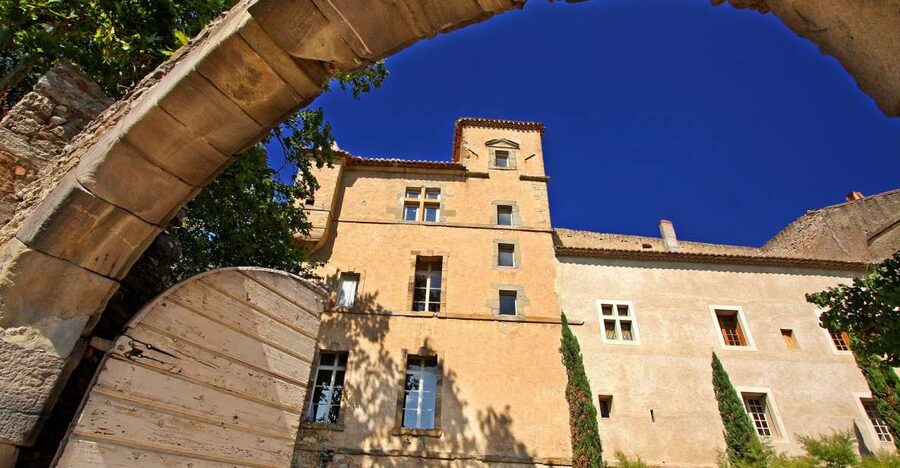
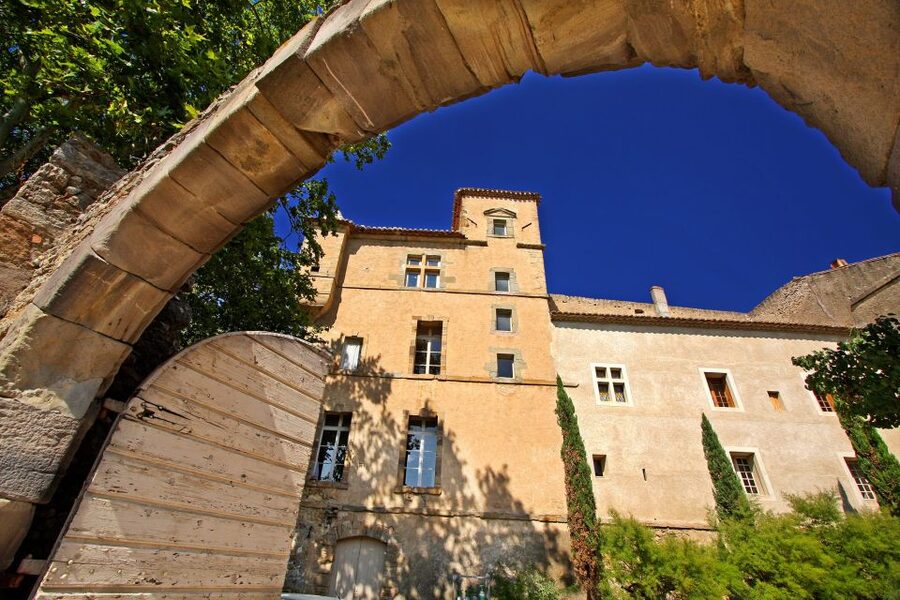
Château de Luc offers more than a quick glass of wine and a look at a few barrels. The visit takes you through historic rooms in the château before leading below the old home to the ancient cellar. That change in setting gives the tour its shape: you start with architecture and family history, then end with the working product of the estate.
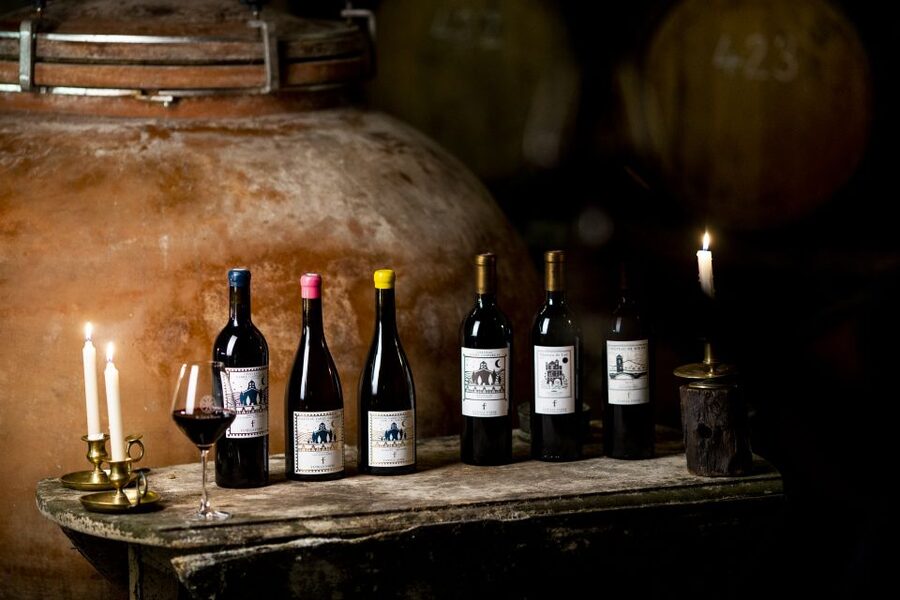
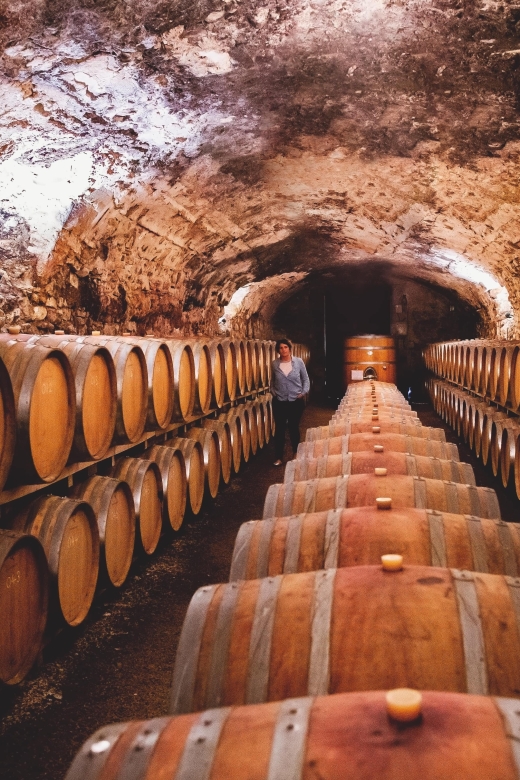
The underground cellar dates from the 14th century. You may see aging barrels there, a detail that gives the history a practical connection to the wine being made today. This is not just an old room preserved for display. It remains part of the story of how the property has produced wine over time.
The château is operated by the Fabre family, and that family connection matters. Instead of receiving a general talk about French wine, you hear about one estate, its buildings, its changing business, and the people who have kept it moving. Jeanne has guided some visits, bringing a personal feel to the history and the winemaking.
The tour is offered in French, English, and Spanish. If you want a visit that works for a mixed-language group, that is a useful advantage. Ask questions as you go. The hosts are prepared to discuss vineyard care, winemaking, and places worth visiting in the surrounding area.
More Wine Tours in France:
- Loire Valley Castles Day Trip from Paris with Complementary Wine
★ 4.5 · 3,907 reviews - From Paris: Loire Valley Castles Day Trip With Wine Tasting
★ 4.6 · 1,727 reviews - Medoc or Saint Emilion Wine Tasting and Chateau from Bordeaux
★ 5.0 · 1,415 reviews
Historic rooms, old barrels, and the story of the Midi
The first part of the visit takes place in the historic rooms of Château de Luc. The exact route and length can vary with the guide and the group, but the purpose is clear: to place the wine estate in its historical setting before tasting anything.
The story reaches back through the centuries, then turns toward the major changes that shaped southern French wine. The 19th century brought a golden age for the wine trade in the Midi. Vineyards expanded, production grew, and wine became a major part of local life and business.
That success also created tension. The tour covers the great winegrowers’ revolt of 1907, a major event in the history of Languedoc viticulture. This adds useful context to what might otherwise be a simple cellar tour. You learn that wine here is not only about grapes and bottles. It is tied to work, prices, regional identity, and political pressure.
I appreciate this historical angle because it helps you read the region differently after the visit. The vineyards around southern France are not just pretty scenery. They reflect centuries of farming and trade, along with the hard economic swings that affected wine families.
The history is told as an epic of the Midi wine region, but the visit stays tied to Château de Luc. That balance is important. You receive enough regional background to understand the estate without sitting through a broad lecture on every French appellation.
The 14th-century cellar is the main attraction
The underground cellar is likely to be the most memorable stop. Its age gives the visit a sense of place that a modern tasting room cannot provide. You are not simply being shown a polished sales area. You are taken into a part of the property that connects directly to its medieval past.
The cellar also gives you a chance to see the relationship between old buildings and present-day wine production. Barrels aging below the old home make the visit feel current, not purely historical. You can ask how wine is handled, how long it ages, and how the estate balances traditional spaces with modern needs, though the precise answers will depend on the guide and the wines being discussed.
Expect uneven access and an old-building setting. The activity is specifically listed as unsuitable for wheelchair users, so anyone with mobility concerns should take that seriously before booking. The underground route is an attraction, but it may also mean steps, narrow passages, or surfaces that are not easy for every visitor.
This is one reason the experience suits people who enjoy historic properties and working estates. If you only want a technical explanation of fermentation, the cellar may not satisfy every question. If you like seeing the place where the family story and wine story meet, it is the strongest part of the tour.
Tasting organic wines in a former stable
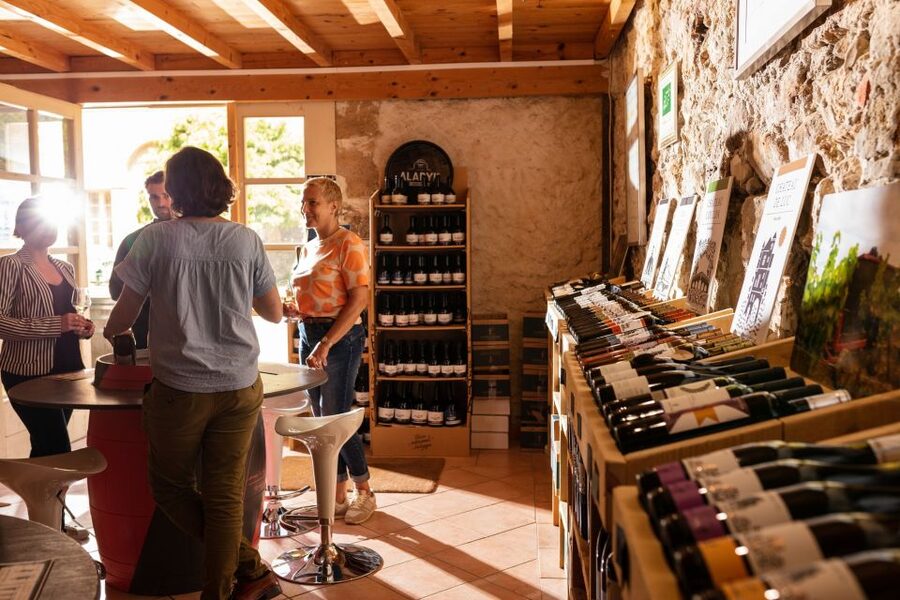
After the château and cellar, you move to the tasting cellar, housed in an old stable. This is a fitting finish. The setting keeps the tasting connected to the property instead of making it feel like a separate shop visit.
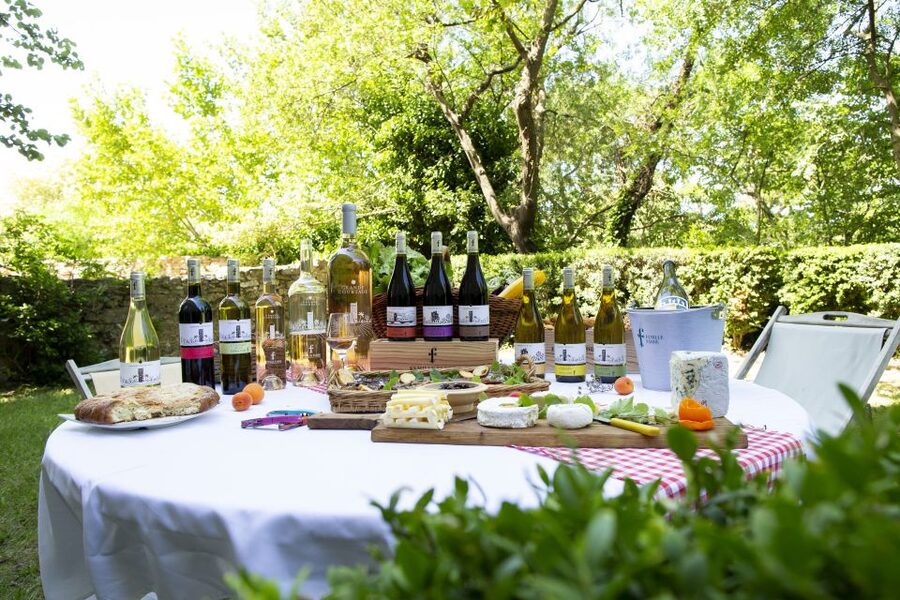
You taste a selection of three to six organic wines. The exact number depends on the tasting, and the range can include:
- IGP Pays d’Oc
- AOC Languedoc
- Corbières
- Minervois
That range lets you compare wines from different classification levels and areas. You do not need to arrive with detailed wine knowledge. The guide can explain what you are drinking and how the bottles differ, and you can ask about the estate’s approach to vineyard management and winemaking.
The organic certification is important for visitors who care about farming methods. Still, organic does not automatically mean every bottle will match your taste. One person rated the tour poorly because the wines did not appeal to them, while several others found the selection varied, excellent, and reasonably priced. That is a fair warning: the historical visit may be more dependable than personal agreement with every wine in the lineup.
The tasting can also be useful for choosing bottles to take home. A visitor who received a private tour was able to sample several wines, find two that suited their taste, and buy them at a reasonable cost. You should treat that as a chance to compare rather than a promise that every wine will be a favorite.
A few more castle tours around France worth a look
- Beaune: Wine Tasting at Château de Pommard
★ 4.6 · 353 reviews - Nice : Wine Tasting at a Historic Château in a Land Rover !
★ 4.9 · 156 reviews - Essential Wine Tour with Tasting & Chateau Visits from Bordeaux
★ 5.0 · 133 reviews - Half day tour Saint-Emilion : Village & Château with wine tasting
★ 4.5 · 114 reviews
How much time should you allow?
The booking information gives the activity a one-day validity, with starting times dependent on availability. It does not provide a fixed tour length. That matters because some visitors may expect a full-day château program from the one-day label, while the actual experience is a guided visit followed by a tasting.
The route includes the historic rooms, underground cellar, regional history, and wine tasting. One account described the visit as short, so I would not plan your entire day around it unless the estate confirms a longer program. Think of it as a focused cultural stop that can fit into a day exploring the Languedoc.
The length may also depend on the group. A small group can move quickly, while a private or near-private visit may allow more questions. One person arrived later because of time problems and was still welcomed into the visit, which suggests some flexibility, but you should not rely on late arrival without contacting the estate.
The best plan is to check the available starting time and leave room before or after the visit. That gives you time to find the visitor area, a useful point because the entrance is not always easy to identify. Look carefully for directions when you arrive.
The $15 price and what it covers
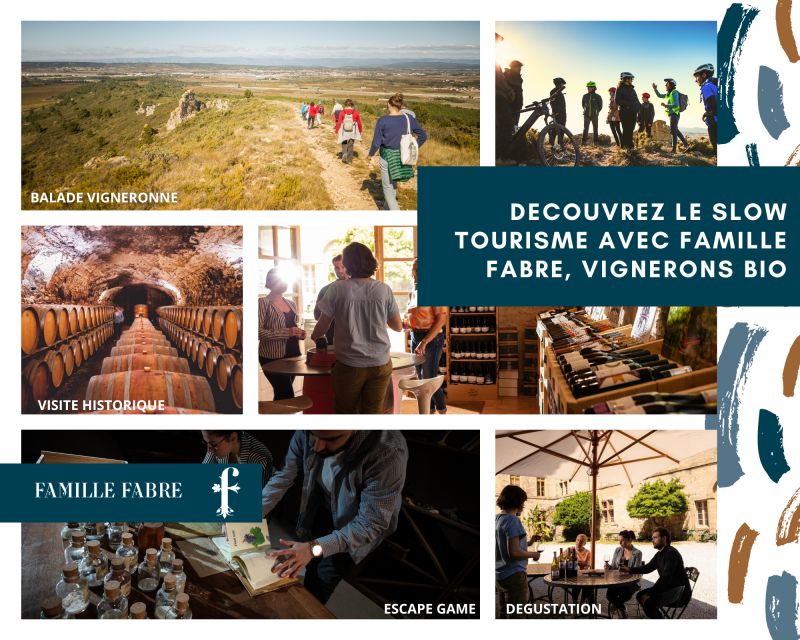
At $15 per person, this is a strong value if you want both a château visit and a wine tasting. You are paying for a guided look at historic rooms, access to the 14th-century cellar, an explanation of Languedoc wine history, and three to six organic wines.
The price is especially reasonable for anyone who would otherwise pay separately for a museum visit and a tasting. It also keeps the experience accessible to couples and families. Under-age children visit free, though the tasting is naturally intended for adults.
Value depends on what you want. If your priority is a long professional tasting led by a specialist, you may find the format too modest. If you want local history, a family-run estate, and a chance to sample regional wine without spending much, the price makes sense.
The bottles are available to buy, and at least some visitors found the wines fairly priced. Buying is optional, and you should taste first rather than feel obliged to purchase. The hosts invite questions about the wines and the region, so the value is not limited to the number of pours.
You can cancel up to 24 hours before the visit for a full refund, and the reserve-now, pay-later option lets you keep your plans flexible. Those terms are helpful if you are building a day around several stops in southern France.
Who will enjoy Château de Luc most?
I would recommend this experience to you if you enjoy several subjects at once: old buildings, regional history, family businesses, and wine. It is particularly well suited to people who want to understand why Languedoc wine matters, rather than simply taste a few local bottles.
It also works well for mixed groups. One person may focus on the medieval cellar, another on the 1907 revolt, and another on the tasting. The French, English, and Spanish options make the visit practical for international groups.
Families can bring children under legal drinking age without paying for their visit. Keep in mind that the content centers on wine production, so young children may find the historical material more interesting than the tasting room.
You may want to skip it if you need full wheelchair access, want a large commercial winery with extensive machinery, or prefer a long tasting focused only on wine technique. You should also consider your expectations about the bottles. Organic production and local appellations do not guarantee that every wine will suit your palate.
Small practical details that can improve the visit
Check the meeting point carefully. A visitor specifically found the directions to the visitor area could be better, so allow extra time to locate the right entrance rather than arriving at the last minute.
Choose a starting time that leaves room for questions. The guides are willing to discuss vineyard management, winemaking, and nearby sights. If you rush through the rooms and cellar, you lose much of what makes this more than a tasting.
If you speak English or Spanish, confirm the language you want when booking. The activity is offered in all three languages, but the available guide at a specific time may vary.
Wear shoes suitable for an old cellar. The information does not promise a smooth, step-free route, and the activity is not suitable for wheelchair users. That is a practical reason to ask about access before you go if you have any mobility limitation.
Keep your wine preferences in mind during the tasting. Try the bottles with an open mind, but do not feel that you must like them all. The choice of IGP Pays d’Oc, Languedoc, Corbières, and Minervois should give you useful comparisons.
Should you book Château de Luc?
Book it if you want a reasonably priced, personal visit that combines a historic château, a 14th-century cellar, and organic Languedoc wines. The strongest reasons are the family connection, the regional story of the Midi wine trade, and the chance to ask direct questions in a small setting.
I would treat the tasting as one part of the experience, not the sole reason to go. Wine tastes are personal, and at least one visitor found the bottles below expectations. The history and cellar provide a worthwhile foundation even if only some of the wines appeal to you.
For $15, the balance is good. Just allow time to find the entrance, confirm the starting time, and remember that this is a focused visit rather than an all-day winery program. If those conditions suit your plans, Château de Luc is a smart stop for anyone exploring southern France through its wine and local history.
FAQ
Where is Château de Luc located?
Château de Luc is in the south of France, in the Languedoc wine region.
How much does the visit cost?
The activity costs $15 per person.
What is included in the price?
The price includes a guided visit in French, English, or Spanish, plus a tasting of three to six organic wines.
How many wines will I taste?
You will taste a selection of three to six organic wines.
Which wines are included?
The selection may include IGP Pays d’Oc, AOC Languedoc, Corbières, and Minervois wines.
Is the tour available in English?
Yes. The tour is offered in French, English, and Spanish.
Are children allowed to join?
Yes. The visit is free for under-age children.
Is the activity accessible to wheelchair users?
No. The activity is listed as unsuitable for wheelchair users.
Can I cancel my booking?
Yes. You can cancel up to 24 hours before the visit for a full refund.
Can I reserve without paying immediately?
Yes. The reserve-now, pay-later option lets you book your place and pay later.
Just added around France
- Private Wine Lovers – Super St Emilion – behind the scenes visits top chateaux and medieval town★ 5.0 · 25 reviews
- Saint Emilion Castle and Village Wine Tour★ 4.5 · 23 reviews
- Château de Fieuzal, Pessac-Léognan: Visit and Tasting★ 5.0 · 18 reviews
- Full-day Saint-Emilion: Village, Undergrounds and Châteaux★ 4.5 · 55 reviews
- 3H private city tour of Bordeaux and vineyard in a Citroën DS★ 5.0 · 4 reviews
- Bordeaux Médoc Region Private Wine Lovers Tour with Chateau Visits & Tastings★ 5.0 · 40 reviews
- Bordeaux to Dordogne – Private Tour: Fortified Castles and Medieval Villages★ 4.5 · 4 reviews
- Chateau du Taillan and Park including Wine Tasting Tour★ 5.0 · 40 reviews
Wine Tours, compared.
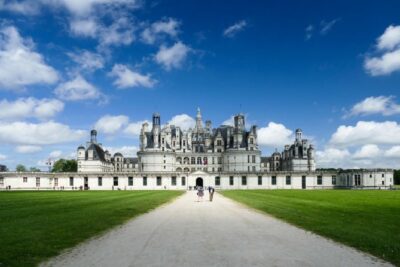
Loire Valley Castles Day Trip from Paris with Complementary Wine
Read our review →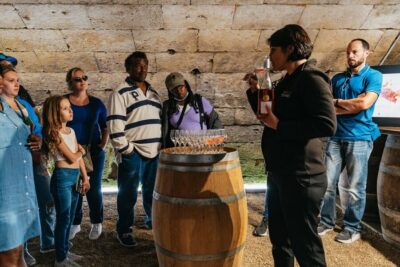
From Paris: Loire Valley Castles Day Trip With Wine Tasting
Read our review →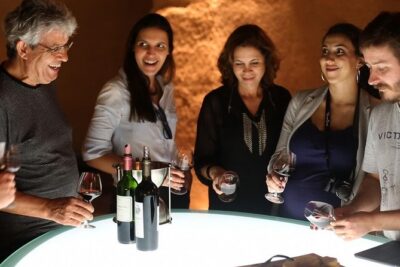
Medoc or Saint Emilion Wine Tasting and Chateau from Bordeaux
Read our review →
Small-Group Barolo Wine Tasting, Alba & UNESCO Piedmont Hills
Read our review →
From Siena: Chianti and Castles Tour with Wine Tastings
Read our review →
Loire Valley Wine and Castles Small-Group Day Trip from Paris
Read our review →

Alicante: Santa Bárbara Castle Wine Tasting & Tapas
Read our review →Browse the lists this tour appears in