REVIEW · FORTRESS & CITADEL TOURS
Carcassonne: 1h30 Walking Tour of the Medieval City
Carcassonne is at its best early, before tour groups fill the lanes and the southern sun turns the stone streets into an oven. This 90-minute morning walk takes you from the bust of Dame Carcas through the drawbridge, Narbonne Gate, ramparts, basilica, and the old city’s quieter corners.
I like the cooler start and the chance to see the fortifications in soft morning light. I also like having Nathalie, a local guide who knows Carcassonne and the Cathar Country, explain how the defenses worked instead of simply pointing at old walls. The main drawback is that admission to the battlements and Count’s Castle is not included, so you need extra time and money if you want to go inside those major sights.
Key points to know
- Start before the heat: The early timing is a real advantage in summer, especially when temperatures reach the low 30s Celsius.
- Meet at Dame Carcas: The tour begins in front of the bust at Place du Prado, just outside the medieval city.
- See the essential sights from outside: Expect the Narbonne Gate, ramparts, Aude Valley views, Basilica of Saint Nazaire, bishopric, and Count’s Castle exteriors.
- A local guide leads the way: Nathalie explains Carcassonne’s defenses, architecture, religion, and regional history in English.
- Good value at $17: You receive a guided introduction for 90 minutes, but museum, battlement, castle, food, and drink costs are extra.
- Plan for uneven walking: Comfortable shoes, a hat, water, sunscreen, and light clothing are sensible. The tour is not suitable for wheelchair users.
Why an early walk works so well in Carcassonne
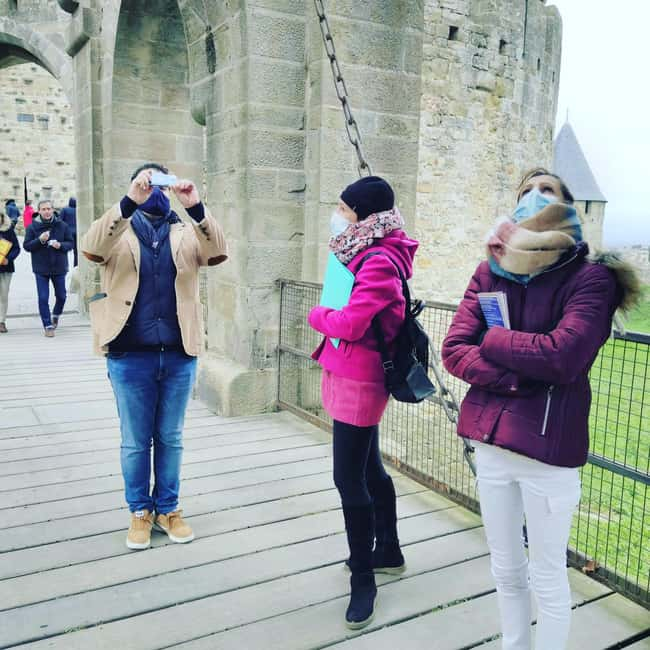
Carcassonne’s medieval city is famous for its dramatic walls, but the setting can feel very different as the day goes on. The narrow streets attract plenty of visitors, and the heat builds quickly against the pale stone. Starting early gives you more room to look up, listen, and take photographs without stopping every few steps for a passing group.
The tour lasts 90 minutes, long enough to give you a useful map of the city without taking over your morning. I see it as an orientation walk rather than a complete visit. You get the story and the main exterior sights first, then you can decide how to spend the rest of your day.
The golden morning light is another small but worthwhile benefit. It gives the walls and towers a warmer look, while the Aude Valley views are often easier to enjoy before the heat becomes tiring. If you have only one morning in Carcassonne, this timing makes good sense.
More Fortress and Citadel Tours in France
- Carcassonne: Castle and Ramparts Entry Ticket
★ 4.6 · 2,884 reviews - Discover Fort Boyard
★ 4.6 · 844 reviews - From La Rochelle: Sailing Cruise to Fort Boyard
★ 4.8 · 623 reviews
Meeting Dame Carcas at Place du Prado
The meeting point is in front of the bust of Dame Carcas at Place du Prado. That detail matters because Carcassonne has several gates, paths, and open areas, and a clear landmark saves you from wandering around the outer fortifications looking for a guide.
From there, you head toward the medieval city and cross the drawbridge. This is a fitting opening because it turns the walk into a physical arrival. You are not simply stepping into another historic quarter from a modern street. You approach the walls as the city’s defenders and residents once would have approached them, at least in broad outline.
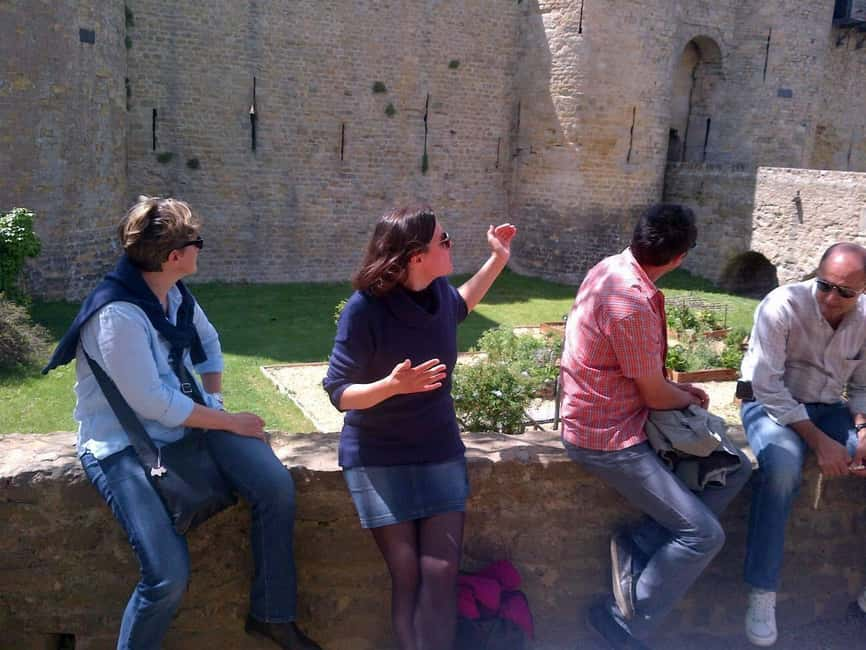
Nathalie leads the walk in English. Her explanations cover Carcassonne itself and the wider Cathar Country, so you get more than isolated dates about individual buildings. She has also been praised for answering detailed questions about the architecture and defensive design. That is useful here, since the walls make more sense when you understand why gates, towers, and elevated positions were arranged as they were.
The pace is steady rather than rushed. You should expect a proper walk, but not a forced march. One useful point from the feedback is that the guide keeps moving while allowing the group to stay together, a good balance for a short tour.
The Narbonne Gate and Carcassonne’s defenses
The Narbonne Gate is one of the most memorable parts of the approach. It gives you an immediate sense of how heavily protected the medieval city was. The gate is not just a pretty entrance. It is part of a defensive system designed to control movement through the walls.
This is where a guide adds real value. On your own, you can photograph the towers and passageway, but it is harder to understand the logic behind the structure. Nathalie explains the organization of the defenses and helps you read the city as a fortified settlement rather than a collection of attractive stone buildings.
You will also spend time along the ramparts and at viewpoints over the Aude Valley. These stops add breathing room to the narrow lanes. They also help you see why Carcassonne mattered: the height of the fortifications gave defenders a wide view beyond the city.
Keep your expectations clear. This walk includes views of the ramparts, but access to the battlements is not included. If you want to walk the full elevated route, you will need to arrange that separately. The tour gives you context and selected viewpoints, not a complete battlement visit.
Narrow lanes, the bishopric, and the Inquisition’s residence
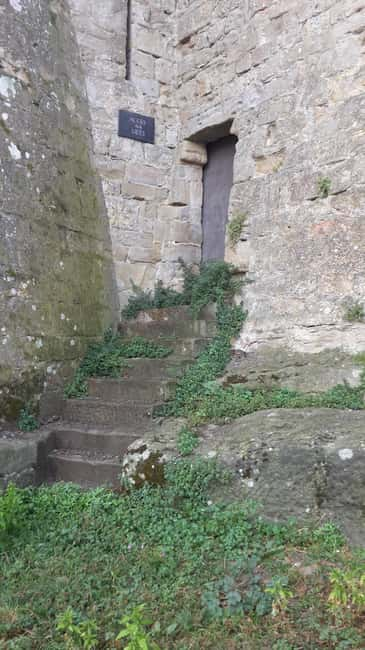
Inside the walls, the route moves through the narrow streets and less obvious corners of the medieval city. This is one of the strongest parts of the walk because the guide can point out details you might otherwise pass without noticing.
The stops include the former medieval bishopric and the residence associated with the Inquisition. These places bring out the religious and political sides of Carcassonne. The city was not only a military stronghold. It was also a place shaped by church authority, local power, conflict, and changing religious control.
The route is described as taking an off-the-beaten-track approach, though you should not read that as a promise of empty streets all morning. Carcassonne is a major sight, and its central lanes can become busy. The early start simply gives you the best chance of seeing these spaces before the crowds reach their peak.
I would pay close attention during this section. The details about organization and power are easy to lose if you treat the walk as a photo stop. Nathalie’s strength is explaining what the buildings meant and how the city functioned, not just naming them.
More Medieval Old Town Tours in France
- Colmar, Medieval Village & Castle Small Group from Strasbourg
★ 5.0 · 769 reviews - Walking tour of Nice, the old town & the Coline du Château
★ 5.0 · 200 reviews - Carcassonne: Private Guided Tour of the Medieval Fortress
★ 4.5 · 64 reviews - Carcassonne: Medieval Builder-Themed City Tour with a Guide
★ 4.9 · 57 reviews
Basilica of Saint Nazaire and the value of timing
The Basilica of Saint Nazaire is one of the tour’s key stops. The walk includes the basilica, and you may have an opportunity to see inside when religious services do not prevent entry. One participant noted that a Sunday morning visit allowed them to enter before mass at 11 o’clock.
That timing comes with an important warning. During a religious service, visitors are not allowed to tour the building. If seeing the interior matters to you, confirm the start time and local service schedule rather than assuming access will be possible.
The basilica gives the tour a change of mood. After walls, gates, and military design, you move into a space shaped by worship and ceremony. The guide can connect the building to the wider story of the medieval city, making it more than a quick church stop.
You should also remember that this is a walking introduction, not a full architectural study. The tour gives you the setting and main points. If you want to examine every chapel, window, or stone detail, save time afterward for your own visit.
The Count’s Castle from the outside
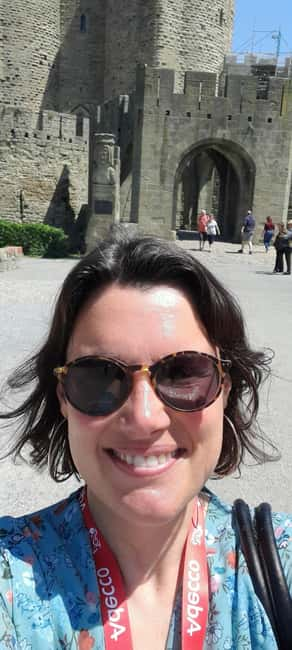
The route ends with the exterior of the Count’s Castle. This is a major sight, and seeing it completes the basic picture of Carcassonne’s power structure. The fortified city had its walls and gates, but the castle formed another important center of authority within the settlement.
The tour does not include entry to the castle. That is probably the biggest practical limitation for anyone who expects a full Carcassonne ticket to be part of the $17 price. You can still understand the castle’s place in the city and see its exterior, but you will need a separate visit for the interior and associated access.
I recommend treating the guided walk as your first pass. Let the guide explain the castle from outside, then decide if you want to return when it opens. One person used the morning introduction before coming back for the castle, ramparts, and gardens at 10 o’clock on another day. That is a sensible plan if you want a slower, more complete visit.
What $17 gets you
At $17 per person, the price is modest for a live, English-language introduction led by a local specialist. You are paying for 90 minutes of explanation, route planning, and orientation in a place where it is easy to focus only on photographs.
The value is strongest if this is your first visit to Carcassonne. The guide helps you understand what you are looking at, and that makes your later independent sightseeing more rewarding. The tour also reduces the risk of spending your first hour wandering without a clear plan.
The price is less complete than it may first appear. Food, drinks, museum tickets, battlement access, and entry to the Count’s Castle are not included. If you want all of those, add them to your budget.
Still, the low cost makes this an easy choice for many visitors. You receive a local overview, see the most important exterior points, and finish in time for a castle visit, a meal, or more independent exploring.
Heat, clothing, and walking conditions
Bring comfortable shoes. The route uses narrow medieval streets and includes walking around gates, walls, and viewpoints. The information provided does not promise a fully accessible surface, and the activity is specifically not suitable for wheelchair users.
A hat, sunscreen, water, and comfortable clothing are sensible, especially from late spring through summer. The early start helps, but it does not remove the heat. One family found the tour manageable for a 12-year-old even during high temperatures, which suggests the pace can work well for older children who are comfortable walking.
The activity is also listed as unsuitable for people over 95. That is a broad age restriction rather than a detailed fitness assessment, so anyone with mobility concerns should consider the route carefully before booking.
Rain is possible too. Nathalie has led the walk in wet conditions, so the experience is not limited to perfect sunshine. Wear suitable shoes and bring weather protection if the forecast calls for rain.
Who will get the most from this tour
I would choose this walk if you want the basic story before exploring on your own. It suits first-time visitors, families with older children, history fans, and anyone who prefers a guide to set out the main facts in clear English.
It is also a good match for summer visits. Starting early helps you avoid the worst combination of crowds and heat. The tour can then lead into a self-guided castle or rampart visit later, once you know where everything is.
You may want a different plan if you have already explored Carcassonne in detail or if your main goal is interior access. This experience does not replace a castle ticket, a full battlement walk, or a long basilica visit.
The guide’s approach is another reason to book. Nathalie has been praised for her clear English, local knowledge, passion for the region, and ability to handle detailed questions. That matters more than a long list of stops. A short route with a good explanation can teach you more than a longer walk with little context.
Practical timing for the rest of your day
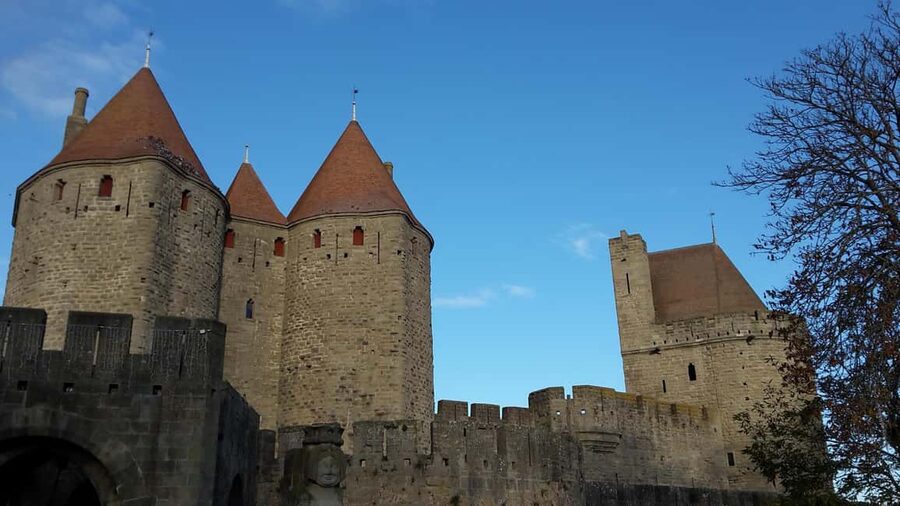
The tour returns to Place du Prado after 90 minutes, giving you a useful starting point for the rest of the medieval city. You can continue with the castle, seek out the ramparts, revisit the basilica, or stop for a meal.
Keep food costs in mind. Eating inside the medieval city can be expensive, so you may prefer to compare options outside the walls or plan your meal before or after the tour. The early finish gives you flexibility, which is one of the activity’s better practical features.
If you are visiting on a Sunday, check whether a service could affect basilica access. If castle and battlement entry are priorities, set aside additional time and confirm opening arrangements separately. The walking tour itself should be viewed as the first chapter of your Carcassonne visit.
Should you book this Carcassonne walk?
Book it if you want an affordable, early introduction to the medieval city and prefer understanding the fortifications rather than simply photographing them. The strongest reasons are the cooler start, clear route, local guide, Aude Valley viewpoints, and useful explanation of Carcassonne’s defensive and religious history.
Skip it if you only want included admission tickets or a long visit inside the castle and on the battlements. Those require separate planning.
For $17, this is a sensible first activity, especially in summer. Meet Nathalie at Dame Carcas, wear proper shoes, carry water, and use the remaining part of your day to explore the interiors the tour leaves out.
FAQ
How long does the walking tour last?
The tour lasts 90 minutes.
What language is the tour conducted in?
The live tour guide speaks English.
Where does the tour begin?
It begins at Place du Prado, in front of the bust of Dame Carcas.
Where does the tour finish?
The walk returns to Place du Prado.
What sights are included in the route?
The route includes the drawbridge, Narbonne Gate, ramparts and viewpoints, the Inquisition’s residence, the medieval bishopric, Basilica of Saint Nazaire, and the exterior of the Count’s Castle.
Is entry to the Count’s Castle included?
No. Access to the Count’s Castle is not included.
Can I access the battlements during the tour?
No. Access to the battlements is not included.
Are museum tickets included?
No. Museum entrances are not included.
What should I bring?
Bring comfortable shoes, a hat, drinks, sunscreen, and comfortable clothing.
Can I cancel the booking?
Yes. You can cancel up to 24 hours in advance for a full refund. You can also reserve now and pay later.
More Walking Tours in France
- Versailles Château and Gardens Walking Tour
★ 4.5 · 727 reviews - Carcassonne: Fortress Walking Tour
★ 5.0 · 24 reviews - Carcassonne: Express Walk with a Local in 60 minutes
★ 4.9 · 14 reviews - Carcassonne: 2-Hour Best Intro Walking Tour with a Local
★ 4.5 · 5 reviews
Just added around France
- Saint Emilion Castle and Village Wine Tour★ 4.5 · 23 reviews
- Château de Fieuzal, Pessac-Léognan: Visit and Tasting★ 5.0 · 18 reviews
- Private Wine Lovers – Super St Emilion – behind the scenes visits top chateaux and medieval town★ 5.0 · 25 reviews
- 3H private city tour of Bordeaux and vineyard in a Citroën DS★ 5.0 · 4 reviews
- Bordeaux Médoc Region Private Wine Lovers Tour with Chateau Visits & Tastings★ 5.0 · 40 reviews
- Full-day Saint-Emilion: Village, Undergrounds and Châteaux★ 4.5 · 55 reviews
- Bordeaux to Dordogne – Private Tour: Fortified Castles and Medieval Villages★ 4.5 · 4 reviews
- Chateau du Taillan and Park including Wine Tasting Tour★ 5.0 · 40 reviews
Fortress & Citadel Tours, compared.

Full Day Taj Mahal, Agra Fort & Baby Taj Tour from Delhi by Car
Read our review →
Fort Sumter Admission and Self-Guided Tour with Roundtrip Ferry
Read our review →
Carcassonne: Castle and Ramparts Entry Ticket
Read our review →
Charleston: Fort Sumter Entry Ticket with Roundtrip Ferry
Read our review →
Same Day Taj Mahal, Fort & Baby Taj Tour from Delhi by Car
Read our review →
From Delhi: Taj Mahal and Agra Fort Private Sunrise Tour
Read our review →
Sunrise Taj Mahal, Agra Fort & Baby Taj Tour from Delhi by Car
Read our review →