
REVIEW · BUDAPEST CASTLE TOURS
Budapest: The WWII Siege of Buda Castle & Bomb Shelter Tour
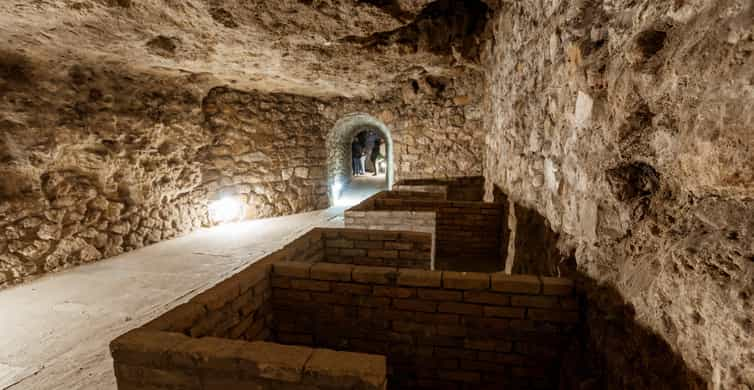
The most powerful part of this tour happens underground, where the Buda Castle Cave and an old bomb shelter make the 52-day siege of Budapest feel less like a distant textbook event. You walk through the same kind of cramped spaces where civilians, wounded soldiers, German troops, and Hungarian soldiers waited out hunger, cold, darkness, and disease.
I like two things here. First, the guide uses diaries and memoirs rather than giving you only dates and battle movements. Second, the tour connects the tunnels to what you see above ground, including bullet marks, hidden doors, and shelter ventilation shafts. Guides such as Rita, Jonas, Kopp, and Balazs have earned praise for their clear, engaging storytelling.
The catch is simple: this is not an easy stroll. You will walk cobbled streets and climb steep stairs, then enter narrow, dim passages with sometimes-wet floors. The cave stays around 12°C, or 54°F, all year, and people with claustrophobia or mobility limits should choose another way to explore Buda Castle.
Key points to know before booking
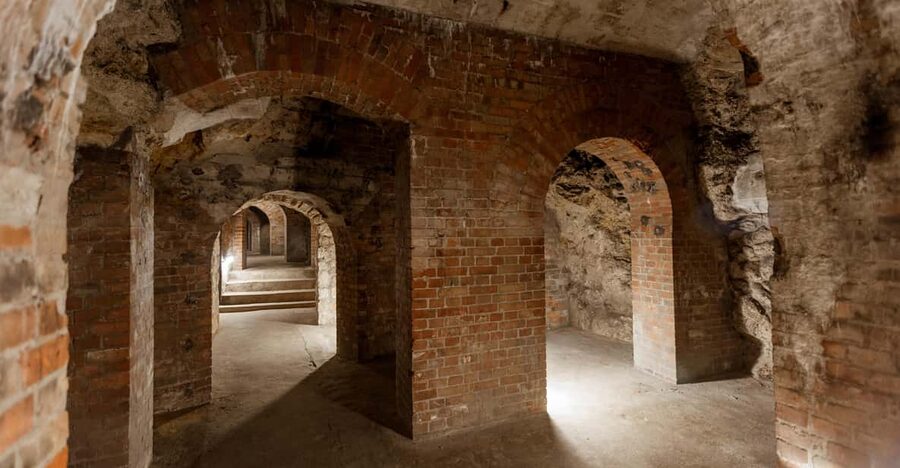
- The underground section lasts about 35 minutes: You enter the Buda Castle Cave, an unusual network of passageways beneath the historic district.
- The story centers on civilians as well as soldiers: You learn how tens of thousands sought refuge during the siege, not just how armies fought.
- The tour begins outdoors: The route follows Úri Street and Castle Hill before moving into cellars and shelters.
- The guide makes the difference: Rita, Jonas, Kopp, and Balazs have all been praised for strong historical explanations and lively delivery.
- Dress for two climates: Castle Hill may be rainy or windy, while the cellar and cave remain cool at about 12°C.
- The $24 price is fair for a focused history tour: You get 90 minutes, an English-speaking guide, and entry to the Buda Castle Cave.
Why the Siege of Buda Castle matters
On Christmas Eve in 1944, the Soviet Red Army surrounded Budapest, which was then under German occupation. The encirclement began a 52-day siege that trapped the capital in a brutal battle.
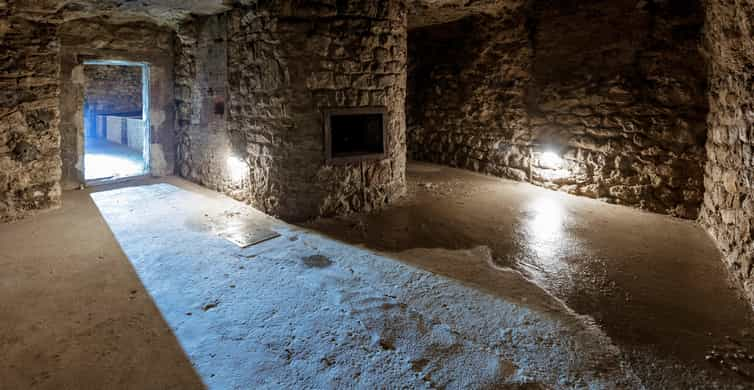
Buda Castle became more than a royal and residential district. It turned into a place of refuge for civilians, soldiers, the wounded, and people trying to protect their possessions. Underground spaces offered some shelter from artillery and street fighting, but they brought their own dangers.
People faced cold, poor sanitation, limited water, little food, darkness, overcrowding, and disease. The Royal Palace and the older cellar and cave systems became crowded hiding places. The siege is often compared with Stalingrad because of its length, destruction, and human cost.
I find the focus on daily survival especially useful. Many war tours concentrate on commanders and troop movements. This one asks you to picture how ordinary people found somewhere to sleep, searched for water, protected children, and tried to stay alive while the city around them collapsed.
That human scale also explains why the tour can feel emotionally heavy. One person described the experience as sad and difficult, although worthwhile. You should not expect a light sightseeing stop. The subject is grim, and the underground setting reinforces it.
A few more castle tours around Budapest worth a look
- Budapest: Buda Castle Cave Tour
★ 4.7 · 5,677 reviews - Budapest: Buda Castle District Vampires and Myths Night Tour
★ 4.6 · 3,830 reviews - Budapest: Buda Castle Walk with Saint Stephen’s Hall
★ 4.5 · 3,012 reviews
Meeting at Dísz Square
The tour starts at De la Motte, also called Beer-palota, at Dísz Square 15 in the Castle District. Look beside the Posta building for the large green gate and a staff member with a turquoise umbrella marked with the Buda Castle Walks logo.
Give yourself extra time to find the meeting point. Construction and building work can make the area confusing, and the group leaves promptly at the scheduled time. The guide cannot wait for late arrivals.
This is a useful location for beginning a Castle Hill walk because you start in the historic residential quarter rather than at a generic city meeting point. You are already among old streets and buildings before the main story begins.
The walking route ends at Szentháromság Square, so you do not return to Dísz Square. That matters if you have a restaurant reservation, luggage, or a timed visit elsewhere. Szentháromság Square puts you near some of the Castle District’s best-known sights, but the tour itself is not a general palace tour.
You can check the Castle Palace District’s on-site visit planner before setting out. It provides current information on closures and traffic conditions in the area and does not require registration.
Following the story along Úri Street
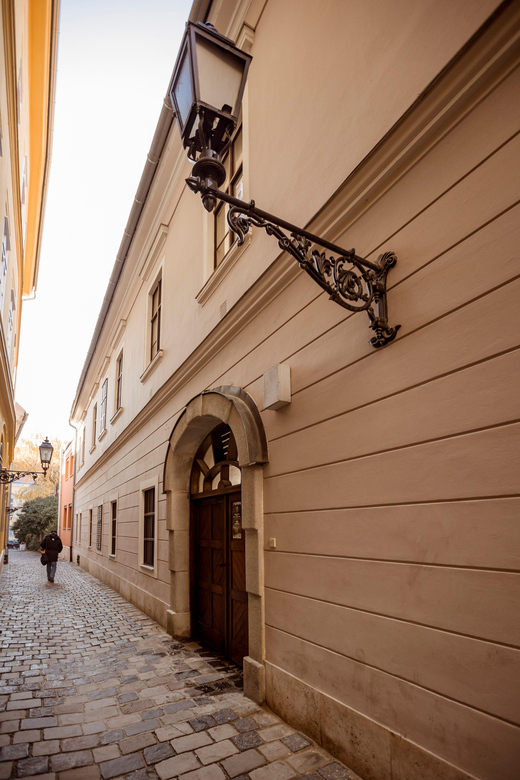
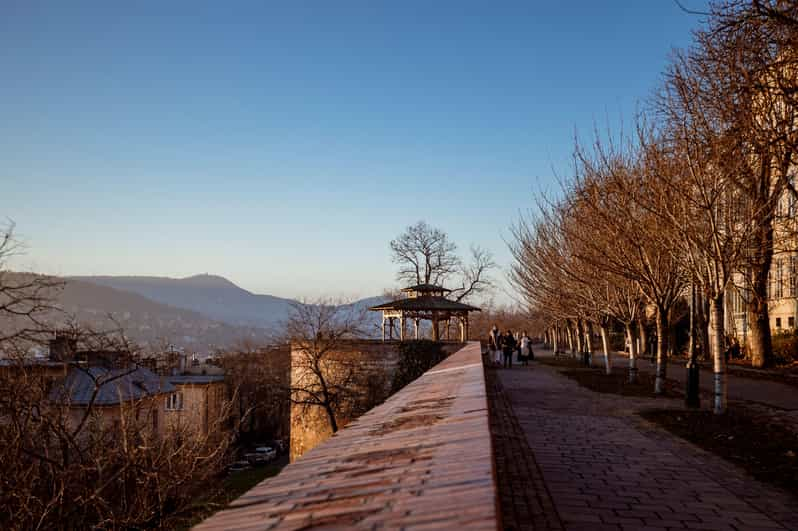
After meeting the guide, you walk through the Castle District, including Úri Street. This outdoor portion gives the siege a physical setting. Instead of hearing about the destruction in an abstract room, you stand among the streets, cellars, and old residential buildings that formed part of the wartime refuge network.
The guide points out traces connected with the siege, such as bullet holes, concealed entrances, and ventilation shafts leading up from public shelters. These details are easy to miss if you explore Castle Hill alone. Once someone shows you what to look for, the buildings begin to tell a more complicated story.
This portion also lets the guide explain what happened before, during, and after WWII. Several guides have been praised for answering wider questions about Budapest, politics, and the period surrounding the siege. That broader context helps if you know little about Hungarian history.
The outdoor walk is not long enough to feel like a full Castle District tour, but that is also its strength. The focus stays on the war and the people affected by it. If you want detailed information about the Royal Palace’s architecture or medieval Hungary, book a separate tour.
You will be walking on cobbles, so sturdy shoes matter even before you reach the cave. Rain does not automatically cancel the program, and the tour operates in all weather conditions. A waterproof layer is more useful than an umbrella in tight streets and underground passages.
Entering the Buda Castle Cave
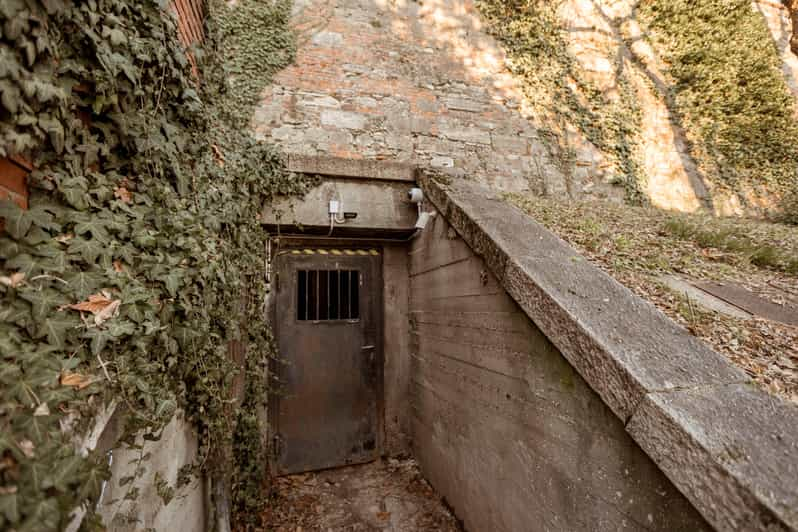
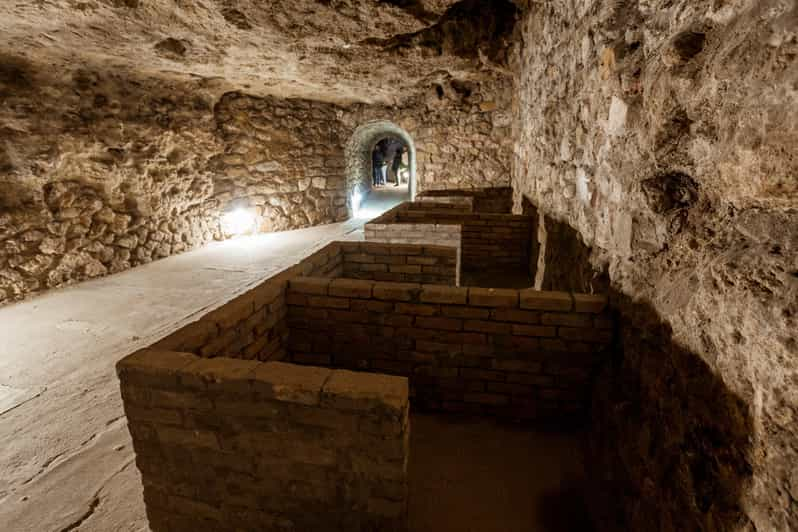
The central part of the experience takes place in the Buda Castle Cave, a network of underground spaces beneath Castle Hill. The visit includes about 35 minutes in the cave system, with the guide leading you through dim but illuminated areas, narrow corridors, steep stairs, and solid surfaces that can sometimes be wet.
The cave is not presented as a polished attraction detached from the city above. It is tied directly to the lives of people who used cellars and shelters during the siege. The setting helps you understand why underground refuge was both necessary and frightening.
At roughly 12°C throughout the year, the cave feels cool even during warm weather. Bring a light jacket or wear layers. In winter, you may already be dressed properly for the temperature, but the point is still worth noting because wet stone and darkness can make the underground section feel colder.
Claustrophobia is a serious consideration. The route includes narrow corridors and enclosed spaces, and there is no reason to book this tour if the thought of underground passageways causes real distress. The setting is part of the experience, not a minor detail.
The cave is also physically demanding. Wheelchair users and people with mobility impairments cannot take part, and steep stairs make it unsuitable for anyone who struggles with balance or prolonged walking. Children under 14 are not admitted, so the recommended age range is older teens and adults.
Same region, a different set of walls:
- Budapest: Buda Castle District Walking Tour
★ 4.6 · 2,108 reviews - Budapest: 3-Hour Grand City Tour and Castle Walk
★ 4.3 · 1,437 reviews - Buda Castle District Dark History, Legends and Vampire Night Tour
★ 4.5 · 1,240 reviews - Budapest: Buda Castle District Walking Tour with a Historian
★ 4.9 · 867 reviews
Visiting the cellar and original bomb shelter
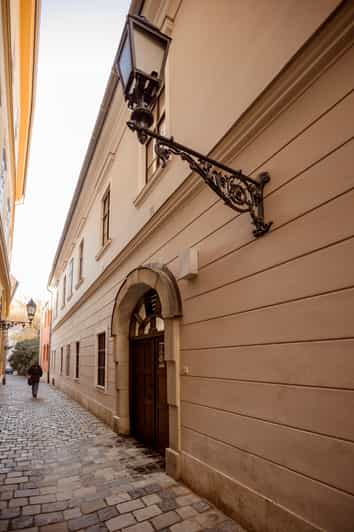
The tour includes a cellar in an old dwelling house and an original WWII bomb shelter. These stops give you two related but different views of wartime life.
The cellar shows how ordinary residential spaces could become places of refuge. It helps you think about the difference between a home cellar and a purpose-built or adapted public shelter. Both might keep people below street level, but neither could remove the fear, crowding, or uncertainty outside.
The bomb shelter provides the sharper historical focus. Here, the guide explains how people tried to survive the siege while the city was cut off. You hear about the lack of water and food, the cold, the darkness, and the spread of disease. You also learn how people attempted to save possessions and items from the Royal Palace while the fighting continued.
I like this combination because it avoids turning the shelter into a simple war relic. The guide links the physical room to the choices people faced. Who could find space? How long could supplies last? What did people do when the underground refuge became crowded or unsafe? The tour does not make those questions comfortable, but it makes them easier to grasp.
Some departures use personal headphones, which can help you follow the guide in a small passage or when other groups are nearby. English pronunciation may vary by guide, and one person found a particular guide difficult to understand at times. Most feedback praises the guides’ command of the subject, but if you need very clear English, stay close to the guide and ask questions when needed.
The guides and the quality of the storytelling
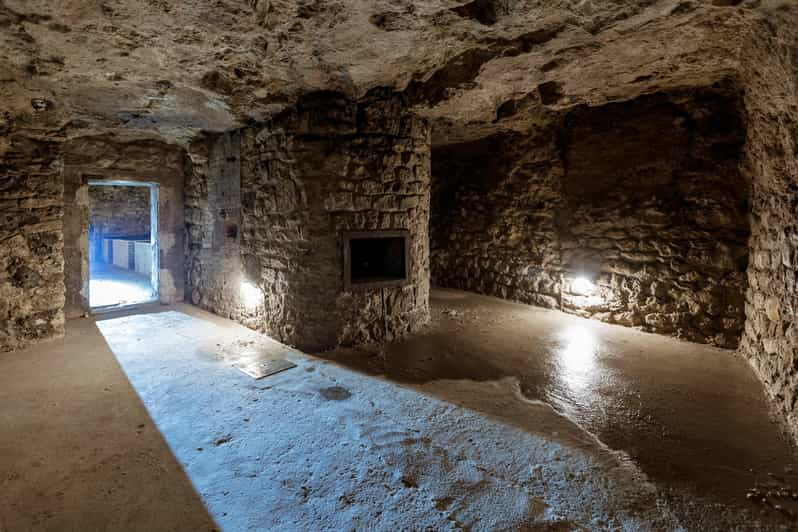
The guide is a major part of the value here. Rita has been praised for giving a detailed account of Budapest before, during, and after WWII. Jonas, sometimes introduced by his nickname, has been described as easy to listen to, informative, and good at keeping the group engaged.
Kopp brings an enthusiastic approach and points out physical traces above ground before taking the group below. Balazs has been praised for his passion and for explaining how the siege affected Hungarian citizens. These are not identical personalities, so the tone can vary by departure.
The strongest feature is the level of detail. You are not handed a short list of dates and told to move on. The guide explains the setting, answers side questions, and uses personal accounts to connect the military events with civilian experience.
At 90 minutes, the tour also has a sensible length. The subject is heavy, and a much longer visit could become tiring, especially in cold underground spaces. The time is long enough to build a clear picture without taking over your day in Budapest.
Small groups can make the experience easier to follow. When attendance is low, the tour may feel almost personal, with more room for questions and conversation. You should not assume every departure will be private, but a smaller group is possible.
What the $24 price gets you
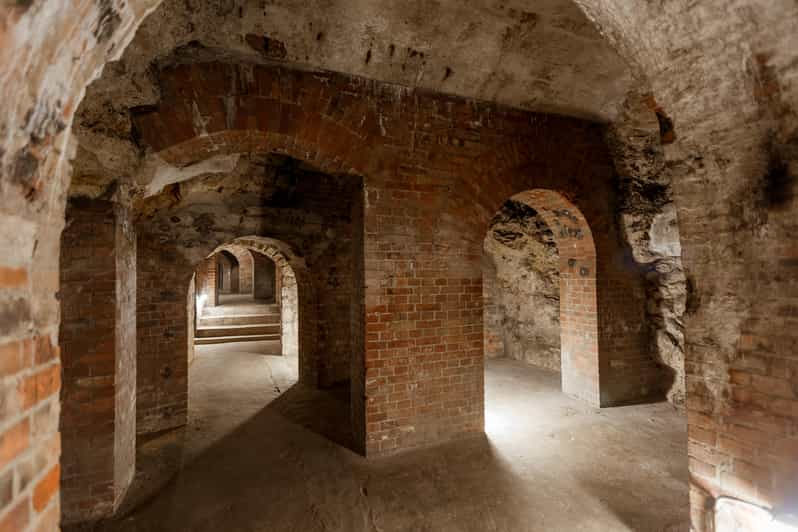
At $24 per person, this is a reasonably priced specialist tour. You receive 90 minutes with an English-speaking guide, a guided walk through the Castle District, and entry to the Buda Castle Cave, including the cellar and bomb shelter portions.
The value comes from the combination. You could walk around Castle Hill for free and spot some wartime marks yourself, but you would miss the connected explanation of the siege and the underground spaces. The guide turns separate details into one story.
The price is less attractive if you want a broad introduction to Budapest or a full tour of the Royal Palace. This is a focused WWII experience, not a general sightseeing walk. I would book it for the historical subject and the cave access, not simply because you want to see Castle Hill.
The tour allows cancellation up to 24 hours before departure for a full refund, and you can reserve now and pay later. Those terms help if your Budapest schedule is still changing.
How to prepare for the 90-minute walk
Wear comfortable shoes with a good grip. You will cross cobbled streets, use stairs, and walk on hard surfaces that may be wet underground.
Dress in layers. The cave and cellar stay around 12°C, or 54°F, throughout the year. Even if the weather outside is warm, the underground portion will feel cool.
Bring water and a snack. The tour lasts only 90 minutes, but the subject is demanding and the walk includes both outdoor and indoor sections. Keep your belongings manageable because narrow corridors leave little room for large bags.
Arrive early enough to find the green gate at Dísz Square 15. The turquoise umbrella is the key marker. Do not cut it close, especially if construction has changed the approach to the meeting point.
The tour runs in rain and other weather conditions. A light rain jacket is a better choice than relying only on an umbrella, since the route includes stairs and confined passages.
Who will appreciate this tour most
I would recommend this tour to anyone interested in WWII, civilian survival, military history, or the political history of Budapest. It also suits people who prefer seeing history in physical places rather than only inside museums.
History and politics students may find the format especially useful because the guides can answer questions beyond the main route. You do not need specialist knowledge beforehand. The guide builds the story from the siege itself and explains the surrounding context.
The tour is also a good choice if you have already seen the main Castle District sights and want a less familiar angle. The cave, shelter, and wartime traces add a different layer to the usual palace and church visit.
I would skip it if you want a relaxed walk, colorful architecture, or a family activity for young children. It is not suitable for children under 14, wheelchair users, people with mobility impairments, or anyone uncomfortable in narrow underground spaces.
Should you book the Buda Castle siege tour?
Book it if you want a serious, focused look at Budapest during WWII and can manage stairs, cobbles, and enclosed passages. The guide-led storytelling, original shelter, cave system, and visible wartime traces make the $24 fee good value for a 90-minute program.
Skip it if you need an accessible route, dislike cool tunnels, or prefer a general introduction to Buda Castle. For the right audience, this tour gives Castle Hill a human story that you would be unlikely to piece together on your own.
FAQ
How long does the tour last?
The tour lasts 90 minutes, or 1.5 hours.
What language is the tour in?
The tour is conducted in English with a live guide.
Where does the tour start?
It starts at De la Motte, also called Beer-palota, at Dísz Square 15 in Budapest. Meet beside the Posta building at the large green gate and look for the turquoise Buda Castle Walks umbrella.
Where does the tour finish?
The tour ends at Szentháromság Square.
What places are included?
The route includes the Buda Castle District, Úri Street, the Buda Castle Cave, a cellar in an old dwelling house, an original WWII bomb shelter, and Lovas Way.
Is the tour suitable for children?
The tour is recommended for people aged 14 and older. Children under 14 are not permitted.
Is the tour accessible for wheelchair users?
No. The route includes steep stairs, narrow corridors, cobbled streets, and sometimes-wet hard surfaces. It is not suitable for wheelchair users or people with mobility impairments.
What should I wear and bring?
Wear comfortable walking shoes and warm layers. The cellar and cave stay around 12°C, or 54°F, all year. Bring water and a snack, and prepare for outdoor walking in all weather conditions.
Just added around Budapest
- Secrets of Buda Castle: Self-Guided Puzzle Adventure in Budapest★ 5.0 · 8 reviews
- Budapest Hike to Visegrád Castle w or wo Sauna/Danube beach★ 5.0 · 11 reviews
- Citadella and Gellert Hill Segway Tour★ 5.0 · 33 reviews
- Castle District tour with Matthias Church Ticket & Cake & Coffee★ 5.0 · 31 reviews
- Buda Castle Tour: History and Architecture★ 5.0 · 33 reviews
- Buda Castle Quarter Walking Tour★ 5.0 · 16 reviews
- Buda Castle’s Secrets with a Historian★ 5.0 · 108 reviews
- Buda Castle Walking Tour with Matthias church entry, Cake&Coffee★ 4.5 · 21 reviews
Budapest Castle Tours, compared.

Budapest: Buda Castle District Vampires and Myths Night Tour
Read our review →
Budapest: Buda Castle Walk with Saint Stephen’s Hall
Read our review →

Budapest: 3-Hour Grand City Tour and Castle Walk
Read our review →
Buda Castle District Dark History, Legends and Vampire Night Tour
Read our review →
Budapest: Buda Castle District Walking Tour with a Historian
Read our review →
Browse the lists this tour appears in