
REVIEW · DRACULA & TRANSYLVANIA CASTLES
Bucovina Painted Monasteries & Transylvania Tour: 4-Day Private
The star of this four-day trip is Bucovina’s painted monasteries, where centuries-old frescoes cover both the inside and outside walls. Voronet is the famous one, with its intense blue, but Sucevita and Moldovita reward a slower look. Private transport also makes this long route far more manageable than trying to piece it together by train and bus.
I like the one-on-one format and the chance to set the pace with guides such as Toni Tatar or Marius, both praised for careful explanations and practical help. I also like the mix of quiet Orthodox monasteries, medieval Saxon towns, and royal Peles Castle. The tradeoff is clear: four days cover a lot of ground, with some long drives and extra admission charges that need sorting out before you go.
Key points at a glance
- Voronet’s famous blue frescoes: See one of Romania’s best-known painted churches, built by Stephen the Great in 1488.
- Three major Bucovina monasteries in one day: Sucevita, Moldovita, and Voronet each offer a different look at medieval religious art.
- Two large nunneries: Agapia and Varatec provide a quieter start, with hundreds of nuns living in active religious communities.
- A private guide and vehicle: You travel with only your own group and receive hotel pickup and drop-off in Bucharest.
- Transylvania’s best-known medieval stops: Sighisoara, Viscri, Brasov, and the Black Church add fortified villages, old walls, and Gothic architecture.
- A packed four-day route: Three nights and three breakfasts are included, but meals, snacks, drinks, and some entrance tickets are extra.
Why the painted monasteries are worth the long ride
The Bucovina monasteries are not simply old churches with a few surviving murals. Their outer walls are covered with large religious scenes, painted in a period when pictures helped explain biblical stories to people who could not read. Inside, the frescoes continue the story in a darker, more intimate setting.
That makes the first two days the artistic heart of the trip. You will see how each monastery uses color, composition, and architecture in a slightly different way. A guide can point out those differences, explain the Orthodox symbols, and show you details that are easy to miss when you walk through alone.
The route also gives you a useful contrast between active religious life and museum-like heritage sites. Agapia and Varatec remain functioning nunneries. Sucevita, Moldovita, and Voronet are also religious places, but their painted walls make them major cultural sights as well.
Dress with care. One visitor specifically noted that trousers or a long skirt are required for access to the monastery grounds, even though a covered head was not requested. Photography rules can vary. At one monastery, outdoor photos required a small fee of 10 lei, while indoor photography was not allowed.
More Dracula and Transylvania Castle Tours in Bucharest:
- Bucharest: Dracula’s Castle, Peles Castle, & Brasov Old Town
★ 4.5 · 17,858 reviews - Bucharest: Dracula Castle, Peles Castle & Brasov Old Town
★ 4.6 · 10,891 reviews - Bucharest: Dracula’s Castle, Peleș Castle & Brașov Day Trip
★ 4.4 · 6,100 reviews
Day 1: Agapia and Varatec, two living nunneries
The tour begins at 9:00 a.m. with pickup anywhere in Bucharest. The first day takes you north toward Neamt County and the monastic communities around Agapia and Varatec.
Agapia Monastery was built between 1641 and 1643 by Gavriil Coci, the brother of Moldavian ruler Vasile Lupu. The church was later restored and painted by Nicolae Grigorescu between 1858 and 1861. That combination makes Agapia unusual: the building has older foundations, while its interior art reflects a much later artistic period.
You have about an hour here. That is enough for a focused visit, especially if your guide helps explain what you are seeing. The key appeal is not only the church, but the scale of the surrounding religious community. Agapia has roughly 300 to 400 nuns and is one of the largest nunneries in Romania.
Varatec offers a similar setting, on an even larger scale. More than 400 nuns live in this Orthodox community, making it the largest nun monastery in Romania. The visit gives you a chance to see a religious settlement that is still part of daily life, not just a preserved monument behind a rope.
I would keep your expectations measured on Day 1. These are not grand castles with long galleries and dramatic rooms. Their appeal is quieter: painted churches, gardens and buildings connected to monastic life, and the sense that you are visiting a working spiritual center.
Day 2: Sucevita, Moldovita, and Voronet
Day 2 is the big monastery day, with about two hours planned at each of the three churches. That timing is useful. Rushing through these sites would defeat the purpose, since the details are the main event.
Sucevita’s complete painted program
Sucevita combines Byzantine and Gothic elements with local Moldavian design. Both its interior and exterior walls carry murals depicting scenes from the Old and New Testaments.
The longer stop lets you look at the paintings as a complete program rather than a set of isolated images. Pay attention to the way the exterior scenes are arranged across the walls. A guide can help you understand the order and meaning of the pictures, since the full effect is easier to grasp with context.
Sucevita is also a good place to appreciate the building itself. The painted surfaces are not separate decorations added to a plain church. They are part of the architecture, shaping how the entire structure looks from a distance.
A few more castle tours around Bucharest worth a look
- Transylvania Castles 4-day tour from Bucharest
★ 5.0 · 31 reviews - 4-Day Transylvania and Dracula Tour from Bucharest
★ 4.5 · 9 reviews - 4 Day Private Tour: Petra Jerash Mount Nebo Karak Castle Wadi Rum Red & Dead Sea
★ 5.0 · 29 reviews
Moldovita and the defensive role of monasteries
Moldovita was built in 1532 by Petru Rares, the son of Stephen the Great. It was founded in part as a protective barrier against Ottoman forces from the east.
That defensive purpose helps explain why these monasteries often feel more substantial than a small rural chapel. The religious and political worlds were closely connected, and the buildings served both spiritual and cultural purposes.
Moldovita’s frescoes are the reason to linger. Look for changes in color, the condition of the painted surfaces, and the way scenes fit around doors and windows. Your guide can also help separate original medieval work from later repairs. Restoration remains an important part of preserving these churches, and one account of a similar visit described seeing conservation work in progress.
Voronet and its famous blue
Voronet is the best-known stop for many people. Stephen the Great built it in 1488, reportedly completing the church in just three months and three weeks to mark his victory at the Battle of Vaslui.
The church is often called the Sistine Chapel of the East, though the comparison is a little grand for such a different place. The real reason to come is the distinctive blue used in the exterior frescoes. In Romania, Voronet blue is a familiar term, and the color remains striking even after more than five centuries.
Give yourself time to look closely. The murals are packed with figures and scenes, and the blue changes with light and weather. You might find the outside walls more immediately memorable than the interior, but both are worth seeing.
Three two-hour visits in one day can be tiring. If you like art and religious architecture, the pace should feel generous. If you prefer short photo stops, it may feel slow. That is one of the main advantages of a private tour: you can ask the guide to adjust the balance where possible.
Day 3: Sighisoara, Viscri, and Brasov
After Bucovina, the route turns toward Transylvania. Day 3 shifts from painted monasteries to fortified churches, medieval walls, and old Saxon towns.
Sighisoara’s historic center is a well-preserved medieval citadel and a UNESCO World Heritage Site. The planned two-hour visit gives you time to walk through the old town rather than simply stop for a photograph.
This is the kind of place where I would put away the camera for a few minutes and pay attention to the street plan, towers, walls, and old houses. The citadel’s value comes from the way these parts remain together as an urban setting. You are not looking at one isolated monument.
The next stop is Viscri Fortified Church, also a UNESCO World Heritage Site. This well-preserved Saxon church offers a more rural view of Transylvanian history. Its defensive character reflects a time when churches also provided shelter for local communities.
Admission to Viscri is not included, so bring some Romanian currency or be ready to pay locally. The visit lasts about an hour. That is enough to understand the church and its setting, though not enough for a long village exploration.
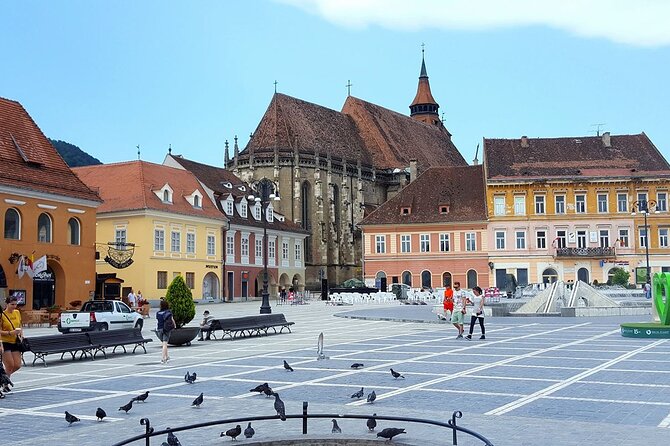
Brasov receives about two hours. The city was once the regional center of the Transylvanian Saxons and grew as a trading hub between East and West. Its historic center has a different feel from Sighisoara: larger, more urban, and better suited to a walk through a busy old city district.
The next morning includes the Black Church, so Day 3 is mainly about Brasov’s old center. That division works well. You can get your bearings in the evening, then spend focused time inside the church before leaving.
Day 4: The Black Church and Peles Castle
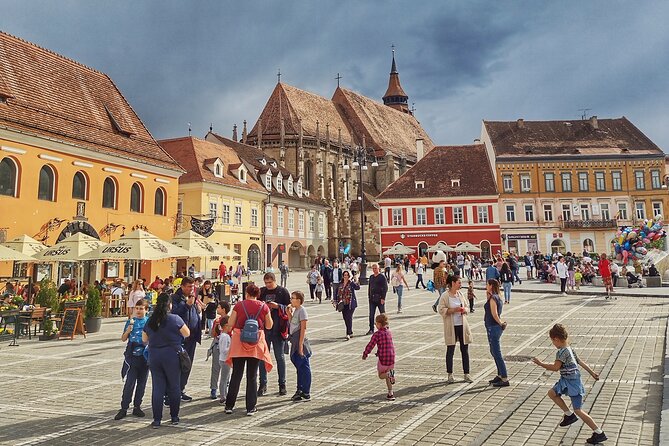
The Black Church is Romania’s major Gothic monument and the largest important Lutheran place of worship in the region. It was built by Brasov’s German community and offers a strong counterpoint to the Orthodox monasteries in Bucovina.
The contrast matters. You move from walls covered in Orthodox biblical imagery to a Gothic church connected to the Transylvanian Saxon and Lutheran tradition. The visit lasts about an hour, but admission is not included.
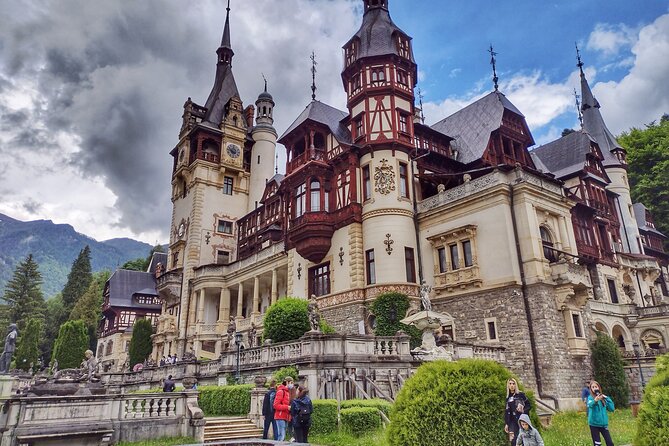
Peles Castle near Sinaia is the final major stop. It served as the summer royal residence of King Carol I and was built between 1873 and 1914 along the historic route between Transylvania and Wallachia. Its inauguration took place in 1883.
Peles is a Neo-Renaissance castle in the Carpathian Mountains. Unlike the monasteries, where the art is mainly religious, Peles presents royal taste, architecture, and ceremony. The one-hour stop gives you a concise introduction, but it may not satisfy anyone who wants a long interior visit.
Admission to Peles Castle is also extra. Check the current ticket arrangements before departure, since interior access can affect both cost and timing. The tour information gives an approximate extra-ticket amount of 25 to 30 euros per person, but the same information also describes entrance fees as included in the highlights. Treat this as an inconsistency and confirm exactly what is covered when booking.
What private travel changes on this route
This itinerary covers several regions in only four days. A private vehicle is not a luxury detail here. It saves you from arranging separate connections to remote monasteries and lets the guide manage the route between stops.
Pickup and drop-off are available anywhere in Bucharest. You leave at 9:00 a.m., and only your own group participates. That means you can ask questions freely, stop for practical needs, and discuss changing the rhythm of the day with the guide.
The vehicles used on similar departures included a spacious, air-conditioned van. That matters on long road days, especially Day 2. One account also described a newer, comfortable van and well-kept rooms.
The guides are a major part of the experience. Toni Tatar is described as warm, thorough, and deeply familiar with Romania. Marius is praised for explaining the differences between monastery eras and painting styles, while also keeping the day from becoming exhausting. Both names are useful to know when you communicate with the operator.
The personal care described around a medical problem is also worth noting. Marius helped locate an emergency room, navigate the medical system, and remain with the person late into the night. You should never plan a trip around needing that kind of help, but it does show the practical value of having a dedicated guide rather than an anonymous driver.
Hotels, meals, and the real cost
The advertised price is $1,356.43 per person. It includes three nights in three-star hotels, three breakfasts, private transportation, hotel pickup and drop-off in Bucharest, and the private guide service.
That price can be reasonable for a four-day private route because the distance is substantial and the group does not share the vehicle with strangers. The value is strongest for couples, families, or small groups who would otherwise need to arrange several hotels and transport legs themselves.
The price does not include other meals, drinks, or snacks. Plan for lunch and dinner costs each day. The information about admission fees is not fully consistent, so budget an additional amount for interior visits, especially at Viscri, the Black Church, and Peles Castle.
The accommodation category is three-star, though reports from previous departures describe rooms as lovely and very comfortable, with one account calling them closer to five-star in comfort. Room standards can vary, so I would treat three-star as the official expectation and consider anything better a bonus.
Who should book this four-day route?
I would recommend it to you if you want Romania’s most important painted monasteries but also want a broader first look at the country. The route gives you Orthodox religious art, Transylvanian Saxon towns, a fortified village, a Gothic church, and a royal castle without asking you to organize the details yourself.
It suits people with a moderate level of fitness. You will spend time walking at monasteries and historic centers, getting in and out of the vehicle, and sitting through long road sections. The itinerary is not designed for a slow, resort-style break.
It is less suitable if you want deep time in each town or several unplanned afternoons. Four days is enough for a strong introduction, not a leisurely study of Bucovina and Transylvania. Art lovers should appreciate the two-hour monastery visits. Those mainly interested in castles may find the first two days more demanding.
The tour can also work well for people who want personal attention. Guides such as Toni and Marius are not only there to recite dates. They can explain religion, painting, architecture, and local history in a way that helps the places make sense.
Should you book it?
Book this tour if the painted monasteries are your main reason for visiting Romania and you want the security of a private vehicle and guide. The combination of Sucevita, Moldovita, and Voronet is the strongest part, while Agapia and Varatec add a look at active Orthodox monastic life.
Before paying, confirm the exact entrance-fee policy, hotel locations, and which guide is scheduled. Also allow for extra meals, drinks, and tickets. If you accept the long driving days and packed schedule, this is an efficient way to connect Bucovina’s frescoes with the medieval and royal sights of Transylvania.
FAQ
Where does the tour start and end?
The tour starts and ends in Bucharest, Romania. Hotel pickup and drop-off can be arranged anywhere in Bucharest.
What time does the tour begin?
The stated start time is 9:00 a.m.
How long is the tour?
The tour lasts approximately four days and includes three nights of accommodation.
Is this a private tour?
Yes. Only your group participates in the private activity.
Is an English-speaking guide provided?
Yes. The tour is offered in English. Guides associated with the experience include Toni Tatar and Marius.
What accommodation is included?
Three nights in three-star hotels are included.
Are breakfasts included?
Yes. Three breakfasts are included.
Are meals and drinks included?
No. Other meals, drinks, and snacks are not included.
Are entrance fees included?
The tour information is inconsistent. It lists included entrance fees among the highlights, but the cost details say interior entrance tickets are not included and may be purchased on the spot. Confirm the current policy before booking.
What is the cancellation policy?
You can receive a full refund if you cancel at least six full days before the start time. Cancellations made two to six full days ahead receive a 50 percent refund. Cancellations less than two full days before the start time are not refunded. If poor weather causes cancellation, you will be offered another date or a full refund.
Just added around Bucharest
- Vlad the Impaler Royal Court from Târgoviște, Peleș Castle and Dracula grave★ 5.0 · 8 reviews
- Dracula Castle, Peles Castle & Brasov-Private Tour from Bucharest★ 5.0 · 80 reviews
- Private Tour to Salt Mine, Lunch at Winery and Dracula Grave★ 5.0 · 60 reviews
- From Bucharest: Brasov & Dracula’s Castle Transylvania★ 5.0 · 5 reviews
- Transylvania Castles 4-day tour from Bucharest★ 5.0 · 31 reviews
- Dracula’s Tomb Snagov Monastery | Mogosoaia Palace – PrivateTour★ 5.0 · 7 reviews
- Bears Sanctuary, Dracula’s Castle and Brașov City – Private Tour★ 5.0 · 10 reviews
- Private tour to Bran Dracula’s Castle and Peleș Royal Castle★ 5.0 · 4 reviews
Dracula & Transylvania Castles, compared.
Bucharest: Dracula’s Castle, Peles Castle, & Brasov Old Town
Read our review →
Bucharest: Dracula Castle, Peles Castle & Brasov Old Town
Read our review →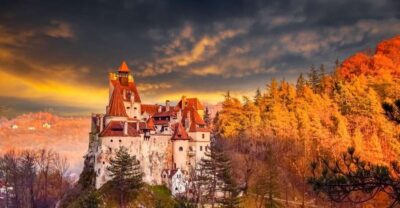
Bucharest: Dracula’s Castle, Peleș Castle & Brașov Day Trip
Read our review →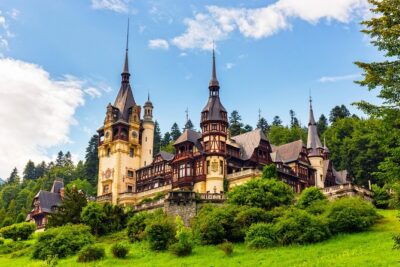
Bucharest to Dracula Castle, Peles Castle and Brasov Guided Tour
Read our review →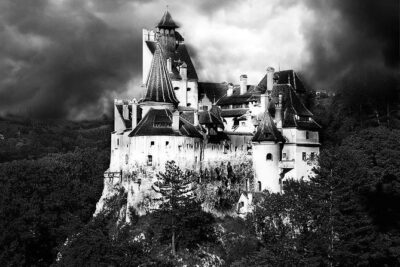
Dracula’s Castle, Peles Castle and Brasov Day Trip from Bucharest
Read our review →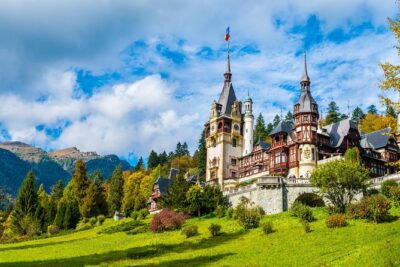
Transylvania and Dracula Castle Full Day Tour from Bucharest
Read our review →
From Bucharest: Brasov Peles & Dracula’s Castle Day Tour
Read our review →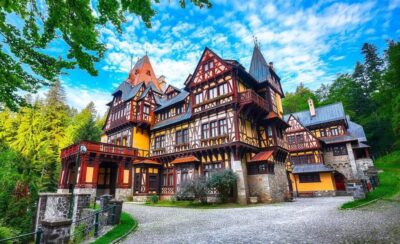
Bucharest: Peles Castle, Bran Castle, & Brasov Old Town Tour
Read our review →Browse the lists this tour appears in