

REVIEW · GUIDED CASTLE TOURS
Forchtenstein Castle Admission Ticket & Optional Guided Tour
Forchtenstein Castle keeps its best surprises inside: a courtyard covered with the largest display of secco wall paintings north of the Alps, then rooms filled with weapons, silver furniture, Ottoman objects, and Esterházy family treasures. I like the way this visit mixes grand architecture with original objects you can examine at close range.
I also like the unusual stories behind the portraits, including the only known full-length image of Vlad the Impaler and imaginary ancestors such as Attila the Hun. The main drawback is the short one-hour visit, and parts of the castle may not suit people with mobility impairments.
Key points to know before you go
- Look up at the courtyard murals: The secco paintings are one of the castle’s most distinctive features and set the tone before you enter the collections.
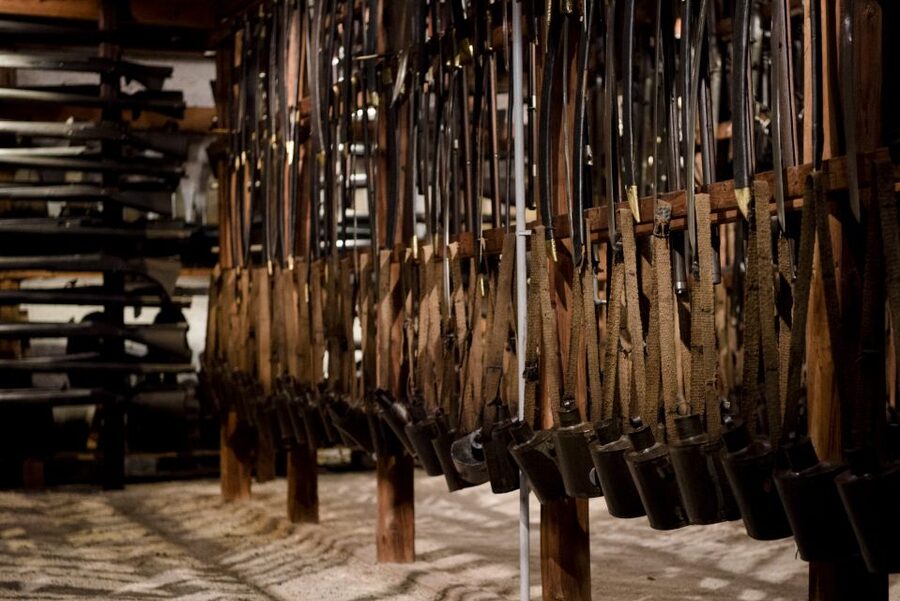
- See a remarkable armory: The first floor includes one of Europe’s largest private weapon collections, along with an oratory and chapel.
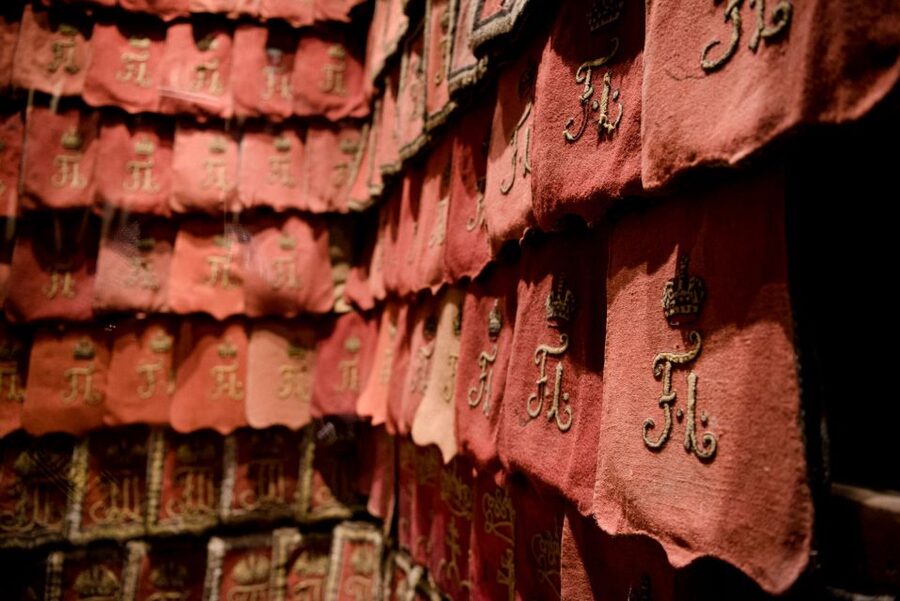
- Find the coronation flags: Three 17th-century flags from Hungary, Croatia, and Serbia are among the rarest objects on display.
- Watch for the Ottoman tent: This ornate, roughly 400-year-old tent gives the collection an unexpected link to the Ottoman world.
- Allow time for odd family portraits: The Gallery of Ancestors includes Vlad the Impaler and fictional forebears presented as part of Esterházy family identity.
- Plan for a compact visit: The advertised duration is one hour, so focus on the courtyard and major rooms rather than trying to linger over everything.
Why Forchtenstein Castle feels different from a standard castle visit
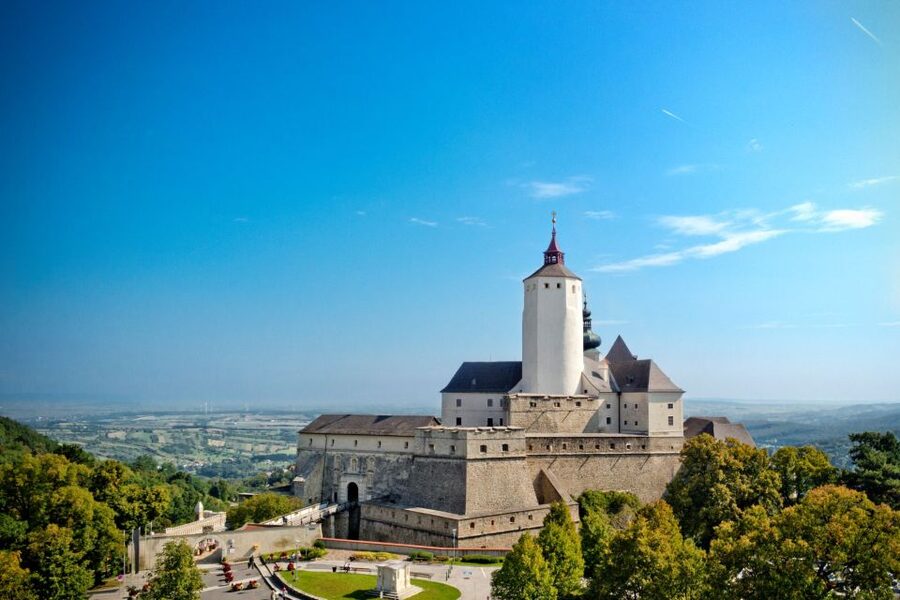
Many castle visits give you a grand staircase, a few old rooms, and a view. Forchtenstein gives you that fortified setting, but the real draw is the Esterházy collection preserved inside it. You are not simply walking through an empty shell. You are moving through rooms linked to a powerful Central European family and its taste for weapons, portraits, ceremonial objects, and curious rarities.
The castle is in Burgenland, Austria, and the experience costs about $22 per person. For a one-hour visit, that is not a bargain attraction in the simple sense. The value comes from the concentration of unusual objects. If you care about decorative arts, military history, aristocratic families, or strange old portraits, you can get a lot from the ticket. If you only want a quick castle photo, the price may feel less convincing.
The advertised rating is 4.7 from 16 bookings, with especially strong praise for the authentic original pieces, the armory, and the guide who explained the collection vividly. One practical warning: access is not suitable for people with mobility impairments, so check the physical route before paying.
More Castle Entry Tickets in Austria:
- Salzburg: Hohensalzburg Fortress Admission Ticket
★ 4.6 · 2,236 reviews - Mauterndorf: Castle Entrance Ticket
★ 4.7 · 8 reviews - Seville: Royal Alcázar Entry Ticket
★ 4.6 · 28,378 reviews
Begin in the painted inner courtyard
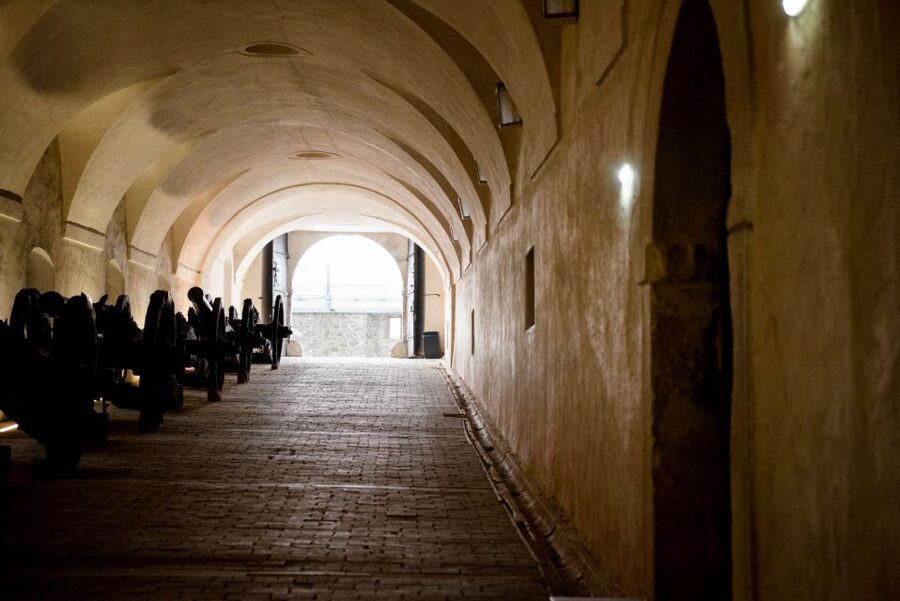
Start in the inner courtyard, where the secco murals immediately give Forchtenstein a sense of place. Secco painting is applied to dry plaster rather than wet plaster, and these large wall paintings are described as the biggest display of their kind north of the Alps.
I would give the courtyard a proper pause instead of treating it as a passageway. Look across the walls before heading indoors. The painted surface is part of the building itself, so it tells you something different from the movable objects in the rooms upstairs. It also gives you an early hint that this is a family stronghold designed to display status, not just a defensive structure.
The courtyard is a useful starting point for a short visit because it requires no hunting for the collection’s star pieces. You see one of the castle’s major features at once, then continue toward the chapels and galleries. If your time is limited, this is one of the areas I would not skip.
The oratory, chapel, and Esterházy armory
The first floor takes you into the castle’s religious and military world. The oratory and chapel add a more private side to the building, while the weapon collection shows how the Esterházy family presented power and protection.
The armory is described as one of Europe’s largest private collections of weapons. That scale matters. You are not looking at one ceremonial sword placed in an otherwise bare room. You are seeing a substantial group of military objects that helps explain the castle’s role and the family’s position.
A detailed guided explanation is useful here, since a room full of weapons can blur together without context. One booking review specifically praised a guide for making the history vivid and explaining the original objects clearly. The guide’s name is not supplied, and the activity details do not promise a named guide or a particular language beyond German information.
This is also the part of the visit where the building and the collection work best together. The castle itself is an original interior setting, and the weapons are not presented as a modern museum display detached from the place. That combination gives the armory more impact than a stand-alone case of historic arms.
Upstairs: silver furniture, flags, and the Ottoman tent
The second floor contains the densest group of major objects. Here you can see what is described as Europe’s largest and earliest collection of silver furniture. That is an unusual specialty, and it rewards slow looking. Silver furniture is not just about precious metal. It shows how wealth could be turned into household display, ceremony, and status.
The three coronation flags are another high point. They date from the 17th century and come from Hungary, Croatia, and Serbia. The information provided describes them as the oldest known coronation flags from those countries. Their ceremonial role gives the room a wider Central European reach, linking the castle to royal traditions beyond Burgenland.
Then there is the Ottoman tent, an ornate object about 400 years old. It is easy to expect a castle collection to focus only on European armor and portraits. The tent breaks that pattern. Its presence points to contact, conflict, trade, and collecting across a much broader region.
I would not rush this floor. The objects are varied enough that you may shift from decorative arts to ceremony to military culture within a few steps. That variety is a strength, though it also means the one-hour schedule can feel tight if you want to read every label or study each case.
More Guided Castle Tours in Austria:
- Edinburgh Castle: Guided Walking Tour with Entry Ticket
★ 4.7 · 11,699 reviews - Seville: Cathedral, Giralda & Alcazar Entry With Guided Tour
★ 4.6 · 8,560 reviews - Granada: Alhambra & Generalife Fast-Track Guided Tour
★ 4.7 · 8,313 reviews - Edinburgh Castle: Guided Walking Tour with Entry Ticket
★ 5.0 · 5,540 reviews
The Gallery of Ancestors and Vlad the Impaler
The Gallery of Ancestors gives the visit its most memorable human element. Alongside portraits of the Esterházy family, the gallery includes supposed ancestors who were not literal family members, including Attila the Hun and Vlad the Impaler.
The portrait of Vlad is especially unusual because it is described as the only known full-length portrait of him. That does not mean the image gives you a simple, direct view of the historical man. It shows how later generations wanted to connect themselves with powerful, feared, or legendary figures.
This is where the collection becomes more than a line of family portraits. You can see how aristocratic identity was built through images, claims, and stories. Some portraits present actual family members, while others create a grander ancestry reaching back to famous figures. I find that tension more interesting than a room of polished family likenesses with no explanation.
The gallery also helps balance the armory and ceremonial objects. After seeing weapons and flags, you get a look at the people and legends that helped shape the family’s public image.
The Kunstkammer and Prince Paul Esterházy’s collecting habit
The Kunstkammer, or cabinet of curiosities, dates from the late 16th to the early 18th century. It offers a window into the collecting habits of Prince Paul Esterházy and the way elite households once gathered objects from different fields.
A cabinet of curiosities was not arranged like a modern specialist museum. It could bring together art, natural wonders, unusual objects, scientific pieces, and prized possessions. At Forchtenstein, this makes the collection feel personal. You are seeing evidence of what one prince found worth saving, displaying, and passing on.
That is the value of this section for me. It gives a sense of curiosity behind the wealth. The silver furniture and flags show public status. The Kunstkammer shows the collector’s private appetite for rare and surprising things.
If you like museums that explain how people collected in earlier centuries, do not treat this as an extra room. It is one of the best ways to understand the Esterházy world. If your main interest is military history, you may prefer to spend more of your limited time in the armory and then make a quicker pass here.
Is one hour enough?
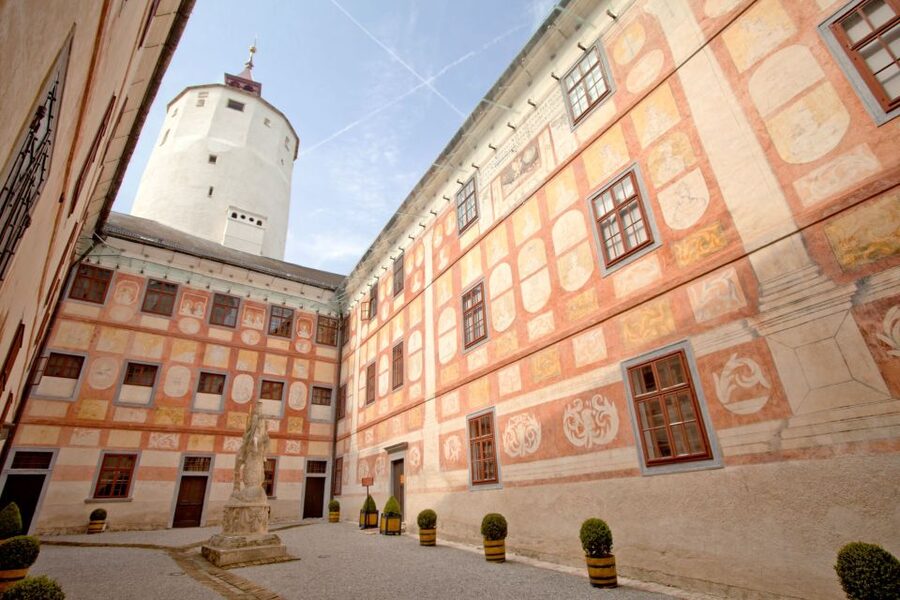
One hour is enough to see the main sequence: courtyard, oratory and chapel, armory, second-floor collections, portraits, and Kunstkammer. It is not enough for an unhurried study of every object.
I would arrive 15 minutes before the activity starts, as requested, and decide in advance what matters most. If you want the broad picture, follow the complete route. If you are an art or military-history enthusiast, plan to spend less time on secondary displays and more time with the armory, silver furniture, Gallery of Ancestors, and flags.
The visit works well as a focused stop rather than a full-day outing. Its one-hour length can be useful if you are fitting Forchtenstein Castle into a wider Burgenland plan. The tradeoff is that you may wish for more time once you reach the second floor.
Guide, audio, and language details
The activity title allows for an optional guided tour, and a guide can make a real difference in rooms filled with unfamiliar names and objects. The supplied information does not give a guide’s name or confirm a regular schedule for live tours, so check the available start time and format when booking.
German is the stated language. The details also describe a German audio guide, but the pricing information is inconsistent: one section says an audio guide costs €2, while another says it is included. Confirm the current arrangement before you arrive, especially if the audio guide is important to your plans.
If you do not speak German, the value of a live tour or audio guide depends on the language offered at your chosen time. Do not assume that every guided visit is multilingual.
Price, access, and who should book
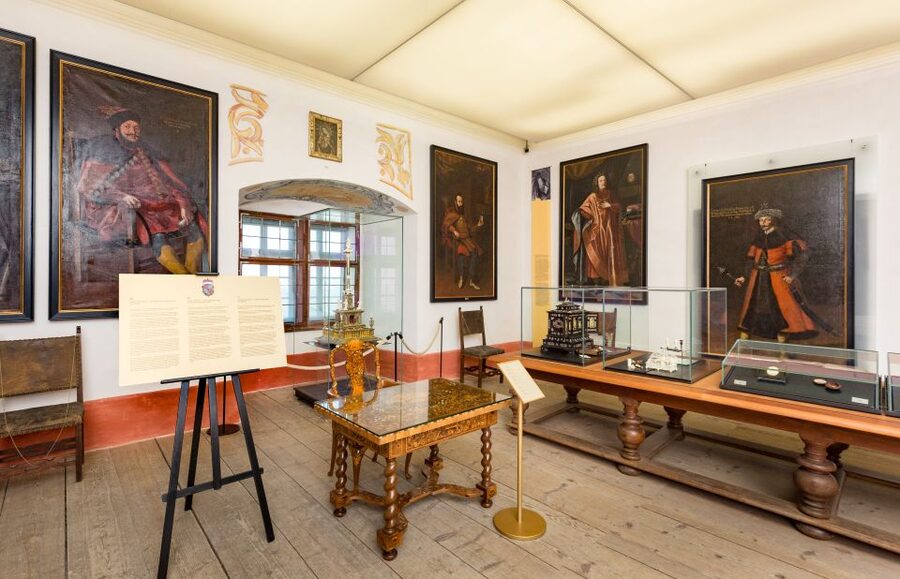
At $22 per person, admission makes the most sense for you if you enjoy authentic interiors and specialist collections. The price covers entry, not every possible add-on, so consider the audio guide fee if it applies. The short duration keeps the financial risk moderate, but the attraction is not designed as a quick free wander through a public courtyard.
The route is not suitable for people with mobility impairments. That is a serious planning point, not a minor footnote. Ask about access before booking if stairs, uneven surfaces, or restricted movement could affect your visit.
I would recommend Forchtenstein Castle to:
- You like castles with original furnishings and collections, not only exterior views.
- You enjoy unusual museum objects, from silver furniture to an Ottoman tent.
- You are interested in Central European dynasties, weapons, flags, and portrait traditions.
- You want a one-hour cultural stop in Burgenland.
- You appreciate a guide who adds stories and context to old objects.
I would be more cautious if you want a long, relaxed castle tour, need step-free access, or prefer a clearly confirmed English-language experience. The attraction’s main information is in German, and the guide arrangements should be checked in advance.
Should you book Forchtenstein Castle?
Book it if the collection matters as much to you as the castle. The secco murals, large armory, silver furniture, coronation flags, Ottoman tent, and eccentric portraits give this visit a clear identity. You are paying for a concentrated look at the Esterházy family’s world, not just a pretty building.
Skip it if you have little interest in historic objects or if mobility limitations make the route impractical. For everyone else, $22 is reasonable when you use the hour well. Arrive early, start with the courtyard, and save enough time upstairs for Vlad the Impaler, the coronation flags, and the Kunstkammer.
FAQ
Where is Forchtenstein Castle?
Forchtenstein Castle is in Burgenland, Austria.
How long does the castle visit take?
The stated duration is one hour.
How much does admission cost?
The listed price is $22 per person.
What is included in the ticket?
Admission to Forchtenstein Castle is included.
Is a guided tour available?
The activity is described as admission with an optional guided tour. Check the available format and start time when booking.
What language is available?
German is the stated language for the activity information and audio guide.
Is the audio guide included?
The supplied details are inconsistent. One section lists a €2 audio guide fee, while another says the German audio guide is included. Confirm the current arrangement before booking.
What should I see first?
Start with the inner courtyard and its secco murals, then continue to the armory and the major second-floor collections.
Is the experience suitable for people with mobility impairments?
No. The activity is listed as unsuitable for people with mobility impairments.
Can I cancel for a refund?
You can cancel up to 24 hours in advance for a full refund. A reserve-now-and-pay-later option is also listed.
Just added around Austria
- Skip-the-line Hohensalzburg Fortress Private Tour and Ticket★ 4.7 · 9 reviews
- Salzburg Old Town, Fortress, Cathedral Private Walking Tour★ 4.5 · 41 reviews
- Salzburg: River Cruise & Best of Mozart Fortress Concert★ 3.9 · 14 reviews
- Salzburg: Christmas/Advent Concert at Fortress Hohensalzburg★ 4.4 · 54 reviews
- Mauterndorf: Castle Entrance Ticket★ 4.7 · 8 reviews
- Innsbruck: Tickets for Schloss Ambras★ 4.6 · 204 reviews
- Mozart Concert and Dinner or VIP Dinner at Fortress Salzburg with River Cruise★ 4.5 · 280 reviews
- Salzburg: River Cruise, Dinner & Fortress Concert★ 4.6 · 406 reviews
Guided Castle Tours, compared.

Edinburgh Castle: Guided Walking Tour with Entry Ticket
Read our review →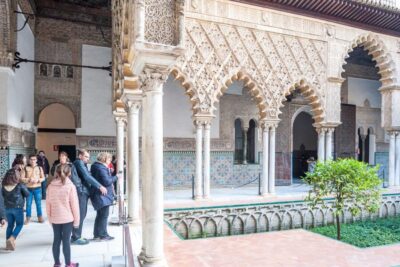
Seville: Cathedral, Giralda & Alcazar Entry With Guided Tour
Read our review →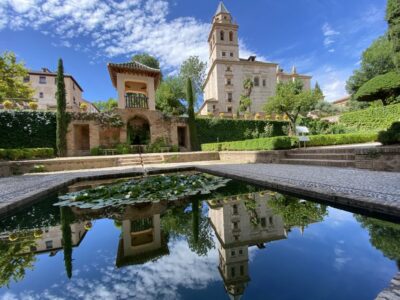
Granada: Alhambra & Generalife Fast-Track Guided Tour
Read our review →Edinburgh Castle: Guided Walking Tour with Entry Ticket
Read our review →
Stonehenge, Windsor Castle and Bath Full Day Guided Tour
Read our review →
Edinburgh Castle Guided Walking Tour in English
Read our review →
Seville: Alcázar and Cathedral Entry Ticket and Guided Tour
Read our review →
Fast-Track Alhambra & Nasrid Palaces Guided Tour
Read our review →Browse the lists this tour appears in