

REVIEW · WINE TOURS
Beaune: Wine Tasting at Château de Pommard
The best part of this Château de Pommard visit is the way a short tasting connects the wine in your glass to the Clos Marey-Monge vineyard outside. You learn how Burgundy divides its vineyards, how soil and other natural factors shape the wine, and why some bottles can age longer than others. Guides such as Alex, Pierre, and Manon have made the hour friendly and easy to follow.
I like the small group limit of eight, which gives you a fair chance to ask questions. I also like that the $35 price includes four wines and access to the French Gardens. The main drawback is clear: the cellars and winery cannot be visited while the château undergoes renovation, so this is a tasting and vineyard lesson, not a full behind-the-scenes winery tour.
Key points at a glance
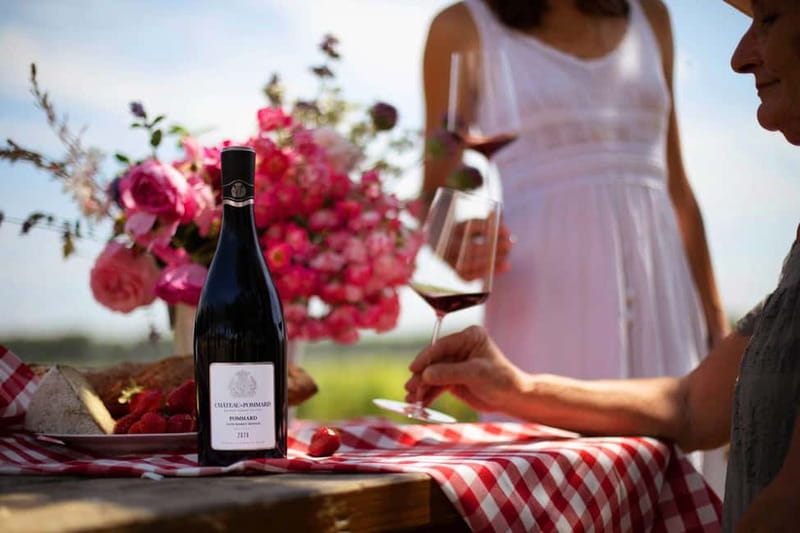
- Four Burgundy wines in one hour: Taste wines from Château de Pommard and Famille Carabello-Baum.
- Clos Marey-Monge vineyard: Learn how vineyard site, soil, and other natural factors affect flavor, style, and aging.
- Burgundy made easier: The guide covers the region’s history, five subregions, and classification system.
- Small groups: No more than eight participants makes questions and conversation easier.
- French Gardens included: Allow time to stroll the grounds, and look for the horses mentioned by past visitors.
- Cellars currently closed: Renovation limits the visit to the tasting, vineyard-related explanation, and gardens.
What this one-hour Château de Pommard visit is really about
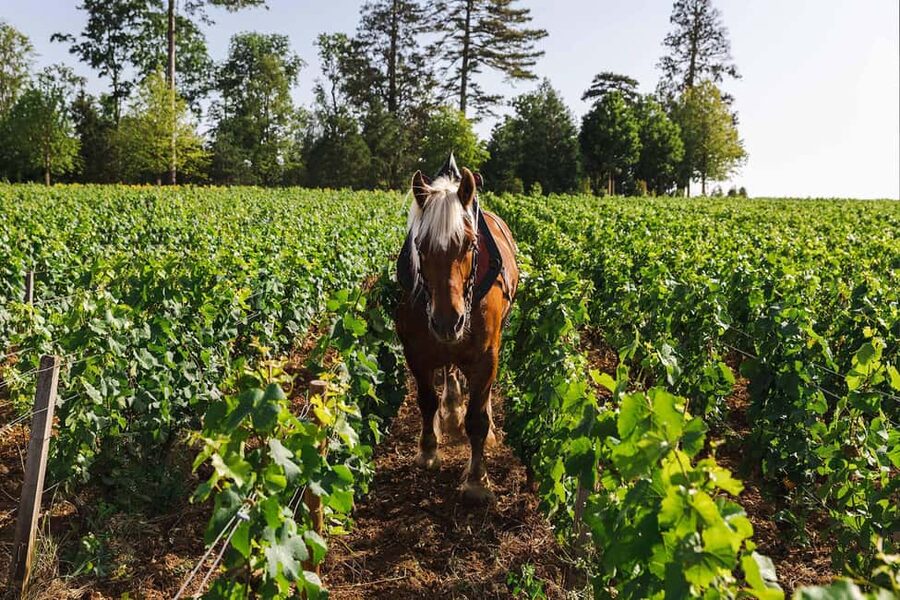
This is a focused introduction to Burgundy wine, not a long estate tour. You spend one hour tasting four wines while an English or French-speaking guide explains how Burgundy organizes its vineyards and how place affects what ends up in your glass.
That focus can be a strength. Burgundy wine can seem needlessly complicated at first, with its subregions, classifications, named vineyards, and producer names. A good guide gives you a framework before you taste, so the wine becomes more than a series of pleasant sips.
The setting helps. Château de Pommard is connected with the Clos Marey-Monge vineyard, and the experience includes free access to the French Gardens. You get a sense of the estate rather than visiting an anonymous tasting room. The gardens also give you somewhere to wander before or after the tasting.
The format is best for someone who wants an introduction with substance but has only an hour. If you are looking for barrel rooms, fermentation tanks, underground cellars, or a detailed production tour, you should wait until the renovation is complete or choose a different experience.
More Wine Tours in France:
- Loire Valley Castles Day Trip from Paris with Complementary Wine
★ 4.5 · 3,907 reviews - From Paris: Loire Valley Castles Day Trip With Wine Tasting
★ 4.6 · 1,727 reviews - Medoc or Saint Emilion Wine Tasting and Chateau from Bordeaux
★ 5.0 · 1,415 reviews
Beginning with Burgundy’s five subregions
The educational portion starts with Burgundy itself. You learn about the region’s five subregions, along with the broad story of Burgundy wine and the system used to classify its vineyards.
That matters because Burgundy labels are not organized in the simple way many visitors expect. The name on the bottle may tell you more about the vineyard or village than about a large winery brand. Understanding the regional structure helps you read the label and place the tasting in context.
The guide also explains Burgundy’s classifications. This is useful if you have ever stood in a wine shop wondering why two bottles from nearby places cost very different amounts. Classification reflects the reputation and position of a vineyard, but it does not replace your own taste. The best use of this part is to give you terms and ideas you can keep using after the visit.
Guides have included Alex, Pierre, and Manon, and their approach appears to vary slightly. Alex has been singled out for detailed explanations and a friendly manner, while Pierre has hosted quieter tastings with plenty of time for questions. Manon has introduced the château’s wines in a clear, approachable way. Your guide will depend on the date and staffing, but the small group format should keep the session personal.
Connecting the glass to Clos Marey-Monge
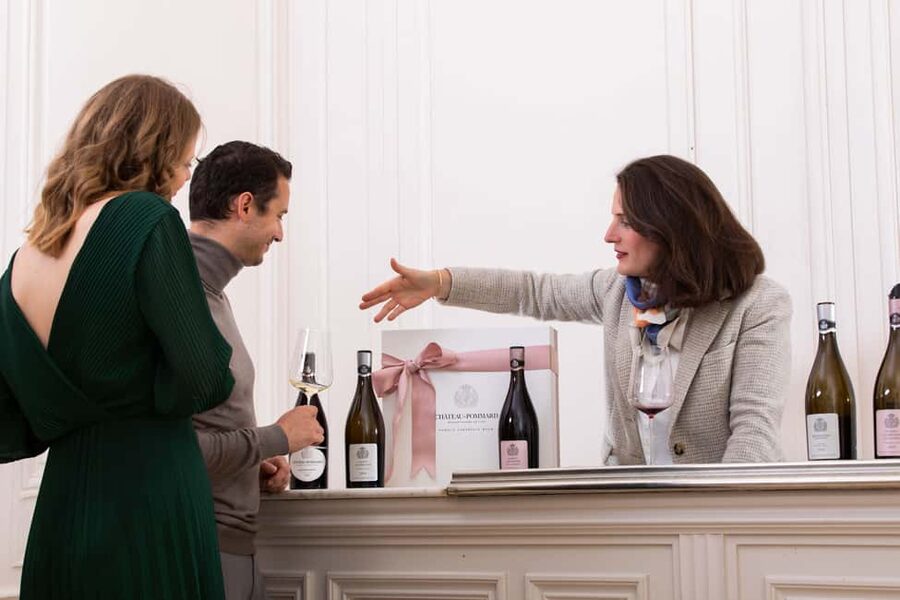
The most useful subject here is terroir. In plain terms, terroir means the natural setting that helps shape a wine: soil, slope, exposure, climate, and other conditions affecting the vines.
At Clos Marey-Monge, the explanation centers on how different soils can influence the taste, style, and ageability of the wines. This is not just a technical lecture. It gives you a reason to pay attention to differences between the four samples.
If you are new to wine tasting, do not worry about finding the perfect words. Listen for the links the guide makes between the vineyard and the wine. You might notice that one sample feels more structured, another more open, or a third seems built to develop over time. The point is not to memorize every soil type. It is to understand why Burgundy places so much importance on the exact patch of ground where grapes grow.
One limitation is worth noting. One past participant wanted a fuller explanation outdoors, with more time spent looking at the soil and vines. The current format may give you a useful overview without offering a detailed walk through every part of the vineyard. If soil science is your main interest, ask questions early and make the most of the guide’s time.
Four wines from two connected names
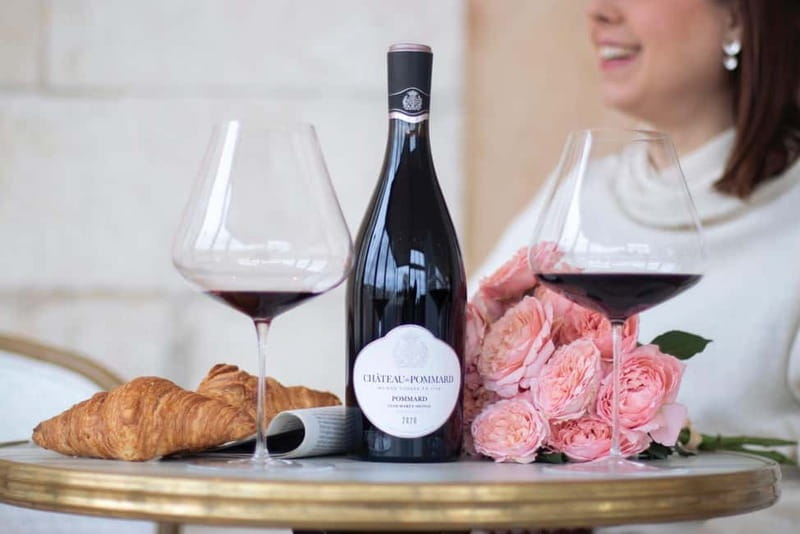
The tasting includes four wines from Château de Pommard and Famille Carabello-Baum. Four samples is a sensible number for a one-hour session. It gives you enough range to compare wines without turning the experience into a rushed parade of glasses.
The wines are the heart of the visit, and the guide uses them to explain the estate and Burgundy more broadly. You can expect discussion of how the wines differ in style, how the vineyard affects their character, and how ageability relates to natural conditions.
The tasting is not presented as a technical exam. You do not need a strong wine vocabulary, and you do not need prior Burgundy experience. A first-time visitor can follow the basic explanation, while someone who already knows Burgundy can use the question period to get into more detail.
The experience received a rating of 4.6 from 353 bookings, and the strongest praise centers on the wine, the setting, and the guides’ ability to explain the region. That matches the design of the visit: you are paying for a guided tasting with context, not only for four pours.
At $35 per person, the value is solid if you want to learn while tasting. You receive four wines, a one-hour guided session, and access to the French Gardens. The value is less convincing if you are mainly paying for cellar access, since that part is unavailable during renovation.
A few more castle tours around France worth a look
- Nice : Wine Tasting at a Historic Château in a Land Rover !
★ 4.9 · 156 reviews - Essential Wine Tour with Tasting & Chateau Visits from Bordeaux
★ 5.0 · 133 reviews - Half day tour Saint-Emilion : Village & Château with wine tasting
★ 4.5 · 114 reviews - Paris: Loire Valley Chambord Castle, Wine Tasting & Lunch
★ 4.7 · 69 reviews
The château, gardens, and what you can see now
The French Gardens are included, so do not rush off after the final wine. They offer a pleasant way to see more of the property and make the experience feel connected to the château rather than confined to one room.
Past visitors have also enjoyed the grounds and mentioned the horses. That makes the gardens particularly worthwhile for families and anyone who wants a break from tasting. Dogs have been present on some visits, and one guide was especially patient with two of them, but you should confirm current pet rules before booking if that matters to you.
You may see the vineyard and château surroundings, but the visit does not currently include the cellars or winery. This is the most important practical difference between this experience and a full estate tour. The closure is tied to a major restoration and expansion project intended to prepare the property for its next several centuries.
That work may eventually improve the visit, but for now you should arrive with the right expectations. The grounds are part of the experience. The production areas are not.
A small group changes the pace
The maximum group size is eight. That is a useful limit for a tasting because wine questions tend to be personal and specific. You can ask about a flavor, a classification, or the difference between two samples without needing to compete with a large crowd.
A small group also gives the guide room to adjust the conversation. If everyone is new to Burgundy, the explanations can stay simple. If the group already knows wine, there is more room for detailed questions. Pierre has hosted a quiet September session that felt almost private, though you should not count on having the château to yourself.
The listed languages are English and French. If you need one of those languages for the tasting, check the option and starting time when you book. The meeting point can vary by the option selected, so read the booking details rather than assuming every session begins in the same place.
The full activity lasts one hour. Some people may find that exactly right, especially during a busy day in Beaune. Others may want more time at the estate. In that case, plan a little extra time around the tasting for the French Gardens, but remember that the official guided portion remains short.
Practical comfort and access
Wear comfortable shoes. High heels are discouraged because the property includes outdoor areas and vineyard surroundings. Flat shoes are the sensible choice, even if you plan to spend most of the tasting indoors.
The experience is not suitable for wheelchair users. That is important to check before booking, since the gardens and property layout may create access problems.
Free parking has been described as easy, and the garden beside the parking area provides a simple place to get your bearings before the tasting. Exact arrival arrangements can depend on the option booked, so give yourself enough time to find the correct meeting point.
The booking terms are flexible: you can cancel up to 24 hours before the activity for a full refund, and you can reserve now while paying later. Those policies are useful if your Burgundy plans are still shifting, but check the final terms attached to your selected time.
Who will enjoy this tasting most?
I would choose this experience for a first visit to Burgundy, especially if you want a clear explanation of the region without committing to a half-day wine program. The four-wine format gives you a taste of the estate while the classification and terroir discussion adds useful context.
It also suits couples and small groups who prefer conversation over a large presentation. The maximum of eight makes it easier to ask questions, and the gardens add a little breathing room before or after the tasting.
Families may appreciate the short duration and outdoor space, though the tasting itself is built around wine education. Dogs have been welcomed on some visits, but confirm the current policy before you rely on bringing one.
I would be more cautious if your priority is production access. Since the cellars and winery are closed during renovation, you will not see the places where the wine is made or stored. You also should not expect a long walk through every part of the vineyard. This is a polished introduction, not a complete estate inspection.
Should you book Château de Pommard?
Book it if you want four Burgundy wines, a useful explanation of classifications and terroir, and a look at a historic château property for $35. The guides can make the difference, and names such as Alex, Pierre, and Manon have been associated with warm, helpful presentations.
Skip it for now if cellar access is essential to your idea of a wine tour. In that case, the renovation closure is a real gap, not a minor footnote.
For most first-time Burgundy visitors, the hour is well judged. You leave with a better sense of how Burgundy works, a few wines to compare, and time to enjoy the French Gardens. Just arrive in flat shoes and treat the visit as a tasting lesson, not a winery tour.
FAQ
How long does the Château de Pommard wine tasting last?
The activity lasts one hour.
How many wines are included?
You taste four wines from Château de Pommard and Famille Carabello-Baum.
Are the Château de Pommard cellars open for visits?
No. The cellars and winery cannot currently be visited because of renovation work.
Is access to the French Gardens included?
Yes. Free access to the French Gardens is included with the wine tasting.
What languages are available?
The tasting is available in English and French.
Is the experience suitable for wheelchair users?
No. The activity is not suitable for wheelchair users. High heels are also discouraged because of the outdoor and vineyard areas.
Just added around France
- Private Wine Lovers – Super St Emilion – behind the scenes visits top chateaux and medieval town★ 5.0 · 25 reviews
- Saint Emilion Castle and Village Wine Tour★ 4.5 · 23 reviews
- Château de Fieuzal, Pessac-Léognan: Visit and Tasting★ 5.0 · 18 reviews
- 3H private city tour of Bordeaux and vineyard in a Citroën DS★ 5.0 · 4 reviews
- Bordeaux Médoc Region Private Wine Lovers Tour with Chateau Visits & Tastings★ 5.0 · 40 reviews
- Full-day Saint-Emilion: Village, Undergrounds and Châteaux★ 4.5 · 55 reviews
- Bordeaux to Dordogne – Private Tour: Fortified Castles and Medieval Villages★ 4.5 · 4 reviews
- Chateau du Taillan and Park including Wine Tasting Tour★ 5.0 · 40 reviews
Wine Tours, compared.
Loire Valley Castles Day Trip from Paris with Complementary Wine
Read our review →
From Paris: Loire Valley Castles Day Trip With Wine Tasting
Read our review →
Medoc or Saint Emilion Wine Tasting and Chateau from Bordeaux
Read our review →
Small-Group Barolo Wine Tasting, Alba & UNESCO Piedmont Hills
Read our review →
From Siena: Chianti and Castles Tour with Wine Tastings
Read our review →
Loire Valley Wine and Castles Small-Group Day Trip from Paris
Read our review →
Alicante: Santa Bárbara Castle Wine Tasting & Tapas
Read our review →
Montalcino: Brunello Wine Tasting & Lunch in a Tuscan Castle
Read our review →Browse the lists this tour appears in