
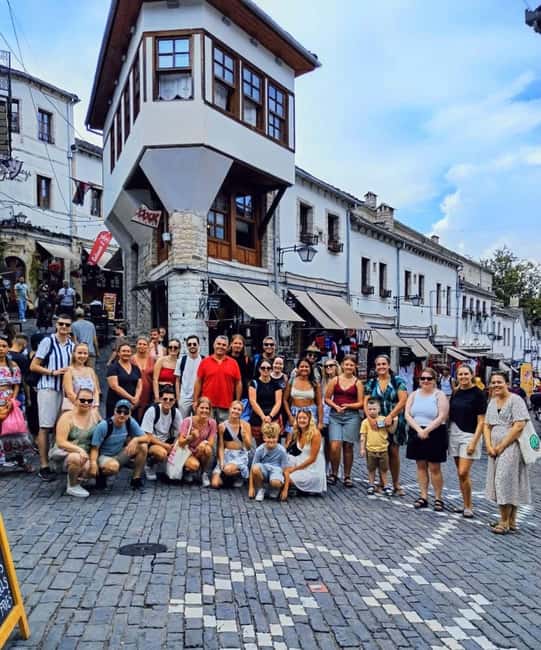
REVIEW · SARANDA CASTLE TOURS
Saranda: Lekursi Castle, Blue Eye, Gjirokaster, & More Tour
Southern Albania packs an astonishing amount into a short drive. In one day, you can look across Saranda from Lekursi Castle, walk through the cool forest around the Blue Eye, and finish among the stone streets of Gjirokaster. The route also adds an Ottoman bridge, communist-era bunkers, and Mesopotam Monastery, so this is more than a standard castle-and-spring outing.
I like two things in particular: the small group of up to eight keeps the day personal, and the Mercedes Vito makes the long loop far more comfortable than a basic bus. Guide Ilir Shehu is often the person who gives the tour its character, adding history, local food advice, Albanian music, and practical help along the way. The main drawback is the length: nine hours, with several stops on foot, can feel demanding in hot weather.
Key points to know
- Six southern Albanian sights in one day: You’ll cover castles, religious history, nature, Ottoman architecture, communist remains, and a UNESCO-listed old town.
- Gjirokaster gets the most time: Plan on about three hours to walk the old town, see the castle area, eat, and browse the bazaar.
- The Blue Eye requires walking: You have about two hours there, and the forest route is more scenic than simply taking the paved road.
- Comfortable transport matters: The air-conditioned Mercedes Vito Tourer is a good fit for the winding roads and long return drive.
- Ilir is a strong part of the experience: Expect clear English, local stories, historical context, and useful suggestions for food and further travel.
- Bring cash for the Blue Eye: Entry is only 50 cents, but food is not included.
Why this route works so well from Saranda
Saranda is easy to enjoy for its sea views and beaches, but the most interesting parts of southern Albania lie inland. This tour gives you a practical way to reach them without renting a car, working out rural bus connections, or trying to fit several separate day trips into your stay.
The route begins at Guma Bar Restaurant at 8:50 in the morning and finishes at Parku Miqësia around 6:00 in the evening. You spend much of the day moving between sites, but the drives are broken up often enough to keep the journey lively. The longest single ride listed is about 50 minutes from Gjirokaster back toward Saranda.
This is also a useful introduction to the region’s different eras. You’ll see Ottoman military architecture, Christian and Muslim religious layers, Cold War bunkers, and a living old town where people still eat, shop, and move through the narrow streets. That range gives you a better sense of Albania than a day spent at one famous viewpoint.
A few more castle tours around Albania worth a look
- From Tirana: Kruja Castle, Old Bazaar & Sari Salltik View
★ 4.8 · 2,171 reviews - From Durres/Golem: Kruja Castle & Old Bazaar Day Tour
★ 4.9 · 1,317 reviews - Berat city UNESCO tour, the Castle & Belshi lake- From Tirana
★ 5.0 · 804 reviews
Lekursi Castle gives you the big picture first
Your first proper stop is Lekursi Castle, reached after a short drive from the meeting point. The castle sits above Saranda, so the main attraction is the wide view over the town, the coast, and the surrounding hills.
The visit lasts about 30 minutes. That is enough for photographs and a quick look around, but not enough for a slow architectural study. I like the placement of this stop at the beginning because it helps you understand the geography before heading inland. From above, Saranda looks like a coastal resort; from the road afterward, you begin to see how quickly the urban edge gives way to hills and open countryside.
Entrance is free. Wear shoes with a decent grip, especially if the ground is uneven or damp. A hat, sunscreen, and water are sensible here, since shade may be limited around the viewpoint.
Mesopotam Monastery adds an unusual religious story
The next stop is the Monastery of Saint Nicholas, also called Mesopotam Monastery. The visit lasts around 30 minutes and is another free stop.
The site dates from the 11th to 13th centuries and contains several layers of religious history. It served both Catholic and Orthodox rites before the Ottoman period, when it was converted into a mosque. The building also incorporates ancient walls linked to a temple from before Christianity.
That combination makes this a worthwhile short stop, even if you are not especially interested in church architecture. It shows how places in this part of Albania changed use as different powers and faiths shaped the region. The stop is atmospheric rather than grand. You should expect a quiet visit and an explanation from the guide, not a large museum with extensive displays.
Ilir’s historical commentary is especially useful here because the site can be easy to overlook if you arrive without context. Thirty minutes is about right for seeing the structure, taking photographs, and hearing the main story before continuing.
The Blue Eye is the natural centerpiece
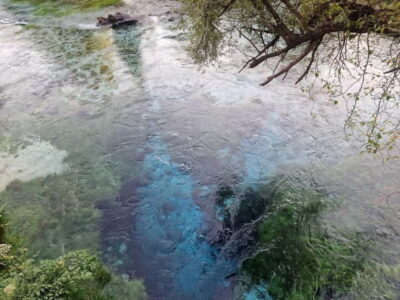
The Blue Eye is the stop that usually makes the strongest visual impression. This spring rises from deep below the surface in a pool of remarkable blue and green water. The water remains around 10 degrees Celsius, even in warm weather.
You have about two hours here, which gives you time to reach the spring, take photographs, walk through the surrounding woodland, and pause before returning to the minivan. The entrance fee is 50 cents and is not included in the tour price.
From the parking area, you can use the paved road, take a forest trail, or use a small tourist tram. If you have comfortable shoes and reasonable fitness, I would choose the forest trail. It adds a little effort, but the walk makes the setting feel more natural and gives you a better chance to enjoy the trees and cool air around the water.
Do not plan on swimming. The spring is extremely cold, and the site is best treated as a viewing and walking stop. Bring water, sunscreen, and a hat. The two-hour allowance is generous compared with the short photo stops earlier in the day, but you should still keep an eye on the meeting time. A late return here could affect the rest of the schedule.
The Blue Eye also shows why practical transport matters. You are far enough inland that reaching it independently can take planning, especially if you are staying in Saranda without a car. Having a driver and fixed schedule removes that problem.
Same region, a different set of walls:
- Sarande: Blue Eye Spring and Lekursi Castle Sunset Tour
★ 4.8 · 798 reviews - Daily Trip To:Blue Eye,Monastery,Gjirokaster&Lekursi Castle
★ 4.9 · 665 reviews - Durres/Golem: Kruja Castle & Bazaar with Traditional Lunch
★ 5.0 · 632 reviews - Kruja castle, the old Bazaar & Sarisalltik- Departure from Tirana
★ 5.0 · 592 reviews
An Ottoman bridge and communist bunkers show two very different Albanias
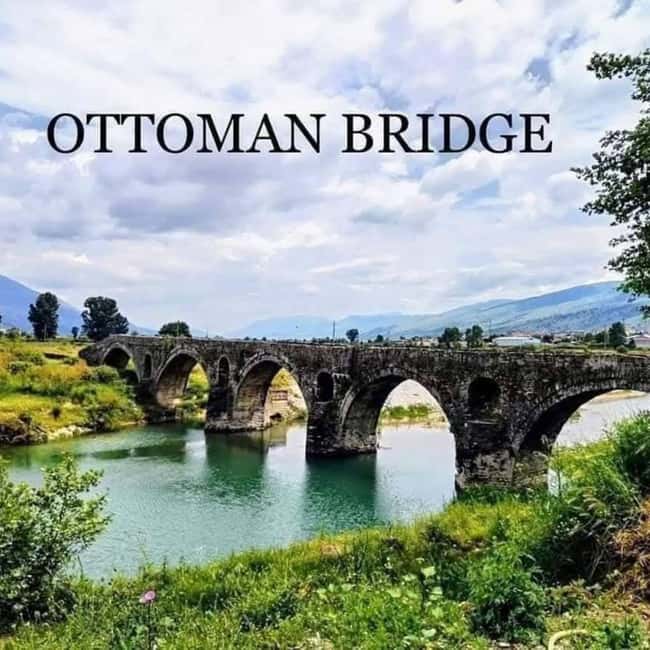
After the Blue Eye, the route continues toward Ura e Kordhocës, an Ottoman bridge. The stop lasts around 30 minutes and includes views of nearby communist-era bunkers.
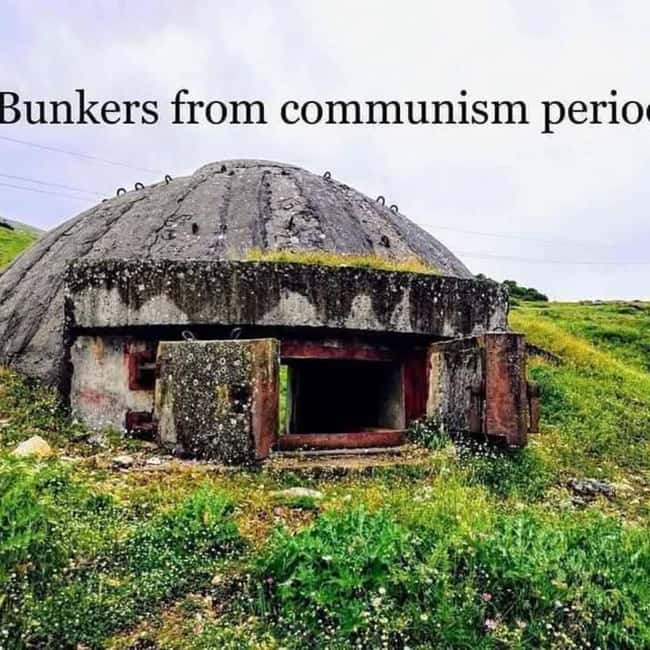
The bridge offers a quieter contrast to the Blue Eye. It is a reminder of the engineering and trade routes of the Ottoman period, while the bunkers belong to Albania’s much more recent communist past. Seeing both in the same part of the countryside makes the region’s history feel close and physical rather than confined to a museum.
The bunkers are not presented as a separate long visit. You should think of them as part of the roadside historical story, with time to stop, look, and photograph. Albania built thousands of bunkers during the communist era, and these concrete structures still appear beside roads and fields. Their presence can seem strange at first, but the guide’s explanation helps connect them to the country’s political past and everyday life under isolation.
This is one of the tour’s less famous stops, and that is part of its value. You are not simply ticking off the best-known sights. You are also seeing details that explain how people lived and how the country changed.
Gjirokaster deserves the longest stop
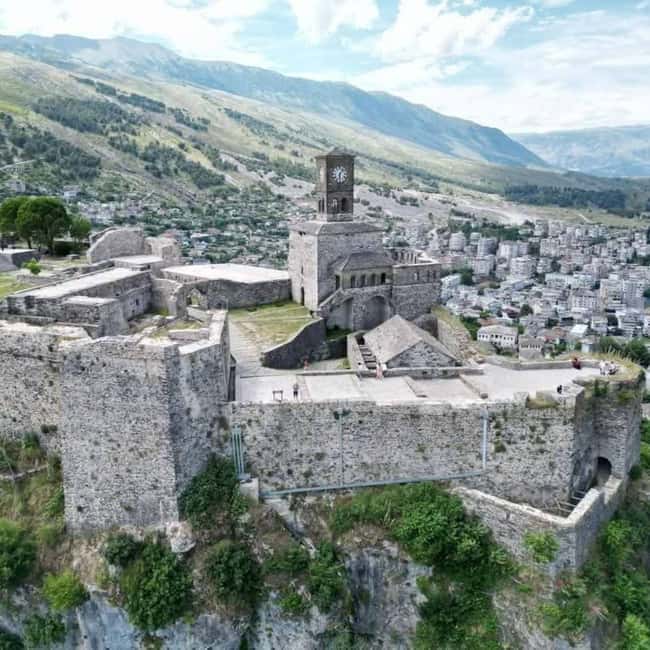
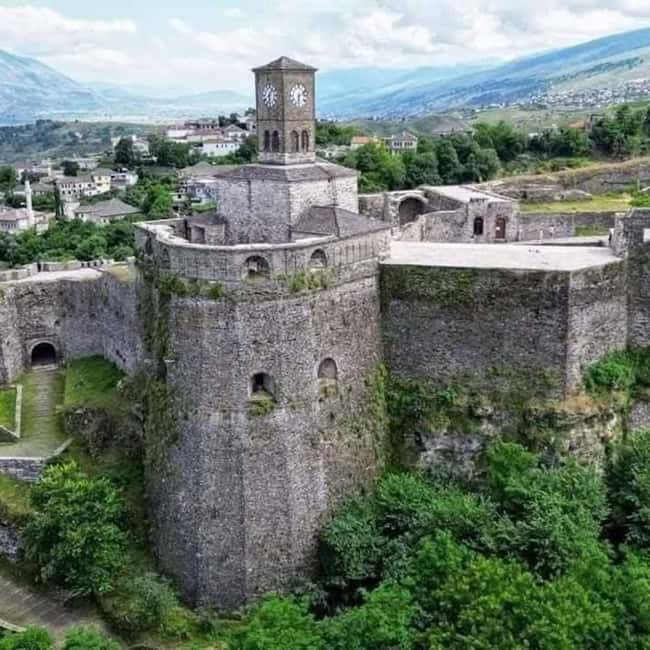
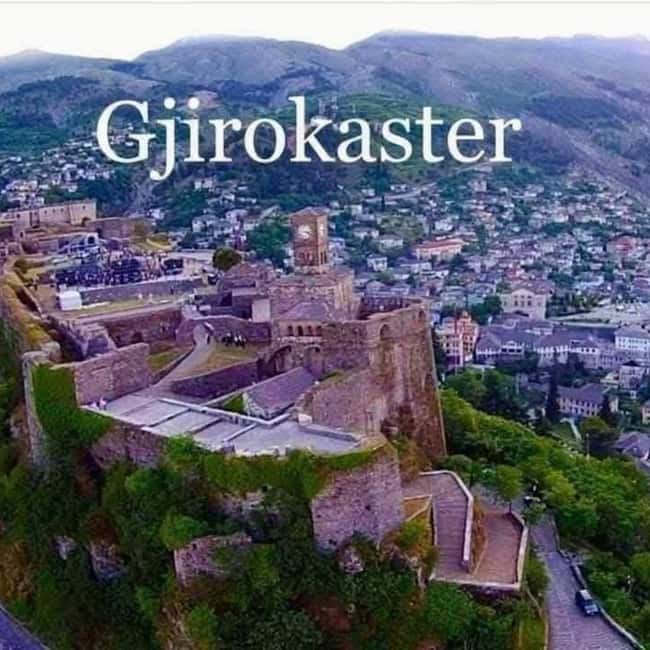
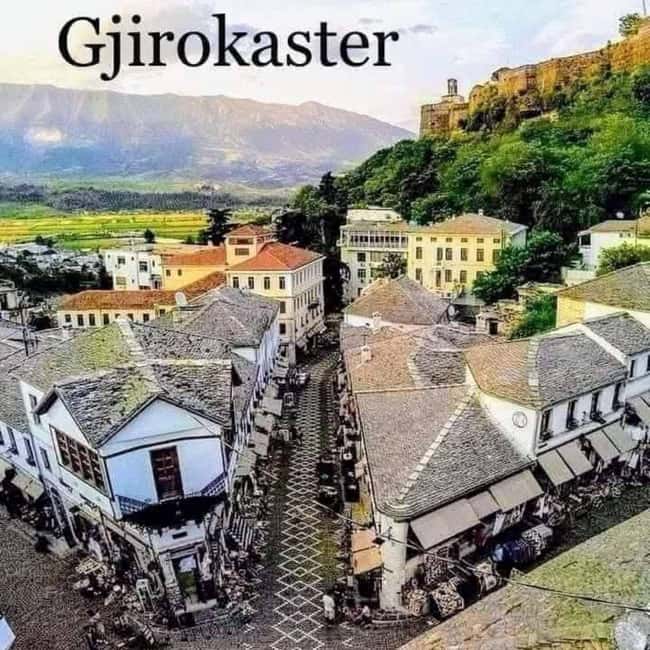
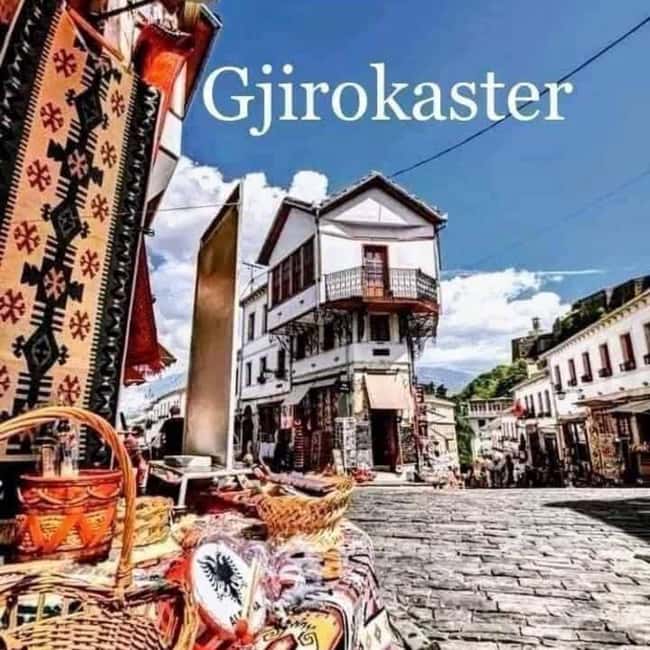
Gjirokaster is the main event, and the schedule allows about three hours here. That is enough time to walk through the old town, see the castle area, explore the old bazaar, take photographs, and stop for Albanian food.
The city is known for its stone-built houses, many of which look like small fortresses. The streets are steep, narrow, and paved with stone, so comfortable shoes are essential. The old town has a strong sense of place, but it is not an easy flat stroll. Expect some climbing and uneven surfaces.
Gjirokaster’s castle is the dominant landmark, and you may want to spend part of your free time there. The tour information does not include a separate castle entrance fee, so check the current local charge if you plan to enter. The schedule gives you freedom to choose how to use your time rather than keeping you in a continuous guided walk.
I appreciate that balance. Ilir explains the city and points you toward the key areas, then gives you room to explore independently. That works well in Gjirokaster because the pleasure comes from wandering, looking up at the stone houses, and finding your own route through the bazaar.
You should also save time for lunch. Food is not included, but guides can suggest restaurants and traditional dishes. Past guests have particularly appreciated local recommendations, including Albanian desserts such as oshaf and restaurants serving small portions of traditional food. Treat those suggestions as part of the practical value of having a local guide, especially if you are unsure what to order.
Gjirokaster is also a useful place to finish the sightseeing portion because it feels different from Saranda. Saranda is coastal and modern, while Gjirokaster is defined by stone, slopes, and centuries of political and cultural change. If you have only one day for inland Albania, this is the stop that should receive your attention.
Ilir’s guiding style is a major part of the day
The tour uses an English-speaking professional driver-guide, and Ilir Shehu is frequently named as the guide. His role goes beyond pointing out buildings. You can expect explanations about Albanian history, the communist period, regional customs, food, geography, and differences between northern and southern Albania.
The strongest praise centers on his patience and personal attention. He has helped solo participants feel comfortable, answered detailed questions, suggested restaurants and other Albanian towns, and assisted with onward transport plans. Some people also enjoyed his Albanian music selections and the stories behind them.
That does not mean every minute is a formal lecture. The better approach is conversational. Ask questions as you go, particularly at Mesopotam Monastery, the bunkers, and Gjirokaster. Those are the places where extra context changes what you notice.
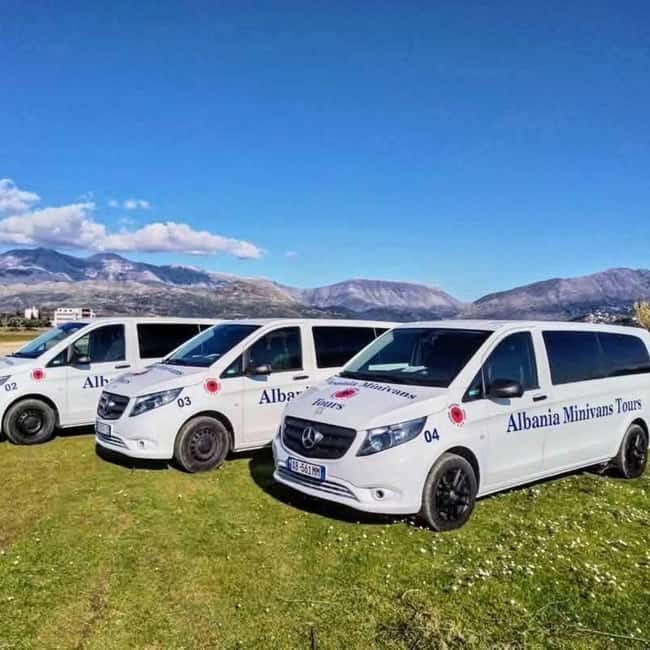
The tour may use more than one minivan if demand is high. One account describes three minivans operating on a busy day, with a main guide coordinating the group. The advertised group size is limited to eight participants, but it is sensible to confirm how the day will operate if your booking falls during a particularly busy period.
The Mercedes Vito makes a long day easier
Transport is one of the tour’s practical strengths. You ride in a new, air-conditioned Mercedes Vito Tourer minivan, with space for up to eight passengers. The vehicle is fully insured, and the driver handles the winding roads between Saranda, the Blue Eye, and Gjirokaster.
A comfortable van matters here because the itinerary covers a lot of ground. You are not just driving to one nearby attraction. You are making a loop through the interior, with repeated stops and a substantial return journey.
The vehicle is not a substitute for a rest day. Nine hours is still a full outing, and the schedule includes walking at the Blue Eye and Gjirokaster. But the clean, air-conditioned minivan gives you a more pleasant base between stops than a crowded coach.
Smoking, food, and drinks are not allowed inside the vehicle. Carry water for the day, but be prepared to drink it outside during stops. Pregnant women and wheelchair users are not considered suitable for this activity.
Is $47 a good value?
At $47 per person, the tour offers strong value if you want to see several major sights without hiring a car. The price covers insured transport, the driver-guide, and visits to Lekursi Castle, Mesopotam Monastery, the Blue Eye, the Ottoman bridge, the bunkers, and Gjirokaster.
You still pay for food and the 50-cent Blue Eye ticket. Any optional entrance inside Gjirokaster should also be checked locally. Those extra costs are small compared with the expense and effort of arranging private transport for the same route.
The real value lies in the combination. A separate trip to Gjirokaster gives you more time there, while a separate Blue Eye outing may allow a slower nature visit. This tour is better for variety. You trade depth at each place for a broad and well-organized view of southern Albania.
I would consider it especially good value for solo visitors, couples, and small groups without a rental car. Larger families should check the group arrangement, while anyone wanting a leisurely day at one site may find the route too ambitious.
What to bring and how to prepare
Bring comfortable walking shoes. The Blue Eye can involve a forest path, and Gjirokaster’s old town has steep cobbled streets.
Also pack:
- Water
- Sunscreen
- A hat
- A camera
- Some money for the Blue Eye and lunch
Start with a good breakfast, since food is not included and the first meal opportunity comes later in the day. Keep your phone charged for photographs and for meeting-point communication.
The meeting point is Guma Bar Restaurant, where you should look for the branded Albania Minivan Tours vehicle. The return point is Parku Miqësia, although individual assistance with hotels or onward travel may be possible in some circumstances. Do not count on a change without confirming it in advance.
Free cancellation is available up to 24 hours before departure, and you can reserve now and pay later. Those terms are useful if your Saranda plans depend on ferry connections or changing weather.
Who should book this tour?
Book it if you want a broad introduction to southern Albania in one day, especially if you care about history, scenery, and local conversation as much as famous sights. It suits independent-minded people who like some guided explanation but also want free time in Gjirokaster and at the Blue Eye.
I would also recommend it to solo visitors who want an easy social setting without joining a large coach group. The small vehicle, English-speaking guide, and practical help with food and onward travel can make the day less complicated.
Think twice if you have limited mobility, dislike steep streets, or prefer slow travel. The tour is not suitable for wheelchair users, and Gjirokaster and the Blue Eye both involve walking. Hot summer days may also make the schedule feel strenuous.
For most visitors staying in Saranda, I would book it. The route covers the region’s strongest mix of nature, architecture, and 20th-century history, and the price is modest for a full day with transport. The best reason to go is not one isolated stop. It is the way Lekursi Castle, Mesopotam Monastery, the Blue Eye, the Ottoman bridge, the bunkers, and Gjirokaster fit together into one clear picture of Albania.
FAQ
Where does the tour start and finish?
The tour starts at Guma Bar Restaurant and finishes at Parku Miqësia. Departure is scheduled for 8:50 in the morning, with return around 6:00 in the evening.
How long is the tour?
The total duration is about nine hours. The itinerary includes approximately 30 minutes at Lekursi Castle, 30 minutes at Mesopotam Monastery, two hours at the Blue Eye, 30 minutes at Ura e Kordhocës, and three hours in Gjirokaster.
Is the Blue Eye entrance included?
No. The Blue Eye ticket costs 50 cents and is paid separately. Food is also not included.
What type of transport is used?
You travel in a new, air-conditioned Mercedes Vito Tourer minivan. Transport is fully insured and is suitable for groups of up to eight passengers.
Is the tour suitable for wheelchair users?
No. The activity is not suitable for wheelchair users or pregnant women.
Can I cancel or pay later?
You can cancel up to 24 hours before departure for a full refund. Reserve-now, pay-later booking is also available.
Just added around Albania
- Durres/Golem: Zipline Albania and Petrela Castle★ 4.9 · 26 reviews
- Tirana: Petrelë Castle Quad Bike Adventure★ 4.4 · 19 reviews
- Tirana Adventure: Petrela Castle, Black Cave Hike & Zipline★ 4.9 · 10 reviews
- Tirana: Shkodra City, Rozafa Castle & Mesi Bridge Tour★ 5.0 · 8 reviews
- Shkodra from Tirana: Day Tour of castle, city & Skadar Lake★ 4.8 · 32 reviews
- Sarandë: Tour Gjirokaster,Blue Eye & Lekursi Castle★ 4.7 · 220 reviews
- Saranda: Butrint, Blue Eye, Ksamil and Lekuresi Castle Tour★ 4.5 · 141 reviews
- Sarande, Blue Eye & Sunset tour at Lekuresi castel★ 4.7 · 36 reviews
Saranda Castle Tours, compared.
Sarande: Blue Eye Spring and Lekursi Castle Sunset Tour
Read our review →
Daily Trip To:Blue Eye,Monastery,Gjirokaster&Lekursi Castle
Read our review →
Best of Saranda: Blue Eye, Butrint, Ksamil & Lekuresi Castle
Read our review →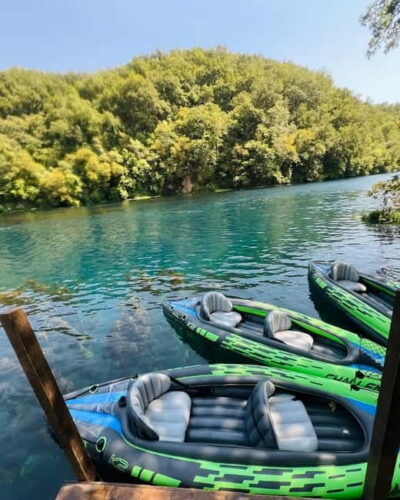
Sarande: Blue Eye Kayak and walking tour & Lekursi Castle
Read our review →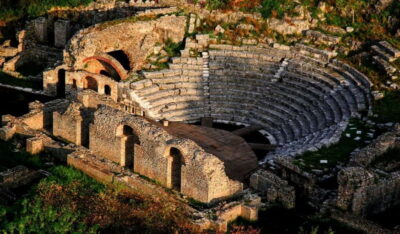
Saranda: Butrint, Blue Eye, Ksamil and Lekuresi Castle Tour
Read our review →
1-Day Tour in Blue Eye, Monastery, Gjirokaster and Lekursi Castle
Read our review →
Saranda: Butrint, Ksamil, Blue Eye and Lekuresi Castle Tour
Read our review →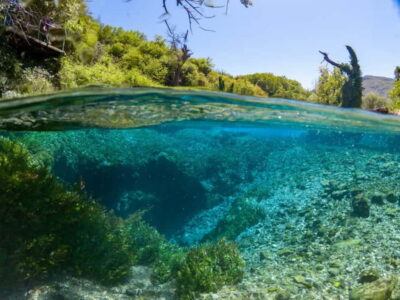
Browse the lists this tour appears in