REVIEW · WAWEL & POLISH CASTLES
Krakow’s Essential Tour of the Old Town and Wawel Castle
Krakow’s best first look may be this walk from the trumpet tower of St. Mary’s Basilica to Wawel Castle, with the city’s medieval center unfolding between them. You’ll hear why the basilica has two unequal towers, trace the market square, pass one of Poland’s oldest universities, and finish among royal tombs and castle walls.
I like the route for two clear reasons: it covers a lot without a bus, and the guides bring history down to human scale. Bart, Slav, Slawek, Chris, and Fran are among the guides praised for clear stories, humor, and a steady pace. The main drawback is that this is a donation-based walk, not a fully paid private tour, and the group may reach as many as 30 people.
Key points to know before you book
- The route links Krakow’s main sights: You walk from the Main Market Square through the Old Town to Wawel Hill.
- The stories are the real attraction: Expect local tales about the trumpet signal, university life, World War II, communism, and Polish rulers.
- The $3 price is only a booking fee: You are expected to tip the guide at the end, in any currency and at an amount you choose.
- Museum admission is not included: You see the exteriors and receive commentary, but entry fees for St. Mary’s, Wawel Cathedral, and museums cost extra.
- Plan for steady walking: You stop often, but the route lasts about two and a half hours.
- It is a strong orientation walk: The finish at Wawel Castle leaves you well placed to return later for interior visits.
Starting beneath St. Mary’s unequal towers
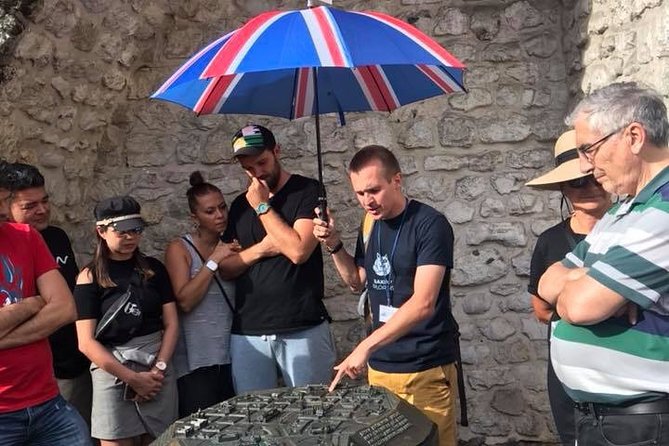
The tour begins at Rynek Główny 4, on Krakow’s Main Market Square. This is a useful meeting point because the square is the city’s natural center and one of the first places you will want to understand.
St. Mary’s Basilica gets the opening slot. The guide explains why its two towers do not match and identifies the trumpeter who plays a short tune every hour from the highest tower. The signal, known as the hejnał, is one of Krakow’s most familiar sounds, but the story behind its broken ending gives the tradition more meaning than a simple clock chime.
You spend about 15 minutes here. Admission is not included, so this stop is mainly about the outside of the basilica and the story attached to it. If entering the church matters to you, ask the guide about the best time to return after the walk rather than assuming the tour includes it.
The guide’s opening also sets the tone for the rest of the experience. You are not simply being led from one landmark to another. You are given the reasons those places matter, which helps the city make sense later when you explore alone.
More Medieval Old Town Tours in Krakow
- Old Town Krakow & Wawel Castle Walking Tour
★ 5.0 · 1,508 reviews - Kraków: Old Town & Wawel Castle Walking Tour in English
★ 4.8 · 532 reviews - Historic Krakow : Old Town & Wawel Castle Walking tour
★ 5.0 · 318 reviews
Reading Krakow through Rynek Główny
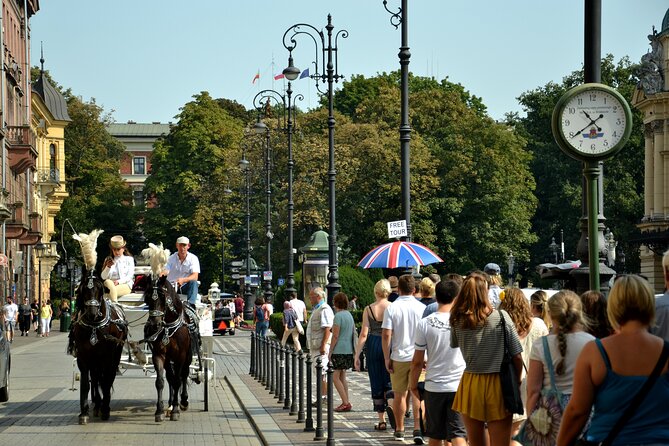
The Main Market Square receives about 30 minutes, the longest stop in the Old Town portion. That is sensible. The square is large, full of major buildings, and easy to cross without understanding what you are seeing.
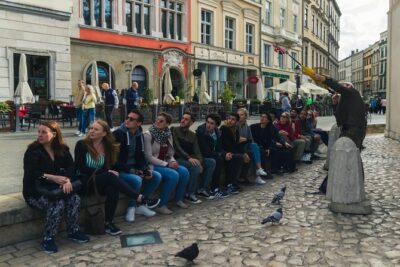
Your guide points out the main attractions and explains the square’s place in Krakow’s medieval life. The Cloth Hall occupies its center, the Town Hall Tower marks one edge, and St. Mary’s Basilica dominates another. This is the point where the tour’s navigation help pays off. You can wander here on your own, but it is easy to miss how the buildings fit together.
The square is also a useful place to ask questions. Guides such as Bart and Slawek have been praised for mixing facts with humor, while Chris is noted for clear communication and amusing stories. That style matters on a walking tour, since two and a half hours of dates and names can blur together without a human touch.
Expect some time standing in an open public space. On a busy day, staying close enough to hear may take effort, especially with a group that can reach 30 people.
The theatre, city walls, and medieval entrance
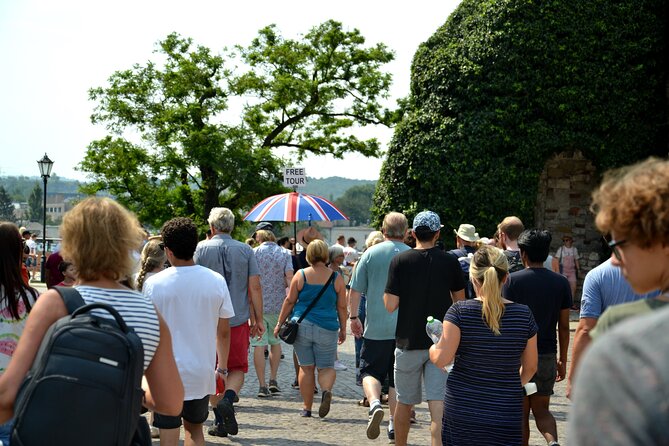
The next stretch adds smaller but telling pieces of Krakow. At the Slowacki Theatre, the guide explains why the building was not built in Poland and why the city once valued it more highly than clean water. That unusual comparison gives you a glimpse of civic priorities and cultural ambition, rather than another standard date from a history book.
The theatre stop lasts about 10 minutes. You should think of it as a story stop, not a theatre visit. No entrance ticket is included.
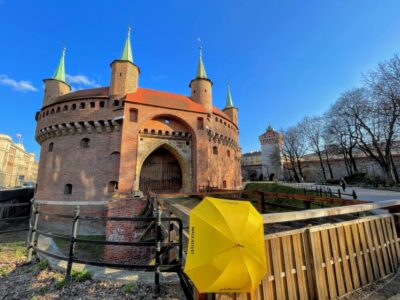
The walk then reaches the Barbican, now connected with the Museum of Krakow. The guide presents this round defensive structure as a 15th-century work of military engineering. You also pass through a roughly 500-year-old main entrance to medieval Krakow. These details help you picture the city as a fortified place, not just a pretty collection of facades.
The Barbican section is brief, so do not expect a full military history lesson or museum tour. Its value is visual and practical: you see how people entered and defended the city before continuing toward the market buildings.
The Cloth Hall and the missing Town Hall
At the Sukiennice, or Cloth Hall, the guide reveals the secrets of Krakow’s medieval shopping center and explains what lies beneath it. The building is still a working commercial space, but its past is the main subject here.
The underground reference is especially useful because Krakow’s center has layers below the modern street level. You do not receive a museum entrance with the tour, so treat this as an introduction to the site rather than a substitute for visiting the underground museum.
Nearby, the Town Hall Tower offers another compact lesson. Only a small section of the original Town Hall remains, and the guide explains why. You also hear what the former building was famous for in its day.
These two stops work well together. The Cloth Hall shows commerce, while the Town Hall points to government and civic life. You begin to see the square as a functioning medieval center, not merely a backdrop for photographs.
More Medieval Old Town Tours in Poland
- Krakow: Skip-the-Line Wawel Castle & Old Town Guided Tour
★ 4.9 · 23 reviews - Krakow: Old Town and Wawel Castle Guided Golf Cart Tour
★ 4.4 · 13 reviews - Segway Tour Krakow: Grand Tour (Old Town + Wawel Castle)
★ 5.0 · 10 reviews - Krakow: Wawel Castle & Cathedral, Old Town & City Basilica
★ 5.0 · 5 reviews
Jagiellonian University and the difficult opening of World War II
The university section is one of the tour’s stronger points for anyone interested in Poland’s intellectual life. At Collegium Iuridicum, you are shown one of the country’s most prestigious universities and one of the oldest in the world. The visit is presented as a chance to get inside, although the supplied details do not promise access to every interior room or any formal university admission.
At Collegium Novum, the focus turns sharply. The guide explains what happened to a professor in Krakow at the beginning of World War II and asks whether Krakow itself was destroyed. This is where the walk moves beyond architecture. You hear about the pressure placed on scholars and the city’s wartime experience through specific local events.
The tour is particularly useful here because its historical scope is not limited to royal Poland. Commentary also covers World War II and social history, giving you a better frame for later visits to Krakow’s museums and memorial sites.
Allow yourself time to absorb this section. The sequence from university buildings to wartime events shows how a familiar city center can hold stories of culture, repression, and survival.
The Bishop’s Palace window and Poland under communism
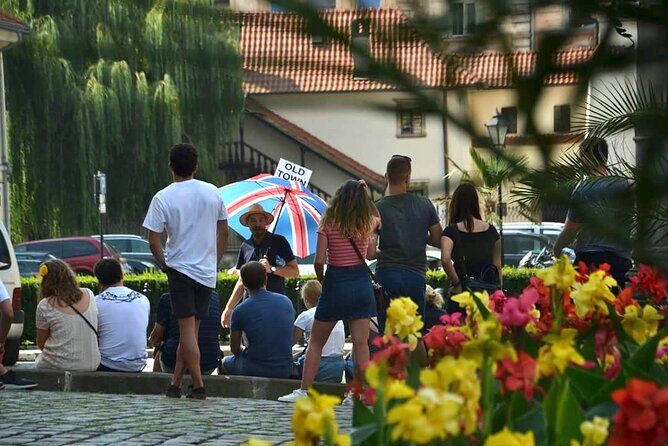
The Bishop’s Palace is one of the more personal stops. You see the famous window associated with Pope John Paul II and hear about Poland during communism. The guide connects a physical place with a period of political tension and Catholic identity.
Admission is free at this stop. You spend about 15 minutes here, enough time for the guide to explain the location and for you to look closely without turning the visit into a long detour.
This is also a good example of the tour’s broad subject range. In one morning, you move from medieval trade and fortifications to university life, wartime history, and modern Polish politics. The subjects are not treated with equal depth, but the variety helps you decide which museums or neighborhoods deserve more of your time.
Walking up to Wawel Hill
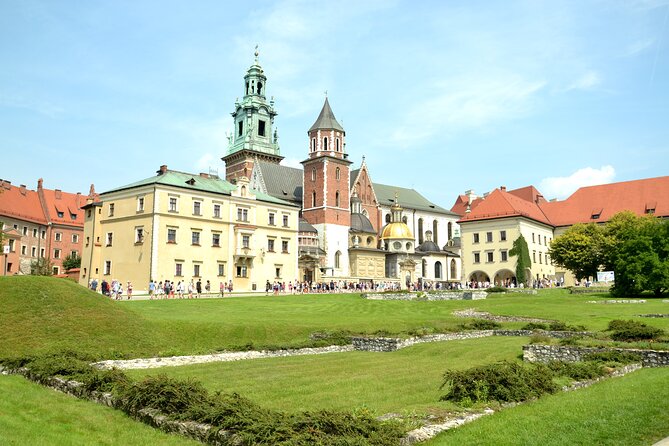
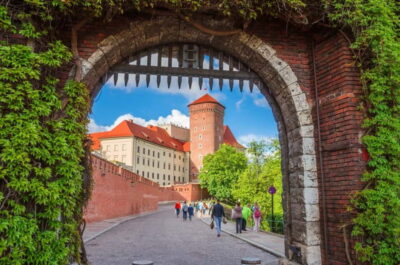
From the Old Town, the route continues to Wawel Castle. The end point is Wawel Royal Castle at Wawel 5, about 10 minutes from the Main Market Square according to the tour details. The walk gives you a clear finish rather than leaving you back where you started.
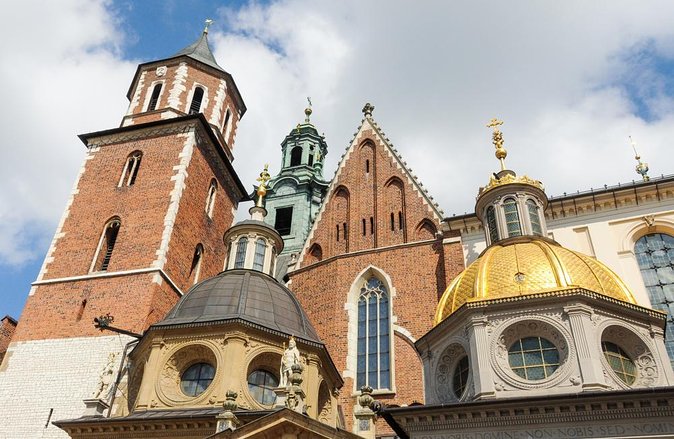
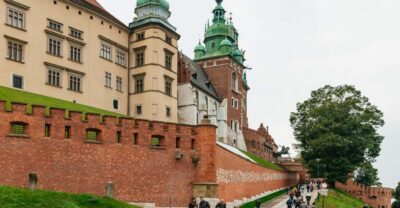
At Wawel Cathedral, you hear about Poland’s national pantheon, royal coronations, and burials. This is one of the most important sacred and political places in the country, so the guide’s context is valuable even if you do not pay to enter.
The itinerary lists a second Wawel Cathedral stop, but the description clearly shifts to the royal residence: where Polish rulers lived, why one section of the castle looks different from the rest, and what other details distinguish the complex. In practical terms, expect commentary on Wawel Castle and its royal buildings as the final part of the walk.
Museum and cathedral entrance fees are not included. That keeps the starting price low, but it means you should budget separately if you want to go inside. The tour gives you the map and background; a later visit lets you explore at your own pace.
What the $3 price really means
The advertised price is $3, but that is only the booking fee. The tour operates on donations, so you pay the guide what you feel the walk was worth at the end. You can tip in any currency, and the amount is up to you.
That arrangement can offer excellent value if you want a strong introduction without committing to an expensive private tour. You receive a licensed guide, route planning, sanitizer, and a carefully chosen path through the city. The guide also handles the navigation, which is useful when you are still learning Krakow’s layout.
There are two points to keep in mind. First, the donation is part of the cost, not an optional detail to ignore. Second, the $3 price does not cover food, drinks, or museum tickets. If you plan to enter St. Mary’s Basilica, the Cloth Hall museum areas, Wawel Cathedral, or castle interiors, add those fees separately.
The value is highest when you use this as an orientation walk. It helps you identify the places worth revisiting, then you can return with a better sense of where you are and what you are looking at.
Timing, group size, and practical comfort
The walk lasts about two hours and 30 minutes. You stop frequently, which makes the pace manageable, but you are still on foot for most of the experience. Wear shoes suited to city walking and leave enough time afterward for a meal or a museum visit at Wawel.
The maximum group size is 30 people. That is not the same as a private, one-to-one tour, despite the description of a private guided experience. A group of this size can work well when the guide projects clearly, but you should stay near the guide at crowded sights.
Guide quality is central here. Bart, Slav, Slawek, Chris, and Fran are specifically associated with praise for clear explanations, humor, patience, and a steady pace. The best match for you will be a guide who turns questions into conversation rather than rushing through a script.
One logistical warning is worth noting: the scheduled meeting time should be checked carefully. One booking showed a discrepancy between the time printed on the voucher and the time given by guides at the meeting point, leading to a 40-minute wait. Confirmation is normally issued at booking, but bookings made within one hour of departure are confirmed as soon as possible, subject to availability.
The activity is near public transportation, service animals are allowed, and most people can take part. No special fitness requirement is stated, but the amount of walking still matters for anyone who finds long periods on foot difficult.
Who will get the most from this walk
I would choose this tour for a first day in Krakow, especially if you want to learn the city’s layout before visiting museums. It suits couples, families, and older children who can manage a steady walking route. One family with teenagers found the mix of information and humor worked well, which fits the tour’s broad appeal.
It is also a good choice if you enjoy social history rather than only grand buildings. The guide discusses professors, communism, wartime events, merchants, rulers, and religious traditions. That range gives you more than a parade of postcard sights.
I would be less inclined to choose it if you want long interior visits or detailed art commentary. Admission is not included, and most stops are short. You will see many landmarks, but you will not have the time to study each one at length.
Free cancellation is available up to 24 hours before the start time for a full refund. Cancellations or changes within 24 hours are not refunded or accepted, so check the local start time before making last-minute plans.
Should you book Krakow’s Old Town and Wawel walk?
Book it if you want a low-cost, story-led introduction to Krakow, with the city’s main square, university, medieval defenses, Bishop’s Palace, cathedral, and castle connected in one route. The strongest reasons are the guide commentary, the efficient path, and the chance to ask questions while you get your bearings.
Skip it if your priority is a small private group, guaranteed interior access, or a slow museum visit. Also remember that the $3 fee is not the full payment. Plan on a donation and separate admission charges.
For most first-time visitors, this is a sensible opening activity. Start at the Main Market Square, listen for the trumpet call, follow the city’s story uphill, and finish at Wawel with a clear idea of where to spend the rest of your time.
FAQ
Where does the tour start?
It starts at Rynek Główny 4 in Krakow, Poland, on the Main Market Square.
Where does the tour end?
It ends at Wawel Royal Castle, Wawel 5, Krakow. The end point is described as about 10 minutes from the Main Market Square.
How long does the tour last?
The walking tour lasts approximately two hours and 30 minutes.
What sights are included in the route?
The route includes St. Mary’s Basilica, the Main Market Square, Slowacki Theatre, the Barbican, the Cloth Hall, Town Hall Tower, Jagiellonian University, Collegium Novum, the Bishop’s Palace, Wawel Cathedral, and Wawel Castle.
Are entrance tickets included?
No. Museum, cathedral, and other entrance fees are not included. The Bishop’s Palace stop is listed as free.
Is the $3 price the full tour cost?
No. The $3 amount is a booking fee. The tour is donation-based, so you pay the guide what you choose at the end.
Is food or drink included?
No. Food and drinks are not included.
How large can the group be?
The activity can have a maximum of 30 participants.
Can I cancel the tour for a refund?
Yes. You can cancel at least 24 hours before the start time for a full refund. Cancellations or changes made within 24 hours are not refunded or accepted.
More Wawel and Polish Castle Tours in Krakow
- Krakow: Wawel Castle & Cathedral Guided Tour
★ 4.7 · 2,111 reviews - Krakow: Wawel Royal Hill with Optional Castle and Cathedral
★ 4.2 · 1,220 reviews - Krakow: Wawel Castle and Cathedral Guided Tour
★ 4.6 · 595 reviews - Krakow: Wawel Hill Audioguide Tour
★ 4.3 · 582 reviews
Just added around Krakow
- Krakow: Skip-the-Line Wawel Castle & Old Town Guided Tour★ 4.9 · 23 reviews
- Krakow: Wawel Castle, Cathedral, Salt Mine, and Lunch★ 4.9 · 6 reviews
- Krakow: Wawel Castle Guided Tour★ 4.7 · 14 reviews
- Krakow: Wawel Guided Tour – Cathedral and/or Castle★ 4.5 · 249 reviews
- Krakow: Wawel Castle & Cathedral Guided Tour★ 4.5 · 20 reviews
- Krakow: Wawel Castle & Cathedral, Old Town & City Basilica★ 5.0 · 5 reviews
- Krakow: Wawel Castle, Cathedral, Rynek Underground & Lunch★ 4.4 · 12 reviews
- Krakow: Skip the Line Wawel Castle & Cathedral Private Tour★ 5.0 · 8 reviews
Wawel & Polish Castles, compared.
Krakow: Wawel Royal Hill with Optional Castle and Cathedral
Read our review →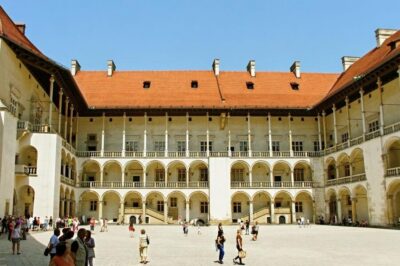
Kraków: Old Town & Wawel Castle Walking Tour in English
Read our review →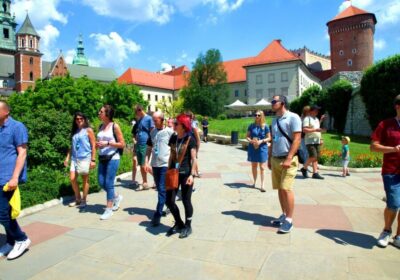
Krakow: Wawel Castle Guided Tour with Entry Tickets
Read our review →