
REVIEW · MEDIEVAL OLD TOWN TOURS
Bratislava: Old Town and Castle Walking Tour
Bratislava’s best surprise is how much history fits into a compact walk. This tour links the old town, St. Martin’s Cathedral, the medieval walls, and Bratislava Castle while explaining the city’s Celtic, Austro-Hungarian, Czechoslovak, communist, and wartime past. You finish beside the castle, high above the Danube.
I like the strong local storytelling, especially from guides such as Samuel, Paras, and Rostislav, who bring energy, humor, and personal feeling to the city’s story. I also like the excellent value: for the listed price of $2.83, you get roughly two to two and a half hours of guiding, castle access, and a broad introduction to Bratislava.
The main drawback is the walking. Expect stairs on the way up to the castle, and allow extra time in cold weather. One winter tour lasted about three hours, so you should dress warmly and be ready to keep moving.
Key points to know before you book
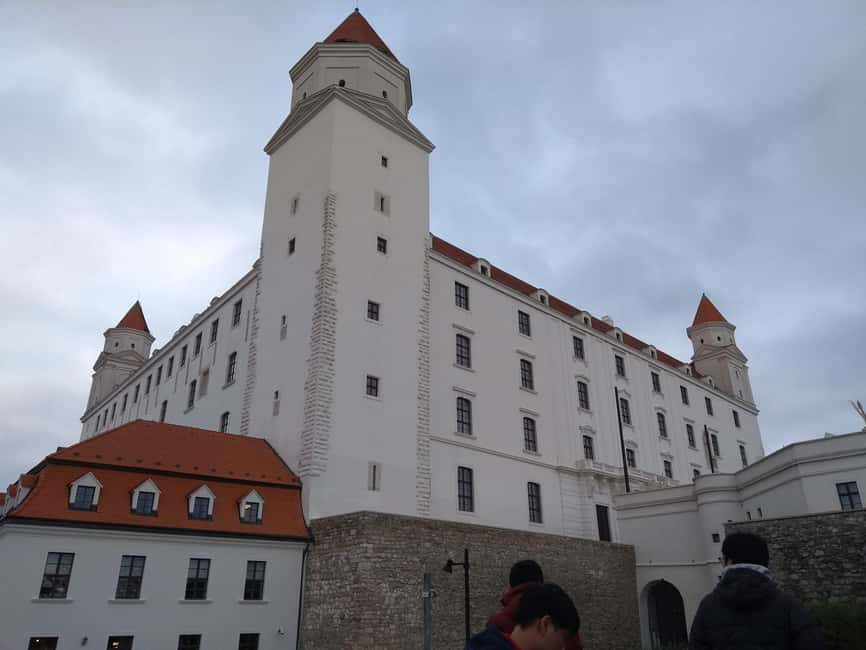
- Bratislava Castle is the finish: You walk uphill and end beside the castle, where you can visit its museum afterward if you wish.
- The route covers more than postcard sights: Expect Michal’s Gate, the Main Square, the National Theatre, Hviezdoslav Square, St. Martin’s Cathedral, city walls, river views, and unusual statues.
- The history reaches well beyond medieval Bratislava: Guides discuss Celtic tribes, the Ottoman Empire, the Austro-Hungarian Empire, Napoleon, World War II, communism, and Czechoslovakia.
- The guide makes the difference: Samuel, Paras, Rasislav, Rostislav, and Ruger have all led highly praised tours, with humor, local feeling, and practical advice.
- Bring walking shoes and warm layers: The route involves a significant amount of walking and some stairs.
- The tour suits many visitors, but check mobility needs first: It is wheelchair accessible, though the route may need adjusting because of the uphill section and stairs.
Why this walking tour is a smart first look at Bratislava
Bratislava is easy to underestimate. It is a small capital, and the center can seem manageable after a quick stroll. Yet its past is layered in a way that is not always obvious from the street. One square can lead you from medieval royal ceremony to Habsburg rule, then toward the uneasy years of communism and the modern Slovak state.
A guide helps connect those pieces. Instead of simply pointing out a building, the tour places it in the story of the city and Slovakia. You hear about traditions, political change, war, borders, and the daily life behind the grand facades.
I would take this tour early in a Bratislava stay. It gives you a working map of the center and leaves you with ideas for what to see afterward. The guide also shares recommendations for food and other local stops, although one person did not receive the promised recommendations, so treat that extra service as a useful possibility rather than the main reason to book.
The tour has a rating of 4.6 from 86 bookings, with particularly strong praise for the guides’ enthusiasm and clarity. That matters here because the route includes many subjects. A dry presentation could make the walk feel like a list of dates. The best guides, including Samuel and Paras, appear to keep it lively with humor, questions, and stories.
More Medieval Old Town Tours in Bratislava:
- Highlights of Bratislava – Old Town with Castle private tour
★ 5.0 · 34 reviews - Highlights of Bratislava’s Old Town with Castle
★ 5.0 · 17 reviews - Bucharest: Dracula’s Castle, Peles Castle, & Brasov Old Town
★ 4.5 · 17,858 reviews
Starting near Hurbanovo Square
The listed starting point is Hurbanovo námestie, with two booking options shown at Hurbanovo námestie 500/10. The meeting point can vary depending on the option you choose, so check your booking details before setting out.
From there, you begin on foot through Bratislava’s historic center. There is no transport between sights, and that is part of the appeal. You move at street level, notice the changes in the buildings, and have time to stop for photographs.
The walk includes breaks and photo stops, but you should not treat it as a gentle wander with long periods of sitting. It is an active sightseeing route. Wear shoes that can handle cobbles and stairs, and choose comfortable clothing rather than something stiff or formal.
The guides speak English, Hindi, French, or Russian. If you have a preferred language, confirm availability for your chosen time.
Michal’s Gate and the old town streets
Michal’s Gate is one of the first important sights on the route. It helps explain the shape of old Bratislava, where gates and walls once controlled movement into the town. From here, the walk moves through the central streets toward the Main Square.
The Main Square gives you a useful sense of Bratislava’s scale. It is grand enough to show the city’s historic importance, but compact enough that you can take in several details without rushing from one end to the other. This is where a guide can point out the buildings, statues, customs, and stories that are easy to miss when you walk alone.
The route also includes specified statues and the Mystery Fountain. These smaller details give the tour some personality. You are not only ticking off major monuments. You are also looking for the odd, curious, or less obvious parts of the center.
That variety is one of the tour’s strengths. If you already know the Main Square and Michal’s Gate, the guide’s interpretation can still add value. The experience is not limited to basic directions and dates.
The National Theatre and Hviezdoslav Square
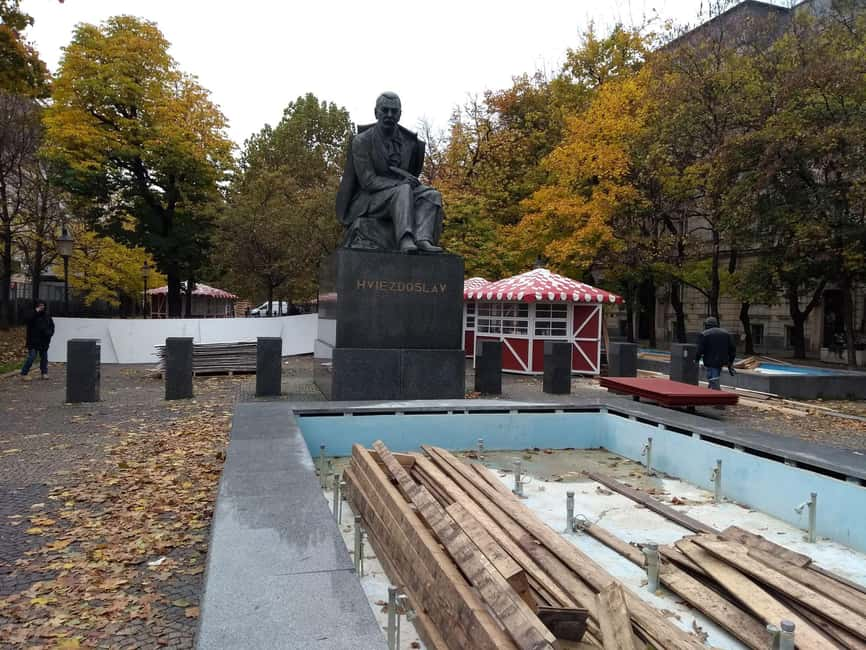
The walk continues to the National Theatre and Hviezdoslav Square, two places that show another side of Bratislava. These stops shift the focus from fortifications and royal history toward public culture and city life.
Hviezdoslav Square is also useful as a pause in the route. You can take photographs, listen to the guide, and watch the character of the center change around you. The tour description also promises a river overview, giving you a chance to connect the old town with the Danube setting that helped shape Bratislava’s position.
The river view is not presented as a separate boat ride or long scenic stop. It is part of the walking route, so keep your expectations in the right place. You get a viewpoint and an explanation, not a full river excursion.
The National Theatre is another stop where context helps. A guide can explain why such a building matters to a capital and how it fits into the city’s cultural identity. The tour does not appear to include a performance or a full indoor theatre visit, so think of this as an exterior sight and history stop.
More Walking Tours in Bratislava:
- Bratislava City & Castle Walking Tour with Sebastian in English
★ 5.0 · 289 reviews - Bratislava walk tour with bonuses and castle 3€ + Tip, kids free
★ 5.0 · 191 reviews - Bratislava: Guided Walking Tour with Castle Entry Ticket
★ 4.6 · 53 reviews - The Story of Bratislava: City and Castle Walking Tour with Locals
★ 5.0 · 31 reviews
St. Martin’s Cathedral and royal Bratislava
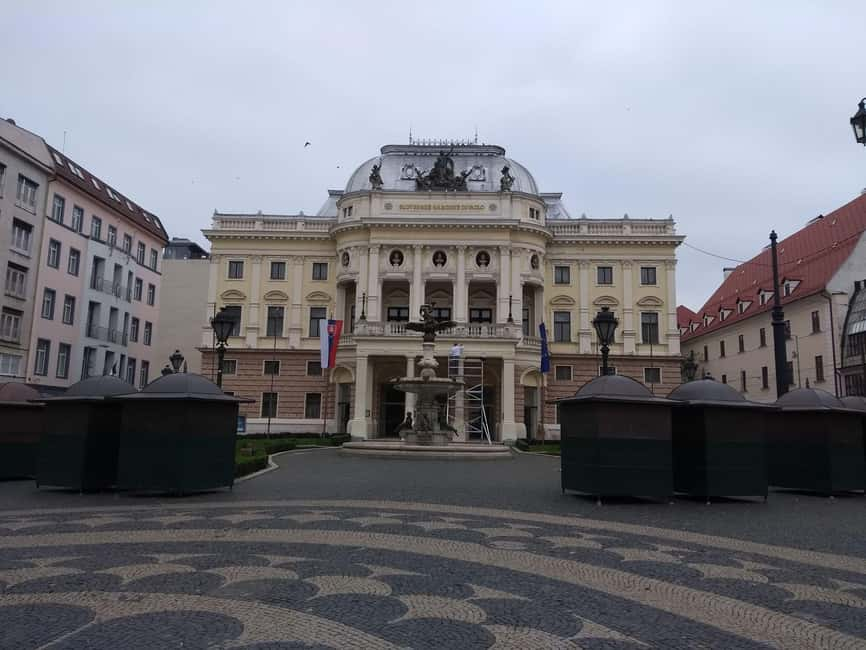
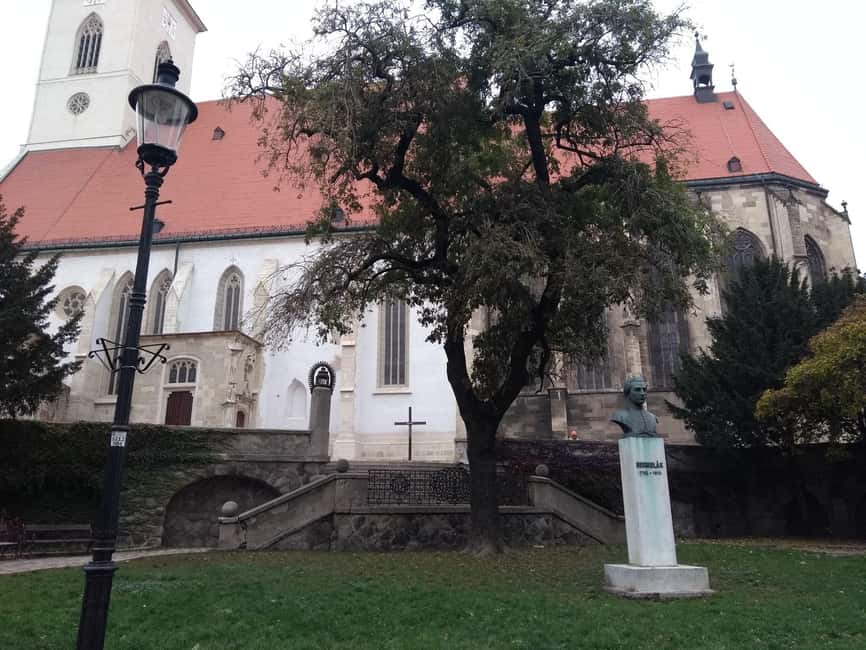
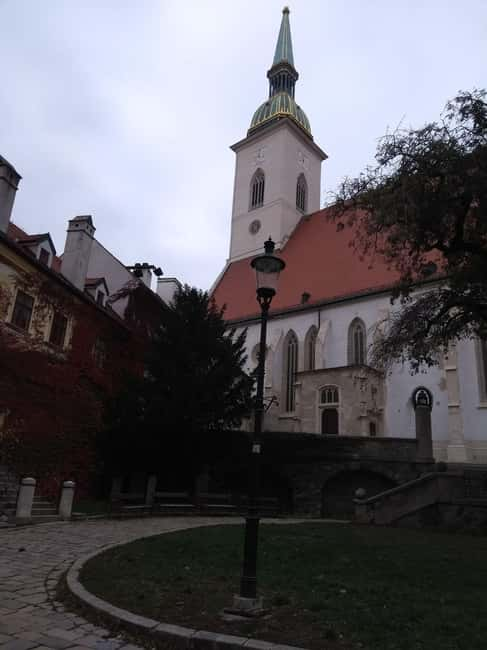
St. Martin’s Cathedral is one of the most important stops, and the visit is included. It connects Bratislava with the royal and religious history of the region.
The cathedral is more than another impressive church on a walking route. Its place in the old city helps explain why Bratislava mattered when political power shifted around Central Europe. The guide brings in the Austro-Hungarian Empire, the Ottoman Empire, and earlier periods, including the Celtic tribes.
This broad time span is a real benefit for first-time visitors. Bratislava’s story does not begin with one empire and end with another. Different peoples and states shaped the city, and the tour aims to show those changes without keeping the focus only on the most photogenic buildings.
You should expect the cathedral stop to be guided rather than a long quiet visit for private reflection. If religious services or local restrictions affect access on a particular day, the exact experience could vary, but the tour includes the visit as part of its planned route.
City walls, war, and the road to the castle
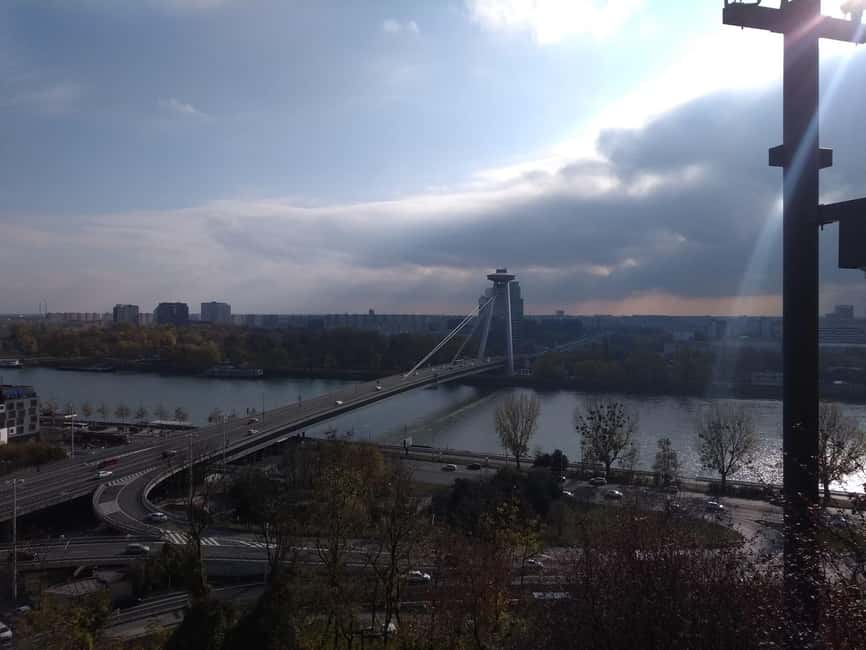
The Bratislava Walls add another piece to the city’s defensive past. Seeing them on foot makes the old town easier to understand. You can relate the gates, walls, cathedral, and castle instead of seeing each sight as an isolated monument.
The historical scope then moves through the Napoleonic wars, World War II, communism, and Czechoslovakia. This is where the tour becomes more than a standard old-town introduction. The twentieth century left a strong mark on Slovakia, and a good guide can help you see how political systems changed public life and the city itself.
The guide may also explain the UFO tower, the distinctive bridge structure over the Danube. The tower is a modern contrast to the medieval center and the castle above it. It gives the tour a way to discuss Bratislava as a city shaped by both old buildings and later political and architectural choices.
One guide was praised for discussing social, cultural, and political context rather than stopping at simple tourist facts. That approach will suit you if you want to understand Bratislava as a living capital, not just a collection of attractive streets.
The uphill walk to Bratislava Castle
The castle is the dramatic finish, but it is also the part that requires the most effort. The route includes a significant uphill section and several stairs. One guide specifically warned that there are many steps up to the castle, so do not book this expecting a flat old-town walk.
The reward is the change in viewpoint. From the castle area, you can look back toward the city and the river, giving the earlier streets a clearer shape. The guide uses the castle to tie together Bratislava’s political and defensive importance.
The experience ends next to Bratislava Castle, not as a full museum visit. You can choose to visit the museum immediately afterward, but that entry is not included in the tour. This is useful planning information: if you want the museum, leave time in your day rather than assuming the guided walk covers it.
The castle finish also means you are not returned to the original meeting point. That is convenient if you want to continue sightseeing in the castle district, but you should note the ending location when planning dinner or another booking.
Guide style and the importance of the person leading
The strongest feature is the guide. Samuel is repeatedly described as energetic, friendly, and passionate about Slovakia. Paras is praised for humor, local knowledge, and practical recommendations. Rasislav, Rostislav, and Ruger also receive strong praise for bringing personal feeling and clear explanations.
Those names matter because the experience may feel different depending on who leads it. The material covers a lot: Celtic tribes, imperial rule, wars, communism, Czechoslovakia, the castle, the cathedral, and the UFO tower. A guide with good pacing can make that range enjoyable. A less lively presentation could feel crowded with information.
The best approach is to ask questions. The tour is designed around conversation and insight, not just a memorized route. You can ask about Slovakia’s past, modern identity, local traditions, or places to eat after the walk.
The guides also appear willing to adjust the rhythm. On a cold day, one guide offered coffee breaks so the group could warm up. That does not mean every departure includes a planned café stop, but it shows why you should speak up if the weather makes the route difficult.
Timing, weather, and physical effort
The advertised duration is two to two and a half hours. In practice, the walk can run closer to three hours, especially when the group asks questions or takes breaks. Build some flexibility into your schedule.
Cold weather deserves special attention. A January participant found the tour worthwhile despite the cold when dressed in heavy clothing, while another felt the route could be shorter on especially cold days. Wear a warm coat, gloves, and comfortable shoes if you visit in winter.
The tour is also listed as wheelchair accessible, but the route includes stairs and an uphill section. Contact the provider in advance so the route can be adjusted for a wheelchair or stroller. Do not assume that the standard path will suit every mobility need.
Smoking is not allowed. Food and drinks are not included, although you may have an opportunity for a coffee break depending on conditions and the guide’s judgment.
Is $2.83 good value?
At the listed price of $2.83 per person, this is unusually inexpensive for a guided city walk that includes entry to St. Martin’s Cathedral and a visit to the castle area. Even if you value it only as a way to get oriented, the cost is low.
The real value comes from the range of subjects covered. You are not paying only for a route between monuments. You are getting explanations of Bratislava’s long political story, plus a local perspective on modern Slovakia.
There are limits. Food, drinks, and the castle museum are not included. The walk also takes time and energy, and the exact pace may depend on the guide and weather. Still, the price leaves room in your budget for a museum visit or coffee afterward.
Free cancellation up to 24 hours before the start and reserve-now, pay-later booking make it easier to fit into a changing schedule. Those policies are helpful, but the main buying decision is simple: decide if you want an active, history-focused introduction rather than a short photo circuit.
Who should book this Bratislava walk?
I would recommend it to first-time visitors who want a broad understanding of the city in one morning or afternoon. It is also a good fit for people arriving in Bratislava for a short stay, since the route covers many central sights without requiring public transport.
It suits curious adults, couples, families with older children, and anyone who enjoys asking questions. The guides’ humor and personal connection to Slovakia should appeal to you if you prefer a human explanation over an audio guide.
You may want something else if you dislike uphill walking, need a slow pace, or want long indoor visits at each monument. The tour covers a lot of ground, and the castle stairs are a real consideration.
Should you book it?
Book this tour if you want to understand why Bratislava looks the way it does, not just photograph the castle and old town. The combination of local guides, a wide historical range, cathedral access, city walls, river views, and a castle finish offers excellent value at the listed price.
Skip it if you want a flat, leisurely stroll with little history. For everyone else, especially first-time visitors, this is a practical way to get your bearings and find the stories behind Bratislava’s compact center.
FAQ
How long does the Bratislava walking tour last?
The stated duration is two to two and a half hours. Some departures may last about three hours, particularly when the guide includes extra explanations, questions, or breaks.
Where does the tour start?
The listed starting point is Hurbanovo námestie 500/10. The exact meeting point can vary depending on the option booked, so check your booking details.
Where does the tour finish?
The walk finishes next to Bratislava Castle. You can visit the castle museum afterward, but the museum visit is not included.
What sights are included?
The route includes Michal’s Gate, the Main Square, the National Theatre, Hviezdoslav Square, the Mystery Fountain, river views, St. Martin’s Cathedral, Bratislava’s walls, and Bratislava Castle.
Is entry to St. Martin’s Cathedral included?
Yes. The cathedral visit is included as part of the guided walking tour.
Does the tour include the Bratislava Castle museum?
No. The tour finishes beside the castle, and you have the option to visit its museum afterward at your own cost.
Which languages are available?
Live guiding is available in English, Hindi, French, and Russian.
Is the tour suitable for wheelchair users or strollers?
The activity is listed as wheelchair accessible, but the standard route includes stairs and an uphill section. Contact the provider ahead of time so the route can be adjusted.
What should I bring?
Bring comfortable shoes and comfortable clothing. Be prepared for a significant amount of walking, and wear warm layers in cold weather.
Just added around Bratislava
- Bratislava Day trip to Bojnice Castle and Cicmany Village★ 4.0 · 8 reviews
- Highlights of Bratislava’s Old Town with Castle★ 5.0 · 17 reviews
- Private Grand City Tour in Bratislava with Devin Castle★ 4.5 · 14 reviews
- Big Castle Tour in Bratislava by Presporacik Sightseeing Vehicle★ 4.5 · 156 reviews
- UFO & Blue Church Tour and Big Castle Tour Combo★ 4.0 · 56 reviews
- Bratislava Sightseeing Danube Cruise to Devin Castle★ 3.5 · 6 reviews
- Bratislava City and Castle Private Tour with Minivan★ 5.0 · 10 reviews
- The Story of Bratislava: City and Castle Walking Tour with Locals★ 5.0 · 31 reviews
Medieval Old Town Tours, compared.
Bucharest: Dracula’s Castle, Peles Castle, & Brasov Old Town
Read our review →
Bucharest: Dracula Castle, Peles Castle & Brasov Old Town
Read our review →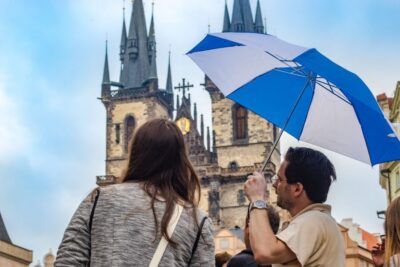
Prague: 3-Hour Walking Tour of Old Town & Prague Castle
Read our review →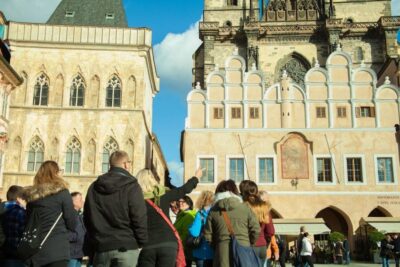
Prague: 3-Hour Old Town and Prague Castle Tour in German
Read our review →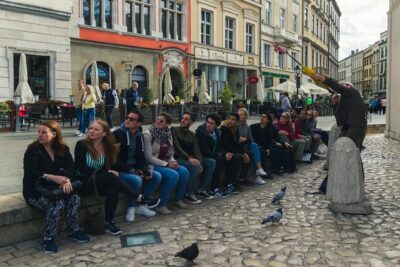
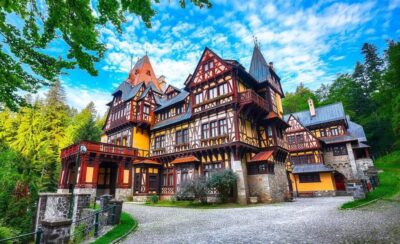
Bucharest: Peles Castle, Bran Castle, & Brasov Old Town Tour
Read our review →
Dubrovnik Combo: Old Town & Ancient City Walls
Read our review →
Dubrovnik: City Walls, Old Town Walking Tour & Adriatic View
Read our review →Browse the lists this tour appears in