
REVIEW · FORTRESS & CITADEL TOURS
Get Big Picture of Belgrade at its 2,000 years old Fortress
Belgrade Fortress is the place to get your bearings in Serbia’s capital. From its walls, you look across the meeting point of the Sava and Danube while an art historian connects Roman beginnings, Ottoman rule, Habsburg attacks, Nazi bombing, and Cold War fears. I especially like the private format, which lets you ask questions and set the pace, and the panoramic finish over New Belgrade and Zemun. The main drawback is that 90 minutes goes quickly, particularly if you want every gate, tower, and story explained.
I also like that the guide, either Igor or Ksenija, treats the fortress as more than a pile of old stones. You hear why church bells across Europe ring at noon in connection with Belgrade, which sultan called the fortress his Contemplation hill, and how a military magazine became a church. The walk requires moderate fitness, and uneven fortress ground may not suit everyone.
Key points at a glance
- Roman foundations and medieval walls: See layers of Belgrade’s long military past in the stonework beneath and around the fortress.
- A private tour for up to eight: Your own group receives the guide’s full attention, with room for questions and discussion.
- Art historian guides Igor and Ksenija: Expect political context, local perspective, and stories that reach beyond dates and battles.
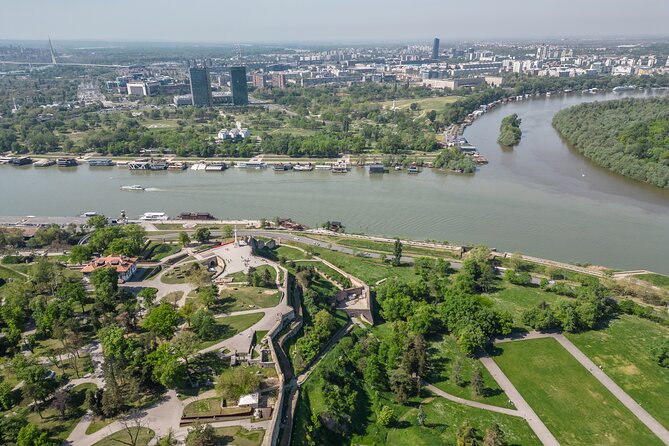
- Views across two rivers: Look over the Sava and Danube, their confluence, New Belgrade, and Zemun.
- A strong choice for limited time: The 90-minute route covers the fortress, Kalemegdan Park, major landmarks, and a broad historical arc.
- Sunset option: The final half-hour can be timed for evening light, with sunset ranging from about 4:30 in winter to after 7 p.m. in summer.
Why Belgrade Fortress explains the city so well
Belgrade Fortress sits where the Sava meets the Danube, a position that explains much of the city’s story. Control this high ground, and you can watch movement along two major rivers. The fortress became a prize for Romans, medieval rulers, Ottomans, Habsburg forces, and modern armies.
That setting gives the tour a useful shape. You are not simply walking from one monument to another. You are moving through a place where military power, trade, politics, religion, and city life met. At one point, the view opens toward New Belgrade, built as the capital of Socialist Yugoslavia. In another direction, Zemun has a quieter Central European appearance. The contrast helps you read Belgrade as several cities joined together.
The tour begins at the Art Pavilion Cvijeta Zuzorić at Mali Kalemegdan 1. It ends near the Embassy of France at Pariska 11. These two points place the walk within the central fortress and park area, so you are not spending the short tour getting to and from a distant meeting spot.
More Fortress and Citadel Tours in Belgrade:
- From Belgrade: Golubac Fortress and Iron Gate Gorge Tour
★ 4.8 · 271 reviews - From Belgrade: Golubac Fortress & Iron Gate Danube Gorge
★ 4.8 · 185 reviews - Along the Danube: Golubac Fortress & Iron Gate Gorge day trip from Belgrade
★ 4.5 · 185 reviews
Roman stones, old gates, and a long fight for the hill
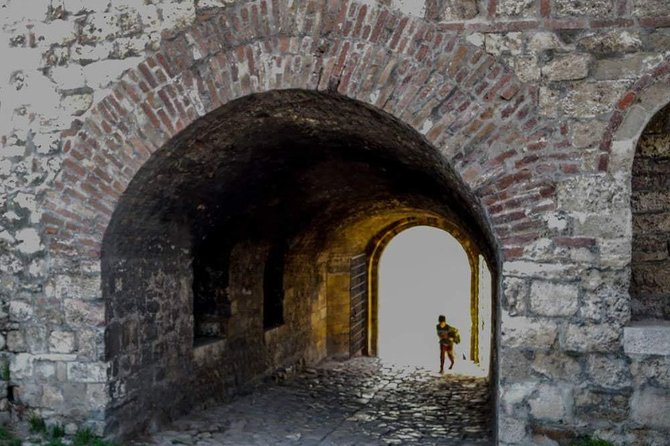
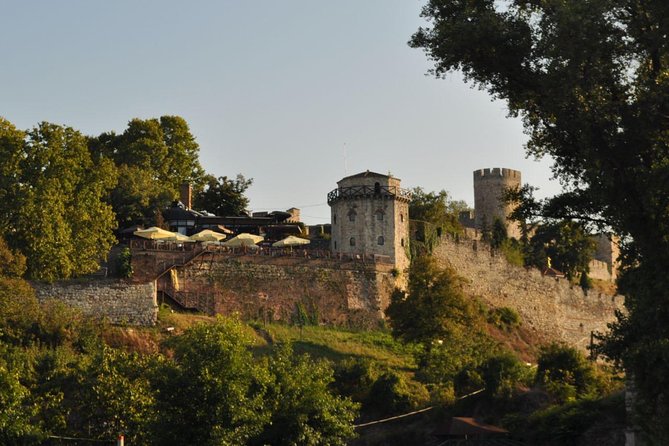
The first part of the walk introduces the fortress through its physical remains. You pass gates, walls, towers, dungeons, and other defensive structures while the guide traces the succession of powers that fought for this piece of ground.
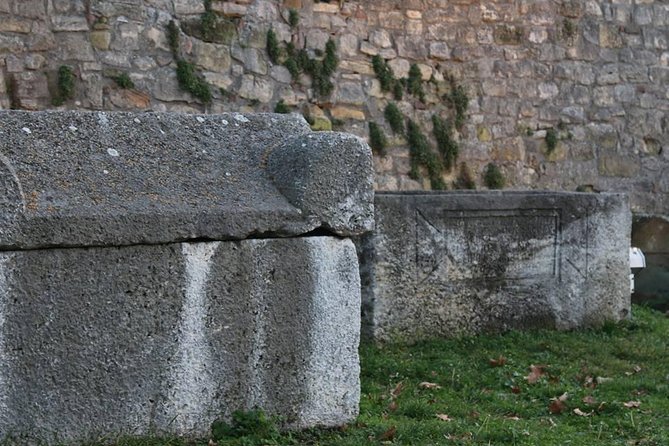
The Roman starting point is important. Belgrade’s fortress is not one single structure from one single age. Its walls and foundations hold evidence of repeated building, destruction, and repair. The route helps you notice that layered character instead of seeing only the most obvious stonework.
I find this approach useful because it gives the ruins a human scale. A wall is not just old. It can mark a change in military technology, a new ruler, or a city rebuilt after attack. A gate is not merely a photo stop. It tells you where people, soldiers, goods, and authority moved through the settlement.
The historical sequence reaches from the decline of the Roman Empire to Ottoman and Habsburg control, then forward into the political tensions of the 20th century. That is a lot to cover, so expect a brisk, story-led walk rather than a full archaeological lecture.
If you like fortifications, you will probably want more time after the tour to look closely at the structures. The 30-minute section cannot give equal attention to every wall and tower. Its value is in showing you how to interpret what you see.
The stories behind the noon bell and Contemplation hill
The second 30-minute section adds the more unusual stories. This is where the tour moves beyond a standard fortress timeline and into the odd connections that make Belgrade memorable.
You learn why the noon bell in churches across Europe is linked to Belgrade. You also hear which sultan referred to the fortress as his Contemplation hill. These details connect a local site to events and ideas far beyond Serbia, giving the fortress a role in European politics and religious life.
The route also addresses Belgrade in the 20th century. You hear what happened when Nazi forces bombed the city in 1941 and what occurred when a Soviet invasion was feared in the 1950s. These subjects show that the fortress was not left behind after the Ottoman and Habsburg eras. Its position continued to matter when the political map of Europe changed again.
The underground stories add another layer. One question concerns the filmmaker who told the press that he felt inspired after going underground. The exact appeal here is the sense of discovery, but you should not expect a long subterranean expedition. The supplied tour details promise underground history and chambers, while the overall experience lasts only about an hour and a half.
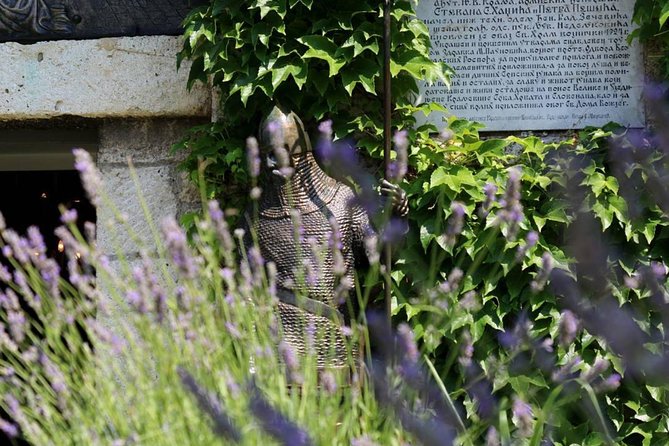
One particularly striking feature is the church built from a military magazine. You may also see foundations of a medieval castle and part of the Roman wall. These are the sort of details that reward curiosity. Ask questions as you go, especially if you want to know how an old defensive building gained a new religious use.
Kalemegdan Park and the river panorama
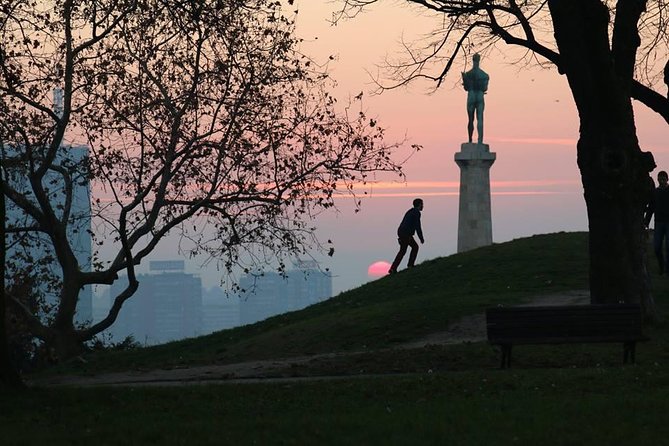
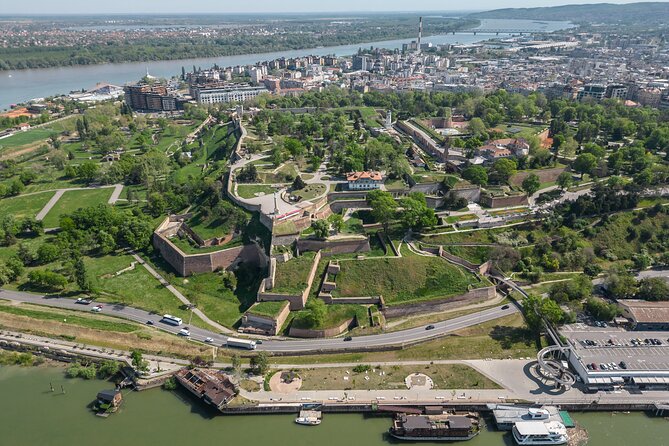
The final section takes place in Kalemegdan Park and around the fortress. Greenery softens the hard military character of the walls, and the open views give you a chance to understand Belgrade’s geography.
The panorama includes the Sava and Danube, their confluence, New Belgrade, and Zemun. New Belgrade was once the capital of Socialist Yugoslavia, while Zemun has a quieter Central European feel. From the fortress, you can compare both with the older city behind you.
This is also the best part for photographs, especially when the air is clear. The view is a central reason to consider the tour even if you are not a dedicated history enthusiast. The rivers, bridges, neighborhoods, and fortress walls make a strong visual introduction to Belgrade.
For the most atmospheric version, schedule the walk near sunset. Sunset is around 5:30 p.m. in autumn, 4:30 p.m. in winter, about 6 p.m. in April and May, and after 7 p.m. in summer. These times are approximate, so check the local date when booking.
A sunset tour has one tradeoff. Evening light improves the view, but winter timing can mean a colder, darker walk. A morning tour gives you a clear start to the day and may suit anyone who wants to continue exploring the city afterward. One morning route also leaves room for extra conversation, which is useful if you have questions about Belgrade’s present-day controversies as well as its past.
A few more castle tours around Belgrade worth a look
- Belgrade: Golubac Fortress with Iron Gate Speed Boat Ride
★ 4.8 · 94 reviews - Belgrade: Guided City Tour and Kalemegdan Fortress Visit
★ 4.9 · 72 reviews - Golubac Fortress w/Iron Gate Speed Boat & Rakija Distillery tour
★ 5.0 · 47 reviews - Iron Gate Tour: Golubac Fortress, Lepenski Vir+National Park
★ 4.9 · 42 reviews
What the private format adds for your group
This is a private activity, with only your group taking part, and it can be booked for up to eight people. That changes the feel of a short tour. You do not have to wait for a large group to gather, and you can ask for clarification without interrupting a crowded walk.
The format is especially useful for families, couples, and small groups with mixed interests. A history enthusiast can ask about Roman or Ottoman events, while someone more interested in the view can still enjoy the river panorama and park.
The guide’s role matters here. Igor is described as a passionate local historian who is comfortable discussing Serbian history and politics, including the points where the past remains debated. Ksenija also leads the walk, and the tour’s strongest character comes from the guides’ ability to connect major events with the exact walls and buildings in front of you.
Do not expect a neutral list of dates with no discussion. The experience is designed around explanation and conversation. If you like asking how history still affects the city, you will get more from it than someone who wants only quick photo stops.
Is $66.01 a fair price?
At $66.01 per person, this is not the cheapest way to see the fortress. You are paying for a private guide rather than a basic walk through a public park. The value improves when you share the booking with several people, since the guide’s time is reserved for your group of up to eight.
The price includes a professional art historian guide and the private tour. Admission is included where applicable, and there are no additional listed costs. Since the fortress and park are open visual spaces, the main purchase is the guide’s interpretation, not access to a large collection of indoor exhibits.
I would consider the price reasonable for a couple or small group that wants a focused introduction to Belgrade and prefers personal discussion. For a solo visitor, it is a more significant expense. In that case, book it if the historical context and private attention matter to you, not simply because you want a quick look at the view.
The 90-minute length also affects the value. It fits neatly into a busy city break and covers the main story without taking half a day. At the same time, it leaves little room for long stops or slow photography. Think of it as a strong orientation walk, then plan extra time at the fortress if you want to explore alone.
Who should book this fortress walk?
I would recommend it most to:
- First-time visitors who want a clear introduction to Belgrade.
- Small private groups that prefer conversation over a fixed large-group tour.
- People interested in war, politics, empires, and changing borders.
- Families who want one compact activity with both history and open-air views.
- Visitors with limited time who need the fortress, Kalemegdan, and the river panorama in one outing.
- Anyone who enjoys local interpretation and does not mind discussing disputed or complicated parts of the past.
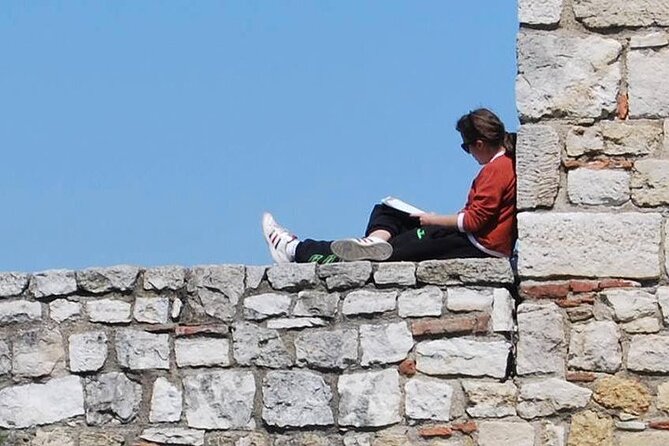
It may be less suitable if you want a slow archaeological study, a long underground visit, or a completely flat walk. The stated fitness requirement is moderate, and fortress paths, gates, and walls can involve uneven ground.
The English-language option is useful for international visitors. Since the experience is private, you can also make your needs clear at the start, such as wanting more explanation of the Roman remains or more time with the river views.
Timing, meeting point, and practical details
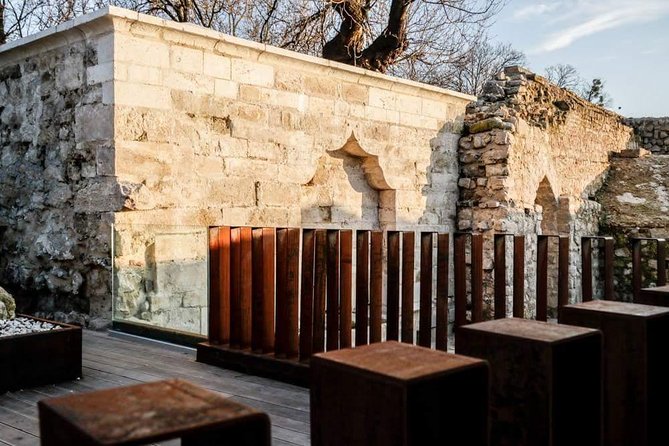
You meet at Art Pavilion Cvijeta Zuzorić, Mali Kalemegdan 1, in Belgrade. The walk ends at the Embassy of France at Pariska 11. Both points are in the central fortress and Kalemegdan area, and the location is near public transportation.
The tour is offered in English and uses a mobile ticket. Confirmation is provided when you book. Service animals are allowed.
Wear shoes suited to a walking route and allow enough energy for moderate physical activity. The available information does not give a detailed accessibility assessment, so anyone concerned about slopes, steps, or uneven surfaces should ask the operator before booking.
Free cancellation is available up to 24 hours before the start time for a full refund. Cancellations or changes made less than 24 hours before the start are not accepted for a refund, and the cut-off follows local time.
The questions worth asking your guide
The tour becomes more rewarding when you arrive with a few questions. Ask about the noon bell and its connection to Belgrade. Ask which sultan used the phrase Contemplation hill. Ask how the fortress changed during the Nazi bombing of 1941 and the Soviet invasion threat of the 1950s.
You can also ask to see the Roman wall, the medieval castle foundations, and the church made from a military magazine. These specific points help turn the route into a conversation rather than a one-way lecture.
The best questions may be about the city you see beyond the walls. New Belgrade and Zemun are not just attractive backgrounds. Their different origins reflect the political and urban changes that shaped modern Belgrade. The fortress gives you the view, while the guide helps you make sense of it.
Should you book this Belgrade Fortress tour?
Book it if you want more than a quick walk through Kalemegdan. The combination of an art historian guide, private group setting, Roman and medieval remains, 20th-century political stories, and river views makes this a strong first activity in Belgrade.
I would choose an afternoon or sunset departure for the best visual payoff, especially in spring and summer. Choose morning if you want cooler conditions, clearer time for questions, or a full day afterward.
Skip it if you prefer to explore fortresses silently at your own pace or if $66.01 per person feels high for a 90-minute visit. For everyone else, especially a small group with an interest in history and politics, this is a compact and thoughtful way to understand why Belgrade grew where it did.
FAQ
How long does the Belgrade Fortress tour last?
The tour lasts approximately 1 hour and 30 minutes.
How much does the tour cost?
The listed price is $66.01 per person.
Is this a private tour?
Yes. Only your group participates, and the tour can be booked for up to eight people.
What language is the tour offered in?
The tour is offered in English.
Who guides the tour?
The professional guides include Igor and Ksenija. The experience is led by an art historian guide.
Where does the tour begin?
It begins at Art Pavilion Cvijeta Zuzorić, Mali Kalemegdan 1, Belgrade, Serbia.
Where does the tour end?
It ends at the Embassy of France, Pariska 11, Belgrade 11000, Serbia.
What places are included in the route?
The route covers Belgrade Fortress, Kalemegdan Park, fortress gates and walls, historical landmarks, and viewpoints over the Sava, Danube, New Belgrade, and Zemun.
Can I cancel for a full refund?
Yes. You can cancel at least 24 hours before the experience starts for a full refund. Cancellations or changes made less than 24 hours before the start time are not accepted for a refund.
Just added around Belgrade
- Private day-trip to Golubac Fortress★ 5.0 · 5 reviews
- Northern Serbia: Sremski Karlovci, Petrovaradin Fort & Novi Sad★ 5.0 · 11 reviews
- Golubac Fortress w/Iron Gate Speed Boat & Rakija Distillery tour★ 5.0 · 47 reviews
- Private Day Tour to Iron Gate Gorge and Golubac Fortress★ 5.0 · 18 reviews
- From Belgrade: Golubac fortress & Iron Gate Danube gorge★ 4.5 · 24 reviews
- From Belgrade: 3 Danube Fortresses tour★ 5.0 · 19 reviews
- Iron Gate Tour: Golubac Fortress, Lepenski Vir+National Park★ 4.9 · 42 reviews
- From Belgrade: Novi Sad, Petrovaradin Fortress secret tunnel★ 4.8 · 13 reviews
Fortress & Citadel Tours, compared.
Full Day Taj Mahal, Agra Fort & Baby Taj Tour from Delhi by Car
Read our review →
Fort Sumter Admission and Self-Guided Tour with Roundtrip Ferry
Read our review →
Carcassonne: Castle and Ramparts Entry Ticket
Read our review →
Charleston: Fort Sumter Entry Ticket with Roundtrip Ferry
Read our review →
Same Day Taj Mahal, Fort & Baby Taj Tour from Delhi by Car
Read our review →
From Delhi: Taj Mahal and Agra Fort Private Sunrise Tour
Read our review →
Sunrise Taj Mahal, Agra Fort & Baby Taj Tour from Delhi by Car
Read our review →
Salzburg: Hohensalzburg Fortress Admission Ticket
Read our review →Browse the lists this tour appears in