

REVIEW · GUIDED CASTLE TOURS
Berlin: Decolonial Berlin Castle/ Humboldt Forum Guided Tour
Berlin’s Humboldt Forum looks grand, polished, and historic. This tour asks you to stop admiring the building at face value and ask harder questions: Who shaped this place? Where did its collections come from? You’ll explore Berlin Palace and the museum through an Afrocentric, decolonial lens rather than through a standard art-history tour.
I like two things right away. First, the tour connects the palace’s 500-year story with German colonial history, missionary work, and the symbolism of the cross on the roof. Second, it gives you an audio walk for examining the ethnological collection with fresh questions. The main consideration is that roughly one hour is spent seated outdoors before you enter the museum, so weather-ready clothing matters.
Key points at a glance
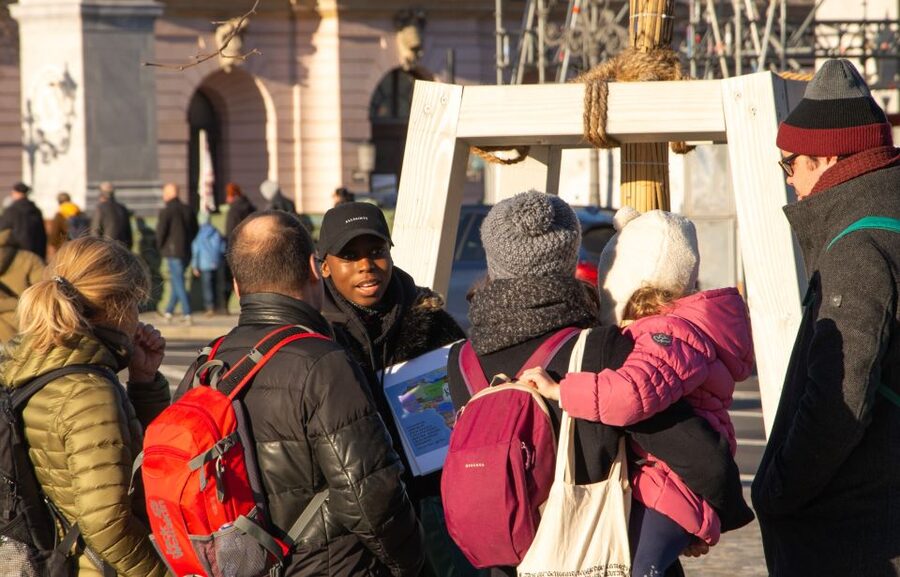
- An Afrocentric reading of Berlin Palace: You examine the Humboldt Forum through perspectives often left out of traditional palace tours.
- About one hour outdoors first: Meet near the reconstructed Sanchi Gate and sit on white chairs before going inside.
- Colonial history connected to the building: The tour explores missionaries, colonial structures, the roof cross, and the palace’s changing meaning.
- A critical look at the ethnological collection: The included audio walk helps you question how objects were collected, labeled, and presented.
- English-language guidance for two hours: The tour is led live in English and includes entry to the ethnological collection.
- Best for curious, open-minded visitors: This is a discussion-led history experience, not a conventional sightseeing circuit.
Why this Berlin tour asks different questions

Many Berlin tours focus on dates, rulers, battles, and architecture. This one shifts the center of attention. You still learn about the palace and the Humboldt brothers, but the guide uses those subjects to examine power, cultural ownership, and the way German history is presented today.
That approach is the reason to book it. You are not simply shown a handsome reconstruction of a royal building. You are asked to consider what the building represents, why certain symbols were chosen, and how objects from other parts of the world came to sit inside a German museum.
The experience is especially useful if you have already seen Berlin’s major sights and want a more critical historical discussion. It also works well if you are visiting the Humboldt Forum for the first time and want help making sense of its complicated purpose.
The tone will not suit everyone. One person who expected a different type of event found the interpretation uncomfortable and strongly disagreed with the tour’s approach to historical meaning. That reaction is worth taking seriously. This is not a neutral, old-fashioned palace tour. The decolonial viewpoint is the main point, not a small extra added to a standard visit.
More Guided Castle Tours in Germany
- Erfurt: Guided Tour of The Petersberg Citadel
★ 4.8 · 674 reviews - Neuschwanstein Castle Ticket With Audio Guided Tour
★ 3.5 · 473 reviews - Braunfels: Guided Tour of the Fairytale Castle Braunfels
★ 4.6 · 68 reviews
Meeting at the reconstructed Sanchi Gate
The meeting point is near the reconstructed Sanchi Gate, where white chairs are available. This is a useful detail because the first part of the tour is not spent walking from room to room. You will be seated outdoors for about an hour while the guide lays out the main ideas.
The Sanchi Gate reconstruction gives the opening discussion a fitting setting. The tour later deals with the ethnological collection and with European ways of presenting cultures from outside Europe. Beginning beside a reconstruction from India helps frame questions about museums, copied architecture, cultural context, and who gets to decide how heritage is displayed.
Bring comfortable shoes and weather-appropriate clothing, even though you will sit for part of the session. Berlin weather can change quickly, and the outdoor portion is long enough for cold, wind, or rain to affect your concentration. Food and drinks are not allowed, and large bags or luggage should not be brought along.
The meeting instructions advise you to take a seat on the white chairs and wait for the guide. Make sure you identify the reconstructed gate clearly before the start time. One past booking problem involved a guide not appearing at the agreed time or place, so checking the meeting point carefully is sensible.
The Berlin Palace story beyond royal decoration

The Berlin Palace has a 500-year history, but the tour does not treat that history as a simple procession of kings and architectural changes. Instead, you examine how the palace has been used, destroyed, reconstructed, and given new meaning.
The present-day building is closely linked to the Humboldt Forum, so the setting itself raises questions. A reconstructed palace now houses collections connected to cultures from across the world. The tour encourages you to think about that pairing rather than accepting it as a natural fit.
You will look at the palace from a decolonial perspective, with attention to the relationship between German power and colonial structures. This helps place the museum inside a wider political story. The building is not presented as an isolated work of architecture. Its symbols and institutional choices are part of the discussion.
One important example is the cross on the roof. The tour explains its symbolic meaning and why that symbol matters in this setting. You may not agree with every interpretation, but you will leave with a clearer sense of why the roof design has sparked questions about religion, authority, and Germany’s public memory.
The Humboldt brothers and the making of German knowledge
The Humboldt brothers are central figures in German history, and this experience gives you context for their importance as scientists. Their names are familiar in Berlin, especially around the Humboldt Forum, but a standard museum visit may not explain why they matter or how their legacy is used today.
The tour looks at their scientific work and the way knowledge was gathered, classified, and shared. That topic links naturally to the ethnological collection. Museums do not merely hold objects. They organize information about people and cultures, often using categories created by European scholars and institutions.
The experience does not reduce the brothers to villains or treat their legacy as beyond criticism. Instead, it asks you to consider how scientific ambition, exploration, collecting, and colonial systems could overlap. That is a useful distinction. You can recognize the brothers’ importance in German science while still examining the wider structures in which European knowledge was produced.
If you enjoy history that connects individuals to institutions, this part should be rewarding. If you mainly want an architectural tour of the palace, it may feel like a detour. The focus is on the meaning behind the names, not on a long list of biographical dates.
Same region, a different set of walls:
- From Munich: Neuschwanstein & Linderhof Castle Full-Day Trip
★ 4.6 · 14,646 reviews - Neuschwanstein & Linderhof Castle-Fairytale Day Tour from Munich
★ 4.5 · 7,275 reviews - Neuschwanstein Castle Tour from Munich
★ 4.5 · 5,117 reviews - From Munich: Neuschwanstein Castle Full-Day Trip
★ 4.7 · 3,977 reviews
Missionaries and the growth of colonial structures
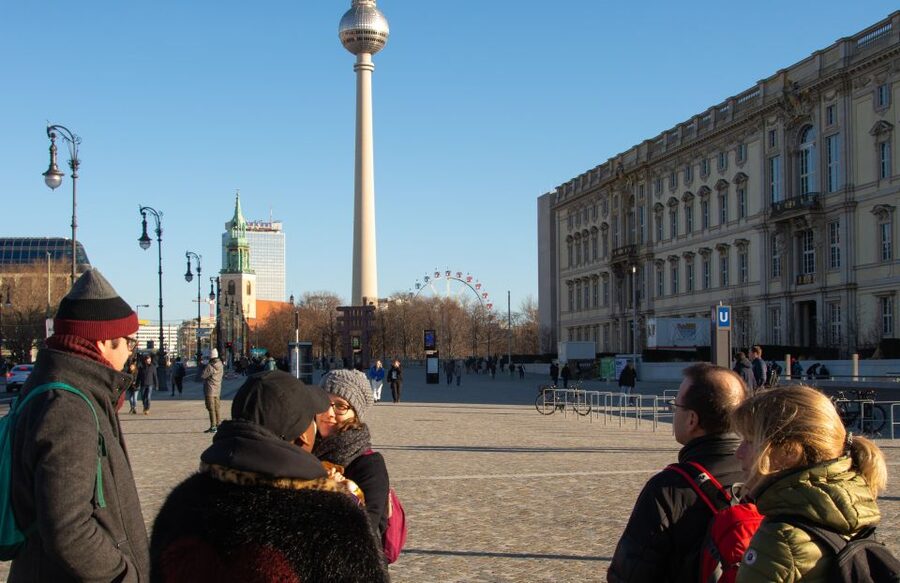
Missionaries are another important part of the discussion. The tour looks at the role various missionaries played during the establishment of colonial structures, encouraging you to see religious work within a wider system rather than as a completely separate activity.
This is one of the more useful parts of the experience because it complicates a familiar story. Missionary work could involve religion, education, language, documentation, and contact with local communities. At the same time, those activities could support European authority and help create conditions for colonial control.
You will not simply hear that missionaries were good or bad. The point is to examine how their actions fit into larger networks of power. That approach gives you a better tool for reading museum labels and historical displays, especially when the people who collected or described cultural objects had strong institutional interests.
The guide’s task here is not only to provide facts. The tour aims to show you how to read between the lines, a feature that one highly positive German-language response singled out as especially effective. That means paying attention to what a display says, what it leaves out, and whose viewpoint shapes the wording.
Entering the ethnological collection

After the outdoor discussion, you head into the museum and explore the ethnological collection. Entry to this collection is included in the tour price, which is important because the museum visit forms the second half of the experience rather than being an optional add-on.
The collection is not presented as a neutral storehouse of beautiful objects. You are encouraged to think about how the objects were acquired, how they were named, and how they are displayed within a German institution. The goal is to examine cultural heritage and colonial history together.
An included audio walk gives you another way to approach the collection. You can use it to analyze selected material from a critical perspective, adding another layer to the live guide’s discussion. Since the tour spends significant time outside, the museum section is not a long, room-by-room survey of every exhibition. It is more focused and interpretive.
That distinction matters. One four-star assessment found that the historical background took up so much time that the Forum portion felt somewhat short. If you want to see a large number of objects or cover every gallery, this may not be the right format. If you want guidance on how to question what you see, the focused museum visit has real value.
What the two-hour format feels like
Two hours is long enough to build an argument without turning the experience into a full-day commitment. The structure is clear: an outdoor introduction, discussion of the palace and its history, then a move into the museum and ethnological collection.
The seated opening may feel unusual if you expect a walking tour. I see it as both a strength and a weakness. Sitting allows the guide to explain the historical framework before you encounter the displays. You are less likely to rush through the museum without understanding the questions being raised.
On the other hand, an hour outdoors is a large share of a two-hour tour. In poor weather, this can become tiring. The tour information is direct about the arrangement, so you can plan properly rather than being surprised on arrival.
The live tour is offered in English. The experience is also listed as wheelchair accessible, though the outdoor seating and museum movement may still make it wise to contact the provider if you need specific assistance.
Is $41 a fair price?
At $41 per person, this is not a bargain-priced museum introduction, but the price is reasonable if you want a guided interpretation rather than simple admission. You are paying for two hours with a live English-speaking guide, entry to the ethnological collection, the outdoor historical discussion, and the audio walk.
The value depends on your purpose. If you would be satisfied wandering through the Humboldt Forum alone, $41 may feel high. If you want help connecting the palace, colonialism, German science, missionary activity, museum practice, and present-day cultural debates, the guide provides something you cannot get from entry alone.
The strongest value comes from the tour’s point of view. It gives you a framework you can carry into the rest of your Berlin visit. Afterward, you may look at other museums, monuments, and public symbols with sharper questions about ownership, representation, and memory.
The group size is not provided, so I would not book this expecting an intimate private tour. The experience is described as a guided group activity, and the emphasis is on shared explanation and discussion.
Who should book this experience?
I would recommend it to you if you:
- Want to understand the Humboldt Forum through an Afrocentric and decolonial perspective.
- Are interested in colonialism as well as palace architecture.
- Prefer discussion and interpretation to a quick list of dates.
- Want to examine the ethnological collection critically.
- Are comfortable hearing a viewpoint that may challenge familiar accounts of German history.
- Can manage about an hour seated outdoors before entering the museum.
I would think twice if you want a traditional royal-palace tour, a broad survey of every gallery, or a mostly indoor activity. The historical discussion takes priority, and the museum portion may feel brief if your main goal is to inspect objects at length.
The high marks given to the guides point to the importance of the person leading your session. Strong guidance makes the material lively and clear, while a mismatch in expectations can make the same approach feel forceful. Read the tour description carefully and book it because you want this viewpoint, not because you assume it is a standard Humboldt Forum tour.
Booking flexibility and practical details
You can cancel up to 24 hours before the start for a full refund, and you can reserve now while paying later. Those policies are useful if your Berlin schedule is still changing.
The tour is conducted in English, lasts two hours, and includes a live guide. Food and drinks are not permitted, and large bags or luggage should stay elsewhere. Plan to arrive near the reconstructed Sanchi Gate with clothing suitable for sitting outside.
A verified booking received a poor rating after the guide did not appear at the agreed time and place. That appears to be an isolated service problem among otherwise strong comments, but it reinforces the practical advice: confirm the meeting point, arrive early, and keep your booking details easy to access.
Should you book the Decolonial Berlin Castle tour?
Book this tour if you want the Humboldt Forum to raise questions, not simply provide photographs. Its best features are the Afrocentric perspective, the link between the palace and colonial structures, and the careful attention to missionaries, scientific collecting, and the museum’s symbols.
Skip it if you want a conventional palace tour or several hours inside the galleries. The outdoor opening is substantial, and the critical approach can feel challenging by design.
For the right audience, $41 buys more than entry. It gives you a set of ideas for understanding one of Berlin’s most debated cultural spaces, and that can make your later museum visits far more thoughtful.
FAQ
Where does the tour meet?
Meet your guide near the reconstructed Sanchi Gate. White chairs are available there, and you are invited to take a seat.
How long does the tour last?
The tour lasts two hours.
What language is the tour conducted in?
The live guided tour is conducted in English.
Is the museum entry included?
Yes. Entry to the ethnological collection is included.
How much time is spent outdoors?
You will be seated outside for approximately one hour before heading into the museum.
Is the tour wheelchair accessible?
Yes, the activity is listed as wheelchair accessible.
What should I bring?
Bring comfortable shoes and clothing suitable for the weather.
Can I bring food or drinks?
No. Food and drinks are not allowed.
Can I bring luggage or a large bag?
No. Luggage and large bags are not allowed.
Can I cancel for a refund?
Yes. You can cancel up to 24 hours in advance for a full refund.
Just added around Germany
- Sightseeing flight Zugspitze Neuschwanstein Castle Alps Munich Augsburg★ 5.0 · 7 reviews
- Stuttgart: Landesmuseum Württemberg Old Castle Entry Ticket★ 4.6 · 21 reviews
- Sigmaringen: Hohenzollern Castle Admission & Audio Guide★ 4.9 · 15 reviews
- Segway Tour: Gerberbach, Schlosspark & Castle Weinheim★ 4.9 · 14 reviews
- Dresden: Scavenger Hunt to Elbe River & Castles★ 4.7 · 15 reviews
- Private tour to Neuschwanstein castle from Munich★ 5.0 · 23 reviews
- Potsdam: The evening Wannsee tour. Castles, parks, and villas.★ 4.7 · 63 reviews
- Neuschwanstein Tour from Munich Luxury Van 6 People with Private Driver★ 5.0 · 12 reviews
Guided Castle Tours, compared.

Edinburgh Castle: Guided Walking Tour with Entry Ticket
Read our review →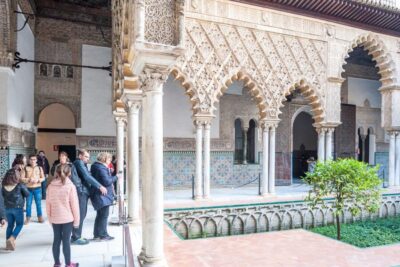
Seville: Cathedral, Giralda & Alcazar Entry With Guided Tour
Read our review →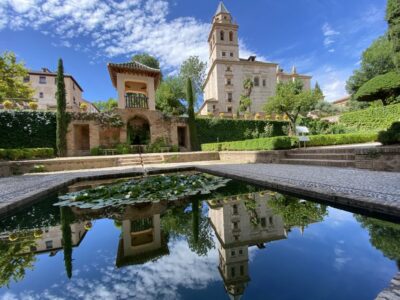
Granada: Alhambra & Generalife Fast-Track Guided Tour
Read our review →Edinburgh Castle: Guided Walking Tour with Entry Ticket
Read our review →
Stonehenge, Windsor Castle and Bath Full Day Guided Tour
Read our review →
Edinburgh Castle Guided Walking Tour in English
Read our review →
Seville: Alcázar and Cathedral Entry Ticket and Guided Tour
Read our review →
Fast-Track Alhambra & Nasrid Palaces Guided Tour
Read our review →Browse the lists this tour appears in