
REVIEW · FORTRESS & CITADEL TOURS
Sigiriya: Rock Fortress Private Guided Walking Tour
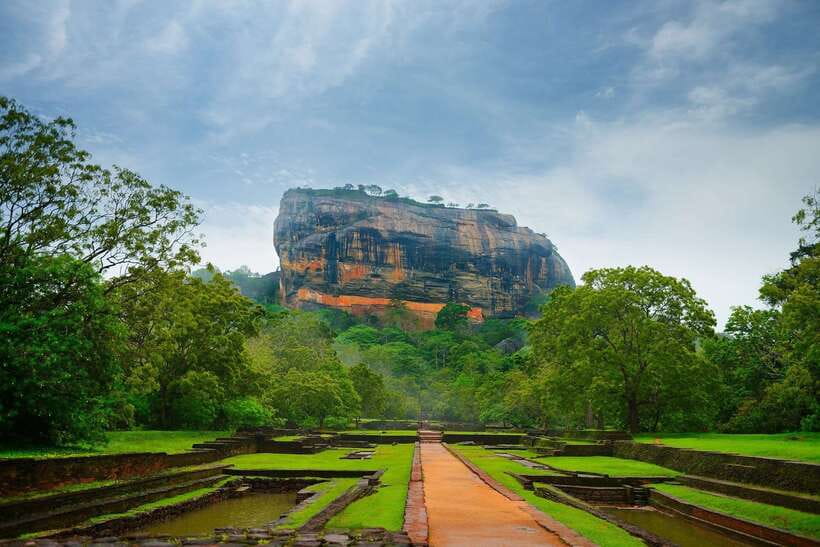
Sigiriya’s great appeal is that you do not simply look at the rock fortress from below. You climb through its gardens, pass ancient paintings, reach the enormous Lion’s Paw, and finish among the ruins of a 5th-century palace high above central Sri Lanka. The climb is the main event, not a minor part of the visit.
I like the small group size, limited to four people, and the chance to have a guide point out details you could easily miss alone. I also like the mix of gardens, art, engineering, and views. The main caution is physical: the route includes about 1,200 steps, plus roughly 1 kilometer of walking on level ground, so this is not a gentle stroll.
Key points to know before climbing Sigiriya
- The $29 tour price excludes the $35 entrance ticket, so budget $64 per person before food, drinks, or transport.
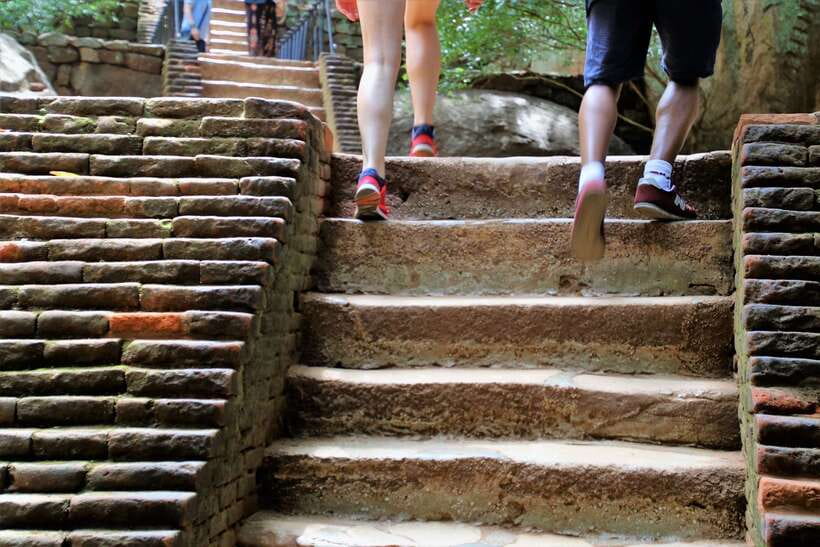
- The route covers about 1,200 steps, with a further 1 kilometer of walking on flat ground.
- The group is limited to four people, giving you a better chance to ask questions and move at a sensible pace.
- The route includes water gardens, fountains, pools, boulder gardens, frescoes, Lion’s Paw, and summit ruins.
- Guides speak English, German, or French, with recent guide assignments including Kumara, Sugath, and Albed.
- Early starts do not guarantee an empty site. A 6:00 am departure can still meet plenty of people at the entrance and on the rock.
Why Sigiriya is worth the climb
Sigiriya is one of Sri Lanka’s most important historic sites, but its appeal is easy to misunderstand. The famous view from the top gets most of the attention. The approach is just as important.
The route shows how the royal complex was arranged around the base of the rock. You walk through carefully planned gardens, pools, fountains, and rocky spaces before the climb becomes steeper. Your guide helps connect these separate pieces into one large palace and defensive site.
I find that especially useful here because the remains can look scattered at first. A guide can explain what each space was for and help you notice the way the gardens, water features, stairways, and rock formations work together.
The tour lasts about three hours. That is enough time for the main parts of the site, but it is not a slow archaeological seminar. You will be walking most of the time, climbing steadily, and stopping for explanations and photographs.
More Fortress and Citadel Tours in Sri Lanka:
- Galle Fort Walking tour
★ 4.9 · 285 reviews - Galle Fort Walking Tour with a Resident
★ 5.0 · 88 reviews - Sigiriya Rock Fortress and Cave Temples Day Trip
★ 4.5 · 73 reviews
Starting at the water gardens
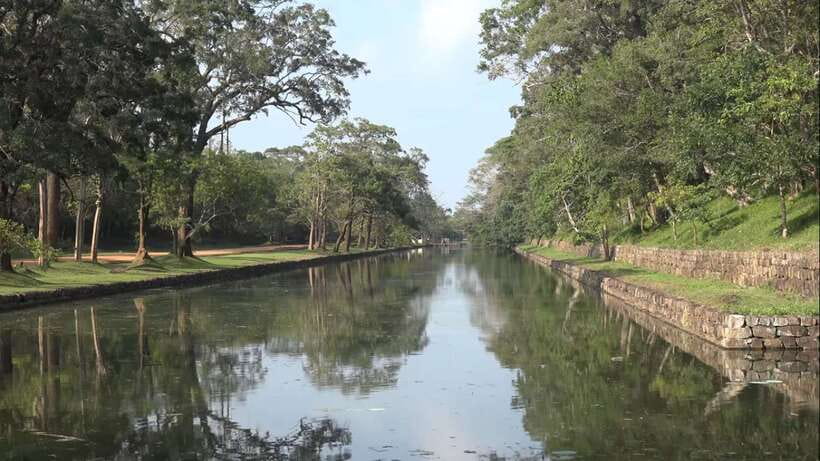
You begin near a miniature water garden at the eastern side of the archaeological site. This is a good starting point because it introduces Sigiriya as a planned royal center rather than just a dramatic stone outcrop.
The water gardens include small pools, channels, and fountains. You will also pass other pools and garden areas as you continue toward the rock. These features give the lower section a calmer feel than the climb that follows.
I like this first section because it allows you to get used to the pace before tackling the stairs. It also gives your guide a chance to explain the setting and point out details that might otherwise seem like ordinary ruins.
Do not rush through the gardens. The temptation is to look straight up at the summit and start climbing. If you pause, you get a clearer sense of the size of the complex and the planning behind it.
The route also includes boulder gardens. These large natural rocks are mixed with paths, walls, and remains of older structures. Your guide can help you distinguish the natural formations from the built elements, which is not always obvious when you are seeing the site for the first time.
The boulder gardens and ancient design
The boulder gardens are one of the more interesting parts of the lower complex because the setting does not feel like a conventional palace site. Large rocks create a rugged contrast with the formal gardens and water features.
This is where a guide earns the fee most clearly. Without help, you might photograph the rocks and move on. With an explanation, you can better understand how the builders used the natural setting as part of the royal complex.
The walking here is on relatively level ground compared with the upper route, but you still cover about 1 kilometer across the site. Wear proper hiking shoes, bring water, and avoid carrying large bags. Luggage and big bags are not allowed on the tour.
A small group is helpful in this section. With a maximum of four participants, it is easier to stop when you want a photograph or ask about a particular ruin without holding up a large crowd.
Climbing toward the Lion’s Paw
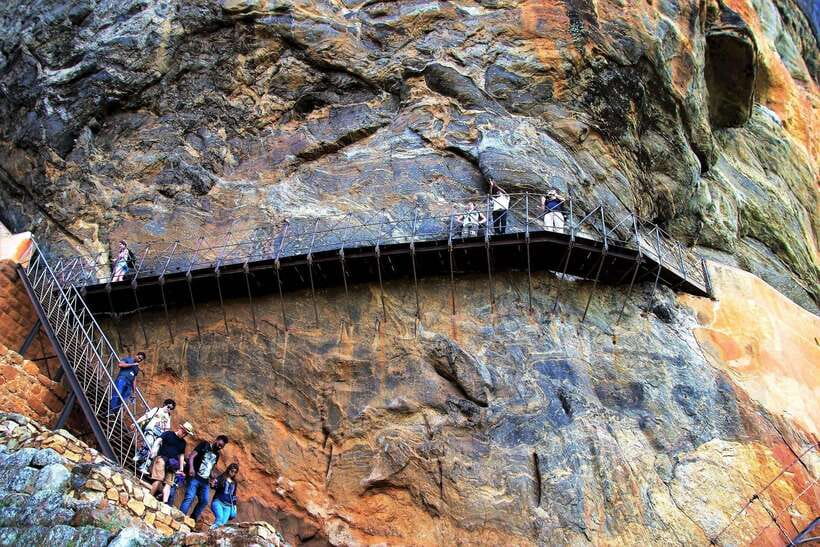
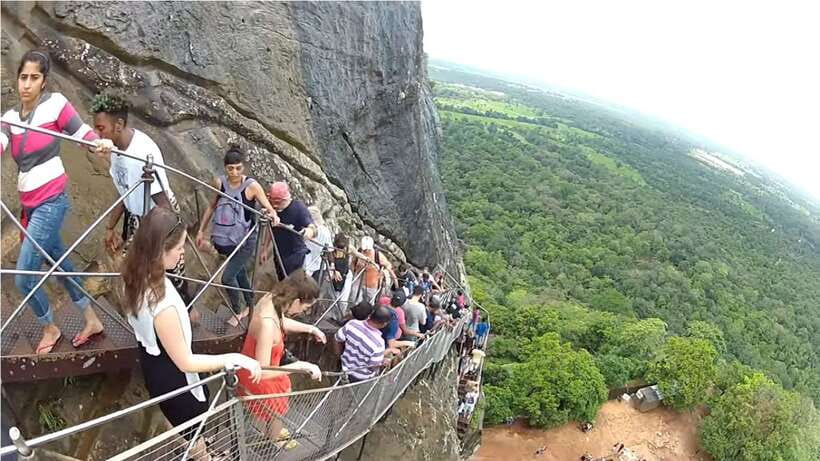
The climb becomes the central test of the tour once you leave the gardens. The full route includes about 1,200 steps, so you should treat this as a proper uphill walk rather than a sightseeing stop with a few stairs.
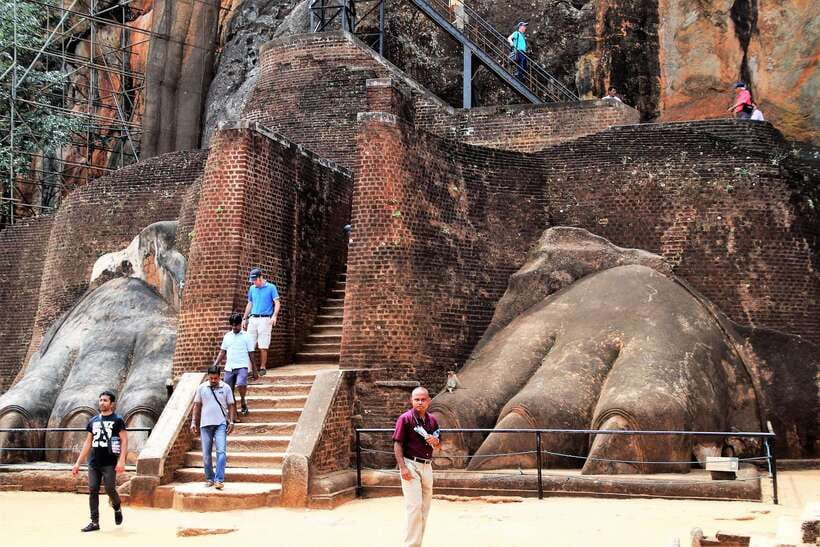
You will reach the Lion’s Paw, one of Sigiriya’s most recognizable features. The massive paws are the surviving lower part of a much larger lion entrance. The original upper portion is gone, but the scale of the paws still gives the approach a strong sense of arrival.
This is also an important photo stop. Guides such as Kumara and Sugath have helped participants find good viewpoints and taken photographs for them. That service is not the main reason to book, but it is a useful benefit when you are climbing with limited free hands and want a picture of the experience.
Your pace matters. One guide, Albed, has been praised for continuing up the rock despite moving more slowly. That points to an important practical issue: guide pace can vary, and a slower guide may suit some people while frustrating others who want to move quickly.
The small-group format should make it easier to keep a comfortable rhythm, but you should still ask about the pace at the start if you have concerns. The tour is not suitable for people with limited mobility, heart problems, back problems, or pregnancy.
More Guided Castle Tours in Sri Lanka:
- Galle Fortt Guided Walking Tour with a Local
★ 4.9 · 33 reviews - Edinburgh Castle: Guided Walking Tour with Entry Ticket
★ 4.7 · 11,699 reviews - Seville: Cathedral, Giralda & Alcazar Entry With Guided Tour
★ 4.6 · 8,560 reviews - Granada: Alhambra & Generalife Fast-Track Guided Tour
★ 4.7 · 8,313 reviews
Seeing the fresco pocket
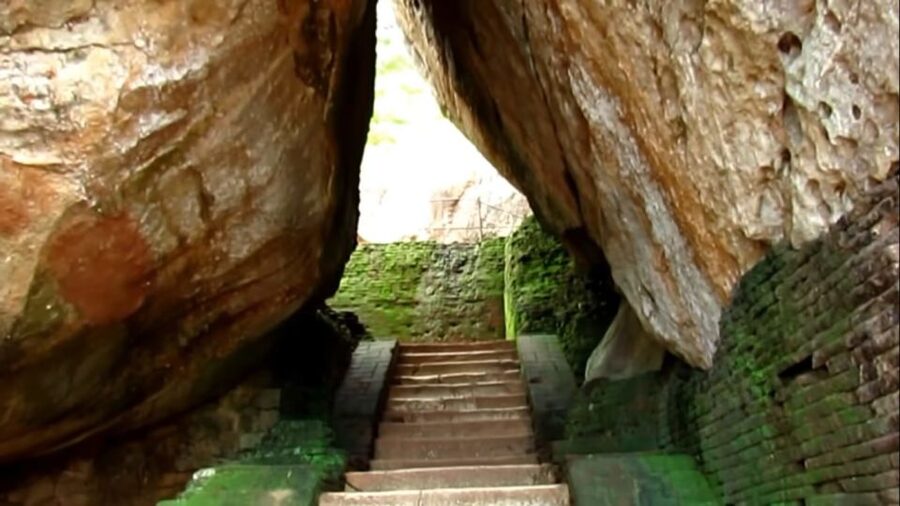
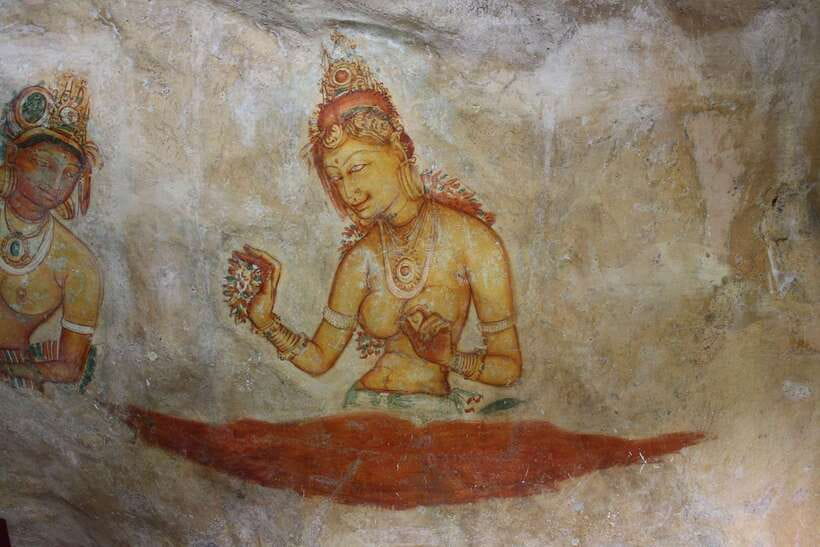
The fresco pocket is one of the tour’s most special stops. Here you can see paintings made by ancient artisans in the 5th century.
The paintings are not just another item to tick off. They show the artistic side of the site, which can get lost when the focus is placed only on the palace ruins and summit views. Your guide’s commentary can help you understand why this protected section matters.
The frescoes are also a reason not to climb alone if you want more than photographs. A guide can identify the relevant area and give context as you move through the route. English, German, and French tours are available, so choose the language in which you will get the most from historical explanations.
The exact amount of time spent at each stop will depend on the guide and the group. If the frescoes are a priority for you, say so early and ask for enough time to look carefully.
Reaching the summit palace ruins
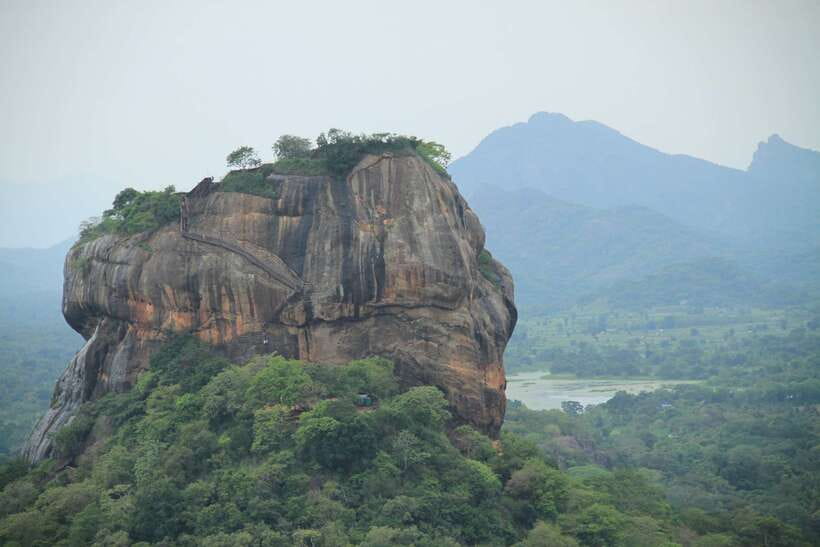
At the top, the route reaches the remains of the 5th-century palace complex. You will see ruins of structures, a swimming pool, and other remains connected with the royal site.
The summit is where the physical effort pays off. You get broad views over the surrounding area, and the high position makes it easier to understand why this rock was chosen for a royal stronghold.
The summit ruins are not an intact palace. You need to use the remains, the rock surface, and your guide’s explanation to picture the original complex. A good guide can make that reconstruction easier by pointing out the purpose of different spaces rather than giving only a list of dates.
Sugath has been described as patient and clear, with a good pace and detailed explanations of Lion’s Rock. Kumara has been praised for bringing the site to life and looking after the practical details of the visit. Guide assignments can change, so you should not book on the assumption that one particular person is guaranteed.
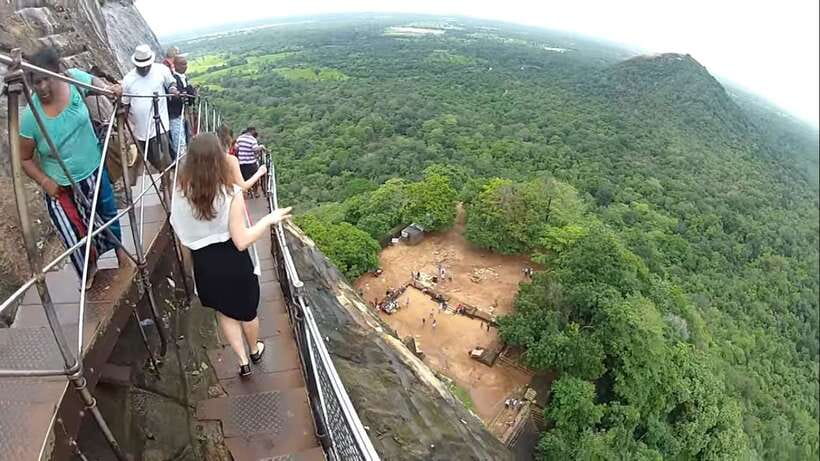
The beautiful view is a major reward, but it is also worth remembering that you will have to climb back down. Save some energy, keep drinking water, and do not treat the summit as the end of the physical part.
What the guide adds to the visit
Sigiriya is possible to visit without a guide, but this experience is built around interpretation. The guide walks with you from the opening water garden through the gardens, rock route, fresco area, Lion’s Paw, and summit.
The best guide reports point to three useful qualities: clear history, a sensible pace, and help with photographs. Sugath has been noted for adjusting to the group and explaining features as the walk progresses. Kumara has been praised for being informative, funny, and a good photographer.
There is one warning to keep in mind. One recent departure was less satisfying because the guide repeated the same facts and repeatedly referred to an expected generous tip. Tipping is not listed as an included feature, so you should decide for yourself if and when you want to offer one. You should never feel pressured to pay more than you planned.
The guide also may help with practical arrangements after the walk. Sugath assisted with return transport on one occasion, but transport is not listed as an included service, so confirm any arrangements and costs directly.
Is $29 a fair price?
The tour costs $29 per person, but the entrance ticket adds $35 per person. That brings the known basic cost to $64 per person, before meals, drinks, or any transport you arrange.
I would judge that price against what you want from Sigiriya. If you only need directions and plan to read about the site yourself, the guide fee may feel unnecessary. If you want historical explanations while walking, help identifying the main features, and a small group rather than a large guided party, the extra cost is easier to justify.
The group limit of four is the strongest value point. A larger group can make a long climb slower and make it harder to hear explanations. With four people, you have a better chance to ask questions and pause for photographs.
The price does not include food or drinks, so bring your own water. The tour includes a guide and hiking aid, but no entrance admission. Make sure you have the required voucher exchange at the ticket counter before the tour begins.
Timing, weather, and practical preparation
The activity takes place rain or shine. That makes suitable footwear and water important, not optional extras. Hiking shoes are specifically recommended, and large bags or luggage are not allowed.
Starting early can help with the heat, but do not assume a 6:00 am start means you will have the site to yourself. One early departure still encountered many people. The main benefit of an early start may be cooler walking conditions rather than complete quiet.
The activity page gives a three-hour duration, while the overview describes a two to three-hour walk. Plan around three hours so you do not need to hurry. Add time before the start to exchange your voucher at the ticket counter and find the guide.
If you cannot locate the guide, call or message them. This is especially useful because the meeting procedure requires you to exchange the voucher before the tour begins.
You can cancel up to 24 hours ahead for a full refund, and the reserve-now, pay-later option leaves your plans more flexible. Those terms are useful if your Sri Lanka route is still changing.
Who should book this Sigiriya tour?
I would choose this experience if you want the main archaeological areas explained as you walk and prefer a small group. It suits people who enjoy combining cultural sites with a real physical challenge.
It is also a good match if you want help with photographs, prefer a planned route, or want to visit the frescoes, Lion’s Paw, gardens, and summit ruins in one organized walk.
I would think twice if you have back, heart, or mobility problems, are pregnant, or do not feel comfortable with 1,200 steps. The tour is not designed for a relaxed, accessible visit.
I would also avoid booking it if you need a completely private, one-to-one experience. Although the group is very small, the stated format allows up to four participants.
Should you book it?
Book this Sigiriya guided walk if you want more than a view from the top. The route gives you gardens, fountains, pools, boulder formations, ancient frescoes, the Lion’s Paw, and royal ruins, with a guide explaining how the pieces fit together.
The strongest reasons to book are the four-person limit, the knowledgeable commentary offered by guides such as Kumara and Sugath, and the help with pacing and photographs. The main drawbacks are the extra $35 admission charge, the demanding climb, and the fact that guide quality and style can vary.
For a fit visitor who values context and does not want to puzzle over the ruins alone, this is a sensible way to see Sigiriya. Just bring water, wear hiking shoes, keep your bag small, and save enough energy for the descent.
FAQ
How long does the Sigiriya guided walk take?
The activity lasts about three hours. The route includes approximately 1 kilometer of walking on flat ground and about 1,200 steps.
Is the entrance ticket included?
No. The entrance ticket costs $35 per person and is paid separately from the $29 tour price.
What languages are available?
The live guide is available in English, German, or French.
How many people are in the group?
The activity is limited to four participants.
What should I bring?
Bring hiking shoes and water. Large bags and luggage are not allowed.
Is the tour suitable for people with limited mobility?
No. The tour is not recommended for people with limited mobility because of the 1,200 steps and the walking distance. It is also not suitable for pregnant women or people with back or heart problems.
What happens if it rains?
The tour operates rain or shine. You should prepare for changing weather and wear suitable walking footwear.
More Walking Tours in Sri Lanka
- Prague: 3-Hour Walking Tour of Old Town & Prague Castle
★ 4.7 · 5,696 reviews - Edinburgh Castle: Guided Walking Tour with Entry Ticket
★ 5.0 · 5,540 reviews - Edinburgh Castle Guided Walking Tour in English
★ 5.0 · 5,214 reviews - Budapest: Buda Castle Walk with Saint Stephen’s Hall
★ 4.5 · 3,012 reviews
Just added around Sri Lanka
- Galle Day Tour and Tea Plantation from Bentota & Other Places★ 5.0 · 19 reviews
- Galle Fort & boat safari & Turtles Day Trip★ 5.0 · 6 reviews
- Kandy: Sigiriya Fortress & Cave Temple Full Day Private Tour★ 4.1 · 29 reviews
- Galle Fortt Guided Walking Tour with a Local★ 4.9 · 33 reviews
- From Colombo to Galle Fort and Unawatuna Beach Day Trip★ 4.5 · 27 reviews
- From Colombo to Galle Fort and Jungle Beach Day Trip★ 5.0 · 26 reviews
- Colombo-Galle Fort, Boat Safari, Turtles, Amazing Group Tour★ 4.6 · 8 reviews
- Bentota: All Inclusive Galle Dutch Fort & Madu River Safari★ 4.2 · 6 reviews
Fortress & Citadel Tours, compared.

Full Day Taj Mahal, Agra Fort & Baby Taj Tour from Delhi by Car
Read our review →
Fort Sumter Admission and Self-Guided Tour with Roundtrip Ferry
Read our review →
Carcassonne: Castle and Ramparts Entry Ticket
Read our review →
Charleston: Fort Sumter Entry Ticket with Roundtrip Ferry
Read our review →
Same Day Taj Mahal, Fort & Baby Taj Tour from Delhi by Car
Read our review →
From Delhi: Taj Mahal and Agra Fort Private Sunrise Tour
Read our review →
Sunrise Taj Mahal, Agra Fort & Baby Taj Tour from Delhi by Car
Read our review →
Salzburg: Hohensalzburg Fortress Admission Ticket
Read our review →Browse the lists this tour appears in