
REVIEW · MILAN CASTLE TOURS
Milan: Sforza Castle and Michelangelo’s Pietà Rondanini Tour
Michelangelo’s Pietà Rondanini is the heart of this tour. It is unfinished, unusually spare, and far removed from the polished perfection of the artist’s earlier sculptures. Your guide helps you see why this final work, shaped by Michelangelo until shortly before his death at age 89, feels so personal and haunting.
I like the tour’s clear focus on two things: the sculpture itself and the castle’s role in Milanese power. I also like that guides such as Giorgio, Stefania, Fabio, and Simon have been praised for making complex art and dynastic politics easy to follow. The main drawback is time: 90 minutes is useful for an introduction, but too short to explore every museum at leisure.
Key points at a glance
- Michelangelo’s final sculpture: Study the unfinished Pietà Rondanini and its elongated figures, rough marble, and emotional force.
- Leonardo at the Sforza court: Learn how Leonardo worked here as an engineer and architect, not only as the painter of The Last Supper.
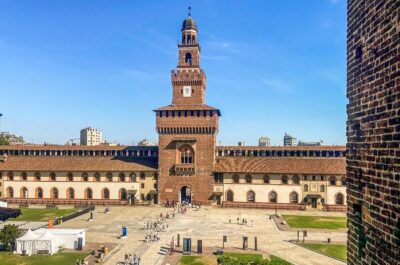
- Two grand courtyards: Walk through the Corte Ducale and Cortile della Rocchetta, the castle’s most impressive interior spaces.
- A focused museum visit: The guide selects key works and explains their place in Milan’s political and artistic story.
- Small-group format: Groups may be very small, sometimes only three or four people, though the exact size can vary.
- Practical value: The $47 price includes admission, a certified guide, and headphones for groups of 11 or more.
Why Michelangelo’s unfinished Pietà matters
Many visitors come to Sforza Castle expecting walls, towers, and military history. The real emotional jolt comes inside, when you meet Michelangelo’s final sculpture.
The Pietà Rondanini shows the Virgin supporting the body of Christ, but it does not have the smooth anatomy or grand balance you may associate with Michelangelo’s famous works. The figures are narrow and elongated. The marble surface remains rough in places. Bodies and limbs seem to emerge from the stone rather than fully separate from it.
That unfinished quality is not a minor detail. It shapes the entire experience. You are looking at a work Michelangelo continued to change until only days before his death. At the end of his life, he appears less interested in showing physical perfection than in expressing grief, faith, and the limits of the human body.
A good guide will not simply point out the sculpture and recite its date. The useful part is learning how to look at it. The tour explains the non-finito effect, the visible marks left in the marble, and the difference between Michelangelo’s youthful confidence and this late, searching work.
The sculpture is displayed in a museum space within the castle, giving this stop a quiet change of mood. After the open courtyards and fortress walls, the Pietà asks you to slow down. It rewards attention more than a quick photograph.
A few more castle tours around Milan worth a look
- Milan: Sforza Castle Entry Ticket with Digital Audio Guide
★ 4.0 · 2,675 reviews - Milan: The Last Supper & Sforza Castle Guided Tour
★ 4.6 · 610 reviews - Milan: Last Supper and Sforza Castle Guided Tour
★ 4.6 · 498 reviews
Entering Sforza Castle through Piazza Castello
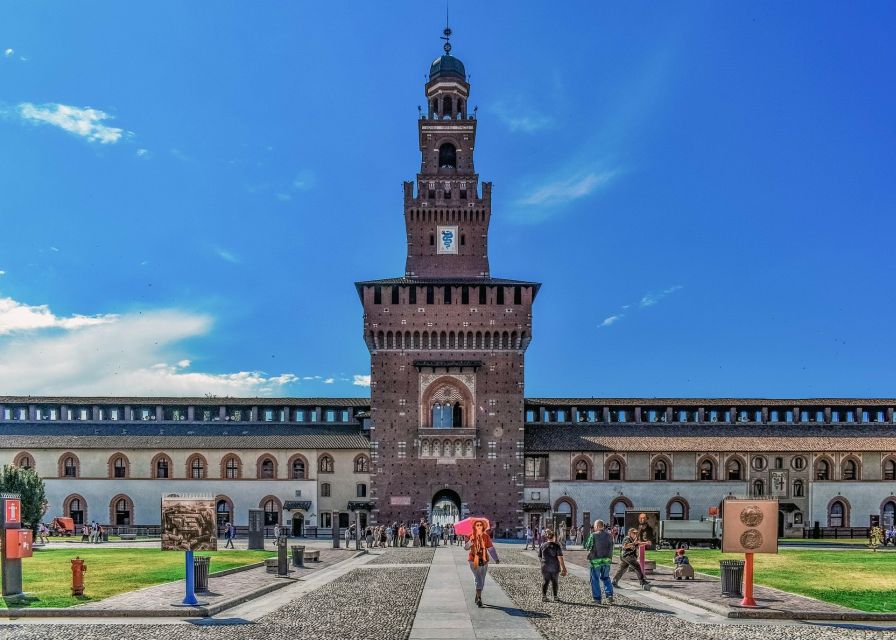
The meeting point is in Piazza Castello, under the Filarete clock tower, directly in front of Sforza Castle. Do not walk into the courtyards looking for the guide. Instead, look for the Hidden Experiences purple flag or board outside.
This is a useful detail because the castle is large and the entrance area can feel spread out. Give yourself enough time to reach Piazza Castello and locate the guide before the start. The tour does not include hotel pickup, though a pickup and drop-off option may be available for an extra charge.
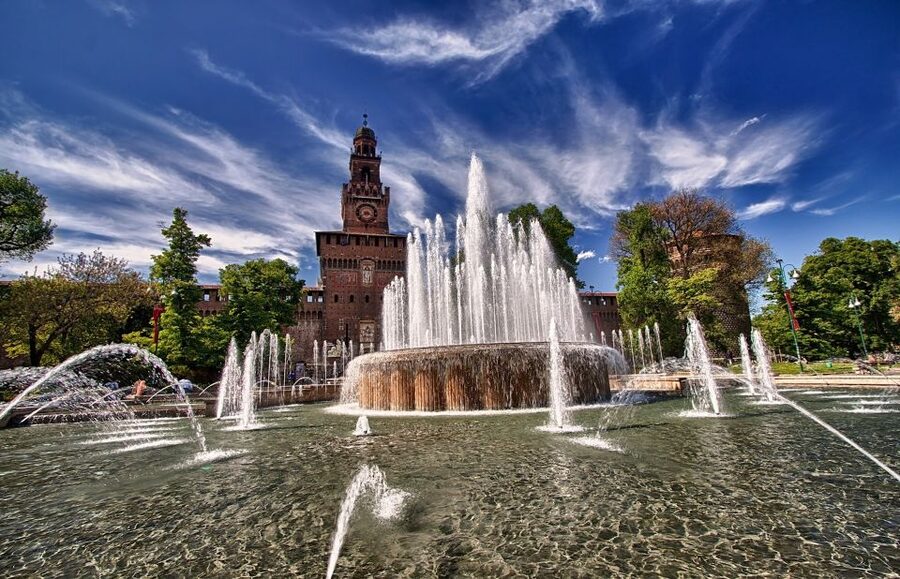
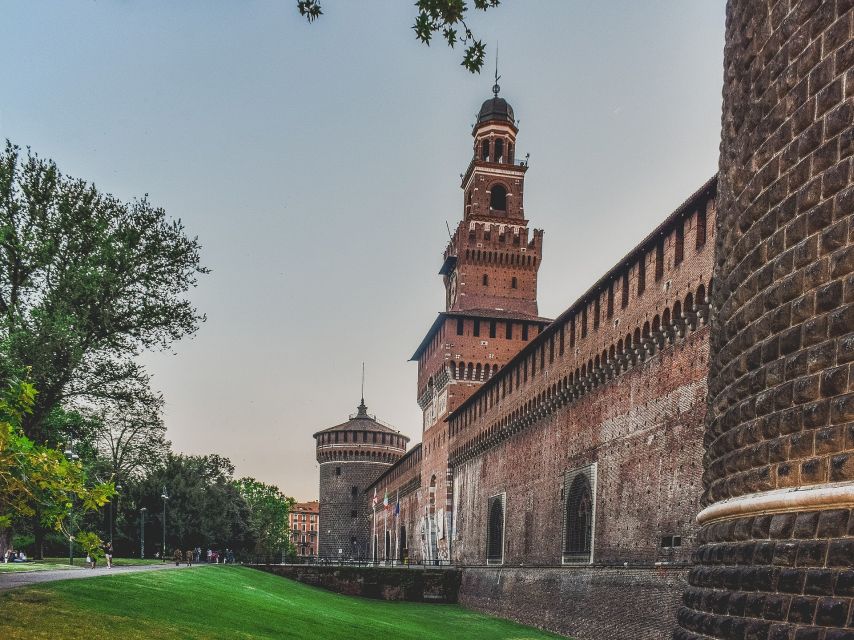
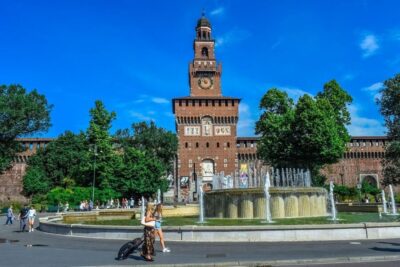
The Filarete Tower gives you an immediate sense of the castle’s scale. Its position at the main entrance makes it an easy landmark, and the guide uses it to begin the story of Milan’s rulers and defenses.
Sforza Castle began as a medieval fortress and later became the court residence of the Visconti and Sforza families. That change is central to understanding the building. It was not just a military outpost. Under the dukes, it became a place of ceremony, residence, artistic work, and political theater.
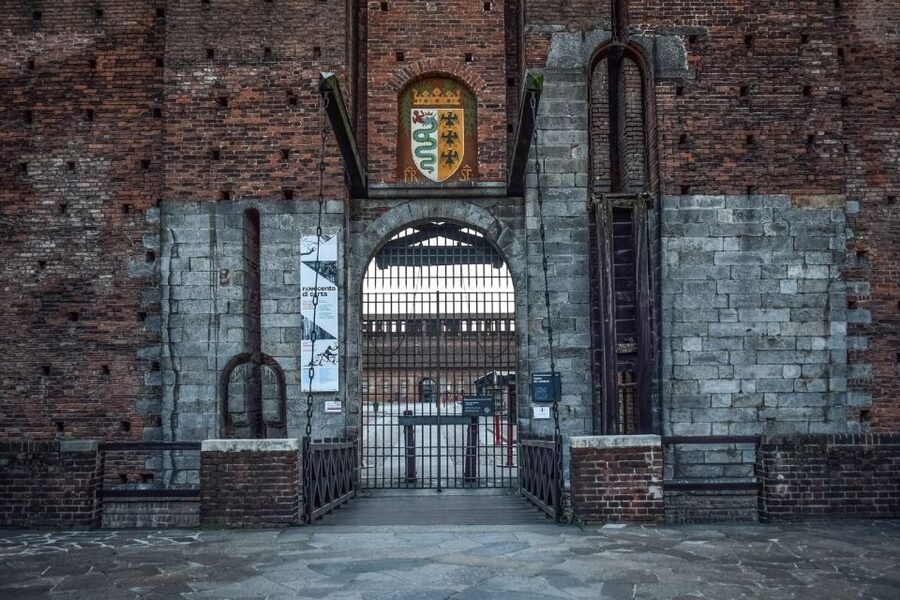
Your guide connects the architecture to the families who controlled Milan. The Visconti serpent, known as the Biscione, appears as a key symbol in the story. You also hear about the ambitious men and noblewomen who shaped court life, rather than getting only a list of dates and battles.
The Ducal Courtyard and Leonardo’s Milan
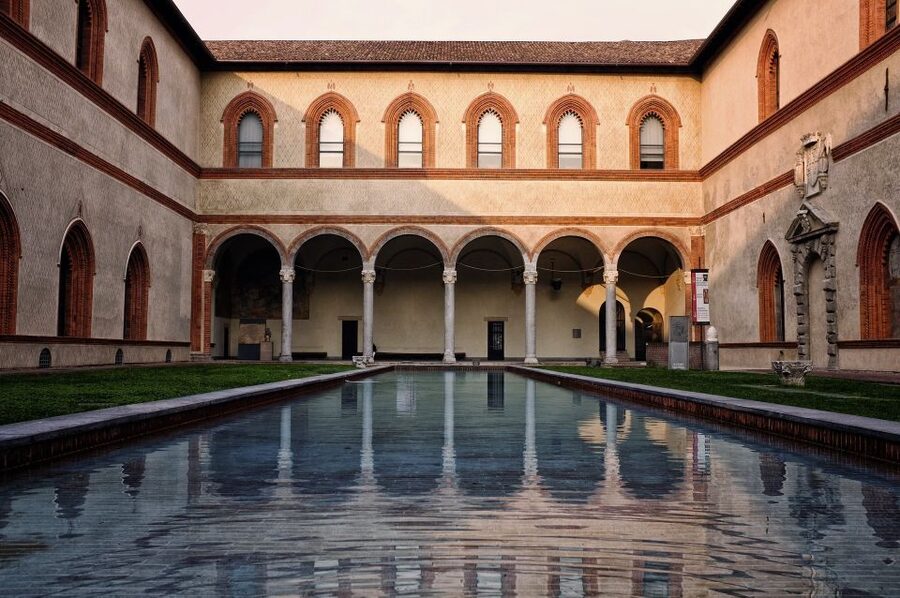
The tour continues through the Corte Ducale, or Ducal Courtyard. This is where the castle’s defensive purpose gives way to Renaissance court culture.
The courtyard’s scale and architecture help explain how Milan presented itself as a major European power. The Visconti and Sforza rulers wanted more than protection from attack. They wanted a residence that reflected authority, wealth, and taste.
This is also where Leonardo da Vinci enters the story in a more useful way than the usual list of famous paintings. Leonardo lived and worked in Milan for nearly 20 years, serving the Sforza court in several roles. He was not only an artist. He worked as an engineer, architect, designer, and problem solver.
The guide points out that Leonardo’s connection to the castle involved practical court work. You learn about his relationship with Ludovico il Moro and his role in the machinery of Renaissance Milan. The castle gives you a different view of Leonardo, one that includes military planning, architecture, court entertainment, and engineering.
You should not expect to see a major Leonardo painting here. The value is in the setting and the story. Inside these walls, you can picture the court environment that supported his work and also placed demands on him.
That context makes the nearby Last Supper easier to understand if you plan to visit it separately. Leonardo was working within a network of patrons, political needs, and technical challenges. Sforza Castle helps fill in that background.
The Cortile della Rocchetta and the castle’s military side
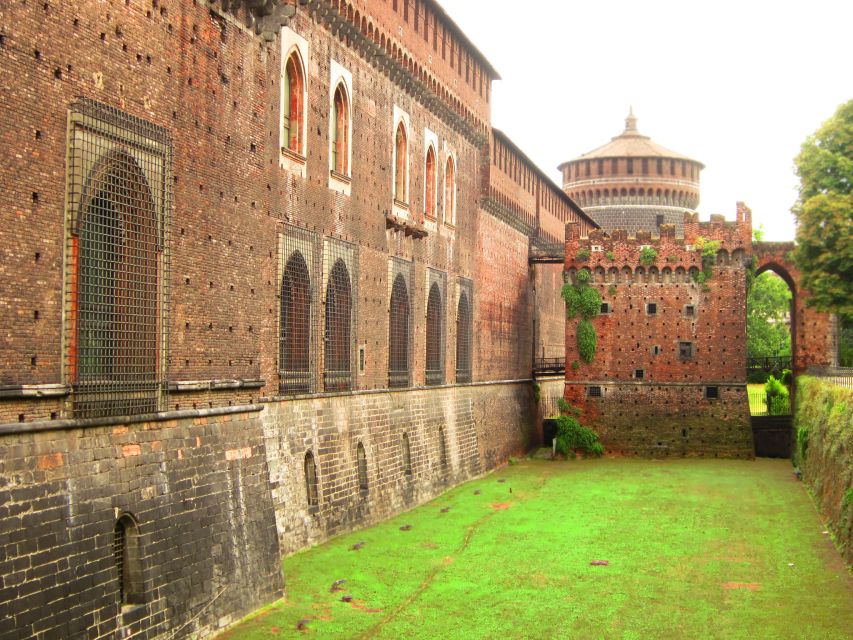
The Cortile della Rocchetta shows another side of the complex. Its design is more closely tied to defense and the practical structure of a fortress, even as the castle also served a luxurious court.
The guide explains how the building survived changes in power and centuries of upheaval. Walking under the Filarete Tower and around the castle walls, you see why Sforza Castle became part of Milan’s identity rather than disappearing as a purely military relic.
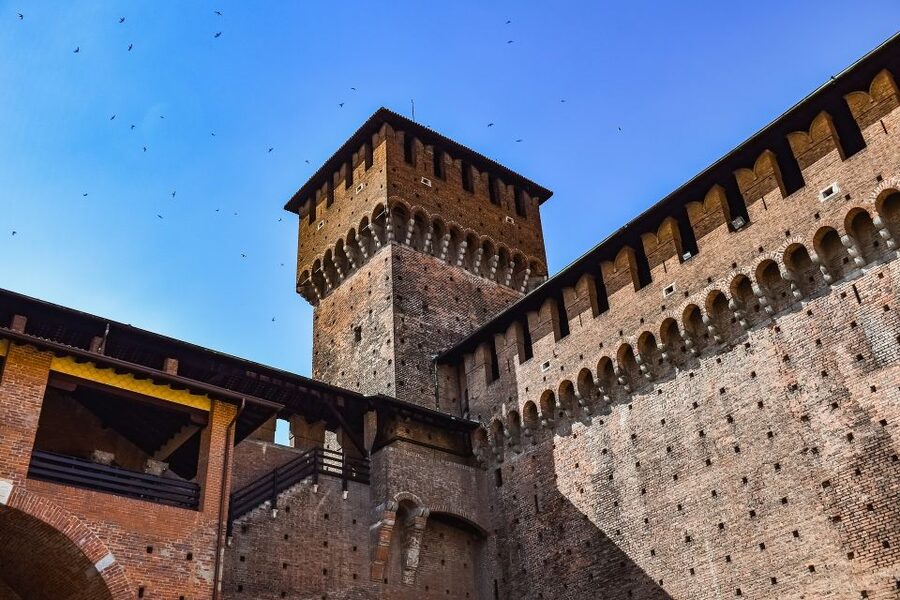
The best part of this section is the way the guide links stone and politics. A tower is not only a tower. It tells you about control of the city, the need to protect the ruling family, and the public image of the dukes.
The castle’s courtyards are also easier to appreciate with a guide because they can seem bare at first glance. Stories about court life, the Biscione emblem, and the people who lived and worked here give the open spaces a purpose.
The visit may include parts of the castle’s museums, including archaeological displays and other collections. The exact balance can vary, but the focus remains on the castle, its art, and the Pietà Rondanini.
Same region, a different set of walls:
- Small-Group Barolo Wine Tasting, Alba & UNESCO Piedmont Hills
★ 5.0 · 689 reviews - Milan: Last Supper and Sforza Castle Tour
★ 4.6 · 115 reviews - Milan: Duomo, Sforza Castle, and Pieta Guided Tour
★ 4.9 · 100 reviews - Milan Small Group: Duomo & Rooftop, Castle, Gelato Tasting
★ 4.8 · 70 reviews
What the 90-minute format does well
A 1.5-hour tour is a sensible length for a first look at Sforza Castle. You get a strong introduction without giving up an entire morning or afternoon.
The guide selects the most important rooms, objects, and stories. That matters because the castle contains more than you can absorb by wandering in without a plan. The tour gives you a framework, then you can return later if you want more time with a particular museum.
The format also works well early in a Milan visit. After 90 minutes, you understand how the castle fits into the city’s political story, and you have a clearer sense of Leonardo’s Milan. It can help you decide how much time to reserve for other nearby sights.
The tradeoff is depth. One visitor found the archaeological museum portion rushed, while another noted that the tour ran a little long. Both comments point to the same practical truth: the guide may need to adjust the pace depending on questions, group size, and how much time the Pietà discussion takes.
If you want a long museum visit, this is not the right product. If you want a sharply guided introduction, the short format works well.
Guide quality and group size
The strongest part of this experience is the guiding. Again and again, the guides are described as clear, friendly, patient, and able to explain difficult history in plain language.
Names praised in individual experiences include Giorgio, Stefania, Fabio, Simon, Lorella, Lara, Nina, Chiara, Sylvia, and Simone. Your guide will vary, so you should not book on the assumption that one particular person will lead your tour. Still, the pattern is encouraging: the experience depends heavily on live storytelling, and the guides appear to be selected for that role.
Several guides have been praised for speaking clearly and slowly, which is important inside a large castle where acoustics can be uneven. A guide who answers questions and adjusts the pace adds real value here. The best moments are not just the prepared facts but the connections between art, politics, and daily life.
Groups may be very small. Some departures have had only three or four people, and private groups are available. Other departures may be larger. Headphones are supplied from 11 participants onward, which should help you hear in busy or echoing areas.
The small-group setup is particularly helpful at the Pietà. You can ask why the sculpture looks so different from Michelangelo’s earlier works, or how the unfinished surface changes its emotional effect, without turning the stop into a lecture for a large crowd.
Is $47 a fair price?
At $47 per person, the tour is not the cheapest way to enter Sforza Castle. You are paying for more than admission, though. The price includes the castle and museum entrance, a certified guide, and a small-group experience.
I consider the price reasonable if you care about art, history, or getting your bearings in Milan. The Pietà Rondanini is not an object I would want to see without some context. Its unusual appearance can be easy to misread as incomplete in a simple or negative sense. The guide explains why the unfinished form is central to its meaning.
The value is also stronger if you would otherwise wander through the castle without knowing what you are seeing. The families, symbols, courtyards, and Leonardo connection make more sense as one story.
The value is weaker if you prefer to read labels at your own speed or want to spend several hours in the archaeological and art museums. You may feel hurried, especially if the group has many questions or the guide covers several areas.
For couples, families, and first-time visitors to Milan, the cost buys useful orientation. For serious museum lovers, I would treat this tour as an introduction and plan extra independent time at the castle if your schedule allows.
Who should book this experience?
I would recommend it to you if you want:
- A short introduction to Milan’s major Renaissance power center
- A closer reading of Michelangelo’s final sculpture
- Historical context for Leonardo’s years in Milan
- A guide who can connect architecture, politics, and art
- A small-group experience rather than a large sightseeing crowd
- A structured visit before exploring more of the castle on your own
Families can benefit from the storytelling, especially if younger visitors would lose interest in room labels and dates. The 90-minute length is manageable, and guides have been praised for keeping the material engaging.
Art lovers should book if the Pietà Rondanini is a priority. The sculpture is the most distinctive reason to choose this tour over a general castle walk.
You should think twice if you want a slow, exhaustive museum visit. The tour covers selected highlights, and the archaeological section may receive less time than you would like.
The experience is wheelchair accessible. Live guiding is offered in Italian, English, German, French, and Spanish. Free cancellation is available up to 24 hours before the start, and you can reserve now and pay later, which helps if your Milan schedule is still changing.
My verdict on Sforza Castle and the Pietà Rondanini
I would book this tour if you want to understand why Sforza Castle matters, not merely walk through a famous building. The Pietà Rondanini gives the visit a powerful center, while the courtyards and Leonardo stories widen the picture.
The tour earns its price through interpretation. You can see the castle on your own, but a good guide helps you connect the Visconti and Sforza families, the military architecture, Leonardo’s court work, and Michelangelo’s late sculpture.
Choose it for a focused 90-minute introduction. Skip it only if you prefer to explore every museum at your own pace and do not need help sorting the castle’s many layers.
FAQ
How long does the tour last?
The tour lasts 1.5 hours.
What is included in the price?
The $47 price includes entrance fees to Sforza Castle and its museums, a certified tour guide, and headphones for groups of 11 participants or more.
Where do I meet the guide?
Meet in Piazza Castello, under the Filarete clock tower, in front of Sforza Castle. Do not go inside the courtyards to find the guide. Look for the Hidden Experiences purple flag or board.
What languages are available?
Live tours are available in Italian, English, German, French, and Spanish.
Is the tour wheelchair accessible?
Yes, the activity is listed as wheelchair accessible.
Is this a private tour?
The standard experience is a small-group guided tour, and a private group option is available.
Does the tour include food or drinks?
No. Food and drinks are not included.
Is hotel pickup included?
No. Hotel pickup and drop-off are not included in the standard price. An optional service may be available for an extra charge.
Can I cancel the booking?
Yes. You can cancel up to 24 hours in advance for a full refund. You can also reserve now and pay later.
Just added around Milan
- Milan: Skip-the-line Sforza Castle and Museums Private Tour★ 4.7 · 7 reviews
- Milan Small Group: Duomo & Rooftop, Castle, Gelato Tasting★ 4.8 · 70 reviews
- Milan: Sforza Castle & Leonardo Skip-the-Line Private Tour★ 4.7 · 26 reviews
- Milano: Highlights Private Tour, Duomo, Castle & Gelato★ 5.0 · 5 reviews
- Milan: Last Supper and Sforza Castle Tour★ 4.6 · 115 reviews
- Milan: Private Tour – Duomo, Sforza Castle & Gelato Tasting★ 4.8 · 36 reviews
- Milan: Professional Photoshoot Outside Sforza Castle★ 3.9 · 12 reviews
- Milan: Duomo, Sforza Castle, and Pieta Guided Tour★ 4.9 · 100 reviews
Milan Castle Tours, compared.
Milan: Sforza Castle Entry Ticket with Digital Audio Guide
Read our review →
Small-Group Barolo Wine Tasting, Alba & UNESCO Piedmont Hills
Read our review →
Milan: The Last Supper & Sforza Castle Guided Tour
Read our review →
Milan: Last Supper and Sforza Castle Guided Tour
Read our review →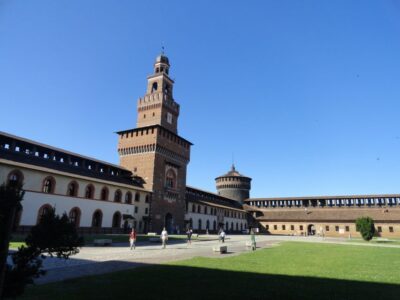
Milan: Duomo, Sforza Castle, and Pieta Guided Tour
Read our review →
Milan Small Group: Duomo & Rooftop, Castle, Gelato Tasting
Read our review →
From Milan: Barolo Wine Tasting, Alba Tour and Castle Visit
Read our review →Browse the lists this tour appears in