
REVIEW · GERMANY CASTLE TOURS
Premiumstadtführung (historische Altstadt und Schlossberg)
Quedlinburg’s 1,100-year story is easiest to grasp on foot, and this two-hour walk connects the market square, medieval lanes, and Schlossberg in one tidy route. You’ll see the town hall, churches, half-timbered houses, museums, and the hilltop collegiate church without spending your day piecing the town together on your own.
I like the route’s range of sights, from the busy market square to the quieter Schlossberg, and I like that the guide points out culinary stops as well as historic buildings. The main catch is physical: cobblestones and a steeper climb make this less comfortable in poor weather or for anyone unsteady on hills.
Key points at a glance
- A 1,100-year story in two hours: The walk gives you a useful introduction to Quedlinburg’s long past without taking over your day.
- A carefully chosen old-town route: See the town hall, St. Benedikti market church, Schuhhof, Hölle, Blasii Church, and the Half-Welfare Museum.
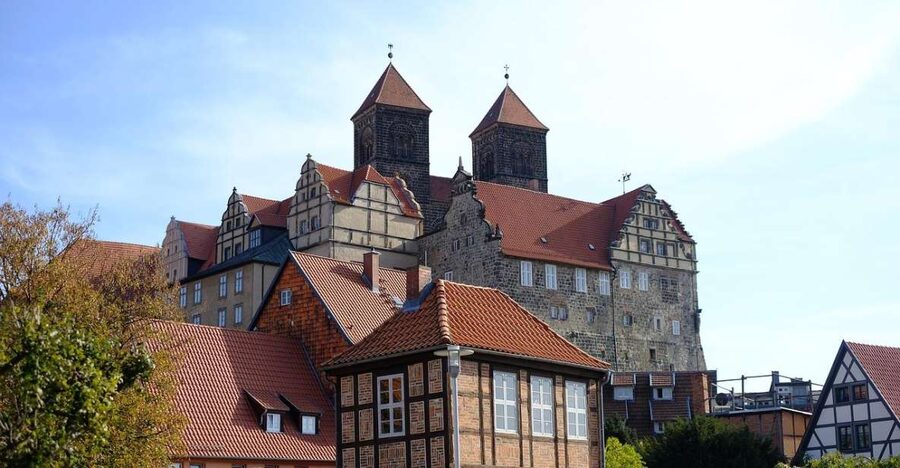
- The Schlossberg is the main payoff: The route continues to Klopstock-Haus, the Lyonel Feininger Museum, Schlossgarten, and St. Servatii collegiate church.
- German-speaking live guide: The tour is conducted in German, so basic German or a translation app will help.
- Free for children through age 16: That makes the tour especially good value for families.
- Cobblestones and a hill matter: Wear sensible shoes, and remember that the tour runs in rain or sunshine.
Why Quedlinburg makes a good walking tour
Quedlinburg is not the kind of town you understand by ticking off one grand monument. Its character sits in the details: a crooked half-timbered façade, a narrow lane, an old church tower, and the way the town rises toward the Schlossberg.
That is why this route works well. It joins the lower town and upper town instead of leaving you to choose between them. In two hours, you get the market square, the historic lanes, the main churches, several museums, the castle hill, and the collegiate church of St. Servatii.
The UNESCO World Heritage setting gives the walk real weight, but you should not expect a museum lecture from start to finish. The appeal is seeing how the parts fit together. The town hall belongs to the market square. The medieval lanes lead toward older religious and civic buildings. The Schlossberg then changes the feel of the visit, with gardens, museums, and the hilltop church.
The tour begins at the Quedlinburg city information office on the Marktplatz. Look for the green sign and arrive with your ticket ready. This central meeting point is practical because you begin among the town’s most recognizable buildings rather than at an out-of-the-way bus stop.
Other castle tours people book around Germany:
- From Munich: Neuschwanstein & Linderhof Castle Full-Day Trip
★ 4.6 · 14,646 reviews - Neuschwanstein & Linderhof Castle-Fairytale Day Tour from Munich
★ 4.5 · 7,275 reviews - Neuschwanstein Castle Tour from Munich
★ 4.5 · 5,117 reviews
The market square and the first steps into history
The market square is a sensible place to begin. It gives you an immediate view of Quedlinburg’s civic heart, with the town hall as the first major point of reference.
A guide can do more here than simply identify the building. You’ll get an introduction to how the old town is organized and why the market area matters. This is also where the tour’s stories about famous people from Quedlinburg can give the town a more personal face.
The next stop is the market church of St. Benedikti. Its location makes it an important part of the town’s historic center, and the tour uses it to shift from civic Quedlinburg to religious Quedlinburg.
I appreciate this gradual start. You are not rushed straight up the hill before you know where you are. The lower-town portion gives you a map in your head, which makes the later Schlossberg section easier to understand.
Medieval lanes, half-timbered houses, and the town’s texture
The route continues through Schuhhof and Hölle, two of the medieval lanes included in the walk. These names alone make the route feel more distinctive than a simple circuit of famous façades.
Here, the half-timbered houses become the main attraction. Quedlinburg is known for the variety of its timber-frame building styles, and a guide can help you notice the differences instead of seeing one picturesque house after another as a blur.
Look up as you walk. Timber framing, painted details, irregular walls, and narrow passages reward attention. The streets are part of the experience, not merely spaces between monuments.
The charm comes with a practical cost. Cobblestones can be tiring, especially in thin-soled shoes. The route is a walking tour through a preserved historic center, not a smooth promenade. Wear shoes with good grip and expect to adjust your pace.
Hölle leads toward the Blasii Church, another reminder that Quedlinburg’s story is spread across many buildings rather than concentrated in one site. The Half-Welfare Museum is also part of this section. The supplied information does not state that the tour includes admission inside every museum, so treat these stops primarily as landmarks and points of explanation unless your guide tells you otherwise.
The Schlossberg climb and the change in view
The Schlossberg is the tour’s central highlight. The route leaves the lower streets and heads uphill to the area around the collegiate church of St. Servatii.
This is where the tour becomes more than a flat old-town stroll. You gain a different sense of Quedlinburg from higher ground, and the hill helps explain the importance of the church and castle area.
The climb is not described as extreme, but it is steeper than the rest of the route. That matters in winter, after rain, or for anyone who finds uneven ground difficult. The tour operates in rain or sunshine, so check the forecast and dress for the conditions rather than assuming the old town will provide shelter.
The Schlossberg section includes Klopstock-Haus, the Museum Lyonel Feininger, and Schlossgarten. These stops broaden the story beyond medieval buildings. Quedlinburg is presented through writers, artists, gardens, religious institutions, and civic history, not just architecture.
Klopstock-Haus connects the town with one of its famous personalities. The Lyonel Feininger Museum adds an art connection. The garden offers a quieter pause before the route reaches St. Servatii. Together, these stops give the hill a varied rhythm.
Same region, a different set of walls:
- From Munich: Neuschwanstein Castle Full-Day Trip
★ 4.7 · 3,977 reviews - Potsdam: City and Castles Tour
★ 4.7 · 3,721 reviews - Premium Neuschwanstein Castle and Linderhof VIP Tour from Munich
★ 5.0 · 2,480 reviews - Dresden: Elbe River Cruise to Pillnitz Castle
★ 4.5 · 2,411 reviews
St. Servatii and what you do not see
The collegiate church of St. Servatii is the main destination on the Schlossberg. Its position gives the walk a strong finish, and the church is one of the clearest symbols of Quedlinburg’s historical importance.
The tour does not include the interior of St. Servatii. That is important when planning your day. You will hear about the church and see it as part of the Schlossberg visit, but an inside visit is not included in the tour price.
For some people, this will be the main disappointment. If you are especially interested in church interiors, religious art, or architectural details, allow separate time to visit the church if it is open and admission arrangements permit. The tour itself is designed to give you the setting and historical context from the outside.
For others, the exterior stop is enough, especially if you want a broad introduction rather than a specialist church visit. The route already covers a lot in two hours, and keeping the visit outside helps maintain a manageable pace.
How the tour handles food and local life
The guide also presents culinary hotspots and recommendations. This is a small but useful part of the experience.
Historic centers can make eating decisions awkward. The prettiest street is not always the best place to stop, and opening times can vary by season. A local guide can point you toward places worth considering after the walk.
You should keep your plans flexible, particularly in January. Quedlinburg can feel very quiet in the off-season, and several restaurants may be closed at the same time. One January booking note described very limited lunch choices, with only a café available at that point. That is not a reason to avoid the town, but it is a reason to check opening hours before you arrive.
The food advice is also a nice counterweight to the monuments. You are not only being shown old stones. You are being given a few ideas for how to spend the rest of your visit.
The guide, language, and group feel
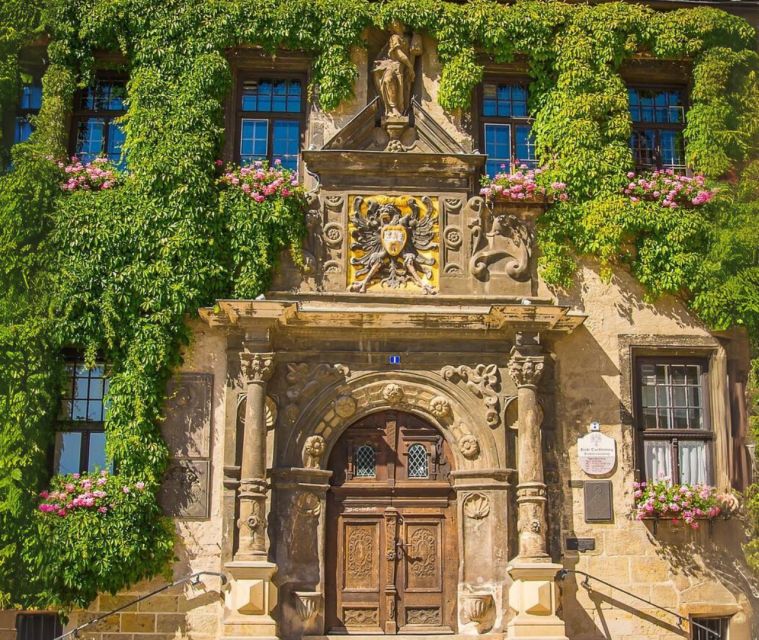
This is a live tour with a German-speaking guide. No guide names are provided, so you should not book expecting a particular person. What you can expect is a spoken introduction to the town rather than an audio guide or self-guided route.
German speakers will get the most from the explanations and opportunities to ask questions. If your German is limited, you may still enjoy the buildings and route, but you should bring a translation app and accept that some historical detail may be difficult to follow.
The tour appears to work well with smaller groups. A recent booking described the group size as ideal and the guide as friendly and detailed, with time for questions. That is exactly what you want in a historic-town walk. A guide who pauses for questions can help you focus on the parts that interest you, whether that is architecture, famous residents, churches, or daily life.
Two hours is long enough to provide substance but short enough to fit around a museum visit, lunch, or onward travel. You will not get an exhaustive study of every street, and that is a fair trade. The tour gives you a framework, then leaves room for your own exploring.
Price, family value, and what the rating means
At $10 per person, this is a modest price for a two-hour guided walk through a UNESCO World Heritage town. The value is strongest if you want orientation and context quickly. You are paying for a route that connects the old town and Schlossberg, not merely for access to a single attraction.
Families get an even better deal because children and adolescents through age 16 are free. That can make a guided introduction much more reasonable than paying separate admission for several museums or monuments.
The published rating is 4.4 out of 5 from 627 ratings. That points to a generally strong experience, but it does not erase the practical limitations. One winter booking was canceled because the Schlossberg was considered too slippery, with a refund offered and a later time suggested. The complaint also raised concern about the refunded amount not matching the amount originally paid.
The sensible lesson is not to assume every departure will run in icy conditions. The provider says the tour runs in all weather, but safety on the hill can still force a change. If your schedule is tight, avoid placing this tour immediately before a train or fixed appointment in winter.
Weather, shoes, and the right pace
The tour runs in rain or sunshine. Bring a waterproof layer when needed, and remember that an umbrella can be awkward on narrow lanes and during the uphill section.
Good footwear matters more than stylish footwear. Cobblestones, uneven surfaces, and the steeper Schlossberg section are specifically part of the route. If you have mobility concerns, contact the provider before booking, since the supplied information does not promise a step-free or fully accessible route.
Allow yourself enough time before the start to find the green city information sign on the market square. Arrive ready to show your ticket. The meeting point is straightforward, but historic squares can still be confusing if you arrive at the last minute.
The best attitude is to treat the walk as an introduction, not a race. Listen for the details that help you read the town later. Afterward, you can return to a lane, church, or museum that caught your attention.
Who should book this Quedlinburg walk?
I would choose this tour if you have only a short stay in Quedlinburg and want to understand the town before exploring on your own. It is also a good first activity because the route gives you bearings in the market area and on the Schlossberg.
Families should take a close look at it because of the free admission for children and teenagers up to 16. The two-hour length is manageable, and the mix of streets, churches, museums, gardens, and stories is more varied than a single-site visit.
History and architecture fans will appreciate the concentration of half-timbered houses and the connection between the lower town and hilltop church. Food-minded visitors will also get a few suggestions for later.
I would hesitate if you need an English-language tour, require smooth and level paths, or want to see St. Servatii from inside as part of the booking. In those cases, the tour may leave important needs unmet.
Should you book it?
Book it if you want a reasonably priced, German-language introduction to Quedlinburg’s UNESCO old town and Schlossberg. The route is well chosen, the two-hour length is practical, and the combination of civic buildings, half-timbered lanes, museums, gardens, and St. Servatii gives you a useful first picture of the town.
Plan carefully if the weather is icy, your walking is limited, or your German is weak. For most visitors who can handle cobblestones and a hill, this is a sensible way to get oriented before spending more time among Quedlinburg’s remarkable streets.
FAQ
Where does the tour begin?
It begins at the Quedlinburg city information office on Quedlinburger Marktplatz. Look for the green sign and show your ticket to the guide.
How long does the tour last?
The tour lasts two hours.
What language is the tour conducted in?
The live tour guide speaks German.
Does the tour visit the UNESCO World Heritage Site?
Yes. The route takes you through Quedlinburg’s historic old town and the Schlossberg, both part of the town’s UNESCO World Heritage setting.
Is entry to St. Servatii collegiate church included?
No. The tour includes the Schlossberg and an outside visit to St. Servatii collegiate church, but entry to the church interior is not included.
What sights are included in the old-town section?
The route includes the town hall, the market church of St. Benedikti, Schuhhof, Hölle, Blasii Church, and the Half-Welfare Museum.
What sights are included on the Schlossberg?
The Schlossberg section includes Klopstock-Haus, the Museum Lyonel Feininger, Schlossgarten, and St. Servatii collegiate church.
Is the tour suitable in bad weather?
The tour takes place in rain or sunshine. It includes cobblestone paths and a steeper section on the Schlossberg, so suitable clothing and shoes are important.
Are children charged for the tour?
Children and adolescents up to age 16 are free.
Can I cancel the booking?
You can cancel up to 24 hours in advance for a full refund. The activity also offers a reserve-now, pay-later option.
Just added around Germany
- Sightseeing flight Zugspitze Neuschwanstein Castle Alps Munich Augsburg★ 5.0 · 7 reviews
- Stuttgart: Landesmuseum Württemberg Old Castle Entry Ticket★ 4.6 · 21 reviews
- Sigmaringen: Hohenzollern Castle Admission & Audio Guide★ 4.9 · 15 reviews
- Segway Tour: Gerberbach, Schlosspark & Castle Weinheim★ 4.9 · 14 reviews
- Dresden: Scavenger Hunt to Elbe River & Castles★ 4.7 · 15 reviews
- Private tour to Neuschwanstein castle from Munich★ 5.0 · 23 reviews
- Potsdam: The evening Wannsee tour. Castles, parks, and villas.★ 4.7 · 63 reviews
- Neuschwanstein Tour from Munich Luxury Van 6 People with Private Driver★ 5.0 · 12 reviews
Germany Castle Tours, compared.

From Munich: Neuschwanstein & Linderhof Castle Full-Day Trip
Read our review →
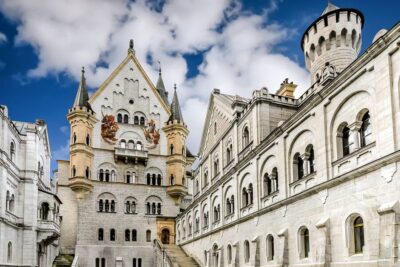
From Munich: Neuschwanstein Castle Full-Day Trip
Read our review →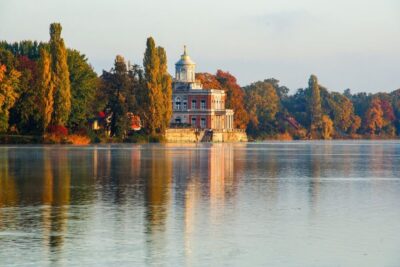
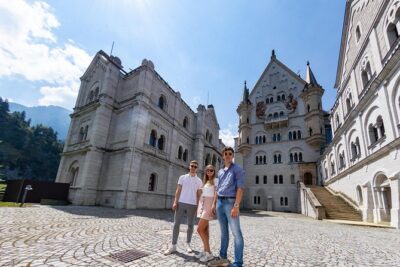
Premium Neuschwanstein Castle and Linderhof VIP Tour from Munich
Read our review →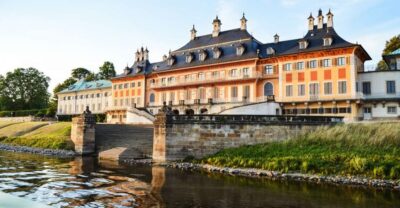
Dresden: Elbe River Cruise to Pillnitz Castle
Read our review →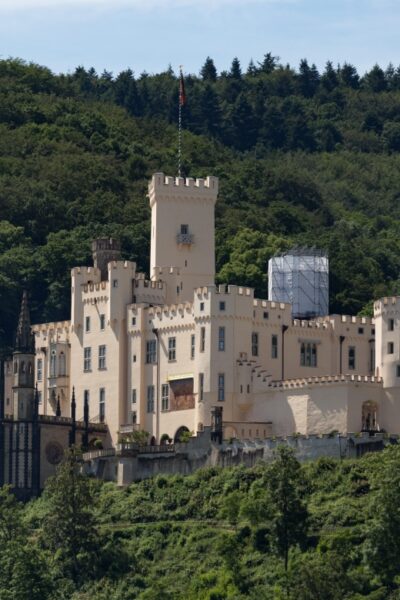
Koblenz: Rhine Valley Castles and Palaces Boat Tour
Read our review →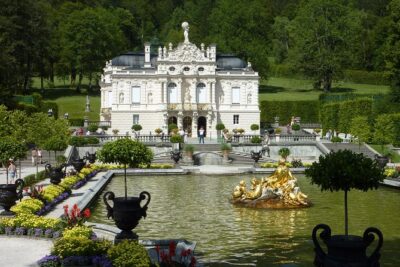
Neuschwanstein Castle and Linderhof Palace Day Trip from Munich
Read our review →Browse the lists this tour appears in